

Reviewed · MUSEUMS
Krakow: Museum of Living Butterflies 2+1
The most striking part of Krakow’s Museum of Living Butterflies is the chance to see these delicate insects up close, not just pinned behind glass. You can watch their colors, wing patterns, and tiny scales at close range while learning how butterflies live and fit into wider ecosystems.
I like the visit for two clear reasons: the unusual subject gives you a break from Krakow’s grand churches and busy streets, and the small-group format makes the $36 price sensible for up to three people. The museum also turns a pretty photo stop into a useful lesson about anatomy, life cycles, and biodiversity.
The main consideration is time and access. The ticket is valid for one day, but no visit length is given, and some sections may be difficult if you have serious mobility limits. You should also expect plenty of walking and must leave your camera flash off.
Key points to know before you go
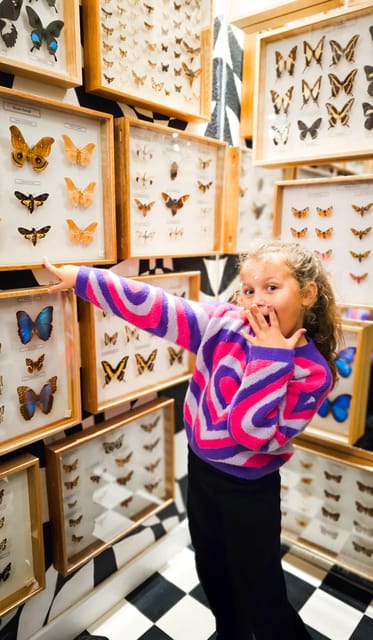
- Living butterflies from around the world: See local and exotic species in the museum’s exhibition areas.
- More than a photo stop: Learn about butterfly anatomy, wing scales, life cycles, and ecosystem roles.
- Small-group value: One booking covers up to three people for $36.
- Photography is welcome: You may take pictures, but flash photography is not allowed.
- Useful for families and curious adults: The displays explain both daytime and nighttime butterfly types.
- Flexible planning: The ticket is valid for one day, with starting times shown when you check availability.
Entering Krakow’s Museum of Living Butterflies

This is a focused museum visit rather than a guided city tour. You make your way to the attraction in Krakow, enter with admission for your group, and explore the exhibition areas at your own pace.
The museum’s main subject is the order of insects called Lepidoptera, which includes butterflies and moths. That distinction matters because you are not simply looking at pretty wings. You are learning how these insects are built, how they change through their life cycle, and why their patterns and colors help them survive.
The atmosphere should appeal to you if you prefer a compact attraction with one clear theme. It gives you a change of pace from Krakow’s churches, old streets, and large museums. Children can focus on the moving butterflies, while adults can pay closer attention to the science and conservation message.
No guide is included, so you should not expect a scheduled talk or a personal explanation from a named expert. The educational content is presented through the museum experience itself. That makes the visit flexible, but it also means you need to read and explore at your own speed.
More Museum Tours in Krakow
- Krakow: Rynek Underground Museum Guided Tour
★ 4.6 · 1,122 reviews - Krakow Schindler’s Factory Museum Guided Tour in English
★ 4.5 · 650 reviews - Museum of illusions Entry Ticket
★ 4.5 · 521 reviews
Seeing butterflies from local and distant places
The collection includes butterflies from Poland and other parts of the world. You can compare familiar local species with more exotic examples, paying attention to differences in shape, color, and pattern.
Butterfly wings are covered with tiny scales. These scales give the wings their color and detailed markings, and the museum explains this basic feature as part of the visit. Seeing a living butterfly while learning about its wings makes the lesson easier to remember than a short description in a book.
You might find butterflies that are active during the day, along with information about species that come out at night. This is a useful reminder that butterfly life is not limited to the bright, colorful insects you notice in a garden on a sunny afternoon.
The collection’s appeal comes from variety rather than size alone. You can look for contrasts in wing shape and coloring, and you can consider how each species has adapted to its surroundings. Since the supplied details do not name individual species, you should visit with an open mind rather than expecting a particular butterfly.
The science behind the color and movement

The museum explains the butterfly life cycle, including the different stages these insects pass through. It also covers anatomy and the way butterflies function as part of ecosystems.
For you, the value is in connecting the display to something familiar. A butterfly begins life very differently from the insect you see fluttering past a flower. The museum gives you a chance to understand that change and to see the adult insect as one stage in a longer process.
Color is another central theme. Butterfly wings can look painted, but the patterns come from their tiny scales and biological structure. The displays help you look more closely at markings rather than treating every butterfly as simply blue, orange, yellow, or brown.
This is also where the museum carries a conservation message. You learn why protecting biodiversity matters and how the loss of species affects the natural world. The information is useful for children, but it is not limited to a young audience. I like attractions that connect beauty with responsibility, and this one makes that connection without requiring a full day.
Taking photographs without flash
You can take photographs inside the museum, which adds another reason to bring your camera or phone. The butterflies provide plenty of close-up subjects, from wing patterns to the differences between species.
You must turn off the flash. This rule protects the butterflies and is not optional, so check your camera settings before you enter. Natural or available light may make photography more challenging, especially if the insects move quickly.
I would treat the camera as an extra, not the whole purpose of the visit. A butterfly may settle long enough for a good picture, but you cannot count on a perfect pose. If you spend the entire time chasing photographs, you may miss the anatomy displays and the chance to watch the insects behave naturally.
A phone camera is likely enough for casual pictures, but the experience does not promise professional photography conditions. The important point is that photography is permitted, provided you respect the no-flash rule and the museum environment.
Same city, a completely different kind of day:
- Kraków: Evening or Night River Cruise
★ 4.0 · 7,386 reviews - Krakow: Oskar Schindler’s Factory Entry Ticket & Guided Tour
★ 4.2 · 3,793 reviews - Krakow: City Sightseeing Tour by Electric Golf Cart
★ 4.5 · 3,264 reviews - Krakow: Schindler’s Factory Tour with Entrance Ticket
★ 4.5 · 3,182 reviews
How the $36 group price works
The price is $36 per group of up to three people. That makes the cost easier to judge as a shared admission rather than a solo ticket. Three people paying together are effectively spending about $12 each, while a couple pays about $18 each and a solo visitor carries the full group price.
For a family of three, this can be a good-value indoor stop, especially if everyone has an interest in animals, science, or photography. It is also a practical choice for two friends who want a short, unusual activity instead of another large cultural museum.
Value depends on how long you stay. The ticket is valid for one day, but the supplied details do not give a fixed visit duration. You should check the available starting times and plan around the rest of your Krakow schedule rather than assuming it will fill half a day.
Admission includes all exhibition areas and the opportunity to take photographs. Food and drinks are not included, and there is no guided tour. You are paying for access to the museum and its educational displays, not for transport, refreshments, or a private naturalist.
Walking, access, and practical comfort
The museum is wheelchair accessible in most areas, but some sections may be challenging for people with mobility impairments. If you use a wheelchair or have difficulty walking, check the access details before booking and allow for the possibility that not every section will be equally easy to reach.
Comfortable shoes are a sensible choice. The information for this activity specifically warns that there will be a lot of walking, so do not treat it as a quick doorway-to-doorway display.
Because the museum contains living insects, you should follow its rules carefully. Flash photography is prohibited, and the quiet, controlled setting matters for the butterflies. The attraction is not presented as a feeding session or a hands-on encounter, so you should expect to observe and photograph rather than handle the insects.
The visit is suitable for a small group of up to three participants. That limit can make the experience feel easier to manage than a large group attraction, especially when several people want to stop at the same display or take pictures.
Who will enjoy this Krakow stop
I would recommend this museum to families who want an educational activity that does not feel like a formal classroom. Children can look for the most colorful butterflies while adults explain the life cycle, scales, and role of insects in nature.
It also fits couples and solo visitors who enjoy unusual museums. One visitor described it as an unusual experience that improved their understanding of butterflies. That is a good way to think about the attraction: it is visually appealing at first, but the educational material gives the visit more purpose.
Photographers should enjoy the subject, provided they are comfortable working without flash. The no-flash rule may limit some shots, but it also encourages you to slow down and observe the insects instead of treating the museum like a quick photo booth.
The museum may be less suitable if you want a guided tour, a long historical presentation, or a large number of activities in one ticket. There is no guide included, no food or beverage service, and no information about additional entertainment beyond the exhibitions and educational material.
How to fit it into a day in Krakow
Since the ticket is valid for one day and starting times depend on availability, you can place the visit around other plans in Krakow. Check the time options before you commit to a morning or afternoon schedule.
I would avoid booking it at the tightest possible point between two major attractions. The museum involves walking, and you may want enough time to look closely at the displays rather than rush through them. The activity is more enjoyable when you can pause for photographs and read the explanations.
A visit works well as a change of pace during a day of churches, squares, and indoor cultural sights. Butterflies offer a very different kind of subject, and the contrast can keep a busy Krakow itinerary from feeling repetitive.
You should arrange your own food and drinks, since they are not included. The activity information also does not include transport, so plan how you will reach the museum separately. The booking covers admission only.
Booking flexibility and cancellation
You can cancel up to 24 hours in advance for a full refund. That is helpful if your Krakow plans are still shifting, especially when weather, transport, or other timed attractions affect your schedule.
The reserve-now-and-pay-later option lets you hold a place without paying immediately. You should still check the exact terms shown at booking, including the available starting times and the deadline for cancellation.
The experience is provided by Sofi sp. z o.o. No guide names are supplied, and no guided tour is included. If you want personal commentary, you will need to rely on the museum’s educational material rather than expect a host to lead your group through each display.
Should you book the living butterfly museum?
Book it if you want a small, distinctive Krakow activity that combines colorful photography with basic natural science. The $36 group rate is most attractive for up to three people, and the chance to see butterflies from different parts of the world gives the visit more substance than a simple display of preserved specimens.
I would especially choose it for a family, a couple, or a small group interested in animals and conservation. It is also a good backup for a rainy spell or for a day when you want something quieter than Krakow’s major sights.
Skip it if you need a guided experience, have very limited walking ability, or want a full-day attraction with food and transport included. For most curious visitors, though, this is an easy way to add something unusual to a Krakow itinerary, as long as you keep the no-flash rule and access limitations in mind.
FAQ
How much does admission to the Krakow Museum of Living Butterflies cost?
Admission costs $36 per group of up to three participants.
How long is the ticket valid?
The ticket is valid for one day. Starting times depend on availability when you check the booking options.
Is a guided tour included?
No. Guided tours are not included in the admission.
Can I take photographs inside the museum?
Yes. Photography is allowed, but flash photography is not permitted inside the museum.
Is the museum wheelchair accessible?
The museum is wheelchair accessible in most areas, though some sections may be challenging for people with mobility impairments.
Can I cancel my booking for a refund?
Yes. You can cancel up to 24 hours in advance for a full refund.
Just added around Krakow
- stag dog chase Krakow prank★ 5.0 · 4 reviews
- Divine Mercy Sanctuary – Private Tour from Krakow★ 5.0 · 4 reviews
- ZALIPIE – painted village, unique small group tour from Krakow★ 5.0 · 7 reviews
- ZALIPIE – painted village, unique PRIVATE tour from Krakow★ 5.0 · 20 reviews
- Zalipie Private Tour from Krakow The Painted Village★ 5.0 · 4 reviews
- Wooden Churches Unesco List Private Tour from Krakow★ 5.0 · 14 reviews
- Guided tour to Salt Mine & Schindler Factory with Pick-Up Options★ 4.0 · 58 reviews
- Wawel Castle, Cathedral, & Rynek Underground Tour with Lunch★ 5.0 · 4 reviews
Museums, compared.

Birkenau Museum and Memorial Guided Tour from Krakow
Read our review →
POLIN Museum of the History of Polish Jews Ticket
Read our review →


Krakow Schindler’s Factory Museum Guided Tour in English
Read our review →
Auschwitz Birkenau Museum Guided Tour with Pickup
Read our review →
Browse the lists this tour appears in