
Reviewed · CRUISES & BOAT TOURS
Krakow: River Cruise & Guided Visit to Former Plaszow Camp
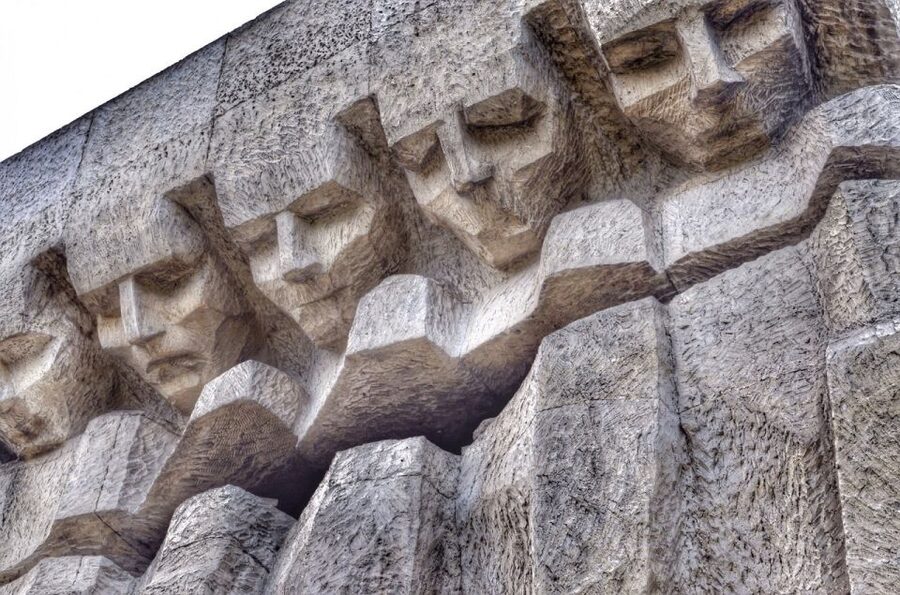
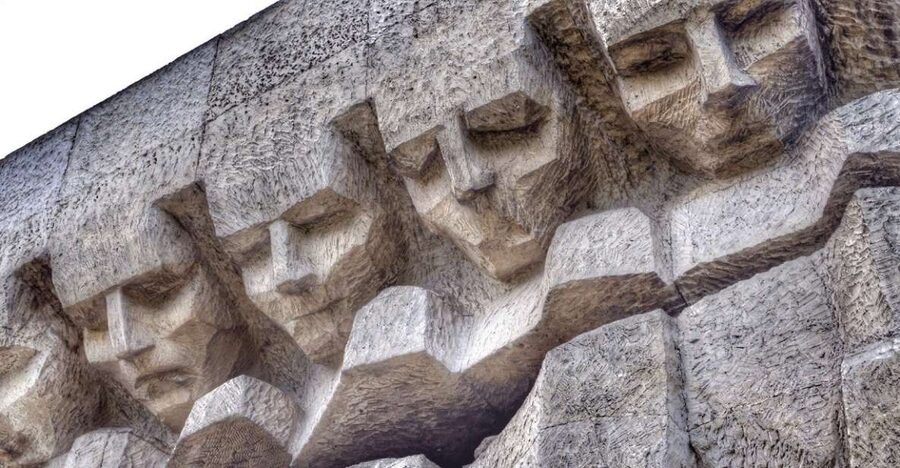
Former Plaszow Camp is not a museum with tidy rooms and polished displays. It is an open, quiet place where a strong guide must help you picture what has vanished. That is the most interesting part of this experience, and I especially like the expert-led visit and the pause at the Monument of Torn-Out Hearts.
The Vistula cruise adds a gentler start, with views of Wawel, Skałka, Bielany monasteries, and Krakow’s bridges. The catch is the walking: you may cover up to 5 miles, including rough ground, rubble, nettles, and unfinished paths, so this is not a good pick for anyone with limited mobility or very young children.
Key points to know before booking
- Plaszow is an open historical site: Few buildings remain, so the guide’s storytelling does much of the work.
- The cruise offers a calm opening: You see Krakow from the Vistula with an English audio guide before the more serious walking begins.
- The itinerary includes Ghetto Heroes Square: The metal chair installation recalls the forced removal and absence of Krakow’s Jewish community.
- Ewa has led this visit: If she is your guide, expect a careful, informed explanation and plenty of room for questions.
- Plan for several miles on foot: Paths may be uneven, muddy, overgrown, or covered with loose rubble.
- The $56 price buys three connected experiences: A short river cruise, a guided Plaszow visit, and one tram ticket, but not your return ride.
Starting beside the Vistula at Paulinska
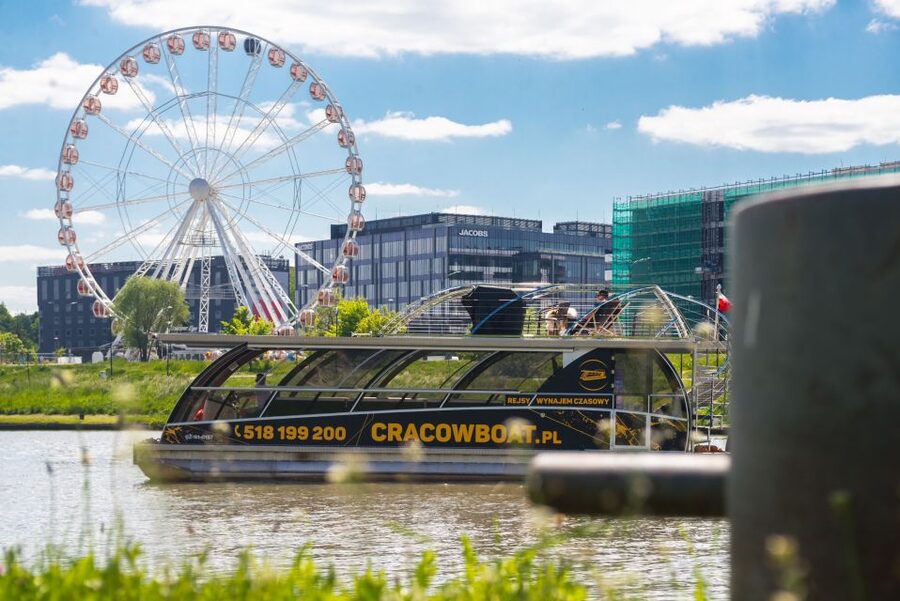
Your meeting point is at Inflancki Boulevard, next to the Paulinska water tram stop. Look for the person carrying a Cracow Boat sign, and arrive at least 10 minutes early. This matters here: once the group leaves, late arrivals cannot join and the ticket is not refunded.
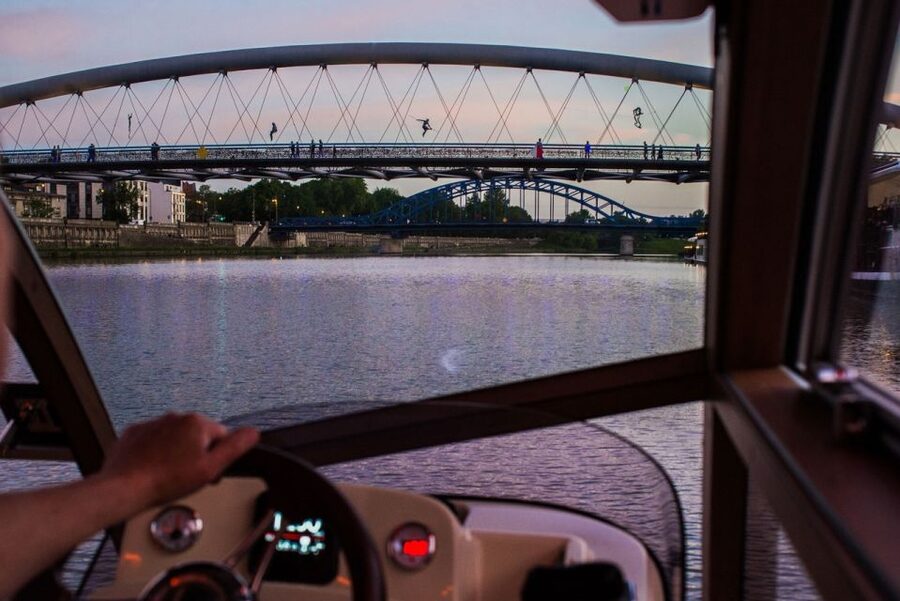
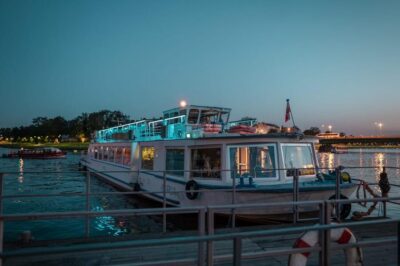
The first part is a one-way cruise on a catamaran. It is not a long sightseeing voyage, but it gives you a useful first look at Krakow from the water. The Vistula links the city’s major periods, and the cruise points out landmarks that can feel scattered when you see them from street level.
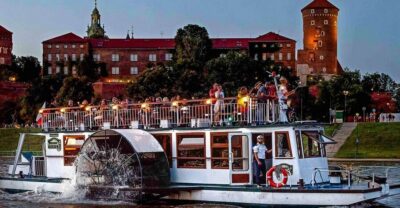
You hear about Wawel and its royal past, the Skałka monastery, the Bielany monasteries, and the bridges that connect the city’s banks. The English audio guide handles this section, so you should expect recorded commentary rather than the live guide speaking throughout the boat ride.
I like this opening because it gives you a little breathing room before the darker history begins. The river views also help you place Krakow on a map. You see how the old city, religious sites, bridges, and southern districts relate to one another.
Do not book the cruise expecting a full river excursion with hours on the water. Its value comes from the change of pace and the city views, not from the length of the sailing itself. The main historical work begins after you leave the boat.
More Boat Tours in Krakow
- Kraków: Evening or Night River Cruise
★ 4.0 · 7,386 reviews - Krakow: Sightseeing Cruise by Vistula River
★ 4.1 · 1,897 reviews - Krakow: Evening Cruise with a Glass of Wine
★ 4.0 · 1,054 reviews
Ghetto Heroes Square and the meaning of the chairs
The next section takes you through Krakow’s Podgórze district, including Ghetto Heroes Square. This is an important stop because it connects the city you see today with the forced confinement and removal of Krakow’s Jewish population during the Second World War.
The square was transformed into a memorial space in 2005. Its most striking feature is a series of large metal chairs. They represent forced departures, empty homes, and the absence left behind when people were taken away.
This is not a site that needs a long list of objects to make its point. The chairs use a simple image that is easy to understand, but the setting gives it weight. I find it useful to see this memorial before Plaszow because it prepares you for the human story behind the camp site.
The walking begins to matter here. The experience combines the river landing, the square, the route onward, and the camp itself. You are not simply stepping off a bus at a single attraction. Wear shoes that can handle a long walk and uneven ground.
Reaching former Plaszow Camp on foot
Plaszow was established in 1942 on the grounds of Jewish cemeteries. It began as a forced-labor camp and later became a concentration camp. More than 35,000 people were imprisoned there, and thousands died.
The site is difficult partly because so little remains. You will not find a complete camp complex with rows of intact barracks. Instead, the guide helps you trace the former layout through scattered remains, open spaces, memorials, and places connected with imprisonment and death.
That absence is central to the visit. Without a guide, you might see grass, paths, slopes, and a few structures without understanding what stood there. A live guide can connect the surviving pieces and explain how the camp occupied the ground.
The route includes the Grey House, the roll-call area, remnants of important buildings, mass graves, and the Monument of Torn-Out Hearts. Each stop adds a physical reference point, but you should expect the guide’s explanation to carry as much weight as the objects themselves.
A guide named Ewa has led this experience and is praised for explaining the site clearly and inviting questions. If she is leading your group, you can expect an informed visit rather than a quick walk past memorials. The guide’s role is especially important at Plaszow because the evidence is fragmented.
The Grey House and the camp’s surviving traces
The Grey House is one of the most recognizable surviving structures linked with Plaszow. It gives you a fixed point in a place where much of the former camp has disappeared.
The roll-call area helps you understand the daily control imposed on prisoners. Even without a complete reconstruction, the site’s open space makes it possible to picture people being assembled and counted under coercive conditions.
You will also see remnants of key buildings and areas connected with mass graves. These are serious stops, and the visit is best approached as a memorial walk rather than an ordinary sightseeing outing. The guide’s job is to explain what happened without turning the place into a theatrical performance.
I appreciate that the itinerary leaves room for quiet. The experience is not built around crowded indoor exhibits or a long line of display cases. You walk, listen, look carefully, and have time to think. That can make the visit powerful, but it also means you need to bring patience and emotional readiness.
Same city, a completely different kind of day:
- Krakow: Oskar Schindler’s Factory Entry Ticket & Guided Tour
★ 4.2 · 3,793 reviews - Krakow: City Sightseeing Tour by Electric Golf Cart
★ 4.5 · 3,264 reviews - Krakow: Schindler’s Factory Tour with Entrance Ticket
★ 4.5 · 3,182 reviews - Krakow: City Sightseeing Tour Eco Electric Buggy Golf Cart
★ 4.7 · 3,143 reviews
The Monument of Torn-Out Hearts
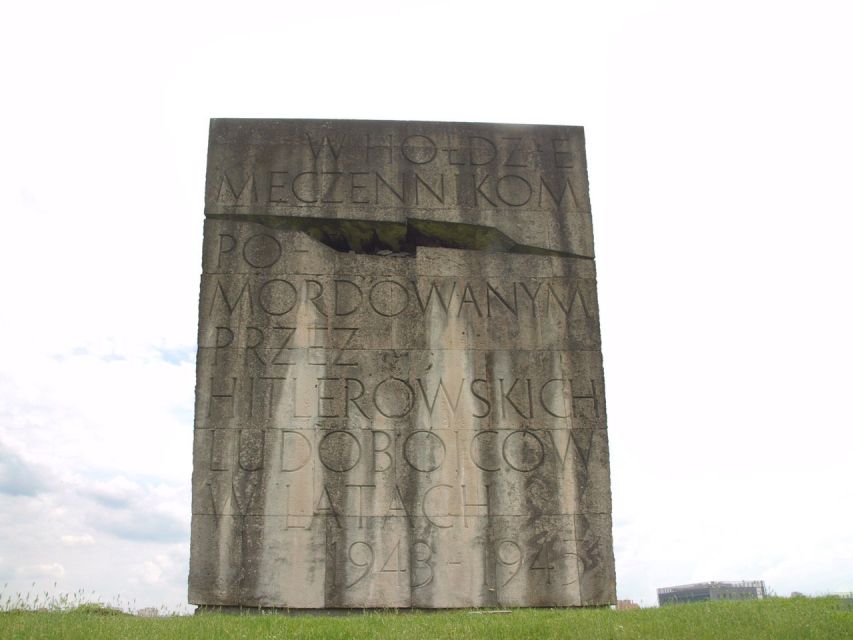
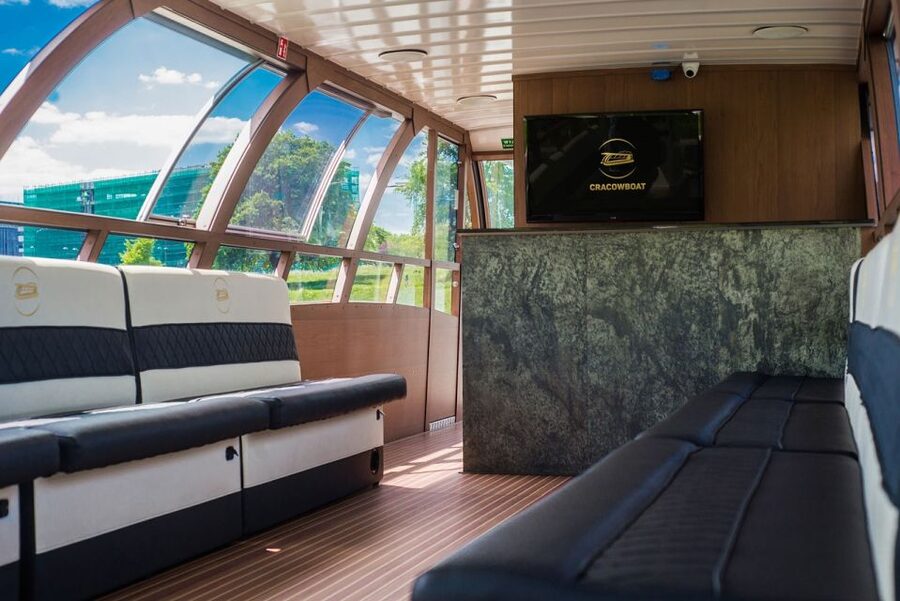
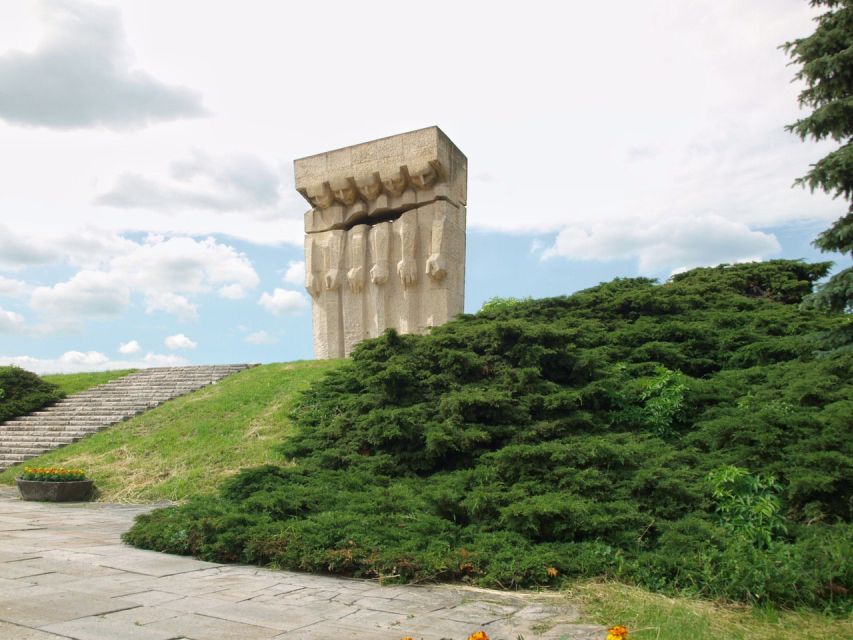
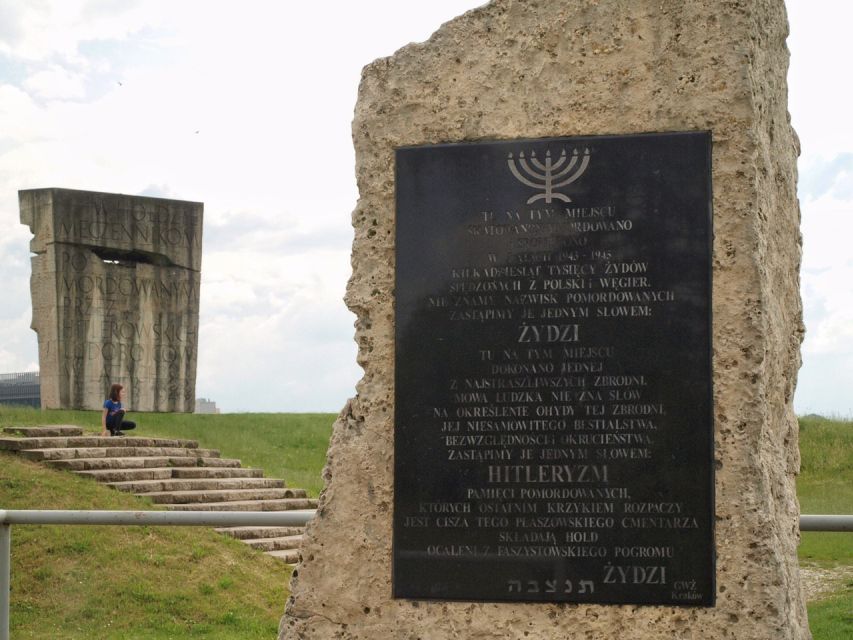
The Monument of Torn-Out Hearts is one of the central pauses on the route. Its title and form point to the violence done to people and communities, while the surrounding space encourages a quieter response.
This is a place for respect rather than photographs taken in a hurry. You can expect the guide to explain the memorial and its connection to the camp, then allow the group time to take in the setting.
The open ground around the monument adds to its force. There are no restored interiors to distract you. You are left with the memorial, the terrain, the silence, and the knowledge of what occurred there.
For many people, this will be the most affecting part of the visit. It is also one reason to avoid packing another demanding attraction immediately afterward. The three-hour schedule is compact, but the subject deserves your full attention.
Oskar Schindler’s connection to Plaszow
The Plaszow story also includes Oskar Schindler, whose name is familiar from the film Schindler’s List. He arranged work permits for prisoners registered at Plaszow and later transferred them to his factory, saving more than 1,000 lives.
This detail gives the visit a connection to a wider Krakow story, but the tour is not simply a Schindler-themed outing. The camp’s history is much larger than one individual. The guide places Schindler within the wider system of forced labor, imprisonment, deportation, and survival.
That context matters. You should not come expecting the Plaszow visit to recreate the film or focus only on its best-known figure. The point is to understand the camp and the people imprisoned there, while also learning how Schindler’s actions affected some of those prisoners.
If Schindler is your main interest, this experience can add useful background, but it does not replace a dedicated visit to other sites connected with his factory. Its focus is the former camp and the memorial ground itself.
How much walking should you expect?
This is the key practical issue. The published duration is three hours, but the actual physical effort can feel greater than that number suggests.
The route includes walking from the river section through Podgórze and onward to the former camp, followed by movement across the site. One person reported walking at least 2 kilometers just to reach the camp and about 5 miles in total. The paths included nettles, rubble, and unfinished surfaces.
That experience may vary, but you should plan conservatively. Comfortable walking shoes are essential. Dress for the weather, since the tour operates in rain, cold, heat, and other conditions. There may be little comfort in an exposed site, and the ground may be uneven.
I would not recommend this for someone with walking difficulties. It is also a poor choice for children who tire quickly or cannot manage a serious memorial visit over several hours. The information specifically warns that the experience may not suit people with mobility issues or children.
If you walk comfortably and understand the conditions, the route is manageable as a historical walk. Just do not treat it like a short stop at a single monument.
What the $56 price includes
At $56 per person, the experience is priced above a simple river cruise or a self-guided visit to a memorial. You are paying for three linked elements: the one-way catamaran ride, the English audio commentary on the boat, and the live guided visit to Plaszow. A single tram ticket is also included.
The strongest value comes from the live guide. Since many camp structures are gone, clear explanation is not a minor extra. It is what turns an empty site into a place you can understand.
The cruise adds sightseeing value, but it is a shorter part of the day. If you mainly want a boat ride, cheaper options may exist. If you want a guided explanation of Plaszow and also like the idea of seeing Krakow from the Vistula, the combined format makes more sense.
The price does not include hotel pickup or drop-off. It also does not include your return transportation at the end. Keep some money or a valid plan for getting back to your accommodation. The included tram ticket covers only one part of the outing.
Free cancellation is available up to 24 hours before the start, and you can reserve now and pay later. Those terms are useful if your Krakow schedule is still changing, but they do not reduce the need to arrive on time.
The right mindset for this Krakow experience
I would choose this tour for a visitor who wants to understand Krakow beyond its medieval center. The river cruise gives you a scenic introduction, while Podgórze and Plaszow show how the city’s recent past remains present in its streets and memorials.
You should come ready to listen. The guide will explain the site, but the experience is not entertainment in the usual sense. The quiet spaces, mass graves, and memorials call for respectful behavior and a willingness to pause.
The audio guide and live guide serve different purposes. On the boat, you receive recorded information while looking at the city. At Plaszow, a person leads the route and can respond to questions. That split works well, especially because the former camp needs explanation that can respond to the group and the place.
The single-language format also helps. This group operates in English only, rather than mixing several languages. Select English when booking and expect the guided part to be conducted in that language.
Should you book the river cruise and Plaszow visit?
Book it if you want a serious, guide-led look at Plaszow and appreciate having a Vistula cruise folded into the same outing. The guide is the main reason to choose this format, especially at a site where surviving structures are limited. The stop at Ghetto Heroes Square and the Monument of Torn-Out Hearts adds important context.
Skip it if you need an easy sightseeing trip, have walking limitations, or are traveling with children who cannot handle several miles on rough paths. The $56 price is fair for the combined cruise, guide, and tram ticket, but only if you will use the full experience.
My practical advice is simple: wear sturdy shoes, check the weather, allow time for reflection, and arrange your return before you set out. For an informed visitor ready to walk, this is a meaningful way to connect Krakow’s riverfront, Podgórze, and former Plaszow Camp.
FAQ
Where does the experience begin?
It begins at Inflancki Boulevard beside the Paulinska water tram stop. Look for the person holding a Cracow Boat sign.
How early should I arrive?
Arrive at least 10 minutes before the scheduled start. Once the group has departed, late arrivals cannot join and the ticket cannot be refunded.
How long does the experience last?
The stated duration is three hours.
Is the guided visit conducted in English?
Yes. The live guide and the boat audio guide are available in English, and the group tour operates in one language.
What transportation is included?
The experience includes a one-way short cruise on a Vistula catamaran and one tram ticket. Return transportation after the tour is not included.
Is hotel pickup included?
No. You must make your own way to the meeting point, and hotel drop-off is not included.
How much walking is involved?
A substantial amount. The route may involve several miles of walking, including uneven ground, rubble, nettles, and unfinished paths.
Does the tour operate in bad weather?
Yes. It operates in all weather conditions, so dress appropriately and wear comfortable walking shoes.
Can I cancel for a full refund?
Yes. You can cancel up to 24 hours before the experience for a full refund. You can also reserve now and pay later.
Just added around Krakow
- stag dog chase Krakow prank★ 5.0 · 4 reviews
- Divine Mercy Sanctuary – Private Tour from Krakow★ 5.0 · 4 reviews
- ZALIPIE – painted village, unique small group tour from Krakow★ 5.0 · 7 reviews
- ZALIPIE – painted village, unique PRIVATE tour from Krakow★ 5.0 · 20 reviews
- Zalipie Private Tour from Krakow The Painted Village★ 5.0 · 4 reviews
- Wooden Churches Unesco List Private Tour from Krakow★ 5.0 · 14 reviews
- Guided tour to Salt Mine & Schindler Factory with Pick-Up Options★ 4.0 · 58 reviews
- Wawel Castle, Cathedral, & Rynek Underground Tour with Lunch★ 5.0 · 4 reviews
Cruises & Boat Tours, compared.
Traditional Galar Cruise on The Vistula River
Read our review →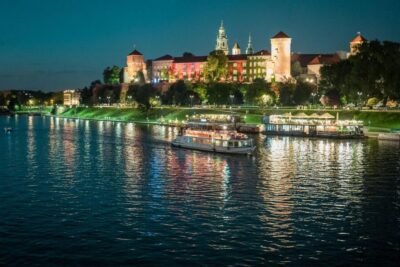

Browse the lists this tour appears in