
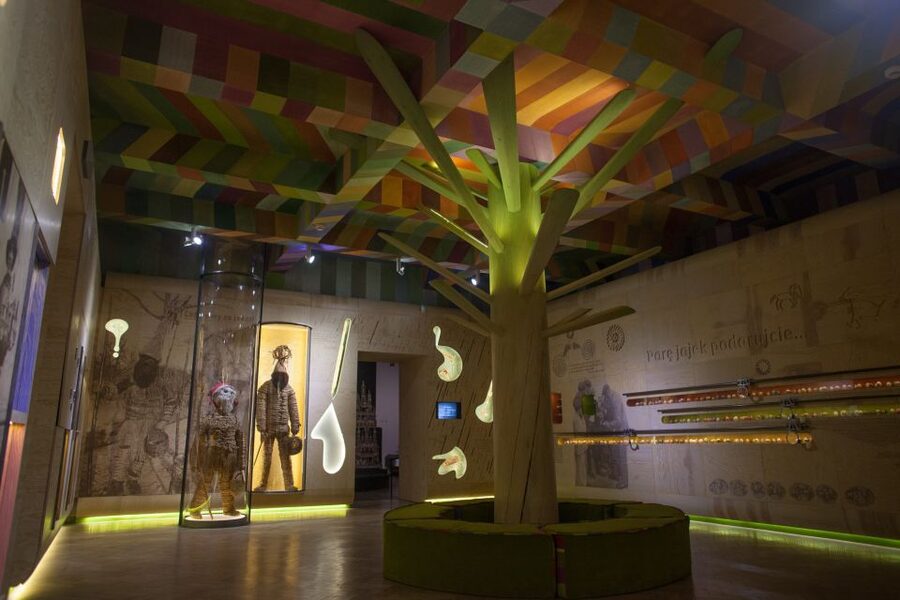
Reviewed · MUSEUMS
Krakow: The Ethnographic Museum ticket
Krakow’s Ethnographic Museum gives you a useful change of pace from royal rooms, church art, and grand city squares. Inside the Town Hall section, you’ll see Polish folk culture through objects collected mainly in the late 19th and early 20th centuries. The museum began with Seweryn Udziela, a teacher and amateur ethnographer, and has grown to about 80,000 objects.
I like two things here. First, the Town Hall exhibition gives Polish village culture a clear home in the middle of Krakow. Second, Esterka’s House adds a different mood, with temporary displays in a beautifully vaulted cellar. The main consideration is that this is a self-guided museum visit, so you’ll need to bring your own context and pace yourself through the collection.
Key points to know before you go

- See Polish folk culture in the Town Hall section, the main part of the museum’s permanent display.
- Visit Esterka’s House, where temporary exhibitions are shown in a vaulted cellar.
- Trace the work of Seweryn Udziela, whose early collection became the basis for the museum.
- Expect a large collection, with around 80,000 objects, most from the late 19th and early 20th centuries.
- Allow flexibility, since the ticket is valid for 1 to 2 days, depending on the option and availability.
- Plan for a self-guided visit, as the ticket includes entry but not a guide, food, or drinks.
Why this museum adds another side of Krakow
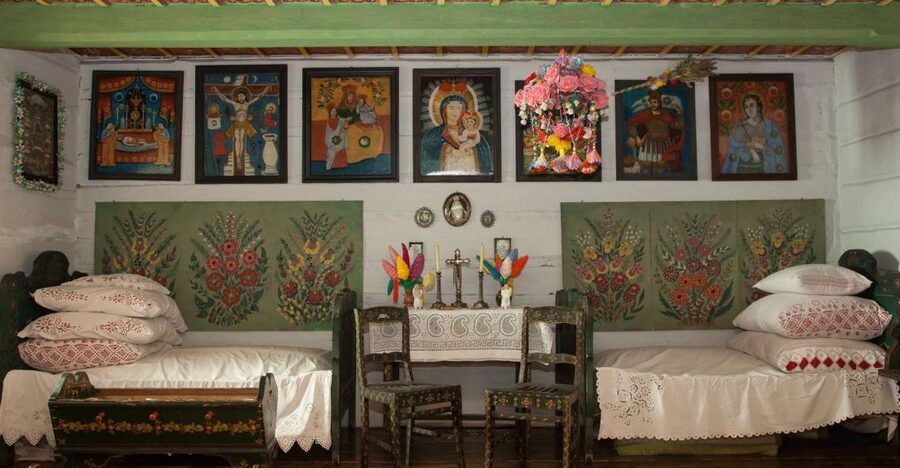
Krakow is easy to read as a city of kings, churches, artists, and university life. The Ethnographic Museum widens that picture. It focuses on everyday Polish culture and the folk traditions that attracted artists and intellectuals around the turn of the 20th century.
That period matters here. Polish artists were drawn to the energy of folklore at a time when many members of the Polish intelligentsia felt stuck in a cultural crisis. Folk art offered direct color, strong symbols, and a connection to village life. You can see the museum not only as a collection of objects, but also as a record of what Krakow’s artists were looking for.
I find that idea more useful than simply walking past case after case. As you look around, ask yourself why folk culture appealed so strongly to artists of the period. The museum’s collection helps explain that interest without requiring you to take a full history course.
The museum was created in 1911 on the initiative of Seweryn Udziela. He was a teacher, collector, and amateur ethnographer who gathered the first group of objects that later grew into the current collection. His work gives the museum a personal beginning rather than an origin tied only to an official state project.
More Museum Tours in Krakow
- Krakow: Rynek Underground Museum Guided Tour
★ 4.6 · 1,122 reviews - Krakow Schindler’s Factory Museum Guided Tour in English
★ 4.5 · 650 reviews - Museum of illusions Entry Ticket
★ 4.5 · 521 reviews
The Town Hall exhibition and its Polish folk collection
The Town Hall section is the main stop for understanding the museum’s purpose. It highlights Polish folk culture and gives you the clearest look at the traditions collected by Udziela and expanded over time.
You might find objects linked to domestic life, craft, decoration, and regional customs. The supplied details do not specify every object or room, so it is best to arrive ready for a broad collection rather than a tightly themed single exhibition. Most of the holdings come from the late 19th and early 20th centuries, which gives the visit a strong historical focus.
The age of the objects also shapes the experience. This is not a display of modern folk design created to look old. It is a record of the period when collectors and artists were taking village culture seriously as part of Polish identity.
I like the way the Town Hall section can work for different kinds of visitors. If you already know something about Polish art, it gives you social and cultural background. If you are new to the subject, it offers a gentle introduction through objects rather than a long political explanation.
The arrangement covers several floors, according to the available visitor feedback. That means you should not assume the museum is a quick single-room stop. One visitor particularly enjoyed the upper section, which included paintings and sculptures. That part may be especially rewarding if you are more interested in art than household objects or traditional craft.
A several-floor layout also calls for a little patience. Give yourself time to notice how the collection changes as you move through the museum. The most memorable section for you may not be the first room or the display with the most obvious folk motifs.
Esterka’s House and the vaulted cellar

The museum’s second building is known as Esterka’s House. Its temporary displays are held in a beautifully vaulted cellar, giving this part of the visit a different character from the Town Hall exhibition.
Because the displays are temporary, the exact subject will change. You should think of Esterka’s House as a reason to check both buildings rather than stopping after the permanent collection. The cellar itself is part of the appeal, adding an architectural setting that feels more intimate than a standard gallery.
This section also helps break up the visit. The Town Hall exhibition carries the main weight of the museum’s folk-culture collection. Esterka’s House gives you a shorter, changing counterpoint. If you are visiting over one or two days, this flexibility can make it easier to return for a temporary display instead of trying to see everything at once.
No guide is included, so you will need to read the exhibition information provided on site. If you prefer museum visits with a narrated route and a clear start-to-finish story, this may feel a little loose. If you like setting your own pace, the separate buildings and changing exhibitions give you room to choose what holds your attention.
From Seweryn Udziela’s collection to 80,000 objects
The scale of the museum is worth keeping in mind. Udziela’s original collection was small compared with the current holdings, which now total around 80,000 showpieces. Most date from the end of the 19th century and the early 20th century.
That number does not mean you will see all 80,000 objects during one visit. It tells you that the museum has depth and that its displays represent only part of a much larger body of material. You are looking at a selection built from decades of collecting, preservation, and exhibition work.
The collection is also described as a haven for Krakow’s peasant culture. That phrase points to the museum’s central value. It preserves traditions that might otherwise be treated as secondary to the city’s grand architecture and fine-art institutions.
I would approach the museum with curiosity rather than a checklist. You do not need to recognize every regional style or understand every object at once. Look for the connections between folk traditions and the artists who found them useful at the start of the 20th century.
The paintings and sculptures deserve particular attention. The available feedback highlights the final section of the museum as an unexpected pleasure, with paintings and sculptures providing a strong finish. If you tend to rush through ethnographic displays, save enough time for the last floors. They may shift your view of the museum from a collection of traditional objects to a broader look at art and cultural influence.
Same city, a completely different kind of day:
- Kraków: Evening or Night River Cruise
★ 4.0 · 7,386 reviews - Krakow: Oskar Schindler’s Factory Entry Ticket & Guided Tour
★ 4.2 · 3,793 reviews - Krakow: City Sightseeing Tour by Electric Golf Cart
★ 4.5 · 3,264 reviews - Krakow: Schindler’s Factory Tour with Entrance Ticket
★ 4.5 · 3,182 reviews
How long to allow and how the ticket works
The ticket is valid for 1 to 2 days, with the exact availability and starting times shown when you book. That is a helpful arrangement for a museum with multiple floors, two buildings, and temporary displays.
If you have only a short visit to Krakow, you can use one session to see the Town Hall exhibition and Esterka’s House. If your schedule allows a second day, you can split the visit and return to the sections that deserve more time.
The entry ticket costs about $4.81 per person. At that price, I see good value for anyone interested in Polish culture, art, or local history. You are paying for access to a substantial museum collection rather than a short attraction that takes only a few minutes.
The value is strongest if you enjoy self-guided visits. The ticket does not include a guide, food, or drinks. You are paying for admission, not a packaged tour with transport, commentary, or refreshments.
The starting point can vary by the option you book, so check the details before setting off. The activity ends back at the meeting point. Since the information does not identify one universal meeting location, do not rely on a general city landmark without checking your selected option.
What the visit feels like without a guide
This is a quiet cultural outing rather than a guided performance. You will not have a guide explaining each object or leading a group from one room to the next. That keeps the cost low and lets you stop where you want.
The tradeoff is simple. You gain independence, but you must supply more of your own attention. Read the labels, notice how the displays are arranged, and give yourself permission to linger over the art sections.
A self-guided format suits you if you like museums on your own terms. You can move quickly through familiar material and slow down when something catches your eye. It also works well for mixed-interest groups, since one person can focus on folk culture while another spends more time with paintings and sculptures.
Flash photography is not allowed. Keep your camera or phone on a non-flash setting and follow the museum’s rules. That is a small point, but it matters if you often photograph details in dim exhibition spaces.
Who will enjoy this most
I would recommend this museum to anyone who wants more than Krakow’s best-known historic sights. It is particularly useful if you are interested in Polish folk art, regional culture, early 20th-century artists, or the way city intellectuals viewed village traditions.
It can also suit art lovers who do not usually choose ethnographic museums. The paintings and sculptures in the later section give the visit a broader artistic angle. You may find that the museum is less about isolated folk objects and more about the relationship between popular culture and professional art.
Families and casual visitors may appreciate the low price and flexible validity, though the amount of material can be more than young children want to absorb. Since there is no guide included, you will need to keep the visit moving and explain the displays yourself if you are visiting with children.
I would be less likely to recommend it if you want a guide, a fixed route, or a short attraction with only a few major highlights. The collection is extensive, and the experience depends on your willingness to look closely.
Practical booking advice
You can reserve now and pay later, which keeps your plans flexible. Free cancellation is available up to 24 hours in advance for a full refund. Check the selected option for the meeting point, starting time, and whether the ticket is valid for one or two days.
Bring enough time for both buildings. The Town Hall section is the essential stop, but Esterka’s House is what gives the visit extra variety. If a temporary exhibition interests you, the 1 to 2 day validity can make a return visit worthwhile.
I would also avoid scheduling this as a rushed gap between major sights. Several floors, a large collection, and a separate building all reward a slower visit. Even at a low price, the museum is better when you give it room.
Should you book the Ethnographic Museum ticket?
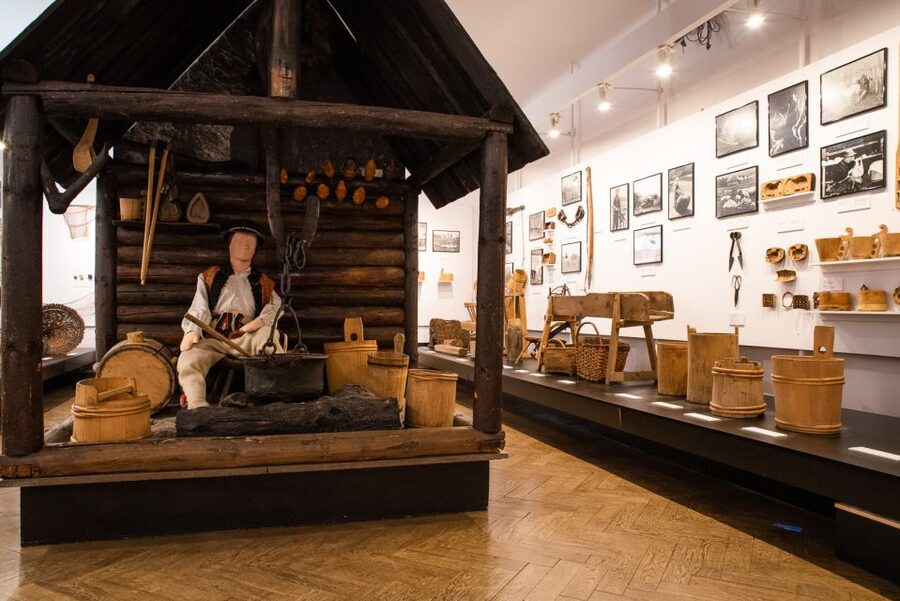
Book it if you want a modestly priced, self-guided look at the Polish culture that exists beyond Krakow’s royal and religious monuments. The Town Hall exhibition, Udziela’s story, the large collection, and Esterka’s vaulted cellar give you several good reasons to go.
The strongest value is the combination of price and flexibility. For about $4.81, you can explore a major folk-culture collection and, depending on your option, use the ticket over 1 to 2 days. Just remember that no guide is included, and the museum asks you to provide your own pace and curiosity.
FAQ
Where is the Ethnographic Museum experience located?
It is located in Lesser Poland, Poland, in Krakow.
What does the ticket include?
The ticket includes entry to the Ethnographic Museum.
Is a guide included?
No. A guide is not included with the entry ticket.
What can I see in the Town Hall section?
The Town Hall section features an exhibition about Polish folk culture.
What is Esterka’s House?
Esterka’s House is the museum’s second building. It contains temporary exhibitions in a beautifully vaulted cellar.
How large is the museum’s collection?
The museum’s current exhibitions come from a collection of around 80,000 showpieces. Most date from the end of the 19th century and the early 20th century.
How long is the ticket valid?
The ticket is valid for 1 to 2 days. Check availability for the exact option and starting times.
Is flash photography allowed?
No. Flash photography is not allowed.
Can I cancel and receive a refund?
Yes. You can cancel up to 24 hours in advance for a full refund. You can also reserve now and pay later.
Just added around Krakow
- stag dog chase Krakow prank★ 5.0 · 4 reviews
- Divine Mercy Sanctuary – Private Tour from Krakow★ 5.0 · 4 reviews
- ZALIPIE – painted village, unique small group tour from Krakow★ 5.0 · 7 reviews
- ZALIPIE – painted village, unique PRIVATE tour from Krakow★ 5.0 · 20 reviews
- Zalipie Private Tour from Krakow The Painted Village★ 5.0 · 4 reviews
- Wooden Churches Unesco List Private Tour from Krakow★ 5.0 · 14 reviews
- Guided tour to Salt Mine & Schindler Factory with Pick-Up Options★ 4.0 · 58 reviews
- Wawel Castle, Cathedral, & Rynek Underground Tour with Lunch★ 5.0 · 4 reviews
Museums, compared.
Birkenau Museum and Memorial Guided Tour from Krakow
Read our review →
POLIN Museum of the History of Polish Jews Ticket
Read our review →

Krakow Schindler’s Factory Museum Guided Tour in English
Read our review →
Auschwitz Birkenau Museum Guided Tour with Pickup
Read our review →
Browse the lists this tour appears in