
Reviewed · AUSCHWITZ TOURS
Exclusive Small Group Auschwitz-Birkenau Guided Tour from Krakow
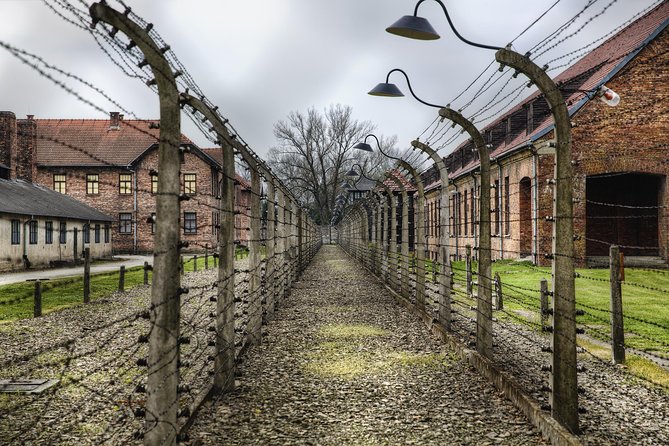
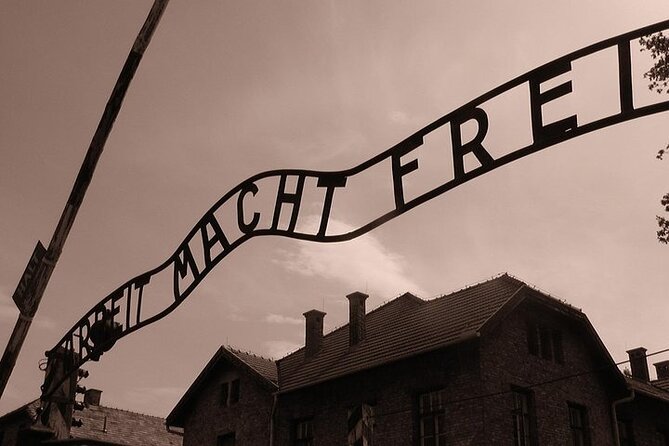
Auschwitz-Birkenau is not a sightseeing stop to rush through. This 7.5-hour guided day trip gives you the structure needed to understand two enormous camp sites, from the Arbeit macht frei gate at Auschwitz I to the watchtowers and barracks of Birkenau. The licensed museum educator leads roughly 3.5 hours on site, while the driver handles the long trip from Krakow and back.
I like the prepaid entrance and the organized transfer, since museum entry can be tightly controlled. I also like the chance to hear the guide clearly with headsets when the group is large enough, plus the small snack, water, and packed lunch included in the day.
The main caution is group size. The experience is advertised as small, but some departures have carried 20 to 30 people rather than 10. Confirm the vehicle and group limit before paying, especially if a quiet, personal tour matters to you.
Key points before you book
- About 3.5 hours inside both camps: Expect around two hours at Auschwitz I and about 1 hour 20 minutes at Birkenau.
- Round-trip Krakow transport included: Pickup is arranged at a designated Old Town meeting point or, when possible, near your hotel.
- The strongest guides make the difference: The best experience comes from an educator who explains the site with care, context, and survivor stories rather than simply reading dates.
- Group size can vary: The stated maximum is 20, while some departures have reportedly been closer to 25 or 30.
- Bring your passport or ID: Personalized museum tickets require each visitor’s name and surname, and identification is required at the entrance.
- Prepare for a serious, physical visit: Expect walking, short breaks of no more than 10 minutes, and an emotionally heavy subject in all weather.
What the 7.5-hour day actually feels like
This is a full day, but the schedule is sensible. You meet your driver and group in Krakow’s Old Town, or at another assigned pickup point, then travel by air-conditioned van, minibus, or bus toward the museum complex.
The journey is not just dead time. Some departures show a short introductory video and give a basic explanation of the day before arrival. That can help you set your expectations, though early pickup instructions have not always been perfectly clear. If your confirmation says 6:00 a.m., arrive early and check the exact meeting place. One pickup point is about a 10-minute walk from the center, and a late change can be awkward before sunrise.
At the museum, prepaid tickets let you avoid the regular ticket queue. That does not mean you skip every security or entry procedure, so keep your ID ready and follow the guide’s instructions.
The visit itself lasts up to 3.5 hours. You begin at Auschwitz I, spend roughly two hours there, then transfer to Auschwitz II-Birkenau for about 1 hour 20 minutes. The return drive brings you back to central Krakow, usually within the advertised total duration of around 7 hours 30 minutes.
I would treat the schedule as a fixed framework rather than a relaxed day out. Breaks are short, usually no longer than 10 minutes. Use them for the toilet, water, or a quick pause, not for a leisurely meal.
A few more Auschwitz half-days worth comparing
- From Krakow: Auschwitz-Birkenau Guided Tour & Hotel Pickup
★ 4.5 · 33,358 reviews - From Krakow: Auschwitz-Birkenau Guided Tour & Hotel Pickup
★ 4.5 · 29,340 reviews - Krakow: Auschwitz Guided Tour with Optional Hotel Pickup
★ 4.5 · 15,280 reviews
Auschwitz I: barracks, documents, and the Death Wall
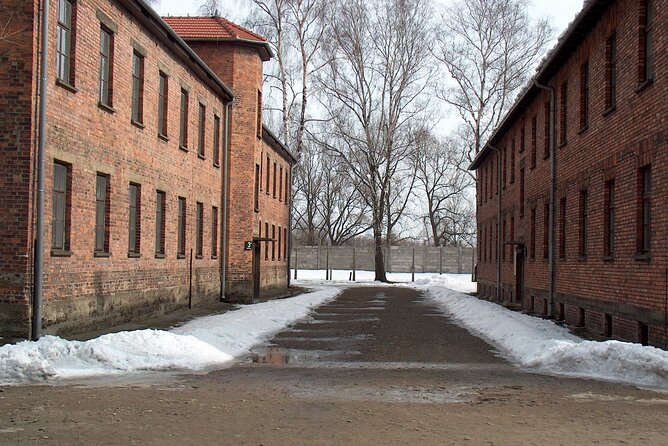
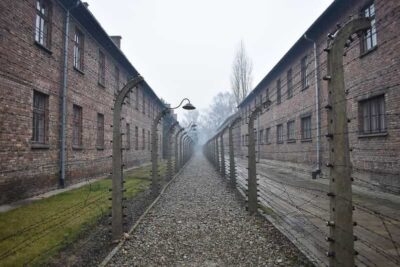
The first camp is the more enclosed and built-up part of the complex. You enter beneath the Arbeit macht frei sign, then move through the original brick buildings that now hold the Auschwitz-Birkenau State Museum.
Inside, the exhibits use photographs, documents, and personal belongings to show the scale of the Nazi persecution and the lives destroyed there. The power of this section comes from its detail. A guide can explain what you are looking at and place the displays within the history of wartime Poland and the Nazi camp system.
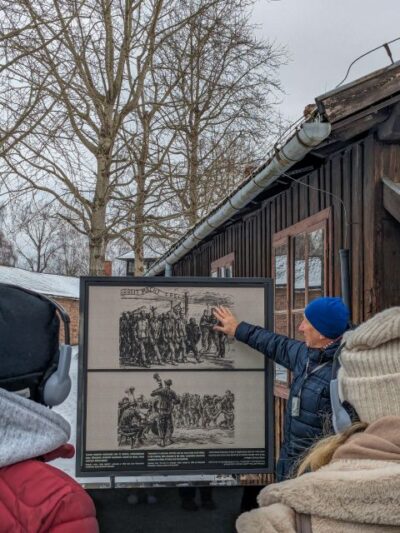
You may visit original barracks, the bathhouse, the crematorium, the gas chamber, and the Death Wall. These are difficult places, and the guide’s tone matters. The strongest guides on this route are described as compassionate, clear, and willing to answer questions. One especially effective style is to add survivor stories and explain the human choices behind the dry facts.
Do not expect a light museum visit. The material is direct, and the route can feel crowded when several groups reach the same building at once. This is where headsets help, although they are listed as available for groups of 10 people or more, not necessarily for every small departure.
The museum setting also means you should allow time for silence. You are not being moved through a collection of ordinary historic objects. Personal items and documents can make the horror feel immediate, so leave room to process what you have seen.
Birkenau: the vast scale of the second camp
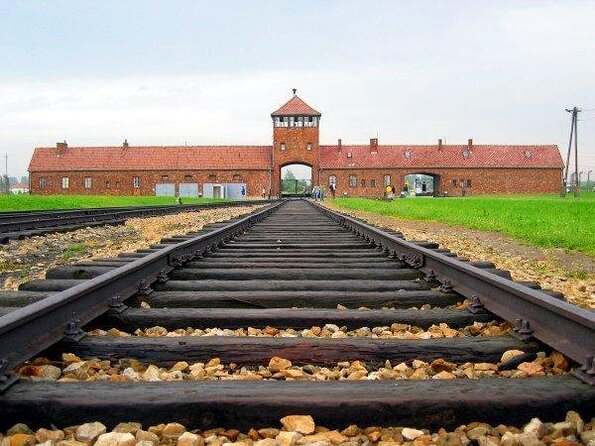
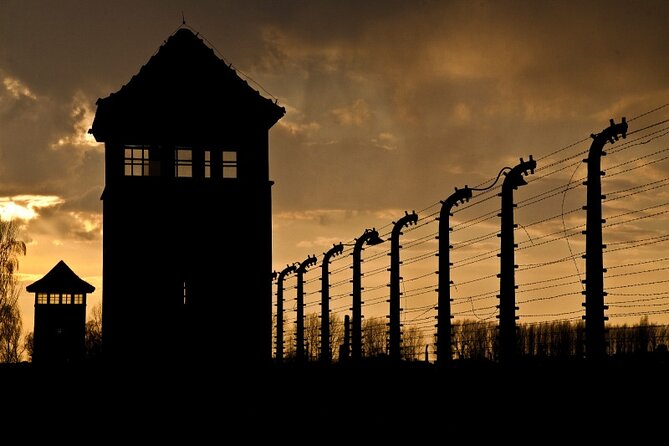
After Auschwitz I, the group transfers to Auschwitz II-Birkenau. The second site feels very different. Its open scale, long railway approach, wooden barracks, watchtowers, and unloading ramp make the industrial size of the camp easier to grasp.
Your guide explains the living conditions in the original barracks and the function of the unloading area. You also see the remaining extermination facilities and the locations connected with mass murder. The open ground and long sightlines can be particularly striking, because you can see how the camp was laid out across a huge area.
This part of the visit is less about a series of indoor museum rooms and more about understanding space. You see how people arrived, where they were processed, and how the camp was organized. The guide’s explanation is important here, since many features are plain or partly ruined and would be hard to interpret on your own.
The tradeoff is weather. Birkenau is exposed, with limited shelter along the walking route. The tour operates in rain, cold, and other conditions, so wear suitable shoes and clothing. The museum requires no shorts or sleeveless tops, and you risk being refused entry if your clothing does not meet the dress rules.
Why the guide matters more than the vehicle
The transport gets you there, but the museum educator shapes the visit. A licensed guide leads both camp sections, and the strongest reports describe guides who speak clear English, explain the subject with compassion, and answer questions rather than reciting a script.
That difference matters at Auschwitz. The buildings and objects cannot explain themselves. You need someone to connect them to the Nazi regime, wartime Poland, the Jewish experience, prisoner life, and the camp’s role in mass extermination.
Driver service also varies. Several accounts describe kind, helpful drivers who checked that everyone was comfortable, passed out water and a snack, and even returned a forgotten tablet to passengers. Other departures had a driver who offered little information, gave unclear instructions, or arrived later than the stated pickup time.
The practical lesson is simple: judge the tour mainly by the quality of the museum guide, but do not ignore the transfer. A well-run vehicle makes a long, solemn day easier. At the same time, one indifferent driver does not necessarily reflect the guide you will receive.
Same city, a completely different kind of day:
- Krakow: Auschwitz-Birkenau Guided Tour with Pickup & Lunch
★ 4.5 · 9,800 reviews - Krakow: Auschwitz-Birkenau Guided Tour Pickup/Lunch Options
★ 4.5 · 9,057 reviews - Krakow: Auschwitz-Birkenau and Salt Mine Guided Tour
★ 4.7 · 9,020 reviews - Krakow to Auschwitz Birkenau Guided Tour with Transfer and Ticket
★ 5.0 · 8,197 reviews
The small-group promise needs a careful reading
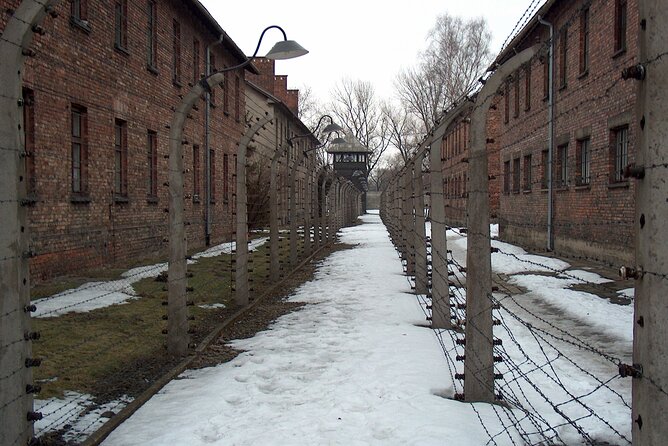
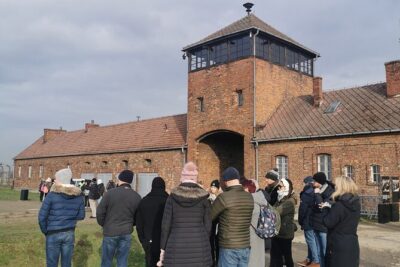
The experience is presented as a small-group tour, with a stated maximum of 20 and a usual group size described as 12 or fewer. Some departures have been much larger, with roughly 20 to 30 people sharing the vehicle and the museum group.
That matters for two reasons. First, a large group can make it harder to hear, especially when other tours are nearby. Second, the pace can feel less personal, with more time spent keeping everyone together.
Headsets are included for groups of 10 or more, which should help, but they are not a complete fix if the group is spread out or nearby guides are speaking at the same time. If a group of 10 is essential to you, contact Escape2Poland before booking and ask for the expected size of your departure in writing.
A larger group is not automatically a bad choice. It can still provide an organized route, a licensed guide, and a practical way to reach the museum. You simply should not pay a premium for intimacy unless the operator confirms it.
Is $168.10 good value?
At $168.10 per person, this is not the cheapest way to reach Auschwitz. The value comes from what is bundled into the price: round-trip shared transport, prepaid admission, a licensed guided visit at both camps, a packed lunch, parking costs, and up to 30 minutes of extra free time for reflection or a bookstore visit.
You are also paying for convenience. The museum is outside Krakow, and arranging entry, transport, and a suitable time slot separately can take effort. The skip-the-line arrangement is useful because museum admission is controlled and tickets are personalized.
The price makes more sense if you value a single booking with transport and an on-site guide. It is less attractive if you expect a private or genuinely tiny group, especially since the group size may reach 20 or more.
The packed lunch and small snack are practical rather than lavish. One departure included a Polish cake and water, and another included water and a snack even when the passenger did not expect food. Still, bring extra water if you prefer more than a short refreshment, since breaks are brief.
Who should take this tour?
I would recommend it to an adult who wants a structured first visit from Krakow and prefers not to manage museum tickets or intercity transport alone. It also suits anyone who wants historical context while walking through both Auschwitz I and Birkenau.
It is a poor match for a casual half-day outing. The subject is disturbing, the walking is steady, and the day begins early on some schedules. You need a moderate level of physical fitness and the ability to remain with the group.
Children must be accompanied by an adult, and the operator does not recommend the museum for children under 14. That guidance is worth taking seriously. The exhibits and locations involve mass murder, starvation, forced labor, and personal suffering.
The tour can work well for solo visitors and couples because the logistics are handled for you. It is also useful for families with older teenagers, provided everyone understands the tone and the dress rules before setting out.
Practical advice for a respectful visit
Wear comfortable shoes and clothing suitable for the weather. Birkenau is open and exposed, while the route through Auschwitz I includes indoor buildings and outdoor paths.
Dress conservatively. No shorts or sleeveless tops are allowed at the museum. Bring a valid passport or ID, since every person must be able to identify themselves at entry.
Use the short breaks carefully. Visit the toilet first, then collect food or water. Do not assume you can bring a drink back onto the route, since the group may leave promptly.
Arrive early at the pickup point. The stated time may be strict, and some pickup details have caused confusion. Check the exact location, confirm whether the pickup is at your hotel or a nearby meeting point, and allow extra walking time.
Book ahead if your dates are fixed. The experience is often reserved about 30 days in advance, and confirmation is issued within 48 hours subject to availability. The booking is non-refundable and cannot be changed after purchase, so check names, dates, pickup details, and identification requirements before paying.
Should you book the Auschwitz-Birkenau tour?
I would book this tour if you want one organized day from Krakow, a museum educator at both sites, prepaid entry, and transport without having to arrange the pieces yourself. The guides are often the best part, and a thoughtful educator can turn a difficult visit into a clear, respectful lesson.
I would hesitate if your main reason for booking is the promise of a tiny group. The actual departure may be larger, and the difference between 10 people and 25 people is noticeable at a place where hearing and quiet reflection matter.
Before booking, ask Escape2Poland to confirm the expected group size, vehicle type, pickup point, and start time. If those details work for you, the tour offers solid practical value and a serious introduction to both Auschwitz and Birkenau. It is a heavy day, but it is also an important one to approach with time, care, and accurate guidance.
FAQ
How long does the Auschwitz-Birkenau tour from Krakow last?
The full experience lasts about 7 hours and 30 minutes, including the round-trip transfer from Krakow. The guided visit inside the museum complex lasts up to 3.5 hours.
How much time is spent at Auschwitz I and Birkenau?
The Auschwitz I section takes about two hours. The Birkenau section takes about 1 hour and 20 minutes, with a transfer between the two sites.
What is included in the price?
The price includes entrance tickets, a licensed guided tour of Auschwitz and Birkenau, round-trip shared transport, parking fees, a packed lunch, and up to 30 minutes of extra free time. Headsets are available for groups of 10 people or more.
Where do I meet the tour?
You meet the guide and group at a designated meeting point in Krakow’s Old Town. Pickup near your hotel may be possible when arranged by the operator.
How many people are in the group?
The tour has a stated maximum of 20 people, and the usual group is described as limited to 12 participants. Some departures have been reported as larger, so confirm the expected group size before booking.
Do I need identification?
Yes. Each person must bring a valid passport or ID to the Auschwitz Museum. Your full name is also required for the personalized museum ticket.
What should I wear?
You need clothing that meets the museum dress code. Shorts and sleeveless tops are not allowed. Dress suitably for the weather because the tour operates in all conditions and includes outdoor walking.
Are children allowed on the tour?
Children must be accompanied by an adult. The operator does not recommend the Auschwitz Museum for children under 14.
Can I cancel or change the booking?
No. This experience is non-refundable and cannot be changed for any reason. If the operator cancels because the minimum number of participants is not reached, you will be offered another date or experience, or a full refund.
Just added around Auschwitz
- Guided Private Tour to Auschwitz Birkenau & Krakow from Wroclaw★ 5.0 · 4 reviews
- Auschwitz-Birkenau Day Tour from Wroclaw★ 5.0 · 40 reviews
- Krakow & Auschwitz day tour from Warsaw by private car with Lunch★ 5.0 · 16 reviews
- One day tour to Auschwitz-Birkenau & Salt Mine from Warsaw with private driver★ 5.0 · 4 reviews
- One Day Tour to Auschwitz-Birkenau from Warsaw by Car★ 5.0 · 81 reviews
- Krakow and Auschwitz – Full Day Tour from Warsaw by private car★ 5.0 · 9 reviews
- From Warsaw: Auschwitz-Birkenau Tour with Premium Train Transportation★ 4.0 · 7 reviews
- Full-Day Tour From Warsaw to Auschwitz (guided) and Krakow by car★ 5.0 · 24 reviews
Auschwitz Tours, compared.
Auschwitz-Birkenau Guided Tour & Hotel Pickup
Read our review →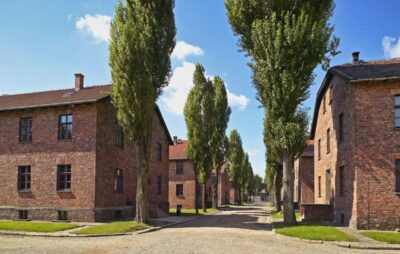
Auschwitz Guided Tour with Optional Hotel Pickup
Read our review →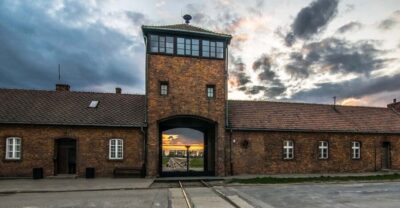
Auschwitz-Birkenau Guided Tour with Pickup & Lunch
Read our review →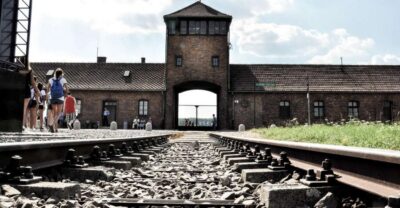
Auschwitz-Birkenau Guided Tour Pickup/Lunch Options
Read our review →
Krakow to Auschwitz Birkenau Guided Tour with Transfer and Ticket
Read our review →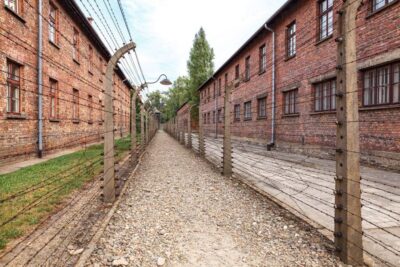
Browse the lists this tour appears in