
Reviewed · AUSCHWITZ TOURS
from Kraków: Auschwitz excursion with guaranteed Dutch guide
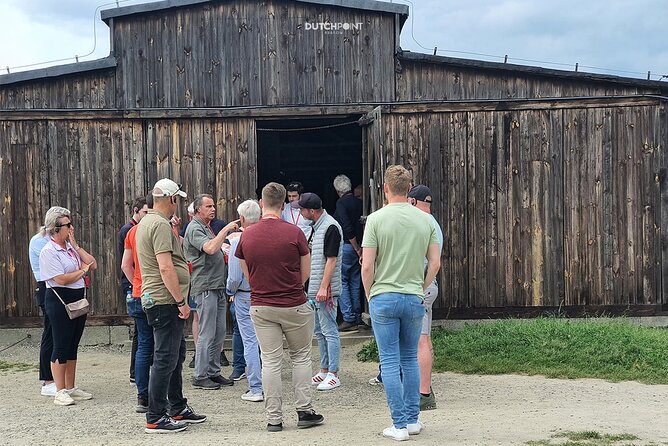
Auschwitz is not a sightseeing stop you check off before lunch. It is a place of murder, evidence, and remembrance, and this Dutch-language excursion gives you about six hours on site to face all three Auschwitz locations. You begin at Auschwitz I, continue to the vast Birkenau camp, and finish at the less-visited Monowitz memorial.
I like two things right away: the guaranteed Dutch guide, which removes the worry of following a tour in a second language, and the unusually broad route. You see the museum barracks and gas chamber at Auschwitz I, the arrival route and crematorium ruins at Birkenau, and the industrial camp at Monowitz. The main drawback is the early start and long day. You meet at 6:00 am, spend roughly 80 minutes on the road from Kraków, and return after about eight to nine hours.
Key points before you book
- A Dutch guide is guaranteed: Guides named in past departures include Wesley, Jeroen, Marijke, and Roland. The storytelling is calm, personal, and suited to serious questions.
- All three Auschwitz sites are included: Auschwitz I, Auschwitz II-Birkenau, and the Monowitz memorial give you a fuller picture than a visit limited to the main museum.
- The Dutch and Belgian connection is direct: Dutch participants visit the Dutch barrack, while Belgian participants visit the Belgian barrack.
- The day begins at 6:00 am: Early departure helps fit in the sites, but this is not a relaxed late-morning outing.
- Transport and admission are covered: The price of $102.14 per person includes the official museum tickets, a minibus or bus, and a guide system.
- The tour is physically demanding: You need moderate fitness, and the activity is not suitable for children under 14 or people with mobility impairments.
Why the Dutch-language guide matters at Auschwitz
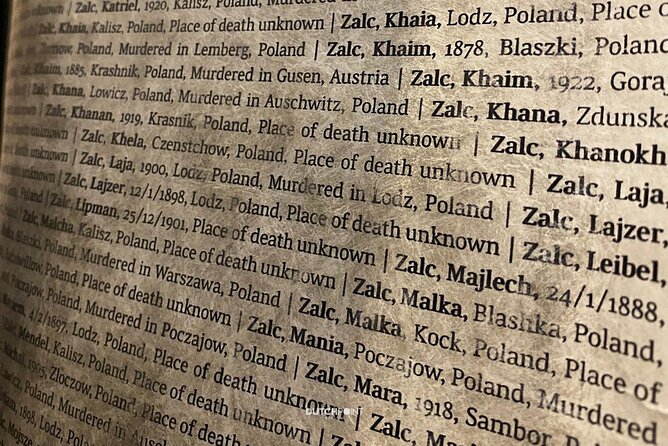
Auschwitz is full of dates, names, buildings, documents, and painful personal stories. A guide who can explain those details naturally in Dutch makes a real difference, especially when the subject becomes emotionally difficult or when you want to ask a question without searching for the right words.
The guides associated with this departure include Wesley, Jeroen, Marijke, and Roland. Their styles vary, but the strongest pattern is clear: careful storytelling, detailed answers, and room for reflection. Wesley is praised for asking questions that make you think beyond the basic facts. Marijke is noted for telling personal stories connected to photographs and objects. Roland is described as attentive and easy to listen to.
That personal approach is important here. Auschwitz should not feel like a hurried march from one building to the next. A good guide helps you understand what you are looking at without turning the visit into a lecture or a spectacle. You hear the large story of Nazi persecution, but also the human stories attached to suitcases, photographs, barracks, and individual prisoners.
The tour uses a guide system, so you can hear the explanation while moving through the sites. That is useful in a group of up to 29 people. It also lets the guide speak in a controlled way in a place where quiet and respect matter.
A few more Auschwitz half-days worth comparing
- From Krakow: Auschwitz-Birkenau Guided Tour & Hotel Pickup
★ 4.5 · 33,358 reviews - From Krakow: Auschwitz-Birkenau Guided Tour & Hotel Pickup
★ 4.5 · 29,340 reviews - Krakow: Auschwitz Guided Tour with Optional Hotel Pickup
★ 4.5 · 15,280 reviews
The early transfer from Kraków to Oświęcim
The meeting point is DutchPoint Kraków at Karmelicka 3. The scheduled start is 6:00 am, and the transfer to Oświęcim takes about 80 minutes. Oświęcim is the Polish name for the town known in German as Auschwitz, so you will see both names used during the day.
The early departure is not a minor detail. This is a full program rather than a quick museum visit, and the schedule has to include three separate sites. You should arrive ready for a long day, with practical shoes and clothing suitable for walking outdoors as well as inside buildings.
The program includes five restroom stops, along with breaks between the main sections. Optional breakfast and lunch boxes are available, but neither is included in the $102.14 price. If you want to eat during the day, plan ahead and check the box option when booking. The supplied information does not specify what those boxes contain.
The bus or minibus transfer takes the pressure off arranging your own route from Kraków. It also keeps the day together, which matters because the visit moves between Auschwitz I, Birkenau, the Judenrampe, and Monowitz. The vehicle size can vary, but the group limit is 29 people.
Auschwitz I: original barracks and hard evidence
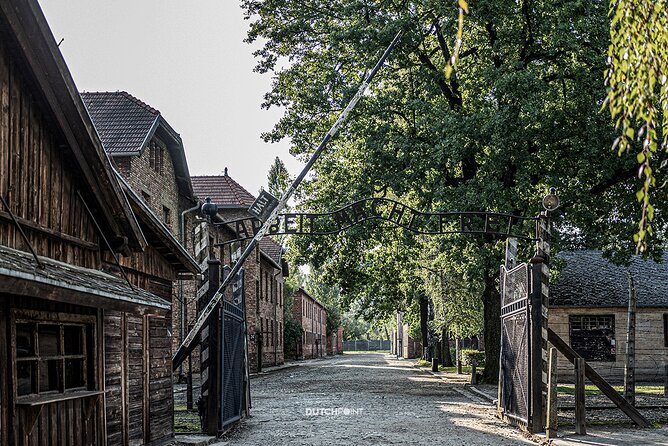
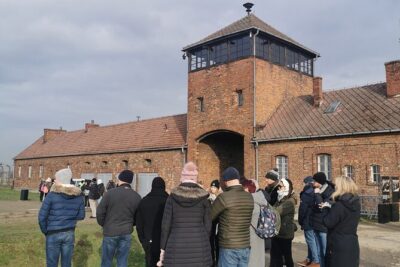
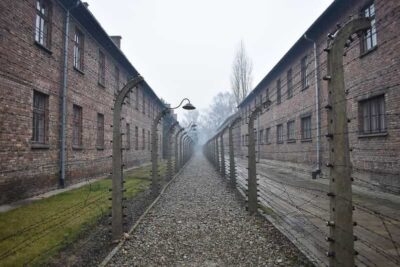
The first major visit is Auschwitz I, the former camp that now functions as a museum. You spend about two and a half hours here, after entry and a restroom break. This is the most contained and museum-focused part of the day.
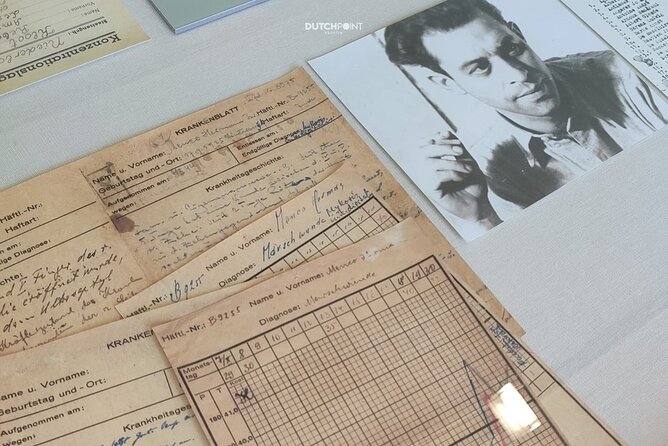
The original barracks hold photographs, documents, objects, and displays that explain the camp system from the first deportations through liberation on January 27, 1945. The evidence is direct and often difficult. You are not simply hearing about a historical event in the abstract. The rooms and objects show how persecution was organized, recorded, and carried out.
Auschwitz I is also where the tour includes a gas chamber. The visit is quiet and serious, and your guide explains what you are seeing without treating the site as an attraction. I would give this section your full attention. It is tempting to move quickly through a museum when the material becomes overwhelming, but the guide’s explanations help place each room in context.
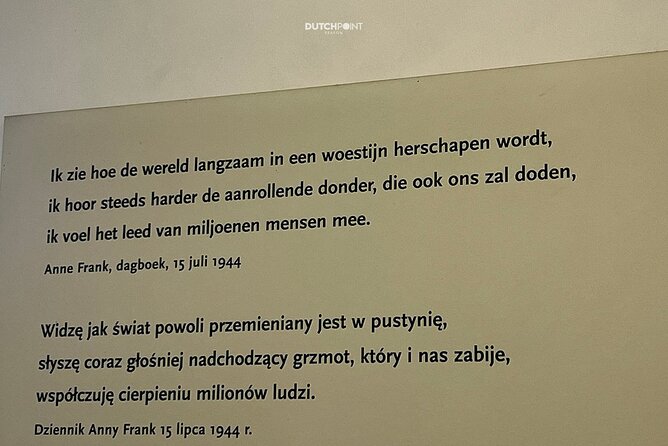
Dutch participants visit the Dutch barrack, while Belgian participants visit the Belgian barrack. These stops give the tour a useful personal connection for people from those countries. The excursion explains that about 60,000 Dutch people and 24,000 Belgians were among those killed at Auschwitz. That detail makes the visit especially relevant for Dutch and Belgian families, though the wider story concerns victims from many countries.
The drawback is emotional rather than practical. Auschwitz I contains some of the most confronting material of the day. You should not schedule this tour casually between lighter activities, and you should leave room afterward to process what you have seen.
The Judenrampe and the road into Birkenau
After Auschwitz I, the group takes a short transfer toward Birkenau and the Judenrampe. The journey and break take about 30 minutes in the schedule. The Judenrampe was the rail point between Auschwitz I and Birkenau where trains arrived and people were selected.
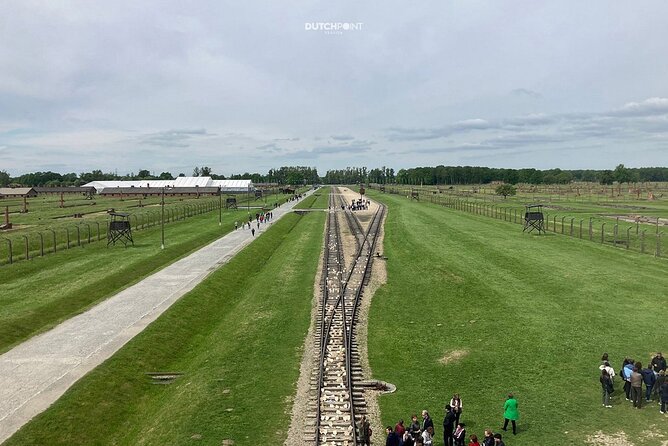
From there, you walk the route taken by people brought to Birkenau. This is one of the most meaningful parts of the program because it connects the transport system to the camp itself. You are not only looking at a map or reading a panel. You follow the physical path from arrival toward selection and imprisonment.
The Judenrampe visit lasts about 30 minutes. It is shorter than the main museum visits, but it adds context that many shorter Auschwitz excursions leave out. The route helps you understand how Birkenau functioned as part of a larger system rather than as an isolated set of barracks.
You should be prepared for outdoor walking here. The supplied details call for moderate physical fitness, and the program includes several stops across a large area. Weather can affect how comfortable the day feels, so sensible footwear and clothing are essential.
Same city, a completely different kind of day:
- Krakow: Auschwitz-Birkenau Guided Tour with Pickup & Lunch
★ 4.5 · 9,800 reviews - Krakow: Auschwitz-Birkenau Guided Tour Pickup/Lunch Options
★ 4.5 · 9,057 reviews - Krakow: Auschwitz-Birkenau and Salt Mine Guided Tour
★ 4.7 · 9,020 reviews - Krakow to Auschwitz Birkenau Guided Tour with Transfer and Ticket
★ 5.0 · 8,197 reviews
Birkenau: barracks, crematorium ruins, and the Dutch monument
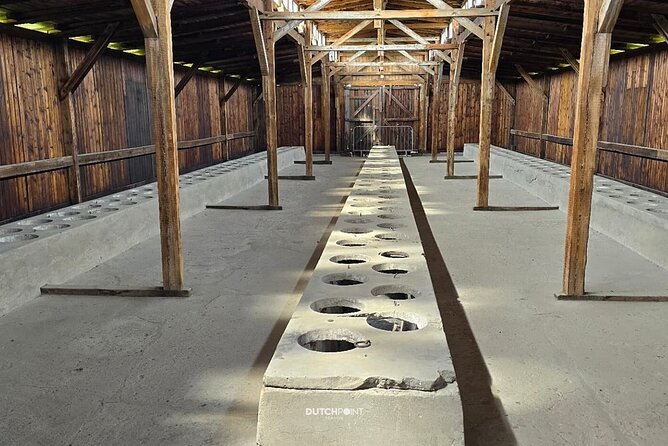
Birkenau is much larger and more open than Auschwitz I. The scheduled visit inside Auschwitz II-Birkenau lasts about 90 minutes, followed by time at the Judenrampe. You see the wooden barracks, the railway area, the remains of gas chambers II and III, and the Dutch monument.
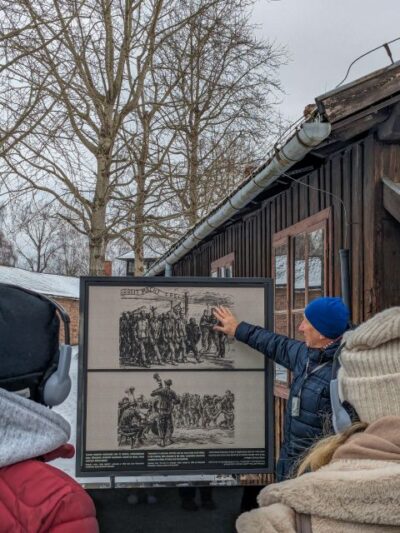
The wooden barracks show the living conditions forced on prisoners. Their scale and simplicity are part of the lesson. After the enclosed displays at Auschwitz I, Birkenau makes the camp system feel physically vast. The distance between structures, the open ground, and the long route toward the crematorium remains help you understand the size of the operation.
The remains of gas chambers II and III are another major stop. The structures were destroyed, but the ruins still provide physical evidence of what happened. Your guide explains the site and answers questions, while the group moves through the area with appropriate restraint.
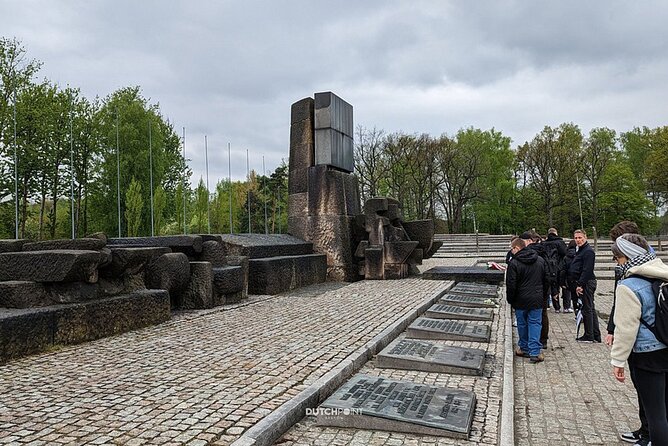
The Dutch monument gives Dutch participants a specific place of remembrance. Belgian participants have the earlier Belgian barrack visit, while all participants continue through the main route and hear the broader story. This balance works well: the tour connects with national histories without reducing Auschwitz to one country’s experience.
There is also a brief bookstore stop near the gate. Do not count on having a long shopping break. The bookstore is useful if you want a museum publication or historical book, but the main value of Birkenau is the site itself.
Monowitz, the part many day trips leave out
The final site is Auschwitz III-Monowitz, reached after another short break and transfer. The visit and transfer take about 45 minutes, followed by roughly 90 minutes back to Kraków. This site is included in the program at no extra admission cost.
Monowitz was connected to the Buna industrial works and the massive factory complex established by the Nazis. It was about 10 kilometers from Auschwitz I and operated as a forced-labor camp. The barracks are no longer visible, so this stop feels different from Auschwitz I and Birkenau.
You can still see the factories and remnants of bunkers, and the tour ends at the Monowitz monument. The guide explains the role of industrial labor and why Monowitz was considered the most grueling camp to work in. This gives you a wider understanding of the camp network, including the link between imprisonment, forced labor, and industry.
Some people may find Monowitz less immediately powerful because fewer original camp buildings remain. I see that as the point. The site asks you to listen closely and imagine the system beyond the preserved museum buildings. It also rewards anyone who wants a fuller historical picture rather than only the most familiar Auschwitz locations.
What $102.14 includes, and where the value lies
At $102.14 per person, this is not the cheapest way to reach Auschwitz. The value comes from the amount of organization and guided time included. You get official Auschwitz-Birkenau State Museum admission, round-trip transport from central Kraków, a guaranteed Dutch guide, the guide system, and a six-hour study program once travel time is excluded.
The tour lasts about eight to nine hours in total. A large part of the price pays for time and coordination: the early departure, transport between the sites, admission arrangements, and a guide who stays with the group across Auschwitz I, Birkenau, and Monowitz.
You can potentially spend less by arranging transport and entry yourself, but that would leave you to manage tickets, site transfers, and explanations in another language. If the Dutch guide is the main reason you are considering this excursion, the price is easier to justify. If you only want a brief look at Auschwitz I, this program may offer more than you need.
Lunch and breakfast boxes cost extra, and tips are not included. The tour does not include a meal, so consider your energy needs before setting out at 6:00 am.
Physical demands, age limits, and group size
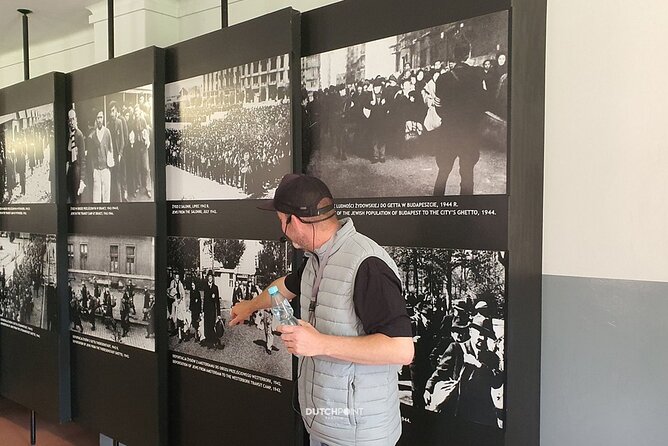
The day involves walking through museum buildings, outdoor paths, barracks, and a large camp site. The operator recommends moderate physical fitness and says the activity is not suitable for people with mobility impairments or children under 14.
The group can contain up to 29 people. That is large enough to provide a social structure and small enough for a guide system to work well, though you should not expect the intimacy of a private tour. The guide’s ability to answer questions is one of the reasons the system matters.
The five restroom stops are a practical advantage on a long day. Breaks are built in between the principal sites, but this remains a serious, tightly scheduled excursion. Wear shoes you can walk in for hours, and do not plan an evening activity that requires you to be energetic or cheerful.
The activity begins and ends at DutchPoint Kraków on Karmelicka 3. It is near public transportation, but the provided information does not state a hotel pickup service.
Who should book this Auschwitz excursion?
I would choose this tour if you want a Dutch-speaking guide and want to visit more than the standard Auschwitz I and Birkenau route. The inclusion of Monowitz is a real advantage for anyone interested in forced labor, Nazi industry, and the wider camp system.
It also suits visitors who prefer to have transport, tickets, and site transfers handled together. The day is long, but the structure means you do not have to solve the practical details yourself.
I would think twice if you dislike early starts, need a flexible pace, or want to explore independently. The schedule is fixed, the group may reach 29 people, and the subject matter is heavy from beginning to end. It is also not the right choice for children under 14 or anyone with mobility limitations.
Should you book it?
Book this excursion if a Dutch guide is essential, you want the Dutch or Belgian memorial connections, and you value a full route that includes Monowitz. The careful explanations associated with guides such as Wesley, Jeroen, Marijke, and Roland add a human layer to a difficult day.
Skip it if you only want a short visit or prefer to arrange every detail on your own. For the right visitor, the price is fair because it covers transport, official entry, a guide system, and six hours at three important sites. Go prepared for an early morning, a lot of walking, and a day that deserves your full attention.
FAQ
Where does the Auschwitz excursion begin?
It begins at DutchPoint Kraków, Karmelicka 3, 31-133 Kraków, Poland. The scheduled start time is 6:00 am, and the activity ends back at the same meeting point.
How long does the full excursion last?
The full experience lasts about eight to nine hours, including travel from Kraków and transfers between the sites. The guided study program at Auschwitz lasts about six hours, excluding travel time.
Which Auschwitz sites are visited?
The program includes Auschwitz I Museum, Auschwitz II-Birkenau, the Judenrampe, and Auschwitz III-Monowitz. At Monowitz, you see the factory area, bunker remnants, and the Monowitz monument.
Is a Dutch-speaking guide guaranteed?
Yes. A Dutch-speaking guide is guaranteed. Guides named for past departures include Wesley, Jeroen, Marijke, and Roland, but a specific guide is not assigned in the provided information.
Are transport and museum admission included?
Yes. The price includes transport by bus or minibus from Kraków, official Auschwitz-Birkenau State Museum tickets, and use of a tour guide system. Breakfast and lunch boxes are optional extras, and tips are not included.
Is the tour suitable for children or people with mobility impairments?
The activity is not suitable for children under 14 or people with mobility impairments. A moderate level of physical fitness is recommended because the program involves walking across museum and outdoor camp sites.
Just added around Auschwitz
- Guided Private Tour to Auschwitz Birkenau & Krakow from Wroclaw★ 5.0 · 4 reviews
- Auschwitz-Birkenau Day Tour from Wroclaw★ 5.0 · 40 reviews
- Krakow & Auschwitz day tour from Warsaw by private car with Lunch★ 5.0 · 16 reviews
- One day tour to Auschwitz-Birkenau & Salt Mine from Warsaw with private driver★ 5.0 · 4 reviews
- One Day Tour to Auschwitz-Birkenau from Warsaw by Car★ 5.0 · 81 reviews
- Krakow and Auschwitz – Full Day Tour from Warsaw by private car★ 5.0 · 9 reviews
- From Warsaw: Auschwitz-Birkenau Tour with Premium Train Transportation★ 4.0 · 7 reviews
- Full-Day Tour From Warsaw to Auschwitz (guided) and Krakow by car★ 5.0 · 24 reviews
Auschwitz Tours, compared.
Auschwitz-Birkenau Guided Tour & Hotel Pickup
Read our review →
Auschwitz Guided Tour with Optional Hotel Pickup
Read our review →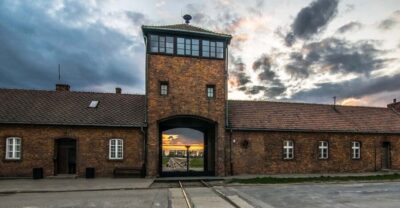
Auschwitz-Birkenau Guided Tour with Pickup & Lunch
Read our review →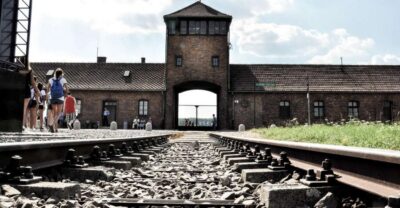
Auschwitz-Birkenau Guided Tour Pickup/Lunch Options
Read our review →
Krakow to Auschwitz Birkenau Guided Tour with Transfer and Ticket
Read our review →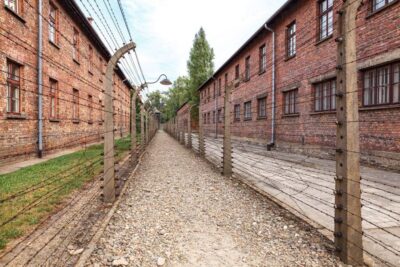
Browse the lists this tour appears in