
Reviewed · COMMUNIST HISTORY TOURS
Nowa Huta Steel Mill Administration Buildings and Shelters with local NGO
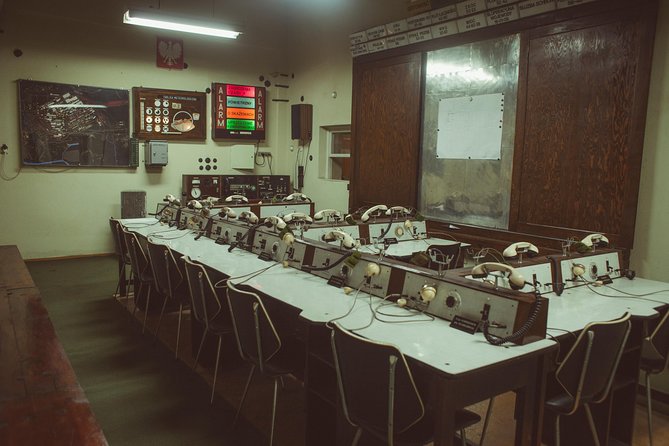
Nowa Huta’s former steelworks offices give you something most Krakow tours cannot: a close look at communist Poland from inside the machinery of power. You walk through grand Socialist Realist rooms, abandoned offices, preserved objects, and a Cold War shelter, while old recordings from the factory radio station add an eerie sense of time passing.
I especially like the access to buildings left largely as they were, and the way the underground shelter turns political history into something physical and easy to understand. Guides such as Mateusz bring strong personal knowledge of the plant and its workers. The main drawback is that the buildings are aging, and some displays combine objects from different periods rather than presenting every room exactly as it once looked.
Key points
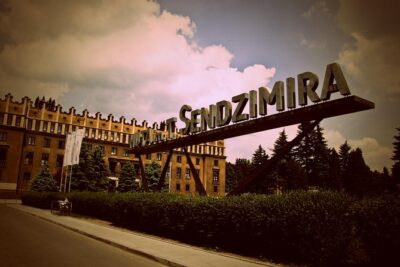
- Former steelworks administration buildings: Explore offices, meeting rooms, and grand Socialist Realist interiors connected to the Lenin Steelworks, later known as the Sendzimir Steelworks.
- Underground Cold War shelter: Walk through tunnels and bunker spaces that reveal how the plant prepared for possible attack.
- Historic factory radio recordings: Hear old broadcasts that add an authentic human voice to the industrial setting.
- Small English-speaking group: The tour is limited to 15 people, making it easier to hear the guide and ask questions.
- A personal guide makes the difference: Mateusz is especially noted for his family connection to the plant and detailed explanations.
- A strong value at $27.63: For roughly two hours, you get a specialist history tour and access to places rarely open to the public.
Why Nowa Huta belongs on your Krakow list
Krakow is famous for its medieval center, royal castle, and Jewish quarter. Nowa Huta tells a different story. Built as a planned industrial district after the Second World War, it was designed around a huge steelworks and shaped by the political ideals of communist Poland.
This tour focuses on the steelworks administration buildings, not just the broad avenues and apartment blocks of the district. That matters because the offices show how the system worked behind its public slogans. The architecture was meant to express order, strength, and collective purpose. Inside, you see the official face of the factory, along with signs of the decades that followed.
I find this more useful than a simple walk past monumental buildings. You are not only looking at Socialist Realist decoration. You are hearing how the plant operated, how workers and managers fit into the system, and how the site changed over time.
The tour is also a good choice if you have already seen Krakow’s central sights. Nowa Huta lies outside the usual old-town circuit, so it gives you a broader picture of Poland in the 20th century.
More Communist History Tours in Krakow
- Krakow: Nowa Huta Guided Tour in Vintage Car
★ 4.9 · 277 reviews - Legendary Private Nowa Huta Communism Tour with Crazy Guides
★ 5.0 · 262 reviews - Nowa Huta: Steelworks Administration Buildings/Shelters Tour
★ 4.9 · 160 reviews
Entering the steelworks administration buildings
The meeting point is at Ujastek 1 in Krakow, opposite the site across the street. The tour begins and ends there, with no hotel pickup or drop-off included. Check the location carefully before setting out, since the meeting instructions specify the opposite side of the street.
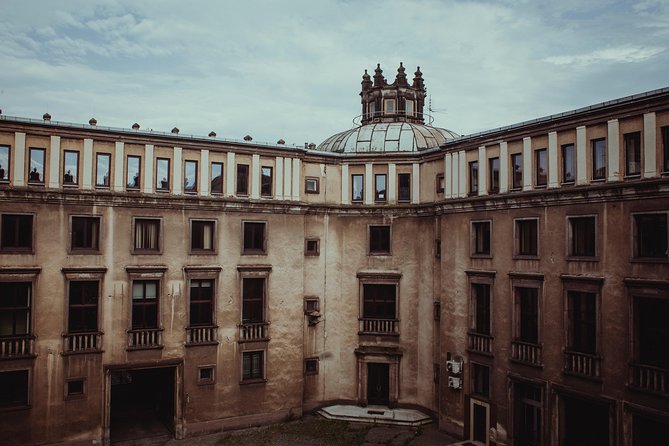
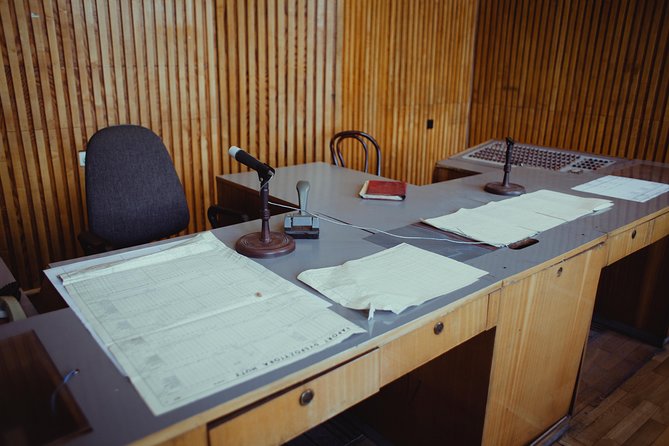
Once inside, you can expect a guided walk through the former administration buildings. The route includes offices, meeting rooms, and other interior spaces connected to the steelworks. Several sections have been left in a worn, almost time-stopped condition, which is part of the appeal.
This is not a polished museum with every surface restored. The buildings have been unused for more than a decade, and age is visible. Paint, fittings, and furnishings may show wear. For me, that gives the tour its character, but you should not book it expecting a bright, fully renovated attraction.
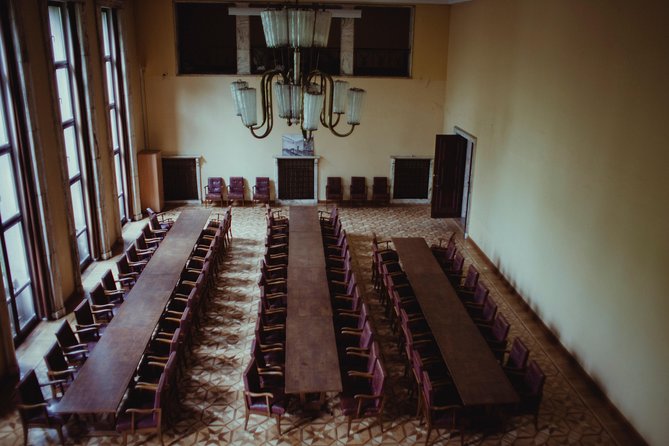
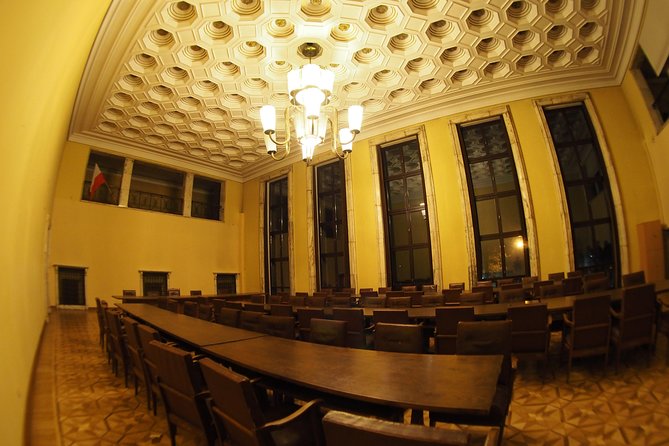
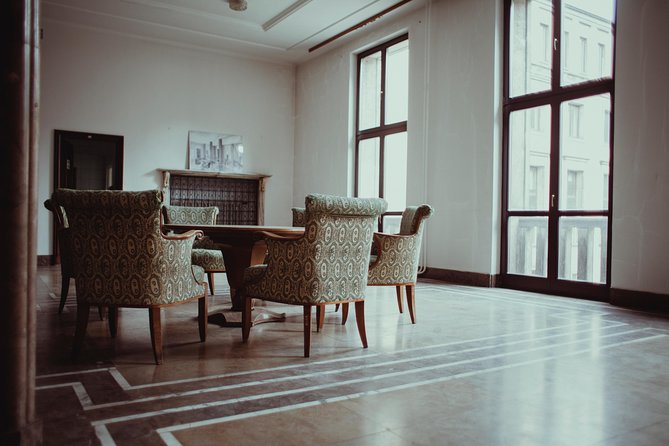
The architecture is one of the strongest parts. Socialist Realism favored grand proportions, formal layouts, and decorative details that presented the state and its industries as powerful and permanent. A guide can explain why rooms were designed as they were, rather than leaving you to see only old furniture and fading walls.
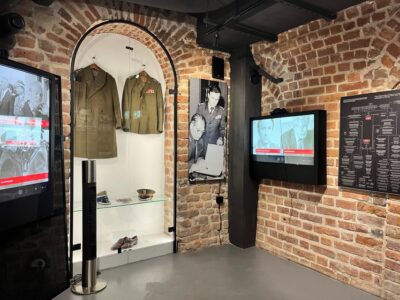
The site includes both the S and Z administration buildings. Rooms may contain objects and furnishings from several decades, from the 1950s through the 2000s. Some items have been gathered by the local foundation for display, so not every object should be treated as original to the exact room where you see it.
That is a small but important distinction. The tour is best understood as a historic building visit with an organized exhibition inside it, not as a perfectly untouched time capsule. The setting remains unusual, and the context supplied by the guide helps you separate original features from later additions.
Socialist Realism you can see, not just read about
The building design carries much of the tour’s meaning. Socialist Realism was not simply a decorative style. It was used to communicate political values through architecture, public spaces, and symbols of work.
The administration offices were built for an important industrial complex, so the interiors were meant to feel serious and imposing. You might notice the contrast between spaces intended for managers and areas associated with ordinary workers. That difference can open a useful discussion about class, status, and how the system presented equality while maintaining clear hierarchies.
A good guide does not reduce every flaw to communism alone. The plant and its buildings also changed under later economic systems, and comparisons with Western industrial sites can complicate the usual easy story. Keep that in mind as you listen. The most useful parts of the tour are the ones that explain how politics, economics, architecture, and daily work overlapped.
Mateusz is praised for having family ties to the steelworks and for explaining the plant’s story with unusual detail. Guides can also point out the building’s use as a setting for films, along with preserved objects that help you picture meetings, office work, and official life inside the complex.
The underground shelter is the tour’s most striking stop
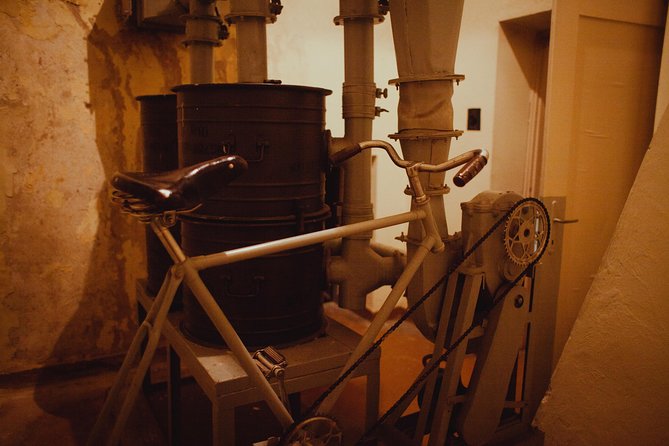
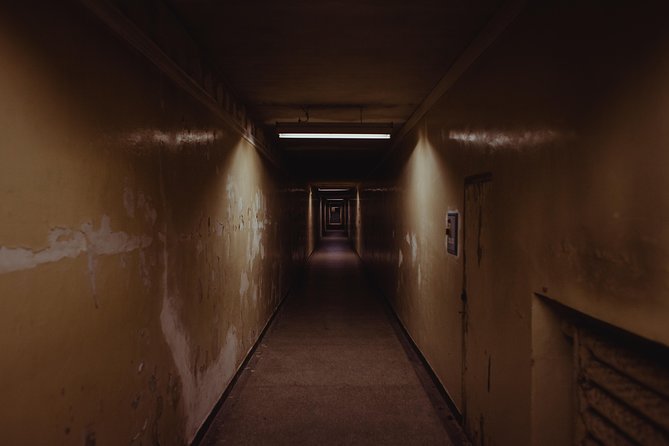
The Cold War shelter adds a different mood. After walking through formal offices and meeting rooms, you go below ground into tunnels and bunker spaces.
This section helps make the period feel practical. Political tension was not only something discussed in newspapers or speeches. Industrial sites had to consider how they would function during an emergency, and the shelter shows how that concern shaped the physical plant.
The underground route is especially interesting if you enjoy abandoned buildings, military history, or industrial sites. It is not a theatrical attraction with elaborate effects. Its impact comes from the confined spaces, the concrete construction, and the knowledge that it was part of a real plan for a real workplace.
You should have a moderate level of physical fitness. The tour includes walking through buildings and underground areas, and the shelter may feel less comfortable if you dislike tight or uneven spaces. The available information does not promise step-free access, so anyone with mobility concerns should contact the provider before booking.
Same city, a completely different kind of day:
- Kraków: Evening or Night River Cruise
★ 4.0 · 7,386 reviews - Krakow: Oskar Schindler’s Factory Entry Ticket & Guided Tour
★ 4.2 · 3,793 reviews - Krakow: City Sightseeing Tour by Electric Golf Cart
★ 4.5 · 3,264 reviews - Krakow: Schindler’s Factory Tour with Entrance Ticket
★ 4.5 · 3,182 reviews
Radio recordings and the human side of the factory
One of the tour’s more unusual details is the use of historic recordings from the steelworks radio station. These recordings give you more than facts about dates and buildings. They provide a sense of the voice that workers would have heard during the working day.
That sound element is valuable because industrial history can otherwise become a list of machinery, offices, and political terms. A radio announcement can suggest the rhythm of factory life and the way official information reached the workforce.
The worker connection continues through the theater included in the visit. The building was not only about administration. It was linked to the social and cultural life of the steelworks, showing how a large industrial complex shaped more than employment.
This is where the tour becomes more than an architecture walk. You are looking at a workplace, a political institution, and a community center at the same time.
What the two-hour format gives you
The experience lasts about 1 hour 30 minutes to 2 hours, with the full route commonly taking close to two hours. That is long enough to cover the offices, historic objects, theater, shelter, and broader background without turning the tour into a full-day commitment.
I think the timing is a good match for Krakow. You can fit it between other activities, but you still have enough time to ask questions and look carefully at the rooms. The guide’s commentary is a major part of the value, so rushing through the route would miss much of what you are paying for.
The group size is capped at 15 people. That is small enough for a more personal feel and useful in rooms where a large crowd would make it harder to hear. It also gives you a better chance to ask about particular objects, the plant’s later history, or the difference between the administration buildings.
English is the offered language. Children must be accompanied by an adult. The tour is near public transportation, but the supplied information does not specify a particular tram or bus route, so check your route to Ujastek 1 before leaving.
Is $27.63 a fair price?
At $27.63 per person, this is not the cheapest short activity in Krakow. It is also not a routine sightseeing walk. The price pays for access to an unusual industrial site, a local guide, historical interpretation, and a small group rather than a large coach excursion.
The value is strongest if you are interested in communist Poland, Cold War history, architecture, film locations, abandoned buildings, or the social story of industrial workers. You receive much less value if you only want a quick photo stop or a general introduction to Krakow.
A two-hour specialist tour can also save you from trying to understand Nowa Huta on your own. The buildings do not explain themselves easily. Without context, you may see old offices and faded rooms but miss why the architecture mattered, how the steelworks shaped the district, and why the shelter was built.
Group discounts are available, which may help if you are booking for several people. Souvenir photos are available to buy, but they are not included. I would treat those as optional extras rather than part of the tour’s basic value.
What the guides add
The strongest praise goes to the guiding. Mateusz is repeatedly singled out for his enthusiasm, clear explanations, and connection to the steelworks. One particularly memorable detail is that he even offered a lift in his Lada, though you should not assume that is part of the standard experience.
The useful point is not the car. It is that the tour can feel personal rather than scripted. A guide with family ties to the plant may explain its importance through the people who worked there, not just through political dates.
You should still keep a balanced view. One guide may frame problems in the building or company mainly through the failures of communism. That can make the presentation feel one-sided if you want a full comparison with industrial sites in Western Europe. Ask questions. The architecture and the site are strong enough to support a more thoughtful discussion about both communist and capitalist industry.
Who should book this experience?
I would choose this tour for:
- Anyone interested in Poland after the Second World War
- People who enjoy industrial architecture and former factories
- Visitors who want more than Krakow’s medieval center
- Film and urban exploration enthusiasts
- History students and curious older children accompanied by an adult
- Anyone who prefers a small guided group to a large sightseeing bus
I would hesitate if you dislike abandoned interiors, underground spaces, or tours that rely heavily on spoken explanation. The site is aging, and the experience is educational rather than comfortable or glossy.
Wear practical clothing and shoes suitable for walking through older buildings. The supplied details do not specify a dress code or exact surface conditions, but moderate fitness is advised. Give yourself enough time to find the meeting point, since the start and end location is outside the historic center.
Cancellation and booking details to know
You receive confirmation at booking, and free cancellation is available if you cancel at least 24 hours before the start time. Cancellations or changes made less than 24 hours before the tour are not accepted for a refund.
The experience is offered in English and usually sells about 19 days in advance on average. That is a useful sign to book ahead if your Krakow dates are fixed, especially if you want a particular guide or are traveling in a group.
Should you book the Nowa Huta steelworks tour?
Book it if you want to understand Krakow beyond its royal and medieval image. The combination of Socialist Realist offices, a workers’ theater, radio recordings, and an underground shelter gives you several ways into Poland’s communist past.
The best reason to go is the access. You are not simply viewing a monument from the pavement. You are entering offices and underground spaces that retain a strong sense of their former purpose. The guide’s stories, especially when connected to workers and family memories, make the architecture easier to read.
Skip it if you want a short, polished attraction with restored rooms and a simple photo opportunity. This is an aging site with mixed-period objects and a presentation that may sometimes lean strongly against communism.
For the right audience, $27.63 is a fair price for a rare Krakow experience. If your interests include industrial history, Cold War Europe, or the daily life behind political systems, I would put it high on your list.
FAQ
Where does the tour begin and end?
The tour begins and ends at Ujastek 1, 31-752 Krakow, Poland. The meeting instructions specify the opposite side of the street.
How long does the tour last?
The experience lasts approximately 1 hour 30 minutes to 2 hours. The listed stop is planned for about two hours.
How much does the tour cost?
The listed price is $27.63 per person. Group discounts are available.
Is the tour offered in English?
Yes. English is the stated tour language.
What is included in the price?
A local guide and a professional guide are included. Hotel pickup, hotel drop-off, and souvenir photos are not included.
Is the tour suitable for children?
Children must be accompanied by an adult. The tour also advises that participants have a moderate level of physical fitness.
Can I cancel for a full refund?
Yes, if you cancel at least 24 hours before the experience start time. Cancellations or changes made less than 24 hours before the start time are not accepted for a refund.
Just added around Krakow
- stag dog chase Krakow prank★ 5.0 · 4 reviews
- Divine Mercy Sanctuary – Private Tour from Krakow★ 5.0 · 4 reviews
- ZALIPIE – painted village, unique PRIVATE tour from Krakow★ 5.0 · 20 reviews
- ZALIPIE – painted village, unique small group tour from Krakow★ 5.0 · 7 reviews
- Zalipie Private Tour from Krakow The Painted Village★ 5.0 · 4 reviews
- Wooden Churches Unesco List Private Tour from Krakow★ 5.0 · 14 reviews
- Guided tour to Salt Mine & Schindler Factory with Pick-Up Options★ 4.0 · 58 reviews
- Wawel Castle, Cathedral, & Rynek Underground Tour with Lunch★ 5.0 · 4 reviews
Communist History Tours, compared.
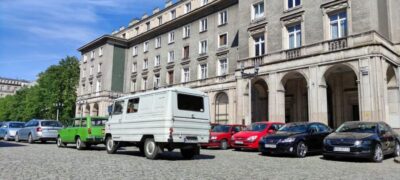
Legendary Private Nowa Huta Communism Tour with Crazy Guides
Read our review →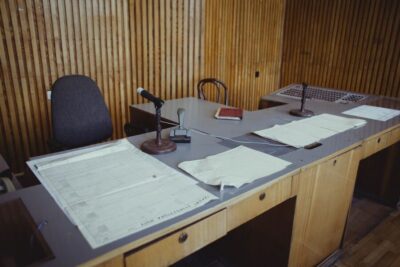
Nowa Huta: Steelworks Administration Buildings/Shelters Tour
Read our review →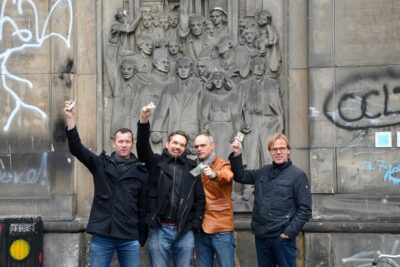
Private Tour: Warsaw’s Communist History by Retro Fiat
Read our review →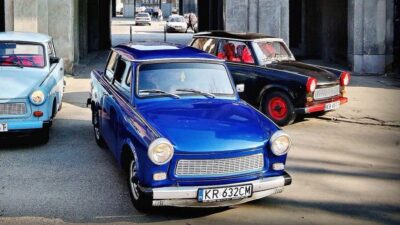
Private Nowa Huta Adventure Tour in Communist Cars
Read our review →
Browse the lists this tour appears in