
Reviewed · COMMUNIST HISTORY TOURS
Nowa Huta Tour from Krakow: Communist City, Vodka & Zapiekanka
Nowa Huta tells Krakow’s 20th-century story in concrete, wide avenues, old bomb shelters, workers’ housing, and one remarkable church built against communist opposition. This tour connects those pieces with a walk, a museum visit, a snack, and a drink, giving you more than a quick look at Soviet-era architecture.
I especially like the Cold War shelter museum, which puts household objects, propaganda, and personal stories ahead of dry dates. I also like the stop for zapiekanka and vodka, because food and drink show how ordinary people lived, not just how governments planned cities.
The main caution is value. At $114.14 per person, this is not a cheap sightseeing outing, especially if you want a detailed lecture on socialist-realist architecture or the workers’ protests. The experience depends a great deal on the guide, and its strongest guides, including Anna and Marta, bring the history to life through personal stories.
Key points to know before booking
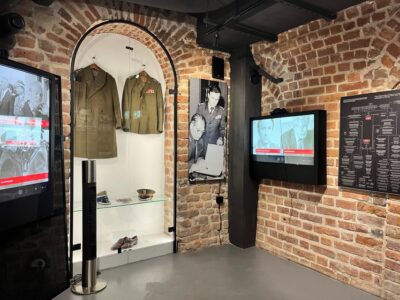
- A former Cold War shelter sets the scene: The underground Nowa Huta museum explains daily life under socialism through original interiors, propaganda, and household objects.
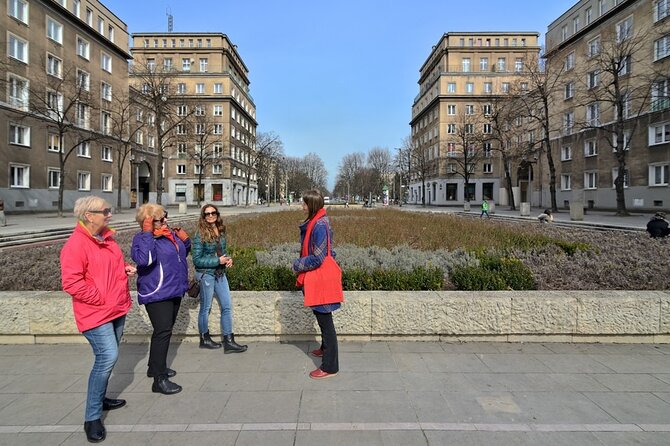
- The city itself is the main exhibit: Wide avenues, symmetrical blocks, grand squares, and planned public spaces reveal how ideology shaped urban design.
- You get a local food break: The tour includes one zapiekanka and a vodka tasting at a communist-style restaurant.
- Arka Pana gives the story a powerful finish: This church became a symbol of faith, resistance, and community action against communist authority.
- The group is capped at 12 people: That helps the guide adjust the walking pace and answer questions.
- Plan for a real half-day: The tour lasts about four hours, uses public transport, and includes a fair amount of walking on level ground.
Why Nowa Huta belongs on your Krakow schedule
Krakow is often presented through medieval streets, royal castles, and Jewish heritage. Nowa Huta offers a different city story: postwar Poland, industrial ambition, state planning, religious resistance, and the daily compromises of life under communism.
The district was built as a planned socialist city. Its broad streets and formal public spaces were meant to reflect order, equality, and the power of the state. At the same time, Nowa Huta became home to workers and families who developed their own local identity. The result is not simply a collection of concrete apartment blocks. It is a place where political ideas were built into streets, housing, culture, and religion.
This tour works best because it moves between three levels of history. You see the official version in the city plan and cultural institutions. You see private life in the museum’s household objects and shelter interiors. Then you see resistance at Arka Pana, the church that challenged the authorities.
You begin at Długa 1 in central Krakow and return toward the Main Market Square area at the end. Tram transport to the district and back is included, so you do not need to work out the public transport route yourself. The maximum group size is 12, small enough for questions without requiring the cost of a fully private outing.
More City Tours in Krakow
- Krakow: City Sightseeing Tour by Electric Golf Cart
★ 4.5 · 3,264 reviews - Krakow: City Sightseeing Tour Eco Electric Buggy Golf Cart
★ 4.7 · 3,143 reviews - Creepy Krakow: 2-Hour City Walking Tour
★ 4.7 · 1,131 reviews
The underground museum makes communism personal
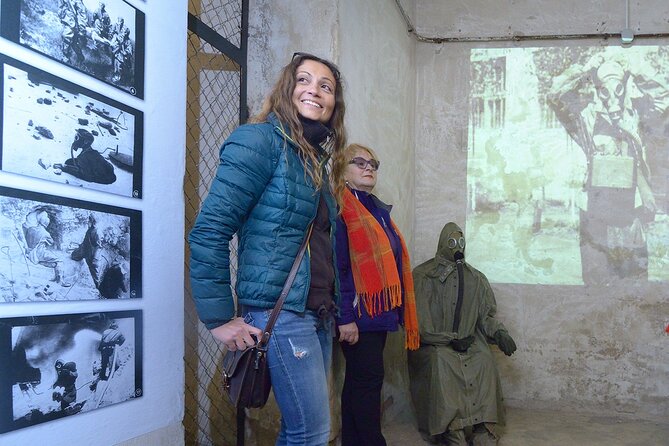
The first major stop is Podziemna Nowa Huta, the Museum of Krakow’s underground Nowa Huta exhibition. It occupies a former Cold War shelter, a fitting setting for a museum about fear, preparation, ideology, and ordinary routines.
Allow about 45 minutes here. You will see original interiors, propaganda displays, household items, and personal accounts from the socialist period. These details matter because communism can feel too large and abstract when reduced to political leaders and economic systems. A kitchen object, a poster, or the layout of a shelter can explain daily life faster than a long timeline.
Your guide provides the context around the displays. You learn why Nowa Huta was created, how the district was meant to function, and how the state shaped public and private life. The shelter also gives the visit a physical sense of the Cold War. You are not simply reading about civil defense. You are standing in a space built for a possible crisis.
This is one of the tour’s strongest sections for first-time visitors to Poland. If you already know a great deal about the Eastern Bloc, you may want more depth than 45 minutes allows. Still, the museum gives you the basic framework needed for the walk that follows.
Read the city plan on foot
After the museum, you walk through the heart of Nowa Huta for about 30 minutes. The ground is level, but you should wear comfortable shoes because the full tour includes several walking sections.
The guide points out the district’s wide avenues, symmetrical apartment blocks, monumental squares, and carefully planned public areas. The point is not just to admire or criticize the architecture. You learn how the built environment was meant to organize social life and project the ideals of the state.
This part requires some attention. At first glance, a broad avenue or repeated housing block may seem plain. With a guide, you can look for the ideas behind the design: scale, order, visibility, access, and the relationship between homes, work, culture, and public space.
One fair criticism is that the architecture and workers’ protests may not receive as much detail as some visitors expect. If socialist realism is your main interest, ask direct questions during the walk. The guide can shape the conversation, and a small group makes that easier.
The district has also changed since the fall of communism. Your guide discusses how Nowa Huta functions today, rather than treating it as a frozen museum piece. That is important. People still live, work, shop, meet, and attend cultural events here. The past is part of the district, but it is not the whole district.
The Nowa Huta Cultural Centre links art and politics
During the walk, you pass the Nowa Huta Cultural Centre. Under socialism, cultural institutions helped promote official values through art, theatre, and music. Today, the centre serves the local community in a different political setting.
This stop adds useful balance. The story is not only about factories, housing, and party control. Culture was one of the ways the state tried to shape public life, but cultural spaces also became places where people gathered, interpreted events, and formed community ties.
The information provided for this stop does not specify a separate admission visit, so treat it as an exterior or walking explanation rather than a full performance or museum entry. That keeps expectations clear. You are learning how the institution fits into Nowa Huta’s story, not attending a show.
More Communist History Tours in Krakow
- Krakow: Nowa Huta Guided Tour in Vintage Car
★ 4.9 · 277 reviews - Legendary Private Nowa Huta Communism Tour with Crazy Guides
★ 5.0 · 262 reviews - Nowa Huta: Steelworks Administration Buildings/Shelters Tour
★ 4.9 · 160 reviews - Krakow: Private Nowa Huta Adventure Tour in Communist Cars
★ 4.9 · 114 reviews
Zapiekanka and vodka show the everyday side
The food stop lasts about 45 minutes and includes a local zapiekanka plus a vodka tasting in a communist-style restaurant. Zapiekanka is an open-faced toasted baguette, often treated as a simple Polish street-food classic.
This is a small part of the tour, but it adds a useful human scale. Political history can become heavy. Sitting down for a familiar snack and a shot of vodka gives you a glimpse of social habits and everyday pleasures under socialism.
The stop is also practical. You have a chance to pause after the walking sections, and the included snack means you are not paying for the tour and then immediately buying another meal. Additional food and drinks are not included, so budget extra if you want more than the provided tasting.
Vegetarians are welcome, and the operator says food allergies can usually be handled unless you have multiple combined allergies or follow a vegan diet. If you are vegan or have serious allergies, contact the operator before booking rather than relying on an improvised solution on the day.
The restaurant is described as being away from the main tourist path, and the tour also supports local vendors by buying the snack. That matters if you prefer spending part of your sightseeing budget in neighborhood businesses instead of only at large attractions.
The vodka tasting is not the reason to book this tour by itself. It is one small included element, and you should regard it as a cultural sample rather than a drinking event. The tour’s value comes from the connections among food, social life, and the larger history.
Arka Pana shows where faith met resistance
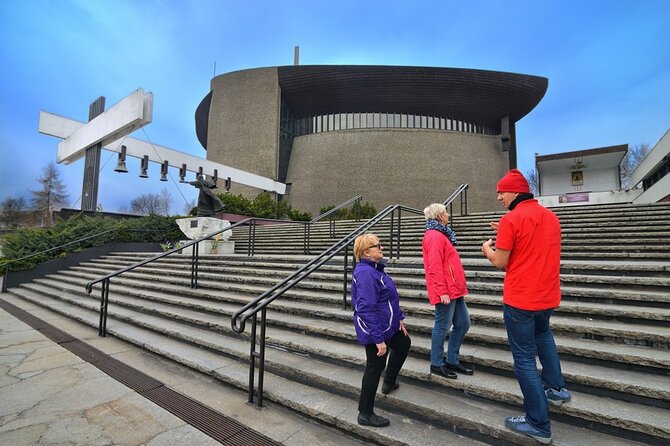
The final major stop is the Church of Our Lady Queen of Poland, widely known as Arka Pana, or the Ark of the Lord. You spend about 45 minutes learning how this church was built despite opposition from communist authorities.
The church gives the tour its clearest symbol of resistance. Nowa Huta was designed as an ideal socialist city, yet residents fought for a place of worship. The struggle showed the strength of religious belief and local community action in a system that sought to keep public life under state control.
Your guide explains the role of religion in modern Polish history and why this church matters beyond its religious function. It became a place tied to faith, solidarity, and opposition. This is also where the tour’s connection to the Solidarity movement becomes most useful. You see how political change grew from institutions and communities that the state could not fully control.
Arka Pana is a strong ending because it moves the story from official planning to popular action. If the earlier streets show what the authorities wanted Nowa Huta to be, the church shows what residents insisted it could become.
How much personal storytelling should you expect?
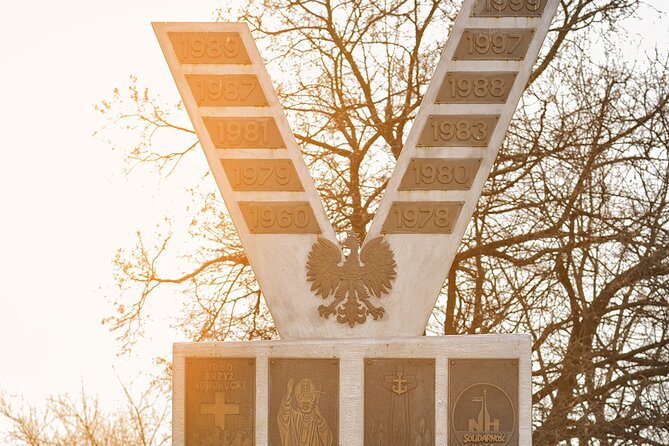
The quality of this experience rests heavily on the guide. Anna is particularly well suited to the subject because she lived in Krakow during the communist period and took part in protests. Her stories about being a student and a protester can turn broad history into something immediate and human.
Marta has also been praised for adjusting her pace, explaining how the community works today, and making the walk comfortable. That flexibility matters because the tour combines museum time, outdoor interpretation, public transport, food, and a church visit in four hours.
Personal storytelling is a strength, but it can also create an uneven experience. If you want a formal architectural survey with precise discussion of socialist realism, tell your guide early. Ask about the city plan, the workers’ protests, the cultural centre, and the church-building campaign. You will get more from the tour if you treat it as a conversation rather than a lecture.
Is $114.14 a fair price?
At $114.14 per person, the tour costs more than a simple museum ticket and independent tram ride. The price includes a local English-speaking guide, transport to and from Nowa Huta, museum admission, one zapiekanka, and vodka tasting.
The real question is how much help you want connecting the pieces. You could reach the district yourself, visit the museum, walk around, and find food. That would cost less, but you would need to research the historical background and decide what deserves your attention.
I see the tour as better value for visitors who want a guided introduction to Poland’s communist era without spending a full day on research. It is also useful if you want a local perspective from someone who remembers the period. The value is weaker if your main goal is a detailed specialist study of architecture or the Solidarity movement.
A private option includes central Krakow hotel pickup, but the provided information does not state a separate private-tour price. For the regular small-group version, hotel pickup is not included. The meeting point is Długa 1, and the tour ends near Krakow’s Main Market Square.
Who should book this experience?
I would recommend it to you if you have already seen Krakow’s old town and want a more modern, political side of the city. It suits people interested in Eastern Bloc history, Cold War sites, urban planning, religion, local food, and personal memories of communism.
It also works well for anyone who prefers a guide to handle public transport and provide structure. The group limit of 12 keeps the experience more personal than a large coach outing.
You may want another option if you dislike walking, avoid alcohol, or want a highly academic architecture tour. The ground is level, but this is still an active four-hour outing. You should also remember that the vodka and zapiekanka are included cultural stops, not a full meal.
The tour has a 4.9 rating from 17 reviews, with 94 percent recommending it, but the mixed experience described above is worth keeping in mind. The strongest praise goes to the guides and their personal stories. The clearest concern is that the content may not go far enough for visitors seeking detailed analysis.
FAQ
How long does the Nowa Huta tour take?
The experience lasts approximately four hours, including transport, the museum visit, walking sections, the food stop, and the church visit.
Where does the tour start and end?
It starts at Długa 1 in Krakow and ends near the Main Market Square, Rynek Główny.
Is transport included?
Yes. Tram transport to the communist district and back is included.
Is the museum open every day?
The communist museum is closed on Mondays. Entrance to the museum is included when it is open.
Are food and drinks included?
The tour includes one zapiekanka and a vodka tasting in a communist-style restaurant. Additional food and drinks are not included.
How large is the group?
The small-group tour has a maximum of 12 people. A private option is also available, with central Krakow hotel pickup offered for that option.
Should you book the Nowa Huta tour?
Book it if you want a guided human story of communist Krakow, not just a checklist of buildings. The shelter museum, planned avenues, zapiekanka stop, and Arka Pana church form a clear four-hour route through daily life, state power, and resistance.
I would book it especially if Anna or Marta is listed as your guide, though guide assignments can vary. If your priority is specialist architectural detail, ask questions and set that expectation at the start. For most visitors seeking a thoughtful half-day beyond Krakow’s medieval centre, this tour offers a useful and memorable look at the city’s most politically charged district.
More Vodka Tastings in Krakow
- The Kraków Vodka Tour
★ 5.0 · 862 reviews - Krakow: Food Tour of 10 Tastings with Pierogi, Vodka & More
★ 5.0 · 169 reviews - Kraków: Guided Vodka Tour with Food and Drink Tastings
★ 5.0 · 146 reviews - Krakow: Vodka Tasting in Hidden Bar
★ 4.9 · 138 reviews
Just added around Krakow
- stag dog chase Krakow prank★ 5.0 · 4 reviews
- Divine Mercy Sanctuary – Private Tour from Krakow★ 5.0 · 4 reviews
- ZALIPIE – painted village, unique small group tour from Krakow★ 5.0 · 7 reviews
- ZALIPIE – painted village, unique PRIVATE tour from Krakow★ 5.0 · 20 reviews
- Zalipie Private Tour from Krakow The Painted Village★ 5.0 · 4 reviews
- Wooden Churches Unesco List Private Tour from Krakow★ 5.0 · 14 reviews
- Guided tour to Salt Mine & Schindler Factory with Pick-Up Options★ 4.0 · 58 reviews
- Wawel Castle, Cathedral, & Rynek Underground Tour with Lunch★ 5.0 · 4 reviews
Communist History Tours, compared.
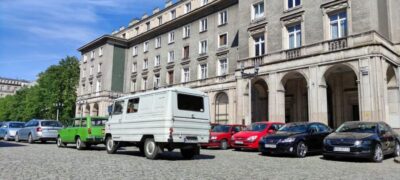
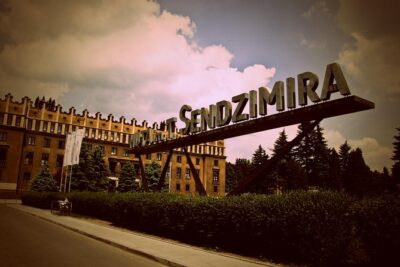
Legendary Private Nowa Huta Communism Tour with Crazy Guides
Read our review →
Nowa Huta: Steelworks Administration Buildings/Shelters Tour
Read our review →
Private Tour: Warsaw’s Communist History by Retro Fiat
Read our review →
Private Nowa Huta Adventure Tour in Communist Cars
Read our review →
Browse the lists this tour appears in