
Reviewed · MUSEUMS
Archaeological Museum of Krakow Entrance Ticket
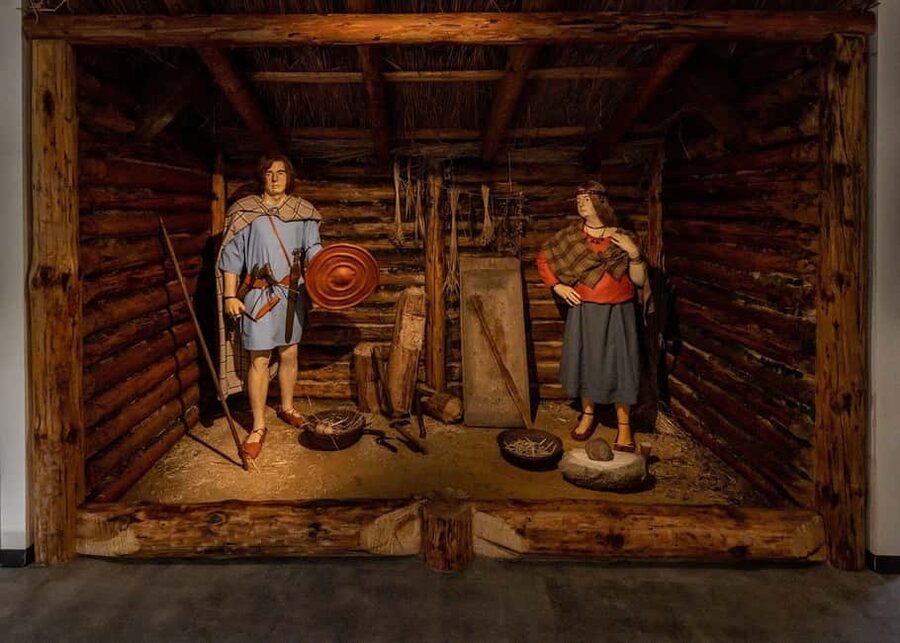
The museum’s most memorable object is a four-faced Światowid statue, a pagan figure carved in the 9th or 10th century and found in 1848 near the Zbrucz River. It gives this modestly priced visit a clear focus: Krakow’s story began long before its churches, kings, and Renaissance squares.
I like two things here. First, the museum occupies a former Barefoot Carmelite monastery that later became St. Michael’s Prison, so the building itself carries several layers of Krakow’s past. Second, the ticket connects you with archaeological finds from across Lesser Poland, not just objects from the city center. The main caution is practical: one booking received no usable ticket or QR code, so check your confirmation before you leave.
Key points to know before you go
- The four-faced Światowid statue: See the museum’s best-known object, a pagan figure from the 9th to 10th century discovered in 1848.
- A monastery turned prison: The main museum occupies the former St. Michael’s Monastery, which later served as an Austrian prison.
- Three museum locations: The Archaeological Museum has its main building, an underground exhibition beneath St. Wojciech’s Church, and a branch at Nowa Huta-Branice.
- A very low ticket price: At about $2.13 per person, admission costs little, especially for anyone interested in early Polish culture.
- No guide included: You explore independently, so allow time to read displays and plan the branches you want to see.
- Check the ticket carefully: Entry may require a QR code, and the last admission is 90 minutes before closing.
Why the Światowid statue gives this museum a purpose
Many Krakow museums focus on royal Poland, Jewish Krakow, art, or the city’s medieval center. The Archaeological Museum reaches further back, into the period when local religious life was shaped by pagan beliefs.
The Światowid statue is the star. It has four faces and is generally dated to the 9th or 10th century. The figure was found in 1848 in Zbrucz, a location associated with the eastern European cultural world, and it later became one of the clearest symbols of the museum’s early medieval collection.
I would make this your first stop inside the museum. It gives the rest of the visit a useful frame. You are not simply looking at old stones, tools, or carved objects. You are looking at evidence from a time when written sources were limited and religious ideas were expressed through physical images.
The statue also makes the museum a good choice for visitors who want something beyond Krakow’s familiar royal and church story. The city’s better-known sights tell you how Krakow developed as a Christian, royal, and commercial center. This museum asks what came before that transformation.
Do not expect a large theatrical presentation built around one spectacular object. The value is quieter. You get a chance to look at an important pagan sculpture and then place it beside archaeological discoveries from Lesser Poland.
More Museum Tours in Krakow
- Krakow: Rynek Underground Museum Guided Tour
★ 4.6 · 1,122 reviews - Krakow Schindler’s Factory Museum Guided Tour in English
★ 4.5 · 650 reviews - Museum of illusions Entry Ticket
★ 4.5 · 521 reviews
Entering the former St. Michael’s Monastery
The main museum is in the former monastery of St. Michael, once operated by the Barefoot Carmelites. The building’s first life was religious, but its later use was far less peaceful.
During the 19th century, when Austrian forces were stationed in Krakow, the building was converted into a prison. It kept the monastery’s old name and became known as St. Michael’s Prison. After the Second World War, the prison closed and the Archaeological Museum was established there.
That sequence makes the building more than a container for exhibits. You are visiting a place that passed through religious, military, and penal history before becoming a center for archaeology.
I like this kind of setting because it helps you read the museum with more attention. The displays concern ancient and medieval life, but the walls also recall Krakow’s more recent political history. The change from monastery to prison is especially striking, and it gives the main branch a stronger sense of place than a modern gallery would have.
The information provided does not give a detailed room-by-room route, so plan on a self-guided visit rather than a fixed tour. The ticket includes museum admission, but no guide is included. If you like moving at your own pace, that is an advantage. If you want every artifact explained in context, you will need to spend time with the labels or arrange your own guide separately.
What you can see from Lesser Poland
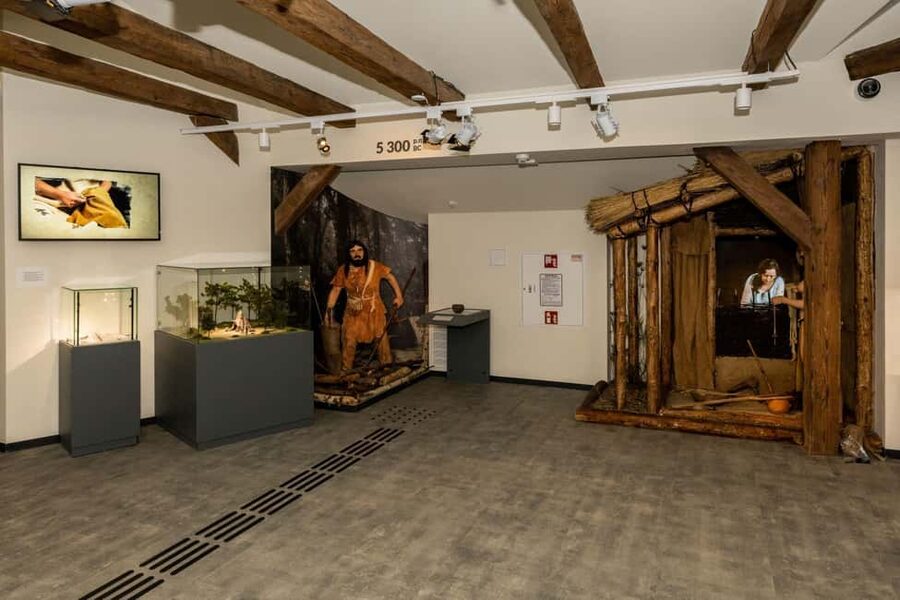
The museum holds archaeological treasures found in the Lesser Poland region. That matters because the collection is not limited to one excavation or one historical period.
You can expect the displays to connect local discoveries with the wider development of human settlement and belief in the region. The most famous piece is the Światowid statue, but the museum’s broader purpose is to show the range of material found in and around Lesser Poland.
For me, this is the museum’s main strength after the statue. It offers a regional view. You are not only learning about Krakow as a single city. You are seeing how archaeology can link a city with the surrounding area, where discoveries were made during construction, excavation, and other forms of land work.
The experience will suit you best if you enjoy evidence more than spectacle. Archaeological museums often reward patience. One object may not seem dramatic by itself, but a group of objects can show how people worshipped, built, worked, and organized their lives.
The low admission price helps here. At about $2.13 per person, you do not need the museum to fill half a day to feel that you received good value. You can visit the main building for a focused look at the Światowid statue and regional collection, then continue to another Krakow sight without feeling that you have spent a large part of your museum budget.
The underground exhibition beneath St. Wojciech’s Church
The Archaeological Museum also has an underground branch beneath St. Wojciech’s Church on Krakow’s Main Square. This site presents the history of the square, the church, and its patron, Saint Wojciech.
The underground setting gives this branch a different character from the former monastery. Here, the point is closely tied to the city center. The exhibition includes remains of wooden and stone floors, along with Romanesque walls.
Those remains are valuable because they let you see physical traces of earlier Krakow beneath one of its busiest public spaces. The Main Square looks polished and complete from above. Underground, you can encounter earlier building phases and fragments of the structures that came before the present setting.
If you are already visiting the Main Square, this branch is especially convenient in principle, since it connects directly with one of Krakow’s central landmarks. Still, check the exact opening hours before setting out. The museum warns that hours can change, and the last entrance is 90 minutes before closing.
Do not assume that every ticket option gives identical access to every branch without checking its terms. The Archaeological Museum has three locations, but meeting points and arrangements may vary depending on the option booked. Confirm which site or sites your ticket covers, especially if you are buying through a city pass or a separate attraction package.
Same city, a completely different kind of day:
- Kraków: Evening or Night River Cruise
★ 4.0 · 7,386 reviews - Krakow: Oskar Schindler’s Factory Entry Ticket & Guided Tour
★ 4.2 · 3,793 reviews - Krakow: City Sightseeing Tour by Electric Golf Cart
★ 4.5 · 3,264 reviews - Krakow: Schindler’s Factory Tour with Entrance Ticket
★ 4.5 · 3,182 reviews
Nowa Huta-Branice and discoveries from 1949 onward
The second branch is at Nowa Huta-Branice, linked with the Nowa Huta district and its metallurgical plant. Archaeological discoveries began there in 1949 during the early construction works.
This branch offers a useful contrast with the main building. The former monastery presents a long sequence of religious and prison use. Nowa Huta-Branice is tied to the growth of a major industrial district and to discoveries made while that modern project was taking shape.
That connection is worth keeping in mind. Archaeology is not only about ruins found in remote places. It often appears during road building, housing projects, factory construction, and other work that changes the ground. The 1949 discoveries show how modern Krakow revealed older layers while expanding.
The information provided does not specify the exact objects or displays at Nowa Huta-Branice, so I would not promise a particular artifact beyond the branch’s archaeological collection. Treat it as a separate stop that requires planning, rather than as a quick room inside the main museum.
For a first visit to Krakow, I would place the main museum and the St. Wojciech’s Church exhibition higher on your list because their locations and themes are easier to connect with the historic center. Add Nowa Huta-Branice if you have extra time or a strong interest in archaeology and the history of the Nowa Huta area.
Is $2.13 good value?
At roughly $2.13 per person, this is one of the easier cultural purchases in Krakow to justify. You are paying less than the cost of many large museum admissions, yet the ticket gives you access to a collection with a distinctive subject and a famous object.
The price is most attractive for three types of visitors. You may be looking for a short indoor stop between major sights. You may be interested in Poland before the better-known medieval and royal period. Or you may be building a full museum day and want to add archaeology without spending much.
The value depends partly on your museum style. If you prefer large interactive exhibitions or a tight guided story, the self-guided format may feel spare. There is no guide included, and no guide name or scheduled tour leader is provided. You are responsible for setting your pace and making sense of the displays.
The price also needs to be compared with the Krakow City Card. Cardholders receive free admission to the Archaeological Museum, and the city pass includes the main building, Nowa Huta-Branice, and the underground section of St. Wojciech’s Church among its listed attractions. If you already have the card, do not buy this separate ticket.
The Krakow City Pass provides access to 36 museums and landmarks for one to three days. Its listed attractions include Schindler’s Factory, the Rynek Underground Museum, the Polish Aviation Museum, the Princes Czartoryski Museum, Krakow’s defensive walls, and several branches of the National Museum. If you plan to visit several of those places, compare the pass price with the individual admissions before purchasing.
Timing, ticket checks, and practical planning
The ticket is described as valid for one to two days, with starting times shown when you check availability. Because the exact arrangement can vary by option, read the booking details carefully before you go.
The most important practical warning concerns entry paperwork. One reported problem involved a ticket that did not arrive, followed by refusal at the ticket office without a QR code. I would save the confirmation on your phone and check that the QR code is visible before leaving your hotel. If the ticket does not arrive, contact the provider before heading across town.
The provider is Discover Cracow. No guide is included, and the meeting point may vary according to the option booked. The activity ends back at the meeting point, though this wording matters more for organized options than for a simple museum admission.
Opening hours can change because of local circumstances. Check the official website for the exact hours on your chosen day, and remember that final admission is 90 minutes before closing. That cutoff is important if you are trying to fit the museum between other appointments.
Smoking, alcohol, and drugs are not permitted. Free cancellation is available up to 24 hours in advance for a full refund.
Who should choose this museum?
I would recommend it to you if you want a compact, inexpensive look at early Polish culture. The Światowid statue gives the visit a memorable centerpiece, while the regional collection adds useful context.
It is also a good option for repeat visitors to Krakow. Once you have seen the Main Square, Wawel, and the city’s major art museums, archaeology offers a different way to understand the area.
Families with older children may find the pagan statue and former prison setting interesting, though the material is likely to work best for children who enjoy history and objects. The lack of a guide means you will need to provide some explanation yourself.
I would be less quick to recommend it if you have only a few hours in Krakow and want the city’s most famous sights. I would also think twice if you already hold a Krakow City Card, since admission is free with the card.
Should you book the Archaeological Museum ticket?
Book it if the $2.13 price fits your plans, you want to see the four-faced Światowid, and you enjoy museums that connect objects with regional history. The former monastery and prison give the main building a memorable setting, while the underground exhibition beneath St. Wojciech’s Church adds a close look at earlier layers of the Main Square.
Skip the separate ticket if you already have a Krakow City Card. Before booking, confirm the exact branch included, check the opening hours, and make sure your QR code arrives. With those details handled, this is a small, affordable museum visit that can add real depth to your understanding of Krakow.
FAQ
Where is the Archaeological Museum located?
The main Archaeological Museum is in the former St. Michael’s Monastery, a building that later became St. Michael’s Prison. The museum also has branches at St. Wojciech’s Church on Krakow’s Main Square and at Nowa Huta-Branice.
What is the museum’s most famous object?
Its best-known object is the Światowid statue, a four-faced pagan god dating from the 9th or 10th century. It was discovered in 1848 in Zbrucz.
Is a guide included with the ticket?
No. The ticket includes museum admission only. You visit independently without a guide.
How long is the ticket valid?
The activity information describes the ticket as valid for one to two days. Check the selected option for the exact validity period and starting time.
Can I enter for free with a Krakow City Card?
Yes. Holders of the Krakow City Card receive free admission to the Archaeological Museum.
When is the last entrance?
The last entrance is 90 minutes before closing. Opening hours can change, so check the museum’s official website for the exact schedule.
Can I cancel the ticket?
Yes. You can cancel up to 24 hours in advance for a full refund.
What is not allowed inside?
Smoking, alcohol, and drugs are not allowed.
Just added around Krakow
- stag dog chase Krakow prank★ 5.0 · 4 reviews
- Divine Mercy Sanctuary – Private Tour from Krakow★ 5.0 · 4 reviews
- ZALIPIE – painted village, unique PRIVATE tour from Krakow★ 5.0 · 20 reviews
- ZALIPIE – painted village, unique small group tour from Krakow★ 5.0 · 7 reviews
- Zalipie Private Tour from Krakow The Painted Village★ 5.0 · 4 reviews
- Wooden Churches Unesco List Private Tour from Krakow★ 5.0 · 14 reviews
- Guided tour to Salt Mine & Schindler Factory with Pick-Up Options★ 4.0 · 58 reviews
- Wawel Castle, Cathedral, & Rynek Underground Tour with Lunch★ 5.0 · 4 reviews
Museums, compared.

Birkenau Museum and Memorial Guided Tour from Krakow
Read our review →
POLIN Museum of the History of Polish Jews Ticket
Read our review →

Krakow Schindler’s Factory Museum Guided Tour in English
Read our review →
Auschwitz Birkenau Museum Guided Tour with Pickup
Read our review →
Browse the lists this tour appears in