
Reviewed · WAWEL CASTLE TOURS
Krakow’s Essential Tour of the Old Town and Wawel Castle
Krakow’s best first look comes on foot, and this tour links the city’s essential sights in one steady walk from St. Mary’s Basilica to Wawel Castle. You’ll hear the story behind the hourly trumpet call, see the Cloth Hall and university buildings, then reach Poland’s royal hill with a guide handling the route.
I like the clear introduction to Krakow’s past and the mix of grand sights with small stories, including why the old theatre mattered more than clean water and what happened to professors at the start of World War II. I also like the value: the $3 charge is only a booking fee, and you decide the donation afterward. The main caution is that museum entry is not included, and the group may reach 30 people.
Key points to know before you book
- The route covers the essentials: Main Market Square, the Barbican, the Cloth Hall, Jagiellonian University and Wawel Castle.
- The tour is donation-based: The $3 payment is a booking fee, not the full cost of the guide service.
- History comes with the landmarks: Expect stories about Poland’s monarchy, communism, World War II and Krakow’s social life.
- The walk ends at Wawel: It is a useful way to learn the city layout before visiting museums on your own.
- Museum tickets cost extra: The stops are mainly exterior explanations, with no listed entrance to the castle or cathedral.
- Guide quality matters: Bart, Slav, Slavek, Chris and Fran are among the guides named in the feedback, with humor and clear storytelling often praised.
A smart route from the trumpet tower to the royal hill
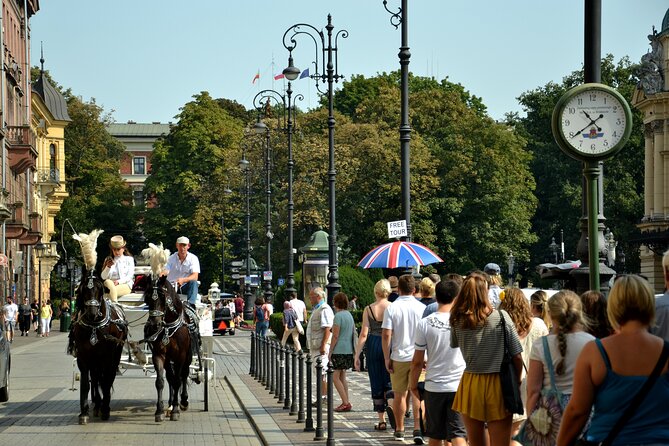
This is a sightseeing walk with a strong sense of direction. You begin at Rynek Główny 4, on Krakow’s Main Market Square, and finish at Wawel Castle, about 10 minutes from the square. That east-to-west route gives you a useful mental map of the historic center without asking you to zigzag across town.
The advertised duration is about two hours and 30 minutes. There are many stops, but most last only 10 to 15 minutes. You should expect plenty of standing and walking, though the frequent pauses keep the pace manageable for most people.
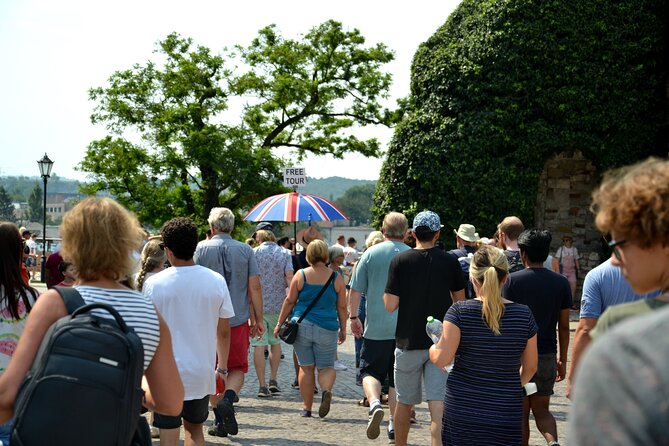
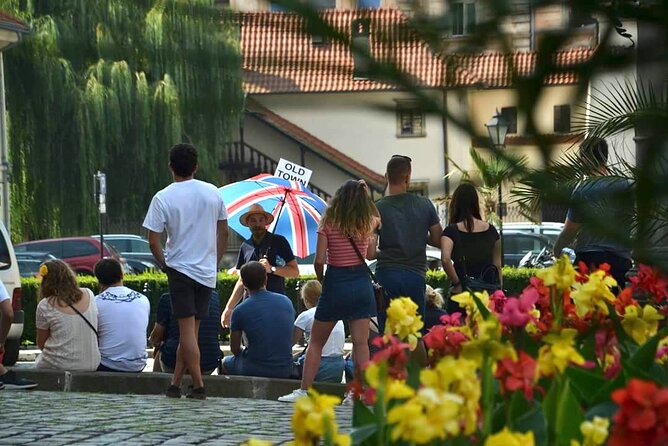
The tour is described as private guided, yet the stated maximum is 30 participants. I would plan for a small-group walking tour rather than a quiet one-to-one visit. A larger group can make questions harder to hear, but the route is broad and the guide’s job is mainly to explain the city outdoors.
The strongest part is the storytelling. Guides including Bart, Slav, Slavek, Chris and Fran are praised for clear explanations, humor and a steady pace. The best guide for you will be the one who connects dates and buildings to real human events, not simply recites facts.
More Wawel Castle tickets and tours:
- Krakow: Wawel Castle & Cathedral Guided Tour
★ 4.7 · 2,111 reviews - Old Town Krakow & Wawel Castle Walking Tour
★ 5.0 · 1,508 reviews - Krakow: Wawel Royal Hill with Optional Castle and Cathedral
★ 4.2 · 1,220 reviews
St. Mary’s Basilica and Krakow’s famous trumpet call
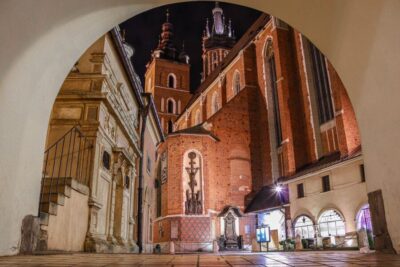
The opening stop is St. Mary’s Basilica, one of the most recognizable buildings on the square. You’ll learn why its two towers are unequal and who plays the tune heard every hour from the highest tower.
That trumpet call is a fine example of the tour’s approach. Instead of merely pointing at a church, the guide gives you a reason to watch and listen. The stop lasts about 15 minutes, and admission is not included, so expect an exterior explanation unless you choose to visit inside later.
This is a good early stop because it gives you an anchor for the rest of the walk. You’ll be able to return to the square on your own and understand what you are seeing. If attending Mass or viewing the interior matters to you, plan a separate visit and check the opening arrangements yourself.
Rynek Główny, Europe’s great medieval square
The next 30 minutes are devoted to Krakow’s central square, Rynek Główny. The space is large enough that a guide can point out several buildings and explain how the square worked as the center of trade, power and public life.
This is likely the most useful stop for getting your bearings. The square sits at the heart of the Old Town, with the Cloth Hall, St. Mary’s Basilica and Town Hall Tower nearby. A guide helps you connect these separate sights rather than treating them as isolated photo stops.
Admission is not included, but the tour’s value here comes from the explanation rather than an indoor visit. You can later decide which buildings deserve your money and time. I like that arrangement because it lets you use the walk as a planning session for the rest of your Krakow stay.
Slowacki Theatre and the city’s old priorities
At the Slowacki Theatre, the guide explains how it was possible for the theatre not to have been built in Poland and why the city considered it more important than clean water.
That is the sort of detail that makes a walking tour worthwhile. A building becomes a window onto civic life, taste and politics. You are not only hearing when the theatre was built, but also learning what Krakow’s leaders and residents valued.
The stop takes about 10 minutes. It is brief, so do not expect a full theatre tour. The focus is the building’s place in the city and the unusual story attached to it.
A few more Krakow half-days worth comparing
- Kraków: Evening or Night River Cruise
★ 4.0 · 7,386 reviews - Krakow: Oskar Schindler’s Factory Entry Ticket & Guided Tour
★ 4.2 · 3,793 reviews - Krakow: City Sightseeing Tour by Electric Golf Cart
★ 4.5 · 3,264 reviews - Krakow: Schindler’s Factory Tour with Entrance Ticket
★ 4.5 · 3,182 reviews
The Barbican and the medieval entrance to Krakow
The Barbican is presented as a 15th-century work of military architecture. The guide explains its defensive purpose and shows how it protected the approach to the Old Town.
You’ll also pass through the 500-year-old main entrance to medieval Krakow. That transition is one of the more satisfying moments of the route. Modern streets give way to the historic center, and the old defenses help you picture Krakow as a fortified city rather than just a pretty collection of facades.
The Barbican is connected with the Museum of Krakow, but admission is not included. Treat this stop as an introduction. If you enjoy military architecture, you may want to return for a fuller visit, but the tour does not provide the museum experience itself.
The Cloth Hall and the market under the market
The Sukiennice, or Cloth Hall, sits in the middle of the main square. The guide tells you about its role as a medieval shopping center and explains what lies beneath it.
That second point is particularly useful because it encourages you to look below the modern street level. Krakow’s present-day square sits over layers of earlier city life, and the Cloth Hall offers a clear reminder that the Old Town is not just a preserved surface.
The stop lasts about 10 minutes. You will not receive a museum ticket, so the guide’s story is the main event. You can use the information to decide later if you want to explore the Cloth Hall or the underground museum.
Town Hall Tower and a vanished building
The Town Hall Tower stop explains why only a small part of Krakow’s old Town Hall remains and what the site was known for in earlier times.
This is a useful correction to the way historic centers can look. A visitor might assume that every missing building was destroyed by war, but the story here is more specific. The remains show how city plans, demolition and changing priorities can reshape an old town.
The explanation takes about 10 minutes. Like most stops on this route, it is an outdoor history lesson rather than an entrance visit. Keep your attention on the guide, since the surviving fragment alone does not tell the whole story.
Jagiellonian University and Collegium Novum
At Collegium Iuridicum, you’ll hear about one of Poland’s oldest and most prestigious universities. The guide takes you inside, according to the tour description, giving this stop a different feel from the street-side explanations.
The university adds intellectual history to a route otherwise filled with churches, defenses and royal buildings. It also shows how Krakow’s importance was tied to learning as well as government and trade.
The stop is scheduled for about 10 minutes, and no admission ticket is included. The route then continues to Collegium Novum, where the guide explains what happened to professors in Krakow at the beginning of World War II and addresses whether the city was destroyed.
This is one of the tour’s most serious sections. The history of wartime Krakow is not treated as a footnote, and the university buildings give the subject a human focus. The stop also helps you separate Krakow’s wartime experience from the fate of cities that suffered greater physical destruction.
The Bishop’s Palace and the famous window
At the Bishop’s Palace, you’ll see the window associated with Pope John Paul II and hear about Poland during the communist period. The stop lasts about 15 minutes and is free.
This is a natural place for the guide to shift from medieval and royal Krakow to modern Polish history. The building’s importance comes not only from its appearance, but from the conversations and public memory linked to it.
The window is a popular point on the route, so it may be one of the busiest stops. Still, the story gives the sight more weight than a quick photograph would. If you have a strong interest in Poland’s 20th-century history, listen closely here and ask questions while the group is gathered.
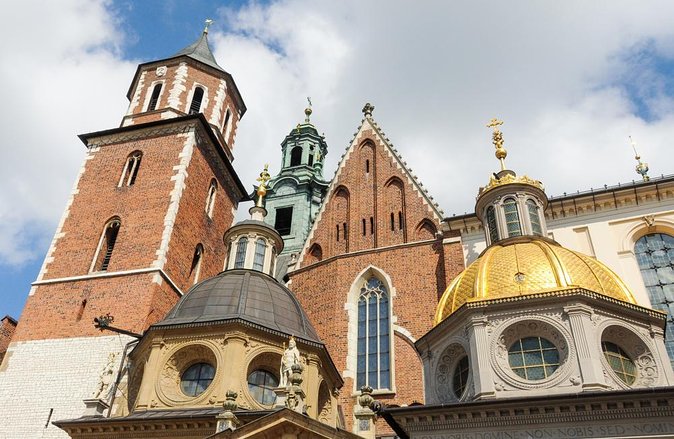
Wawel Cathedral, Poland’s national pantheon
The walk ends on Wawel Hill at Wawel Cathedral. The guide explains its role as a national pantheon and the place where Polish rulers were crowned and buried.
This stop brings the earlier stories together. You have seen the trading square, the city defenses, the university and the church towers. Now you reach the religious and royal center of Poland’s historic capital.
Admission is not included, so the tour does not replace a cathedral visit. That is an important cost to remember. The guide gives you context, but you will need a separate ticket if you want to enter areas that charge admission.
Wawel Castle and the end of the walk
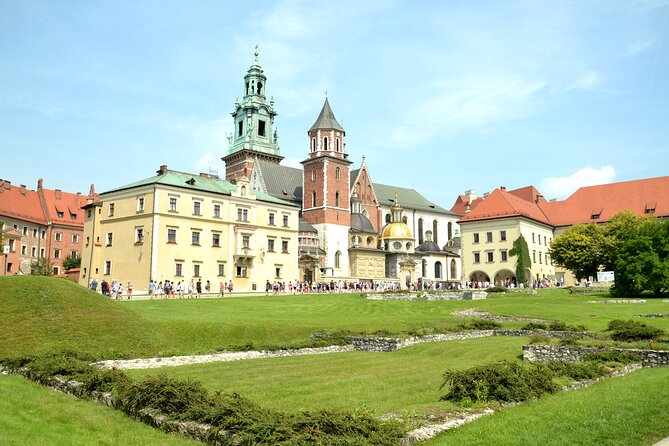
The final stop covers the royal residence: where Polish rulers lived, why one part of the castle looks different from the rest and other details about the hilltop complex.
The castle is the right place to finish because it gives the walk a clear destination. You are not simply returned to the starting point. Instead, you can continue into Wawel’s museums, look for lunch nearby or walk back to the Main Market Square with a better sense of the route.
The castle is a large site with several separate collections. Museum entry is not included, and the tour does not promise access to every interior. I recommend treating this walk as an orientation, then choosing your preferred Wawel collection afterward rather than trying to see everything during the guided visit.
What the $3 price really means
The advertised price is $3, but that is only the booking fee. The tour is funded by donations, so you pay the guide what you think the experience was worth at the end.
That makes the tour unusually affordable, but it also means you should not mistake $3 for the final cost. Bring enough money to make a fair donation. Any currency is accepted according to the information provided.
This model can offer excellent value if you want a broad introduction without paying a high fixed rate. It also asks you to judge the tour at the end. If the guide gives you a clear route, useful historical context and answers your questions well, the donation should reflect that.
Food, drinks and museum entrance fees are not included. Sanitizer and a licensed guide are included. A mobile ticket makes the booking simple, but you still need to arrive at the correct meeting point.
Who will get the most from this walk
I would choose this tour for a first visit to Krakow, especially if you want help with orientation before exploring alone. It suits people who like history but prefer short explanations at many locations instead of one long museum visit.
Families can also use it well. One review describes a parent and two teenagers enjoying the steady pace, and the guide’s humor can help keep a long history lesson moving. Still, the route involves a lot of walking and standing, even though the frequent stops break it up.
This is less suited to you if you want deep interior access to Wawel Castle, St. Mary’s Basilica or the museums. It is also not ideal if you dislike group tours. With a possible maximum of 30 people, you may need to stay close to the guide and speak up when you have a question.
Most people can participate, service animals are allowed and the meeting point is near public transport. Free cancellation is available up to 24 hours before the start time. Within 24 hours, you cannot receive a refund or make changes.
Should you book Krakow’s Essential Tour?
Book it if you want a low-cost, story-led introduction to Krakow’s Old Town and Wawel Hill. The route covers the landmarks you most need to recognize, and the best guides, including Bart, Slav, Slavek, Chris and Fran, are described as clear, funny and deeply interested in Polish history.
Go in with the right expectations. The $3 payment is a booking fee, the rest comes through donations, and museum tickets are extra. You may walk with a group of up to 30 people, and a guide may not be present in every private-tour sense suggested by the wording.
For a first morning in Krakow, I find the format practical. You get the city’s main outline, several memorable stories and a clear finish at Wawel Castle. After that, you can spend your time and money on the interiors that matter most to you.
FAQ
How long does the Krakow Old Town and Wawel Castle tour last?
The tour lasts approximately two hours and 30 minutes.
Where does the tour begin?
It begins at Rynek Główny 4 in Krakow, on or near the Main Market Square.
Where does the tour end?
The tour ends at Wawel Royal Castle, Wawel 5. The castle is about 10 minutes from the Main Market Square.
Are museum entrance fees included?
No. Museum, cathedral and other attraction entrance fees are not included.
Is the $3 price the full tour cost?
No. The $3 payment is a booking fee. The tour operates on donations, so you pay as much as you want at the end.
How many people can join the tour?
The maximum group size is 30 participants.
Just added around Krakow
- stag dog chase Krakow prank★ 5.0 · 4 reviews
- Divine Mercy Sanctuary – Private Tour from Krakow★ 5.0 · 4 reviews
- ZALIPIE – painted village, unique small group tour from Krakow★ 5.0 · 7 reviews
- ZALIPIE – painted village, unique PRIVATE tour from Krakow★ 5.0 · 20 reviews
- Zalipie Private Tour from Krakow The Painted Village★ 5.0 · 4 reviews
- Wooden Churches Unesco List Private Tour from Krakow★ 5.0 · 14 reviews
- Guided tour to Salt Mine & Schindler Factory with Pick-Up Options★ 4.0 · 58 reviews
- White Water Rafting Krakow★ 5.0 · 3 reviews
Wawel Castle Tours, compared.
Wawel Royal Hill with Optional Castle and Cathedral
Read our review →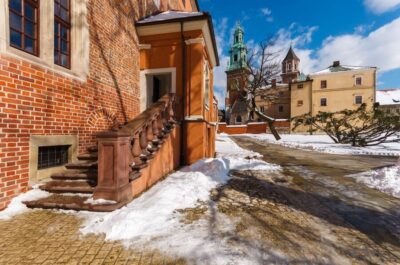
Old Town & Wawel Castle Walking Tour in English
Read our review →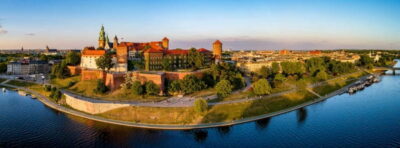
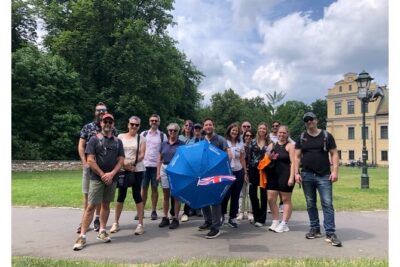
Historic Krakow : Old Town & Wawel Castle Walking tour
Read our review →Browse the lists this tour appears in