
Reviewed · TRAIN EXPERIENCES
In 10 days around Poland – by train, with hotels and local tours
Poland reveals itself especially well by rail. This 10-day route links Warsaw, Gdansk, Poznan, Wroclaw, and Krakow, with drivers meeting you at stations and local guides handling the major sights. You get a broad look at the country without renting a car or solving every transfer yourself.
I like the first-class train travel, which turns long moves into useful rest, and the mix of guided sightseeing with free afternoons. The central hotels also matter, since you can walk out for dinner or a private stroll. The main drawback is pace: you change cities often, and the final-day choice between Auschwitz, Wieliczka, and Kazimierz means you cannot fit all three into this trip.
Key points at a glance
- Five major Polish cities: Follow a north-to-south route from Warsaw to Gdansk, Poznan, Wroclaw, and Krakow.
- First-class rail travel: Direct trains connect the main city changes, with station transfers arranged by drivers.
- Small group size: The tour accepts a maximum of 10 people, allowing a more personal format.
- Strong local support: Tomasz organizes the trip, while guides and drivers meet you throughout the route. Jola is one named guide who has handled airport arrivals.
- Three excellent choices in Krakow: Spend your final half-day at Auschwitz-Birkenau, Wieliczka Salt Mine, or Kazimierz.
- A full schedule with breathing room: Most sightseeing takes three to five hours, leaving selected afternoons open.
What this Poland rail tour really gives you
At $3,900 per person, this is not a budget rail pass with a few hotel bookings attached. You are paying for a managed trip: nine breakfasts, 3-star or 4-star hotels, first-class train tickets, local guides, drivers, airport or station transfers, and entrance fees for many scheduled visits.
That price can make sense if you value time and support. You do not need to compare train schedules, arrange taxis at every station, or work out how to reach a hotel after a long ride. Drivers handle the short transfers, and local guides take over for the city walks.
You should still look closely at what is not included. Dinners are your responsibility, as are some meals during day trips. The plan also has a quick rhythm. You have only one full day in several cities, so this is best viewed as a useful first tour of Poland, not an unhurried stay in each place.
The group limit of 10 is a real plus. You get the structure of an organized tour without the feel of a large coach group. It also gives the operator room to adjust parts of the program. Tomasz has helped guests alter the route to suit broader travel plans, and he has been praised for quick replies and careful organization.
More trips by train from Warsaw:
- From Warsaw: Krakow Sightseeing Tour by Express Train
★ 5.0 · 13 reviews - Warsaw: Tour to Krakow and Auschwitz by Train with Pickup
★ 4.6 · 603 reviews - From Warsaw Auschwitz and Krakow one day tour by train with pick up and drop off
★ 4.5 · 267 reviews
Day 1: A gentle arrival in Warsaw
Your trip begins with a welcome at the airport or train station and a transfer to a centrally located hotel. The first day is intentionally light, which is sensible after an international journey.
You have time to check in and rest rather than rushing into a museum or city walk. Since the tour starts in Warsaw but the published meeting information lists Krakow-Balice Airport as the start and end point, confirm the exact arrival arrangements before booking flights. The stated start time is 12:00 am, which is another detail worth checking with GFP Travel.
Day 2: Warsaw’s royal route and garden palaces
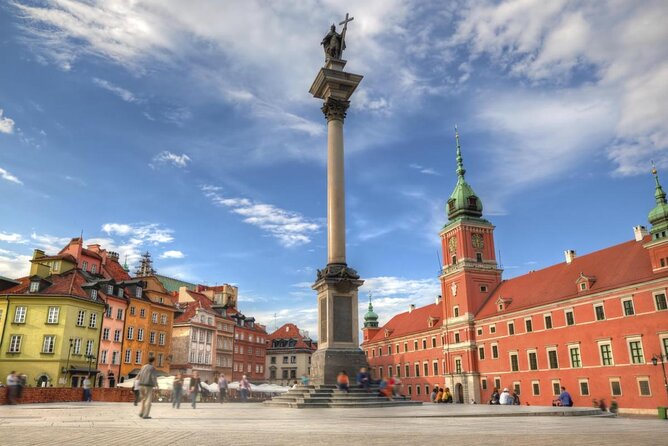
Your half-day Warsaw tour covers the city’s classic sights. The Royal Castle introduces Poland’s royal past, while the Royal Route links several of the capital’s grand civic and religious buildings. The Old Market Square and Barbican offer a more intimate section of the old city.
Krakowskie Przedmiescie is part of the same central walk, giving you a useful sense of how Warsaw’s historic core fits together. The visit to Lazienki adds a different mood. Its gardens and Palace on the Water provide open space after the denser streets of the Old Town.
I like the balance here. You see major sights with a guide, then get an afternoon to recover from jet lag or explore at your own speed. The tour does not try to fill every hour, and that is helpful at the start of a long trip.
Day 3: First-class rail from Warsaw to Gdansk
A driver takes you to Warsaw’s railway station, and you board a direct train to Gdansk. The rail journey is more than a practical transfer. It gives you a comfortable pause between guided city visits, and first-class tickets should make the ride easier for reading, resting, or watching Poland pass by.
On arrival, a driver takes you to a central hotel. Gdansk is one of the strongest stops on the route, so having the hotel near the center matters. You can use the evening for a short walk, although dinner is not included and must be arranged separately.
The schedule lists about four hours for this transfer day, but train timing and station procedures can shape the day. Pack a small bag for the ride and keep larger luggage easy to handle at the station.
A few more Warsaw half-days worth comparing
- Warsaw: Chopin Concert in the Old Town
★ 4.8 · 2,287 reviews - Warsaw: Traditional Galar Cruise on The Vistula River
★ 4.6 · 1,640 reviews - Warsaw: Old Town Highlights Walking Tour in English
★ 4.7 · 1,516 reviews - Warsaw Concert: Chopin – Painted by Candlelights with Wine
★ 4.8 · 1,442 reviews
Day 4: Gdansk, Solidarity, and music in Oliwa
Gdansk receives a full guided day, and rightly so. The Golden Gateway leads toward Dluga Street and the city center, where you see Neptun’s Fountain, Artus Court, the Uphagen House, and the old streets rebuilt after wartime destruction.
Mariacka Street and the wooden Crane on the Motlawa River add visual variety. The Crane is especially useful for understanding Gdansk as a port city, while the Solidarity Monument at the shipyard shifts the focus from medieval trade to modern Polish history.
The afternoon visit to Oliwa includes an organ music concert in the Oliwa Dome. This is a welcome change from another row of monuments. You hear the building as well as see it, and the concert gives the day a clear local character.
The tour calls itself a full-day guided experience, but it also allows time for private arrangements. I would use that flexibility for a relaxed evening rather than trying to add another distant sight.
Day 5: Malbork Castle, brick walls, and a practical day trip
The journey to Malbork takes you to Poland’s largest medieval brick castle. A half-day guided visit explains the site, and there is a castle restaurant available for lunch before the return to Gdansk.
Malbork is one of the most worthwhile excursions on this itinerary because it gives you something the city tours cannot: a large, self-contained historic complex with a strong sense of place. The brick construction also makes it visually different from the stone churches and civic buildings elsewhere on the route.
The listing gives the excursion about five hours, including the return ride. That makes this a fairly efficient day, but do not expect a leisurely exploration of every corner. After returning to Gdansk, you have time for gifts, a private walk, or a quiet evening.
Day 6: Poznan and a shorter city introduction
You leave Gdansk by train for Poznan, with a driver taking you to the station and meeting you again after arrival. The city is known for its fairs and commercial role, but the afternoon tour focuses on its historic center.
The Cathedral, Renaissance Town Hall, and Baroque Church of St. Mary Magdalene give you a compact introduction. With about three hours of guided sightseeing, this is more of an orientation than a full examination of Poznan.
That short visit is the tradeoff for covering five cities in 10 days. If Poznan is a priority for you, the available free time becomes important. The centrally located hotel should make an independent walk possible, but no detailed evening program is included.
Day 7 and Day 8: Wroclaw’s rivers, cathedral island, and market square
A direct train carries you from Poznan to Wroclaw. A driver meets you at the station and takes you to the hotel, leaving time to rest before the next day’s guided tour.
Wroclaw’s appeal comes from its different parts. Ostrów Tumski, or Cathedral Island, gives you the city’s most historic setting, with the cathedral as a main highlight. The University adds a grand Baroque interior in Aula Leopoldina, and the Market Square closes the tour with restored tenement houses and the Gothic City Hall.
The formal city tour lasts about four hours. You will have time afterward for a private walk, and this is a good place to slow down a little. One account of the trip also included a boat ride and noted Wroclaw’s unusual tram system, but neither is part of the stated package, so treat those as possible independent additions rather than included features.
Wroclaw can feel different from Warsaw and Gdansk, which is one reason the route works. You are not seeing the same old town repeated five times. The river setting, cathedral district, university interior, and market square give this stop its own identity.
Day 9: Krakow’s Old Town and Wawel Hill
You take a direct train to Krakow, then meet your driver at the station for the transfer to a central hotel. After check-in, a half-day city tour covers the heart of Krakow.
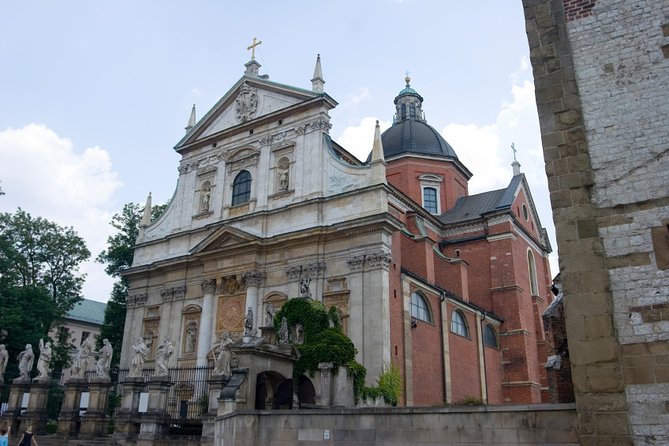
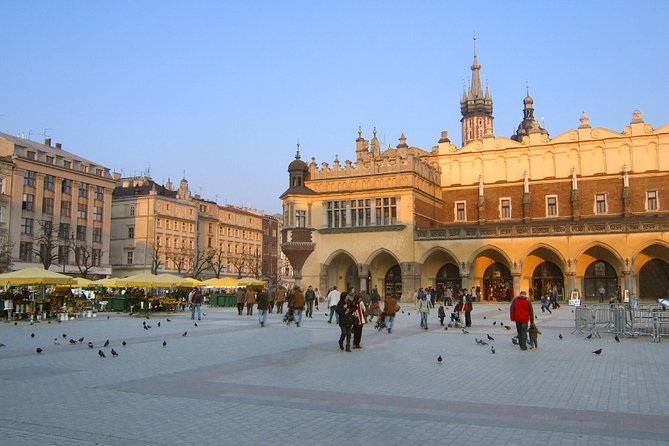
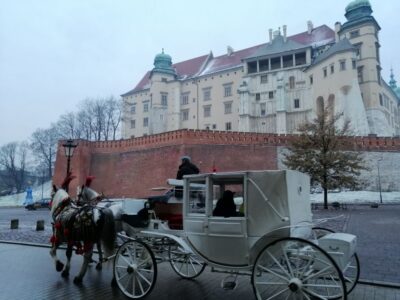
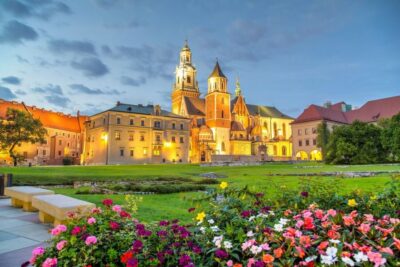
The Rynek Glowny, or Main Market Square, is the natural starting point. The Cloth Hall and St. Mary Basilica frame one of Europe’s best-known central squares, while the walk along the Royal Route leads toward Wawel Hill. The cathedral and Royal Castle make Wawel more than a viewpoint. It is the place where Krakow’s royal and religious stories come together.
The schedule leaves time for a private walk afterward. An optional regional dinner with live music costs $45 per person, but it is not included in the tour price. You should treat this as a pleasant extra, not part of the core value calculation.
Krakow is often the city where people wish they had another day. This plan gives you a strong first look, but the following morning is already assigned to a regional choice before your departure.
Day 10: Choose one final Krakow-area experience
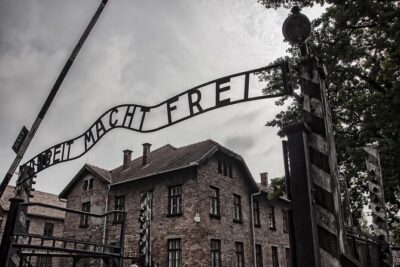
Your last morning offers a choice of three half-day tours. You can visit the Auschwitz-Birkenau Nazi German camp and museum, go underground at the Wieliczka Royal Salt Mine, or explore Kazimierz, Krakow’s Jewish district.
This choice deserves thought before you arrive. Auschwitz-Birkenau is a serious historical visit and may be the most emotionally demanding option. Wieliczka offers a very different experience, focused on an underground salt mine. Kazimierz keeps you in Krakow and gives you more time with the city’s Jewish quarter.
You cannot reasonably cover all three in the available half-day. The choice also affects how much time you have before the final transfer to Krakow airport or station, so check the exact departure schedule before selecting a flight or train.
Trains, hotels, and the value of support
The rail plan is one of the strongest parts of this trip. Direct trains connect the main legs, and drivers meet you at both ends. That removes a common source of stress: arriving in an unfamiliar station with luggage and no clear plan for reaching the hotel.
First-class tickets add comfort, but they do not remove the need for basic station awareness. Keep your ticket accessible, arrive with enough time to find the platform, and make sure your luggage is easy to move. The tour handles the major arrangements, but you still need to be ready when the train leaves.
The hotels are described as centrally located 3-star or 4-star properties. That is a useful category for this route. A central address lets you walk to evening sights and restaurants, while public transportation remains available if your feet need a break.
Hotel quality may vary from city to city. The plan promises a category, not identical room standards or the same style in every place. If you care about a specific hotel feature, ask before paying because the price is non-refundable and changes are not allowed.
What the schedule demands from you
You should expect a moderate physical level. The days include city walks, station transfers, historic interiors, and at least one castle or regional visit. Comfortable shoes are essential, especially in old centers with uneven paving.
This is not an ideal choice if you want long mornings, late starts, or several free days in one city. It is a good fit if you prefer a clear route and want local help without being part of a large group.
The program includes nine breakfasts, but no dinners. Budget separately for evening meals, lunches on excursion days, and the optional Krakow dinner. Since the tour moves often, keep daily essentials in a small carry-on or day bag instead of reopening your main luggage at every hotel.
Who should book this Poland journey?
I would recommend it to a first-time visitor who wants to see several major Polish cities without driving. It also suits solo visitors, couples, and small groups who value direct help from an organizer. The personal service is a notable strength: Tomasz has arranged adjustments, answered many questions, and helped with difficult situations, including an early trip home after a serious medical emergency.
The tour is less suited to someone focused on one region, a slow-food holiday, or intensive museum time. It also demands trust in a fixed schedule. The cancellation policy is strict: the experience is non-refundable and cannot be changed for any reason, although a full refund is offered if the operator cancels because the minimum group size is not met.
Should you book it?
Book this tour if you want efficient rail travel, central hotels, and human help at every major handoff. Its best qualities are the small group size, direct trains, strong city guides, and the chance to see Poland’s north, west, and south in one trip.
Before booking, confirm the Warsaw arrival details, because the published meeting point lists Krakow-Balice Airport even though the itinerary begins in Warsaw. Also decide which Krakow-area visit matters most to you. If you accept the brisk pace and plan your dinners and free time, this is a well-supported way to get your first broad look at Poland.
FAQ
How long is the Poland rail tour?
The tour lasts approximately 10 days, beginning with arrival in Warsaw and ending with departure from Krakow.
Which cities are included?
The route includes Warsaw, Gdansk, Poznan, Wroclaw, and Krakow.
Are train tickets included?
Yes. First-class train tickets for the scheduled rail journeys are included.
What type of hotels are provided?
Accommodation is provided in centrally located 3-star or 4-star hotels.
Are meals included?
Nine breakfasts are included. Dinners are not included, and some lunches are also at your own expense.
What can I choose for the final Krakow-area tour?
You can choose Auschwitz-Birkenau, the Wieliczka Royal Salt Mine, or a half-day tour of Kazimierz, Krakow’s Jewish district.
How large can the group be?
The maximum group size is 10 people.
Is the tour physically demanding?
You should have a moderate level of physical fitness. The program includes city walking, train station transfers, castle visits, and guided sightseeing over several hours.
Just added around Warsaw
- Wolfs Lair and Swieta Lipka Small Group Tour from Warsaw with Lunch★ 4.5 · 21 reviews
- Wolf’s Lair & Treblinka Tour in 1 day from Warsaw★ 5.0 · 37 reviews
- Wolfs Lair “Hitler’s Headquarters” – Full Day Tour from Warsaw by private car★ 4.5 · 4 reviews
- Tour from Warsaw: Wolf’s Lair, Hitler’s HQ Zones I and II★ 5.0 · 32 reviews
- Wolf’s Lair Private Day Trip from Warsaw★ 5.0 · 50 reviews
- Warsaw Must-See Local City Tour with Antek and Tomek★ 5.0 · 51 reviews
- Off the Beaten Track in Warsaw: Private City Tour★ 4.5 · 9 reviews
- Warsaw’s Old Town A Self-Guided Audio Tour★ 4.5 · 10 reviews
Train Experiences, compared.
Tour to Krakow and Auschwitz by Train with Pickup
Read our review →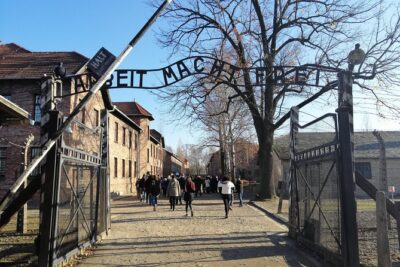
From Warsaw Auschwitz and Krakow one day tour by train with pick up and drop off
Read our review →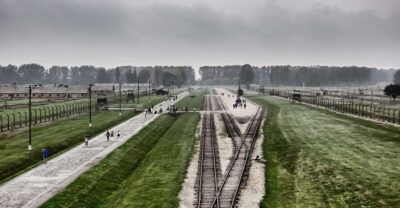
Auschwitz-Birkenau Tour with Premium Train Transportation
Read our review →Browse the lists this tour appears in