
Reviewed · WARSAW TOURS
Warsaw Behind the Scenes – small group tour with hotel pickup
Warsaw’s story is written in layers: Jewish life before the war, Nazi destruction, the 1944 uprising, Soviet control, and the fast-changing city of today. This tour connects those layers in a classic Żuk minibus, taking you from former ghetto streets to Praga’s old courtyards and communist-era central Warsaw.
I like the mix of serious history and ordinary city life. I also like the use of old photographs, which helps you picture streets that were destroyed or radically rebuilt. The drawback is that the tour moves quickly, and much of the history is heavy. You will also walk at each stop, while the minibus is used mainly for transfers.
I like that guides such as Marcin, Tom, Artur, Mark, Jan, and Lucas bring different personalities to the experience. Some add food or drink stops when possible, but these are not part of the listed schedule, so treat them as a pleasant extra rather than a promise. The limited air conditioning and occasional lack of seat belts in the vintage vehicles are worth considering before you book.
Key points to know before booking
- Former ghetto sites come first: Muranów, Chłodna Street, and Nowolipki give the tour its most powerful historical focus.
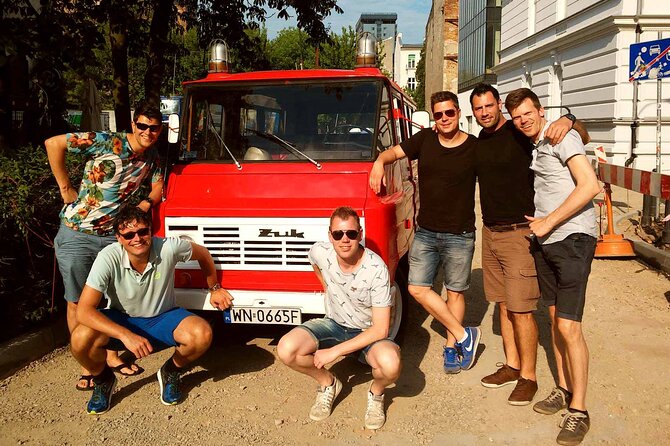
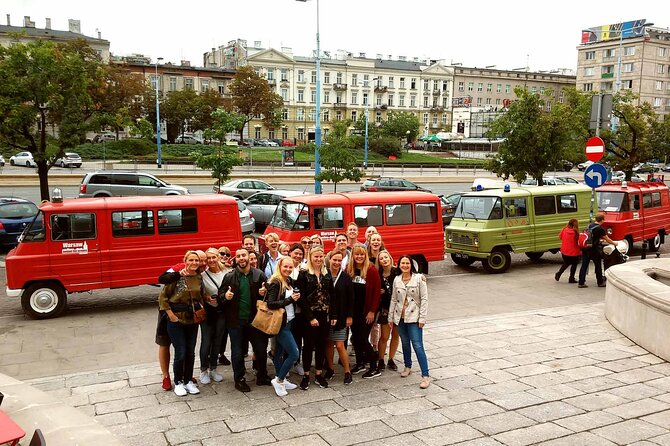
- The Żuk is part of the experience: Each minibus carries up to eight people and adds a distinctly Polish, communist-era touch.
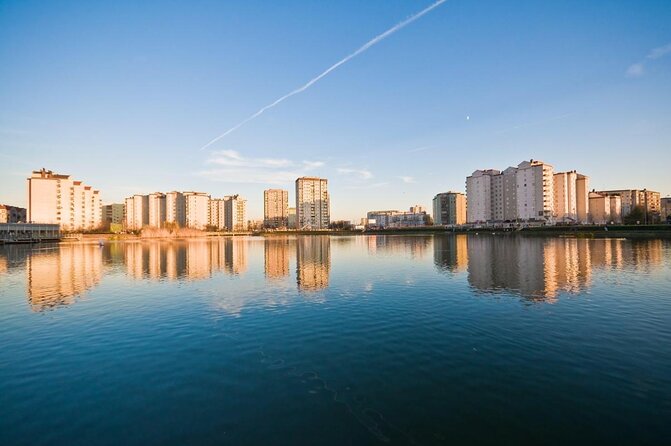
- Praga offers a different Warsaw: You see prewar buildings, courtyards, river views, and a creative district largely spared from wartime destruction.
- The tour explains rebuilding, not just destruction: Central Warsaw shows how postwar planners worked within Soviet political demands.
- It works well on your first day: The route helps you understand the city’s layout and gives you useful context for later museum visits.
- Hotel pickup keeps things simple: Pickup and drop-off are available from listed hotels, with the exact time confirmed after booking.
Why this route helps you understand Warsaw
A standard city tour can show you Warsaw’s rebuilt Old Town, the Royal Route, and the Palace of Culture. This experience takes a different path. It asks why Warsaw looks the way it does and what disappeared beneath the modern streets.
That question matters here. Around 85 percent of Warsaw was destroyed after the 1944 Warsaw Uprising, and the city had to be rebuilt almost from ruins. The route also explains how Poland’s postwar future was shaped by agreements between the Western Allies and Stalin, followed by decades of communist rule.
You begin at about 10:00 a.m. with a short introduction to Poland and Warsaw. It is only around ten minutes, so I would not expect a full history lecture before the route starts. One useful tip is to read a little about the Second World War and the Warsaw Ghetto before going. That small amount of preparation will help you follow the dates and events as the tour moves from one site to the next.
A few more Warsaw half-days worth comparing
- Warsaw: Chopin Concert in the Old Town
★ 4.8 · 2,287 reviews - Warsaw: Traditional Galar Cruise on The Vistula River
★ 4.6 · 1,640 reviews - Warsaw: Old Town Highlights Walking Tour in English
★ 4.7 · 1,516 reviews
Muranów and the ground beneath modern Warsaw
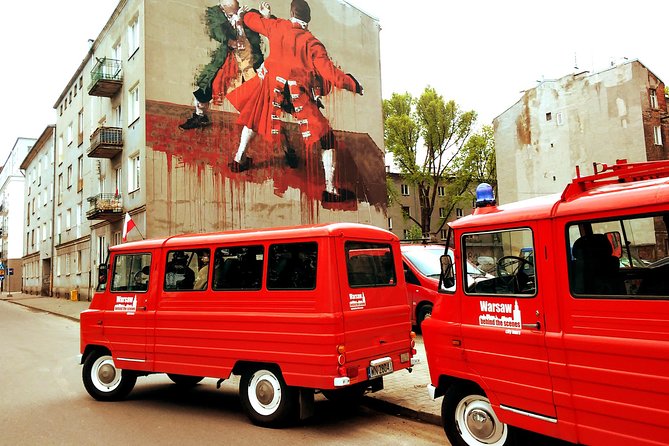
The first major stop is Muranów, built over the former Jewish Ghetto established by Nazi Germany in 1940. Today, much of the area looks like an ordinary postwar housing district. That contrast is the point.
Your guide explains how the ghetto was sealed, how Jewish residents were forced into it, and how the district was destroyed. You also learn how postwar construction changed the appearance of the area. The streets do not always announce what happened there, so this is a place where a guide adds real value.
You spend about 20 minutes here. That is enough for an introduction and a few key details, but not enough for a long, reflective visit at every site. If you want more time with the history of Polish Jews, plan a separate visit to the POLIN Museum. One guide-led tour can set the scene, while the museum gives you a much longer historical account.
Chłodna Street and a vanished bridge
At Chłodna and Żelazna Streets, you stop near the location of the wooden bridge that once connected two parts of the ghetto. The bridge passed high above the road, allowing traffic to move underneath. It became widely known through the film The Pianist.
There is no bridge to walk across today. Instead, your guide uses historical photographs to show where it stood and how the street once functioned. This is a good example of the tour’s method: modern Warsaw provides the setting, while images and explanation restore the missing pieces.
The stop lasts about 15 minutes. Bring your attention rather than expecting a large physical monument. The interest is in matching the old photograph to the present street and understanding how a simple crossing point became part of the system of confinement.
Nowolipki and the 1943 uprising
At Nowolipki, the focus shifts to the Warsaw Ghetto Uprising of 1943. Jewish resistance fighters fought deportation and made a final stand against overwhelming Nazi forces. After several weeks, the ghetto was destroyed.
This section can be difficult. The guide explains both the fighting and the way the events are remembered in the modern city. You will see how commemoration is not limited to one museum or monument. It is built into streets, plaques, memorial sites, and the stories told about the neighborhoods.
You spend around 15 minutes here. The pace means you may not linger, but the stop fits the wider route well. It gives you the human and political context needed before the tour moves into the destruction of Warsaw as a whole.
Same city, a completely different kind of day:
- Warsaw Concert: Chopin – Painted by Candlelights with Wine
★ 4.8 · 1,442 reviews - Warsaw: City Sightseeing Hop-On Hop-Off Bus Tour
★ 3.6 · 1,415 reviews - Warsaw: POLIN Museum of the History of Polish Jews Ticket
★ 4.7 · 1,142 reviews - #1 Pub Crawl Warsaw with Optional Premium 1 Hour Open Bar
★ 5.0 · 790 reviews
Bielańska and the city reduced to ruins
At Bielańska, the story broadens beyond the ghetto. You learn about the 1944 Warsaw Uprising, the city’s attempt to resist Nazi control, and the political pressure surrounding Poland’s future.
The tour explains how the uprising took place while Poland’s fate was also being shaped by Soviet power. When the uprising failed, Nazi forces systematically destroyed much of Warsaw. The Red Army entered the ruins in January 1945, finding a city that had been nearly erased.
This is one of the most useful parts of the route because it keeps separate events from becoming one blurred wartime story. The 1943 Jewish uprising and the 1944 Warsaw Uprising were different events, with different aims and circumstances. The tour links them without treating them as interchangeable.
Old photographs are especially helpful here. Mark, Tom, Artur, and other guides are praised for showing images of Warsaw before and after the war, making the scale of destruction easier to grasp. You do not just hear that the city was destroyed. You begin to see what that meant for streets, buildings, and daily life.
Crossing the Vistula to Praga
The minibus then crosses the Vistula to Praga Północ. This district gives you a sharp change of mood and architecture.
Praga survived the war more intact than much of central Warsaw. You see Belle Époque buildings, old courtyards, and streets that preserve something of prewar Warsaw. The district was once overlooked, but it is now known for artists, creative businesses, and a strong local identity.
The stop lasts around 30 minutes. You get river views and time to look around before continuing. Praga is not presented as a polished open-air museum. Its appeal comes from the mix of old buildings, ordinary local life, and newer creative energy.
This is also one of the tour’s best answers to the question: what does regular Warsaw feel like beyond the major sights? The district has a different character from reconstructed central Warsaw. You may find the contrast more revealing than another formal monument.
Central Warsaw and communist rebuilding
Back in Śródmieście, the tour stops near the former headquarters of the Polish Communist Party. Here, the focus turns to the enormous practical and political problem of rebuilding Warsaw after 1945.
Architects wanted to make the capital modern and functional. At the same time, their plans had to fit Soviet-inspired ideology. The result was a city shaped by compromise, ambition, and political control.
This stop helps explain why Warsaw can feel visually mixed. Rebuilt historic forms sit near modernist housing and communist-era buildings. The city was not simply restored exactly as it had been. It was planned again, under a new political system.
Spend a little time looking at the buildings around you instead of treating this as a stop for dates alone. The point is to read the city as evidence. Streets, offices, housing blocks, and public spaces all show how the government wanted citizens to live and what it wanted the capital to represent.
1989 and Warsaw’s next transformation
The final section covers 1989, Solidarity, and the role of Pope John Paul II in the end of communist rule in Poland. You then hear how democracy and capitalism brought another major change to Warsaw.
This conclusion gives the tour a useful arc. You start with a city shaped by war, move through forced rebuilding and Soviet control, and finish with a capital adapting to a new political and economic system.
The final stop is about 15 minutes. It is not a detailed political seminar, but it gives you the essential frame for understanding modern Warsaw. After the tour, newer offices, renovated buildings, old courtyards, and busy commercial streets make more sense as parts of a city that has repeatedly had to remake itself.
The Żuk minibus and what the ride is really like
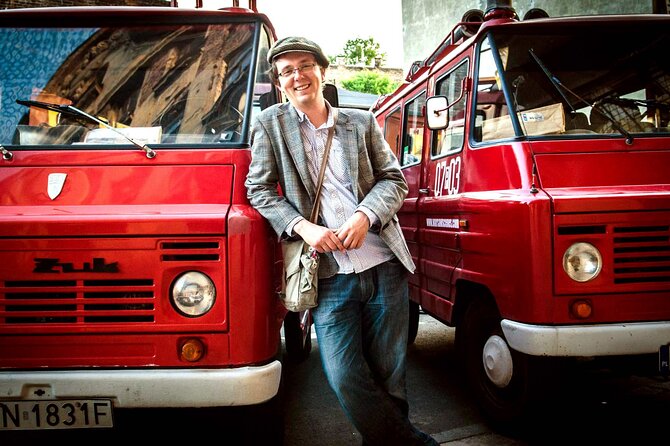
The vintage Żuk is a genuine part of the appeal. It is quirky, compact, and tied to Poland’s communist-era past. Several guides use it as more than simple transportation, and the vehicle adds atmosphere to a tour about Warsaw’s recent history.
Each minibus holds up to eight passengers. The operator has a fleet of five vehicles, with a total tour capacity of up to 39 people. Your own vehicle should feel small-group in practice, though the full departure can be larger across several minibuses.
The vehicle is mainly used to move between stops. You will get out and walk at each location, so wear comfortable shoes and clothing. Classic vehicles do not all have air conditioning, and some do not have seat belts because they are historic vehicles permitted under Polish law. Heating is provided in winter.
That combination makes the ride charming but not luxurious. On a hot day, limited air conditioning may matter. On a cold day, the heating helps, but you should still dress sensibly. If comfort and modern vehicle standards are your top priority, a newer minibus may suit you better.
Guides, pacing, and the value of the personal touch
The guide can shape this experience as much as the route. Marcin is described as flexible and good at adjusting the discussion to questions. Tom is praised for storytelling and historical detail. Mark brings extensive knowledge of Warsaw and Poland’s wartime and communist periods, while Artur is noted for a friendly, clear approach.
Jan, Lucas, and other guides also lead departures. The exact guide is not guaranteed, so book this for the route and format rather than one named person. Still, the repeated emphasis on clear English, humor, visual aids, and personal stories suggests that the guide-led element is central to the value.
Some departures have included a local bakery stop, a Polish meal, or a drink such as cucumber vodka. These extras appear to depend on the guide and timing, so do not book with the expectation that food is included. The listed route itself is about history, neighborhoods, and city life.
Is $133.08 a fair price?
At $133.08 per person, this is not the cheapest way to see Warsaw. You are paying for hotel pickup, a small vehicle, a guide for roughly three hours, and a route that would be awkward to recreate by public transport in the same amount of time.
The value is strongest if you want an introduction to Warsaw’s difficult history without spending a full day in museums. You visit several districts and cover the Jewish Ghetto, both major wartime uprisings, the city’s destruction, Praga, communist rebuilding, and 1989.
The price is harder to justify if you mainly want famous landmarks or a long stop at each site. This is a moving overview, not a museum tour. Think of it as an orientation with serious historical content and local neighborhoods added in.
Who should book this Warsaw tour?
I would choose this tour for a first or second day in Warsaw. It gives you a map in your head, explains why the city looks rebuilt, and points you toward places you may want to revisit on foot.
It suits you especially well if you:
- Want wartime and communist history explained together
- Prefer neighborhoods and street-level context to a checklist of monuments
- Like small vehicles and informal guiding
- Have limited time in Warsaw
- Want hotel pickup from an eligible property
- Plan to visit museums later and need background first
I would think twice if you dislike somber subjects, have difficulty walking between stops, or need modern vehicle comfort. The tour is also less suitable if you want a slow, detailed study of Jewish Warsaw. In that case, pair it with the POLIN Museum and allow extra time for the memorial sites.
Should you book it?
Book it if you want Warsaw explained through its scars, rebuilt streets, and living neighborhoods. The combination of Muranów, the former ghetto bridge site, Praga, communist central Warsaw, and the Żuk minibus gives you more than a standard city circuit.
Choose another format if you want extended museum time, guaranteed food stops, or a modern air-conditioned vehicle. For most visitors seeking a strong first look at Warsaw’s past and present, this is a thoughtful use of half a day, provided you are ready for a quick pace and some very serious history.
FAQ
How long does the Warsaw Behind the Scenes tour last?
The advertised duration is approximately three hours. Individual accounts describe some departures lasting closer to four hours, so allow some flexibility in your schedule.
What time does the tour start?
The listed start time is 10:00 a.m. The exact pickup time is confirmed after booking because the operator collects people from several hotels.
Is hotel pickup included?
Pickup and drop-off are available from hotels listed by the operator. If your hotel is not listed, contact the operator to arrange a convenient pickup point.
What parts of Warsaw does the tour visit?
The route includes Muranów, Chłodna Street, Nowolipki, Bielańska, Praga Północ, and central Warsaw near the former Polish Communist Party headquarters.
Does the tour visit the inside of museums?
No museum admission is included in the listed route. The stops focus on streets, neighborhoods, and historic sites viewed from outside.
How many people fit in each minibus?
Each minibus accommodates up to eight passengers. The operator has five minibuses, and the total activity capacity is listed as 39 people.
Is the tour suitable for children?
The tour can be booked online for children taller than 150 centimeters, or about 4 feet 9 inches. For a child under 150 centimeters, contact the operator in advance to ask about a mandatory booster seat.
Are the vintage minibuses air-conditioned?
The classic vintage minibuses are not equipped with air conditioning. Some also do not have seat belts because they qualify as historic vehicles under Polish law. All vehicles have heating for winter.
What happens if I need to cancel?
You can receive a full refund if you cancel at least 24 hours before the experience start time. Cancellations or changes made less than 24 hours before the start are not accepted for a refund.
Just added around Warsaw
- Wolfs Lair and Swieta Lipka Small Group Tour from Warsaw with Lunch★ 4.5 · 21 reviews
- Wolf’s Lair & Treblinka Tour in 1 day from Warsaw★ 5.0 · 37 reviews
- Tour from Warsaw: Wolf’s Lair, Hitler’s HQ Zones I and II★ 5.0 · 32 reviews
- Wolf’s Lair Private Day Trip from Warsaw★ 5.0 · 50 reviews
- Wolfs Lair “Hitler’s Headquarters” – Full Day Tour from Warsaw by private car★ 4.5 · 4 reviews
- Warsaw Must-See Local City Tour with Antek and Tomek★ 5.0 · 51 reviews
- Off the Beaten Track in Warsaw: Private City Tour★ 4.5 · 9 reviews
- Warsaw’s Old Town A Self-Guided Audio Tour★ 4.5 · 10 reviews
Warsaw Tours, compared.
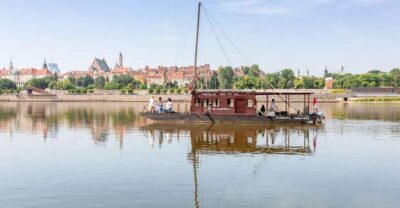
Traditional Galar Cruise on The Vistula River
Read our review →
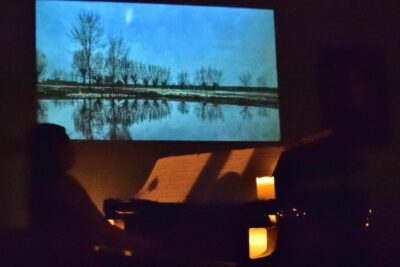
Warsaw Concert: Chopin – Painted by Candlelights with Wine
Read our review →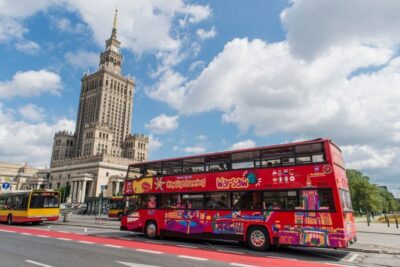
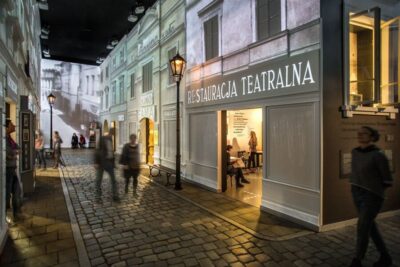
POLIN Museum of the History of Polish Jews Ticket
Read our review →
#1 Pub Crawl Warsaw with Optional Premium 1 Hour Open Bar
Read our review →
Browse the lists this tour appears in