
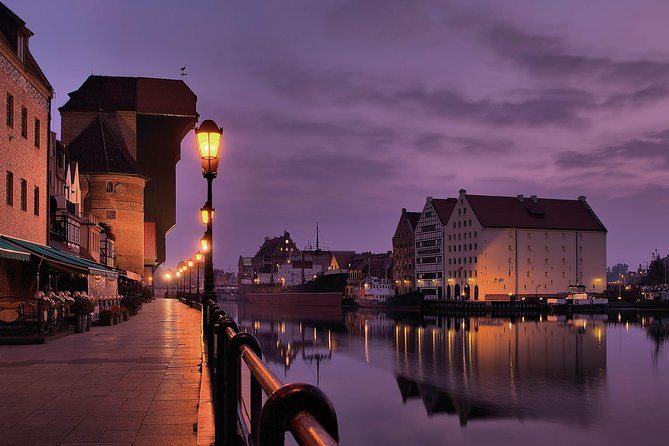
Reviewed · WARSAW TOURS
6 Day Private Tour in Poland with Hotels
Poland packs a lot into six days here: royal cities, sacred sites, Nazi camp memorials, mountain views, salt-carved chapels, and the hometown of Pope John Paul II. The private format lets you travel with only your own group, while a guide-driver such as Rafal, Marcin, or Sebastian may handle the road and the storytelling.
I like the door-to-door transport, since this route covers a large stretch of southern Poland. I also like the blend of major sights and local character, from Warsaw’s rebuilt Old Town to Zakopane’s wooden chapels and Highlander shops. The drawback is pace: six days leaves little free time, and Auschwitz, the Salt Mine, and Zakopane can make several days long.
Key points to know before booking
- Private travel from Warsaw to Krakow: Your own group travels with a guide-driver rather than joining a large coach.
- Five dinners and five breakfasts included: This reduces daily planning and adds a taste of Polish hospitality.
- Auschwitz and Birkenau receive six hours: The visit has the time needed for a serious, unhurried look at the memorial.
- Wieliczka Salt Mine includes three underground hours: Expect chambers, chapels, and sculptures carved from salt.
- Zakopane adds a mountain contrast: Gubalowka Mountain, wooden architecture, religious sites, and Highlander crafts break up the city touring.
- The tour ends near Krakow Airport: Day six includes Tyniec Abbey followed by an airport transfer.
What this six-day Poland route really covers
This is a sightseeing-heavy route designed for first-time visitors who want the major Polish highlights in one booking. You begin in Warsaw and finish with a transfer to Krakow Airport, passing through Czestochowa, Krakow, Auschwitz, Wadowice, Zakopane, and Tyniec.
That route gives you a useful sense of Poland’s variety. Warsaw presents royal and national history. Krakow supplies medieval streets and royal monuments. Czestochowa and Wadowice show the importance of Catholic faith in Polish life. Auschwitz calls for reflection, while Zakopane brings mountain culture and open views.
The private setup matters. You do not need to coordinate with strangers, and the guide-driver can focus on your group’s needs. The tour is listed for a 9:00 a.m. start, and pickup is offered. Since daily touring often runs for several hours, I would treat this as an active trip rather than a relaxed hotel-based holiday.
The price is $4,700 per person. That is a serious outlay, but it covers private transportation, a guide-driver, local guides, hotel accommodation, five dinners, five breakfasts, taxes, and fees. You are paying for one organized route rather than arranging several hotels, long-distance transfers, museum visits, and local guides yourself.
The value is strongest if you want convenience and personal service. It is less compelling if you prefer public transport, long unscheduled breaks, or choosing your own hotels and restaurants. Hotel categories are not specified, so ask what properties are planned before paying.
Other Warsaw days people book alongside this one:
- Warsaw: Chopin Concert in the Old Town
★ 4.8 · 2,287 reviews - Warsaw: Traditional Galar Cruise on The Vistula River
★ 4.6 · 1,640 reviews - Warsaw: Old Town Highlights Walking Tour in English
★ 4.7 · 1,516 reviews
Day one: Warsaw’s parks, Chopin, and rebuilt Old Town
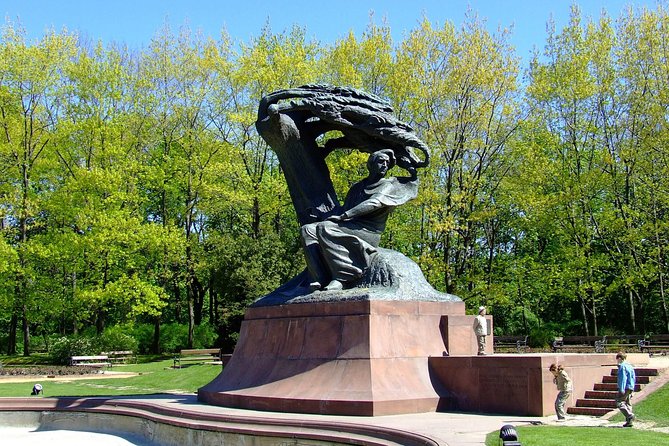
Your first day spends about five hours in Warsaw, beginning at Lazienki Garden. The guided walk leads to the Palace and Frederick Chopin’s monument, giving you an early look at both Polish royal culture and one of the country’s best-known composers.
Lazienki is a welcome opening because it gives you room to walk after arrival. The Chopin monument is especially meaningful in Warsaw, where the composer spent his early years. The tour then allows a short lunch break before moving into the city center.
Warsaw’s Old Town is not an untouched medieval quarter. It was rebuilt after World War II, and that fact is central to what you see. The rebuilt streets and facades lead to the Royal Castle, once the seat of Poland’s kings.
The castle also connects the sightseeing to Polish political history. The Constitution of May 3, 1791 was proclaimed here. It is commonly recognized as the second-oldest written national constitution after the United States Constitution, so your guide can place the castle in a much wider European story.
I like the order of this day. The garden and monument provide a softer start, while the Old Town and Royal Castle bring in the major historical weight. Still, five hours is enough for a guided overview, not a full Warsaw visit. If you want museums, extensive shopping, or a long cafe stop, you will need extra time outside the tour.
Day two: Czestochowa and the Black Madonna
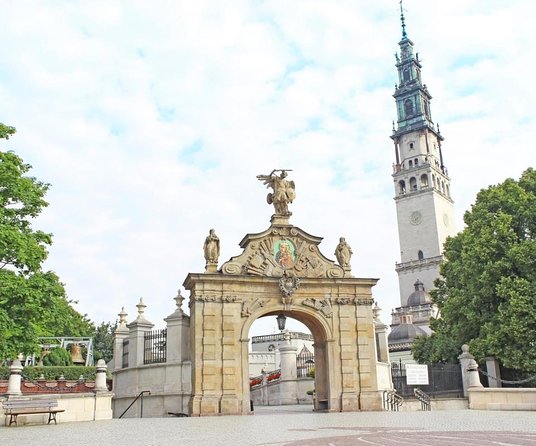
The second day centers on Jasna Gora monastery in Czestochowa, Poland’s most important pilgrimage center. The visit takes about three hours and includes the Basilica, Treasury, and Museum with a local monk as your guide.
The Black Madonna is the focus of the sanctuary. This is not simply a quick church stop. Jasna Gora is a major place of Polish religious identity, and the guided visit gives you context for the objects, art, and devotional traditions gathered here.
You may also participate in Mass. That option will matter most if religious practice is part of your trip, but even visitors who attend mainly for cultural reasons should remember that this is an active sanctuary rather than a standard museum.
Admission is listed as free, though the tour includes local guidance and transportation. The day is more focused than the others, which can be a relief after Warsaw. It also means that your experience will depend strongly on your interest in religious sites and on the timing of services.
Ask your guide about the exact Mass schedule and any visiting rules before you arrive. The provided details do not promise a particular service time, so keep your plans flexible.
Day three: Krakow’s Royal Route and the Wieliczka Salt Mine
Day three pairs two major sights: a four-hour guided visit to Krakow and a three-hour visit to Wieliczka Salt Mine. It is one of the fullest days of the trip, but also one of the most rewarding.
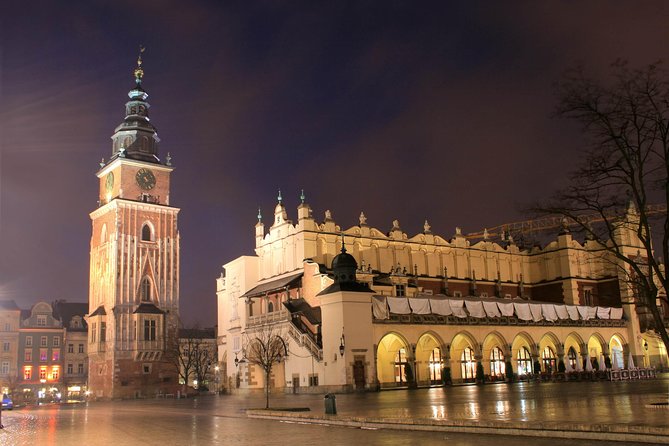
In Krakow, you visit the Main Market Square, St. Mary’s Basilica, and the Cloth Hall. These sites form the heart of the city, and the square gives you a clear sense of Krakow’s scale and old urban design.
The route continues along the Royal Route to Wawel Hill. Here you see the Renaissance Royal Castle and Wawel Cathedral, two places closely linked to Poland’s kings and national story. The route is compact enough to work well with a guide, but you should expect plenty of walking and standing.
After Krakow, the tour heads to Wieliczka Salt Mine. Three hours underground allows time for the mine’s chambers, chapels, and sculptures carved from salt. The site is on the UNESCO World Heritage list, and it feels very different from the open squares and royal buildings earlier in the day.
This is a day when good footwear matters. The tour data does not specify the exact walking conditions or stairs, so ask the operator if mobility is a concern. You should also expect limited personal time in Krakow because the mine visit takes up much of the day.
A few more Warsaw half-days worth comparing
- Warsaw Concert: Chopin – Painted by Candlelights with Wine
★ 4.8 · 1,442 reviews - Warsaw: City Sightseeing Hop-On Hop-Off Bus Tour
★ 3.6 · 1,415 reviews - Warsaw: POLIN Museum of the History of Polish Jews Ticket
★ 4.7 · 1,142 reviews - #1 Pub Crawl Warsaw with Optional Premium 1 Hour Open Bar
★ 5.0 · 790 reviews
Day four: Auschwitz, Birkenau, and Wadowice
Day four is the most emotionally demanding. The Auschwitz and Birkenau visit lasts about six hours and focuses on the former German Nazi camp built during World War II. Today it is a museum and memorial that recalls the crimes of the Holocaust.
Six hours is an important detail. This is not a hurried photo stop between other attractions. You have time for a serious visit, though the subject matter can be difficult and the pace may feel heavy. I recommend approaching the day with patience and respect, and not planning an ambitious evening afterward.
The tour then continues to Wadowice, the birthplace of Pope John Paul II. You visit the Basilica where he was baptized and his family home, which takes about two hours.
The contrast is striking. Auschwitz and Birkenau confront the darkest chapter of twentieth-century Europe, while Wadowice presents a personal and religious story tied to one of Poland’s best-known figures. Placing both on the same day gives you a broad view of Polish memory, but it can also feel like a lot of emotional material in one stretch.
Admission is listed as free for Auschwitz and included for the family home. Your guide-driver and local guides help with the structure of the day, which is useful at a site where context matters.
Day five: Zakopane, wooden chapels, and Gubalowka views
Zakopane brings a change of mood. The five-hour visit focuses on the town’s wooden architecture, mountain setting, religious sites, and Highlander crafts.
You visit Jaszczurowka Chapel, an example of the local wooden style known as Zakopianski Style. The design has been copied in other parts of Poland, so this stop gives you a specific architectural reference rather than just a general look at mountain buildings.
The tour also visits the Sanctuary of Our Lady of Fatima at Krzeptowki. It was built by the people of Zakopane as thanks for the survival of Pope John Paul II after an attempt on his life. That connection makes the sanctuary a meaningful stop for visitors interested in modern Polish Catholic history.
The high point of the day is Gubalowka Mountain, where you can admire views of the Tatras. You then have time for local shops selling Highlander arts and crafts. This is one of the better chances on the tour to buy something tied to the place you are visiting rather than a generic city souvenir.
Zakopane is also one of the few days with a clear outdoor focus. Weather can shape how much you enjoy the mountain views, and the tour details do not promise a particular viewpoint condition. Even so, the wooden architecture and local shopping give the day value if clouds cover the Tatras.
Day six: Tyniec Abbey and the Krakow airport transfer
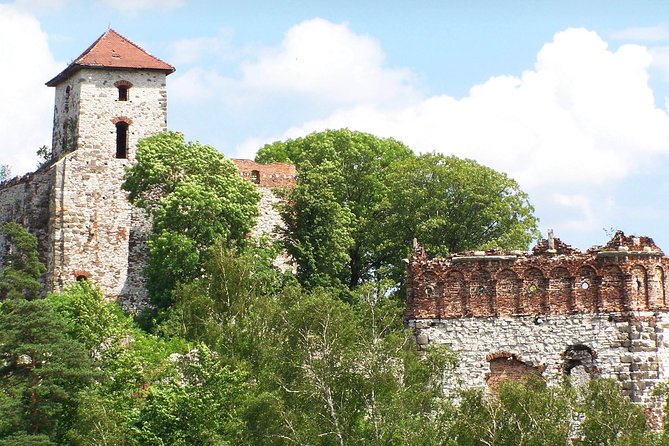
The final day visits Benedictine Abbey of Tyniec, described as the oldest abbey in Poland. The visit lasts about two hours, followed by a transfer to Krakow Airport.
This is a sensible final stop because it adds one more historical site without requiring a full day of touring. The abbey gives you a quieter ending after Auschwitz, Zakopane, and the busy Krakow region.
The airport transfer is useful, but check your flight time carefully. The tour data does not give a departure schedule or a guaranteed arrival buffer. Tell GFP Travel your flight details when arranging the trip so the transfer can be planned around them.
Guides, hotels, meals, and the private format
Your guide-driver is central to the experience. The available information names Rafal, Marcin, and Sebastian as guides associated with different groups, while Tomasz handles communication and tour planning. You should not assume a particular guide unless GFP Travel confirms one for your booking.
The strongest practical benefit is having one company coordinate transportation, hotels, local guides, and meals. You receive five breakfasts and five dinners, so the basic rhythm of the trip is covered. Lunch is not listed as included, and day one specifically allows a short lunch break, so budget separately for midday meals.
Hotel accommodation is included, but no hotel names, star ratings, or room details are provided. Ask about location, room type, and whether single supplements apply if you are not sharing. One useful detail is that a Krakow-area hotel used for a previous group was near the main square, but that does not guarantee the same property for your booking.
Private travel also makes this suitable for families, couples, and small groups with shared interests. A group interested in Holocaust history can give Auschwitz more personal attention. A family tracing Polish roots may be able to request extra stops, although the supplied details only confirm that the tour is private, not that custom genealogy stops are included.
Who will get the most from the $4,700 price
I would consider this tour if you want Poland’s major sights with very little planning. The combination of private transport, hotels, meals, guide-driver service, and local guides removes much of the work involved in joining Warsaw and southern Poland in one trip.
The cost makes less sense if you want to set your own pace. You may find six days tight, especially with a full Auschwitz day, the Krakow and Wieliczka pairing, and the trip to Zakopane. Independent travelers who enjoy comparing hotels and using trains could spend less, but they would also be responsible for arranging the moving parts.
The most praised qualities tied to this service are prompt communication, caring attention, strong country knowledge, and guides who go beyond basic driving. Rafal, Marcin, and Sebastian are specifically associated with positive experiences, while Tomasz is described as efficient with planning and email communication. Treat those names as useful points to request, not a promise of assignment.
The non-refundable policy deserves serious attention. Once booked, the amount paid cannot be refunded or changed for any reason. I would confirm your dates, flight plans, room needs, and guide expectations before committing.
Should you book this Poland tour?
Book it if you want a private, tightly planned introduction to Poland and value having transport, hotels, meals, and guides arranged in one package. It is especially well suited to first-time visitors, families, small groups, and anyone who wants Auschwitz, Krakow, Wieliczka, Zakopane, and Warsaw without managing each transfer alone.
Skip it if free time is your top priority, if you want to choose every hotel and meal, or if the non-refundable $4,700 commitment feels too high. Before booking, ask for the hotel list, the likely guide, the daily driving schedule, and the exact airport transfer timing. Those answers will tell you whether the convenience matches your budget and touring style.
FAQ
Where does the six-day tour begin?
The tour begins in Warsaw, with a listed start time of 9:00 a.m. Pickup is offered.
Where does the tour end?
The final day includes a visit to Tyniec Abbey followed by a transfer to Krakow Airport.
Is this a private tour?
Yes. Only your group participates in the private activity.
What meals are included?
The package includes five breakfasts and five dinners. Lunches are not listed as included.
Is accommodation included?
Yes. Hotel accommodation is included, though specific hotel names and categories are not provided.
Does the tour include a visit to Auschwitz?
Yes. Day four includes a roughly six-hour visit to Auschwitz and Birkenau, now a museum and memorial.
Are local guides included?
Yes. The package includes local guides as well as tour guide-driver services.
Can I cancel or change the booking?
No. The experience is non-refundable and cannot be changed for any reason.
Just added around Warsaw
- Wolfs Lair and Swieta Lipka Small Group Tour from Warsaw with Lunch★ 4.5 · 21 reviews
- Wolf’s Lair & Treblinka Tour in 1 day from Warsaw★ 5.0 · 37 reviews
- Wolfs Lair “Hitler’s Headquarters” – Full Day Tour from Warsaw by private car★ 4.5 · 4 reviews
- Tour from Warsaw: Wolf’s Lair, Hitler’s HQ Zones I and II★ 5.0 · 32 reviews
- Wolf’s Lair Private Day Trip from Warsaw★ 5.0 · 50 reviews
- Warsaw’s Old Town A Self-Guided Audio Tour★ 4.5 · 10 reviews
- Warsaw Must-See Local City Tour with Antek and Tomek★ 5.0 · 51 reviews
- Off the Beaten Track in Warsaw: Private City Tour★ 4.5 · 9 reviews
Warsaw Tours, compared.
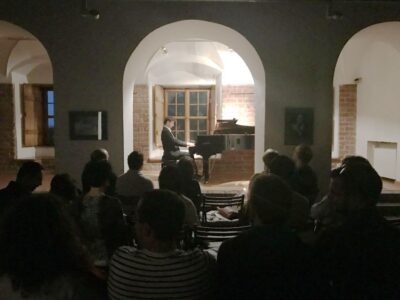
Traditional Galar Cruise on The Vistula River
Read our review →
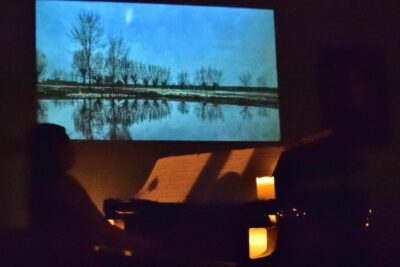
Warsaw Concert: Chopin – Painted by Candlelights with Wine
Read our review →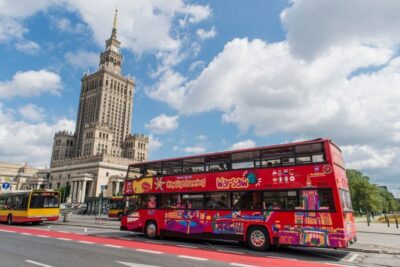
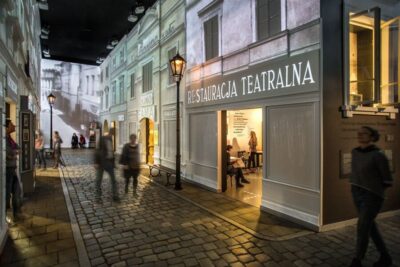
POLIN Museum of the History of Polish Jews Ticket
Read our review →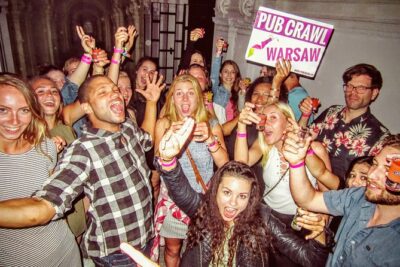
#1 Pub Crawl Warsaw with Optional Premium 1 Hour Open Bar
Read our review →
Browse the lists this tour appears in