
Reviewed · ZALIPIE PAINTED VILLAGE
From Krakow: Zalipie Village Day-Tour
Zalipie is a Polish village where flowers climb across house walls, fences, wells, stables, and even humble farm buildings. The best part is not simply taking photos of pretty facades. With a guide such as Damian or Wojtek, you can learn how this folk tradition grew and, when arrangements allow, meet the people who still paint it.
I like the private format, which gives you room to stop for photos and ask about Poland beyond Zalipie. I also like the visits to Dom Malarek and Felicja Curyłowa Cottage, since they give the painted houses some cultural context. The main drawback is value: at $61 per person, it costs more than a shared coach trip, and food options in the village can be limited, especially outside the busy season.
Key points to know before booking
- A 100-year floral painting tradition: Zalipie’s decorative style began in the late 19th century and remains part of local identity.
- Private transport from Krakow: Hotel pickup and drop-off save you the trouble of finding a route to this rural village.
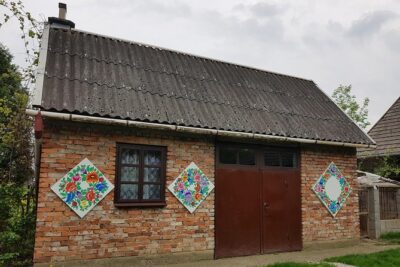
- More than house fronts: You may see painted fences, wells, stables, chicken coops, church interiors, and private homes.
- Local artists can add the human touch: Guides have personal connections in the village and may arrange meetings or home visits.
- Three hours in Zalipie: The visit allows time for sightseeing, photos, museums, and the Church of St. Joseph.
- Bring snacks and water: Food service is not included, and options may be scarce in the off season.
Why Zalipie feels different from a standard day trip
Many day trips from Krakow focus on major monuments, difficult wartime history, or grand natural sights. Zalipie offers something quieter: a working rural community shaped by a distinctive art tradition.
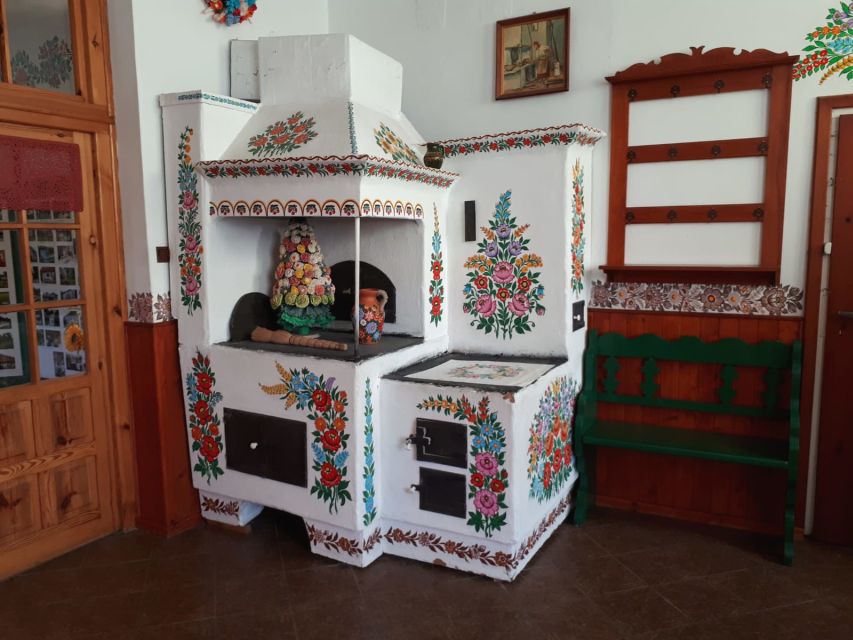
The custom began when village women decorated the interiors of their homes with floral patterns. Over time, the flowers moved outdoors. Walls, doors, window surrounds, wells, fences, stables, and other small structures became places for color and pattern.
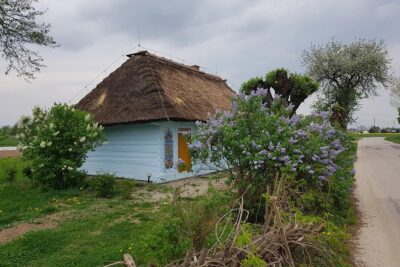
You will not find every building painted from roof to foundation. That is part of the appeal. The decorated houses appear among ordinary homes, gardens, fields, and farm buildings. The result feels like a real village with a local tradition, not a purpose-built folk park.
I think this distinction matters. You are not just looking at a collection of displays. You are seeing how an artistic custom became part of daily life. A guide can explain the difference between a museum piece and a private home, and can help you notice details you might otherwise pass by.
The village is also a good change of pace after several days in Krakow. The ride takes you into the Polish countryside, and the six-hour schedule gives you a half-day away from city streets without taking up your entire day.
More trips to the painted village of Zalipie:
- From Krakow: Guided Tour of Zalipie
★ 4.6 · 30 reviews - ZALIPIE – painted village, unique PRIVATE tour from Krakow
★ 5.0 · 20 reviews - Krakow: Zalipie Village Tour
★ 4.6 · 8 reviews
The drive from Krakow to rural Lesser Poland
Your day begins with pickup in Krakow. The driver finds you in your hotel lobby, or outside the building if you are staying in an apartment. Transport is by air-conditioned car, and the tour is arranged as a private group rather than a large bus outing.
That private setup is the tour’s practical strength. You do not need to work out rural connections, watch a group leader’s flag, or wait while a full coach loads. You can talk with your guide during the drive, ask about Polish customs, and request a little extra time for photographs.
The guides are also part of the experience. Wojtek, Bart, Damian, Mateusz, Alex, Simon, and others have led this route, and the strongest part of their work is the combination of driving, translation, and local explanation. Some guides have personal relationships with residents and artists in Zalipie. That can open doors that are not obvious to someone arriving alone.
The drive itself is not the main attraction, but it helps you see a less urban side of Poland. Several guides have taken the scenic countryside route, and the journey provides time to ask about local life and the surrounding area. If you have questions about Polish food, customs, or places to eat back in Krakow, this is a useful time to ask.
Painted houses, fences, wells, and farm buildings
Once in Zalipie, expect to move between several points rather than simply park beside one famous house. The painted details appear across the village, often on structures that would be easy to overlook.
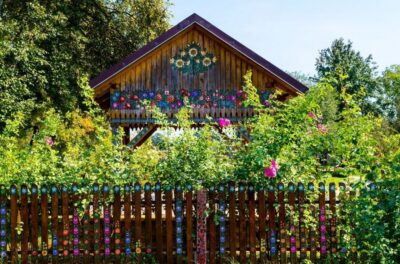
Look for floral designs around windows and doors, along fences, on wells, and on stables and chicken coops. The patterns are not all identical. You may see differences in flowers, colors, layout, and the amount of decoration used by each artist or household.
This is where a guide earns the fee. On your own, you could photograph attractive buildings, but you might not know which ones are important, which are private, or where to find the less obvious examples. Guides also help with translation and may introduce you to local artists or families when the opportunity is available.
Several guides have arranged visits inside private homes. These are not guaranteed as a fixed public display, so you should treat them as a possible bonus rather than a promised stop. If they happen, they add a personal side to the art. You may see how a householder lives with the tradition rather than viewing it only behind museum glass.
Please be respectful with photography. A painted wall may be part of someone’s home, not a public exhibit. Ask before photographing people or entering private property, and let your guide handle introductions.
Dom Malarek, the House of the Female Painters
Dom Malarek, or the House of the Female Painters, helps explain how Zalipie’s floral art is kept alive. It is connected with local women artists and gives you a closer look at the work behind the decoration.
This stop is useful because the village can otherwise seem like a series of charming photo spots. At Dom Malarek, you get more of the process and tradition. Depending on the visit, you may see artists working and learn about the stages involved in creating the painted designs.
The center also offers a chance to understand the social side of the craft. This was not an art movement created for tourists. It grew from local women decorating their homes, then continued through generations and public recognition.
English explanations depend on your guide, but the guides routinely translate museum and cultural information. Alex, for example, has helped visitors understand material that would otherwise be available only in Polish. That translation is important here, since the meaning of the displays may not be obvious from the paintings alone.
A few more Krakow half-days worth comparing
- Kraków: Evening or Night River Cruise
★ 4.0 · 7,386 reviews - Krakow: Oskar Schindler’s Factory Entry Ticket & Guided Tour
★ 4.2 · 3,793 reviews - Krakow: City Sightseeing Tour by Electric Golf Cart
★ 4.5 · 3,264 reviews - Krakow: Schindler’s Factory Tour with Entrance Ticket
★ 4.5 · 3,182 reviews
Felicja Curyłowa Cottage and the story behind the style
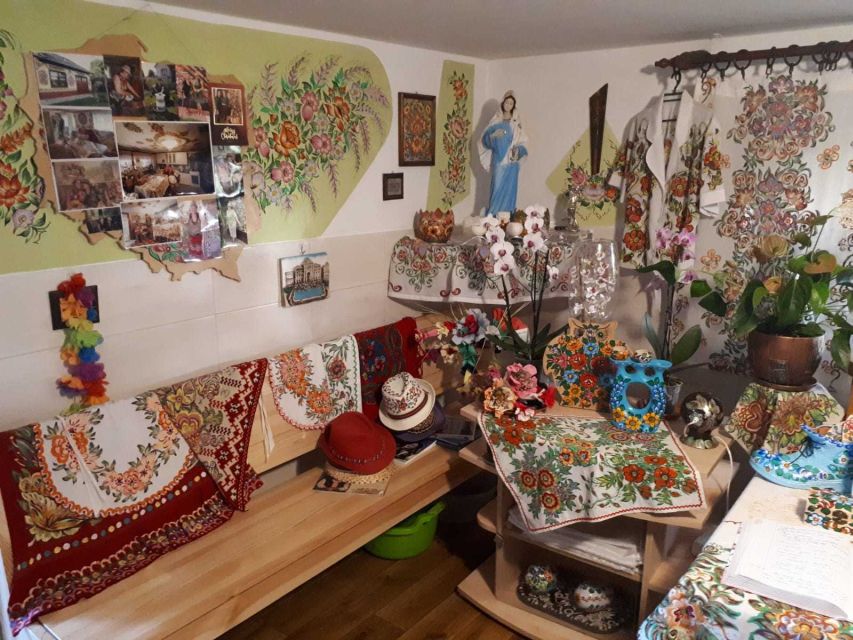
The Felicja Curyłowa Cottage is one of the most important stops in Zalipie. Curyłowa was a well-known local artist whose work helped bring attention to the village and its floral painting tradition.
The cottage gives you a more personal setting than a general village walk. It connects the style to one artist’s home and career, while showing how decoration could cover many parts of domestic life.
I would pay attention to the ordinary objects as much as the painted walls. The point is not just that the cottage is colorful. It helps show how folk art can be part of rooms, household objects, and practical spaces instead of being separated from daily use.
This stop is particularly worthwhile if you enjoy folk art, domestic history, or craft traditions. If you mainly want a quick collection of Instagram photos, you may find the historical explanation slower. The tour works best when you give yourself time to understand why the cottage matters.
The Church of St. Joseph and floral religion
The Church of St. Joseph the Betrothed adds a religious layer to the visit. It is a small church with floral motifs inside, linking local belief, community life, and the same decorative tradition found on village buildings.
The church is not a giant architectural sight. Its value comes from the way it fits the village. The interior decoration shows that the floral style is not limited to private houses or craft centers. It also appears in a place used by the wider community.
Your guide can explain what you are seeing and help with translation. As with any church, dress and behavior should be respectful, particularly if services or local activity are taking place.
For me, this is a useful stop because it broadens the story. Zalipie is not just a pretty village. Its art has a place in home life, community spaces, and religious settings.
Three hours in the village, with room for real encounters
The scheduled sightseeing time in Zalipie is about three hours. That is enough for the main cultural stops, several painted buildings, photographs, and a relaxed conversation with your guide.
The private format can make those three hours feel flexible. Guides have waited patiently while people take many photos, adjusted the pace for their group, and helped arrange coffee, ice cream, or a meal when local options were available.
Still, do not assume that food will be easy to find. Food and drinks are not included, and one visit in early October had no open food options in the village. Bring water and a few snacks. Your guide may offer a rest-area stop or suggest a local place during busier periods, but that should be treated as help rather than part of the fixed tour.
The village can also feel different by season. Summer may offer more open businesses and outdoor activity. The off season may be quieter, but you could find fewer services. The art remains the reason to go, yet practical planning matters.
What $61 per person really buys you
At $61 per person, this is not the cheapest way to see a Polish village. You are paying for private transport, hotel pickup and return, a licensed English-speaking guide, entrance tickets, and the convenience of having someone else handle the route.
For two people, the price can feel reasonable if you value privacy and personal attention. You are not only buying admission to a cottage or cultural center. You are paying for the drive from Krakow, local navigation, translation, and possible introductions to residents and artists.
The value is strongest when your guide is active and engaged. Damian, Mateusz, Bart, Wojtek, and others have been praised for explaining the art, answering wider questions about Poland, and making the day feel personal. A guide who knows local people can show you more than a self-guided visit.
The price may feel high if you are mainly looking for transportation and a quick photo stop. One practical alternative would be sharing transport with another couple, but this experience is specifically arranged as a private group. If keeping the cost down matters most, compare the price with other private day trips from Krakow before booking.
Free cancellation up to 24 hours before departure and the option to reserve now and pay later make the booking less rigid. Those terms are useful if your Krakow schedule is still shifting.
Who will enjoy this half-day outing
I would choose this tour if you like folk art, local craft, photography, small communities, or quieter cultural experiences. It is also a good fit if you want to leave Krakow without spending a full day on the road.
Families, couples, and solo visitors can all benefit from the private arrangement. A solo participant has sometimes received the same personal attention as a couple, while couples have enjoyed having a guide adjust the pace around photographs and questions.
You should also consider it if you do not speak Polish. The guide can translate museum information and conversations, which makes a difference when local art and personal stories are central to the visit.
I would think twice if you want a packed schedule of major monuments, substantial meals, or a large selection of shops. Zalipie is small and rural. Its appeal lies in careful looking, conversation, and the chance to see a local custom in its own setting.
Wear comfortable shoes and comfortable clothes. You will be walking around village sites and standing for explanations and photographs. The tour includes transport, but it is not simply a drive-by sightseeing route.
Should you book the Zalipie tour from Krakow?
Book it if you want a gentle, unusual side trip and value a guide who can connect the paintings to real people. Dom Malarek, Curyłowa Cottage, the Church of St. Joseph, and the decorated farm buildings create a fuller experience than a quick stop for photographs.
The strongest reason to choose LinkPoland is the private guiding. Ask about the day’s guide when possible, and mention that you are interested in meeting local artists or seeing private painted homes. Those encounters depend on availability, but they can turn a pretty outing into a meaningful one.
At $61 per person, the cost is fair for private transport and personal guiding, though not a bargain. Bring snacks, allow for a quieter rural pace, and book this tour when you want to see a very specific part of Polish culture rather than another major city attraction.
FAQ
How long is the Zalipie tour from Krakow?
The experience lasts six hours in total, including pickup from Krakow, the visit to Zalipie, and the return journey.
How much time do I spend in Zalipie?
The sightseeing portion in Zalipie lasts about three hours.
Is hotel pickup included?
Yes. Hotel pickup and drop-off in Krakow are included. At a hotel, the driver looks for you in the lobby. For an apartment, the driver meets you at the front of the building.
Is the tour private?
Yes. The activity is arranged for a private group.
What language does the guide speak?
The live guide speaks English, and the activity includes an English-speaking driver.
What sites are included in Zalipie?
The tour includes painted village buildings, Dom Malarek, Felicja Curyłowa Cottage, and the Church of St. Joseph. You may also see decorated fences, wells, stables, and other farm structures.
Are entrance tickets included?
Yes. Entrance tickets are included in the tour price.
Are food and drinks included?
No. Food and drinks are not included. Bring water and snacks, especially if you visit outside the busy season when food options may be limited.
What should I wear or bring?
Bring comfortable shoes and comfortable clothes. Water and snacks are also useful.
Can I cancel the booking?
You can cancel up to 24 hours before the activity for a full refund. The reserve-now-and-pay-later option is also available.
Just added around Krakow
- stag dog chase Krakow prank★ 5.0 · 4 reviews
- Divine Mercy Sanctuary – Private Tour from Krakow★ 5.0 · 4 reviews
- ZALIPIE – painted village, unique small group tour from Krakow★ 5.0 · 7 reviews
- ZALIPIE – painted village, unique PRIVATE tour from Krakow★ 5.0 · 20 reviews
- Zalipie Private Tour from Krakow The Painted Village★ 5.0 · 4 reviews
- Wooden Churches Unesco List Private Tour from Krakow★ 5.0 · 14 reviews
- Guided tour to Salt Mine & Schindler Factory with Pick-Up Options★ 4.0 · 58 reviews
- Wawel Castle, Cathedral, & Rynek Underground Tour with Lunch★ 5.0 · 4 reviews
Zalipie Painted Village, compared.
ZALIPIE – painted village, unique PRIVATE tour from Krakow
Read our review →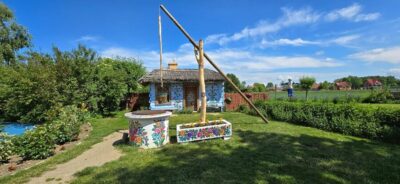
ZALIPIE – painted village, unique small group tour from Krakow
Read our review →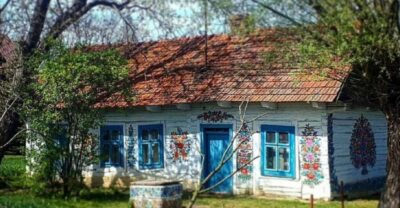
Guided Day Tour of Zalipie Village & Museum Entry
Read our review →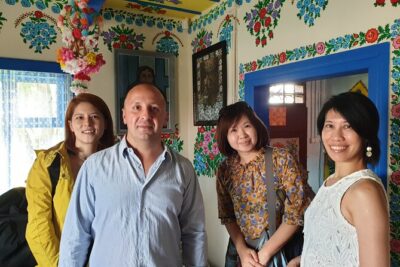
Zalipie Private Tour from Krakow The Painted Village
Read our review →Browse the lists this tour appears in