Reviewed · KRAKOW TOURS
Krakauer old town tour
Krakow’s Old Town is a rare place where a short walk brings you from medieval city walls to royal courtyards, university halls, churches, and a dragon below Wawel Hill. I like the well-shaped Royal Route, which links the city’s main sights instead of treating them as scattered photo stops. I also like the storytelling, especially the mix of kings, Copernicus, Pope John Paul II, and Krakow’s best-known legend.
The main consideration is pace. One recent German-speaking tour was described as informative but somewhat rushed, and 150 minutes is not long enough for every stop to receive equal attention. This is a walking tour in German, so you should be comfortable listening while moving between sights.
Key points to know before you book
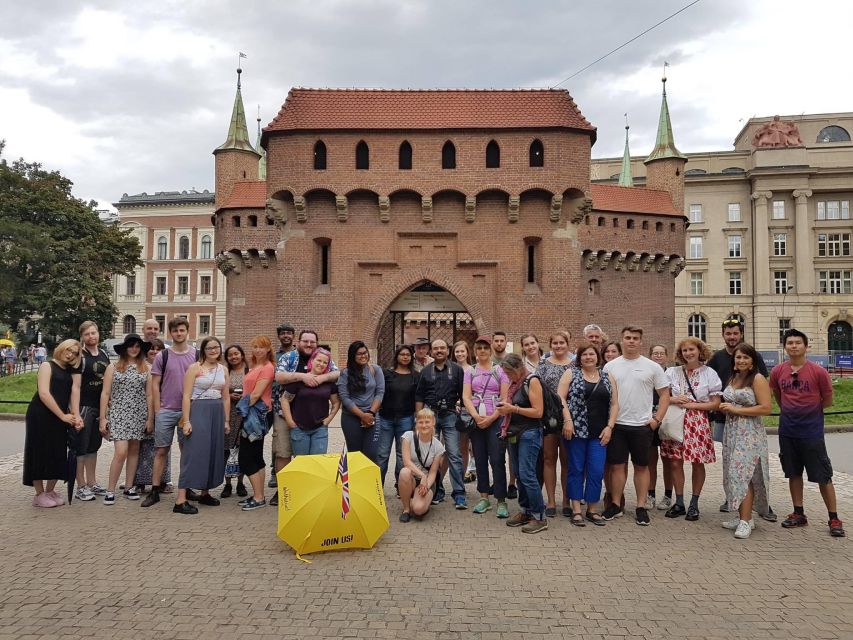
- The route follows Krakow’s Royal Route: You walk from the medieval Barbican and St. Florian’s Gate toward the Main Market and Wawel Hill.
- Wawel is the grand finale: The tour includes the castle courtyard, cathedral area, hilltop setting, and the Wawel dragon.
- Collegium Maius adds a scholarly side: You visit the oldest building at Central and Eastern Europe’s oldest university.
- German is the tour language: Guides such as Monika have been praised for excellent German, clear explanations, and gentle humor.
- Expect a brisk 150-minute walk: The tour works well for first-time orientation, but it is not a slow museum visit.
- The price is $26 per person: That is good value if you want structure, local stories, and several major sights in one outing.
Starting between the Barbican and St. Florian’s Gate
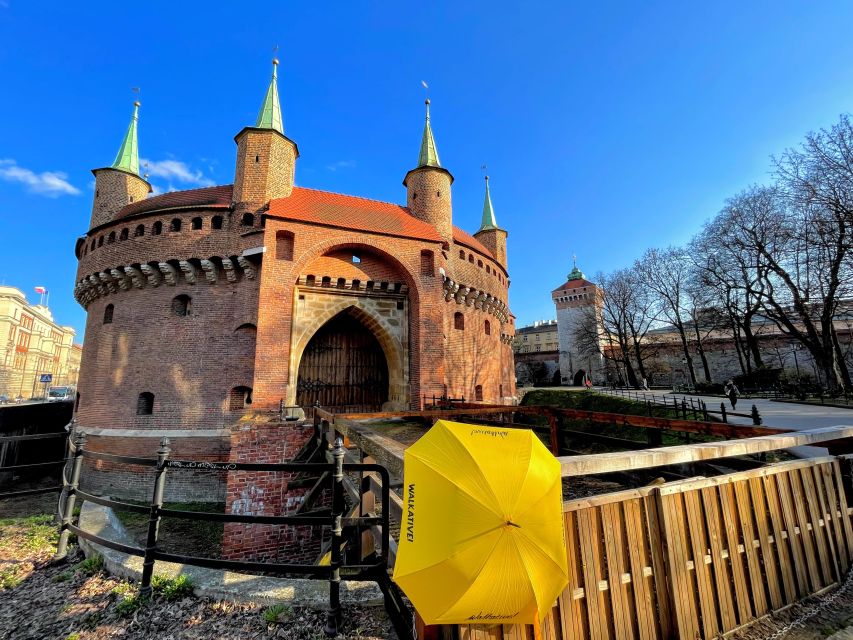
Your meeting point is a small area between the Barbican and St. Florian’s Gate, the old medieval entrance to Krakow. This is a useful place to begin because you are already beside two of the city’s most recognizable defensive remains.
The Barbican is a rounded brick fortification built to protect the approach to the city. St. Florian’s Gate once formed part of the medieval entrance system, and together the two sites help you picture Krakow as a walled city rather than simply a collection of handsome streets.
I like this opening because it gives you a clear sense of transition. You begin outside the old center, then pass through the historic gateway toward the city that once served as the capital of a major European kingdom. The guide can explain how Krakow’s defenses fit into its wider story before the route turns toward grander buildings.
Arrive ready to walk. The meeting point is not a hotel pickup, and transport back to your accommodation is not included. The tour takes place in all weather, although a roof is found if rain or cold makes standing outside unpleasant.
A few more Krakow half-days worth comparing
- Kraków: Evening or Night River Cruise
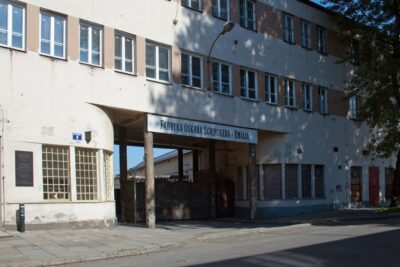
★ 4.0 · 7,386 reviews - Krakow: Oskar Schindler’s Factory Entry Ticket & Guided Tour
★ 4.2 · 3,793 reviews - Krakow: City Sightseeing Tour by Electric Golf Cart
★ 4.5 · 3,264 reviews
Walking the Royal Route into the Main Market
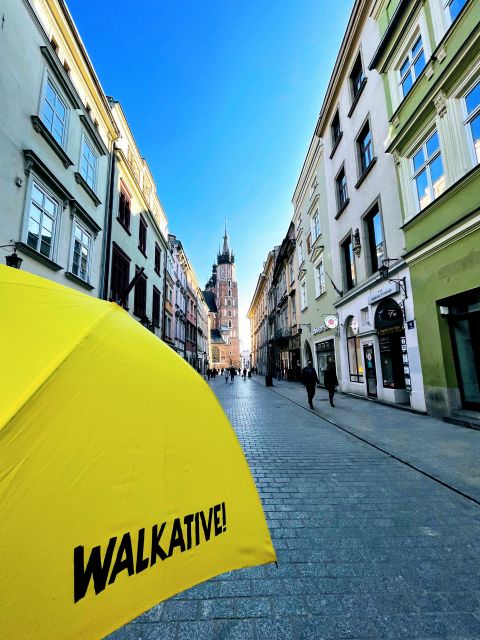
From the old gate, the route heads through the historic center toward Krakow’s Main Market. This is the part of the walk that gives you your bearings quickly. Streets lead toward one of Europe’s most important medieval squares, with churches, town buildings, arcades, and historic commercial spaces gathering around it.
The Main Market is not just a large open square. It has long been the city’s public stage, where trade, ceremony, politics, and daily life met. The guide’s job here is to connect the architecture with the people who used it, including rulers, merchants, artists, scholars, and church officials.
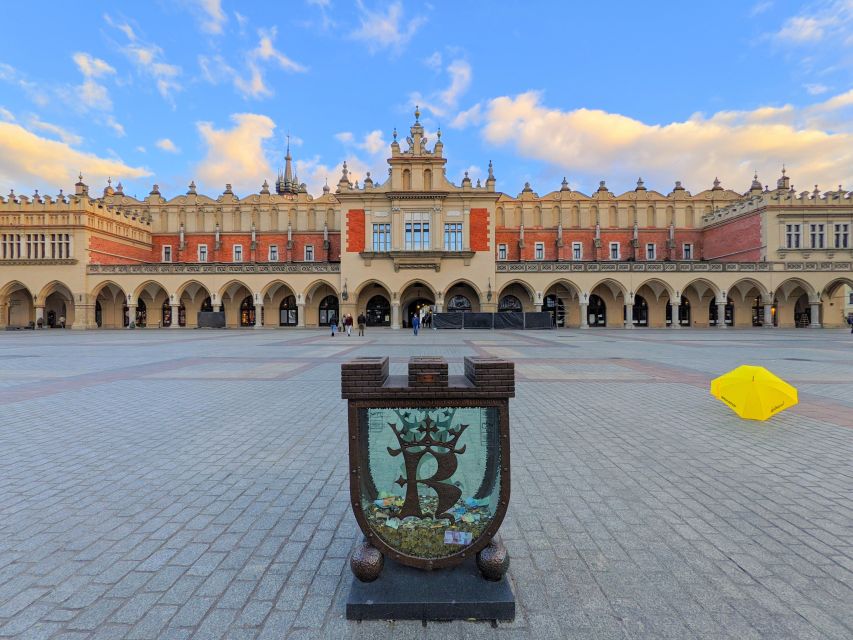
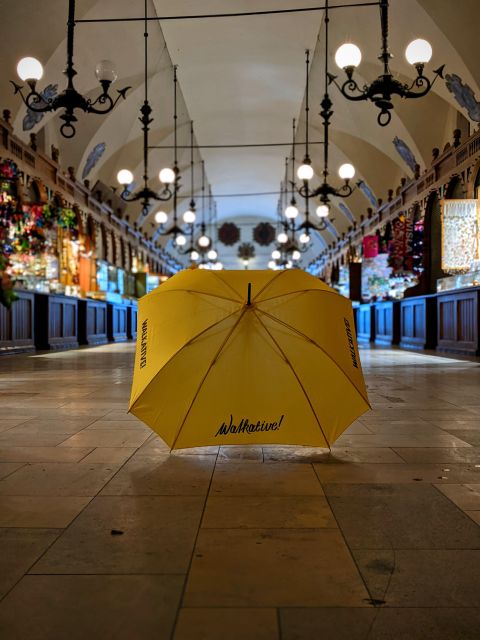
The Cloth Hall, known locally as Sukiennice, sits at the center of the square. Its name comes from the cloth trade that once made this area a key commercial point. Today, its arcades make it one of Krakow’s most photographed buildings, but the useful thing about a guided stop is learning why this building belongs at the heart of the market.
You should have time to look up and around, but do not expect an extended shopping break. Snacks are not included, and this is not designed as a food tour. If you want a coffee or pastry, plan it before or after the walk rather than counting on a long pause during the route.
St. Mary’s Basilica and the sound from the tower
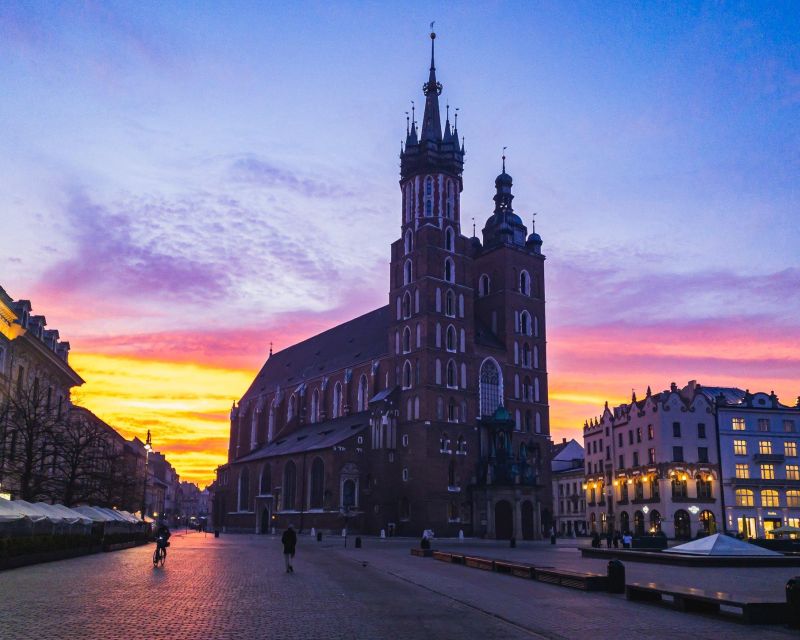
St. Mary’s Basilica is one of the tour’s essential stops. Its twin towers give the Main Market much of its familiar outline, while the church itself points to the religious and civic importance of Krakow’s center.
The most famous detail is the trumpeter’s call from the taller tower. The melody stops suddenly, a small but memorable ritual tied to a traditional warning story. You learn the legend as part of the city’s wider collection of tales about danger, loyalty, and sudden interruption.
This is a good example of what a guide adds. You can see the towers on your own, but the story gives the sound a place in Krakow’s character. The stop also helps you understand how medieval cities used church towers for both worship and practical warning.
Because the walk includes several major landmarks, the guide may keep the group moving rather than offering a long interior visit. The focus is on context and storytelling, not a detailed examination of every artwork or chapel.
Collegium Maius and Krakow’s university tradition
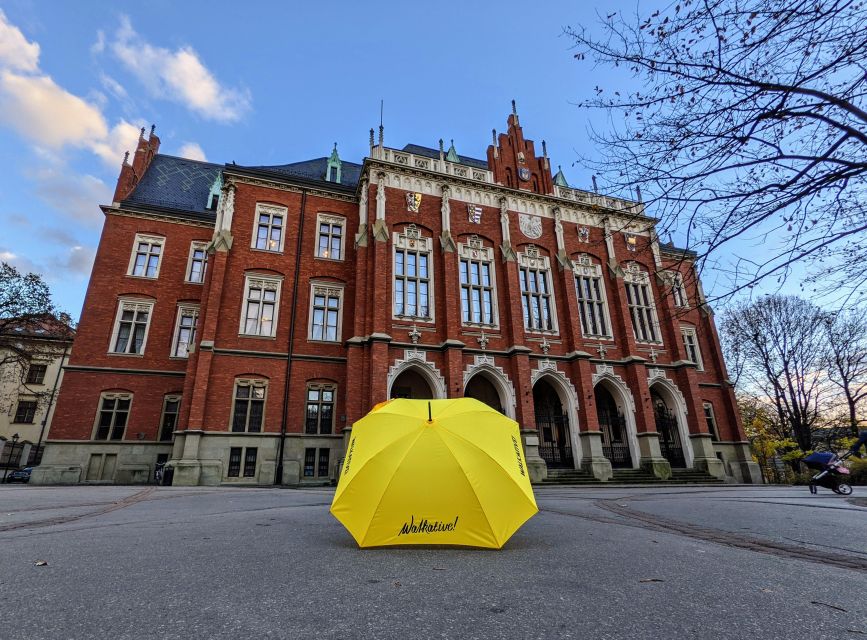
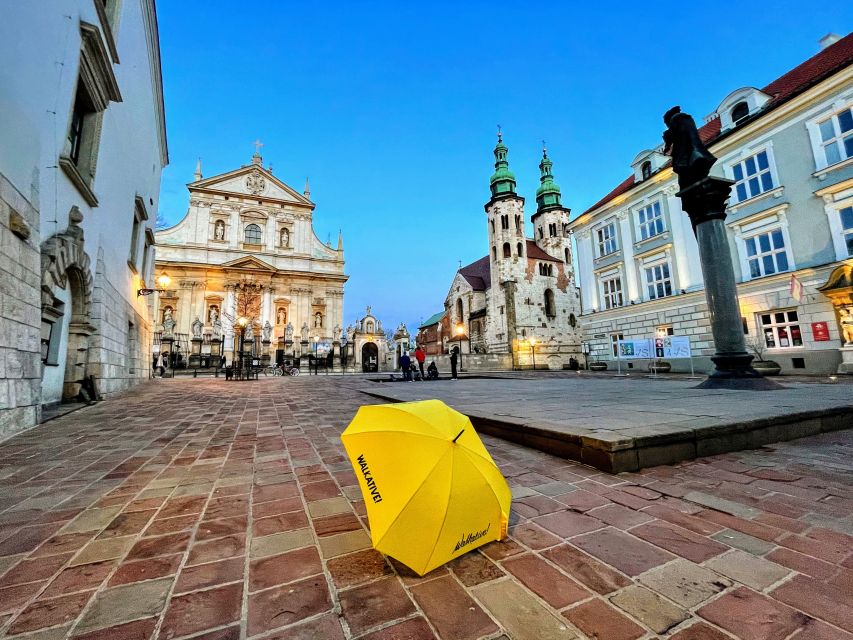
The route then reaches Collegium Maius, the oldest building of the Jagiellonian University. This stop changes the mood of the tour. After defensive walls, royal power, and church towers, you get a look at Krakow as a center of study.
The university attracted scholars from across Europe, and its streets were once part of the world of astronomy, law, theology, and philosophy. Copernicus passed through these streets, a detail that gives the old university quarter a strong connection to the history of science.
A visit to Collegium Maius is included, which adds real value to the $26 price. You are not only looking at the outside of a famous building. You get access to part of the university setting and a clearer sense of how Krakow’s intellectual life developed during its strongest period in the 15th and 16th centuries.
Do keep your expectations in check. The supplied information does not describe a full museum tour or a long interior presentation. Think of this as a focused stop within a walking route, not a separate university visit.
Same city, a completely different kind of day:
- Krakow: Schindler’s Factory Tour with Entrance Ticket
★ 4.5 · 3,182 reviews - Krakow: City Sightseeing Tour Eco Electric Buggy Golf Cart
★ 4.7 · 3,143 reviews - Krakow: Schindler’s Factory Skip-the-Line Ticket
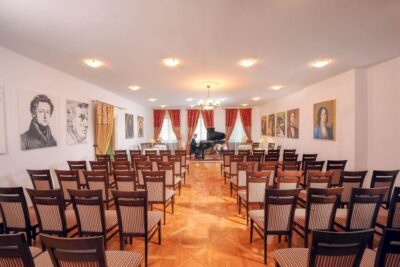
★ 4.4 · 3,105 reviews - Krakow: Chopin Piano Recital at Chopin Concert Hall
★ 4.7 · 2,330 reviews
From the Archbishop’s Palace to the papal window
The tour continues to the Archbishop’s Palace, known for its connection to Pope John Paul II. The famous papal window is associated with the time when he met people gathered outside the palace.
This stop brings the story into more recent Polish history. Krakow is not only a medieval and royal city. It is also a place where religious life, national identity, and modern Polish memory meet. The guide can help place the palace within that story without separating the present city from its older layers.
I like the range here. In one afternoon, you move from medieval defenses to university history and then to a site linked with one of Poland’s most important modern figures. That variety keeps the tour from becoming a string of similar stone facades.
Wawel Hill, cathedral, and the castle courtyard
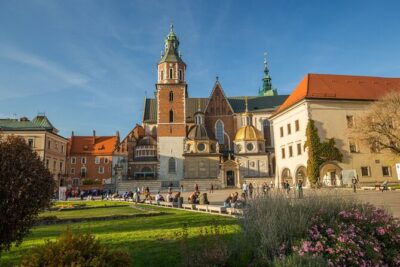
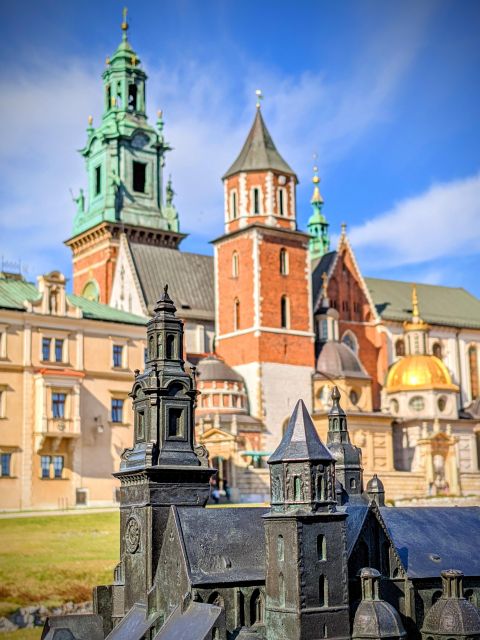
The route’s largest historical setting is Wawel Hill. The hill rises above the Vistula area and holds Krakow’s cathedral and royal castle complex. For centuries, this was the center of Polish royal power, so it is the place where the stories of kings and palaces come together.
The tour includes the Wawel cathedral area and the castle courtyard. This matters because Wawel is not a single building with one simple story. It is a royal, religious, and symbolic center, and the courtyard helps you read the complex as a whole.
The guide’s explanation is especially useful here. Without context, you might see a grand castle and a cathedral and move on. With the right story, you begin to understand why Krakow’s Old Town and Wawel belong on the UNESCO World Heritage list, and why the city has remained such an important destination.
The tour does not promise a full visit to every castle interior or a detailed museum program. If you want to spend hours examining royal rooms, art, or cathedral chapels, you will need extra time after the walk. The strength of this tour is orientation and interpretation, not exhaustive indoor sightseeing.
The Wawel dragon and Krakow’s lighter side
Below Wawel Hill, you reach the Wawel dragon. The creature is tied to one of Krakow’s most famous legends, a story that gives the city a playful counterweight to its kings, bishops, and scholars.
This is more than a children’s stop. Krakow’s identity includes serious political and religious history, but it also includes tales passed from one generation to the next. The dragon lets the guide show you how legend helps a city explain its own landmarks.
It also makes a natural finish. After the formal weight of Wawel Castle and the cathedral, the dragon sends you away with something easy to remember. You leave with kings in your head and a monster by the river, which is a fair picture of Krakow’s personality.
Guide style, language, and pace
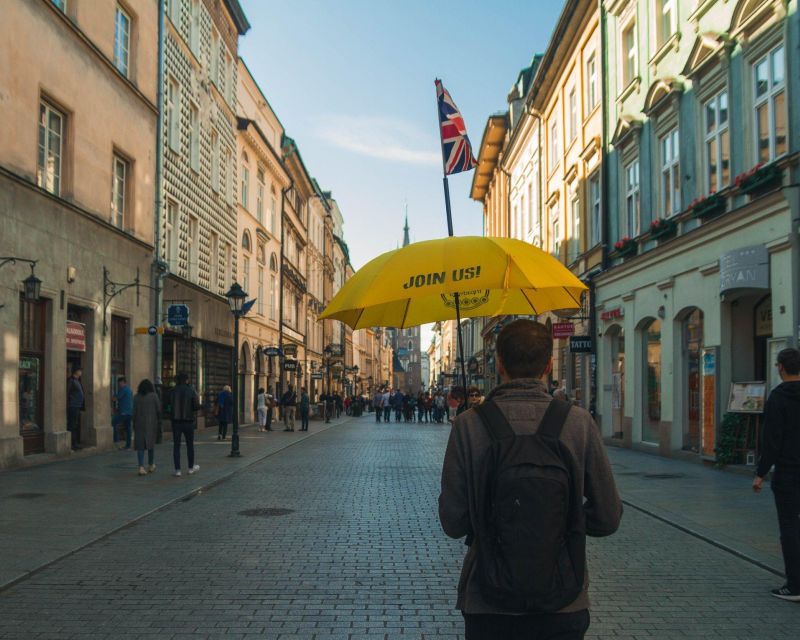
The tour is offered in German. That is important enough to check before booking, since no other language is listed. If German is your strong language for guided sightseeing, the tour should feel much more useful than an English-language tour you only partly follow.
Monika is one guide named in the tour feedback. She has been praised for excellent German, strong command of the subject, friendliness, and a light touch with humor. Other comments describe the tour as very informative and entertaining, with an especially friendly guide and a good balance of facts and wit.
There is one practical warning. One German-language group found the tour informative but at times too fast, with the sense that another group was already waiting. That can happen on a tightly timed route through popular sights. If you prefer long pauses for photographs, quiet reflection, or detailed questions at every stop, this may feel hurried.
For most first visits, I see the pace as a reasonable trade. You cover the major Old Town sights and reach Wawel in two and a half hours. Just do not treat the tour as a slow architectural study.
Is $26 a fair price?
At $26 per person, I consider this a solid value if you want a guided introduction to Krakow. The price covers a local guide, a planned route, the stories that link the stops, a visit to Collegium Maius, and access to the Wawel castle courtyard area described in the tour details.
You are paying for more than directions between monuments. The route connects the city walls, market, church, university, palace, castle, and dragon into one story. That is useful on your first day, when Krakow’s names and landmarks can blur together.
There is a small pricing point to check. The activity is also described as a Pay What You Wish walk, while the stated price is $26 per person. Confirm the amount and payment arrangement at booking so you know which terms apply to your reservation.
The tour does not include snacks, hotel pickup, or return transport. Those omissions are normal for a city walking tour, but they matter if you are planning a tightly packed day.
Who should book this Krakow walk?
I would choose this tour if you are visiting Krakow for the first time and want a clear introduction before exploring on your own. It is also a good fit if you want the big sights in one route without building the walk yourself.
History-minded visitors will appreciate the range: medieval defenses, royal power, university life, religious history, Polish memory, and local legend. Families may enjoy the dragon, while adults will get more from the royal and scholarly context.
You should think twice if you want a German tour with a very slow pace or a long interior visit at every major building. This is a structured overview, not a full-day castle and museum program. You also need to be prepared for outdoor walking in changing weather, although the guide looks for shelter when conditions turn poor.
The tour is wheelchair accessible, which makes it a practical choice for visitors who need an accessible route. Still, the precise conditions at every historic site are not described, so you may want to confirm any particular access needs before booking.
My verdict on the Old Town experience
Book it if you want Krakow’s essential sights explained in German, with a route that builds from the medieval gate to Wawel Hill. The best parts are the connected itinerary, Collegium Maius, the royal setting, and guides such as Monika who combine facts with humor.
Skip it if you already know Krakow well or want to spend your time inside museums and royal rooms. For a first look at the city, though, $26 for 150 minutes is a sensible way to get your bearings, learn the stories behind the stones, and decide where to return for a longer visit.
FAQ
How long does the Krakow Old Town tour last?
The tour lasts 150 minutes, or two and a half hours.
What language is the tour in?
The live guided tour is offered in German.
Where does the tour meet?
The meeting point is a small area between the Barbican and St. Florian’s Gate, the medieval entrance to Krakow.
What major sights are included?
The route includes the medieval city walls, the Barbican, the Main Market, the Cloth Hall, St. Mary’s Basilica, Collegium Maius, the Archbishop’s Palace, Wawel Hill, Wawel Cathedral, the castle courtyard, and the Wawel dragon.
Is Collegium Maius included?
Yes. The tour includes a visit to Collegium Maius, the oldest building at the oldest university in Central and Eastern Europe.
Is Wawel Castle included?
The tour includes the Wawel area, the cathedral, and the castle courtyard. The information provided does not describe a complete visit to every castle interior.
Does the price include food?
No. Snacks are not included.
Is hotel pickup provided?
No. Hotel collection and return transport are not included.
Is the tour wheelchair accessible?
Yes, the activity is listed as wheelchair accessible.
What happens if it rains or gets cold?
The tour operates in all weather. If rain or cold becomes a problem, the guide finds a roof or sheltered place.
Can I cancel for a full refund?
Yes. You can cancel up to 24 hours in advance for a full refund.
Can I reserve now and pay later?
Yes. The booking terms allow you to reserve your place and pay later.
Just added around Krakow
- stag dog chase Krakow prank★ 5.0 · 4 reviews
- Divine Mercy Sanctuary – Private Tour from Krakow★ 5.0 · 4 reviews
- ZALIPIE – painted village, unique small group tour from Krakow★ 5.0 · 7 reviews
- ZALIPIE – painted village, unique PRIVATE tour from Krakow★ 5.0 · 20 reviews
- Zalipie Private Tour from Krakow The Painted Village★ 5.0 · 4 reviews
- Wooden Churches Unesco List Private Tour from Krakow★ 5.0 · 14 reviews
- Guided tour to Salt Mine & Schindler Factory with Pick-Up Options★ 4.0 · 58 reviews
- Wawel Castle, Cathedral, & Rynek Underground Tour with Lunch★ 5.0 · 4 reviews
Krakow Tours, compared.
Oskar Schindler’s Factory Entry Ticket & Guided Tour
Read our review →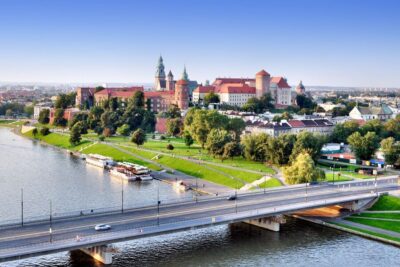
Schindler’s Factory Tour with Entrance Ticket
Read our review →
City Sightseeing Tour Eco Electric Buggy Golf Cart
Read our review →