
Reviewed · AUSCHWITZ TOURS
Krakow: Guided Auschwitz Birkenau Tour
A visit to Auschwitz and Birkenau is not a light sightseeing stop. It is a carefully guided encounter with the remains of Nazi Germany’s largest concentration and extermination camp complex, where original barracks, prison blocks, crematoria ruins, and the railway ramp make history painfully physical. This tour takes you from Krakow by coach and gives you about 3.5 hours inside the two memorial sites.
I like the clear transport plan from central Krakow and the fact that you visit both Auschwitz I and Auschwitz II Birkenau, not just the more compact first camp. I also like the museum-appointed guide system, with headsets that help you follow the explanation even when other groups are nearby. The main drawback is that the day can feel tightly timed, and the museum may change your start time, so you should keep the whole day free.
Key points at a glance
- Two separate camps: See Auschwitz I’s prison blocks and exhibitions, then Birkenau’s vast barracks, railway ramp, and ruins.
- About 3.5 hours on site: The guided visits last roughly two hours at Auschwitz I and 1.5 hours at Birkenau.
- Central Krakow meeting point: Departures use 14 Straszewskiego Street, with return to the same place.
- Skip-the-ticket-line entry: Your admission is arranged in advance, though security and access procedures can still take time.
- Languages offered: Tours may be available in English, Polish, French, Italian, German, or Spanish.
- Bring identification: Your booking name must match the passport or ID you show at the museum.
Why this Auschwitz tour matters
Auschwitz is one of those places where a guide changes the entire visit. You can walk through the grounds alone, but the buildings do not explain themselves. A guide gives dates, names, context, and scale to what you are seeing, while also helping you move through the memorial with the right level of care.
The visit covers Auschwitz I and Auschwitz II Birkenau, which are different in character. Auschwitz I is the older camp and the more museum-like part of the visit. Its surviving brick blocks contain exhibitions, prisoner rooms, and displays about camp life and mass murder. Birkenau is much larger and more open, with long rows of barracks, the railway unloading platform, and the remains of gas chambers and crematoria.
I find the contrast important. Auschwitz I shows the machinery of imprisonment through preserved buildings and museum displays. Birkenau shows the scale of the killing center through distance, space, and the stark remains of the camp itself. Seeing only one site would leave out half the picture.
This is also why the tour should not be treated as a quick photo stop. The setting is a memorial and museum, not a theme park attraction. You will encounter difficult material, original objects, and places connected to mass suffering. The guide’s tone matters, and the most successful departures use clear, measured explanations rather than sensational storytelling.
A few more Auschwitz half-days worth comparing
- From Krakow: Auschwitz-Birkenau Guided Tour & Hotel Pickup
★ 4.5 · 33,358 reviews - From Krakow: Auschwitz-Birkenau Guided Tour & Hotel Pickup
★ 4.5 · 29,340 reviews - Krakow: Auschwitz Guided Tour with Optional Hotel Pickup
★ 4.5 · 15,280 reviews
Leaving Krakow from Straszewskiego 14
The standard meeting point is the parking area at Floriana Straszewskiego 14, near central Krakow. Depending on the option you book, pickup arrangements may vary, so check the exact meeting details rather than assuming a hotel pickup.
The coach journey to Oświęcim takes about 1.5 hours. The route passes through towns and countryside before reaching the museum area, and the drive gives you a useful pause before the visit begins. Some past departures have included a documentary on the way, though you should not assume this is part of every departure.
The vehicles have been described as comfortable, with air conditioning on at least some departures. That matters in summer, when you may be outside for long stretches at Birkenau, and in winter, when the open camp can feel particularly exposed.
Allow extra time at the meeting point. The tour operator may give you a firm departure time, but the museum controls the final entry schedule. In the past, start times have sometimes shifted by several hours, including one change from late morning to very early morning. This is not a good activity to place between two fixed Krakow plans.
Auschwitz I: prison blocks and museum exhibitions
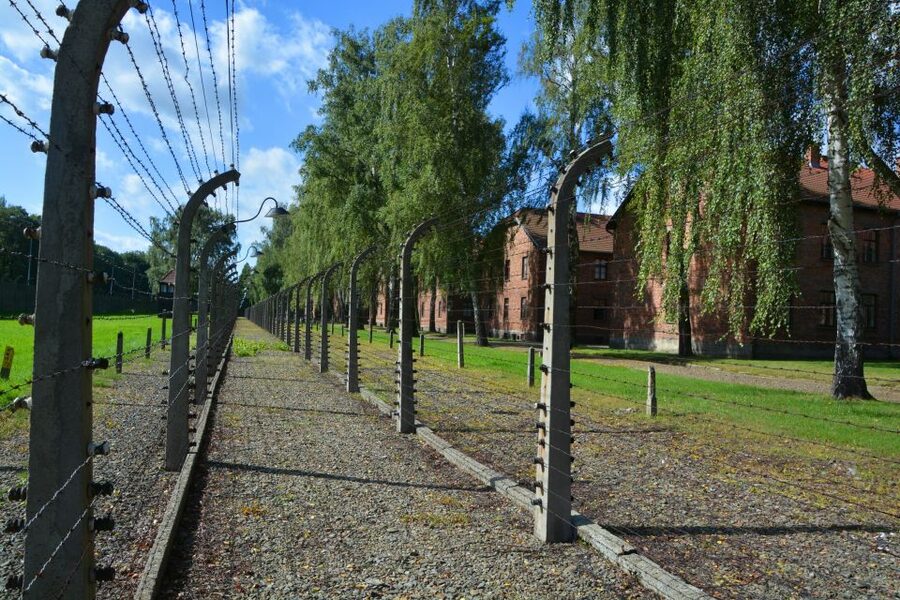
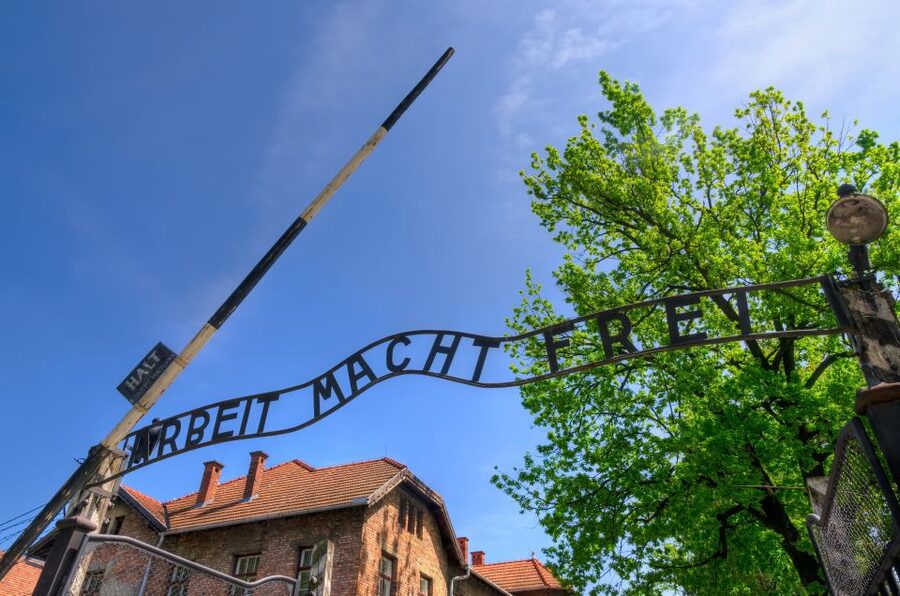
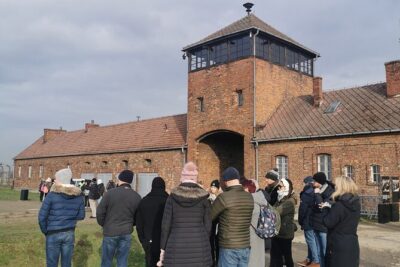
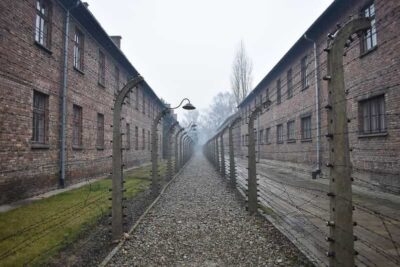
Your first guided visit is usually at Auschwitz I and lasts about two hours. This is the smaller, original camp, recognizable by its brick buildings and the surviving entrance gate.
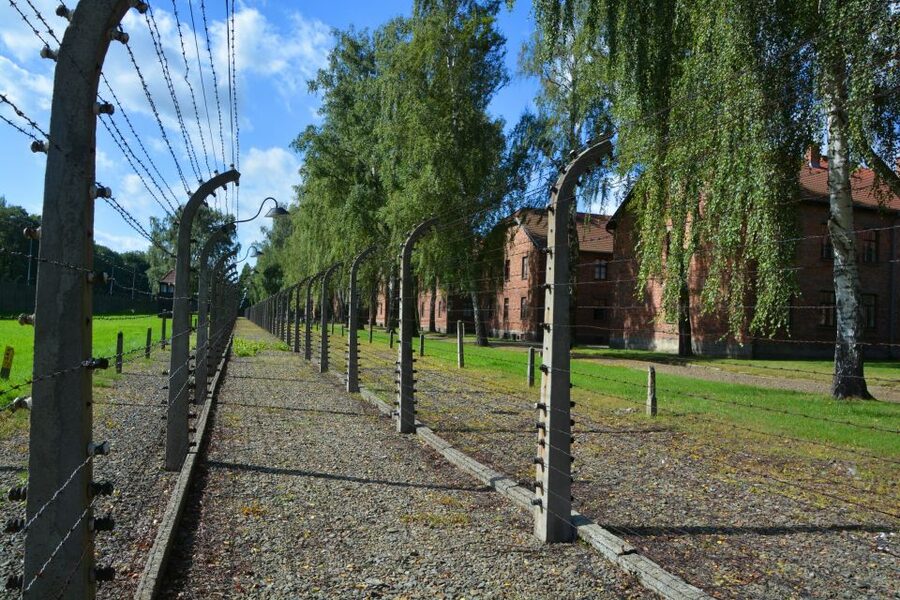
Inside the remaining prison blocks, exhibitions explain the camp system and the treatment of imprisoned people. You may enter former prisoner rooms and see original objects connected with daily camp life. The visit also includes the death wall, gas chamber areas, crematoria buildings, and other parts of the original site.
The power of Auschwitz I comes from its detail. The buildings are close together, and the displays show how a functioning camp was organized. You are not simply looking at empty rooms. You are being shown the structures used for confinement, selection, punishment, forced labor, and killing.
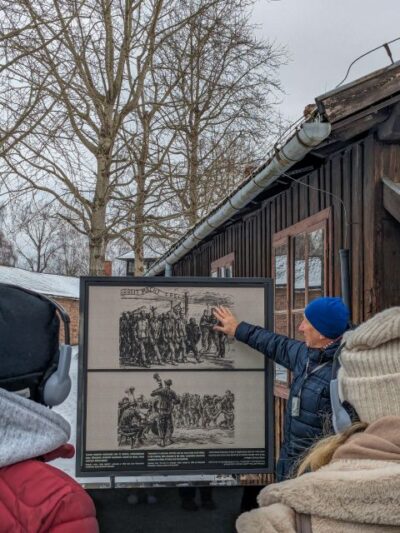
A guide is especially useful here because the route can feel crowded with information. The museum’s visitor service sets the pace, and you may move from one block to another without much spare time. Several groups can be present at once, but headsets help you hear your own guide.
Do not expect much private wandering time during this section. One past visitor found the pace too brisk, with little time to process each room. That is a fair concern. The advantage is that you cover a lot in a limited period; the tradeoff is that you may want to return to certain displays later, but this tour does not provide a separate return visit.
The short transfer to Birkenau
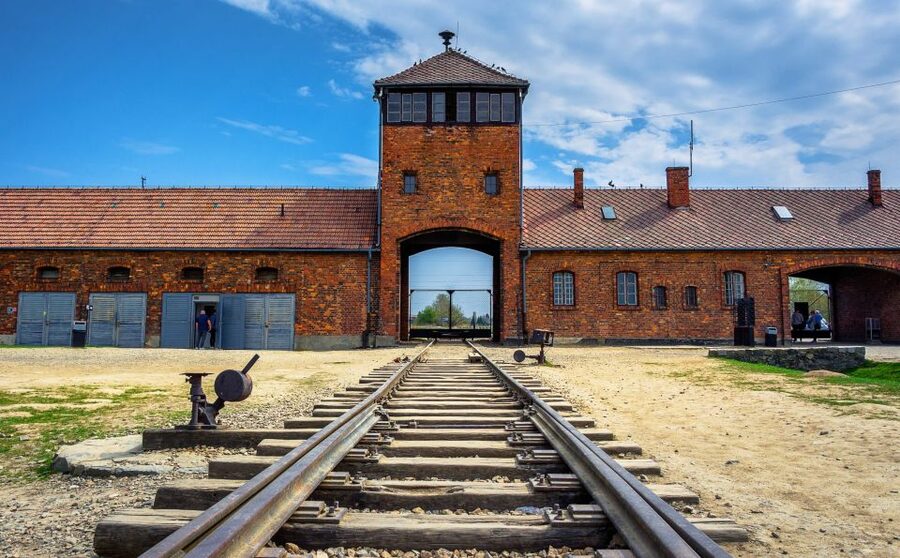
After Auschwitz I, the group transfers by coach to Auschwitz II Birkenau. The ride takes about 15 minutes.
This short move is practical, but it also marks a change in the nature of the visit. Auschwitz I is compact and built around preserved blocks. Birkenau is broad and open, with long distances between major points. Comfortable shoes are essential. One past departure involved roughly six kilometers of walking across the two sites, and conditions can be uneven.
The transfer also gives you a brief mental break. The subject matter is heavy, and the second camp can feel even more severe because of its scale. Take the few minutes on the coach to drink water and prepare for more walking.
Same city, a completely different kind of day:
- Krakow: Auschwitz-Birkenau Guided Tour with Pickup & Lunch
★ 4.5 · 9,800 reviews - Krakow: Auschwitz-Birkenau Guided Tour Pickup/Lunch Options
★ 4.5 · 9,057 reviews - Krakow: Auschwitz-Birkenau and Salt Mine Guided Tour
★ 4.7 · 9,020 reviews - Krakow to Auschwitz Birkenau Guided Tour with Transfer and Ticket
★ 5.0 · 8,197 reviews
Birkenau: scale, barracks, and the railway ramp
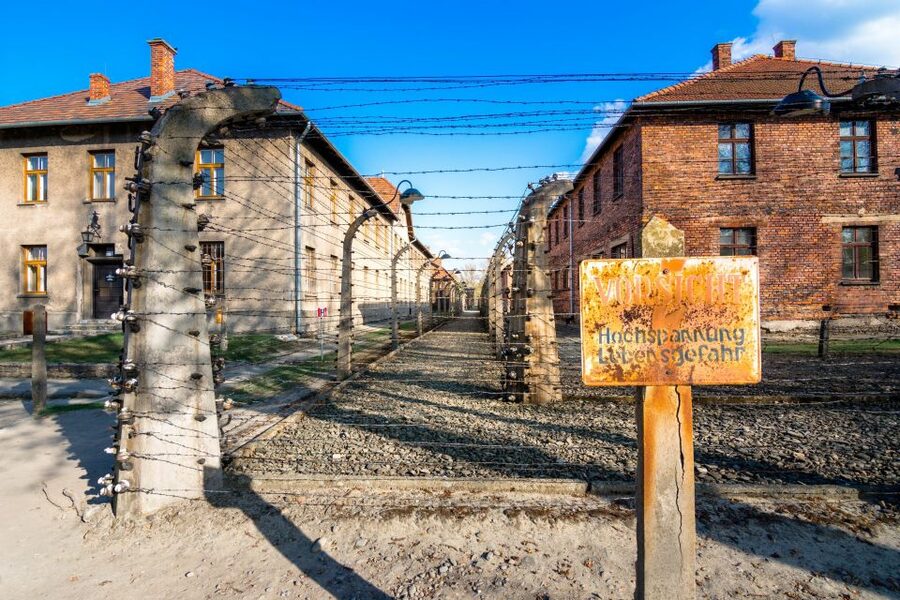
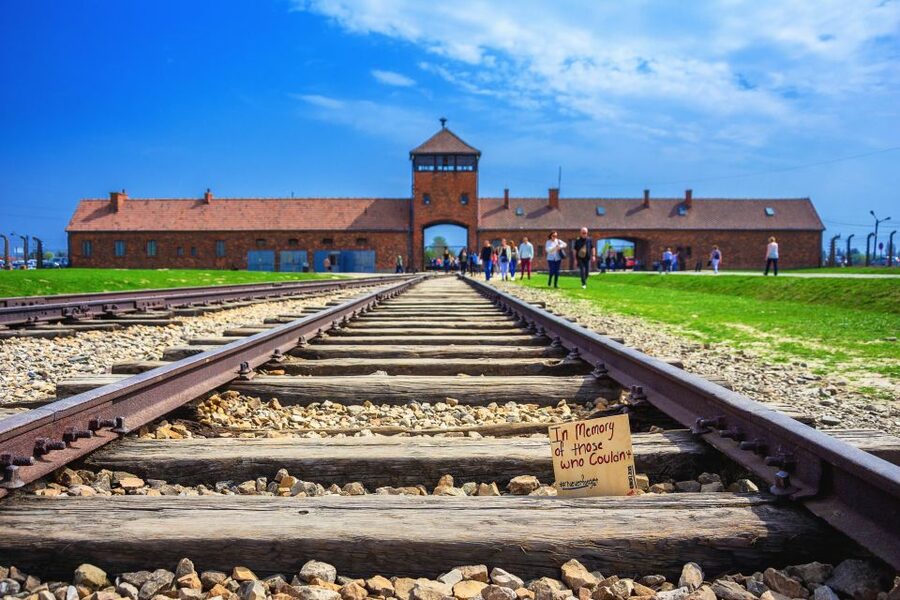
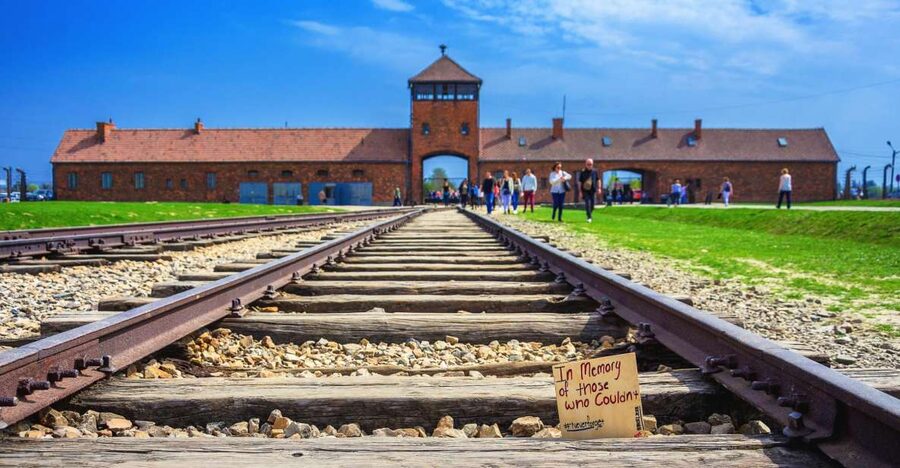
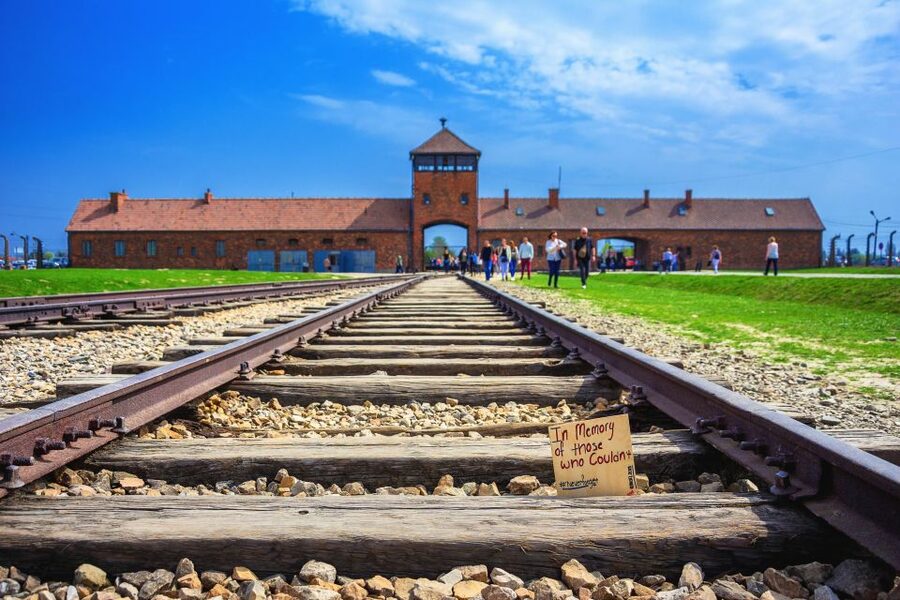
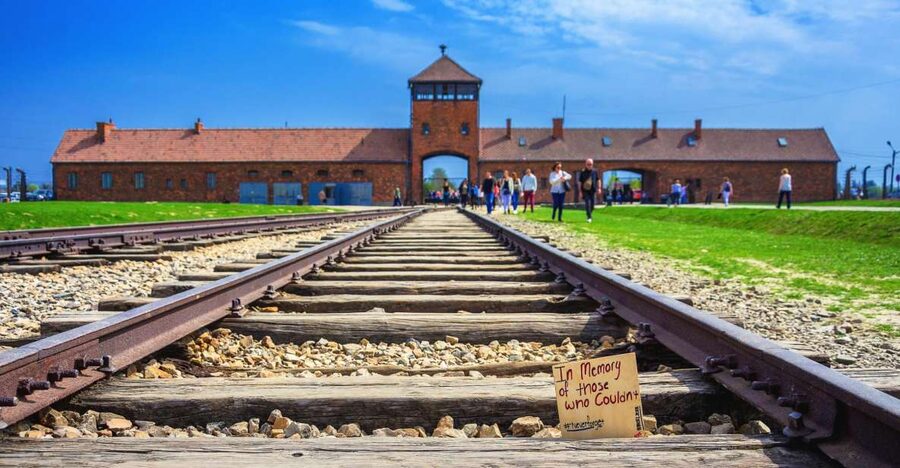
The guided visit at Auschwitz II Birkenau lasts about 1.5 hours. This is the place many people picture when they think of Auschwitz: the long railway line, the watchtower entrance, rows of barracks, and a huge open area stretching toward the horizon.
The railway ramp is one of the most important points on the route. It was where prisoners arrived and were selected, with families separated and people sent toward forced labor or death. Seeing the distance from the entrance to the far end of the camp helps explain the scale of the operation in a way that photographs cannot.
You will see remaining barracks and other original structures, as well as the ruins of gas chambers and crematoria buildings. Some areas are preserved as ruins because the Nazis destroyed parts of the camp as they tried to hide their crimes. The guide explains what remains and what happened there.
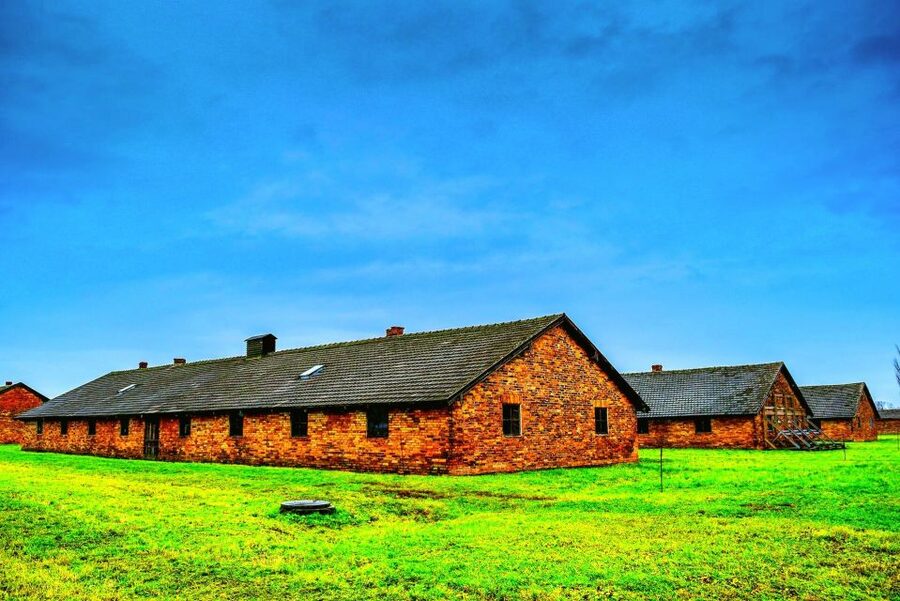
Birkenau is less museum-like than Auschwitz I. There are fewer enclosed displays, but the size of the grounds makes its own statement. You may find the open space quieter and more emotionally difficult than the first camp. Wind, rain, heat, or snow can make the walk demanding, so dress for the forecast and wear shoes with solid support.
The route is organized and guided rather than self-paced. You will need to stay with the group and follow instructions about meeting points. This helps the memorial operate with dignity, but it also means you cannot simply stop wherever you wish.
Guides, languages, and how the tour feels
A local guide is included in your selected language, with English, Polish, French, Italian, German, and Spanish listed as options. If a language group does not reach the required minimum, the provider may switch the tour to English.
Past departures have included tour leaders and guides named Konrad, Martin, and Jan. The strongest guiding style is calm, precise, and considerate, with time for questions where the schedule permits. Several guides have been praised for speaking clearly and slowly, which is helpful when the subject is complex and the group includes people with different levels of English.
Headsets are used during the camp visit, allowing you to hear the guide while other groups move through the same buildings. This is a small but important feature. Without it, the mix of groups and languages could make the visit hard to follow.
You should expect a group tour, not a private conversation. Guides can answer questions, but the memorial controls the pace and the route. If you want long periods of silence at each display or a highly personal discussion, a private visit may suit you better. If you want a structured introduction with transport handled, this format is more practical.
Timing, food, and practical comfort
The complete outing can last from about 3.5 hours to seven hours, depending on the departure schedule and museum arrangements. The listed route adds up to roughly 6.5 to seven hours: 1.5 hours to reach the museum, two hours at Auschwitz I, 15 minutes between sites, 1.5 hours at Birkenau, and 1.5 hours back to Krakow.
Bring water and a snack. Food and drinks are not included, and the available break may be short, around 15 minutes on some departures. You should not expect a relaxed meal during the visit.
Wear comfortable clothes and shoes. The tour includes substantial walking, outdoor exposure, and standing. People with mobility impairments may find the route unsuitable, and the activity is not recommended for them in the supplied booking information.
Large bags are not allowed inside. Hand luggage must be no bigger than 12 by 8 by 4 inches, or 30 by 20 by 10 centimeters. Larger luggage must remain on the bus. Bring a passport or identity card, and make sure the name on your booking matches the name on your ID. The museum can refuse entry if it does not match.
Alcohol is forbidden during the tour. That rule is entirely appropriate for the setting, and you should treat the memorial as a place for quiet, respectful conduct.
Is $69 a fair price?
At $69 per person, the tour offers solid value if you need transport from Krakow and want a guided visit at both camps. The price covers round-trip transportation when that option is selected, museum entry, a local guide in your chosen language, an English-speaking driver or tour leader, and arranged entry that avoids the normal ticket queue.
You are paying for convenience as much as admission. Reaching Oświęcim independently is possible, but you would still need to arrange museum access and understand the route between Auschwitz I and Birkenau. This package puts the transport, tickets, and guide into one booking.
The value is weaker if you already have transport and prefer to visit alone. The schedule is fixed, the museum controls the pace, and the tour does not include food or hotel drop-off. Still, for a first visit from Krakow, the combination of two camps and organized transport makes the price reasonable.
Remember that this activity is non-refundable. Museum tickets are issued under strict rules, and the name match requirement is not a minor formality. Check the date, language, meeting point, and passenger details before paying.
Who should book this experience?
I would choose this tour if you are staying in Krakow, want both Auschwitz sites, and prefer not to manage transport and museum entry yourself. It is also a good fit if you want a guide to explain the buildings and events in a clear order.
It suits first-time visitors especially well. The route gives you a broad understanding in one day, from the prison blocks and exhibitions at Auschwitz I to the vast killing center at Birkenau.
I would think twice if you need a flexible schedule, have later plans that cannot move, or want extended time alone at each display. The museum can change the start time, the walking is substantial, and the pace is set by the visitor service.
Should you book the Krakow Auschwitz-Birkenau tour?
Book it if you want a serious, well-organized introduction to both camps with transport from central Krakow. The most useful features are the two-site itinerary, multilingual guiding, headsets, and a return to the same central meeting point.
Skip it if you cannot keep the whole day open, dislike group pacing, or need an accessible route. For most visitors who have limited time in Krakow, though, the $69 price is a practical way to reach Auschwitz and Birkenau without leaving the details to chance. Go prepared for a long, emotional day, and give the memorial the time and respect it deserves.
FAQ
Where does the tour start in Krakow?
The main meeting point is the parking area at Floriana Straszewskiego 14. The exact meeting point may vary depending on the option you book.
How long does the full tour take?
The activity is listed as lasting from 210 minutes to seven hours. The route normally includes about 1.5 hours to Auschwitz, two hours at Auschwitz I, 15 minutes between the sites, 1.5 hours at Birkenau, and 1.5 hours back to Krakow.
How much time do I spend inside the camps?
The guided visit lasts about 3.5 hours in total, with roughly two hours at Auschwitz I and 1.5 hours at Auschwitz II Birkenau.
Which languages are available?
Guided tours may be offered in English, Polish, French, Italian, German, or Spanish. If minimum numbers are not reached for a selected language, the tour may be conducted in English.
Do I need to bring identification?
Yes. Every participant must bring a passport or ID card. The name on the booking must match the name on the identification document, or entry may be refused.
Can I bring a large bag?
No. Large bags and luggage are not allowed inside. Hand luggage must be no larger than 30 by 20 by 10 centimeters. Larger luggage must remain on the bus.
Is food included?
No. Food and drinks are not included. Bring a snack and water, since the available break may be short.
Does the tour include hotel drop-off?
No. The tour ends at Straszewskiego 14 in Krakow, including options that may offer hotel pickup. Hotel drop-off is not included.
Just added around Auschwitz
- Guided Private Tour to Auschwitz Birkenau & Krakow from Wroclaw★ 5.0 · 4 reviews
- Auschwitz-Birkenau Day Tour from Wroclaw★ 5.0 · 40 reviews
- Krakow & Auschwitz day tour from Warsaw by private car with Lunch★ 5.0 · 16 reviews
- One day tour to Auschwitz-Birkenau & Salt Mine from Warsaw with private driver★ 5.0 · 4 reviews
- One Day Tour to Auschwitz-Birkenau from Warsaw by Car★ 5.0 · 81 reviews
- Krakow and Auschwitz – Full Day Tour from Warsaw by private car★ 5.0 · 9 reviews
- From Warsaw: Auschwitz-Birkenau Tour with Premium Train Transportation★ 4.0 · 7 reviews
- Full-Day Tour From Warsaw to Auschwitz (guided) and Krakow by car★ 5.0 · 24 reviews
Auschwitz Tours, compared.
Auschwitz-Birkenau Guided Tour & Hotel Pickup
Read our review →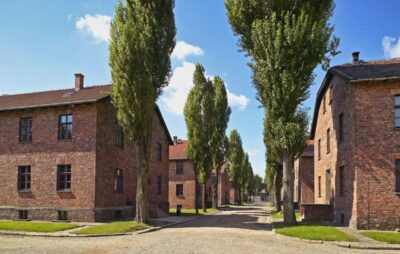
Auschwitz Guided Tour with Optional Hotel Pickup
Read our review →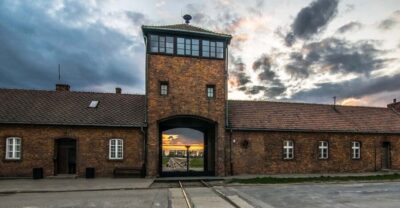
Auschwitz-Birkenau Guided Tour with Pickup & Lunch
Read our review →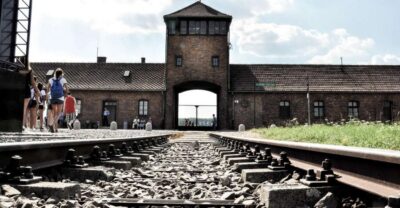
Auschwitz-Birkenau Guided Tour Pickup/Lunch Options
Read our review →
Krakow to Auschwitz Birkenau Guided Tour with Transfer and Ticket
Read our review →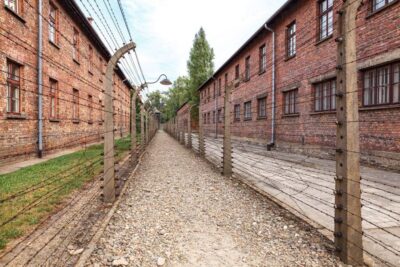
Browse the lists this tour appears in