
Reviewed · AUSCHWITZ TOURS
Auschwitz-Birkenau & Salt Mine Day tour
Auschwitz-Birkenau and Wieliczka Salt Mine make an unusually demanding pair: one site confronts you with the crimes of Nazi Germany, while the other leads you through centuries of underground salt mining and religious art. You visit Auschwitz I and Birkenau first, then descend into the Wieliczka Salt Mine later in the day.
I like the door-to-door Krakow pickup, since the early start can otherwise be awkward. I also like that museum guides lead both major visits, rather than leaving you to find your way around these large sites alone. The main drawback is the length: expect 10 to 12 hours, plenty of walking, stairs, and a late finish.
Key points to know
- Auschwitz and Birkenau are separate stops: You spend about two hours at Auschwitz I and one hour at Birkenau, with a short transfer between them.
- The day starts early: Pickup is usually between 6:00 and 7:30 am, with the exact time confirmed by text and email the day before.
- Wieliczka means stairs: You descend 378 wooden stairs to the first level, with around 800 steps across the full route.
- The mine is cold: Temperatures are about 14 C, or 57 F, so bring a warm layer even in summer.
- Small bags only at Auschwitz: Bags carried onto the museum grounds must be no larger than 30 by 20 by 10 centimeters.
- The price covers the main costs: At $140.74 per person, the package includes transport, admissions, and English-speaking guides at both sites.
Why this full-day pairing works
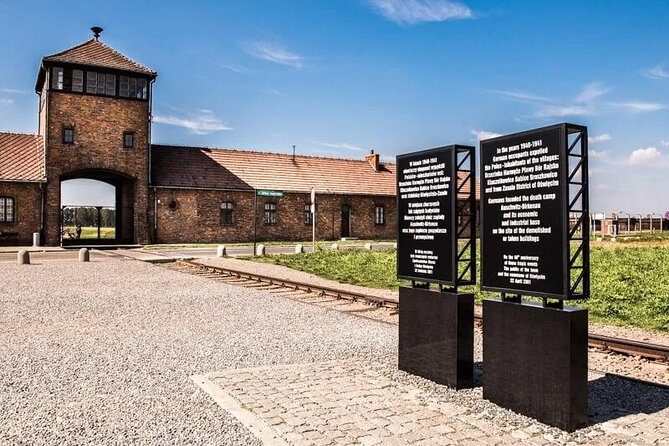
This tour gives you two of southern Poland’s most important sights in one organized day from Krakow. They are very different experiences, which is exactly why the schedule can feel rewarding and exhausting at the same time.
Auschwitz-Birkenau asks for quiet attention. Wieliczka is more visual and physical, with carved salt chambers, statues, and a long underground route. Putting them together means you do not need to arrange two separate day trips, but you also have little spare time between major activities.
I would choose this tour if your Krakow visit is short and both places matter to you. If you prefer slow mornings, long lunches, or time to process a difficult historical site before moving on, separate days would be easier.
The advertised price is $140.74 per person. That is not the cheapest way to see either attraction, but it includes Krakow transportation, admission to both sites, English guides, and the convenience of one booking. You are paying for time saved and for someone else to handle the driving and coordination.
More Salt Mine Tours in Auschwitz:
- Krakow: Auschwitz-Birkenau and Salt Mine Guided Tour
★ 4.7 · 9,020 reviews - Day Trip: Auschwitz-Birkenau and Wieliczka Salt Mine from Krakow
★ 4.5 · 4,282 reviews - Kraków: Auschwitz-Birkenau & Salt Mine Full-Day Guided Tour
★ 4.7 · 2,887 reviews
Early Krakow pickup and the ride south
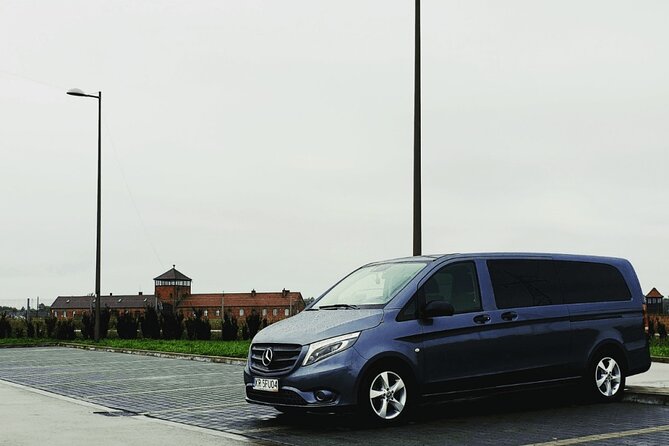
Pickup is offered within Krakow city limits, including hotels and Airbnb accommodations. If your lodging is in the Old Town or Jewish Quarter, the morning pickup is generally directly at your accommodation, though the return may use the closest designated drop-off point.
The normal pickup window is 6:00 to 7:30 am. The listed start time is 7:00 am, but your actual time depends on your accommodation and the day’s schedule. You receive confirmation by text and email the day before. In summer, pickup may begin as early as 5:30 am to avoid walking in the strongest heat.
That early start is useful. Auschwitz and Birkenau are major sights, and the day needs room for transport, entry procedures, guided visits, and the later mine tour. It does mean you should plan a simple breakfast before leaving or bring something with you. Coffee and tea are not included.
The ride is in an air-conditioned vehicle. A documentary about Nazi concentration camps may be shown during the journey, subject to availability. This gives you historical background before reaching Auschwitz, though you should still expect the actual visit to carry far more weight than a film can provide.
The tour is operated in a group of up to 30 people. That is large enough to keep the cost manageable, but small enough to stay together during transfers. The activity information also lists a maximum of 90 people overall, so ask about the group arrangement if the size of your booking matters to you.
Auschwitz I: barracks, evidence, and a museum guide
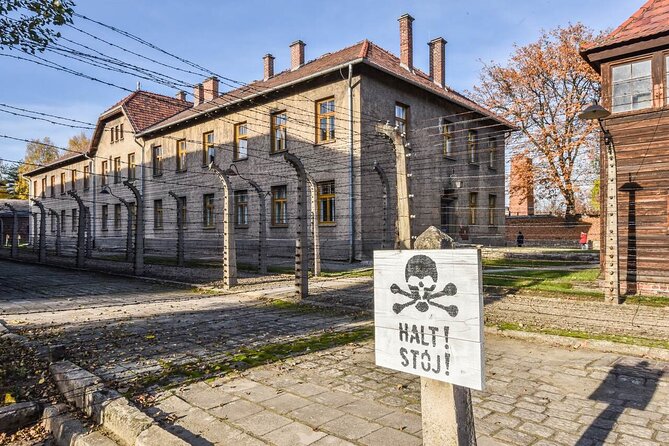
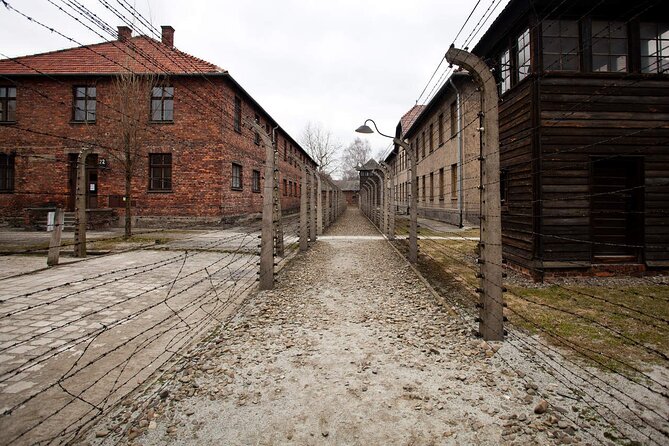
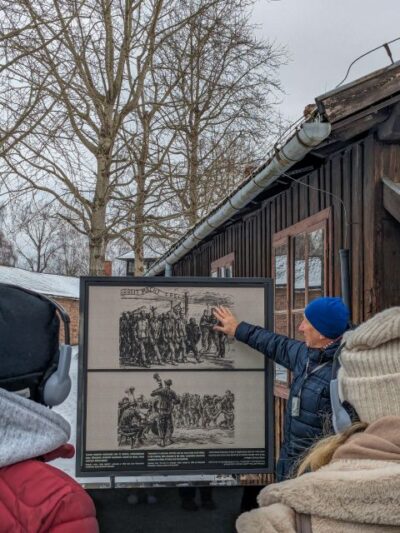
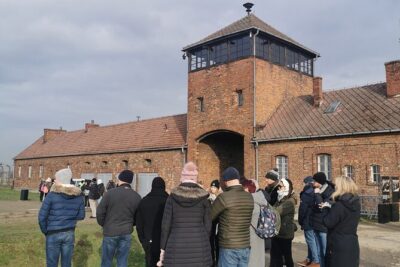
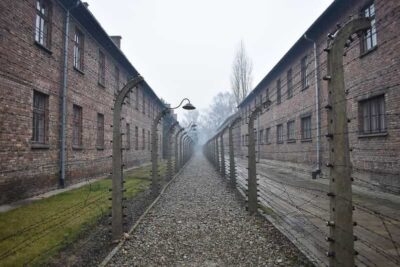
The first visit is to Auschwitz I, where an English-speaking museum guide leads you for about two hours. This is the original camp complex, with brick buildings and permanent exhibitions that explain how the camp operated and how prisoners were treated.
You should approach this part slowly and respectfully. The material is serious, and the visit is not designed as light sightseeing. The guide’s role matters here because the site contains a large amount of information, and the context helps you understand what you are seeing rather than simply moving from building to building.
The guided format also keeps the visit focused. You do not have unlimited time to pause at every display, but you receive a structured explanation of the camp. Keep your attention on the guide and dress for the weather, since parts of the visit involve walking between buildings.
A small-bag rule is important. Bags and backpacks carried onto the museum grounds may be no larger than 30 by 20 by 10 centimeters. Larger belongings can remain on the nearby bus. Pack only what you need for the visit, and keep your valuables secure.
The first stop can be bitterly cold in winter. One visitor who went in late January described the conditions as intensely cold, so gloves, a hat, and proper footwear are sensible in that season. In warmer months, the early start may help you avoid the worst heat, but you still need comfortable shoes.
Birkenau: scale and silence
After Auschwitz I, the vehicle transfers you about two kilometers to Auschwitz II-Birkenau. You spend around one hour there with the same museum guide.
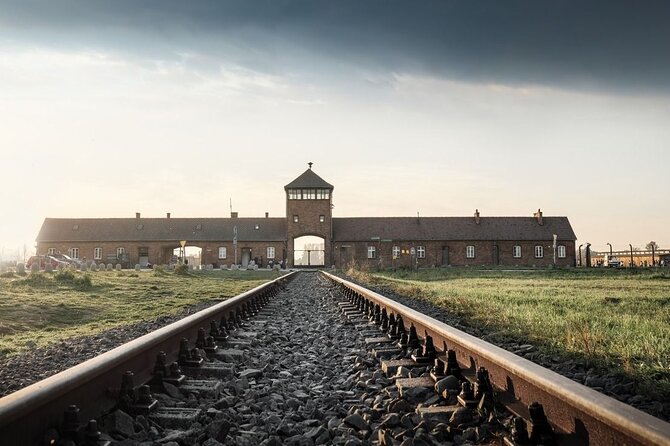
Birkenau is physically larger and more open than Auschwitz I. The scale of the grounds is central to the visit. Instead of focusing mainly on indoor exhibitions, you encounter a broad camp site, surviving structures, and long distances that help show the size and system of the complex.
An hour passes quickly. Listen closely to the guide, since the visit is timed and the site covers a lot of ground. You will be walking outdoors, so shoes with good support and clothing suited to the forecast are essential.
This part of the day can be especially difficult. The setting is stark, and the open space gives you a direct sense of the camp’s size and isolation. The guided visit does not turn the site into a simple lesson. It gives you a framework for understanding what happened there and why the place remains so important.
The transfer between Auschwitz I and Birkenau is short, but the overall day is not. You have about three hours of guided visits at the two camp sites, followed by the road journey to Wieliczka. Allow yourself some quiet time during the ride if you need it.
A few more Auschwitz half-days worth comparing
- From Krakow: Auschwitz-Birkenau Guided Tour & Hotel Pickup
★ 4.5 · 33,358 reviews - From Krakow: Auschwitz-Birkenau Guided Tour & Hotel Pickup
★ 4.5 · 29,340 reviews - Krakow: Auschwitz Guided Tour with Optional Hotel Pickup
★ 4.5 · 15,280 reviews - Krakow: Auschwitz-Birkenau Guided Tour with Pickup & Lunch
★ 4.5 · 9,800 reviews
Wieliczka Salt Mine: 700 years below the surface
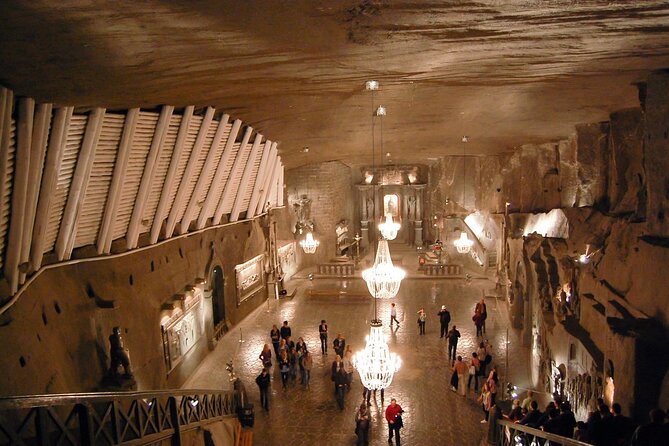
The second half takes you to Wieliczka Salt Mine, one of the world’s oldest working salt mines. Salt production has continued there for more than 700 years, and the tourist route offers a very different experience from the morning.
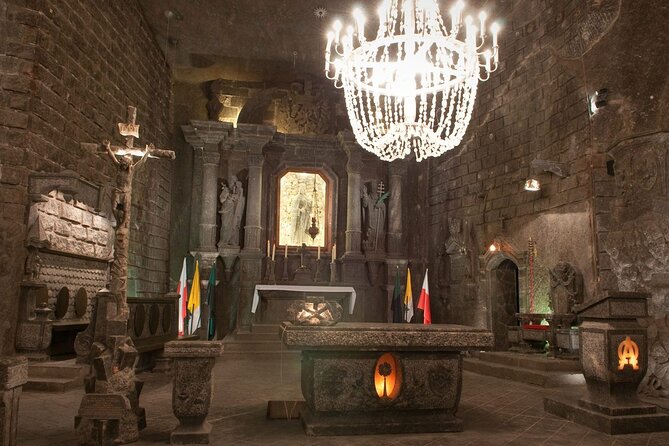
An English-speaking guide leads a route about 2.5 kilometers long. You descend as far as 140 meters underground and pass through chambers filled with salt carvings and statues. The route lasts about 2.5 hours, so this is not a quick underground peek.
The scheduled start is around 4:00 or 5:00 pm, depending on road conditions. That uncertainty is worth noting. The Auschwitz visit and the drive to Wieliczka may not run at exactly the same pace every day, so you should expect the mine portion to be fitted into the afternoon rather than treated as a completely fixed appointment.
The mine is kept at approximately 14 C, or 57 F. Bring a sweater, fleece, or light jacket. Comfortable shoes matter even more here than at Auschwitz because the route is long and includes many steps.
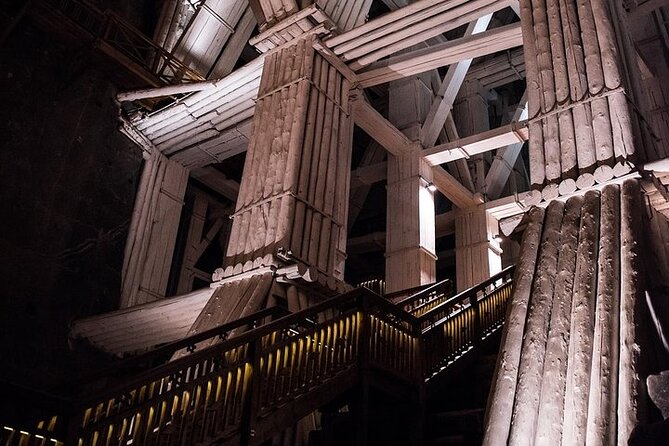
To reach the first level at 64 meters underground, you descend a wooden staircase with 378 steps. Across the full route, there are about 800 steps. After the guided visit, you return to the surface by lift.
This makes the mine unsuitable for anyone who cannot manage a long walk and repeated stairs. The stated requirement is a moderate physical fitness level. You should also think carefully about how you will feel after several hours at Auschwitz and Birkenau. The mine is fascinating, but it asks for another sustained effort late in the day.
What the price includes, and what it does not
At $140.74 per person, the tour includes the pieces that can make a two-site day expensive and complicated to arrange independently:
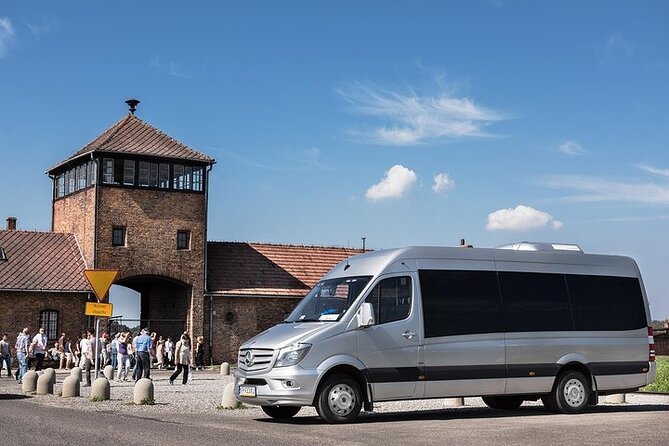
- Air-conditioned transportation from Krakow
- Hotel pickup within Krakow city limits
- Admission to Auschwitz-Birkenau
- Admission to Wieliczka Salt Mine
- English-speaking guides at both sites
- A documentary film, if available
- A free PDF guidebook
Coffee and tea are not included. Pickup outside Krakow city limits costs extra, and airport pickup is listed as an example at 33 euros. The exact additional charge depends on the distance and number of people.
The strongest value comes from the combination of transport and timed entry. You do not need to navigate the roads, coordinate two admissions, or work out how to connect Auschwitz with Wieliczka on the same day. You also receive guided interpretation at both locations.
The weaker value is personal flexibility. You cannot easily decide to stay longer at Auschwitz, skip the mine, or take a long lunch. The schedule is built to fit two major attractions into one day, and that means the day belongs to the timetable.
How hard is the day physically?
You should be comfortable walking for several hours and using stairs. Auschwitz and Birkenau involve outdoor movement across large grounds, while Wieliczka includes roughly 800 steps across the tourist route.
Wear shoes that you can walk in all day. Bring water and a small snack if useful, but remember the strict bag limit at the museum. Large bags can remain on the bus, which is parked nearby.
The temperature contrast can be noticeable. Auschwitz may be bitterly cold in winter, while the salt mine stays cool throughout the year. Dress in layers so you can adjust during the long day.
This is not a good pick if you need a relaxed pace, have serious difficulty with stairs, or want a tour with long breaks. It can work well for someone with moderate fitness who understands that the value lies in seeing both sites in one outing.
Timing, drop-off, and booking cautions
The full experience lasts about 10 to 12 hours. Return transport takes you to your accommodation or Krakow city center. For hotels in the Old Town or Jewish Quarter, the final drop-off may be at the nearest meeting point rather than directly at the door.
The tour is not offered on December 25, January 1, Easter Saturday afternoon, Easter Sunday, or March of the Living Day. It also requires good weather and a minimum number of bookings. If the operator cancels for poor weather or because the minimum is not reached, you are offered another date or experience, or a full refund.
Your own cancellation terms are strict. The experience is non-refundable and cannot be changed for any reason after booking. Because the day is popular and is booked an average of 35 days ahead, check your plans carefully before paying.
Who should book this tour?
I would recommend it to you if you have limited time in Krakow and want both Auschwitz-Birkenau and Wieliczka Salt Mine without arranging separate transport. It is also a sound choice if you prefer having guides at both sites and do not want to manage a complicated day by train, bus, and timed admission.
The tour suits history-focused visitors, first-time visitors to Krakow, and people who are comfortable with early starts and a full schedule. The museum guide at Auschwitz and the English guide at the mine provide structure at places where wandering without context would be less useful.
I would hesitate if you want a gentle holiday rhythm. The day is long, the Auschwitz visit is emotionally heavy, and the mine adds a substantial walk and many stairs afterward. A private or split-day plan would give you more breathing room, though it would likely cost more and require extra planning.
Should you book the Auschwitz and Salt Mine day tour?
Book it if your main goal is efficiency. For $140.74, you receive transport, admissions, and English guiding at two major Polish sights, with Krakow pickup included within the city limits. The early start and full timetable are the price of fitting both into one day.
Before booking, confirm that you can handle the walking, stairs, cold mine, and emotional weight of Auschwitz. Pack light, wear sturdy shoes, bring warm layers, and wait for the pickup message the day before. If those conditions suit you, this is a practical way to cover an ambitious pair of day trips in one organized outing.
FAQ
How long does the Auschwitz-Birkenau and Salt Mine tour take?
The full tour lasts approximately 10 to 12 hours, including transportation, the two Auschwitz visits, and the Wieliczka Salt Mine tour.
What time is pickup in Krakow?
Pickup is provided between 6:00 and 7:30 am, depending on your accommodation and the schedule. In summer, pickup may begin between 5:30 and 7:30 am. The exact time is confirmed by text and email the day before.
Is hotel pickup included?
Yes. Free pickup is available from accommodations within Krakow city limits, including Airbnb properties. Pickup outside the city limits is available for an additional charge.
How much time do you spend at Auschwitz and Birkenau?
You spend about two hours at Auschwitz I and about one hour at Auschwitz II-Birkenau. The same museum guide leads both visits.
Is the tour conducted in English?
Yes. English-speaking guides lead the Auschwitz-Birkenau visits and the Wieliczka Salt Mine tour.
How many stairs are in the Wieliczka Salt Mine?
You descend 378 wooden stairs to reach the first level at 64 meters underground. There are around 800 steps across the full tourist route, and you return to the surface by lift.
What should you wear for the Salt Mine?
The mine temperature is approximately 14 C, or 57 F. Wear warm clothing and comfortable shoes.
Can I bring a large backpack to Auschwitz?
No. The maximum bag size allowed on the museum grounds is 30 by 20 by 10 centimeters. Larger belongings can be left inside the nearby bus.
Just added around Auschwitz
- Guided Private Tour to Auschwitz Birkenau & Krakow from Wroclaw★ 5.0 · 4 reviews
- Auschwitz-Birkenau Day Tour from Wroclaw★ 5.0 · 40 reviews
- Krakow & Auschwitz day tour from Warsaw by private car with Lunch★ 5.0 · 16 reviews
- One day tour to Auschwitz-Birkenau & Salt Mine from Warsaw with private driver★ 5.0 · 4 reviews
- One Day Tour to Auschwitz-Birkenau from Warsaw by Car★ 5.0 · 81 reviews
- Krakow and Auschwitz – Full Day Tour from Warsaw by private car★ 5.0 · 9 reviews
- From Warsaw: Auschwitz-Birkenau Tour with Premium Train Transportation★ 4.0 · 7 reviews
- Full-Day Tour From Warsaw to Auschwitz (guided) and Krakow by car★ 5.0 · 24 reviews
Auschwitz Tours, compared.
Auschwitz-Birkenau Guided Tour & Hotel Pickup
Read our review →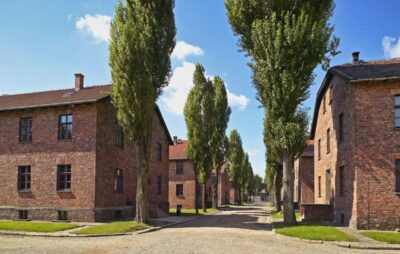
Auschwitz Guided Tour with Optional Hotel Pickup
Read our review →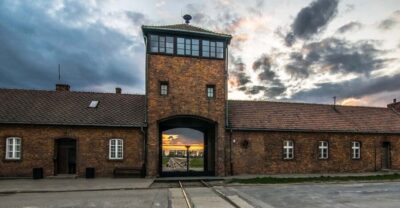
Auschwitz-Birkenau Guided Tour with Pickup & Lunch
Read our review →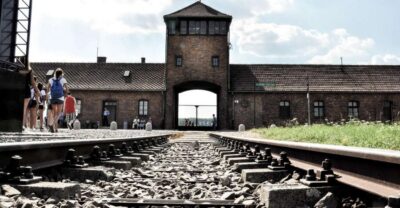
Auschwitz-Birkenau Guided Tour Pickup/Lunch Options
Read our review →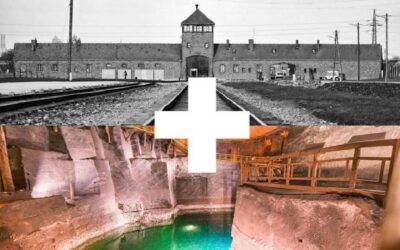
Krakow to Auschwitz Birkenau Guided Tour with Transfer and Ticket
Read our review →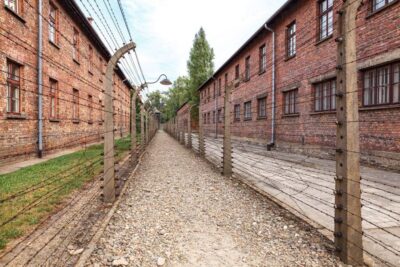
Browse the lists this tour appears in