
Reviewed · AUSCHWITZ TOURS
From Krakow: Auschwitz-Birkenau Tour with Transportation
Auschwitz-Birkenau is not a quick sightseeing stop. It is a place of evidence, silence, and difficult facts, spread across two former Nazi camps. This Krakow outing makes the visit manageable with round-trip transport, a documentary on the way, and time at both Auschwitz I and Auschwitz II-Birkenau.
I like the visit to the Judenrampe, including the original camp train car, and I like having a map and suggested route if you choose the self-guided option. The main caution is the schedule: pickup times can change, groups can reach 30 people per guide, and the day may last anywhere from about 7 to 11 hours.
Key points to know before booking
- Two separate camp sites: You visit Auschwitz I and the much larger Birkenau site, with a short transfer between them.
- The Judenrampe adds useful context: You see where deportation trains arrived, plus an original railway car.
- Several tour styles are available: Choose transport with host assistance, a booklet-based visit, or a professional guided option.
- The ride takes about 75 minutes each way: A film about the liberation of Auschwitz-Birkenau fills part of the outward journey.
- Pickup is central but not door-to-door: Common meeting points include the Radisson Blu Hotel and other central Krakow stops.
- Bring matching identification: Auschwitz Museum rules require your booking name to match the name on your passport or ID.
Why this Auschwitz trip matters
The power of this visit comes from seeing the camps as physical places rather than treating them as a chapter in a textbook. At Auschwitz I, you move through preserved buildings and learn about the prison system, executions, forced labor, and early experiments with mass killing.
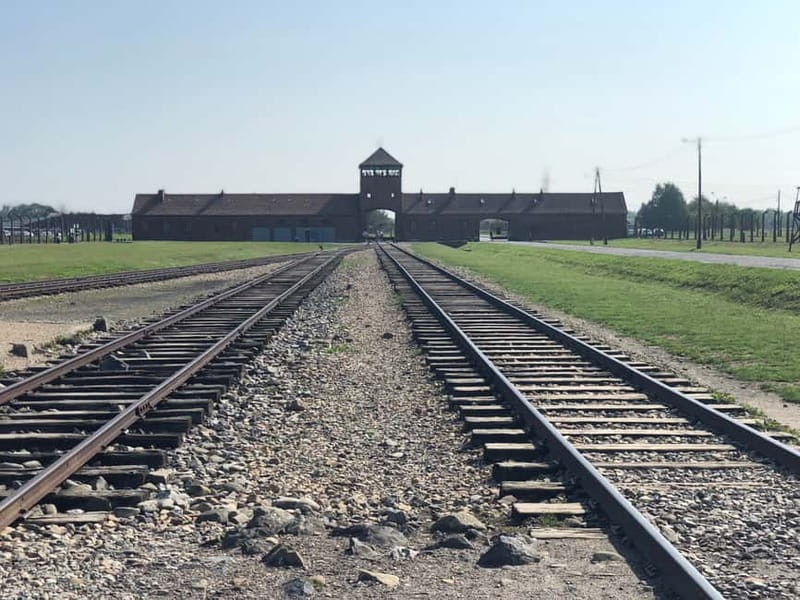
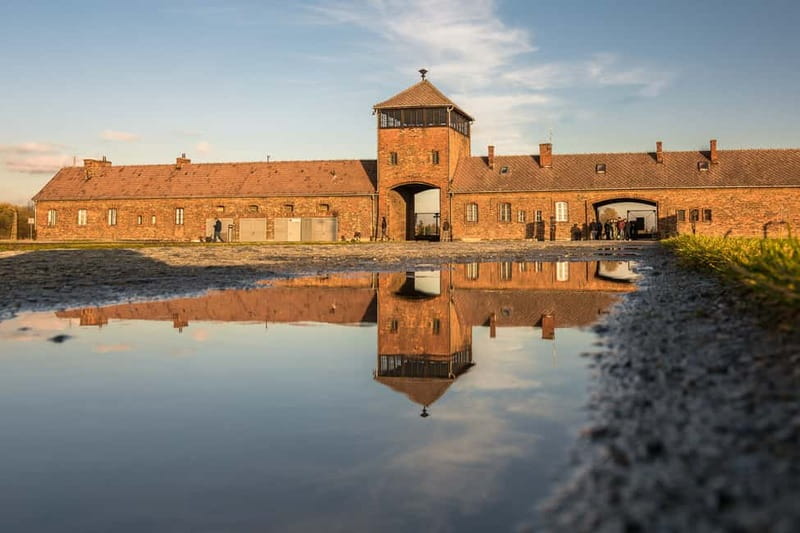
Birkenau then changes the scale completely. Its open ground, long fences, ruined gas chambers, wooden barracks, and railway approach show how the Nazis built an industrial system for mass murder. The contrast between the two sites is one reason you should not shorten the visit to only one camp.
You should also prepare yourself emotionally. This is not a light day out, and the subject matter is upsetting. The museum controls the pace and timing, so you may have little freedom to linger in one room or move quickly past another. That structure can feel restrictive, but it helps protect the site and keeps a large number of people moving respectfully.
A few more Auschwitz half-days worth comparing
- From Krakow: Auschwitz-Birkenau Guided Tour & Hotel Pickup
★ 4.5 · 33,358 reviews - From Krakow: Auschwitz-Birkenau Guided Tour & Hotel Pickup
★ 4.5 · 29,340 reviews - Krakow: Auschwitz Guided Tour with Optional Hotel Pickup
★ 4.5 · 15,280 reviews
Leaving Krakow by minibus or coach
Your day begins at a selected Krakow meeting point. The main location is in front of the Radisson Blu Hotel at the tourist bus stop, though other listed drop-off points include Starowiślna 65, Floriana Straszewskiego 17, and Wielopole 2.
Look for a vehicle marked KrakowDirect. It may be a van, minibus, or coach, so do not expect one fixed vehicle type. You should arrive 15 minutes before the confirmed pickup time, and keep checking your email or WhatsApp because the operator may adjust the start time.
The stated pickup window runs from 5:00 AM to 11:00 AM. Changes are often around 30 to 60 minutes, though a larger adjustment can sometimes be needed. That matters if you have dinner plans, a train, or another booked activity in Krakow.
The ride to the museum takes about 75 minutes. Recent service feedback points to clean, warm vehicles with seat belts, including a Mercedes minibus on some departures. Drivers such as Gregory and other English-speaking staff have been praised for clear instructions and a friendly manner, though the exact driver depends on your departure.
A documentary about the liberation of Auschwitz-Birkenau is shown during the journey. It is a useful way to prepare for the site, especially if you know little about the camp system. Still, I would treat it as an introduction, not a substitute for reading the museum displays or listening to a professional guide.
The Judenrampe and the original railway car
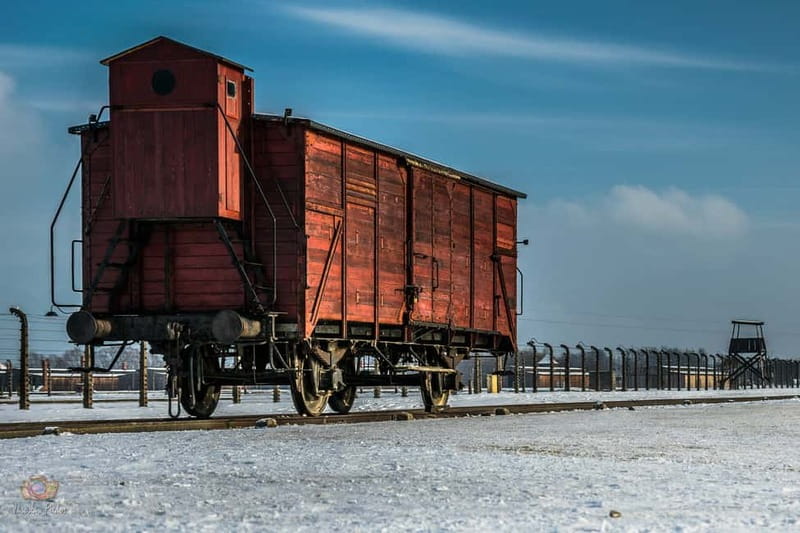
The first stop is the Judenrampe, reached before the main museum sections. You spend about 30 minutes here, usually with your tour host explaining the basic procedures and directing you through the visit.
The Judenrampe was a railway unloading area used for deportation transports before the Birkenau railway platform was completed. Seeing the original camp train car gives the arrival process a physical scale that is hard to get from photographs alone.
This short stop is one of the most distinctive parts of the outing. It also helps connect the road from Krakow with the people who were transported here. You are not simply entering a museum at the end of a bus ride. You are following part of the route by which prisoners arrived.
The limitation is time. Thirty minutes is enough for orientation and reflection, but not for a long independent visit. Stay close to your group and listen carefully for instructions about the next transfer.
Auschwitz I: preserved blocks and the prison system
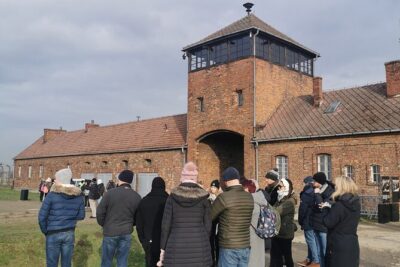
After a short bus ride of about 10 minutes, you reach Auschwitz I. This was the first camp in the complex and the place where the Nazis established their initial concentration camp for men and women.
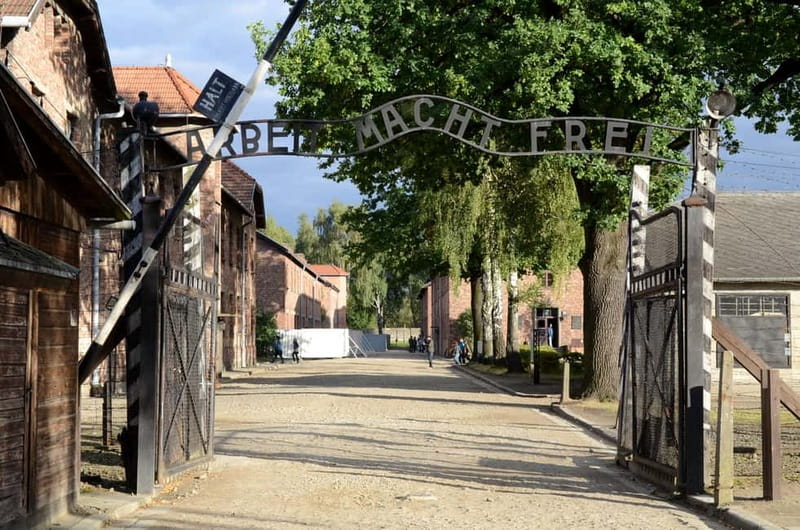
The red-brick blocks now hold museum exhibitions. You can expect to see evidence of prisoner life, the machinery of camp administration, and the system of punishment that operated here. Block 11 served as a central prison for prisoners from across the camp complex, and the camp commandant’s office and many SS offices were located at Auschwitz I.
This site also marks several early stages of Nazi mass murder. The first experiments using Zyklon B took place here, as did the murder of the first large transports of Jews, criminal experiments on prisoners, and many executions by shooting.
The buildings make the history feel close and specific. You are looking at rooms, corridors, yards, and prison blocks rather than an abstract map. At the same time, the indoor displays can be emotionally difficult. You should expect a serious visit, not a conventional museum tour.
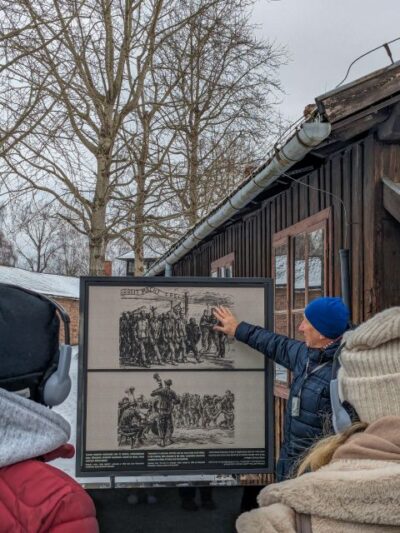
A professional guide can help explain the links between the buildings and the wider camp system. Guided options include a 3.5-hour guided tour of Auschwitz-Birkenau, while other options rely on a booklet in your chosen language. The booklet includes maps, descriptions, and a suggested route, which gives you more independence but also places more responsibility on you to keep track of time.
The guide assignments vary. Recent departures have included guides and hosts named Chris, Paweł, Marcin, Lucas, Michael, and Gregory. Michael, also known as Walker, has received particular praise for keeping people together, answering questions, and explaining the history clearly. These names are useful context, but you should not book expecting a particular person, since staffing changes from day to day.
Same city, a completely different kind of day:
- Krakow: Auschwitz-Birkenau Guided Tour with Pickup & Lunch
★ 4.5 · 9,800 reviews - Krakow: Auschwitz-Birkenau Guided Tour Pickup/Lunch Options
★ 4.5 · 9,057 reviews - Krakow: Auschwitz-Birkenau and Salt Mine Guided Tour
★ 4.7 · 9,020 reviews - Krakow to Auschwitz Birkenau Guided Tour with Transfer and Ticket
★ 5.0 · 8,197 reviews
The short break between the two camps
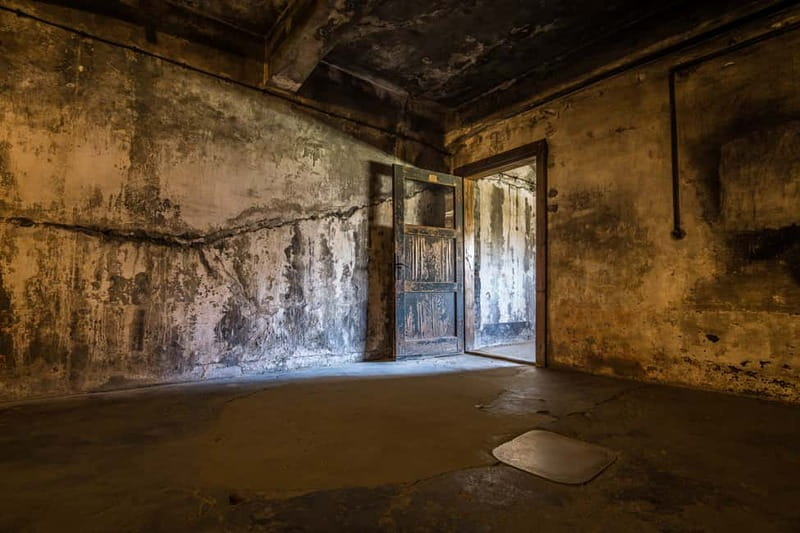
After the first section, you get a brief break before continuing to Birkenau. Use it wisely. You may want water, a quick snack, or a moment to collect yourself before the larger and more exposed second site.
Do not expect a long restaurant stop built into the program. The schedule belongs to the museum and transport operator, and the day can run longer than the basic seven-hour estimate. Comfortable shoes matter more than fashionable ones because you will walk between buildings, along roads, and across uneven outdoor ground.
Birkenau: scale, ruins, and the machinery of murder
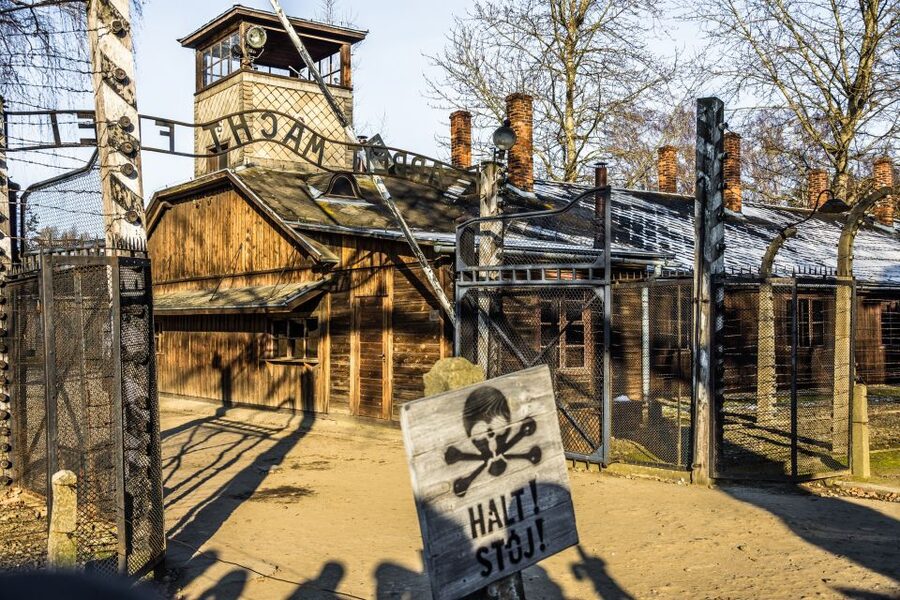
A short transfer brings you to Auschwitz II-Birkenau. This was the largest camp in the complex, covering nearly 200 hectares and holding more than 100,000 prisoners in 1944.
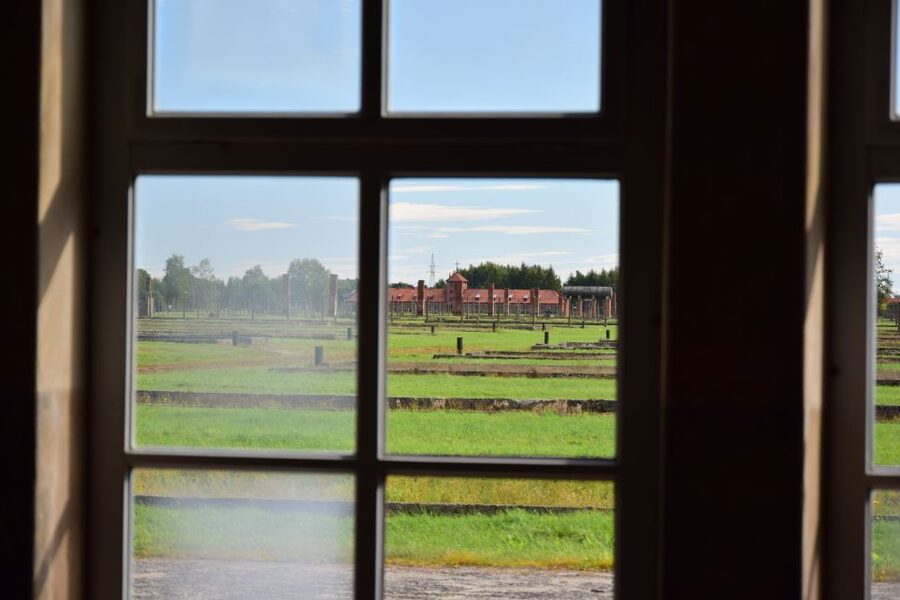
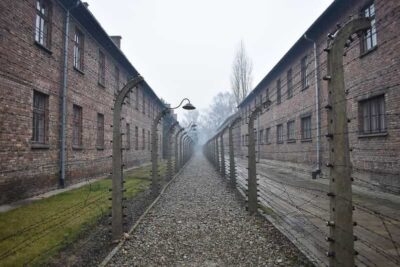
Birkenau feels very different from Auschwitz I. Instead of a compact set of brick blocks, you see long lines of fencing, wide open ground, wooden barracks, roads, railway tracks, and the remains of gas chambers. Nearly 300 mostly wooden barracks once filled the site.
Approximately one million Jews were murdered at Birkenau. Poles, Roma, and other groups were also imprisoned there. The size of the site helps explain how mass deportation and murder were organized on a scale far beyond a single prison compound.
The ruins of the gas chambers and crematoria are among the most difficult places on the route. Some structures were destroyed by the Nazis as they tried to hide evidence, but the remaining foundations, rubble, fences, and surrounding ground still show how the site functioned.
You may find Birkenau more physically demanding than Auschwitz I. It is broad, exposed, and less concentrated, so you will spend more time outside. Weather can affect the experience, and the tour restrictions mean that you may not be able to explore every corner at your own speed.
That said, the open spaces are important. The camp’s size, distance between barracks, and long lines of fencing are part of what you need to understand. A visit limited to the preserved buildings at Auschwitz I would leave out much of the story.
Choosing between a booklet and a professional guide
The most important booking decision is not the pickup point. It is the tour format.
With a guided option, a professional guide leads the museum visit and explains the site as you move through it. This is the better choice if you want historical context without stopping constantly to read, or if you are visiting Auschwitz for the first time and want help understanding how the two camps relate to one another.
The guided options may include skip-the-line admission. That can save time during busy periods, although the museum still controls entry and movement. The maximum group size is listed as 30 people per guide, so a guided visit is not necessarily intimate.
The booklet option is more flexible in spirit. You receive descriptions, maps, and a suggested sightseeing route in your chosen language. It can suit you if you prefer to read quietly and set your own attention from one building to the next.
The tradeoff is that a booklet does not answer questions in the moment. You also need to watch the clock and stay alert for meeting instructions. If you choose the basic transport option, the entry ticket itself is not included and you receive tour host assistance with obtaining it. Check exactly which option you select before paying.
Is $22 good value?
At about $22 per person, the basic price is low for a full-day outing from Krakow. You are paying for round-trip transportation, assistance from an English-speaking host, the documentary, insurance, and access to a major historical site, depending on the option you choose.
Do not compare the price without checking the details. Some packages include a professional guide and skip-the-line entry, while others offer a booklet or transport assistance instead. The lowest advertised rate may not include every feature you expect.
The value is strongest if you want someone else to handle the long journey and the connection between the two camp sites. A self-guided option can also be good value if you are comfortable reading, navigating, and following a fixed schedule.
The tour is less attractive if you want a private experience or a slow, personal pace. A group of up to 30 people and museum-controlled timing mean you will share the route with others. For this site, that is not necessarily a flaw, but it is a real limitation.
Practical details that can affect your day
Bring a passport or national ID card. The museum requires the full name and contact details of each participant, and the name on your booking must match the identification you show at entry. A mismatch can result in refused admission.
Pack lightly. Large bags and luggage are not allowed, and alcohol and drugs are prohibited. Wear comfortable shoes, since the visit includes outdoor walking at both sites.
The operator lists the activity as unsuitable for wheelchair users and people with mobility impairments. If you have difficulty walking or standing for long periods, you should ask for current accessibility details before booking rather than assume the route will work for you.
The total duration is approximate. The basic itinerary suggests about seven hours, while selected options can run from 7 to 11 hours. Museum regulations, entry procedures, group movement, and transport timing all affect the final length.
You can cancel up to 24 hours before departure for a full refund, and the booking system allows you to reserve now and pay later. Those policies help if your Krakow plans are still shifting, but they do not remove the need to monitor any amended pickup notice.
Who should book this Krakow day trip?
I would recommend it to you if you want the practical side handled for you. The Krakow pickup system, long-distance transport, documentary, museum assistance, and return journey make this easier than arranging the visit independently.
Choose the guided format if you value explanation and want help connecting individual rooms, barracks, and ruins to the wider Nazi camp system. Choose the booklet format if you prefer a quieter visit and are comfortable managing your own reading and time.
This trip suits first-time visitors, history-focused visitors, and anyone with only a short stay in Krakow. It is less suitable for someone seeking a relaxed day, a private guide, extensive free time, or a visit that avoids difficult subject matter.
Should you book it?
Book this experience if you want a well-organized route from Krakow at a modest price, especially if you choose the guided option. The strongest parts are the visit to both camps, the Judenrampe and train car, the documentary during the drive, and the practical support from the host and driver.
Before paying, confirm four things: your exact pickup point, the tour format, whether entry and skip-the-line service are included, and the expected duration. If you can accept the early start, changing pickup time, group size, and serious subject matter, this is a useful and respectful way to reach Auschwitz-Birkenau from Krakow.
FAQ
How long does the Auschwitz-Birkenau trip from Krakow take?
The advertised duration is about 7 to 11 hours, depending on the option selected. The itinerary includes roughly 75 minutes of travel each way, a visit to the Judenrampe, a short transfer between the sites, and time at Auschwitz I and Birkenau.
Where do I meet the tour?
The main meeting point is in front of the Radisson Blu Hotel at the tourist bus stop. Other central Krakow pickup or drop-off points may include Starowiślna 65, Floriana Straszewskiego 17, and Wielopole 2. Arrive 15 minutes before the confirmed time.
Is a professional guide included?
A professional guide is included only with selected guided options. Other choices use a booklet with maps, descriptions, and a suggested route. Check the exact package before booking.
Is admission included in every option?
No. Guided and skip-the-line options include the relevant tickets according to the selected package. The transport option with tour host assistance does not include the entry ticket itself.
What should I bring?
Bring a passport or ID card and comfortable shoes. Your identification name must match the name submitted during booking. Large bags and luggage are not allowed.
Can I cancel the booking?
You can cancel up to 24 hours before the experience for a full refund. The reserve-now, pay-later option is also available, subject to the booking conditions shown when you select your package.
Just added around Auschwitz
- Guided Private Tour to Auschwitz Birkenau & Krakow from Wroclaw★ 5.0 · 4 reviews
- Auschwitz-Birkenau Day Tour from Wroclaw★ 5.0 · 40 reviews
- Krakow & Auschwitz day tour from Warsaw by private car with Lunch★ 5.0 · 16 reviews
- One day tour to Auschwitz-Birkenau & Salt Mine from Warsaw with private driver★ 5.0 · 4 reviews
- One Day Tour to Auschwitz-Birkenau from Warsaw by Car★ 5.0 · 81 reviews
- Krakow and Auschwitz – Full Day Tour from Warsaw by private car★ 5.0 · 9 reviews
- From Warsaw: Auschwitz-Birkenau Tour with Premium Train Transportation★ 4.0 · 7 reviews
- Full-Day Tour From Warsaw to Auschwitz (guided) and Krakow by car★ 5.0 · 24 reviews
Auschwitz Tours, compared.
Auschwitz-Birkenau Guided Tour & Hotel Pickup
Read our review →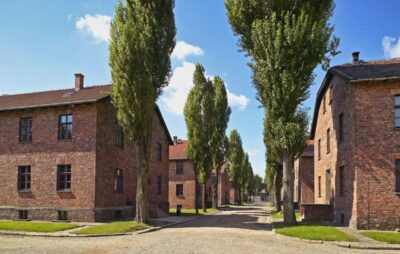
Auschwitz Guided Tour with Optional Hotel Pickup
Read our review →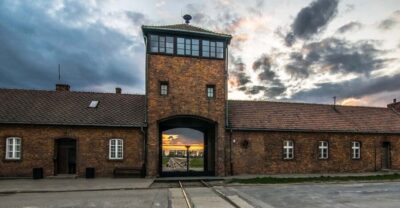
Auschwitz-Birkenau Guided Tour with Pickup & Lunch
Read our review →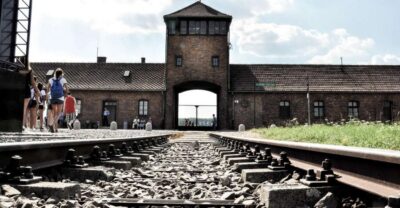
Auschwitz-Birkenau Guided Tour Pickup/Lunch Options
Read our review →
Krakow to Auschwitz Birkenau Guided Tour with Transfer and Ticket
Read our review →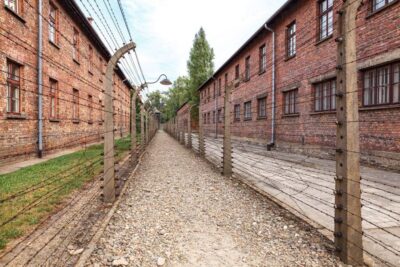
Browse the lists this tour appears in