
Reviewed · AUSCHWITZ TOURS
From Wroclaw: Guided Tour to Auschwitz-Birkenau and Krakow
Auschwitz-Birkenau is the heart of this long day, and it is not a light sightseeing stop. You walk through barracks, guard towers, cremation sites, and preserved camp grounds while an English-speaking guide explains what happened here. The visit covers both Auschwitz I, linked mainly with political prisoners, and Auschwitz II-Birkenau, built largely for the mass murder of Jewish and Roma people.
I like two practical choices here: you start at Wrocław Główny, so there are no hotel pickups, and the package includes both train tickets and the Krakow to Auschwitz transfer. I also like that the Krakow visit is not forgotten. You get a short but useful window to see the Old Market and take in one of Poland’s most important cities.
The drawback is the clock. This can mean a 16-hour day, with one reported departure at 5 in the morning and arrival back near 11 at night. Train delays are possible, and Auschwitz is physically and emotionally demanding. You need stamina, punctuality, and the right frame of mind.
Key points at a glance
- A full day from Wrocław: Expect roughly 3.5 hours by train each way, plus road transfers and museum time.
- Two different Auschwitz sites: Auschwitz I and Auschwitz II-Birkenau offer distinct settings and historical roles.
- A guide-led memorial visit: The museum portion lasts about 3.5 hours and is conducted in English.
- Krakow in a small slice: You have about two hours for dinner, a walk, and the Old Market.
- Transport is bundled: Train tickets, road transport, museum entry, and guided touring are included.
- A serious, demanding outing: The day suits visitors who value historical understanding more than a relaxed pace.
Why this day works for a Wrocław visitor
Wrocław and Krakow are close enough on a map to tempt you into a quick side trip, but far enough apart to make planning awkward. This experience solves the main problem by arranging the rail journey, the Krakow meeting point, the road trip to Auschwitz, and the return connection.
You board at Wrocław Główny, the city’s main railway station. At least three days before departure, you receive the train departure time, carriage number, and seat numbers by email. That matters on a day with so many moving parts. You are not left guessing which platform, carriage, or seat to find at the last minute.
The train ride takes about 3 hours and 20 minutes each way. That is a lot of sitting, but it also avoids the strain of driving. You can rest, read, or simply watch Poland pass by. A delay did affect one departure, so do not plan an important late-night commitment in Wrocław after you return.
The price is $190 per person. That is not cheap, but it covers round-trip rail travel, the Krakow to Auschwitz transfer, skip-the-line museum admission, a guided visit, and free time in Krakow. If you tried to arrange each piece separately, you would need to coordinate several schedules and make sure the Auschwitz time slot matched the train. The value is mainly in that coordination.
A few more Auschwitz half-days worth comparing
- From Krakow: Auschwitz-Birkenau Guided Tour & Hotel Pickup
★ 4.5 · 33,358 reviews - From Krakow: Auschwitz-Birkenau Guided Tour & Hotel Pickup
★ 4.5 · 29,340 reviews - Krakow: Auschwitz Guided Tour with Optional Hotel Pickup
★ 4.5 · 15,280 reviews
Meeting in Krakow, then heading to Auschwitz
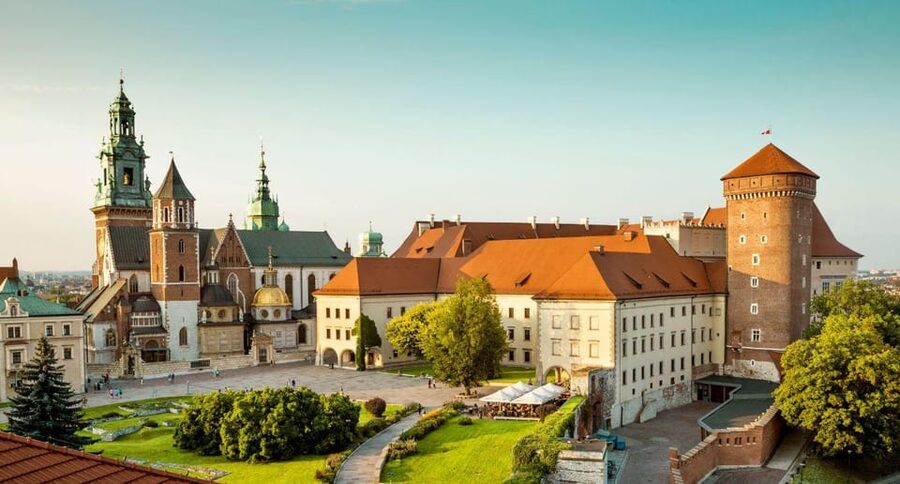
After arriving in Krakow, you have a short break of about 20 minutes before meeting the local transport. The meeting point is around a seven-minute walk from the railway station, and you receive a map and clear directions.
That short gap is useful, but do not treat it as a leisurely Krakow stop. You need to leave the station, find the meeting point, and be ready for the 1.5-hour drive to the museum. Keep your directions available and your belongings organized.
The road transfer may be by car, minivan, or bus. The exact vehicle is not specified, so expect practical transport rather than a particular style of coach. The road journey adds another three hours to the day, but it is the most direct way to connect Krakow with the memorial site.
Bring your identification documents. The Auschwitz-Birkenau Memorial and Museum requires the full name and contact details of every participant. Large bags are not allowed inside the museum, though you can leave them on the bus. A small bag is the sensible choice.
Auschwitz I: barracks, evidence, and a hard look at the past
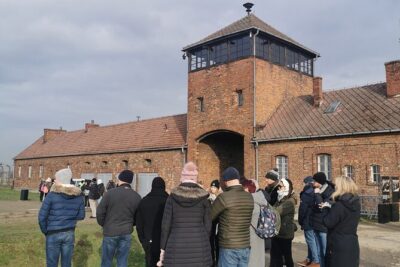
The first section of the museum visit takes about two hours at Auschwitz I. This is the older camp complex, with its brick barracks, guard towers, and controlled entrance areas.
The tour explains that Auschwitz I was designed mainly for political prisoners. It also introduces the system of imprisonment, forced labor, punishment, and murder that operated across the camp network. The preserved buildings and displayed evidence make this more than a general history lecture. You are looking at the physical setting where these crimes were organized and carried out.
A guide matters here. The site contains a large amount of information, and a short visit cannot cover everything. An English-speaking guide helps connect the buildings and exhibits to the larger events of World War II and the Holocaust. Jacob, one of the guides associated with this experience, was specifically praised for explaining the museum clearly and helping participants understand what they were seeing.
Do not expect the atmosphere of a standard museum outing. The subject is painful, and some areas may be confronting. You should approach the visit quietly and allow yourself time to process it. This is not a place for rushing from one photo stop to the next.
The word skip-the-line is useful in practical terms, but it does not mean you bypass the whole experience. You still pass through the museum’s required entry procedures and follow the scheduled guided route. The main benefit is having a reserved admission rather than trying to secure a suitable time on your own.
Auschwitz II-Birkenau: scale changes the picture
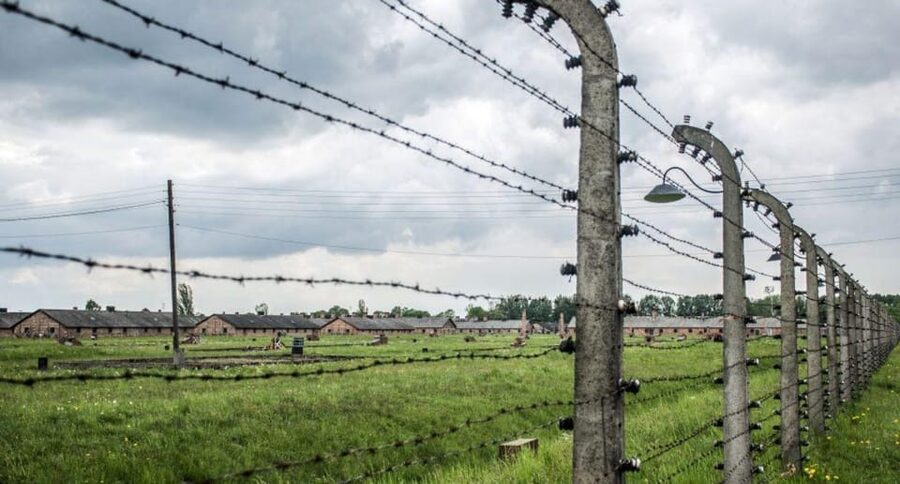
The second section lasts about one hour at Auschwitz II-Birkenau. The setting is different from Auschwitz I. The grounds are much more open, and the scale of the former camp is immediately important to understanding its purpose.
Birkenau was largely focused on the extermination of Jewish and Roma people. The tour includes the camp grounds, barracks, guard towers, and cremation sites. The wider setting helps show how the camp was planned and how arrival, confinement, forced labor, and mass murder were connected.
One hour is not a long time for such a large site. You will not see every part of Birkenau, and that is one limitation of a single-day excursion from Wrocław. Still, the combination of Auschwitz I and Auschwitz II gives you two essential views: the built camp complex and the enormous extermination site.
The total guided museum visit lasts about 3.5 hours, split into roughly two hours at Auschwitz I and one hour at Birkenau. Wear comfortable shoes and expect to walk. The activity is not suitable for people with mobility impairments, according to the stated conditions. Even for those without mobility concerns, the day involves extensive walking, standing, and moving with a timed group.
Same city, a completely different kind of day:
- Krakow: Auschwitz-Birkenau Guided Tour with Pickup & Lunch
★ 4.5 · 9,800 reviews - Krakow: Auschwitz-Birkenau Guided Tour Pickup/Lunch Options
★ 4.5 · 9,057 reviews - Krakow: Auschwitz-Birkenau and Salt Mine Guided Tour
★ 4.7 · 9,020 reviews - Krakow to Auschwitz Birkenau Guided Tour with Transfer and Ticket
★ 5.0 · 8,197 reviews
Returning to Krakow for two useful hours
After Auschwitz, the vehicle takes you back to Krakow. This is your chance to shift from a place of mourning to one of Poland’s great historic city centers, though the change in mood can feel abrupt.
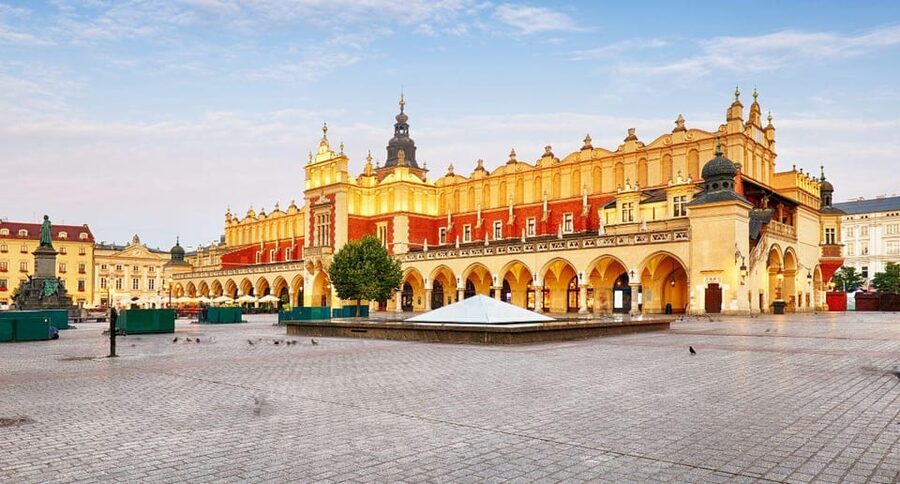
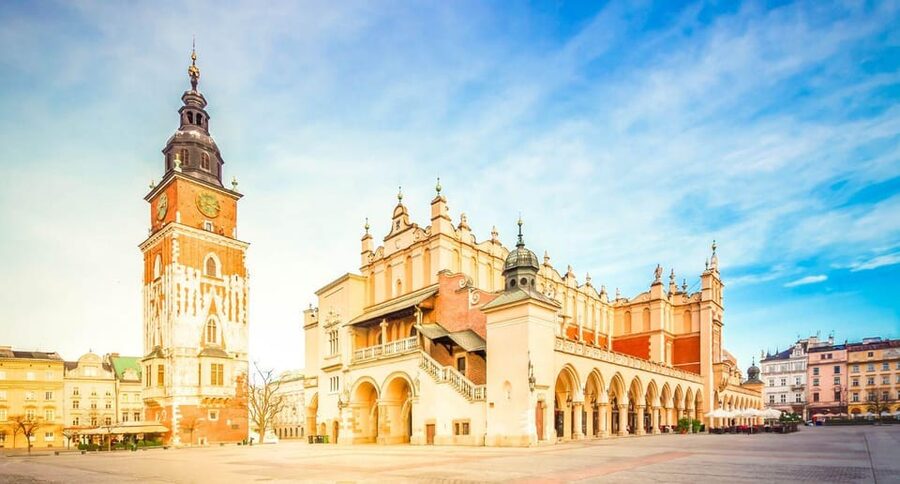
You have about two hours for free time, including dinner, a walk, and sightseeing. The Old Market is the natural target. It is described as the largest medieval market square in Europe and is part of Krakow’s UNESCO World Heritage setting.
Two hours is enough to get your bearings, walk across the square, and choose a meal. It is not enough for a full Krakow visit. You will not have time to explore every museum, church, or neighborhood, so keep your plan simple. A walk through the central area is more realistic than trying to build a long attraction list.
This portion is one of the tour’s best features because it adds contrast. Auschwitz asks you to confront Poland’s wartime past. Krakow shows another side of the country, with its medieval urban center and living city streets. The free time also breaks up the return journey before the final train.
Do keep an eye on the departure schedule. The return train to Wrocław takes another 3 hours and 20 minutes. Missing it would create a serious problem at the end of an already long day.
The real cost is your time and energy
At $190, this is a premium day trip, but the price covers a lot: two train journeys, road transport, museum entry, skip-the-line access, and the guided Auschwitz visit. You are paying for a ready-made chain of connections as much as for the tour itself.
The tradeoff is pace. The day is scheduled tightly, and the rail journey alone accounts for nearly seven hours. Add the three hours of road travel, about 3.5 hours inside the museum, Krakow time, and station transfers, and the 16-hour duration makes sense.
One confirmed outing began around 5 in the morning and ended around 11 at night. That is not necessarily the exact schedule for every departure, since starting times and the museum’s available guided slots can change. It is a good warning about what this format can demand.
If you are already staying in Krakow, this is not the most efficient way to visit Auschwitz because the Wrocław rail journey is built into the day. If Wrocław is your base and you have only one available day, the arrangement is much more attractive.
Who should book this experience?
I would recommend it to a first-time visitor based in Wrocław who wants Auschwitz and Krakow in one outing without arranging several separate bookings. It is also a sensible choice if you prefer a guide to explain the memorial rather than walking through it alone.
The day is a good match for people who value historical context, clear transport instructions, and a planned schedule. The English-language guiding is especially important because the museum visit carries far more weight than simply seeing the buildings.
I would not choose it for a relaxed day trip. You need to accept an early start, long rail journeys, a lengthy road transfer, extensive walking, and a late return. It is also not suitable for people with mobility impairments.
Bring your ID, keep your bag small, watch your meeting times, and do not schedule anything demanding that evening. If possible, leave room after returning to Wrocław to rest. The museum visit may stay with you long after the train ride ends.
Should you book it?
Book this tour if you are staying in Wrocław and want a carefully connected visit to Auschwitz with a short introduction to Krakow. The included transport and reserved museum access remove much of the planning work, and the guide-led visit gives the memorial the attention it deserves.
Skip it if you have several days in Poland, can stay overnight in Krakow, or dislike very long day trips. For the right reader, though, this is a powerful and practical way to visit two major Polish destinations in one demanding day.
FAQ
Where does the tour begin?
The tour begins at Wrocław Główny Railway Station. You board the train there rather than receiving hotel pickup.
How long is the complete experience?
The stated duration is 16 hours. The schedule includes train journeys of about 3 hours and 20 minutes each way, road transfers, the Auschwitz visit, and free time in Krakow.
How long is the train ride from Wrocław to Krakow?
Each train journey takes about 3.33 hours, or roughly 3 hours and 20 minutes.
How do I find the meeting point in Krakow?
The meeting point for the Auschwitz transfer is about a seven-minute walk from Krakow railway station. You receive a map and clear instructions.
How long is the guided visit at Auschwitz-Birkenau?
The guided museum visit takes about 3.5 hours. Around two hours are spent at Auschwitz I and about one hour at Auschwitz II-Birkenau.
Is the tour conducted in English?
Yes. The listed tour language is English. If a selected language is unavailable, the tour takes place in English.
Are museum tickets included?
Yes. The package includes skip-the-line entrance tickets to Auschwitz and Birkenau, along with the guided tour.
What should I bring to the museum?
Bring your identification documents. Large bags are not allowed inside, but you can leave them on the bus.
Is food included?
No. Food and drinks are not included. You have free time in Krakow for dinner and should plan to buy meals separately.
Just added around Auschwitz
- Guided Private Tour to Auschwitz Birkenau & Krakow from Wroclaw★ 5.0 · 4 reviews
- Auschwitz-Birkenau Day Tour from Wroclaw★ 5.0 · 40 reviews
- Krakow & Auschwitz day tour from Warsaw by private car with Lunch★ 5.0 · 16 reviews
- One day tour to Auschwitz-Birkenau & Salt Mine from Warsaw with private driver★ 5.0 · 4 reviews
- One Day Tour to Auschwitz-Birkenau from Warsaw by Car★ 5.0 · 81 reviews
- Krakow and Auschwitz – Full Day Tour from Warsaw by private car★ 5.0 · 9 reviews
- From Warsaw: Auschwitz-Birkenau Tour with Premium Train Transportation★ 4.0 · 7 reviews
- Full-Day Tour From Warsaw to Auschwitz (guided) and Krakow by car★ 5.0 · 24 reviews
Auschwitz Tours, compared.
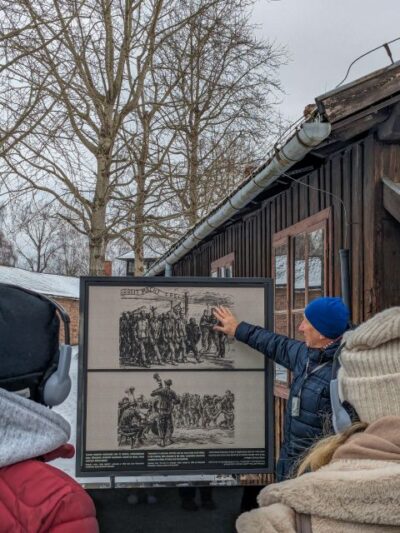
Auschwitz-Birkenau Guided Tour & Hotel Pickup
Read our review →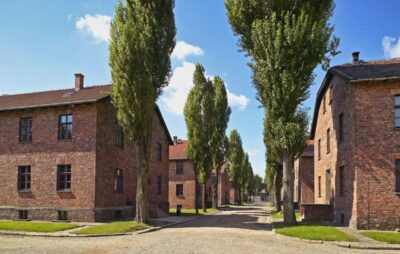
Auschwitz Guided Tour with Optional Hotel Pickup
Read our review →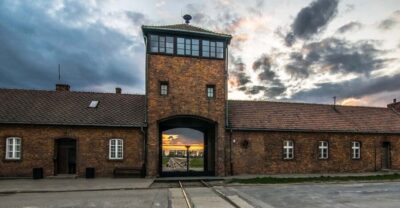
Auschwitz-Birkenau Guided Tour with Pickup & Lunch
Read our review →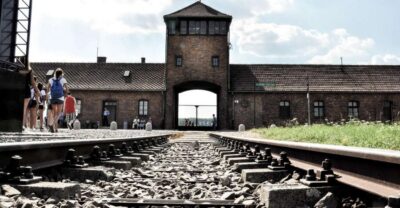
Auschwitz-Birkenau Guided Tour Pickup/Lunch Options
Read our review →
Krakow to Auschwitz Birkenau Guided Tour with Transfer and Ticket
Read our review →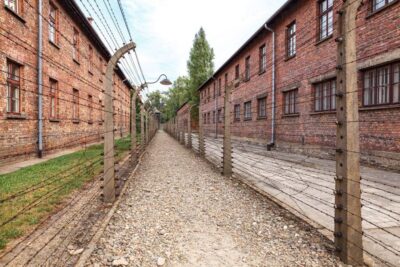
Browse the lists this tour appears in