
Reviewed · WARSAW TOURS
Highlights & Hidden Gems With Locals: Best of Warsaw Private Tour
Warsaw reveals itself best in contrasts: royal gardens beside plain wooden houses, grand avenues beside wartime memorials, and a carefully rebuilt Old Town beside modern city life. This private tour gives you that wide-angle view, with a local guide leading only your party through central Warsaw.
I like the private format, which lets you ask about Polish history, architecture, Soviet influence, or places to eat without waiting for a busload of strangers. I also like the mix of famous sights and quieter stops, including the Finnish houses near Lazienki Park and the crosses around St. Alexander’s Church. The main caution is pace: three hours can feel tight for this much ground, and some outings have involved more than 10 kilometers of walking.
Key points to know before booking
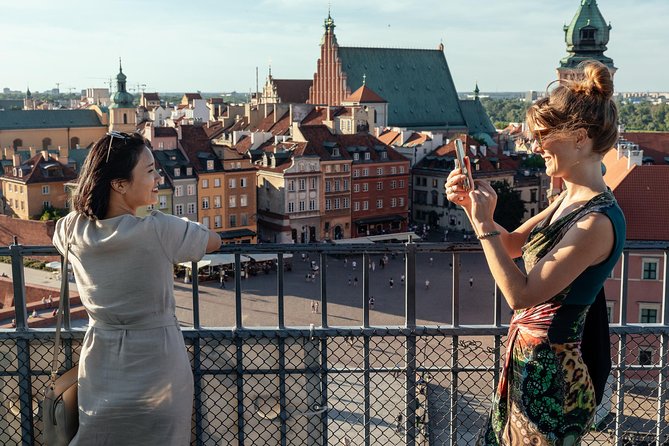
- A broad first look at Warsaw: The route links Belvedere Palace, Lazienki Park, the Royal Castle, Krakowskie Przedmiescie, and central monuments.
- Private guiding matters: You can shape the conversation around history, architecture, food, or modern Warsaw.
- Terrace Widokowy is included: You get a high view of the city without buying a separate ticket.
- Expect a walking-heavy morning or afternoon: The route is mostly flat, but one set of stairs leads to the viewing terrace.
- Small local touches add character: The tour includes one drink or tasting, and past guides have offered coffee, chocolate, or cherry liquor.
- Guide quality can affect the day: Marcin, Mona, Tunia, and Wit have each been praised for their warmth and city knowledge, but punctuality and depth of explanation have not been perfectly consistent.
Why this route works for a first look at Warsaw
Warsaw is not a city you understand from one square. Its story is spread across parks, palaces, churches, monuments, reconstructed streets, and postwar buildings. This route tries to connect those pieces in a short time.
You begin near Al. Ujazdowskie 6, in the area of the Belvedere Palace and Józef Piłsudski Monument. From there, the path moves through royal parks and central avenues before reaching the Old Town and its castle. That progression gives you a useful sense of Warsaw’s geography.
The tour is listed at about three hours, but the exact experience can depend on the guide, weather, walking speed, and how many questions you ask. Some accounts describe a relaxed overview, while another describes walking more than 10 kilometers. I would plan for a serious walk, not a gentle stroll with long seated breaks.
That difference matters. If you want a quick orientation before exploring alone, the tour can be very useful. If you expect a detailed lecture at every site, three hours may feel too short. The private setting helps, since you can ask the guide to slow down or spend more time on the parts that interest you.
A few more Warsaw half-days worth comparing
- Warsaw: Chopin Concert in the Old Town
★ 4.8 · 2,287 reviews - Warsaw: Traditional Galar Cruise on The Vistula River
★ 4.6 · 1,640 reviews - Warsaw: Old Town Highlights Walking Tour in English
★ 4.7 · 1,516 reviews
Belvedere Palace and the royal parkland
The first stop is the Józef Piłsudski Monument, with Belvedere Palace nearby. You do not pay a separate admission fee for this part, and the appeal is mainly the setting and the story your guide adds.
Belvedere Palace is closely tied to Poland’s political life, so this is a good place to ask about the country’s leaders and changing government. The stop itself lasts only about 10 minutes, which means you should expect an introduction rather than a full palace visit.
The route then reaches Park Ujazdowski and the Lazienki area. The published plan refers to entering Lazienki Park, admiring a former presidential residence, and visiting a small community of Finnish wooden houses nearby. Those houses are one of the more unusual parts of the route. They offer a look at ordinary housing and community life, a welcome change from palaces and monuments.
A guide can make this section much more than a pleasant walk among trees. One account specifically praised the story behind the Scandinavian-style houses, while another guide shared a personal connection to a sculpture. Those personal details can give the walk a human scale, though they also show why guide style matters. Ask questions if you want the wider political or social context.
Lazienki is one of Warsaw’s most attractive areas, but it can also slow the group down. Paths, gardens, statues, and royal buildings invite lingering. If your guide spends extra time here, the later stops may receive shorter explanations.
St. Alexander’s Church and a square full of symbols
St. Alexander’s Church provides a change of mood. The church sits near a prominent square, and the guide draws attention to the many crosses in the area.
This is exactly the kind of small detail that can pass unnoticed when you explore alone. Rather than simply pointing at the church, the guide asks you to look around and connect the symbols to Poland’s public memory and religious life.
The stop is scheduled for about 20 minutes. You will not be touring every interior space in depth, but you should have time to examine the surroundings and ask why the crosses are there. This part of the tour works best with an alert guide who explains the meaning behind what you see instead of naming buildings and moving on.
The National Philharmonic and Warsaw’s everyday city center
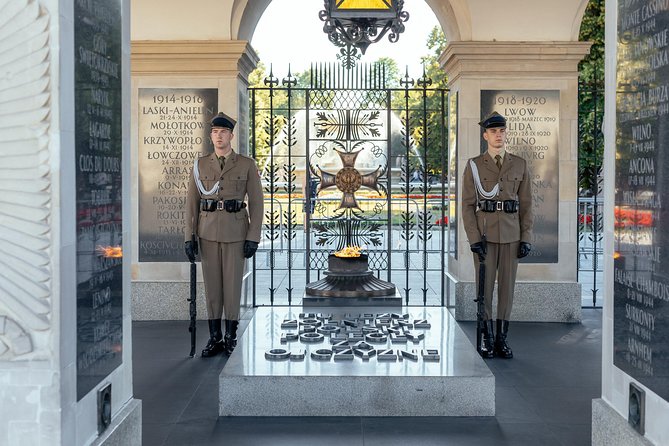
On the way to the National Philharmonic, the route passes Poland’s most famous chocolate manufacturer. That small detour helps keep the walk from becoming a procession of official buildings.
The Philharmonic stop is less about entering for a performance and more about seeing an important cultural building as part of the city. Your guide may discuss architecture, music, or the way central Warsaw was rebuilt and reshaped.
This is also a useful point to notice how the tour balances grand public institutions with daily city life. A chocolate shop, café, or food market can tell you as much about modern Warsaw as a statue can. Some guides have added a coffee break or local sweets, but those extras are not guaranteed beyond the included local drink or tasting.
Same city, a completely different kind of day:
- Warsaw Concert: Chopin – Painted by Candlelights with Wine
★ 4.8 · 1,442 reviews - Warsaw: City Sightseeing Hop-On Hop-Off Bus Tour
★ 3.6 · 1,415 reviews - Warsaw: POLIN Museum of the History of Polish Jews Ticket
★ 4.7 · 1,142 reviews - #1 Pub Crawl Warsaw with Optional Premium 1 Hour Open Bar
★ 5.0 · 790 reviews
Krakowskie Przedmiescie and the Presidential Palace
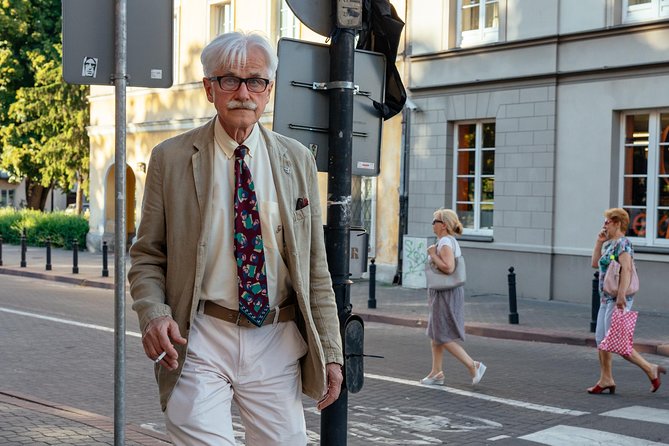
Krakowskie Przedmiescie is one of the city’s key historic avenues. Here you see the elegant Presidential Palace and a sculpture of the Romantic Polish poet Adam Mickiewicz.
The avenue gives your guide a chance to explain Poland’s literary and political identity. It also helps connect Warsaw’s monuments with the country’s long struggle to preserve language and national culture.
This section is especially valuable if you want more than a list of names. Ask your guide how the buildings changed over time, what survived the war, and what had to be rebuilt. Several guides have been praised for explaining architectural styles, wartime destruction, Soviet influence, and postwar reconstruction. Those subjects can turn a simple walk into a readable lesson in how Warsaw acquired its present appearance.
Piłsudski Monument and the Tomb of the Unknown Soldier
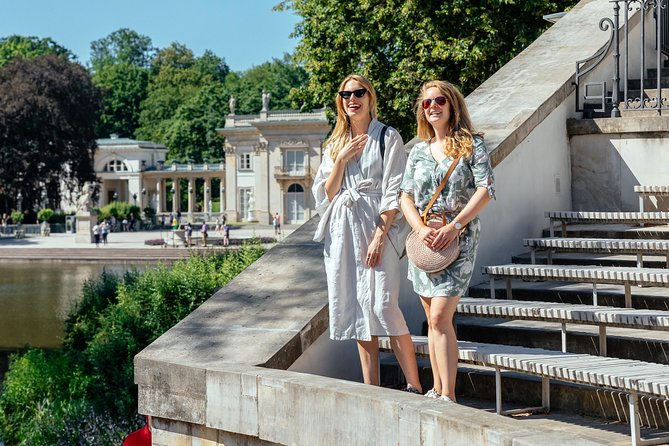
The Józef Piłsudski Monument and the Tomb of the Unknown Soldier bring military memory into the route. The guide explains the tomb and its place in Polish history.
This is one of the stops where a short explanation can either feel satisfying or too thin. The site deserves context, especially for anyone unfamiliar with Poland’s partitions, wars, independence movement, and 20th-century upheavals. If your interest is history, say so early and ask for more detail.
The stop lasts about 20 minutes. That is enough for a focused explanation, but not enough for a full account of Poland’s modern past. The private format is helpful here because you can steer the conversation toward the First World War, Piłsudski, the Second World War, or the postwar period.
Teatr Wielki and the approach to Old Town
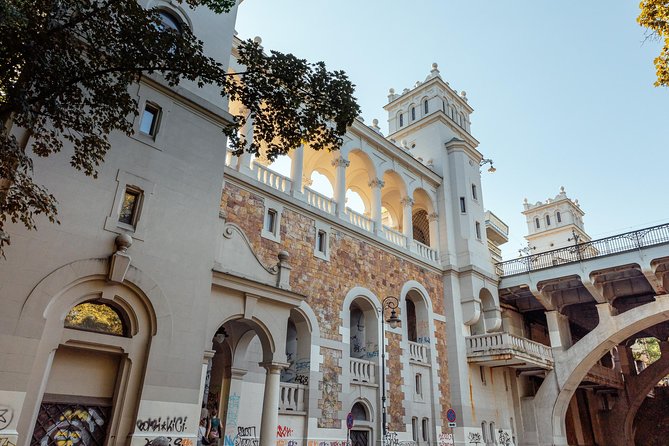
Teatr Wielki, home of the Polish National Opera, is described as Poland’s oldest opera. The building gives you another view of Warsaw’s cultural life and the monumental scale of central public architecture.
From here, the route moves toward the Royal Castle and Old Town. This transition is one of the strongest parts of the outing. You shift from broad avenues and formal institutions to the compact streets and colorful façades associated with historic Warsaw.
The phrase rebuilt Warsaw matters here. Much of the city was badly damaged during the Second World War, and the Old Town was reconstructed. A good guide will explain what you are looking at, what was restored, and how Warsaw chose to present its past after destruction. Guides have also discussed the city’s uprisings, wartime damage, Soviet-era influence, and later rebuilding.
Do not expect a long interior visit to Teatr Wielki or the Royal Castle. The route lists short sightseeing stops, and the main value is the connection between them.
Royal Castle and the view from Terrace Widokowy
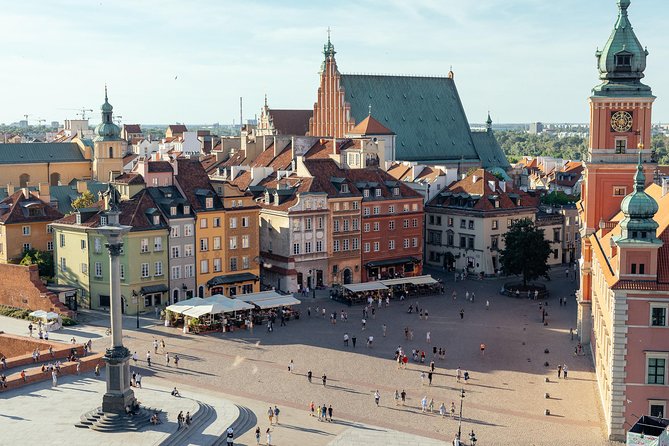
The Royal Castle is the visual gateway to Warsaw’s Old Town. You will see it as you enter the historic center, but this tour does not list a full castle admission. The emphasis is on the exterior, its place in the city, and the surrounding streets.
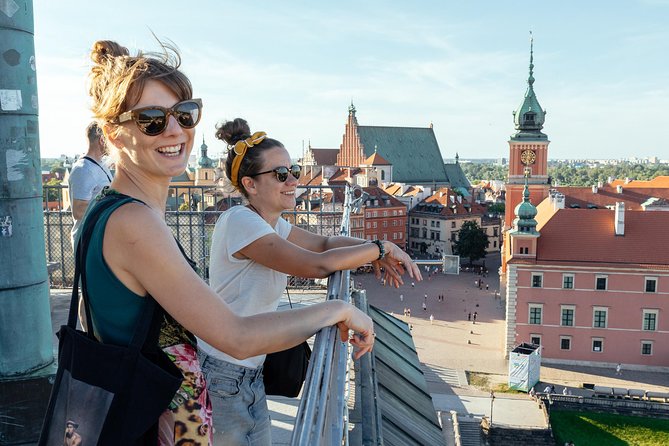
The included Terrace Widokowy is one of the clearest practical benefits of the tour. From above, you can sort out the city’s layout and recognize places you passed earlier. A panorama is especially useful at the beginning of a visit because it turns a collection of streets into a mental map.
The terrace stop is listed at about 10 minutes. One account notes a set of stairs, so anyone with limited stamina should take that into account. The tour states that most people can participate, and service animals are allowed, but it does not promise step-free access.
The viewing platform may be less appealing in poor weather. Snow, rain, or strong wind can turn a quick panorama into an uncomfortable finish. If the forecast looks rough, wear practical shoes and a waterproof layer.
What the private guide adds
The biggest reason to choose this experience over a basic sightseeing walk is control. Only your party and the local guide take part, so you can ask for more history, more architecture, or more practical advice for the rest of your stay.
Several named guides have received especially warm praise. Marcin has been described as strong on Warsaw’s past and present. Mona has been praised for explaining Polish history and architecture, and for adding chocolate, coffee, or cherry liquor. Tunia has been described as a good companion for a city walk, while Wit has been noted for punctual communication and useful advice about restaurants and other things to do.
The quality is not guaranteed by the format alone. One outing was affected by two late arrivals, limited explanation at later stops, poor transport coordination, and a change of plan after heavy rain. That is an important warning for a private tour costing $111.74 per person. If your guide is late or the route changes sharply, contact the provider promptly rather than letting the entire day drift.
A second caution concerns historical depth. One account praised explanations of architecture and reconstruction but found the information at individual sites too brief. If history is your main reason for booking, tell the guide at the start. You may get a better experience by asking for a focused theme instead of trying to cover every subject.
Price, walking, and what you receive
At $111.74 per person, this is not a budget city walk. The price reflects a private guide, a local drink or tasting, transportation, and admission to Terrace Widokowy. It can make sense for couples, families, or small groups who value personal attention and do not want to join a large tour.
Group discounts may improve the value when several people book together. For one person, the price is harder to justify unless you particularly want a private conversation and tailored route.
The tour is listed as three hours, but bring comfortable walking shoes. The route includes parks, avenues, monuments, churches, cultural buildings, and Old Town streets. One account describes more than 10 kilometers, while another calls the outing mostly flat with one stair section. Those details suggest you should prepare for a brisk urban walk rather than a short sightseeing loop.
Transportation is included, but the experience is still strongly walk-based. Hotel pickup and drop-off are not included, and the activity begins and ends at the stated meeting point near Al. Ujazdowskie 6. You will need to arrange your own way to and from that location.
Who should book this Warsaw tour
I would choose this tour if you are visiting Warsaw for the first time and want a fast orientation from a local person. It is also a good fit if you like asking questions, want advice for the rest of your stay, or prefer a private pace.
It suits people interested in architecture, reconstruction, public monuments, royal parks, and the links between Poland’s political and cultural life. It can also work well for a small group with mixed interests, since the guide can shift between history, food, neighborhoods, and practical suggestions.
I would be more cautious if you dislike long walks, need a guaranteed detailed lecture at every stop, or want extensive indoor time at the Royal Castle, opera, or palace. This is an overview with many outdoor stops, not a series of full museum visits.
Free cancellation is available up to 24 hours before the start time. Within 24 hours, the payment is not refunded, and changes are not accepted.
Should you book it?
Book it if you want a private introduction to Warsaw’s layout and major stories, with some less obvious stops mixed into the classic sights. The terrace view, royal parks, Finnish houses, Old Town approach, and flexible conversation give the tour real value.
Before booking, decide what matters most. If you want a relaxed walk and broad orientation, it is a sensible choice. If you want dense historical detail, confirm your expectations with the guide at the beginning and ask for the subjects you care about. Allow extra energy for walking, wear good shoes, and keep a little flexibility in case rain changes the route.
FAQ
How long does the Warsaw private tour last?
The tour lasts approximately three hours.
Is this a private activity?
Yes. Only your group and the local guide participate.
Is an English-speaking guide available?
Yes. The experience is offered in English.
Is admission to Terrace Widokowy included?
Yes. Tickets for Terrace Widokowy are included in the tour price.
Does the tour include hotel pickup and drop-off?
No. Hotel pickup and drop-off are not included. The tour starts and ends at Al. Ujazdowskie 6 in Warsaw.
What is included besides the guide?
The tour includes private guiding, transportation, one local drink or tasting, and Terrace Widokowy admission. Other food and drinks are not included.
Just added around Warsaw
- Wolfs Lair and Swieta Lipka Small Group Tour from Warsaw with Lunch★ 4.5 · 21 reviews
- Wolf’s Lair & Treblinka Tour in 1 day from Warsaw★ 5.0 · 37 reviews
- Wolfs Lair “Hitler’s Headquarters” – Full Day Tour from Warsaw by private car★ 4.5 · 4 reviews
- Tour from Warsaw: Wolf’s Lair, Hitler’s HQ Zones I and II★ 5.0 · 32 reviews
- Wolf’s Lair Private Day Trip from Warsaw★ 5.0 · 50 reviews
- Warsaw Must-See Local City Tour with Antek and Tomek★ 5.0 · 51 reviews
- Off the Beaten Track in Warsaw: Private City Tour★ 4.5 · 9 reviews
- Warsaw’s Old Town A Self-Guided Audio Tour★ 4.5 · 10 reviews
Warsaw Tours, compared.
Traditional Galar Cruise on The Vistula River
Read our review →
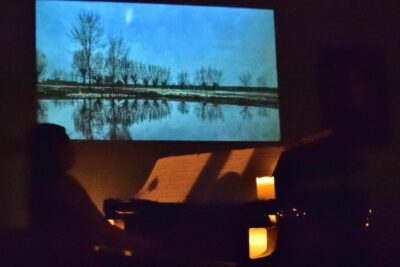
Warsaw Concert: Chopin – Painted by Candlelights with Wine
Read our review →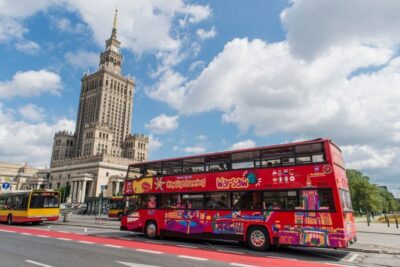
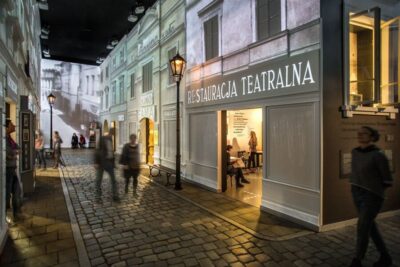
POLIN Museum of the History of Polish Jews Ticket
Read our review →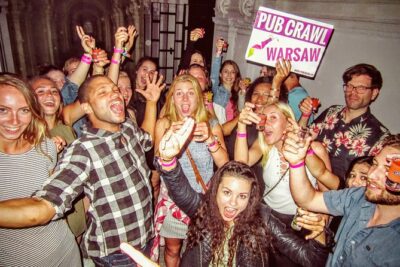
#1 Pub Crawl Warsaw with Optional Premium 1 Hour Open Bar
Read our review →
Browse the lists this tour appears in