
Reviewed · WROCLAW TOURS
Jewels of Lower Silesia
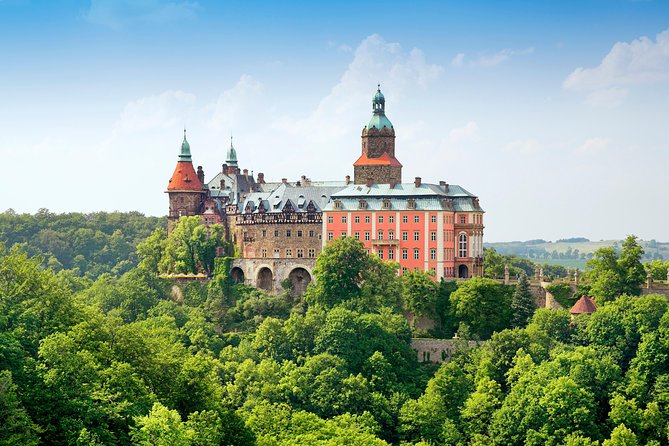
Ksiaz Castle gives this day its drama: a huge hilltop residence shaped by Polish, Bohemian, Hungarian, German, and wartime history. I like that you get more than polished rooms. The Palm House shows the Hochberg family’s wealth, while the Church of Peace in Swidnica offers a startling look at religious conflict in seventeenth-century Europe.
I also like the small-group format, with no more than eight people, and the strong English-speaking guides. Adam, Matthias, and Maciej are all named by past guests as clear, punctual, and engaging. The main drawback is physical: castle routes and the optional Nazi-era tunnels can involve many stairs, and lunch is not included.
Key points to know before booking
- Ksiaz Castle is the main event: Allow about three hours for the castle, grounds, and possible underground sections.
- The Palm House adds a welcome change of pace: Its exotic plants, lemurs, and peacocks make this more than a standard castle outing.
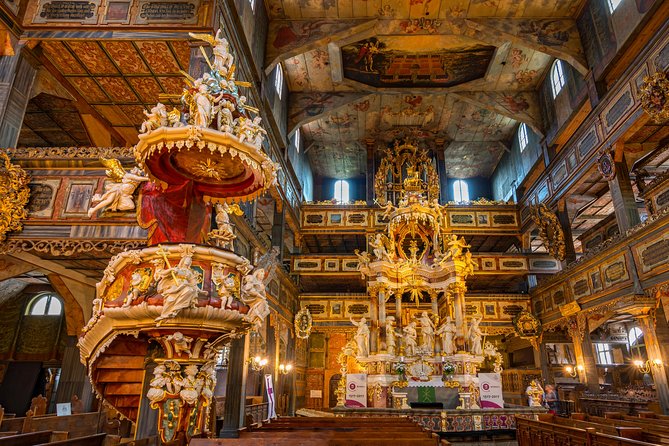
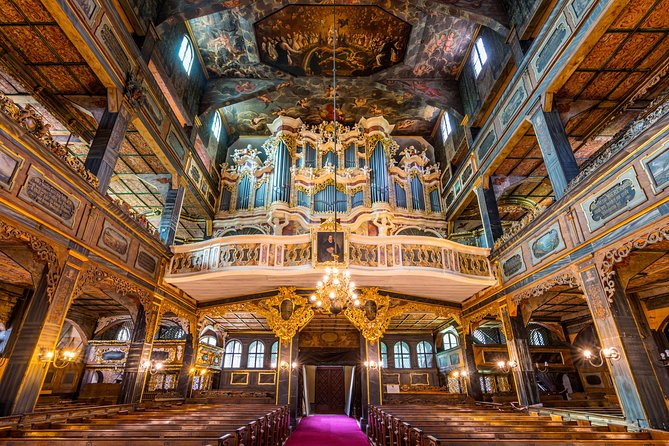
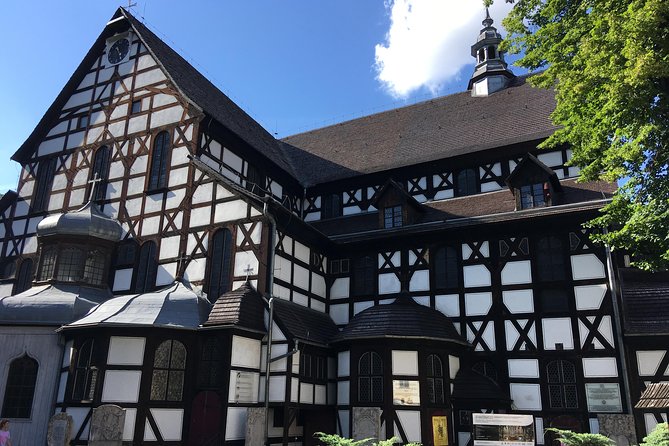
- Swidnica’s Church of Peace is the artistic high point: The ornate wooden interior is far more impressive than its plain exterior suggests.
- The group is capped at eight people: That keeps the day personal and makes questions easy.
- The price covers the useful basics: At $150.03 per person, admission tickets, parking, transport, and an English-speaking guide are included, but lunch is extra.
- Plan for a full day: Departure is at 8:30 a.m. from Cinema New Horizons in Wroclaw, with a return to the same meeting point after roughly seven to eight hours.
Why this Lower Silesia day trip works
Lower Silesia is ideal for a day outside Wroclaw. Within a manageable drive, you get an aristocratic castle, a lavish greenhouse, and one of Europe’s most unusual Protestant churches. The subjects are different enough that the day does not feel like three versions of the same sightseeing stop.
I especially like the way the trip moves between beauty and difficult history. Ksiaz Castle reflects the ambitions of the Hochberg family, who became major industrial-era entrepreneurs. The castle was later damaged and stripped during the Second World War, and the Church of Peace recalls an earlier period when religious divisions shaped daily life and politics.
The small vehicle matters here. With a maximum of eight people, the guide can give instructions without making the day feel like a procession. The guides named in the feedback, including Adam Wronecki, Matthias, and Maciej, are praised for clear English, good timing, and useful historical explanation. That is important on a day with several admission times and meeting points.
At $150.03, this is not a bargain-priced bus outing. Still, the admission fees, parking, air-conditioned transport, and guide are bundled together, so the price can make sense if you want to see all three places without arranging regional transport on your own. The best value comes from the small group and the amount of ground covered in one day.
A few more Wroclaw half-days worth comparing
- Wroclaw: E-Car Tour and Audio Guide
★ 4.6 · 1,738 reviews - Wroclaw: 2-Hour Private Guided Tour by Electric Car
★ 4.8 · 805 reviews - Wrocław: Old Town and Ostrów Tumski Walking Tour in English
★ 4.8 · 311 reviews
Ksiaz Castle: aristocratic scale and wartime scars
The first major stop is Ksiaz Castle in Walbrzych, where you spend about three hours. The building’s story is unusually tangled. It began with a local dynasty from Swidnica connected to the Polish Piast royal line, passed through Bohemian rulers and other owners, and eventually came to the Hochberg family.
The Hochbergs turned Ksiaz into a sign of power and success during the nineteenth-century industrial age. That background helps explain the castle’s size and setting. You are not simply looking at old walls. You are seeing how an ambitious Silesian family used architecture, gardens, and display to announce its position.
The castle is in good physical shape, but do not expect every room to be filled with original furnishings. During the Second World War, German and Soviet forces stripped the property, leaving much of the decoration gone. This absence is part of the experience. The bare or altered interiors make the region’s wartime losses easier to grasp than a perfectly restored palace might.
The visit can also include the underground tunnels connected with the castle. These were excavated by Jewish forced laborers near the end of the war. If the tunnel section is operating as part of your visit, take the stair count seriously. The route includes many steps down and back up, and some people may prefer to skip it. Confirm the exact tunnel arrangements when booking, since the published schedule focuses on the castle itself.
The castle grounds and views add another layer. You get time to look beyond the interiors, and the drive through the surrounding countryside is part of the pleasure. Guides provide context along the way, which helps you understand why the castle has such a mixed Polish, Bohemian, German, and wartime identity.
Three hours is a sensible allocation. Ksiaz is too large for a rushed forty-minute stop, yet the schedule does not ask you to spend an entire day in one building. You have time for the castle, outdoor areas, and possible tunnel visit without making the next stop feel like an afterthought.
The Palm House: Hochberg luxury in living form
The Palm House in Walbrzych lasts about twenty-five minutes, but it makes a strong contrast with Ksiaz Castle. Instead of stone, portraits, and damaged interiors, you move through colorful greenhouses filled with unusual plants.
The greenhouse helps explain the wealth of the Hochberg family in a direct, almost practical way. Maintaining exotic plants in Silesia required money, staff, heat, and a taste for display. The Palm House was not just a garden feature. It was a statement that the family could bring distant climates and rare species into its own estate.
This is also a welcome pause after the castle. You can walk at an easier pace, look closely at the plant collections, and enjoy the bright setting. The Palm House includes lemurs and peacocks, details that make the stop particularly appealing if you are traveling with children or simply want something less formal after several rooms of history.
Twenty-five minutes is enough for a pleasant visit, but it is not a long botanical garden tour. I would treat this as a compact stop that adds color and texture to the day rather than the central reason to book. The greenhouse is best understood as part of the Hochberg story, a glimpse of the private world that surrounded the castle.
Swidnica’s Church of Peace is the emotional high point
The final listed stop is the Church of Peace in Swidnica, with about thirty-five minutes inside. For many people, this is the most memorable place on the route.
The church was built in the seventeenth century under Habsburg rule, after the religious conflicts that tore through Europe. Its construction came with strict conditions, making the building itself a record of political compromise and religious pressure. It later earned UNESCO World Heritage status because of its historic and artistic importance.
From the outside, you might not expect the interior. Inside, the church is richly decorated, with an ornate wooden design that feels much larger and grander than its materials suggest. It is an impressive example of what Protestant communities created under severe limits. The contrast between a relatively restrained exterior and the elaborate interior is part of its appeal.
The thirty-five-minute visit is short, so listen closely to the guide’s explanation before wandering off to inspect details. The setting rewards careful looking. Painted surfaces, carved wood, and layered decoration can blur together at first, but a little historical context makes the design easier to read.
I like ending here. After Ksiaz’s aristocratic power and the Palm House’s display of wealth, the Church of Peace shifts attention to ordinary religious communities working within imposed restrictions. It gives the day a strong final idea rather than ending with one more pretty view.
Same city, a completely different kind of day:
- Wroclaw: Private Old Town Guided Walking Tour (2 hours)
★ 4.8 · 275 reviews - Old Town Wrocław Walking Tour
★ 5.0 · 249 reviews - Wroclaw: City Tour Sightseeing By Golf Cart Shared Or Privat
★ 4.8 · 189 reviews - Wroclaw Pub Crawl with Free Drinks
★ 4.4 · 127 reviews
A guide makes the long day easier
The quality of the guide matters on this tour because the sights are not self-explanatory. The castle has several historical chapters, the tunnels require sensitive context, and the Church of Peace needs an explanation of the religious settlement that made its construction possible.
Adam Wronecki receives particular praise for his English, humor, timing, and ability to explain the sites without overloading the day with lectures. Matthias is noted for keeping meeting times clear and offering information during the drive. Maciej is described as especially organized, with straightforward instructions and strong English.
You may not get a particular guide, but the named examples show what to look for: clear communication, historical context, and practical control of the schedule. That last point matters more than it sounds. With three stops and a possible tunnel visit, vague instructions could easily create stress.
The drive itself is not wasted time. Guides explain the region while you travel, helping connect the sights rather than presenting them as isolated attractions. Since the tour is offered in English, it is a good fit if you do not speak Polish and want more than whatever written signs happen to be available.
Timing, transport, and the lunch question
The tour begins at 8:30 a.m. at Cinema New Horizons, Kazimierza Wielkiego 19a/21, in central Wroclaw. It ends back at that same meeting point after about seven to eight hours. The starting point is near public transportation, which makes it easier to reach from elsewhere in the city.
Transport is by air-conditioned vehicle, and parking fees are included. That removes two common headaches on a day trip: finding a car and working out parking near a major castle. The small vehicle should also make the long day less tiring than a large coach, though you should still expect several hours on the road and at the sites.
Lunch is not included. You will need to plan for that yourself, and the schedule may allow time to eat depending on the day’s pace. One past itinerary included an early dinner at a nearby rustic Polish restaurant, but that should not be treated as a guaranteed part of the tour. Bring a snack and ask the guide about meal timing at the start.
The day is fairly structured. The castle receives the most time, the Palm House is a short visit, and the Church of Peace provides a compact final stop. That structure works well for people who want to see a lot in one day, but it leaves less room for lingering wherever you happen to fall in love with a place.
Who should book this tour?
I would recommend this trip to couples, solo visitors, families, and anyone using Wroclaw as a base for several days. It is especially useful if you want Lower Silesian history but do not want to rent a car or piece together regional connections.
History-minded visitors will get the most from the mix of dynastic politics, industrial wealth, wartime destruction, forced labor, and religious conflict. Garden and architecture fans will also find plenty to enjoy. The Palm House keeps the day from becoming too heavy, while the church supplies a beautiful finish.
You should think twice if stairs are difficult for you. The castle route can include many steps, and the tunnels have a particularly demanding stair section. Most people can participate, but the schedule is not designed as a mobility-focused visit.
This is also not the right choice if you prefer a very slow day at one site. You will see three distinct places, and the schedule is designed to keep moving. The reward is variety and a much broader picture of the region.
Practical value at $150.03
The cost is easiest to justify when you value convenience. You receive transport from central Wroclaw, parking, admission tickets, and an English-speaking guide. You also avoid the planning burden of organizing three stops across Lower Silesia.
A private car could offer more flexibility, but it would not automatically provide the same historical explanation. A large group tour might cost less, but the eight-person limit gives this experience a more personal feel and makes it easier to ask questions.
The price does not cover lunch, and the exact tunnel arrangements should be checked before departure. Those are small but important points when comparing options. I would also remember that the tour normally sells out well ahead of time, with bookings often made about six weeks in advance, so last-minute planning may be harder.
Free cancellation is available if you cancel at least twenty-four hours before the start time. Changes or cancellations inside that window are not refunded, and the tour requires a minimum number of participants. If that minimum is not met, you are offered another date or experience, or a full refund.
Should you book Jewels of Lower Silesia?
Book it if you want a well-organized full-day escape from Wroclaw that combines grand architecture with difficult, meaningful history. Ksiaz Castle gives you scale, the Palm House brings color and a touch of aristocratic excess, and Swidnica’s Church of Peace provides the day’s most striking interior.
I would be less enthusiastic for anyone who dislikes stairs, wants lunch fully arranged, or prefers unhurried visits. For most visitors, though, the balance is good: a small group, strong English guidance, included admissions, and three very different sights in one day. The Church of Peace alone is a fine reason to go, while Ksiaz Castle gives the outing its memorable sense of place.
FAQ
Where does the tour start and end?
The tour starts at 8:30 a.m. at Cinema New Horizons, Kazimierza Wielkiego 19a/21, 50-077 Wroclaw. It returns to the same meeting point at the end of the day.
How long does the tour last?
The experience lasts approximately seven to eight hours.
What sites are visited?
The scheduled stops are Ksiaz Castle in Walbrzych, the Palm House in Walbrzych, and the Church of Peace in Swidnica.
Is admission included?
Yes. Admission tickets for the listed attractions and parking fees are included in the tour price.
Is lunch included?
No. Lunch is not included.
How large is the group?
The tour has a maximum of eight participants and is offered in English.
Just added around Wroclaw
- Lower Silesia Tour From Wroclaw★ 4.5 · 33 reviews
- Wroclaw Old Town Private Tour★ 5.0 · 6 reviews
- Museum of Illusions Wroclaw Entrance Ticket★ 5.0 · 42 reviews
- Legends of Old Town 1 Hour Walking Tour in Wroclaw★ 5.0 · 6 reviews
- Highlights of Wroclaw Private Tour with one Entrance★ 5.0 · 5 reviews
- Private Candlelight concerts with classical music in Wroclaw★ 4.5 · 6 reviews
- Famous Islands of Wroclaw – Cathedral Island and Sand Island Private Tour★ 5.0 · 13 reviews
- Undercover City Games: Wroclaw★ 5.0 · 44 reviews
Wroclaw Tours, compared.
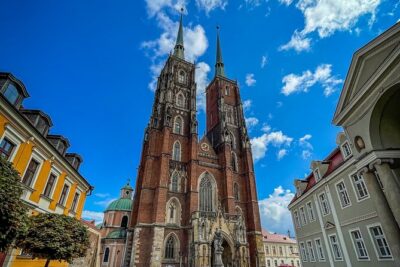
Old Town and Ostrów Tumski Walking Tour in English
Read our review →
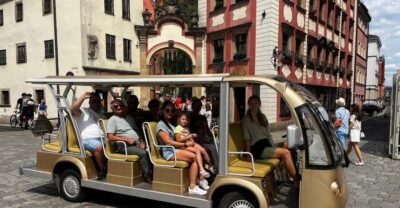
City Tour Sightseeing By Golf Cart Shared Or Privat
Read our review →
Browse the lists this tour appears in