
Reviewed · COMMUNIST HISTORY TOURS
Self-Drive Tour: Communist Warsaw by Retro Fiat “Toddler”
Warsaw’s Communist past is more fun to explore from the driver’s seat of a tiny Fiat 126p, nicknamed the Toddler, than from a standard sightseeing bus. You follow a guide through central Warsaw and Praga, stopping at grand state buildings, old political landmarks, and places that reveal how ordinary life changed after 1989.
I like the way this tour puts you behind the wheel, and I like the tight route, which covers several major sights in only two and a half hours. The main consideration is that you need a valid driver’s license, a moderate level of fitness, and a refundable 500 PLN security deposit.
Key points to know
- You drive the retro Fiat yourself, with a guide leading the way so you do not have to navigate Warsaw alone.
- The Palace of Culture and Science and Hotel MDM provide two very different examples of Soviet-era urban design.
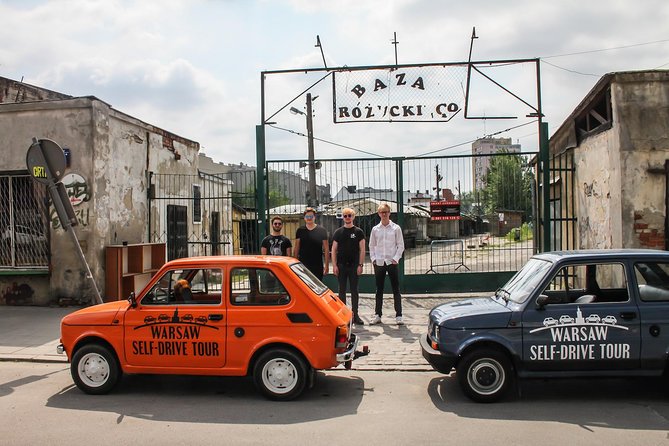
- Praga Polnoc adds a rougher, more artistic side of Warsaw, including the fading Różycki Bazaar.
- Guide Hannah can adjust the route slightly, based on the experience described, including an extra park stop.
- The price includes tour photos and a shot of Polish vodka, but not the refundable security deposit.
- The English-language tour begins and ends at Warsaw Tourist Information at pl. Defilad 1.
Why a Fiat 126p changes the way you see Warsaw
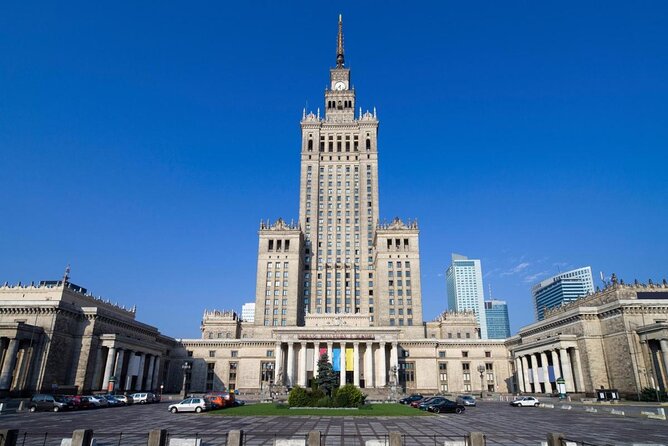
The Fiat 126p is small, simple, and instantly tied to everyday life in Communist Poland. It was not a luxury car. For many Polish families, it represented a rare taste of personal mobility in a time of limited choice and long waits for goods.
That makes the car more than a novelty. You are using a piece of social history to visit the buildings and districts created by the same system. The contrast is useful: grand ministry blocks and monumental squares look different when you arrive in a little car built for ordinary people.
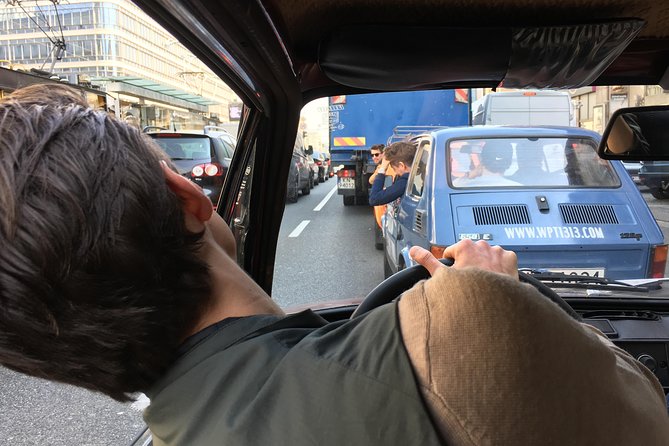
You drive the Fiat during the tour, while a guide joins you and provides live commentary. That arrangement gives you the fun of operating the car without leaving you to find every stop yourself. If you are not keen on driving in an unfamiliar city, this guided setup is a major benefit.
The cars are described as easy to drive, but you should still expect a manual, old-fashioned driving experience rather than the smooth controls of a modern rental car. The tour is best for people who enjoy the act of driving and do not mind a compact vehicle with plenty of character.
More Communist History Tours in Warsaw
- Private Tour: Warsaw’s Communist History by Retro Fiat
★ 5.0 · 115 reviews - Warsaw: Communism Tour in an Original Socialist Van
★ 4.9 · 75 reviews - Warsaw: Cold War Museum Entry Ticket
★ 4.6 · 55 reviews
Palace of Culture and Science: Warsaw’s biggest Communist symbol
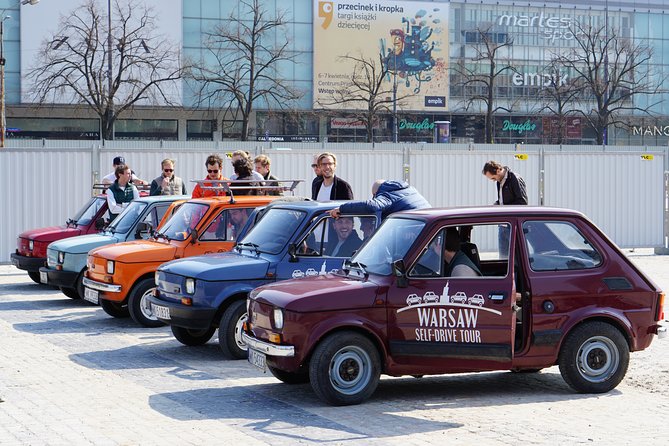
The tour begins with the Palace of Culture and Science, the most recognisable building in Warsaw. Its socialist realist design was a gift from the Soviet Union, and its scale still dominates the city center.
You have about 30 minutes here. The admission listed for the stop is free, so the focus is on the building and its setting rather than a paid interior visit. The palace now contains theaters, museums, a cinema, pubs, and other city venues, giving the old political symbol a more mixed modern life.
I like this as an opening stop because it gives you the visual key for the rest of the tour. The palace was designed to project power, order, and progress. Yet the city around it has changed sharply, with modern commercial buildings and new public spaces pressing in from every side.
The drawback is that the palace can feel familiar if you have already spent time in central Warsaw. The value comes from hearing the political story and seeing it as part of a larger route, not from treating it as a stand-alone attraction.
Hotel MDM and the Communist Ministerial District
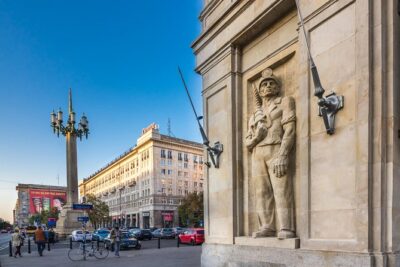
Hotel MDM offers a more austere version of the same era. Its architecture is less immediately famous than the palace, but it helps you understand how Communist Warsaw shaped entire streets rather than just one giant landmark.
You have around 20 minutes at the hotel. Look at the severe lines, broad scale, and formal design. This was architecture meant to express authority and collective purpose, not personal taste or commercial charm.
The surrounding Communist Ministerial District adds useful context. Instead of seeing isolated buildings, you get a sense of how government offices, hotels, avenues, and public monuments were arranged to support the state’s image.
This is also where a guide matters. A quick photograph of a gray building tells you little. The live commentary gives the district a human and political frame, helping you notice what the architects were trying to communicate.
Do not expect a long interior visit at Hotel MDM. The stop is primarily about the exterior, the district, and the atmosphere of the architecture. If you prefer museums and indoor exhibits, this portion may feel brief. If you enjoy cities as political documents, it earns its place on the route.
Censorship at the Monument of the Free Word
The Monument of the Free Word is a very short stop, about five minutes, but it brings the story down from monumental buildings to the control of information.
Here, the guide explains censorship in Communist Poland. The stop is not long enough for an extended visit, yet the subject gives the tour a sharper edge. Political architecture tells you what the state wanted people to see. Censorship tells you what people were not allowed to read, publish, or discuss freely.
I would treat this as a quick pause rather than a major attraction. Its value comes from the commentary and from linking the monument to the wider story of daily life under the Communist system.
Same city, a completely different kind of day:
- Warsaw: Chopin Concert in the Old Town
★ 4.8 · 2,287 reviews - Warsaw: Traditional Galar Cruise on The Vistula River
★ 4.6 · 1,640 reviews - Warsaw: Old Town Highlights Walking Tour in English
★ 4.7 · 1,516 reviews - Warsaw Concert: Chopin – Painted by Candlelights with Wine
★ 4.8 · 1,442 reviews
Charles de Gaulle and the former party headquarters
The statue of Charles de Gaulle provides another short stop, lasting about 10 minutes. The nearby setting also points to the former Communist Party headquarters.
This is a good example of how the tour connects familiar streets to political change. The name Charles de Gaulle may suggest French wartime history, but here the surrounding location helps you think about Poland’s own political past and the institutions that once directed the country.
The stop should not be confused with a long museum visit. You will have time to see the statue and hear the explanation, then continue. That brisk pace is part of the appeal for a first visit to Warsaw, but it also means you will not explore every location in detail.
From the old stadium site to modern Warsaw
The route also points out the place where something else once stood before the new National Stadium was built. The supplied details do not specify the earlier structure, so your guide’s commentary is especially important here.
This kind of stop works well on a moving city tour because it shows that Warsaw is not a finished historical display. Buildings disappear, districts change function, and major public projects replace older sites. You get a glimpse of the city’s physical change rather than only its preserved monuments.
The stop is more about orientation and context than admission or a long walk. If you want a detailed stadium visit, this tour is not designed for that. If you want to understand how Warsaw keeps rebuilding itself, it adds another useful layer.
Praga Polnoc and the fading Różycki Bazaar
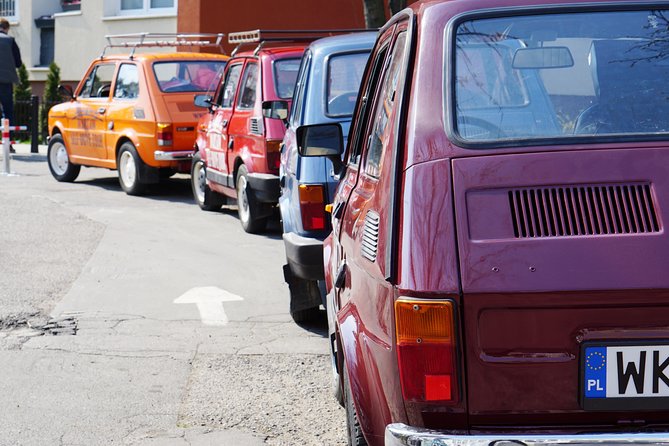
Praga Polnoc is the tour’s change of mood. Located on the other side of the Vistula, Praga survived the wartime destruction that hit much of central Warsaw. It has its own character, with older streets, bohemian culture, and major cultural and housing investment.
You have about 30 minutes in Praga, giving you more time to get out of the car and look around. This is the part of the route I find most useful for seeing a side of Warsaw that a short central sightseeing circuit can miss.
The Różycki Bazaar offers a particularly strong link to the past. It was once Warsaw’s leading bazaar, and black-market trading flourished there under both Nazi and Communist rule. Today, its former energy has faded, leaving a much quieter version of the old market.
That change is the point. The bazaar is not presented as a polished attraction. You may find it more interesting because it feels like a place shaped by real economic and political pressures, not a site arranged for visitors.
Praga also brings an important balance to the monumental center. Central Warsaw shows official power through wide streets and grand buildings. Praga shows survival, adaptation, and a more informal urban culture. The two districts help you see that Warsaw’s past was never just one story.
The practical limit is time. Thirty minutes gives you a taste of Praga, not a full neighborhood exploration. You may want to return on your own if this becomes the part of Warsaw that interests you most.
A flexible guide makes the short route work
The tour is conducted in English and includes live commentary onboard. The guide leads the route, explains the sights, and keeps you from getting lost while you operate the car.
One named guide connected with the experience is Hannah. The account of the tour describes her as flexible about adding an unplanned park stop. That detail matters because the route already has several fixed points, yet a little room for personal interest can make a short tour feel less mechanical.
You should still expect the main route to guide the day. A 2-hour-30-minute outing cannot cover every corner of Warsaw, and the stops have set approximate times. The best approach is to tell the guide early if you have a particular interest, then accept that the core landmarks need to fit into the schedule.
The maximum group size is 15 people. That is small enough to keep the experience more personal than a large coach tour, though the actual feel will depend on how many cars and participants are on your departure.
What the $70.81 price includes
At $70.81 per person, the cost is higher than a basic walking tour but easier to justify if you value the car itself. You are paying for a guided city route, the chance to drive a Communist-era Fiat, live commentary, photos, and a Polish vodka shot at the end.
The pictures are a practical extra. You can enjoy the drive without constantly stopping to take your own photos, and you leave with a record of the unusual vehicle and the route.
The vodka shot is brief rather than a major tasting. It works as a small closing ritual after the tour, not as a reason to book the experience by itself.
Remember the 500 PLN security deposit. It is refunded after the tour, but you need to plan for it at the start. This is not part of the final tour cost if returned, but it can affect your available cash or card limit on the day.
The tour requires at least two people per booking. That makes it less suitable for someone seeking a solo activity, but it works well for couples, friends, and families with an eligible driver.
Who should book this Fiat tour?
I would recommend it most strongly to:
- First-time visitors who want a fast overview of central Warsaw and Praga
- People interested in Communist-era design and Polish political history
- Drivers who enjoy unusual cars and do not want a standard bus excursion
- Couples or friends looking for a shared activity with plenty of conversation
- Visitors who want photos and a guide rather than a self-guided city drive
It may be less suitable if you dislike driving, need a very slow sightseeing pace, or want extended time inside museums. You also need a valid driver’s license and a moderate level of physical fitness.
The tour includes short walks and several stops, so comfortable clothing makes sense. Since the route operates in an active city, you should also be ready for ordinary urban traffic and the compact feel of an older car, though the available information does not give specific traffic or weather arrangements.
Booking, cancellation, and meeting point
You meet at Warsaw Tourist Information, pl. Defilad 1, 00-901 Warszawa, Poland. The activity ends back at the same meeting point, which makes it easy to plan around other central Warsaw sightseeing.
A mobile ticket is provided, and confirmation arrives at booking. The meeting point is near public transportation, so you can reach it without arranging a separate transfer.
The tour usually sells about 31 days ahead, so booking early is sensible if your Warsaw dates are fixed. Free cancellation is available up to 24 hours before the start time. Cancellations or changes made less than 24 hours before the start are not refunded or accepted.
Because the tour needs a minimum number of participants, it can be canceled if that number is not reached. In that case, you are offered another date or experience, or a full refund.
Should you book the Communist Warsaw Fiat tour?
Book it if you want Warsaw’s history delivered with movement, humor, and a real sense of place. The Fiat 126p turns a history lesson into an activity, while the route covers major symbols such as the Palace of Culture, Hotel MDM, the former party headquarters area, and Praga’s Różycki Bazaar.
I especially like the balance between official Warsaw and everyday Warsaw. The central monuments show how the Communist state presented itself. Praga and the old bazaar show a less polished side, shaped by survival and change.
Skip it if you want long museum visits, a relaxed walking pace, or a fully passive ride. For everyone else, this is a compact and distinctive way to get oriented, learn the city’s twentieth-century story, and drive a small piece of Polish history.
FAQ
How long is the Communist Warsaw Fiat tour?
The tour lasts approximately 2 hours and 30 minutes.
What car do I drive?
You drive a retro Polish Fiat 126p, commonly nicknamed the Toddler.
Is the tour offered in English?
Yes. The experience includes an English-speaking guide and live commentary onboard.
Where does the tour start and finish?
It starts at Warsaw Tourist Information, pl. Defilad 1, 00-901 Warszawa, Poland, and ends back at the same meeting point.
Do I need a driver’s license?
Yes. A valid driver’s license is required because you become the driver of the retro Fiat.
Is there an additional security deposit?
Yes. A 500 PLN security deposit is required and is refunded after the tour.
What is included in the price?
The price includes the Fiat driving experience, live commentary, pictures from the tour, and a shot of Polish vodka after the tour. The security deposit is not included in the price.
Just added around Warsaw
- Wolfs Lair and Swieta Lipka Small Group Tour from Warsaw with Lunch★ 4.5 · 21 reviews
- Wolf’s Lair & Treblinka Tour in 1 day from Warsaw★ 5.0 · 37 reviews
- Tour from Warsaw: Wolf’s Lair, Hitler’s HQ Zones I and II★ 5.0 · 32 reviews
- Wolf’s Lair Private Day Trip from Warsaw★ 5.0 · 50 reviews
- Wolfs Lair “Hitler’s Headquarters” – Full Day Tour from Warsaw by private car★ 4.5 · 4 reviews
- Warsaw Must-See Local City Tour with Antek and Tomek★ 5.0 · 51 reviews
- Off the Beaten Track in Warsaw: Private City Tour★ 4.5 · 9 reviews
- Warsaw’s Old Town A Self-Guided Audio Tour★ 4.5 · 10 reviews
Communist History Tours, compared.
Legendary Private Nowa Huta Communism Tour with Crazy Guides
Read our review →
Nowa Huta: Steelworks Administration Buildings/Shelters Tour
Read our review →
Private Tour: Warsaw’s Communist History by Retro Fiat
Read our review →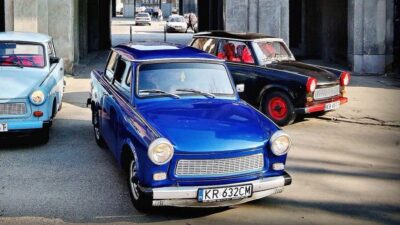
Private Nowa Huta Adventure Tour in Communist Cars
Read our review →
Browse the lists this tour appears in