
Reviewed · CRUISES & BOAT TOURS
Sightseeing Cruise around the Old Town of Gdansk
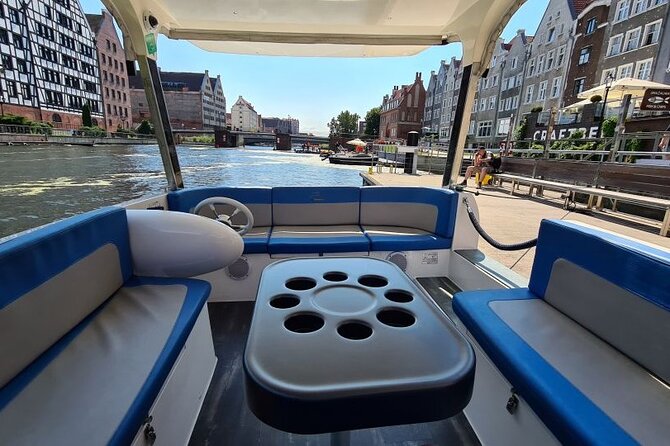
The best thing about this 50-minute Motława River cruise is the fresh angle it gives you on Gdańsk. From the water, the red-brick Crane, old gates, museum ships, converted warehouses, and working-port past line up in one compact view. The boat is electric, quiet, and limited to a maximum of eight people, so this feels more like a small outing than a city ferry ride.
I like the solar-panel roof, which helps shade the boat and offers some cover from light rain. I also like the route itself: it pairs postcard views around the historic center with less polished but important places such as the Imperial Shipyard and Polish Hook.
The main caution is reliability. Several scheduled trips have been canceled because of boat trouble, weather, or the end of the operating season, and some refunds took time to arrive. Check the departure status close to your visit, especially outside the main season.
Key points to know before boarding
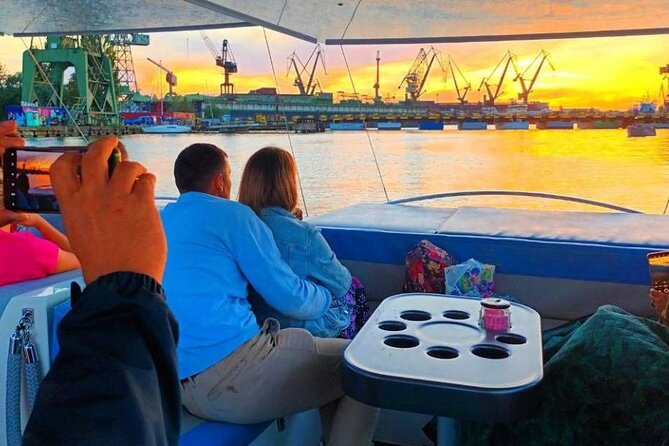
- Small electric boat: The maximum group size is eight, with comfortable seats, pillows, and blankets.
- A different view of the Crane: Gdańsk’s famous medieval port crane is at its most impressive from the river.
- English audio guide: Recorded commentary provides background as the boat passes the main sights.
- Historic and modern waterfront: The route includes Green Bridge, Granary Island, Sołdek, Brabank, Polish Hook, and the Imperial Shipyard.
- Short and easy to fit in: The cruise lasts about 50 minutes and returns to Powroźnicza 13/15.
- Weather matters: Poor conditions can lead to a new date or a full refund, while late cancellations by you are not refundable.
Why the Motława is the right place to see Gdańsk
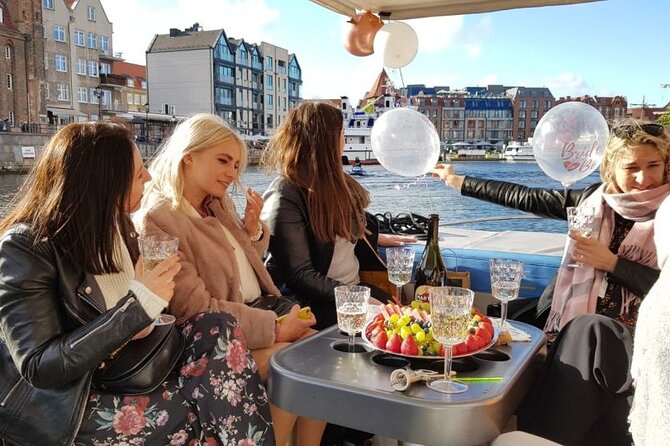
Gdańsk’s historic center faces the Motława, but most people experience it from the quayside. That means you see handsome façades, restaurant terraces, and the waterfront promenade, but you miss the reason the city grew wealthy in the first place: ships, warehouses, cranes, and river traffic.
This cruise turns the river into your viewing platform. The Old Town is not simply a row of pretty buildings. It was a major trading port, and the water explains the layout better than a walk alone. You see where goods arrived, where grain was stored, and how the gates controlled movement between the river and the city.
The electric boat is suited to this setting. It moves slowly enough for you to take in the sights and hear the audio guide, without the engine noise of a larger sightseeing vessel. A slower pace is useful here because many details are easy to miss from land, including the old water gates and the layers of industrial waterfront beyond the main center.
The route begins at Powroźnicza 13/15, near the central waterfront. You return to the same point, so you do not need to arrange transport back from another part of town. The mobile ticket is convenient, and confirmation is provided when you book.
More Boat Tours in Gdansk
- Gdansk: City Cruise on Historical Polish Boat
★ 4.8 · 2,913 reviews - Gdańsk: Sunset Cruise on a Historic Polish Boat
★ 4.9 · 977 reviews - Gdansk: Guided Round-Trip Cruise to Westerplatte
★ 4.3 · 865 reviews
Green Bridge and the first look at Granary Island
Green Bridge links the Long Market area with Granary Island. From the boat, you see this connection from below and get a clear sense of how tightly the old center is tied to the river.
The bridge was once partly wooden and served as a drawbridge until the end of World War II. Its name came from the paint used on the earlier structure. The current steel bridge no longer has that original appearance, but the old name survived.
Granary Island follows. It sits between two branches of the Motława and stretches almost two and a half kilometers, though it is only about 300 meters wide at its broadest point. For centuries, this was a storage district, not a residential quarter designed for strolling and dining.
At its height, nearly 360 granaries occupied the island. Grain was the main cargo, but warehouses also held wood, resin, ash, and other goods traded through Gdańsk. The river view lets you see both sides of the island at once, which makes its narrow shape and commercial purpose easier to understand.
The modern redevelopment is part of the story, too. Former warehouses have been turned into a stylish neighborhood, while traces of the old storage district remain. I find this stretch particularly useful early in a visit because it shows how Gdańsk has changed without erasing its port identity.
The Crane, the city’s most dramatic waterfront sight
The medieval Crane is the visual star of the cruise. Its enormous red-brick and timber structure once worked as both a defensive water gate and a port crane. After its expansion in the fifteenth century, it was considered the largest structure of its kind in medieval Europe.
The machinery was remarkably physical. Workers walked inside two pairs of large wooden wheels mounted on shared axles. With pulley ropes, one set of wheels could lift up to two tons.
From the water, the Crane makes immediate sense. You see the opening where ships and cargo once met the city, rather than viewing the building only as a handsome riverside landmark. The scale is easier to judge from a boat, and the position of the Crane beside the water explains why it mattered so much.
The audio guide in English adds useful context here. It is not a live guide, so you will not have a person answering questions as you go, but the recorded commentary allows you to look up from your phone and focus on the passing sights.
The route also passes several historic water gates, including St. Mary’s Gate, Stragglers Gate, St. John’s Gate, and Holy Spirit Gate. From a boat, you see how these entrances faced the river and helped regulate access to the town.
Sołdek and Ołowianka Island
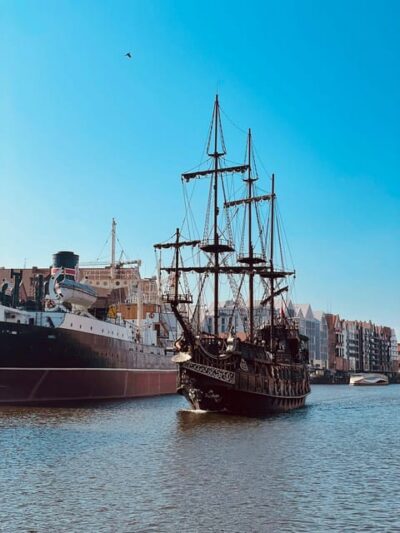
Next comes the Sołdek, moored at the quay of Ołowianka Island. This steamship was the first Polish ship built after World War II at the Gdańsk shipyard. Its name honors Stanisław Sołdek, a stevedore and leading worker at the shipyard.
The ship is also the prototype for a series of bulk carriers. Look closely at the hull and you can see the rivets used to join its sections. More than 300,000 rivets went into the ship, a small detail that gives the vessel a human, industrial scale.
The boat also passes the Ołowianka Footbridge. This helps connect the old waterfront sights with the city’s later shipping and industrial history. The Sołdek is not just a museum ship placed for decoration. It represents the rebuilding of Polish industry after the war and the importance of Gdańsk’s shipyards in the country’s modern story.
You may also catch views toward the World War II Museum from the water. The museum itself is not a stop on this cruise, so treat the river view as an orientation point rather than a substitute for a visit inside.
Same city, a completely different kind of day:
- Gdańsk City Sights & History Guided Walking Tour in English
★ 4.8 · 876 reviews - Gdansk: Firearm Shooting Experience with Instructor
★ 4.8 · 866 reviews - Gdańsk: Sightseeing EcoCruise around the Old Town of Gdansk
★ 4.6 · 719 reviews - Main Town Gdańsk Walking Tour
★ 5.0 · 644 reviews
Fish Market, Brabank, and the changing riverfront
The route continues past the Fish Market, whose story reaches back to the fourteenth century. The Teutonic Knights allowed fresh fish to be sold near the castle walls, while reserving first choice of the catch for themselves. Fishermen from Gdańsk, Wisłoujście, and Hel brought their goods here.
That detail says a lot about the old city. The waterfront was not only a place for grand merchants and ocean-going ships. It was also a practical food market, with local fishermen bringing in the day’s catch.
You then pass Brabank, a modern residential complex near the mouth of the Radunia Canal. This is one of the route’s sharper changes in tone. Old port structures give way to new apartments and waterfront development, showing how the river is still being put to work in new ways.
I like this contrast because it keeps the cruise from becoming a parade of reconstructed façades. Gdańsk’s riverfront includes preserved monuments, restored warehouses, museum vessels, modern housing, and working industrial areas. You see a city that is still changing.
Polish Hook and the old grain trade

At the mouth of the Motława, the headland known as Polish Hook reaches toward the Martwa Wisła. For centuries, raftsmen stopped here after long journeys carrying grain to Gdańsk.
The location was practical. Merchants came to inspect and buy the imported grain, while local people visited for less commercial reasons. Raftsmen sang, played music, and danced around bonfires, turning the stopping place into an informal gathering point.
This is one of the quieter sections of the route, and the audio guide helps give it meaning. You may not see a grand monument here, but the place explains how the grain trade actually worked. Cargo arrived by river, crews waited, merchants negotiated, and the city’s economy reached far beyond its walls.
The view also opens up compared with the tight waterfront around the Crane. If you prefer constant architectural highlights, this portion may feel less exciting. If you want a sense of the wider port, it is valuable.
The Imperial Shipyard and Gdańsk beyond the postcard
The final major part of the route reaches the Imperial Shipyard. Its beginnings go back to a small corvette repair workshop created for a ship connected with the Gdańsk Navigational School.
The workshop expanded into a shipbuilding complex with wooden and later iron steamers. Additional land brought workshops, warehouses, a forge, a foundry, and office buildings. It became the Royal Shipyard, then the Imperial Shipyard after German unification in 1871.
This section adds necessary weight to the cruise. The old center is beautiful, but Gdańsk’s identity is also tied to shipbuilding and labor. Seeing the shipyard from the river gives you a broader picture of the city’s working life and industrial growth.
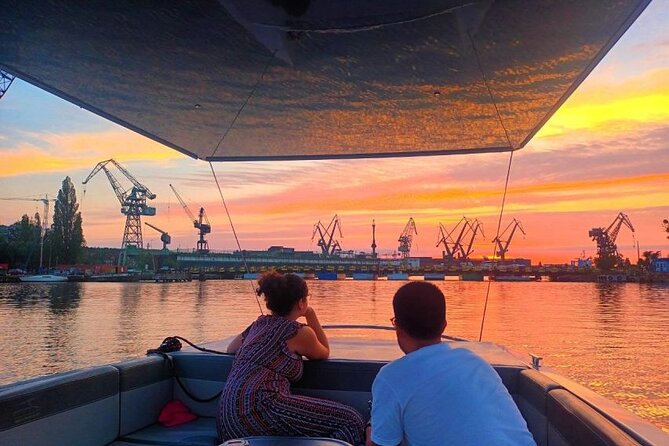
The view may be less tidy than the central waterfront. That is part of its value. You are not looking at a staged historic district, but at a port area shaped by work, war, rebuilding, and redevelopment. The cruise does not stop here, so pay attention while the boat passes and keep your audio guide ready.
Comfort, group size, and the onboard setup
The boat carries no more than eight people. That is a useful size for a narrow river route. You should have a better chance of seeing the sights without a large crowd blocking your view, and the atmosphere is likely to be quieter than on a standard sightseeing vessel.
Seating includes plush pillows and blankets. The roof has solar panels, which provide a practical benefit beyond the environmental message: they help shade the seating area and offer some protection from light rain. The boat does not travel quickly, so this is a sightseeing ride, not a fast harbor trip.
An onboard mini-bar sells drinks. It is a small convenience, not a reason to book the cruise, but it can be welcome on a cool or warm day. Bring reasonable expectations about the commentary: the English audio guide provides information, but this is not a private live-led tour with detailed answers to every question.
The tour is listed as a private sightseeing cruise, with a maximum of eight participants. Service animals are allowed, the departure point is near public transportation, and most people can take part. Specific access details for the boat itself are not provided, so contact the operator if you need a particular boarding arrangement.
Is $21.62 a fair price?
At $21.62 per person, the cruise is reasonably priced if you want a compact introduction to Gdańsk’s waterfront. You get about 50 minutes on the river, an electric boat, an English audio guide, and a route that combines major sights with less familiar port districts.
The value is strongest early in your stay. Use it to understand the city’s layout before walking the quayside, visiting the Crane, or exploring Granary Island on foot. You will recognize the places you saw from the water and understand how they fit together.
The value is weaker if you are looking only for an in-depth history lesson or a long boat trip. The audio guide cannot match a dedicated live historian, and 50 minutes goes quickly. It is also not the right choice if your schedule cannot absorb a possible weather or operational change.
The small group and quiet electric boat help justify the price. A larger cruise might offer a longer ride, but this format keeps the focus on the central riverfront and gives you a more relaxed setting.
Timing, cancellations, and who should book
The cruise is best for you if you want a gentle activity between walking tours, need a short introduction to Gdańsk, or enjoy seeing cities from the water. It also suits couples, families, and small groups who prefer a calm ride to a crowded sightseeing boat.
I would be more cautious if your visit falls near the end of the operating season. Trips have been canceled because of weather and boat problems, and at least some departures have not run as expected. Confirm the status close to departure and leave room in your schedule rather than booking this immediately before an important train or flight.
You can cancel for a full refund up to 24 hours before the start time. Cancellations inside that window are not refundable. If poor weather cancels the trip, you are offered another date or a full refund, though processing a refund may take time.
My verdict on this 50-minute Gdańsk cruise
I would book this cruise as a short orientation to Gdańsk’s riverfront, not as a replacement for the city’s museums and walking sights. The Crane, Green Bridge, Granary Island, Sołdek, and shipyard views make the route worthwhile, while the quiet electric boat keeps the ride pleasant.
The strongest reasons to go are the small group, the solar-panel cover, and the mix of famous landmarks and working-port history. The main reason to hesitate is operational uncertainty, especially in poor weather or outside the main season.
If you have a spare hour and want Gdańsk to make more sense from the water, this is a good-value choice. Just verify that the boat is running before you set out.
FAQ
How long is the sightseeing cruise?
The cruise lasts approximately 50 minutes.
Where does the cruise start and finish?
It starts at Powroźnicza 13/15, 80-828 Gdańsk, Poland, and ends back at the same meeting point.
Is an English audio guide available?
Yes. An English audio guide provides information during the cruise.
What sights can I see from the boat?
The route includes Green Bridge, Granary Island, the historic water gates, the Crane, Sołdek, the Ołowianka Footbridge, Fish Market, Brabank, Polish Hook, and the Imperial Shipyard. You can also view the World War II Museum from the water.
How many people can join the cruise?
The activity has a maximum of eight participants.
What happens if bad weather cancels the cruise?
You will be offered a different date or a full refund. You can also cancel for a full refund up to 24 hours before the experience begins. Cancellations made less than 24 hours before departure are not refundable.
Just added around Gdansk
- Gdansk and Malbork Castle Small Group Tour from Warsaw with Lunch★ 4.5 · 20 reviews
- Westerplatte private tour led by Expert-Guide (door to door)★ 5.0 · 5 reviews
- Whisky Tasting in Gdańsk★ 5.0 · 3 reviews
- Gdansk EVERYDAY Vodka Tasting Tour★ 5.0 · 6 reviews
- Westerplatte – 2h private trip by luxury car|★ 5.0 · 4 reviews
- Private WW2 Tour of Westerplatte,Gdansk and Stutthof Including Lunch★ 5.0 · 12 reviews
- Aiport Gdansk Transfer to Malbork Castle or Stutthof★ 5.0 · 3 reviews
- 5 hours Individual trip to the Stutthof Concentration Camp★ 5.0 · 5 reviews
Cruises & Boat Tours, compared.
Traditional Galar Cruise on The Vistula River
Read our review →
Browse the lists this tour appears in