
Reviewed · HISTORICAL TOURS
Gdańsk City Sights & History Guided Walking Tour in English
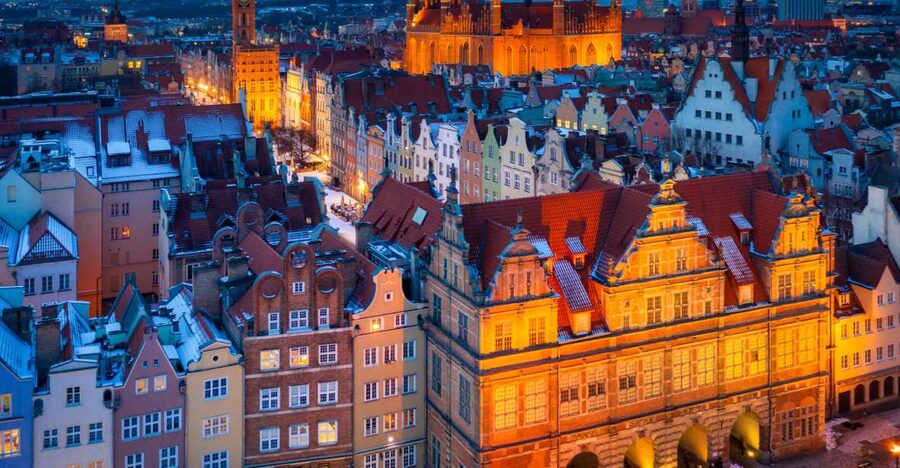
Gdańsk’s story is unusually concentrated along one walk. From the Golden Gate, you follow the old royal route through rebuilt merchant houses, Long Market, Neptune Fountain, St. Mary’s Basilica, and the harbor crane, while your guide connects the city’s trading past to the outbreak of WWII and the Solidarity movement. I like the way this tour links handsome buildings with hard history, rather than treating the Old Town as a pretty backdrop. I also like the practical human touch: guides such as Tufi, Kate, Sandra, Marcin, and Filip are praised for clear English, humor, and personal stories.
The main consideration is that this is a general walking tour, not a private outing. A large group can be harder to hear and manage in busy spots, and the wording about the reservation fee may feel unclear at the end. Still, at $26 for 150 minutes, it offers a lot of Gdańsk in one sitting.
Key points to know before booking
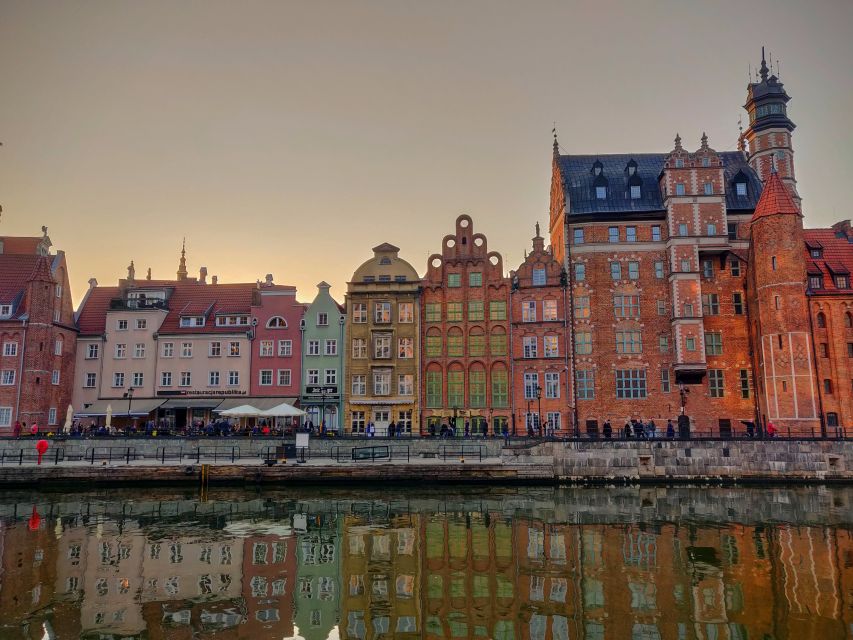
- Follow the old royal route: Begin at the Golden Gate and walk the same central path used for centuries by Poland’s kings.
- See Gdańsk’s signature sights: Long Market, Neptune Fountain, St. Mary’s Basilica, the Motława waterways, and the Zuraw crane all fit into the route.
- Get the difficult history explained clearly: The tour covers WWII, the city’s changing national identity, and Solidarity’s role in the fall of communism.
- Expect strong English-speaking guides: Tufi, Kate, Sandra, Marcin, Filip, and others are praised for humor, clear storytelling, and an easy manner.
- Plan for outdoor conditions: The tour runs rain or shine, so wear weather-appropriate clothing and comfortable shoes.
- Pay attention to the group format: The $26 covers your reservation and guide payment, but a private tour requires a separate arrangement with Walkative Tours.
Starting at the Golden Gate
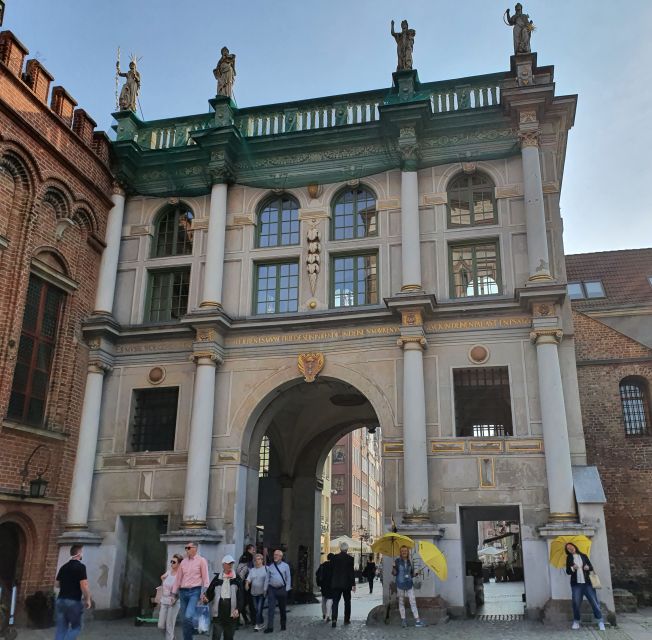
Look for the yellow umbrella at the Golden Gate, or Złota Brama. This is the practical starting point, but it is worth checking which side of the gate the group will use. One person found the meeting instructions less clear than they should have been, so arrive a little early and look carefully for the guide.
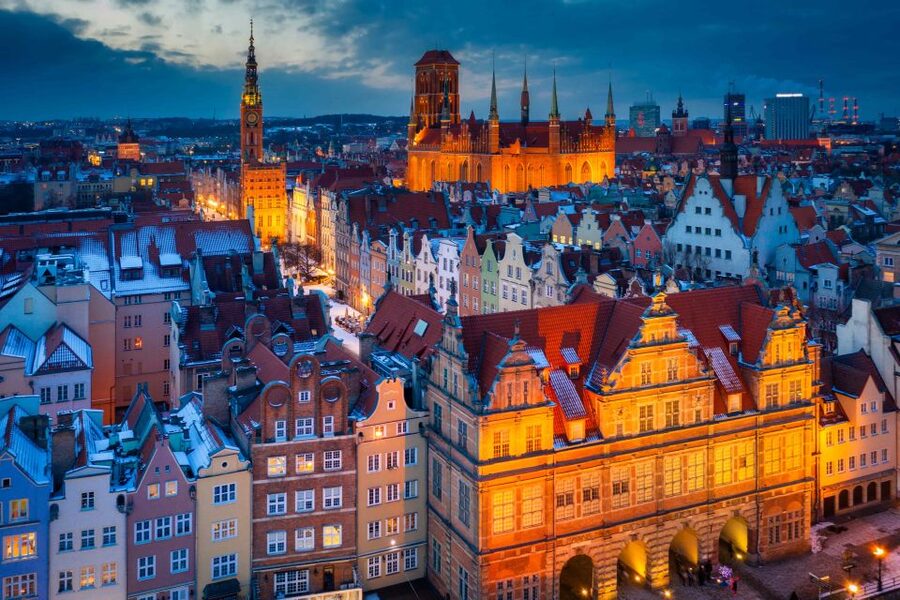
The gate opens the way into Gdańsk’s main historic center. From here, the tour quickly introduces you to the city’s unusual mix of Polish, German, and Dutch influence. That mix is not just an abstract piece of history. You see it in the street plan, the tall merchant houses, the harbor connections, and the city’s long struggle to decide who should control it.
Your guide sets the scene before the walk gets busy. This matters because Gdańsk can look like a polished medieval city at first glance, yet much of what you see was rebuilt after wartime destruction. Once you know that, the decorated facades carry a different weight.
More City Tours in Gdansk
- Gdansk: City Cruise on Historical Polish Boat
★ 4.8 · 2,913 reviews - Gdansk: City Sightseeing Tour by Golf Cart/Buggy Guided Tour
★ 4.9 · 510 reviews - Gdansk: Shared or Private City Tour Sightseeing By Golf Cart
★ 4.8 · 233 reviews
Rebuilt merchant houses and the old royal route
The walk follows the route used by Polish kings, leading through the heart of the old merchant city. You pass rows of colorful townhouses that once belonged to traders and civic leaders. Their wealth came from Baltic commerce, and the guide explains how Gdańsk became one of the most prosperous ports in the region.
I find this one of the most useful parts of the experience because it gives the architecture a reason. The narrow, tall houses were not built merely to look elegant. They reflected trade, status, and the need to fit important homes and businesses into a compact urban center.
The wartime story is equally important. Many of the buildings were destroyed, then rebuilt with great care. The result can fool you into thinking the old center survived untouched. A good guide makes that difference clear, explaining what was lost and why reconstruction mattered to local identity.
Guides are encouraged to tell the story rather than recite dates. Tufi is repeatedly praised for mixing facts with humor and personal observations. Kate is noted for making centuries of history easy to follow, while Sandra has a gift for placing Gdańsk’s past in a wider Polish setting. The guide you receive will vary, but the strongest part of the operation is clearly its people.
Long Market and Neptune Fountain
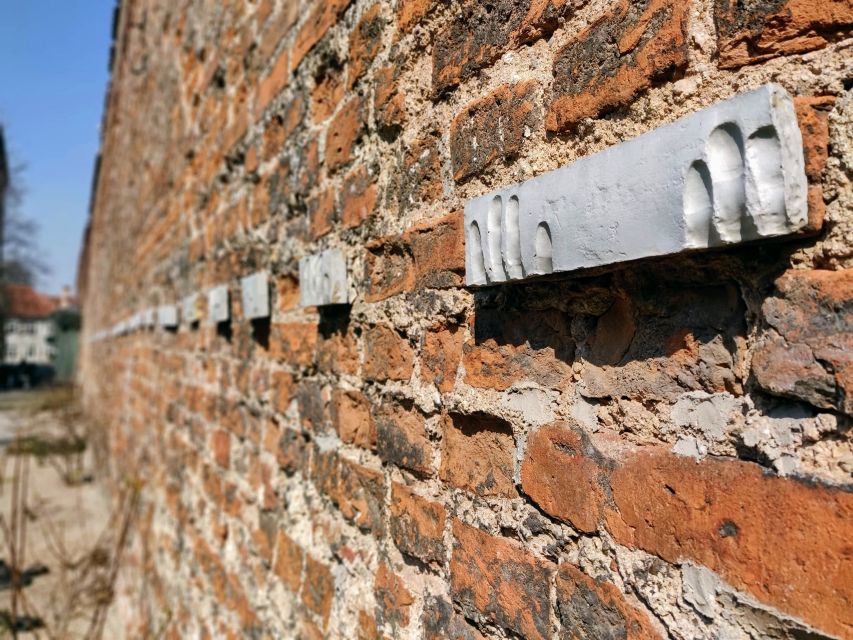
Long Market is the visual center of the walk. This broad street and square are lined with ornate facades, restaurants, and some of Gdańsk’s best-known civic buildings. It is also where the city’s wealth becomes easiest to read, with grand homes facing a route designed for public display.
The Neptune Fountain is the natural photo stop. Your guide explains its place in the city’s identity and gives you time to look around rather than rushing past. This is also a good point to understand the difference between a quick sightseeing circuit and a guided walk. You can take a picture on your own, but you may not notice the political, commercial, and cultural clues around the fountain without someone to point them out.
The central streets can be crowded, especially when several groups gather at the same landmark. A larger group may spread out, so keep close to the yellow umbrella and make sure you can hear the guide before the explanation begins. This is one reason the 150-minute length works well: the walk allows time to regroup, ask questions, and take photographs.
St. Mary’s Basilica and the famous clock
St. Mary’s Basilica is one of the major stops, and its scale is striking even from outside. It is described as the largest brick Gothic church in the world, and the brick construction gives it a powerful, solid character that differs from the stone cathedrals found in many other European cities.
The guide explains the church’s place in Gdańsk’s religious and civic life, along with the wider story of the city’s changing rulers and communities. You should allow yourself a moment to look up at the brickwork and the vast exterior before moving on. The building is not a quick tick on a list.
Timing can add a nice detail here. One guide arranged the walk so the group could see the figures move on the church clock at noon. Another guide built in time for visitors to warm up and use a nearby café or restroom. These moments depend on the day and the guide, but they show how the walk can respond to conditions rather than follow a rigid script.
The church stop also highlights a practical issue: this is an outdoor walking tour with indoor pauses when possible, not a long indoor museum visit. In cold weather, you will still spend much of the two and a half hours outside. Wear warm layers, especially in winter, when wind off the water can make the temperature feel much lower.
More Historical Tours in Gdansk
- Gdańsk: Sunset Cruise on a Historic Polish Boat
★ 4.9 · 977 reviews - Historic City Center Tour Gdansk in German
★ 4.6 · 455 reviews - Gdansk Guided City Cruise on Historical Polish Boat
★ 4.5 · 230 reviews - Gdansk Legends & Cocktails Tour: Historic Tales and Tasting
★ 5.0 · 11 reviews
Toward the harbor and the Zuraw crane
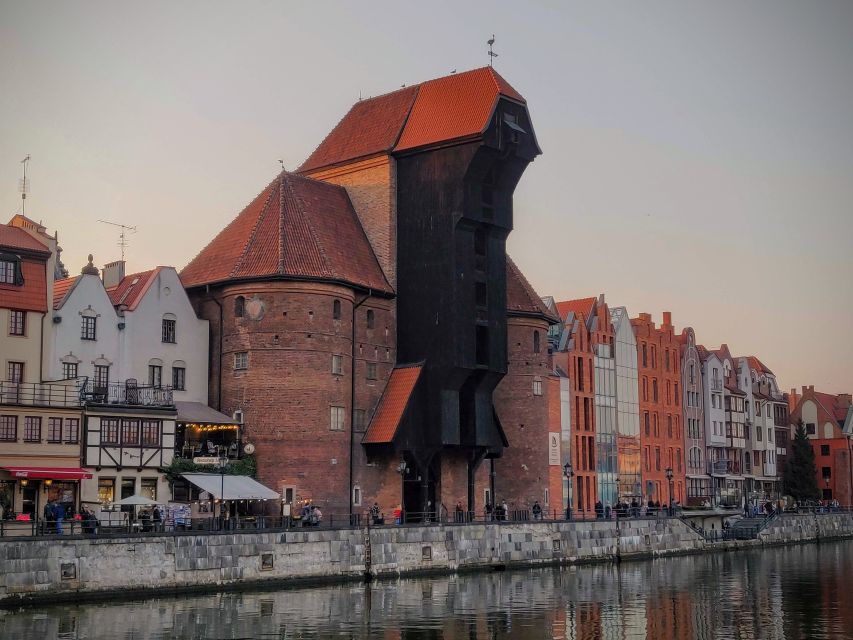
The route continues toward Gdańsk’s rivers and canals, where the city’s port economy becomes easier to picture. The waterways explain why merchants, shipbuilders, and rulers cared so much about this location. They also give you a change of pace after the decorated streets around Long Market.
The Zuraw crane is the harbor’s most distinctive structure. This medieval treadwheel crane is described as the largest of its kind in the world and has become one of Gdańsk’s best-known symbols. Its wooden form looks unusual beside the water, but the guide helps you understand its practical purpose: lifting cargo and loading ships before modern port machinery existed.
This is a strong stop for people who like engineering and working history. The crane shows how the city’s prosperity depended on physical labor and clever machinery, not only on wealthy merchants and grand facades.
The harbor section also gives you space to take photographs. The guide’s job here is less about rushing you from one object to the next and more about explaining how the river, canals, trade, and city walls fit together. Keep in mind that water views can be exposed to wind, so a hat or waterproof layer is useful in poor weather.
How WWII and Solidarity change the picture
The tour does not stop with medieval Gdańsk. It moves into the events that shaped modern Europe, including how WWII began in the city and how Gdańsk became tied to the Solidarity movement.
This is where the walk becomes more than an architectural introduction. You learn about the city’s continuing push toward independence and the pressures created by competing national identities. The guide places Gdańsk within Polish history without reducing its German and Dutch connections to a footnote.
The WWII section deals with the city’s role at the start of the conflict and the destruction that followed. The rebuilt streets make more sense after this discussion. You are not simply admiring old-looking houses. You are looking at a city that had to decide how to recover its visible past after enormous damage.
The Solidarity story brings the timeline into the late twentieth century. Gdańsk was central to the movement that challenged communist rule, and the guide explains how that struggle helped lead to the fall of communism across the Eastern Bloc. The best guides make this understandable without turning the walk into a lecture.
This is also where guide quality matters most. Filip, also referred to as Tufi in some tour settings, is praised for clear explanations and strong storytelling. Marcin is described as animated and funny, while several guides are credited with answering questions rather than simply delivering a fixed speech. If you want a full political history of Poland, you will need a separate museum or specialist tour. For a first introduction, this gives you a useful framework.
Guide style, group size, and comfort
The tour is in English and has a live guide. The individual guide makes a real difference, but the repeated strengths are clear: easy-to-follow English, a friendly manner, humor, and a strong attachment to Gdańsk.
Some guides use personal anecdotes about the city or their families. Others offer suggestions for lunch and additional sights. That informal advice can be especially useful if you take the walk early in your visit, since you can use the guide’s recommendations to shape the rest of your time in town.
The advertised duration is 150 minutes. That is long enough to cover the main center without feeling like a quick orientation, but it is still a substantial walk. One person felt that two hours might have been enough, while others appreciated the amount of detail. Your experience will depend on the size of the group, the weather, and how many questions come up.
This is not a private tour. The amount paid covers the reservation fee and the guide’s payment for joining the general walk. If you want a smaller private experience, you can contact the supplier after booking to arrange one. A large group may be less convenient at narrow streets or crowded landmarks, and you may need to position yourself close to the guide to hear every explanation.
Weather, clothing, and the practical details
The tour runs rain or shine. Bring weather-appropriate clothing, and wear shoes suitable for two and a half hours on city streets. Gdańsk can be especially cold by the water in winter, and several walks took place in freezing conditions. Guides sometimes add a coffee, restroom, or warming break, but you should not rely on that as a substitute for proper clothing.
The tour does not include hotel pickup or drop-off. You make your own way to the Golden Gate and look for the yellow umbrella. The route itself is listed as wheelchair accessible, though a larger group and crowded historic streets may affect how easily you move through certain points.
The $26 price is strong for the amount of guided time. You are paying for a live explanation of major sights, historical context, and the ability to ask questions, not simply for someone to point out buildings. The value is best if you are new to Gdańsk and want a clear starting point before exploring alone.
Free cancellation is available up to 24 hours before the tour, and you can reserve now and pay later. Those terms are useful if your plans are still moving, but the main booking decision is simpler: choose the public walk for value, or ask about a private version if you want more control over pace and group size.
Who should book this Gdańsk walk?
I would choose this tour near the start of a Gdańsk visit. It gives you a working map of the center and explains why the rebuilt streets, harbor, church, and political history belong in the same story.
It suits first-time visitors, cruise passengers with limited time, and anyone who wants more context than a self-guided photo walk provides. It is also a good fit for people who enjoy history but do not want a dry academic lecture. The guides use humor, stories, and questions to keep the material moving.
You may prefer another format if you dislike walking for 150 minutes, need a very small group, or want to spend long periods inside each church and museum. This tour is an overview, not a substitute for a dedicated WWII, Solidarity, or religious-art visit.
Should you book it?
Book it if you want an affordable, well-paced introduction to Gdańsk’s central sights and the forces that shaped the city. The strongest reasons are the route, the range of history, and the quality of guides such as Kate, Tufi, Sandra, Marcin, and Filip.
Go in prepared for a public group, outdoor weather, and a fair amount of historical detail. Arrive early at the Golden Gate, bring layers, stay close to the yellow umbrella, and take the walk near the beginning of your stay. At $26, it is an easy recommendation for most first-time visits, especially if you want the beautiful center to make sense rather than simply look beautiful.
FAQ
Where does the Gdańsk walking tour begin?
The meeting point is the Golden Gate, called Złota Brama in Polish. Look for a yellow umbrella.
How long does the tour last?
The tour lasts 150 minutes, or two and a half hours.
What language is the tour conducted in?
The live guided tour is conducted in English.
Does the tour include hotel pickup?
No. Hotel pickup and drop-off are not included, so you must make your own way to the Golden Gate.
Is the walking tour wheelchair accessible?
Yes, the activity is listed as wheelchair accessible.
Does the tour operate in bad weather?
Yes. The tour takes place rain or shine. Bring clothing suitable for the forecast, with extra warm layers advisable in cold weather.
More Walking Tours in Gdansk
- Main Town Gdańsk Walking Tour
★ 5.0 · 644 reviews - Discover Gdansk Walking Tour
★ 5.0 · 495 reviews - Gdańsk: Old Town Private Walking Tour with Legends and Facts
★ 4.9 · 245 reviews - Gdansk Old Town 2-Hour Walking Tour
★ 4.5 · 94 reviews
Just added around Gdansk
- Gdansk and Malbork Castle Small Group Tour from Warsaw with Lunch★ 4.5 · 20 reviews
- Whisky Tasting in Gdańsk★ 5.0 · 3 reviews
- Westerplatte private tour led by Expert-Guide (door to door)★ 5.0 · 5 reviews
- Gdansk EVERYDAY Vodka Tasting Tour★ 5.0 · 6 reviews
- Westerplatte – 2h private trip by luxury car|★ 5.0 · 4 reviews
- Private WW2 Tour of Westerplatte,Gdansk and Stutthof Including Lunch★ 5.0 · 12 reviews
- Aiport Gdansk Transfer to Malbork Castle or Stutthof★ 5.0 · 3 reviews
- 5 hours Individual trip to the Stutthof Concentration Camp★ 5.0 · 5 reviews
Historical Tours, compared.

POLIN Museum of the History of Polish Jews Ticket
Read our review →


Small-Group Historical Guided Tour of Warsaw with pick up/drop off. Public Tour.
Read our review →
Browse the lists this tour appears in