
Reviewed · WALKING TOURS
Krakow: A Magical Walking Tour of the Old City – 120 min
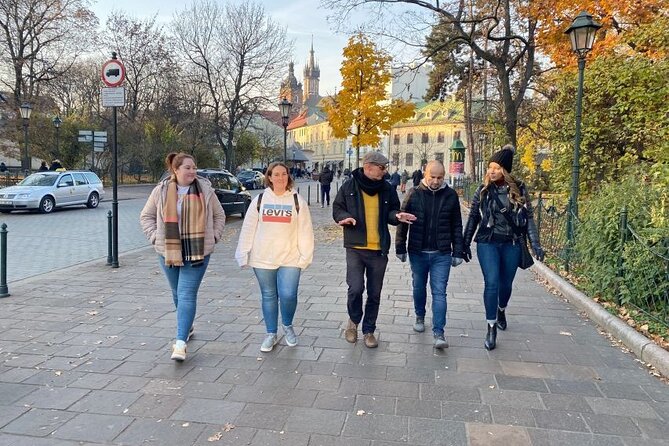
Krakow’s best-known sights fit into this two-hour walk, but the real appeal is the stories linking them. You move from Rynek Glowny and its church legends along the Royal Way to Wawel Castle, the Dragon, Franciscan churches, the university, and the old defensive gates.
I like the wide historical sweep and the fact that the tour uses the city itself as the classroom, with no admission fees at the listed stops. I also like the local touches, from the Dragon legend to the Pope’s Window and the different-height towers of St. Mary’s Basilica. The main caution is the possible group size of up to 50, which can make a walking tour less personal. Clear meeting-point signs would also help, so arrive with extra time to find Wiślna 4.
Key points at a glance
- Thirteen central sights in 120 minutes: You cover Krakow’s major Old City landmarks without arranging separate visits.
- Stories matter as much as monuments: The guide explains legends linked to St. Mary’s Basilica, the Cloth Hall, the Wawel Dragon, and the Franciscan churches.
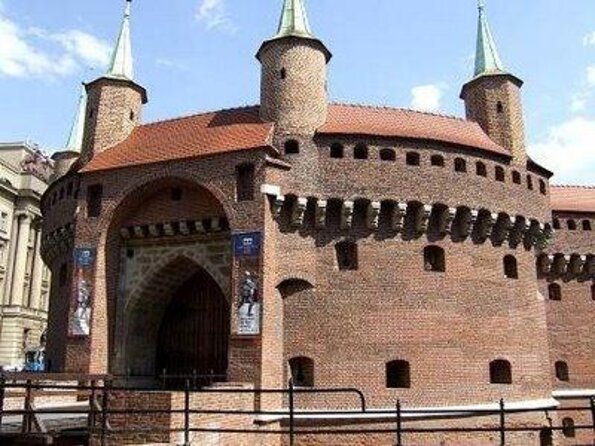
- A useful first-day orientation: The route connects the Main Square, Royal Way, Wawel, Planty Park, the Barbican, and St. Florian’s Gate.
- No entry tickets are included or needed for the listed stops: This is an exterior-focused walking tour, with storytelling rather than interior visits.
- English is the stated language: Guide Vlad is praised for his clear delivery, and one review notes a guide who spoke very good French.
- A practical value choice: At $36.09 per person, you are paying for a guide and a concentrated introduction, not museum admissions.
Why this Krakow walk works as an introduction
Krakow is easy to admire and surprisingly easy to misunderstand. The Main Square, Wawel Hill, church towers, city walls, and grand university buildings can blur together if you see them without a thread connecting them.
This tour gives you that thread. In two hours, you follow the route once used by monarchs, hear how Krakow defended itself, learn why certain churches carry such weight in local life, and finish among the Old City’s most familiar landmarks.
I like this kind of first walk because it helps you decide what deserves a longer visit later. You may return to Wawel Castle, spend more time inside St. Mary’s Basilica, or explore the Barbican after you understand its place in the city’s defenses.
The pace is brisk. The schedule allows only a few minutes at some locations, so expect short explanations rather than long stops. That is useful if you want an overview, but it will feel rushed if you prefer extended time inside churches or detailed architectural discussion.
More Walking Tours in Krakow
- Old Town Krakow & Wawel Castle Walking Tour
★ 5.0 · 1,508 reviews - Creepy Krakow: 2-Hour City Walking Tour
★ 4.7 · 1,131 reviews - Krakow: The Old Town Walking Tour
★ 4.8 · 794 reviews
Starting at Rynek Glowny and following the Royal Way
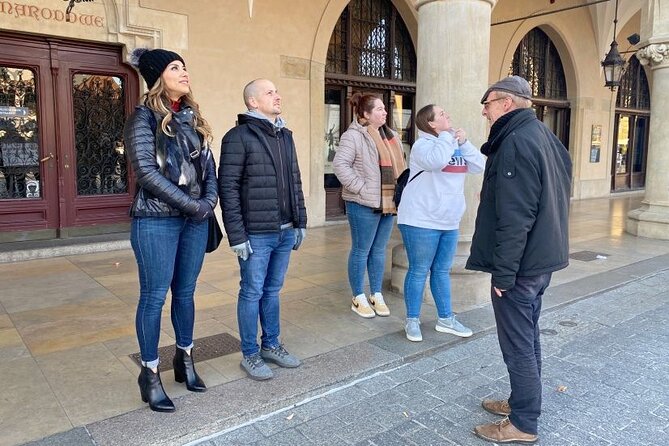
The walk begins at Wiślna 4 and soon brings you into Rynek Glowny, Krakow’s central square. The scheduled explanation here lasts about 10 minutes, which is enough to place the surrounding buildings in context and hear stories about St. Mary’s Church and the Cloth Hall.
This is the right place to start because the square is the city’s visual anchor. You get a sense of how Krakow’s Old Town is arranged, then move outward along the route that links the historic center with Wawel.
The Cloth Hall and St. Mary’s Basilica are treated through stories rather than formal entry visits. That distinction matters. You can look at the buildings from outside and learn why they matter, but you should not expect this walk to replace a ticketed church or museum visit.
The next stop is the Royal Way, known in Polish as Droga Królewska. The guide explains why it has that name and how it connects to Krakow’s royal past. I find this sort of explanation more useful than simply hearing a list of dates because it shows how the city functioned as a ceremonial route.
Kanonicza Street and the churches near Wawel
The route continues to Ulica Kanonicza, or Kanonicza Street, described as Krakow’s oldest street. Its value is less about checking off another sight and more about seeing a historic street within the larger royal route.
You then pause at the Church of St. Peter and St. Paul for about five minutes. The stop is brief, but the guide uses it to explain why the church is regarded as one of Krakow’s most beautiful.
Five minutes is enough for a quick introduction and exterior viewing. It is not enough for a careful look at every detail, so note the location if you want to return on your own.
Wawel Castle and the Dragon legend
Wawel Royal Castle receives another short stop. Here the guide introduces the kings and queens of Poland and the role of the castle in the country’s royal story.
The itinerary does not include castle admissions, so think of this as a historical orientation to Wawel, not a castle tour. That can be a good choice if you already plan to visit the castle separately. You will know more about what you are seeing when you return.
From the castle area, the walk reaches the Monument of the Wawel Dragon. This is one of the route’s most playful moments. The guide tells the Krakow dragon legend, a story familiar across Poland and especially popular with children.
I like the change of tone here. After royal history and church architecture, the dragon gives the walk a strong local character. It also makes the experience easier for families, since children get a clear story and a memorable landmark rather than only dates and dynasties.
Same city, a completely different kind of day:
- Kraków: Evening or Night River Cruise
★ 4.0 · 7,386 reviews - Krakow: Oskar Schindler’s Factory Entry Ticket & Guided Tour
★ 4.2 · 3,793 reviews - Krakow: City Sightseeing Tour by Electric Golf Cart
★ 4.5 · 3,264 reviews - Krakow: Schindler’s Factory Tour with Entrance Ticket
★ 4.5 · 3,182 reviews
The Pope’s Window and Franciscan Krakow
The next stops introduce a more recent and personal side of the city. At Okno Papieskie, or the Pope’s Window, you learn why the place carries that name and hear related stories.
The tour then goes to Plac Franciszkański and the Basilica of St. Francis of Assisi. The square and basilica each receive about 10 minutes, with a mix of facts and local legends.
These stops show why a city walk can offer more than architecture. Krakow’s religious sites are tied to public memory, local tradition, and major figures in Polish life. The guide’s job here is to connect the place to those stories without turning the walk into a formal religious history lecture.
The tour information does not promise interior access, so plan on an outside-focused visit unless the guide says otherwise on the day. If entering the basilica is important to you, treat this stop as an introduction and set aside separate time.
Planty Park and Jagiellonian University
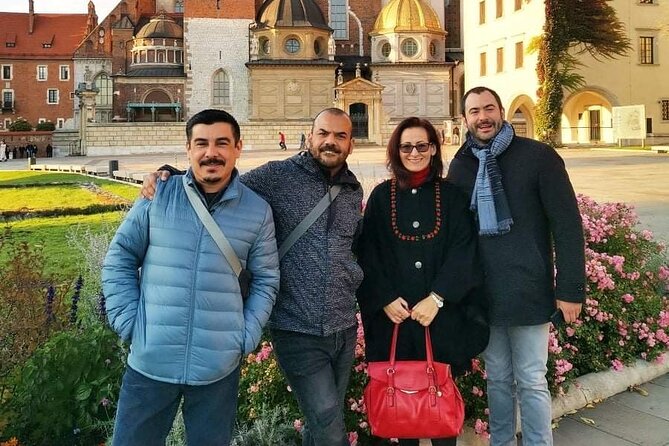
The walk heads toward Jagiellonian University and its Collegium Medicum, passing along Planty Park. This green belt surrounds Krakow’s Old Town and is described as a much-loved place among local residents.
Planty helps break up the stone streets and gives you a better sense of the city’s shape. Instead of seeing the Old Town as a sealed medieval core, you see the park that now traces much of its edge.
At the university stop, the guide tells the story of Uniwersytet Jagielloński, Poland’s oldest university. The schedule allows about 10 minutes, so expect a concise introduction rather than a campus tour.
This is one of the route’s strongest educational stops. It adds an intellectual side to the royal, religious, and military stories you have already heard. If you are choosing this tour for orientation, the university also helps mark the transition between the Old Town’s main square and its northern defenses.
Krakow’s defenses at the Barbican
The Barbican, now associated with the Museum of Krakow, is the key military stop. The guide explains how Krakow was defended and how the city changed during and after the partitions of Poland.
That last point gives the walk needed political context. You are not only looking at a round fortified structure. You are hearing how Krakow’s role and appearance changed through periods of conflict and political upheaval.
The stop is scheduled for about 10 minutes. Again, the focus is explanation and exterior orientation, not a museum visit. If you want the exhibitions inside the Barbican, plan a separate visit and check current admission details.
For me, this is also the point where the tour’s route begins to make practical sense. Earlier, you saw the royal approach and major churches. Here, you see the protective edge of the historic city.
St. Mary’s Basilica and the final walk to St. Florian’s Gate
The route returns to St. Mary’s Basilica for a dedicated story about its two towers of different heights and the legends connected with the church.
This is a smart inclusion because the basilica is one of Krakow’s most recognizable buildings, yet its details invite questions. Why are the towers unequal? What local stories explain the church? A guide can answer those questions quickly, giving you a better view of the building even if you do not go inside.
The final listed landmark is St. Florian’s Gate, described as the last remaining fragment of Krakow’s wall. The guide explains what happened to the larger wall and what can be found on the inner side of the remaining fortifications.
The published end point is Sienna 2a, with the tour ending at the central square near the monument to Adam Mickiewicz. Because the route includes St. Florian’s Gate near the end, confirm the exact finishing position with your guide on the day. The important practical point is that you finish in the center, not far from Krakow’s main sights and transport links.
What $36.09 buys you
At $36.09 per person, this is not a bargain-priced donation walk. The value depends on how much you want a structured introduction and a guide who can connect the sights.
You are paying for two hours of guided interpretation across 13 locations. There are no separate admission fees at the listed stops, but that also means the price does not cover entry into Wawel Castle, the churches, or the Barbican museum.
I would consider it good value for a first visit if you want to get your bearings quickly. The route covers enough ground that arranging the same overview alone would take planning, and you would miss many of the legends and explanations that give the city personality.
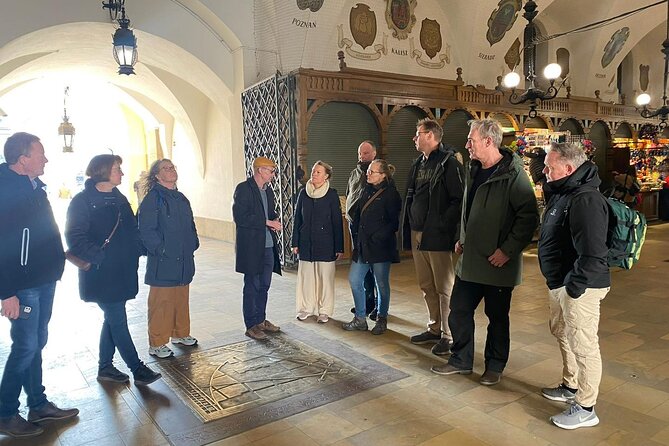
The value is weaker if you already know Krakow well, dislike group walks, or want long interior visits. A group of up to 50 can limit questions and make it harder to hear at the back. The strongest praise is for guides who explain clearly and keep the history engaging. Vlad is specifically praised for his handling of Polish and Krakow history, and another guide is described as funny, informative, and willing to answer questions.
Timing, meeting point, and comfort
The experience lasts approximately 120 minutes and is offered in English. It is near public transportation, and most people can take part.
The start point is Wiślna 4 in Krakow. One piece of practical advice is worth taking seriously: allow extra time to locate the meeting point. A complaint about the experience centered on difficulty finding a visible meeting marker and an unpleasant exchange with a guide. That does not define the entire tour, but it is a good reason to arrive early, keep your booking confirmation ready, and ask clearly if you are unsure.
The walk requires decent weather. If poor weather cancels it, you are offered another date or a full refund. The same applies if the minimum number of participants is not reached.
Cancellation is free up to 24 hours before the start time. Changes or cancellations inside that 24-hour window are not refunded, so keep the local start time in mind.
Who should book this walk?
I would recommend it most to a first-time visitor who wants a fast, story-led introduction to Krakow. It also suits families who like legends, couples who want a simple orientation walk, and anyone who prefers to see the major sights before choosing which ones deserve a longer visit.
It may work well for people with limited time. In two hours, you see the Main Square, Royal Way, Kanonicza Street, Wawel, the Dragon, the Franciscan area, Planty Park, the university, the Barbican, St. Mary’s Basilica, and St. Florian’s Gate.
I would be more cautious if you need a small group, have difficulty walking for two hours, or expect entry to every church and museum. The maximum group size is 50, and the short stop times favor a broad overview over close inspection.
Should you book it?
Book this tour if you want Krakow’s Old City explained through royal stories, church legends, defensive history, and local folklore, all in one compact walk. The route is broad, central, and useful for planning the rest of your stay.
Skip it if you already have a detailed Krakow plan and prefer to spend your time inside museums and churches. For most first visits, though, the combination of Wawel, the Dragon, St. Mary’s Basilica, Planty Park, and the old city defenses makes $36.09 a reasonable price for a guided starting point. Arrive early at Wiślna 4, expect a group setting, and treat the walk as an overview rather than a series of full site visits.
FAQ
How long does the Krakow walking tour last?
The tour lasts approximately two hours, or 120 minutes.
What language is the tour offered in?
The tour is offered in English. One review also notes a guide who spoke very good French, but English is the stated tour language.
How much does the tour cost?
The listed price is $36.09 per person.
Where does the tour begin?
The meeting point is Wiślna 4, 33-332 Kraków, Poland.
Where does the tour end?
The stated end point is Sienna 2a, 31-041 Kraków. The tour also says it ends at Krakow’s central square near the monument to Adam Mickiewicz.
What sights are included?
The route includes Rynek Glowny, the Royal Way, Kanonicza Street, the Church of St. Peter and St. Paul, Wawel Royal Castle, the Wawel Dragon, the Pope’s Window, Plac Franciszkański, the Basilica of St. Francis of Assisi, Jagiellonian University’s Collegium Medicum, the Barbican, St. Mary’s Basilica, and St. Florian’s Gate.
Are admission tickets included?
The listed stops show free admission. The experience is a guided walking tour, and separate admission to sites such as Wawel Castle or the Barbican museum is not stated as included.
How large can the group be?
The activity can have a maximum of 50 participants.
Can I cancel for a full refund?
Yes. You can cancel at least 24 hours before the experience start time for a full refund. Cancellations or changes made less than 24 hours before the start time are not refunded.
Just added around Krakow
- stag dog chase Krakow prank★ 5.0 · 4 reviews
- Divine Mercy Sanctuary – Private Tour from Krakow★ 5.0 · 4 reviews
- ZALIPIE – painted village, unique small group tour from Krakow★ 5.0 · 7 reviews
- ZALIPIE – painted village, unique PRIVATE tour from Krakow★ 5.0 · 20 reviews
- Zalipie Private Tour from Krakow The Painted Village★ 5.0 · 4 reviews
- Wooden Churches Unesco List Private Tour from Krakow★ 5.0 · 14 reviews
- Guided tour to Salt Mine & Schindler Factory with Pick-Up Options★ 4.0 · 58 reviews
- Wawel Castle, Cathedral, & Rynek Underground Tour with Lunch★ 5.0 · 4 reviews
Walking Tours, compared.
Gdańsk City Sights & History Guided Walking Tour in English
Read our review →
Browse the lists this tour appears in