
Reviewed · WALKING TOURS
Private Warsaw Old Town & Royal Route Walking Tour – Bestseller
Warsaw’s Old Town looks old, but much of it was rebuilt after World War II. That surprising fact gives this walk its main thread: you’ll see handsome squares and churches while learning how a nearly ruined city rebuilt its center from photographs, paintings, and memory. The story of Chopin’s heart, hidden inside Holy Cross Church, adds a personal touch.
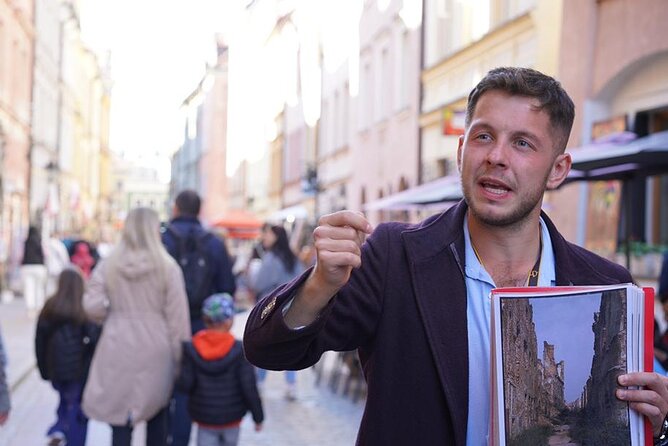
I like the private format, since Łukasz Benedykciński can shape the pace and explain details without a large group crowding around him. I also like the mix of major sights and odd local stories, from Warsaw’s mermaid to the pigeon lady and a former garbage hill now used by couples.
The main consideration is time. Two and a half hours covers a lot of ground, and the walk includes several short stops. If you want to tour the Royal Castle interiors or spend a long time in museums, you’ll need a separate visit.
Key points at a glance
- Chopin’s heart at Holy Cross Church: Hear how the composer’s sister brought his heart back to Warsaw and see where it is kept.
- A private walk for up to 15 people: The format gives your group direct access to guide Łukasz Benedykciński.
- Warsaw’s destruction and rebirth: Compare Old Town before and after World War II and learn why rebuilding took decades.
- Royal Route landmarks: Walk Krakowskie Przedmieście, see the Presidential Palace, and pause at Pilsudski Square.
- Stories beyond the postcard views: Hear about coffee, the Barbakan, Gnojna Góra, Piwna Street, and the city mermaid.
- Hotel pickup option: You can meet at your hotel and walk, take public transport, or use a taxi to reach the Copernicus Monument.
Why Warsaw’s rebuilt Old Town makes a strong walking tour
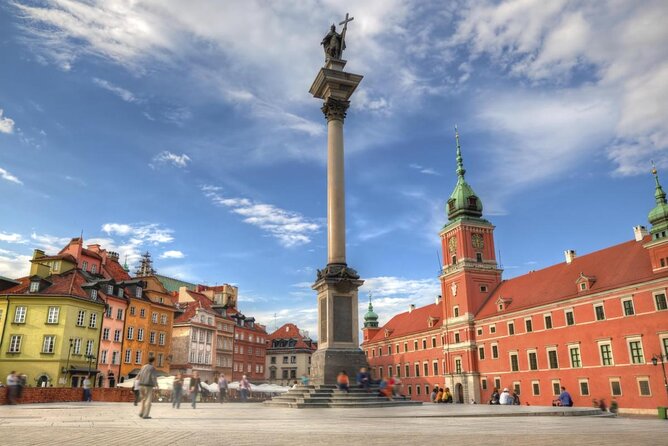
The first thing to understand is that Warsaw’s Old Town is both genuine and reconstructed. After World War II, about 70 percent of Warsaw was destroyed. The old center was rebuilt over roughly four decades, using historical images and plans to restore its appearance.
That gives every square and street a second story. You are not simply looking at pretty façades. You are looking at a city that decided its historic center was worth bringing back, even when much of the original material had been lost.
This private tour links that rebuilding story with the Royal Route, the grand path leading through central Warsaw toward the Old Town. The route combines churches, state buildings, monuments, open squares, medieval streets, and small legends. It is a useful first walk because you get both orientation and context.
The tour lasts about two hours and 30 minutes. The listed stops are mostly outdoors, and admission is free at each one. You should expect steady walking, short explanations, and frequent pauses for photos and questions rather than long visits inside buildings.
More Walking Tours in Warsaw
- Warsaw: Old Town Highlights Walking Tour in English
★ 4.7 · 1,516 reviews - Warsaw: Old Town Guided Walking Tour
★ 4.9 · 599 reviews - Half-Day Polish Food Walking Tour with Guide and Dinner
★ 4.5 · 381 reviews
Meeting Łukasz at the Copernicus Monument
The standard meeting point is the Nicolaus Copernicus Monument on Krakowskie Przedmieście. The walk ends at the Warsaw Mermaid Statue in the Old Town Market Square, so the route has a clear beginning and finish rather than circling back to the starting point.
Hotel pickup is offered. Łukasz can meet you at your hotel reception, then walk, use public transport, or take a taxi to the starting point. You can also begin at the hotel, with extra stops added on the way to the Royal Route.
That option matters if you are still learning Warsaw’s layout. It also saves you from finding the Copernicus Monument on your own. Ask about the exact route when booking, since the amount of time available for extra stops depends on where your hotel is located.
The tour is offered in English and can run between 7:00 in the morning and 9:00 at night, Monday through Sunday, during the stated operating period. A private group can include up to 15 people, though a smaller party will usually find it easier to stay together on narrow Old Town streets.
Holy Cross Church and the heart of Chopin
The walk begins with one of Warsaw’s most personal stories. At Holy Cross Church, you learn about Fryderic Chopin, Poland’s famous composer, who died abroad but wanted his heart returned to Warsaw.
His sister carried it back to the city, and the guide explains how she managed to bring it home. The heart is located inside the church, making this more than a quick exterior stop. The visit lasts about 10 minutes and admission is free.
This is a good early stop because it connects a major Polish figure to a specific Warsaw place. You do not need to know Chopin’s music to appreciate the story. It is brief, memorable, and gives you a human entry into the city before the tour turns to politics, war, and architecture.
Krakowskie Przedmieście and the Royal Route
You then spend about 40 minutes along Krakowskie Przedmieście, one of Warsaw’s most representative streets. The name means Kraków suburb, and one of the questions answered here is why a Warsaw street carries the name of another important Polish city.
The guide also explains why Warsaw became Poland’s capital. That context helps the grand buildings along the route make more sense. You are not just passing through an attractive avenue. You are following a corridor shaped by royal travel, national government, religion, and Poland’s changing political role.
Coffee gets its own place in the story. You’ll hear where Warsaw’s oldest coffeehouse was and how Polish coffee culture connects to wider European history. This is exactly the kind of small detail that can make a familiar-looking street more interesting.
I would pay attention here to the guide’s storytelling rather than rushing for photos. The stop is long enough to connect several subjects, but not long enough for a full architectural survey. If you want detailed information about every palace and church façade, you may need more time afterward.
Same city, a completely different kind of day:
- Warsaw: Chopin Concert in the Old Town
★ 4.8 · 2,287 reviews - Warsaw: Traditional Galar Cruise on The Vistula River
★ 4.6 · 1,640 reviews - Warsaw Concert: Chopin – Painted by Candlelights with Wine
★ 4.8 · 1,442 reviews - Warsaw: City Sightseeing Hop-On Hop-Off Bus Tour
★ 3.6 · 1,415 reviews
Pilsudski Square, the Presidential Palace, and the Royal Castle
Pilsudski Square is a brief stop, about 10 minutes, but it offers a broad view toward Warsaw’s skyline. Its open space gives you a break from the tighter streets and makes the scale of modern Warsaw easier to read.
The tour also addresses the Presidential Palace, which survived the destruction that hit much of the city after World War II. You’ll hear why this important building was spared. That story helps explain the uneven survival of historic Warsaw, where some structures remained while entire districts disappeared.
The Royal Castle brings one of the tour’s strongest wartime stories. Adolf Hitler ordered his soldiers to destroy it. Explosive charges were drilled into the building in 1939, but they were not filled until 1944, five years later. The guide explains why the destruction was delayed and why rebuilding the castle took another 40 years.
The detail is useful because it turns the castle from a grand landmark into evidence of deliberate cultural destruction and patient reconstruction. You see why Warsaw’s rebuilt center cannot be understood only by looking at its restored walls.
The tour does not include a Royal Castle interior visit. If you want to see the rooms, collections, and exhibitions, plan that separately. This walk gives you the historical frame, not a museum tour.
The Tomb of the Unknown Soldier and Warsaw’s churches
At the Tomb of the Unknown Soldier, you spend about five minutes hearing the story behind the monument. It is a short stop, but the site carries national meaning and fits naturally with the tour’s focus on Poland’s wars, losses, and survival.
Another church stop covers an important Warsaw church that was built twice. The guide explains why the first building was replaced or rebuilt. The supplied schedule does not name this church, so you should ask Łukasz for the exact building and story if that detail matters to you.
That small uncertainty is worth noting. The tour description promises the subject, but not every stop is labeled with the same precision as Holy Cross Church or the Tomb of the Unknown Soldier. A private walk gives you a good chance to ask for clarification.
Kanonia and the small Amsterdam of Warsaw
Kanonia is one of the Old Town’s most picturesque corners. Locals call it the small Amsterdam, and the square includes a wishing bell. The tour also explains that the area was once a cemetery for hundreds of years and what happened to it.
This is a good example of the walk’s balance. You get a pleasant place for photographs, then a reminder that attractive public spaces can cover difficult or forgotten chapters. The stop lasts about 10 minutes.
The wishing bell is a simple detail, but it gives you something to look for rather than just another square to cross. If you enjoy local customs and urban stories, Kanonia may be one of the most satisfying pauses on the route.
The Market Square and Warsaw’s long reconstruction
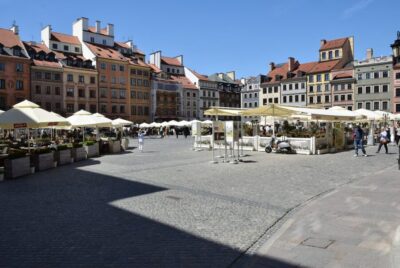
The Old Town Market Square is one of Warsaw’s prettiest spaces, with the Mermaid Statue at the tour’s endpoint. Here, Łukasz uses photographs to show the square before and after World War II and explains how the rebuilding process worked.
That visual comparison is central to the tour. You can look at the restored buildings and understand that their appearance is based on careful reconstruction, not uninterrupted survival. For many visitors, this is the moment when Warsaw’s wartime story becomes visible.
The end point is practical too. You finish in the heart of the Old Town, where you can continue exploring on foot. The route does not leave you at an isolated pickup point.
Barbakan, Gnojna Góra, and Old Town stories
The Barbakan forms part of Warsaw’s city walls, but it was not as militarily important as its appearance might suggest. The guide explains who built it, why it was created, and who actually used it.
That distinction is useful. Historic defenses often look more powerful than they were, and this stop helps separate appearance from purpose. You get a short lesson in how the Old Town’s walls functioned without turning the walk into a technical military lecture.
Gnojna Góra adds an unusual twist. Today, it is presented as a romantic viewpoint where couples attach padlocks. Its earlier use was far less charming, and the guide explains the site’s past.
I like this contrast because it keeps the tour from becoming a simple procession of monuments. Warsaw’s streets have changed jobs over time. A place associated with waste can later become a spot for romance, even if you may think twice before adding another lock.
The final Old Town section covers Piwna Street, whose name relates to beer, the pigeon lady, the Warsaw mermaid, and more stories from the city’s wartime years. These details fill in the spaces between the major landmarks.
What the $258.88 group price really means
The price is $258.88 per group, with up to 15 people included. That is not a cheap individual walking tour, but the calculation changes if you are traveling with family or friends. A group of four pays about $64.72 per person; a group of eight pays about $32.36 each; a full group of 15 pays about $17.26 per person.
For a couple, the cost is harder to justify unless private guiding and hotel pickup are especially important to you. For a larger group, the price can be reasonable, particularly since the tour runs for about two and a half hours and includes a guide who can focus on your party.
The value is in the interpretation, not paid admission. The stops are free, so you are paying for route planning, historical explanation, private attention, and the convenience of starting at your hotel if arranged. The strongest value comes if you want Warsaw’s destruction and rebuilding explained as one connected story.
This tour is often booked about 128 days ahead. That suggests you should reserve early for a preferred date, especially if your schedule is fixed. Confirmation is sent within 48 hours, subject to availability.
Who will get the most from this walk
I would choose this tour if you are visiting Warsaw for the first time and want a clear introduction to the Royal Route and Old Town. It also suits anyone drawn to wartime history, reconstruction, national monuments, and local legends.
Families may appreciate the short stories and changing scenery. The walk does not depend on long museum visits, and the mermaid, wishing bell, pigeon lady, and Chopin story give younger visitors concrete things to remember.
It is also a good fit for a group that wants flexibility. With only your party on the tour, you can ask questions and request clarification. Service animals are allowed, public transportation is nearby, and most people can participate.
You should look elsewhere if your main goal is a long Royal Castle visit, extensive time inside churches, or a specialist architecture tour. The route moves briskly and gives many subjects a short treatment.
Free cancellation is available until 24 hours before the start time for a full refund. Changes or cancellations made less than 24 hours before the start time are not accepted for a refund, and the cut-off uses Warsaw local time.
Should you book the Warsaw Old Town and Royal Route walk?
Book it if you want a private, story-led introduction to Warsaw that connects Chopin, royal power, wartime destruction, and modern reconstruction. The best reason to choose it is the clear human scale: a composer’s heart, a rebuilt market square, a church built twice, and a former dump turned romantic viewpoint.
The price makes the most sense for groups of four or more. Solo visitors and couples may prefer a less expensive shared walk unless hotel pickup and private attention are priorities.
For a larger party, this is a useful first-day activity. You finish in the Old Town, learn how the main sights fit together, and leave with enough background to explore the Royal Castle and other interiors on your own.
FAQ
How long does the tour last?
The tour lasts approximately two hours and 30 minutes.
Where does the walking tour begin?
The standard meeting point is the Nicolaus Copernicus Monument on Krakowskie Przedmieście in Warsaw.
Where does the tour end?
The tour ends at the Warsaw Mermaid Statue in the Old Town Market Square.
Is hotel pickup available?
Yes. The guide can meet you at your hotel reception and help you reach the starting point by walking, public transport, or taxi. You can also begin at your hotel and add stops on the way.
What language is the tour offered in?
The tour is offered in English.
How many people can join the private tour?
The price covers one private group of up to 15 people.
Are admission tickets included?
The listed stops have free admission. The walk does not include a separate Royal Castle interior visit.
Can service animals join the tour?
Yes. Service animals are allowed.
Is the tour near public transportation?
Yes. The experience is near public transportation.
What is the cancellation policy?
You can cancel at least 24 hours before the start time for a full refund. Cancellations or changes made less than 24 hours before the start time are not accepted for a refund.
Just added around Warsaw
- Wolfs Lair and Swieta Lipka Small Group Tour from Warsaw with Lunch★ 4.5 · 21 reviews
- Wolf’s Lair & Treblinka Tour in 1 day from Warsaw★ 5.0 · 37 reviews
- Wolfs Lair “Hitler’s Headquarters” – Full Day Tour from Warsaw by private car★ 4.5 · 4 reviews
- Tour from Warsaw: Wolf’s Lair, Hitler’s HQ Zones I and II★ 5.0 · 32 reviews
- Wolf’s Lair Private Day Trip from Warsaw★ 5.0 · 50 reviews
- Warsaw’s Old Town A Self-Guided Audio Tour★ 4.5 · 10 reviews
- Warsaw Must-See Local City Tour with Antek and Tomek★ 5.0 · 51 reviews
- Off the Beaten Track in Warsaw: Private City Tour★ 4.5 · 9 reviews
Walking Tours, compared.
Gdańsk City Sights & History Guided Walking Tour in English
Read our review →
Browse the lists this tour appears in