
Reviewed · COMMUNIST HISTORY TOURS
Warsaw: Cold War Museum Entry Ticket
The most unusual part of this Warsaw museum is its mix of serious political history and hands-on technology. You can study original Cold War objects, test yourself at a multimedia quiz, enter a VR game as a secret agent, and meet an autonomous robot that guides you through the displays. The museum is only about 40 meters from Old Market Square, so it is easy to add to a walk through the historic center.
I like the Polish point of view, which gives the exhibition a clear local purpose rather than presenting the Cold War as a distant contest between Washington and Moscow. I also like the mix of VR games and original artifacts: maps, uniforms, and devices give the subject weight, while the interactive displays keep the visit moving.
The main consideration is the museum’s strong political framing. It presents Polish contributions to the victory of the capitalist world over Soviet communism and gives major attention to Ronald Reagan, John Paul II, and General Ryszard Kukliński. That makes the story focused and forceful, but not fully neutral. The museum is also not suitable for wheelchair users.
Key points to know before you go
- Just off Old Market Square: The entrance is about 40 meters from Warsaw’s Old Market Square, making this an easy short stop during a day in the historic center.
- More than 50 multimedia elements: Touchscreens, interactive tables, VR goggles, a cinema, and a hologram space station add variety to the historical displays.
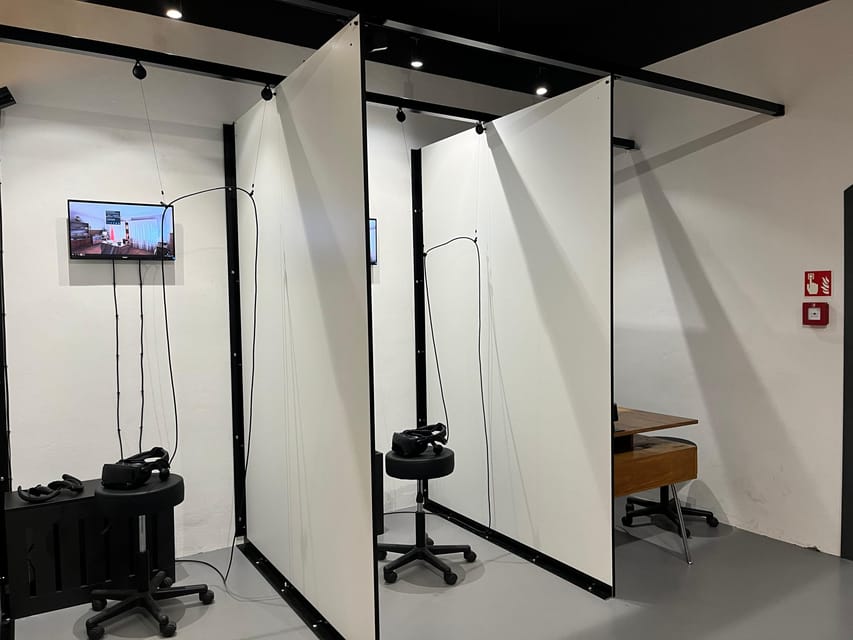
- Three Cold War VR games: You can play the role of a secret agent attempting to disrupt Soviet invasion plans.
- A Polish interpretation of the conflict: The museum places Poland and its anti-communist figures at the center of the story.
- Autonomous robot guide: The robot can guide you through the museum, with English and Polish available.
- Good value at $12: Admission covers the exhibitions, all attractions inside, and the robot guide, with no separate charge listed for the interactive features.
Entering the Cold War Museum near Old Market Square
This museum is easy to fit into a Warsaw sightseeing day. It sits in the Old Town area, roughly 40 meters from Old Market Square, so you do not need special transport or a long trip across the city. Show your ticket at the entrance and go straight inside.
The location adds a darker layer to the visit. During Poland’s communist period, the address housed a communist militia station. It was also where high school graduate Grzegorz Przemyk, a well-known victim of martial law, was beaten to death. The museum uses this setting to connect global Cold War politics with the personal cost of repression in Poland.
That context matters. This is not only a display about missiles, spycraft, and presidents. The building’s past points you toward questions about state violence, fear, resistance, and the people caught between political systems. You should expect an emotional and strongly framed presentation rather than a detached timeline.
The museum welcomes Polish and foreign visitors, and its attractions are designed for a wide range of ages. The displays use short explanations, images, films, and interactive features, so you can spend as much time with the political story as with the technology.
More Communist History Tours in Warsaw
- Private Tour: Warsaw’s Communist History by Retro Fiat
★ 5.0 · 115 reviews - Warsaw: Communism Tour in an Original Socialist Van
★ 4.9 · 75 reviews - Warsaw: Communist History Self-Driving Tour
★ 4.8 · 52 reviews
How the Polish point of view shapes the exhibition
The museum presents the Cold War as a struggle between the capitalist world and Soviet communism, with Poland playing an important role in the eventual defeat of the communist system. This is the central lens for the entire visit.
You will encounter the conflict between the two blocs, including the countries involved in the wider confrontation. The presentation also highlights three figures from the final decades of the Cold War: President Ronald Reagan, Pope John Paul II, and General Ryszard Kukliński.
Ronald Reagan represents the American political challenge to the Soviet Union. John Paul II connects the story to the Catholic Church and Polish identity. General Kukliński represents a more secretive side of the conflict, tied to military information and opposition to the Soviet system.
This emphasis gives the museum a clear narrative. You are not left wondering what the exhibition believes or which events it considers decisive. At the same time, you should know that the interpretation is not designed as a perfectly even comparison of every viewpoint. The wording about the capitalist victory over the Evil Empire signals a firm anti-communist position.
I consider that both a strength and a limitation. It gives the museum energy and makes its Polish connection easy to understand. If you want a neutral academic survey of every side, you may find the tone one-sided. If you want to understand how Poland remembers its role in the collapse of Soviet communism, the focus is useful.
Original maps, uniforms, and devices give the story weight
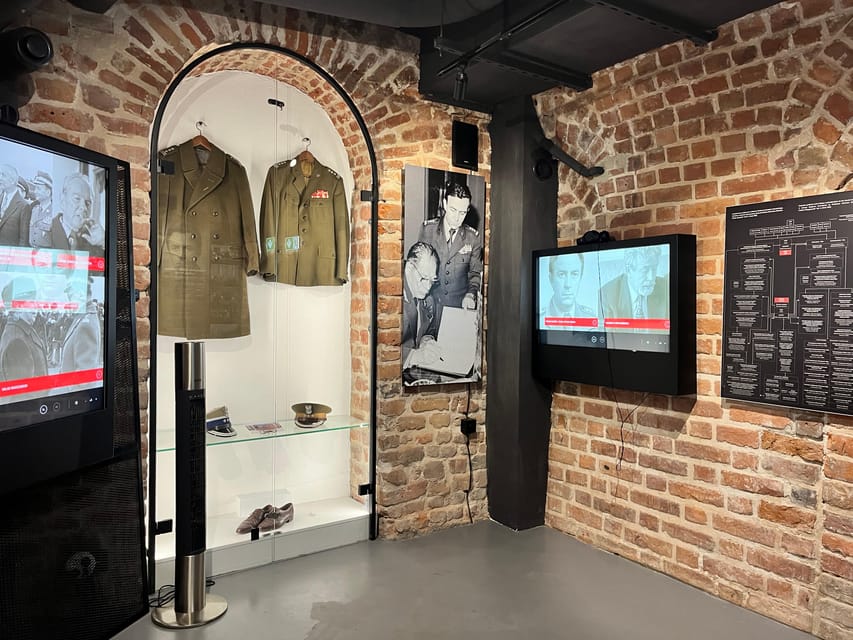
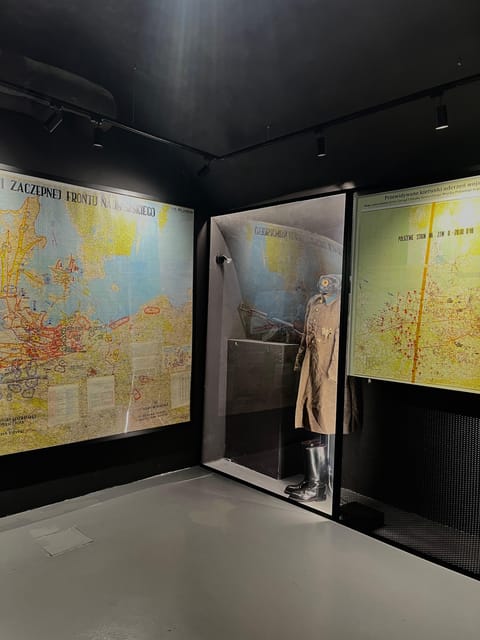
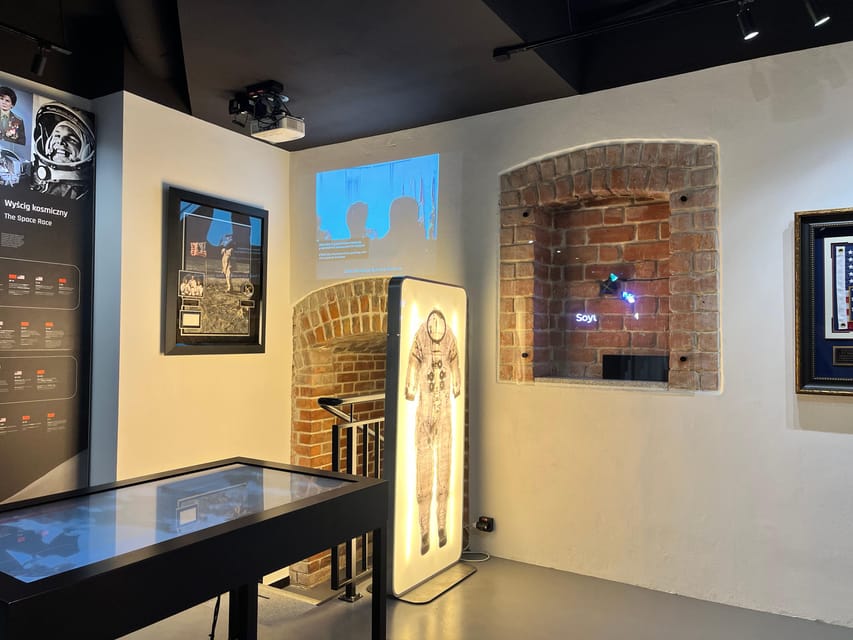
Technology can make a museum fun, but objects are what keep the story grounded. Here, you can see original devices, maps, and uniforms connected with the Cold War period.
These pieces help translate a huge subject into physical evidence. A map can show the division of Europe more directly than a paragraph. A uniform can remind you that the conflict involved institutions and people, not only speeches by leaders. Devices suggest the systems of surveillance, communication, and military planning that shaped daily life and international tension.
The exhibition covers the entire Cold War period. That broad reach means the displays move beyond one crisis or one decade. You may find material about the competing blocs, major political figures, military concerns, and the gradual pressure that weakened communist rule.
Do not expect every object to receive the same amount of space. The museum also relies heavily on digital presentation, so the physical collection works together with the screens, films, and interactive tables. I like that balance because it gives you something tangible to look at while still allowing the museum to explain a long and complicated period.
More than 50 multimedia displays keep the visit active
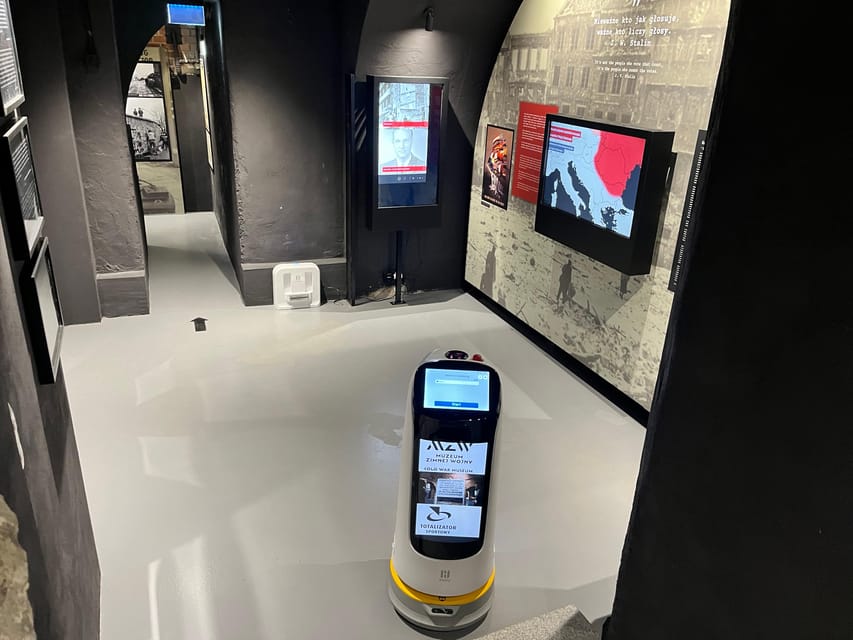
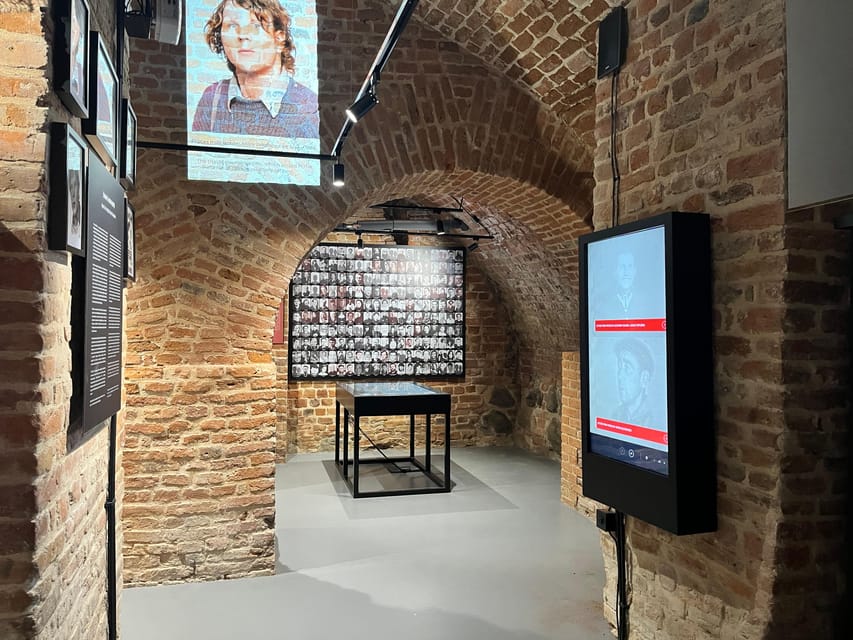
The museum uses more than 50 multimedia elements. These include touchscreens, multimedia tables, VR goggles, a cinema, and other interactive stations.
That variety matters if you are visiting with children, teenagers, or anyone who loses interest in long rows of text. You can shift between reading, watching, playing, and examining objects. The format also lets you control your level of detail. You can move quickly through a screen or spend longer with a subject that catches your attention.
The multimedia knowledge quiz is a useful part of the visit. It turns the exhibition into a test of what you have learned rather than a one-way flow of information. You do not need to treat it like an exam. Think of it as a way to check which dates, people, and events have stayed in your head.
The cinema adds a more traditional viewing experience. The supplied information does not specify the film’s length or exact subject, so I would treat it as one part of the museum rather than plan your visit around a particular screening time.
Because the displays are interactive, the experience may feel closer to a modern history center than a quiet object museum. That is good for engagement, but it also means the visit can feel busy if you prefer slow, silent galleries.
More Museum Tours in Warsaw
- Warsaw: POLIN Museum of the History of Polish Jews Ticket
★ 4.7 · 1,142 reviews - Warsaw: Polish Vodka Museum Tour with Tasting
★ 4.6 · 788 reviews - Warsaw: Museum World of Illusion Entry Ticket
★ 3.9 · 666 reviews - Warsaw: Ghetto, Jewish Cemetery & POLIN Museum Private Tour
★ 4.8 · 132 reviews
Space exploration and the hologram station
The Cold War was fought through politics, military alliances, intelligence, and technology. Space exploration was another major arena for competition, and the museum gives it a dedicated place in the story.
You can discover the history of space flights and see a hologram of a space station. The hologram provides a visual break from the political displays and helps show how the rivalry reached beyond Earth.
This section should appeal to anyone interested in space history, even if military politics is not your main reason for visiting. It also gives younger visitors an easy entry point into the larger topic. The space race is familiar, visual, and exciting, but the museum places it within the wider contest between the two blocs.
The exact space-flight material and the size of this section are not specified, so do not expect a full-scale space museum. Think of it as one feature inside a broader Cold War exhibition.
Three VR games put you inside the conflict
The VR section is one of the museum’s clearest attempts to make Cold War history feel immediate. You can play three games using VR goggles, including a scenario in which you act as a Cold War secret agent trying to compromise Soviet invasion plans.
That setup gives you a task instead of simply asking you to absorb information. You have a role, a goal, and a sense of consequence within the game. It is not the same as learning what intelligence work was actually like, but it can help you understand the atmosphere of secrecy and pressure surrounding the period.
I would allow extra time for the VR attractions if they interest you. The museum includes them within admission, so you do not need to budget for a separate game fee. The information does not give the duration of each session or explain whether all three games are available at every moment, so the amount of time you spend may depend on the museum’s operation that day.
The VR games are also a reason to compare this museum with a standard history gallery. If you want only original objects and formal labels, you may find the games distracting. If you learn best by doing, they add real value to a $12 ticket.
Meeting the autonomous robot guide
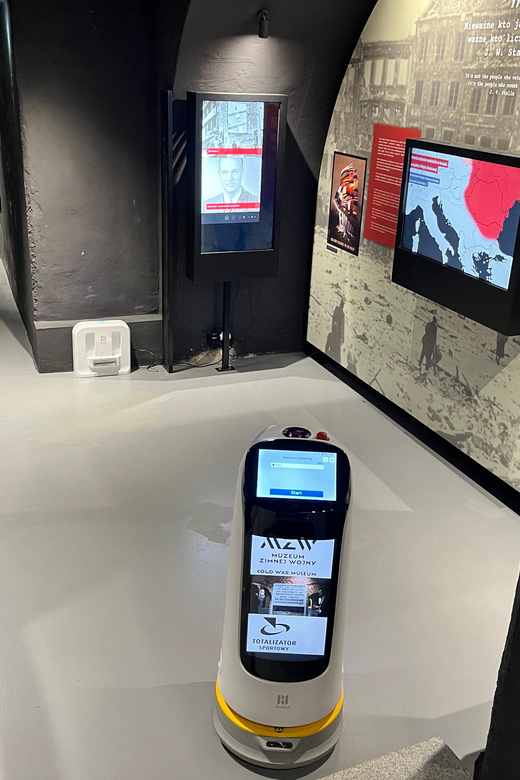
The Cold War Museum is the first and only museum in Poland described as having an autonomous robot serving as a guide. That is a memorable feature, especially for families and younger visitors.
The robot can guide you through the museum, and the available languages are English and Polish. You are not booking a personal human guide, so do not expect a tailored conversation or a private tour. The robot is part of the museum’s self-guided format.
For English-speaking visitors, the robot may make the experience easier if you want basic direction without joining a group. A host or greeter is also available in English and Polish, which gives you a person to approach at the entrance if you need help getting started.
The robot is more than a novelty because it fits the museum’s overall approach. The exhibition uses technology to present a subject that can otherwise feel distant and difficult. Still, I would treat it as an extra feature rather than the main reason to buy a ticket. The original objects and the Polish historical setting carry more lasting importance.
Is $12 good value for the visit?
At $12 per person, the ticket is reasonably priced for a museum that includes admission to the exhibitions and access to all attractions inside. You are not paying separately for the quiz, the VR games, the hologram station, or the robot guide.
The value depends on how much of the interactive material you use. A quick walk through the displays may not justify the price as strongly as a slower visit that includes the quiz, film, VR games, space section, and robot guide. If you enjoy modern museum technology, the ticket gives you several different formats rather than one exhibit repeated across a room.
The ticket is also valid for three months, with starting times checked through availability. That is useful if your Warsaw schedule is uncertain. You can reserve now and pay later, and cancellation is free up to 24 hours in advance for a full refund.
Transportation is not included, but the museum is so close to Old Market Square that this should not add much cost if you are already sightseeing in the Old Town. The skip-the-ticket-line feature can also save time, though you still need to show the ticket at the entrance.
Who will enjoy this museum most?
I would recommend this museum to you if you like modern history, Cold War politics, Polish resistance, space exploration, or interactive exhibits. It works especially well for families and mixed-age groups because the displays offer several ways to engage with the subject.
It is also a good choice if you have already seen Warsaw’s major historic sights and want a museum that connects international events with Poland’s own experience. The location makes it easy to add between Old Town stops.
You may want to choose another museum if you need step-free access or use a wheelchair, since this attraction is specifically listed as unsuitable for wheelchair users. You may also prefer a different institution if you want a politically neutral account of the Cold War. This museum has a clear anti-communist message and gives special weight to Reagan, John Paul II, and Kukliński.
Four-legged visitors are welcome, making this one of the few museums in Warsaw where you can bring a dog. Food, drinks, smoking, vaping, alcohol, and drugs are not allowed inside.
Should you book the Cold War Museum?
Book it if you want a compact but active look at the Cold War from a Polish perspective. The combination of original uniforms and maps, more than 50 multimedia elements, three VR games, a hologram space station, and an autonomous robot gives the $12 ticket plenty to do.
Go in with clear expectations. This is not a neutral textbook presentation, and it is not a large military museum with every Cold War country treated equally. It is a focused Polish interpretation, shaped by anti-communist memory and the museum’s own difficult location.
For an easy Old Town stop with strong local context and technology that keeps the subject moving, I would book it. For a wheelchair-accessible visit or a strictly balanced political history, I would choose another attraction.
FAQ
Where is the Cold War Museum located?
The museum is about 40 meters from Old Market Square in Warsaw’s Old Town area, in Poland’s Mazovia Province.
How much does admission cost?
The listed price is $12 per person.
What does the ticket include?
The ticket includes admission to the exhibitions, access to all attractions within the exhibition, and use of the autonomous robot guide.
How long is the ticket valid?
The ticket is valid for three months. You should check availability for the available starting times.
Are English-language options available?
Yes. English and Polish are available, and an English or Polish host or greeter is available at the museum. The autonomous robot guide also supports these languages.
Is transportation included?
No. Transportation is not included, but the museum is located about 40 meters from Old Market Square.
Are wheelchairs suitable for this museum?
No. The experience is listed as not suitable for wheelchair users.
Can I bring a dog?
Yes. Dogs and other four-legged visitors are welcome, making this one of the few museums in Warsaw that allows them.
Just added around Warsaw
- Wolfs Lair and Swieta Lipka Small Group Tour from Warsaw with Lunch★ 4.5 · 21 reviews
- Wolf’s Lair & Treblinka Tour in 1 day from Warsaw★ 5.0 · 37 reviews
- Wolfs Lair “Hitler’s Headquarters” – Full Day Tour from Warsaw by private car★ 4.5 · 4 reviews
- Tour from Warsaw: Wolf’s Lair, Hitler’s HQ Zones I and II★ 5.0 · 32 reviews
- Wolf’s Lair Private Day Trip from Warsaw★ 5.0 · 50 reviews
- Warsaw Must-See Local City Tour with Antek and Tomek★ 5.0 · 51 reviews
- Off the Beaten Track in Warsaw: Private City Tour★ 4.5 · 9 reviews
- Warsaw’s Old Town A Self-Guided Audio Tour★ 4.5 · 10 reviews
Communist History Tours, compared.
Legendary Private Nowa Huta Communism Tour with Crazy Guides
Read our review →
Nowa Huta: Steelworks Administration Buildings/Shelters Tour
Read our review →
Private Tour: Warsaw’s Communist History by Retro Fiat
Read our review →
Private Nowa Huta Adventure Tour in Communist Cars
Read our review →
Browse the lists this tour appears in