
Reviewed · JEWISH HERITAGE TOURS
Warsaw: Ghetto, Jewish Cemetery & POLIN Museum Private Tour
Warsaw’s former Jewish ghetto is a place where absence speaks loudly. Much of the wartime district was destroyed, so the most valuable part of this tour is the guide’s ability to connect today’s streets with the vanished walls, homes, shelters, and deportation routes. The Monument to the Ghetto Heroes and the Umschlagplatz Monument give the walk a clear emotional and historical spine.
I like two things here: the private format lets you stop and ask questions, and the guide uses photos and street lines to show what is no longer there. I also like the choice of three tour lengths. The main drawback is that this is a serious, sometimes painful experience, not a light city stroll, and the two-hour version leaves out both the Jewish Cemetery and POLIN Museum.
Key points to know before booking
- The two-hour walk follows the former ghetto: See boundary markers, the Monument to the Ghetto Heroes, Mila 18, and Umschlagplatz.
- The three-hour option adds the Muranow Jewish Cemetery: A one-way public transport ticket is provided because the cemetery lies outside the central walking route.
- The five-hour plan adds POLIN Museum: Tickets cover the main exhibition, the current temporary exhibition, and the Heritage Gallery.
- Private guiding makes a difference: Your guide can respond to questions and use photos to explain buildings and streets erased by war.
- The meeting point is easy to identify: Find the anchor monument outside the main entrance to the Field Cathedral of the Polish Army on Długa Street.
- The price buys time and personal attention: At $112 per person, value improves for a small private group choosing the longer itinerary.
Why this Warsaw history tour matters
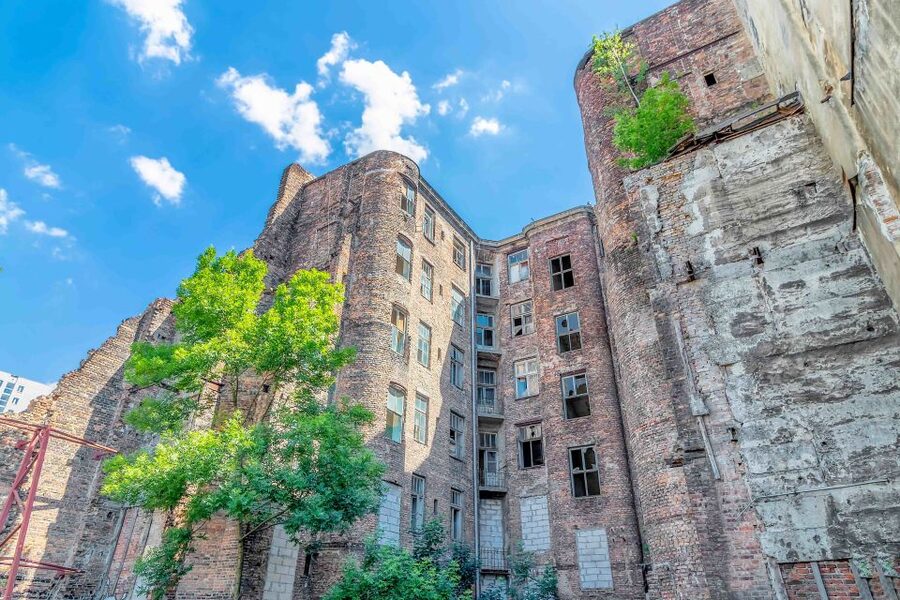
A visit to Warsaw can make the wartime past seem strangely invisible. The city was rebuilt after enormous destruction, and in the former ghetto area you often walk through ordinary streets without seeing the full outline of what happened there.
That is why a guide matters. You need someone to point out boundary markers, explain where streets once ran, and place personal stories beside the larger events of German occupation, ghetto imprisonment, resistance, deportation, and murder.
More than 400,000 Jewish people from Warsaw and nearby areas were forced into the ghetto. Hunger, disease, overcrowding, and death shaped daily life, but the story also includes underground education, mutual aid, cultural life, and armed resistance.
The tour does not treat the ghetto as a list of dates. It focuses on the people who lived there and the decisions they faced. I find that approach more useful than simply moving from one monument to the next.
Expect a quiet, respectful experience. The subject is heavy, and the tour’s value comes from taking time to listen and think rather than rushing toward entertainment.
More Jewish Heritage Tours in Warsaw
- Warsaw: Warsaw Ghetto Private Walking Tour with Hotel Pickup
★ 4.9 · 369 reviews - Warsaw: Jewish History Guided Walking Tour in English
★ 4.7 · 324 reviews - Private Tour: Warsaw’s Jewish Heritage by Retro Fiat
★ 5.0 · 208 reviews
Starting at Długa Street and the Field Cathedral
The meeting point is next to the anchor monument in front of the main entrance to Katedra Polowa Wojska Polskiego, the Field Cathedral of the Polish Army, at Długa 13/15.
This is a practical place to meet because the anchor is a clear landmark. If you are staying in Warsaw’s Old Town, pickup may be available from your accommodation if it is within 1.5 kilometers of the meeting point. Otherwise, plan to reach the cathedral yourself.
Check your email the day before for the final meeting information. That small step matters in a private tour, especially if you have arranged pickup or need to confirm the guide’s arrival point.
The route then moves toward the former ghetto area. Your guide speaks the language selected at booking, with English, Spanish, French, German, Italian, Polish, and Russian available.
Language quality matters on a tour like this. The historical terms can be difficult, and the subject calls for careful explanation. Iwona, one of the named guides associated with the experience, received especially warm praise for clear German explanations. Another guide made a strong effort to explain the subject in French. These details suggest you should select your language based on comfort, not simply availability.
Seeing a ghetto that largely disappeared
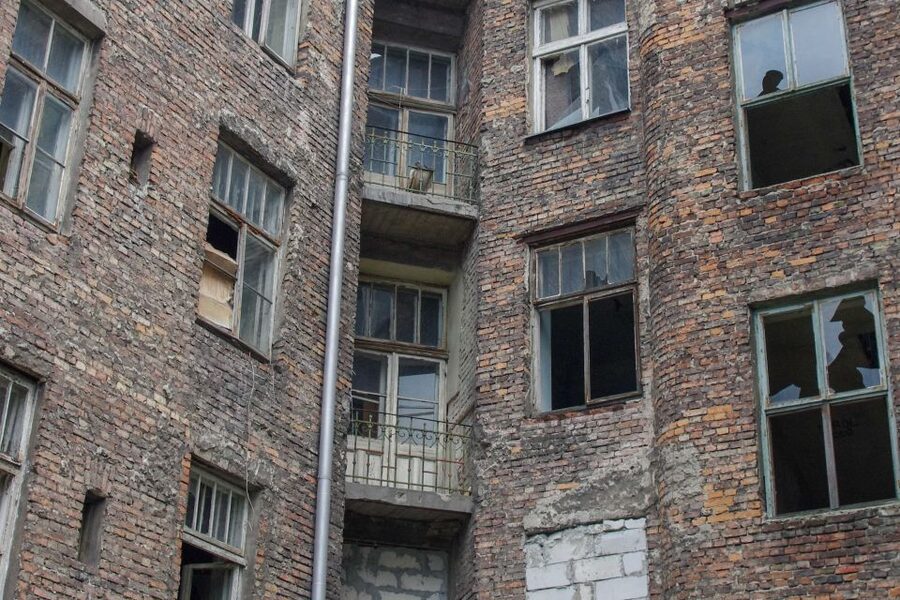
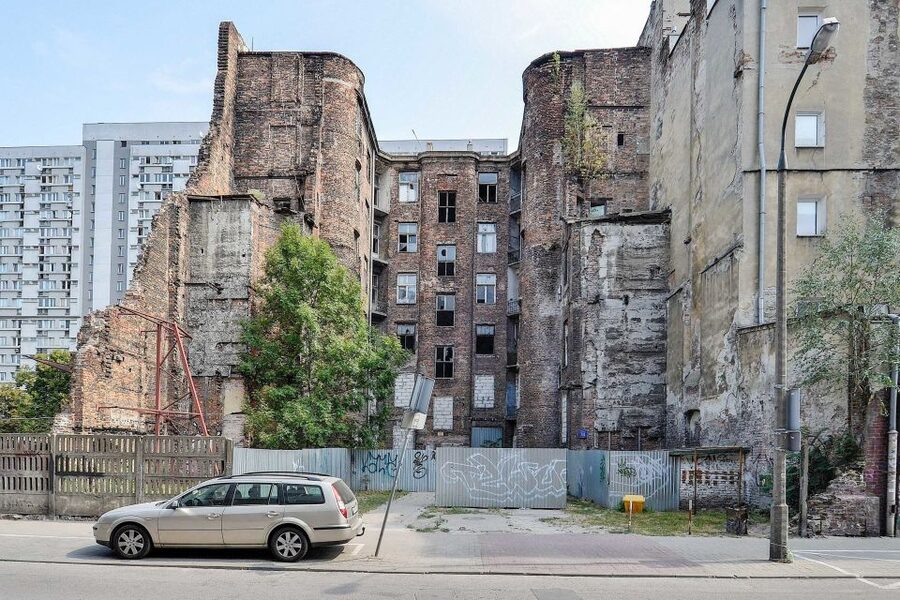
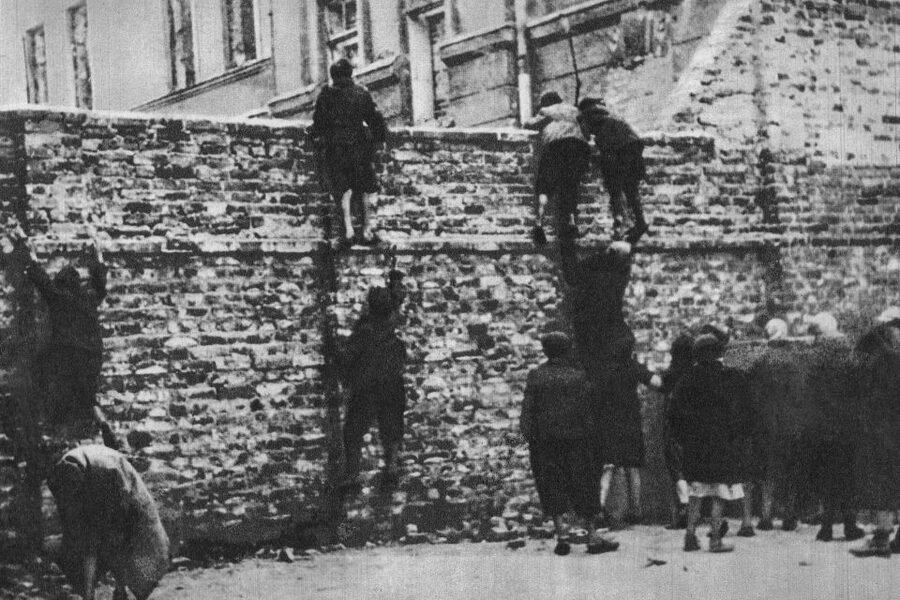
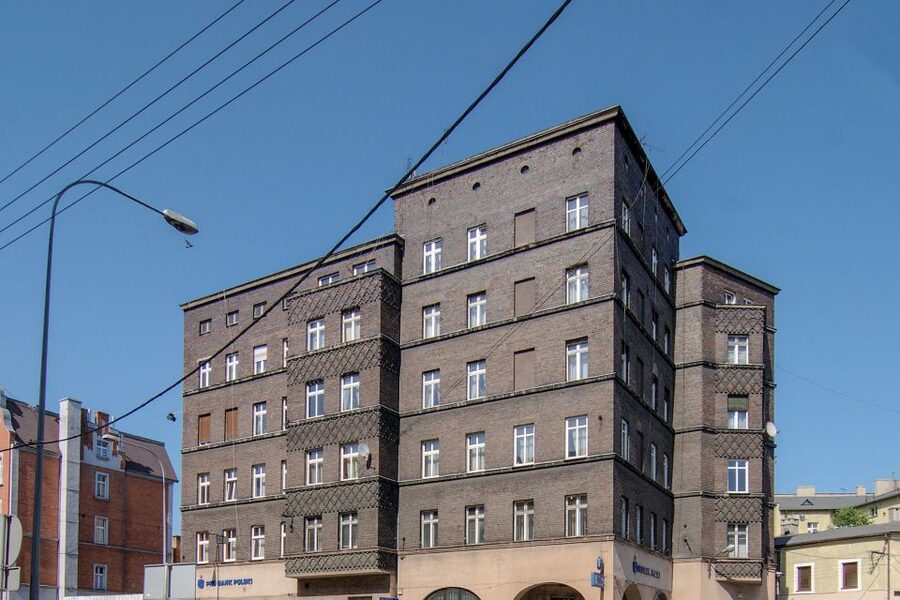
The former Warsaw Ghetto does not survive as one intact district. This is one of the first things you need to understand before you arrive. You will not walk along long stretches of preserved ghetto wall or enter a complete wartime neighborhood.
Instead, your guide points out boundary markers and surviving traces among later streets and buildings. Photos and the shape of the roads help reconstruct places that no longer exist. That can feel less visually dramatic than visiting a preserved historic site, but it is also the honest reality of Warsaw.
The strongest guides make absence understandable. They show you where the ghetto boundary ran, explain how the enclosed area functioned, and describe the pressure placed on people living inside it. You may find that an unremarkable street corner becomes more meaningful once you understand what happened there.
The tour also explains the ghetto as a system, not just a prison wall. You learn about forced confinement, hunger, illness, death, and the way German occupation authorities controlled movement and supplies.
At the same time, the guide covers resistance and courage. That balance matters. The people trapped in the ghetto were not simply passive victims. They organized, recorded events, helped one another, and eventually fought back.
The Monument to the Ghetto Heroes and Mila 18
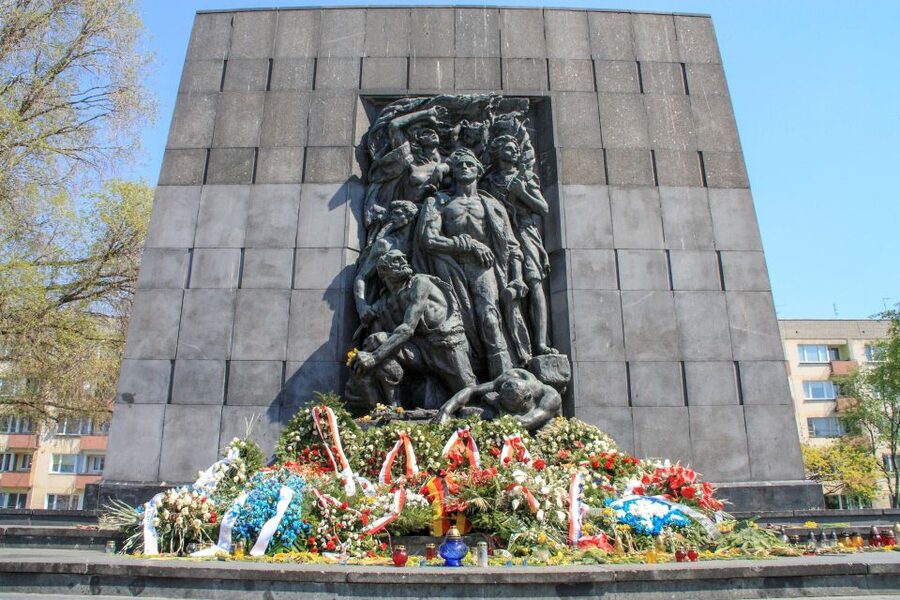
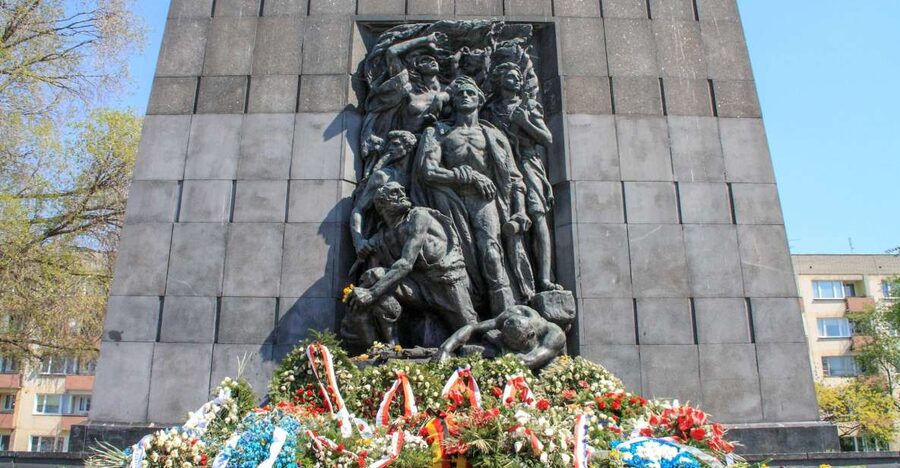
The Monument to the Ghetto Heroes is the central memorial stop. It commemorates the Warsaw Ghetto Uprising of 1943, when Jewish resistance fighters rose against the German forces preparing to destroy the ghetto and deport its remaining population.
The monument carries special weight because it sits in the former ghetto area, where the uprising took place. Your guide can explain the setting and the people behind the revolt, giving the memorial more meaning than a quick photograph would.
Nearby, the tour includes the Anielewicz Mound at Mila 18. This marks the location of a hidden shelter used by a Jewish resistance group. The site is tied to Mordechai Anielewicz, a leader of the uprising, and to the final days of fighters who chose resistance despite the odds.
Mila 18 is not a grand attraction with a large interior to explore. Its importance comes from what happened beneath and around the ground. Bring your attention rather than expecting a conventional museum visit.
I like this part of the route because it shifts the story from persecution alone to organized resistance. You hear about fear and destruction, but also about people who made a deliberate choice to fight.
More Museum Tours in Warsaw
- Warsaw: POLIN Museum of the History of Polish Jews Ticket
★ 4.7 · 1,142 reviews - Warsaw: Polish Vodka Museum Tour with Tasting
★ 4.6 · 788 reviews - Warsaw: Museum World of Illusion Entry Ticket
★ 3.9 · 666 reviews - World of Illusion Museum Skip-the-Line Ticket
★ 4.0 · 55 reviews
Ending at the Umschlagplatz Monument
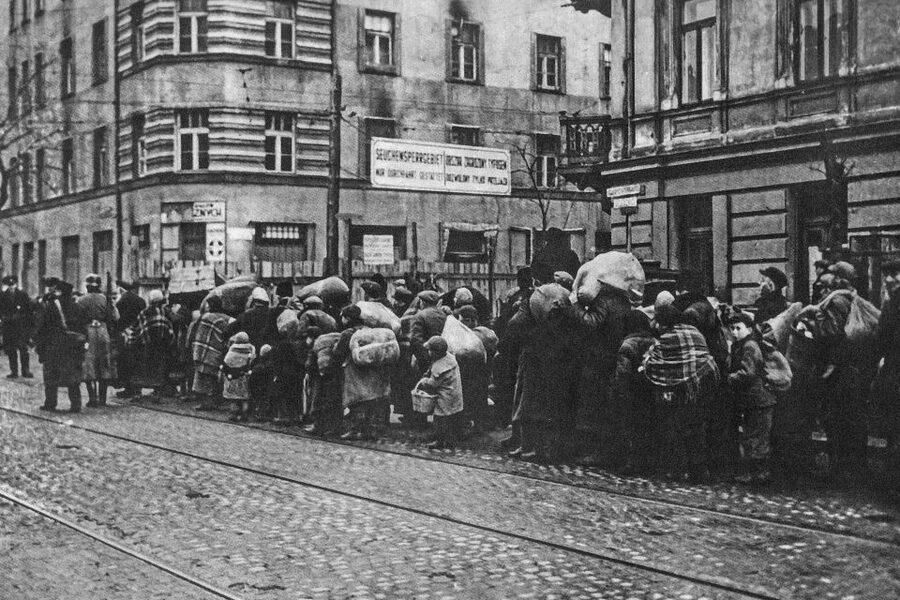
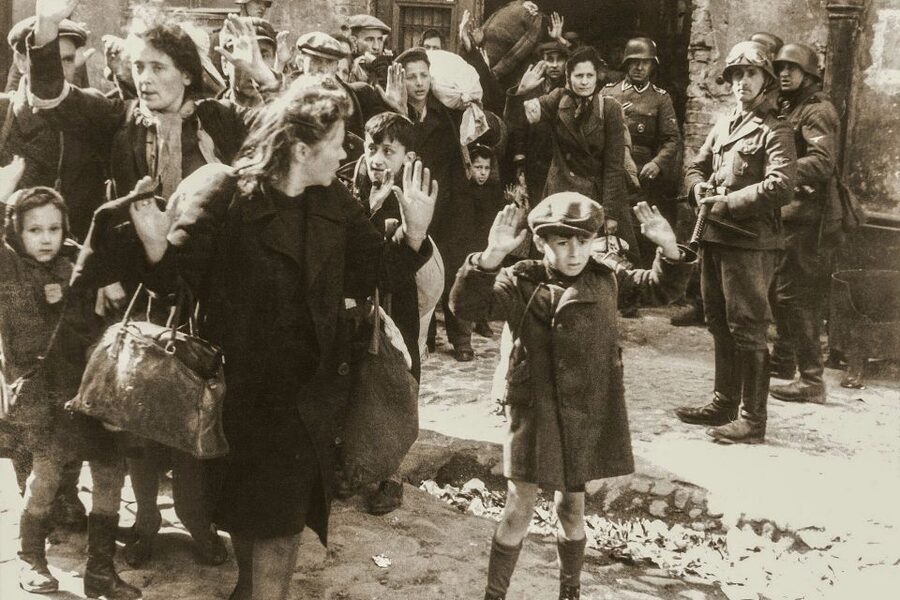
The two-hour walk ends at the Umschlagplatz Monument. This memorial marks the departure point where Jewish people were loaded onto trains and transported to Treblinka extermination camp.
More than 300,000 Jewish people died at Treblinka. The Umschlagplatz stop gives the tour a stark endpoint. It connects the ghetto’s daily suffering to the deportation process and the larger machinery of the Holocaust.
For many people, this is the hardest section of the visit. The monument marks a place where individuals and families were gathered, forced onto trains, and sent away from Warsaw. A guide’s explanation can help you understand the sequence of events without turning the site into a vague symbol of tragedy.
The route is described as a walking tour, so wear comfortable shoes. The supplied information does not give a precise walking distance or a detailed accessibility assessment. If you have mobility concerns, ask the provider about the route before booking.
Adding the Jewish Cemetery in the three-hour option
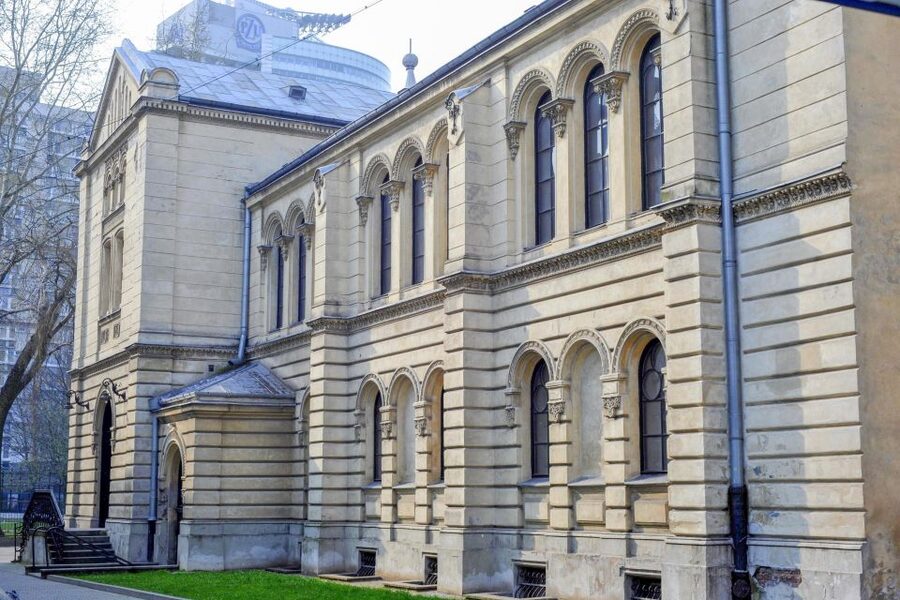
The three-hour tour adds the old Jewish Cemetery in Muranow. Established in 1809, it is one of Europe’s largest Jewish cemeteries and the resting place of more than 200,000 people.
This changes the tone of the experience. The former ghetto walk focuses on occupation, confinement, uprising, and deportation. The cemetery widens the story to include Jewish life in Warsaw before the war and the people who shaped religious, political, and cultural life.
Your guide can point out graves of spiritual leaders, political activists, and respected creators of Jewish culture. You will also see the graves of many unnamed victims of World War II. The contrast between carefully marked tombs and anonymous wartime deaths is hard to miss.
The cemetery lies outside the central walking route, so the tour includes a one-way public transport ticket for the three-hour option. This is useful, but it also means the extended tour is not simply an extra hour of walking. You are changing locations by public transport, so allow the full three hours rather than trying to fit the visit into a tight schedule.
A small point deserves attention: the cemetery entry fee and transport ticket are not included in the two-hour option. Since the two-hour itinerary does not include the cemetery, this mainly matters if you are comparing options or considering additions. The three-hour option is the straightforward choice if you want the cemetery included.
Giving the five-hour POLIN Museum time
The five-hour version includes the former ghetto, the Jewish Cemetery, and POLIN Museum of the History of Polish Jews. This is the most complete choice and the one I would favor if Jewish history in Poland is a major reason for your Warsaw visit.
POLIN is not limited to the Holocaust. Its exhibitions cover Polish Jewish history, culture, and heritage before, during, and after the war. That wider frame is important because the ghetto was not the beginning of Jewish life in Poland, and the Holocaust was not the whole story.
The museum gives you the background needed to understand what was destroyed. It also helps explain the communities, traditions, institutions, and cultural contributions that existed long before the Nazi occupation.
Skip-the-line tickets are included for the five-hour option. They let you bypass the ticket office line, but not the entrance or security checks. Admission includes the main exhibition, the ongoing temporary exhibition, and the Heritage Gallery.
Do not underestimate the museum’s size or subject matter. Even with a guided visit, you may want more time to read and reflect. One French-speaking visitor spent more than three hours in POLIN because the museum was so absorbing and clear. That is useful planning advice: the five-hour tour gives you a strong introduction, but you may still want to return independently if your schedule allows.
What the private format adds
A private group is a better fit here than a large group for one simple reason: the questions are likely to be personal and specific. You may want to ask about a family name, a memorial, a street alignment, or the difference between the ghetto uprising and the Warsaw Uprising.
The guide can adjust the explanation to your interests and pace. A German-speaking guide, for example, received praise for responding to questions and using photos to show buildings that disappeared during the war. That sort of flexibility is hard to guarantee in a fixed group.
The private format also helps with the emotional rhythm of the visit. You can pause at a memorial without feeling that you are holding up a large crowd. You can ask for clarification when a story becomes complicated.
The tradeoff is price. At $112 per person, this is not the cheapest way to spend two hours in Warsaw. The value improves if two or more people share the private experience and if you choose the three or five-hour version. A solo visitor pays more for privacy, but may still find the personal attention worthwhile.
The five-hour option offers the clearest value if you plan to visit POLIN anyway. It combines the museum, cemetery, and ghetto route in one organized experience, with museum tickets and cemetery transport included where specified.
Choosing the right length
The best option depends on how much context you want.
Choose two hours if you have limited time and want the main former ghetto route. You will see the boundary traces, learn about life under German occupation, visit the Monument to the Ghetto Heroes and Mila 18, and finish at Umschlagplatz.
Choose three hours if you want the ghetto route plus the old Jewish Cemetery. The cemetery adds a longer view of Warsaw’s Jewish community, but public transport becomes part of the plan.
Choose five hours if you want the fullest historical framework. POLIN helps connect prewar Jewish life, the Nazi occupation, the Holocaust, and the postwar story. This option requires more stamina and attention, but it gives you the most complete picture.
I would not choose the two-hour tour if POLIN and the cemetery are priorities. You may save time and money, but you will miss two of the strongest parts of the experience.
Practical details for a respectful visit
This is a walking tour with a serious subject, so comfortable shoes and suitable clothing are sensible. The tour operates as a private group, and starting times vary. Check availability for the date and time you need.
Pickup is limited to accommodations within 1.5 kilometers of the designated meeting point, and only Old Town accommodation pickup is described. If your hotel is farther away, meet the guide at the Field Cathedral.
The tour is offered in seven languages. Make sure the selected language is the one you want for detailed historical discussion, since the experience depends heavily on spoken explanation.
Cancellation is free up to 24 hours in advance, and reserve-now, pay-later booking is available. These policies are useful if your Warsaw plans may change, but the more important booking decision is the tour length.
The published rating is 4.8 from 132 reviews, with especially strong praise for guide clarity, language ability, and historical explanation. The consistent practical lesson is simple: a good guide makes the lost physical evidence easier to understand.
Who should book this tour
I recommend it to anyone who wants more than a quick memorial stop. It suits first-time visitors who need context, people with a strong interest in World War II and Jewish history, and families or private groups who want to ask questions at their own pace.
The five-hour version is best for serious history students and anyone planning to visit POLIN. The three-hour option is a good middle path if the cemetery matters but you do not want to spend most of the day indoors.
The tour may not suit you if you want a light sightseeing walk or prefer to explore only preserved buildings. Much of the former ghetto has vanished, and the experience asks you to imagine places with help from maps, photos, and spoken history.
Should you book it?
Book this tour if you want the former ghetto explained by a guide who can connect scattered traces to real people and events. I especially recommend the five-hour version for the museum context and the three-hour version for a shorter visit that still includes the cemetery.
Choose the two-hour route only if your schedule is tight. It covers the essential memorials, but the longer options make Warsaw’s Jewish history feel less like an isolated wartime chapter and more like the story of a living community, its destruction, and its memory.
FAQ
Where does the tour meet?
Meet next to the anchor monument in front of the main entrance to Katedra Polowa Wojska Polskiego, the Field Cathedral of the Polish Army, at Długa 13/15 in Warsaw.
Is hotel pickup available?
Pickup is available only from accommodations within 1.5 kilometers of the designated meeting point, with Old Town accommodation specified. You need to provide your address when booking.
How long is the tour?
You can choose a two-hour, three-hour, or five-hour private tour. Starting times depend on availability.
What languages are available?
The live guide service is available in English, Spanish, French, German, Italian, Polish, and Russian.
What does the two-hour tour include?
The two-hour tour covers the former Warsaw Ghetto, including boundary markers, the Monument to the Ghetto Heroes, the Anielewicz Mound at Mila 18, and the Umschlagplatz Monument.
Is the Jewish Cemetery included?
The old Jewish Cemetery in Muranow is included only in the three-hour and five-hour options. A one-way public transport ticket is provided for those options.
Is the cemetery entry fee included in the two-hour tour?
No. The two-hour option does not include the Jewish Cemetery entry fee or a public transport ticket.
Is POLIN Museum included?
POLIN Museum is included only in the five-hour tour. That option includes skip-the-line tickets for the main exhibition, the ongoing temporary exhibition, and the Heritage Gallery.
Do POLIN tickets skip all lines?
The tickets allow you to skip the ticket office line. You still need to pass through the entrance and security checks.
Can I cancel the booking?
You can cancel up to 24 hours before the tour for a full refund. Reserve-now, pay-later booking is also available.
Just added around Warsaw
- Wolfs Lair and Swieta Lipka Small Group Tour from Warsaw with Lunch★ 4.5 · 21 reviews
- Wolf’s Lair & Treblinka Tour in 1 day from Warsaw★ 5.0 · 37 reviews
- Wolfs Lair “Hitler’s Headquarters” – Full Day Tour from Warsaw by private car★ 4.5 · 4 reviews
- Tour from Warsaw: Wolf’s Lair, Hitler’s HQ Zones I and II★ 5.0 · 32 reviews
- Wolf’s Lair Private Day Trip from Warsaw★ 5.0 · 50 reviews
- Warsaw Must-See Local City Tour with Antek and Tomek★ 5.0 · 51 reviews
- Off the Beaten Track in Warsaw: Private City Tour★ 4.5 · 9 reviews
- Warsaw’s Old Town A Self-Guided Audio Tour★ 4.5 · 10 reviews
Jewish Heritage Tours, compared.

Bike Tour of Old Town, Jewish Quarter and the Ghetto
Read our review →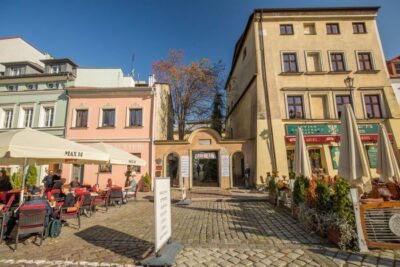
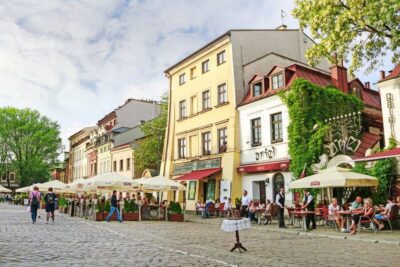
Kazimierz, Schindler’s Factory & Ghetto Guided Tour
Read our review →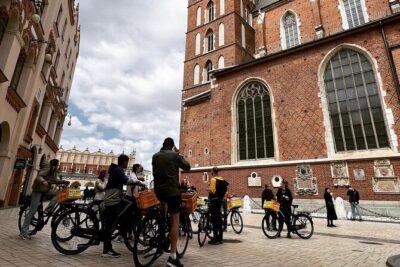
Full Bike Tour – the Old Town, Jewish Qtr & the Ghetto NEW BIKES
Read our review →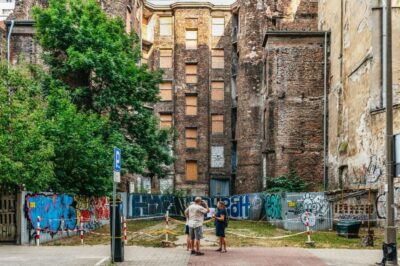
Warsaw Ghetto Private Walking Tour with Hotel Pickup
Read our review →
Bike Tour of the Old Town, Kazimierz, and the Ghetto
Read our review →Browse the lists this tour appears in