
Reviewed · 2-HOUR EXPERIENCES
Wroclaw: 2-Hour Private Guided Tour by Electric Car
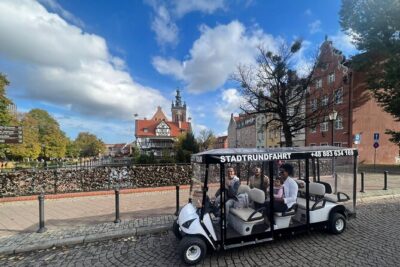
Wroclaw is spread across islands and riverbanks, so a private electric-car tour is a smart way to get your bearings quickly. In two hours, you can pass 30 major sights, from Saint Elisabeth Church and the Market Square to Cathedral Island and the Botanical Gardens, without wearing out your feet.
I like the hotel pickup, which removes the fuss of finding a meeting point, and the chance to stop for photos along the way. Guides such as Hubert, Artur, Pawel, Anya, and Mary have added personal stories, humor, food tips, and Polish history to the route. The main drawback is time: you see many places from the car, but only have brief stops for exploring.
Key points to know before booking
- Thirty sights in two hours: The route gives you a broad first look at Wroclaw’s center, river islands, churches, university, and historic streets.
- Private group format: You can ask questions and set the pace more easily than on a large shared tour.
- Strong guide element: English and Polish live guides explain the city, while audio commentary covers Spanish, German, Russian, Italian, French, Czech, Swedish, Norwegian, Finnish, Danish, Dutch, and Polish.
- Useful for limited mobility: The electric car avoids a long walking route, and the activity is listed as wheelchair accessible.
- Good in cold weather: The car has heating, wind curtains, and warm blankets from December through February.
- A good first-day plan: You can note the places you want to revisit on foot after the tour.
Wroclaw by electric car: a fast first look
At $38 per person, this is priced as a short private sightseeing tour rather than simple transport. The value comes from combining a driver, a live guide, a planned route, hotel pickup, and access to far more of central Wroclaw than you could cover comfortably on foot in the same period.
The tour is especially useful at the start of a stay. You get a working map of the city in your head, then you can return later to the churches, islands, cafés, museums, or streets that caught your eye. If you have just one day in Wroclaw, this format helps you spend your limited time wisely.
The route has earned a 4.8 rating from 805 reviews, and the praise centers on the same things I would look for: clear explanations, friendly guides, easy pickup, comfort, and the number of sights covered. Several guides are singled out by name, including Hubert, Artur, Pawel, Anya, Mary, Alan, and Julia. Guide quality can vary with the departure, but the human part of this tour is clearly important.
A few more Wroclaw half-days worth comparing
- Wroclaw: Private Old Town Guided Walking Tour (2 hours)
★ 4.8 · 275 reviews - Wroclaw: Guided City Night Tour (2 hours)
★ 4.6 · 21 reviews - Wroclaw different – secrets of the city, 2 hours. 3-9 people
★ 4.5 · 6 reviews
Why the electric car works well in Wroclaw
Wroclaw’s center is walkable, but the city’s sights are not all packed into one small square. The route reaches the Old Town, the university area, the river islands, Cathedral Island, and the Botanical Gardens. That range is the main reason to choose a vehicle instead of a standard walking tour.
The compact car also gives you a protected seat while the guide explains what you are seeing. You are not stopping at every monument, so this is not a substitute for a full museum visit or an in-depth church tour. Think of it as a moving introduction, with a few chances to get out and take photographs.
The private format matters. You can ask why a building matters, request a little more explanation, or let the guide know if someone in your group needs a slower pace. A family with young children can avoid the challenge of keeping everyone moving through a long walking route. An older visitor or anyone with mobility limits can see more without making the whole day about footwork.
One practical point: hotel pickup is included, but drop-off is not. Pickup times can vary, so keep your schedule slightly flexible at the beginning of the day.
Saint Elisabeth Church and the Old Town streets
Saint Elisabeth Church is one of the first important sights on the route. Its large form helps you understand the scale of Wroclaw’s historic center, while the surrounding streets show how much of the city’s sightseeing is concentrated around the Old Town.
The nearby Jatki area adds a different note. This historic street is associated with the old butcher stalls and is now a small, atmospheric corner of the center. From the car, you receive the setting and the story. If you want time to inspect details, take photographs, or look more closely at the sculptures and buildings, mark it for a later walk.
This is where the guide’s delivery makes a difference. Hubert has been praised for speaking clearly and moving through a large amount of information without losing the thread. Artur has used small local stories to make individual places easier to remember. Those details help prevent the first two hours from becoming a blur of church names and dates.
University of Wroclaw and Ossolineum

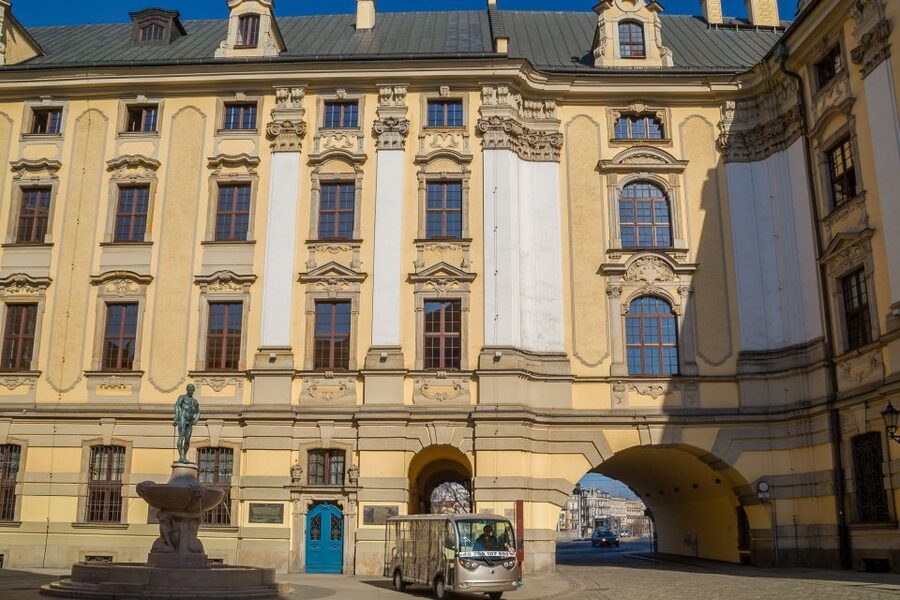
The University of Wroclaw brings an academic side of the city into the route. It is not just another stop on a list of façades. The university area helps explain Wroclaw as a center of education and public life, and the guide can place the buildings within the wider story of the city.
Ossolineum adds another cultural landmark. You may not have time for a full visit during the two-hour ride, but seeing it in context gives you a better sense of the institutions that shaped Wroclaw’s identity.
This part of the route is a good example of the tour’s limits and strengths. You get useful orientation and a spoken explanation, but the schedule cannot allow extended time inside each site. If a particular building interests you, write down its name and return later.
Several guides have also connected the city’s older story to the Second World War and the post-war communist period. That broader account is valuable because Wroclaw’s appearance today does not tell the whole story. The tour can give you a basic timeline, then you can choose a museum or longer walking tour for more detail.
Same city, a completely different kind of day:
- Wroclaw: E-Car Tour and Audio Guide
★ 4.6 · 1,738 reviews - Wrocław: Old Town and Ostrów Tumski Walking Tour in English
★ 4.8 · 311 reviews - Old Town Wrocław Walking Tour
★ 5.0 · 249 reviews - Wroclaw: City Tour Sightseeing By Golf Cart Shared Or Privat
★ 4.8 · 189 reviews
Market Hall and the everyday city
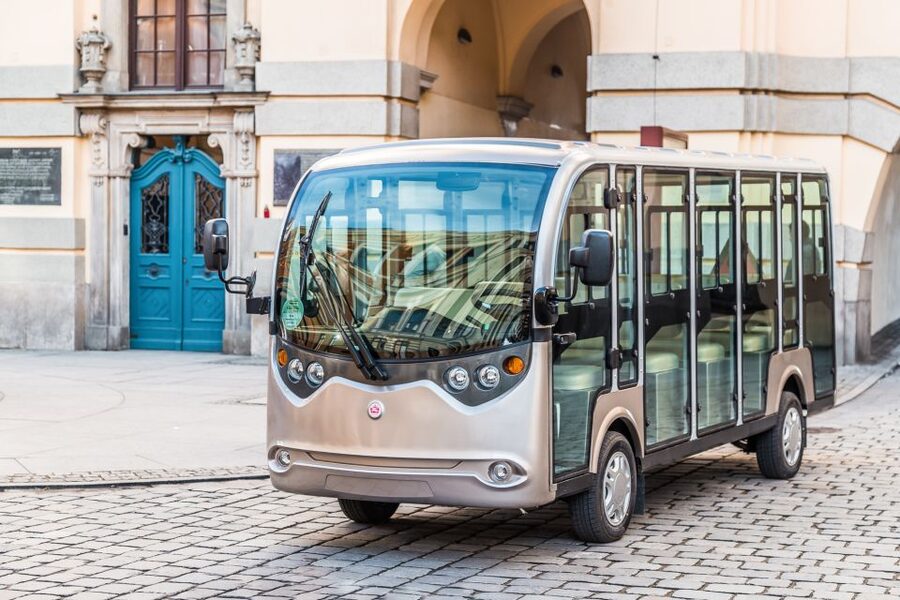
The Market Hall gives the route a more everyday feel. Wroclaw is not only a collection of churches, monuments, and grand university buildings. A market helps you see how the center works as a place where people shop and meet.
You may pass the hall rather than spend a long time inside it, depending on the route and traffic. That is fine for orientation. I would treat this as a note-to-self stop for later, especially if you want to look at food stalls or combine sightseeing with a practical break.
The electric car is helpful here because it connects several separate parts of the center without asking you to retrace your steps. The guide can point out where you are, what lies nearby, and which areas deserve more of your time after the ride.
Piasek Island, Piasek Bridge, and the river
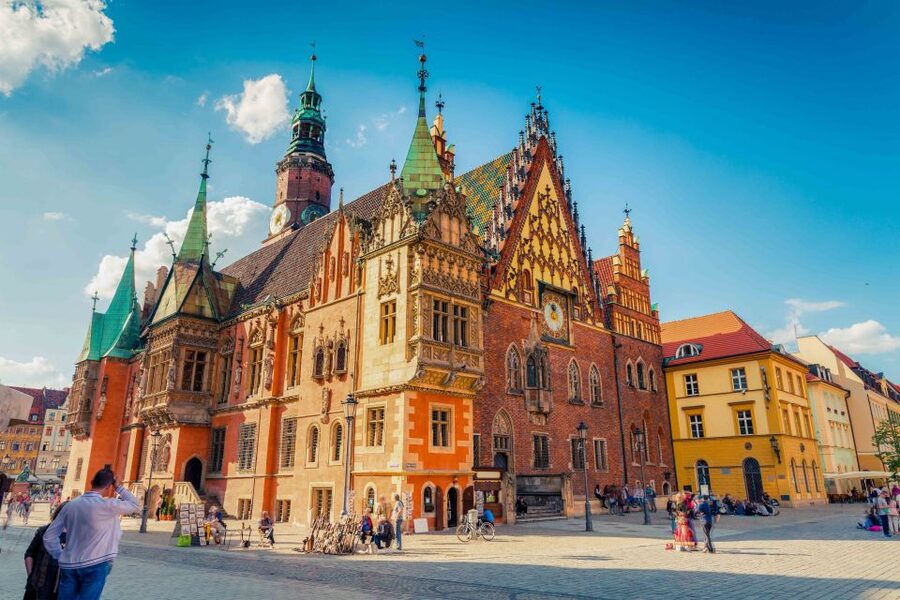
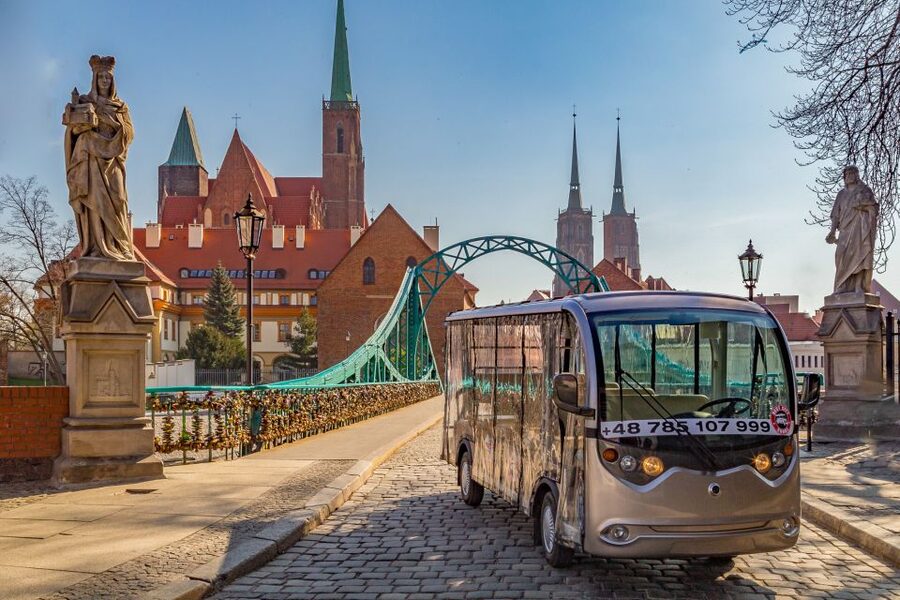
The journey toward Piasek Island changes the feel of the tour. The river is central to Wroclaw, and the islands help explain why the city has so many bridges, church towers, and water-level views.
Crossing Piasek Bridge gives you a sense of the city’s layout that is difficult to gain from a single square. You see how the historic center relates to the river and how the islands fit into the wider route. The car keeps the pace comfortable, but photo stops are important here, since a moving view can disappear quickly.
If your guide stops, use the time for wide photographs rather than trying to record every spoken detail. The city’s river setting is one of the places where a few minutes outside the car can add real value.
Weather affects this section. In rain, the protective curtains help keep the car usable, but they can limit the openness of the view. One past visitor specifically found that lowered rain guards reduced the experience. That is a fair warning: choose a dry departure if your schedule allows, or accept that bad weather may make the ride more practical than scenic.
Cathedral Island and Saint Martin Church
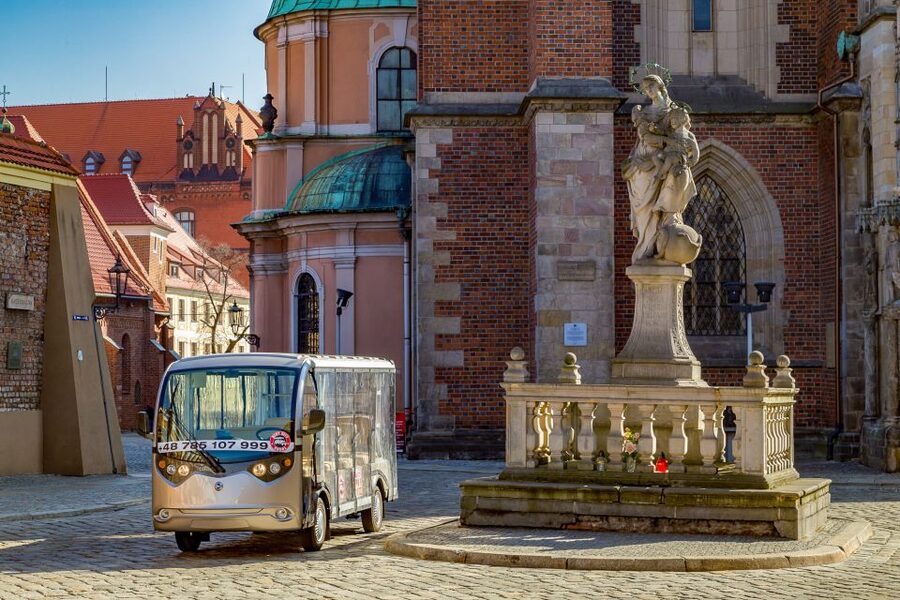
Cathedral Island, or Ostrow Tumski, is one of the most important parts of the route. Its churches and older streets give you a strong sense of Wroclaw’s religious and early urban center.
Saint Martin Church is among the named sights, and the route also includes the cathedral area. Some departures have allowed brief visits inside churches, but you should not expect a full guided church tour at every stop. The main purpose is to connect the buildings, their setting, and the city’s past.
Cathedral Island is also a good place to return on foot. The electric car lets you see it early, then you can decide if you want more time among the churches and riverside paths. This is one reason I like taking the tour near the beginning of a stay rather than at the very end.
The guide commentary can add legends and smaller stories that do not appear on a standard map. Julia, for example, has been described as adding local facts and legends, while other guides have brought old photographs or personal recommendations into the explanation. Ask questions when you can. The private format gives you a better chance to turn a general city overview into something useful for your own interests.
Botanical Gardens and the edge of the route
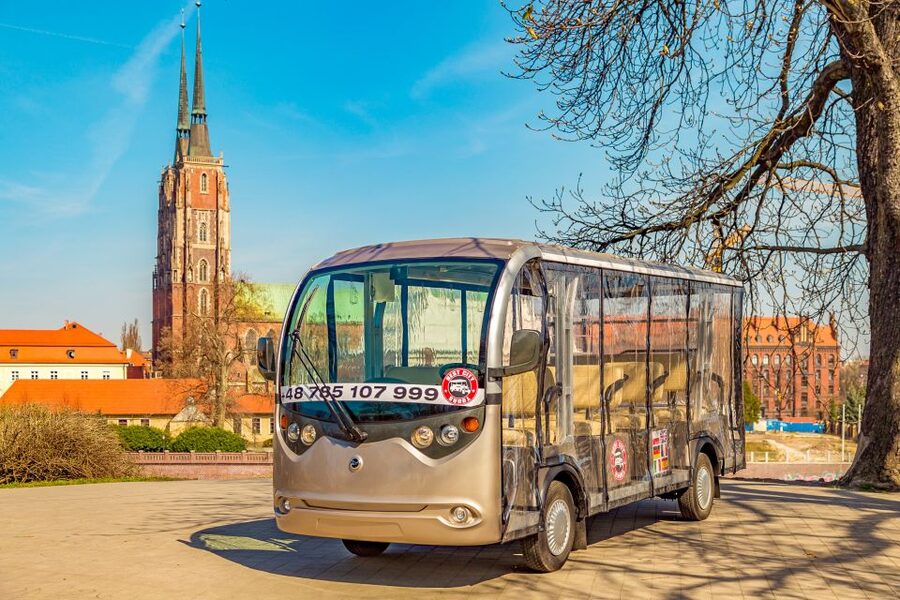
The Botanical Gardens show that the tour is not limited to the busiest Old Town streets. Their presence near Cathedral Island adds greenery and a quieter point to the route, even if the two-hour schedule does not allow a garden visit.
This is another place where expectations matter. You are getting a view and an explanation, not a leisurely stroll through every section. If gardens are high on your list, return separately with enough time to walk.
The route’s broad coverage is its main strength. In one ride, you move from churches and medieval streets to university buildings, the market hall, islands, bridges, and gardens. You will not study any one place in depth, but you will learn which places deserve a closer look.
Guides, languages, and the quality of the commentary
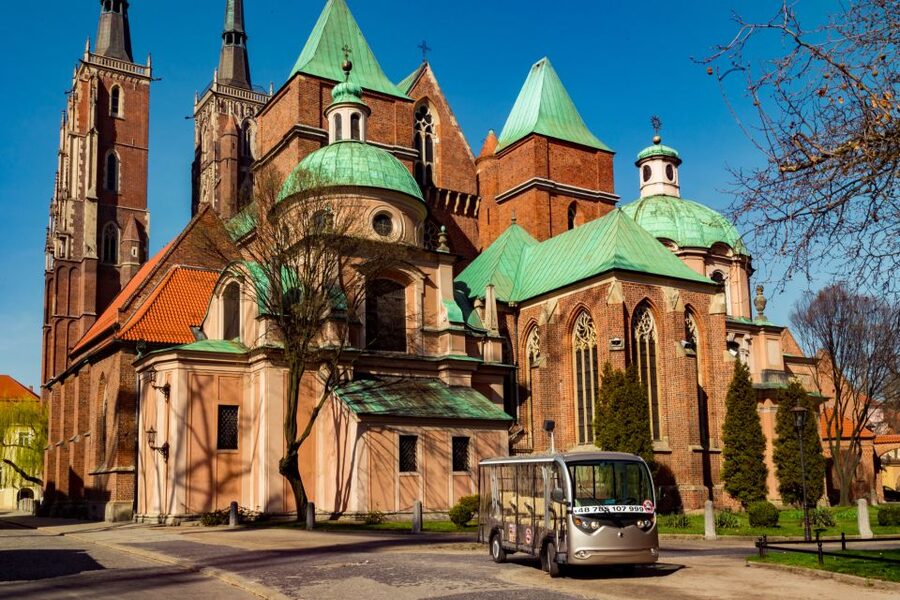
The live guide is available in English or Polish. Audio commentary is also listed in Spanish, English, German, Russian, Italian, French, Polish, Czech, Swedish, Norwegian, Finnish, Danish, and Dutch.
That language choice is useful for mixed groups. The live guide handles the personal side of the tour, while the audio system provides a structured explanation in your chosen language. One family booked in English but had the guide switch to German for the children, which shows that language flexibility may be possible, though you should confirm your preferred arrangement when booking.
The sound system matters because traffic and city noise can make casual narration hard to hear. The electric car is not silent in the practical sense, but onboard audio gives the commentary a better chance of reaching everyone.
The strongest guide comments focus on clear English, humor, local facts, and practical recommendations. Hubert is often praised for an easy-to-follow delivery and a dry sense of humor. Pawel has connected Wroclaw’s story with the history of Poland. Anya, Mary, Alan, and others have been described as friendly and easy to talk to. Since guides change, book this for the route and format first, not on the assumption that you will receive a particular person.
Comfort, weather, and mobility
The car has a heated interior and warm blankets from December through February. Curtains help block wind, rain, or snow in winter. Families with six- and eight-year-old children have found the setup comfortable, and a five-year-old has managed the ride well.
Summer has a different concern: a covered vehicle may feel less open than walking, especially in warm weather. The supplied details do not give a temperature policy or air-conditioning information, so you should consider the day’s forecast when choosing your departure.
The tour is listed as wheelchair accessible, and it can be a sensible choice for anyone who finds two hours of walking tiring. A visitor accompanying an 80-year-old parent used it to gain a broad overview without putting too much strain on her feet. Still, accessibility can depend on the exact vehicle and boarding conditions, so ask the operator if you need specific assistance.
A toilet stop is not described as part of the standard schedule. One person suggested a break after the first hour. Plan ahead, especially with children or older members of your group.
Who gets the best value from $38
I see the strongest value for four kinds of visitors:
- First-time visitors: You get a map of the center and a list of places to revisit.
- Short-stay visitors: Two hours can cover far more ground than walking between the same sights.
- Families and older visitors: The ride saves energy and gives children a change from constant walking.
- People with mobility limits: The vehicle and private format can make central sightseeing more manageable.
The price is less compelling if you want long visits inside churches, museums, or the Botanical Gardens. A walking tour may suit you better if your main goal is close-up detail and plenty of time at each stop. You are paying for reach, comfort, and a guide, not admission to the sights.
Hotel pickup adds practical value, particularly in cold weather or when you are unfamiliar with Wroclaw. Since there is no included drop-off, plan your next stop from the final point or ask the guide for directions.
Should you book this Wroclaw electric-car tour?
Book it if you want a fast, comfortable orientation and prefer local explanation to wandering with a map. It is especially useful on your first day, for a short visit, for families, and for anyone who would rather conserve energy for museums and meals.
Skip it if you want a slow walking tour with long indoor visits. The two-hour route is broad by design, so some sights will pass quickly. For most first-time visitors, though, the combination of 30 landmarks, a private guide, hotel pickup, winter protection, and time for photographs makes $38 a reasonable way to begin exploring Wroclaw.
FAQ
How long is the electric-car tour?
The tour lasts two hours.
How much does the tour cost?
The listed price is $38 per person.
Is the tour private?
Yes. It is offered for a private group.
Does hotel pickup come with the tour?
Yes. Pickup at your hotel is included.
Is hotel drop-off included?
No. Drop-off is not included.
Which languages are available with a live guide?
Live guiding is available in English and Polish.
Which languages are available for the audio guide?
Audio commentary is available in Spanish, English, German, Russian, Italian, French, Polish, Czech, Swedish, Norwegian, Finnish, Danish, and Dutch.
Is the electric car heated in winter?
Yes. From December through February, the car has heating and warm blankets. Curtains help protect against wind, rain, and snow.
Is the tour wheelchair accessible?
Yes. The activity is listed as wheelchair accessible.
Just added around Wroclaw
- Lower Silesia Tour From Wroclaw★ 4.5 · 33 reviews
- Wroclaw Old Town Private Tour★ 5.0 · 6 reviews
- Museum of Illusions Wroclaw Entrance Ticket★ 5.0 · 42 reviews
- Jewels of Lower Silesia★ 5.0 · 22 reviews
- Legends of Old Town 1 Hour Walking Tour in Wroclaw★ 5.0 · 6 reviews
- Highlights of Wroclaw Private Tour with one Entrance★ 5.0 · 5 reviews
- Undercover City Games: Wroclaw★ 5.0 · 44 reviews
- Private Candlelight concerts with classical music in Wroclaw★ 4.5 · 6 reviews
2-Hour Experiences, compared.
2H City Sightseeing Tour LIVE GUIDED by Buggy/Golf cart
Read our review →

Browse the lists this tour appears in