
Reviewed · WALKING TOURS
Gdansk Old Town: German Influence Walking Tour
Gdansk’s Old Town looks wonderfully Polish today, but its streets tell a more complicated story. On this private walk, you follow the German thread through Danzig’s merchants, Hanseatic trade, Prussian rule, architecture, and famous residents, then step inside St. Mary’s Church.
I like two things right away: the guide can shape the walk around your interests, and the route links famous sights to real people and events. The friendly, competent guiding is a major strength. The main consideration is price: at $108 per person, this makes the most sense for a private group that wants focused history, not a quick orientation stroll.
Key points to know before you book
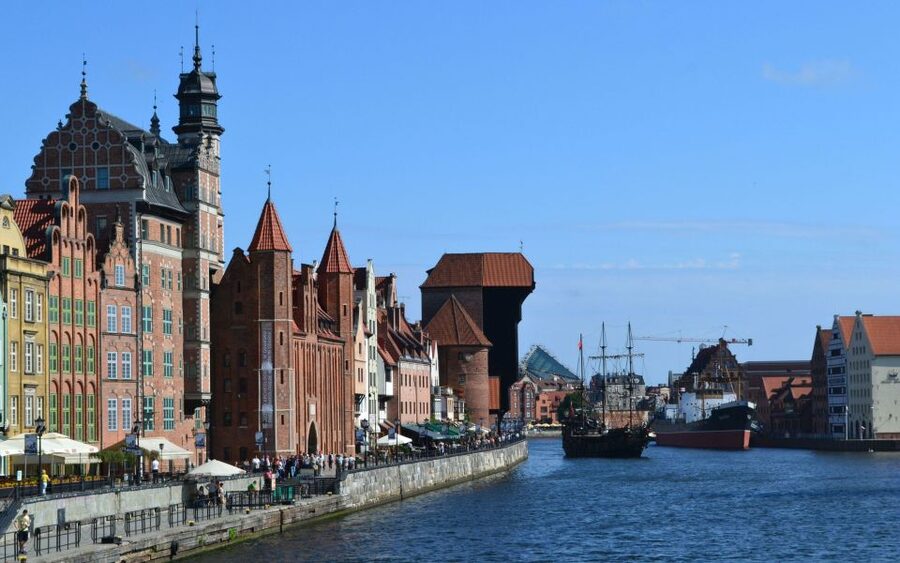
- Follow the Royal Route: Walk from the High Gate to Long Market, with stories of merchants, rulers, and German visitors along the way.
- Choose the three-hour version: It includes entry to Artus Court, where Gdansk’s merchant culture comes into sharper focus.
- Visit St. Mary’s Church: Admission is included, but the tower ticket is not.
- Meet at the High Gate: The starting point is about eight minutes from Gdansk’s Main Railway Station.
- Book in German or Polish: This is a private tour, with a licensed guide and an itinerary adjusted to your interests.
- Allow for church restrictions: Masses and concerts may limit the guide’s ability to speak inside St. Mary’s.
Why Gdansk’s German past is worth exploring
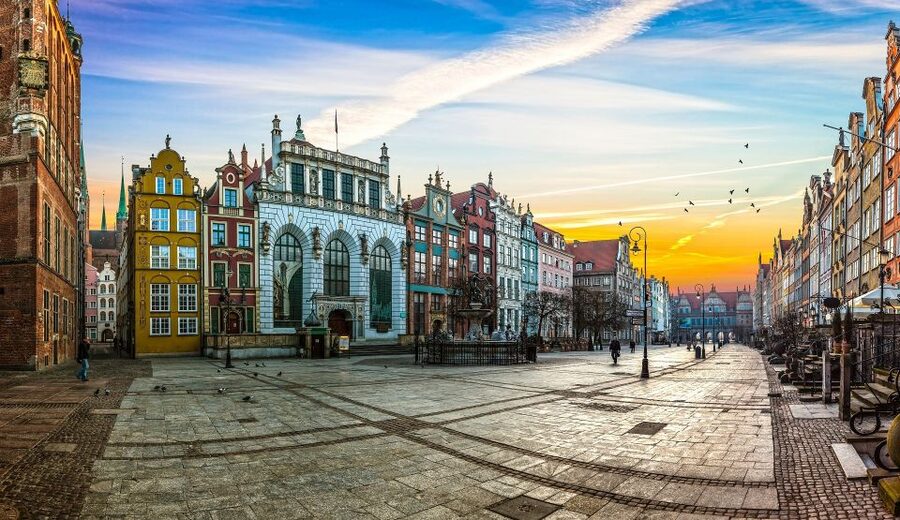
Gdansk can seem easy to read. Its rebuilt facades, brick churches, grand gates, and waterfront suggest a clear Polish identity. Yet the city was also known as Danzig, a major Baltic port shaped by Polish, German, Prussian, Hanseatic, and other northern European connections.
This tour helps you sort out those layers without reducing the city to a simple Polish-versus-German story. You’ll hear about German citizens who came to Danzig for trade, work, study, and public life. You’ll also learn how political control changed over time, including 146 years under the Teutonic Order and 126 years connected with Prussia and the German Reich.
That context matters because the German influence here is not limited to one monument or neighborhood. It appears in trade, church life, architecture, literature, and the city’s role as a port. A private guide can pause when you have questions, which is useful when the subject gets politically or historically complicated.
The tour is offered in German or Polish. If you choose German, the subject matter may feel especially direct, since so much of the tour concerns German-speaking people and institutions connected with old Danzig. Polish speakers can also use the walk to examine the city’s long relationship with its western neighbor.
More Walking Tours in Gdansk
- Gdańsk City Sights & History Guided Walking Tour in English
★ 4.8 · 876 reviews - Main Town Gdańsk Walking Tour
★ 5.0 · 644 reviews - Discover Gdansk Walking Tour
★ 5.0 · 495 reviews
Starting beneath the High Gate
The meeting point is in front of the tourist information sign beneath the High Gate, known in Polish as Brama Wyżynna, at Wały Jagiellońskie 2A. It is roughly eight minutes from the Main Railway Station, making this a practical meeting place if you have just arrived by train.
The High Gate is a good place to begin because it introduces the ceremonial side of Gdansk. From here, the route follows the historic Royal Route toward Long Market. You won’t simply be shown a series of handsome buildings. Your guide will explain how power, trade, and civic pride were displayed along this path.
The walk ends back at the meeting point. That makes planning easy, though it also means the tour does not function as a one-way transfer to another part of town. Wear comfortable shoes. The tour lasts two or three hours, and the Old Town portion is explored on foot.
If your hotel is in the Old Town, pickup may be available. You need to provide the full address when booking. If the accommodation is more than 1.5 kilometers from the meeting point, or if no address is supplied, you should plan to meet at the High Gate instead.
The Royal Route and the German merchant story
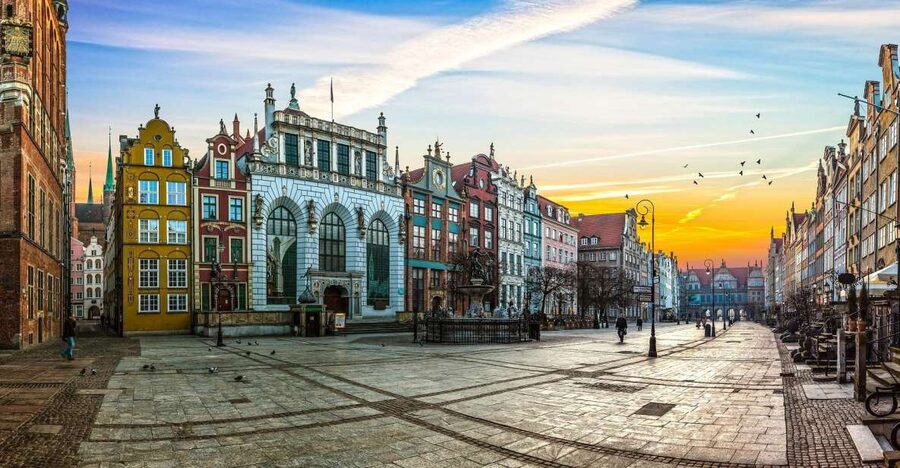
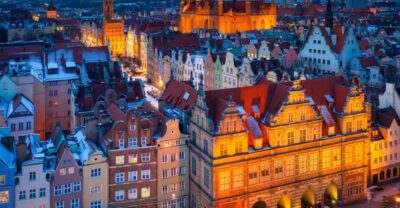
The Royal Route gives the two-hour tour its backbone. As you move toward Long Market, your guide connects the grand facades with the wealthy merchants who came to Danzig seeking amber and other valuable goods.
This is where the tour’s focus on cultural exchange becomes useful. German influence was not only imposed from above by rulers. German-speaking merchants helped shape the city through business, banking, civic organizations, and trade links across the Baltic. The Hanseatic League made ports such as Gdansk part of a broad commercial network, and the Motlawa River was central to that activity.
You’ll hear about the city’s changing political status, but the strongest part of this section is likely the connection between large historical forces and ordinary urban details. A gate, a merchant’s meeting place, or a waterfront view becomes easier to understand when you know who used it and why.
The guide also introduces notable German figures connected with Gdansk. These include astronomer Johann Bernoulli, writer Günter Grass, and architect Barthel Ranisch. Grass is especially interesting for readers who know The Tin Drum, part of his Danzig Trilogy. The tour uses his connection to show how the city’s German past continued to shape modern literature.
Artus Court and the world of Hanseatic trade
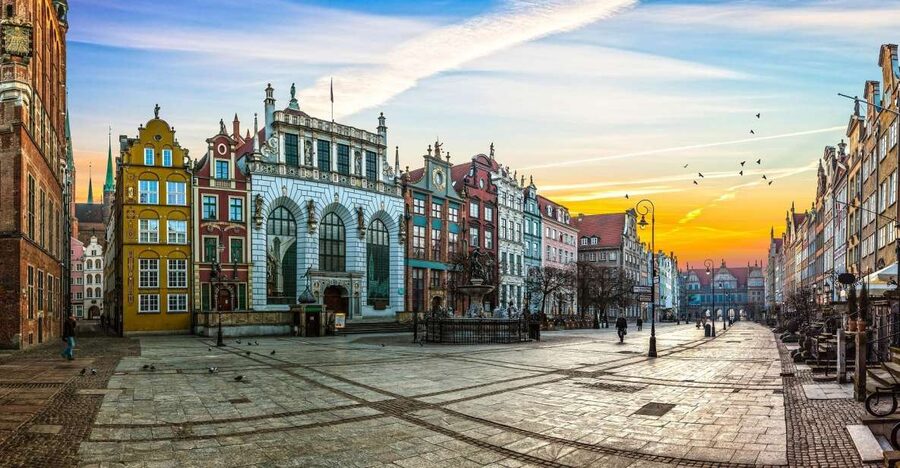
If you have three hours, Artus Court is the most important extra stop. Tickets are included with that option, while the two-hour tour does not include admission.
Artus Court was a meeting place for merchants and became a symbol of Gdansk’s power during the sixteenth and seventeenth centuries. This is not just another ornate interior. It gives you a clearer picture of how trade operated as a social and political force.
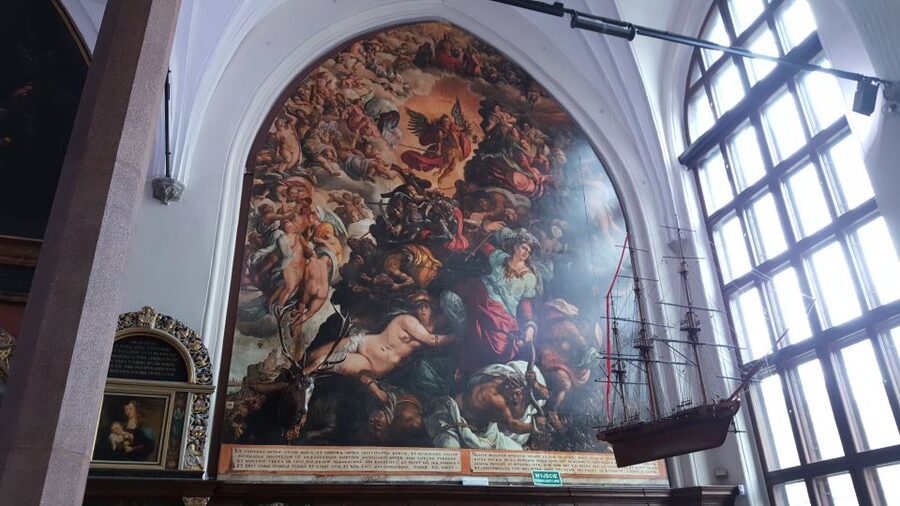
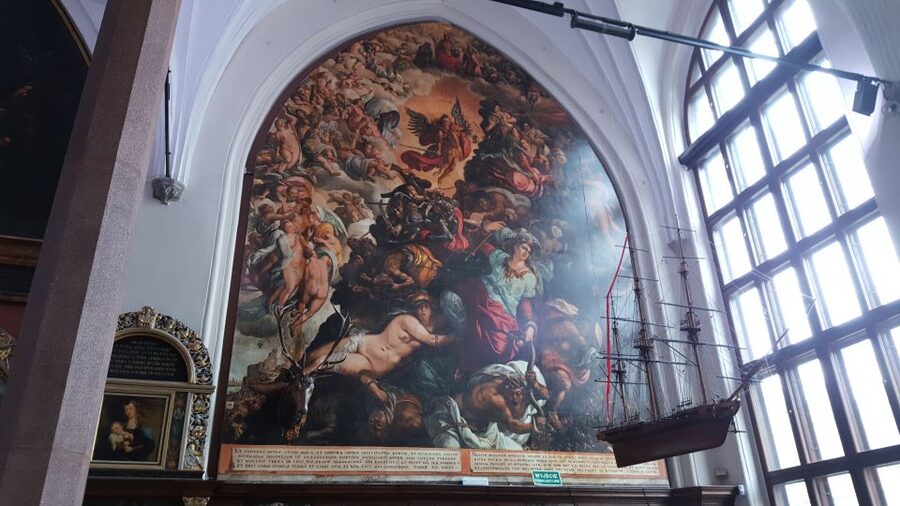
Your guide points out German influences inside the building and explains its place in the Hanseatic world. You’ll also see the controversial Last Judgment painting by Anton Möller. The work gives the visit a more human edge, since it raises questions about judgment, morality, and public art rather than serving as mere decoration.
I would choose the three-hour option if you have a serious interest in port cities, merchant history, or northern European trade. Artus Court adds substance to the walk. It also helps explain why Gdansk’s public buildings were designed to impress. Wealthy trading families and civic leaders wanted visitors to see a confident, prosperous city.
The drawback is simple: the extra hour costs more time and includes one additional indoor attraction, so it may feel too specialized if you mainly want photographs and a general introduction to Gdansk. The two-hour version still covers the main route and St. Mary’s Church.
Same city, a completely different kind of day:
- Gdansk: City Cruise on Historical Polish Boat
★ 4.8 · 2,913 reviews - Gdańsk: Sunset Cruise on a Historic Polish Boat
★ 4.9 · 977 reviews - Gdansk: Firearm Shooting Experience with Instructor
★ 4.8 · 866 reviews - Gdansk: Guided Round-Trip Cruise to Westerplatte
★ 4.3 · 865 reviews
Neptune’s Fountain and the city’s public face
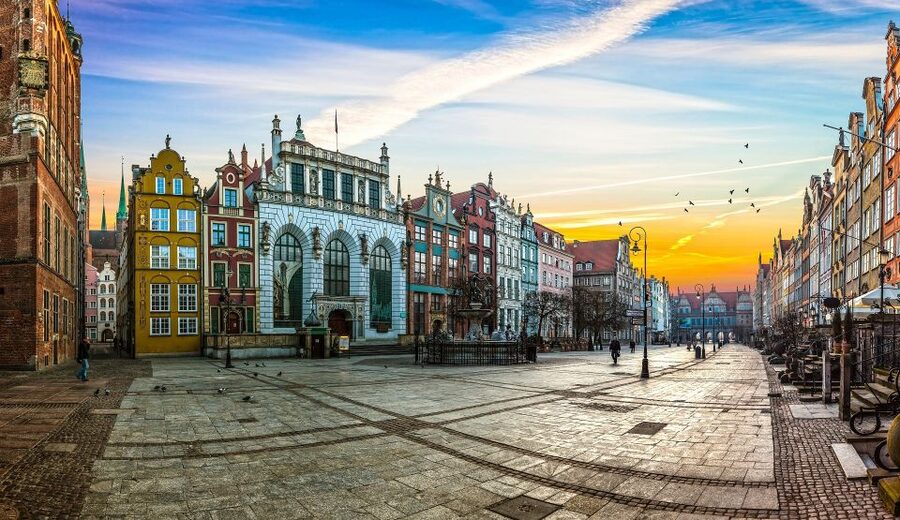
Neptune’s Fountain is one of Gdansk’s best-known sights, and the tour uses it as more than a photo stop. Its position near Long Market helps show how the city presented itself to residents, merchants, and visitors.
This part of the route is likely to be visually busy, especially at popular times, so a private guide is useful. You can focus on the explanation instead of trying to find your way through the central streets. The guide may also help you connect the fountain, nearby facades, and Artus Court as parts of one civic setting.
The value here is interpretation. You can see these sights independently, but it is harder to understand how they relate to Gdansk’s merchant wealth and political history without someone joining the dots. If you already know the Old Town well, the tour’s value will depend on how much German-Polish history you want to add.
The Motlawa waterfront and the Hanseatic connection
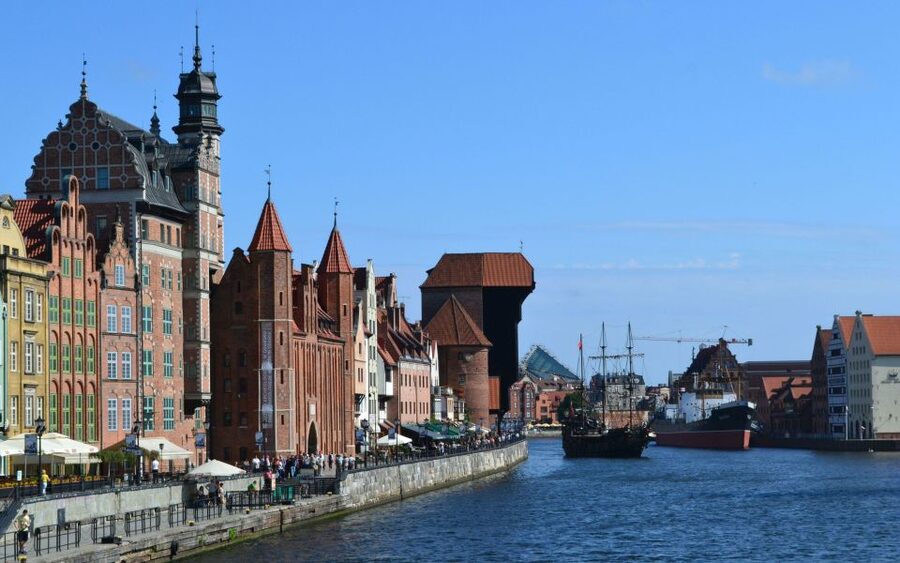
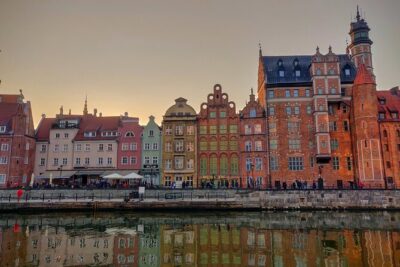
The walk reaches the Motlawa River, once one of the key ports of the Hanseatic League. The waterfront gives the historical story room to breathe. Instead of looking only at buildings, you can consider how goods, people, and ideas entered the city.
The river also helps explain why Gdansk attracted visitors from German-speaking lands. Trade brought opportunity, but it also brought competition and cultural exchange. A port city is shaped by movement, and this tour makes that point without requiring a separate museum visit.
I like this section because it places the city’s German influence in a wider setting. Gdansk was not isolated. Its connections reached across the Baltic, and the waterfront was the practical stage for those links.
The tour does not promise a boat ride or a long waterfront stop, so think of this as a walking viewpoint and history lesson rather than a river excursion. If you want extended time for photos, tell the guide at the start. The private format gives you more room to adjust the pace than a large group tour would.
St. Mary’s Church and the final German connection
The final main attraction is St. Mary’s Church, one of the city’s defining buildings. Admission is included, and the church gives the tour a change of mood after the commercial focus of the Royal Route and Artus Court.
Inside, the guide discusses Martin Opitz, a German Baroque poet who was buried here. That detail reinforces the tour’s larger point: German connections in Gdansk involved writers, artists, astronomers, builders, and merchants, not only rulers and armies.
Barthel Ranisch is also tied to the church story. He is credited with building the eye-catching Royal Chapel, another example of how architecture can reveal the city’s mixed cultural past.
You should know that guided commentary inside churches can be limited during Mass or special events, including scheduled concerts. In that case, your guide may explain the church from outside. That is not a flaw in the tour, but it can affect the experience on your chosen date.
A ticket to the St. Mary’s Church tower is not included. If climbing the tower is important to you, budget separately and confirm the current arrangement. The tour itself includes the church visit, not the tower admission.
The two-hour or three-hour choice
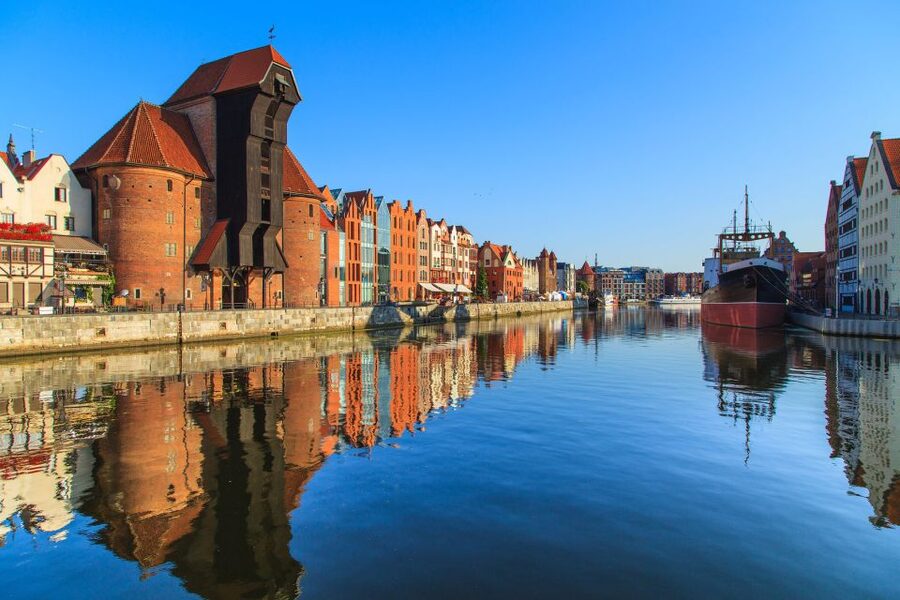
The two-hour tour is the sensible choice if you want the main German trail, the Royal Route, St. Mary’s Church, the Motlawa area, and the principal Old Town sights. It gives you a focused introduction without taking up most of a morning or afternoon.
The three-hour tour earns its higher value through Artus Court. I would pick it for anyone interested in the Hanseatic League, merchant guilds, civic power, or the way trade shaped Gdansk’s architecture. The extra hour is not just padding. It adds an indoor site with a direct connection to the tour’s central theme.
Since the tour is private, you can also ask for more attention to a particular subject. You might want to focus on German literature, the Teutonic Order, Prussian rule, church architecture, or the city’s trading past. The itinerary can be tailored to your needs, within the attractions included in your selected option.
Is $108 per person a good value?
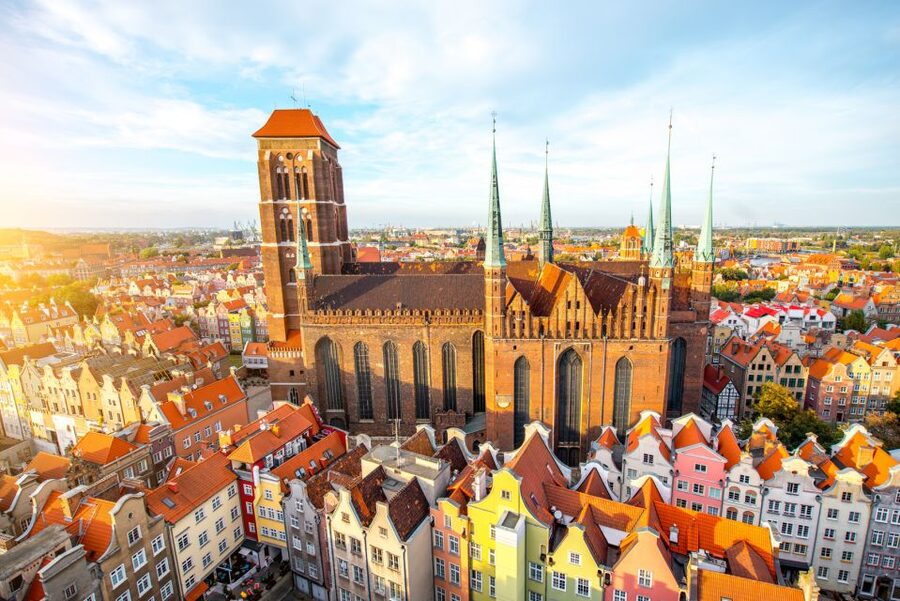
At $108 per person, this is not a budget walking tour. You are paying for a private group, a licensed guide fluent in your selected language, and a tailored experience rather than a standard public walk.
The price makes better sense for couples, families, or small groups who would otherwise book several separate history visits. It is also useful if you want German-language guiding, since that kind of focused tour may be harder to find at short notice.
The two-hour option includes admission to St. Mary’s Church. The three-hour version also includes Artus Court. Pickup may be available within the Old Town, but there is no general hotel transfer, and the meeting point is easy enough to reach from the station.
I would not choose this tour if you only want a quick overview or prefer to explore independently with a guidebook. Gdansk’s central sights are walkable, and many exterior views cost nothing. I would choose it if you want the story behind those sights, have a strong interest in German-Polish relations, or value the chance to ask questions without a large group slowing you down.
Who should book this Gdansk walking tour?
This experience suits you best if you:
- Want a private tour in German or Polish.
- Are interested in the links between Gdansk, Danzig, Prussia, and the German Reich.
- Enjoy architecture, merchant history, and Hanseatic trade.
- Want to visit St. Mary’s Church with historical guidance.
- Prefer a flexible walk that can be shaped around your interests.
- Are traveling with family or friends and can share the private-tour cost.
It may be less suitable if you want a broad Polish history tour, a food walk, a museum-heavy experience, or a tour that includes the church tower. The German focus is clear, so book it for that reason rather than expecting a general introduction to every period of Gdansk’s past.
FAQ
How long does the Gdansk German influence walking tour last?
You can choose a two-hour or three-hour private tour. Starting times depend on availability.
What language is the tour offered in?
The tour is available in German or Polish with a licensed guide fluent in the selected language.
Where does the tour begin?
The meeting point is in front of the tourist information sign beneath the High Gate, Brama Wyżynna, at Wały Jagiellońskie 2A in Gdansk. It is about eight minutes from the Main Railway Station.
Is admission to St. Mary’s Church included?
Yes. Free admission to St. Mary’s Church is included, but a ticket for the church tower is not included.
Is Artus Court included in the price?
Artus Court admission is included with the three-hour tour. It is not included with the two-hour option.
Can the guide pick me up at my hotel?
Pickup is available for accommodations in the Old Town if you provide the full address when booking. If your accommodation is more than 1.5 kilometers from the meeting point, you will meet the guide at the High Gate.
Should you book it?
Book this tour if you want Gdansk’s German past explained in person, especially if Artus Court and Hanseatic trade catch your interest. I would favor the three-hour version for the fuller story and the two-hour version for a tighter introduction.
The strongest reason to choose it is the private format. You get a friendly, competent guide, a German or Polish language option, and room to ask about the people and events that interest you most. At $108 per person, it is a considered purchase, but for a small group seeking serious local context, it offers more than a standard sightseeing loop.
Just added around Gdansk
- Gdansk and Malbork Castle Small Group Tour from Warsaw with Lunch★ 4.5 · 20 reviews
- Whisky Tasting in Gdańsk★ 5.0 · 3 reviews
- Westerplatte private tour led by Expert-Guide (door to door)★ 5.0 · 5 reviews
- Gdansk EVERYDAY Vodka Tasting Tour★ 5.0 · 6 reviews
- Westerplatte – 2h private trip by luxury car|★ 5.0 · 4 reviews
- Private WW2 Tour of Westerplatte,Gdansk and Stutthof Including Lunch★ 5.0 · 12 reviews
- Aiport Gdansk Transfer to Malbork Castle or Stutthof★ 5.0 · 3 reviews
- 5 hours Individual trip to the Stutthof Concentration Camp★ 5.0 · 5 reviews
Walking Tours, compared.
Gdańsk City Sights & History Guided Walking Tour in English
Read our review →
Browse the lists this tour appears in