
Reviewed · GOLF CART TOURS
Gdansk: Private Top City Tour by Electric Cart & Live Guided
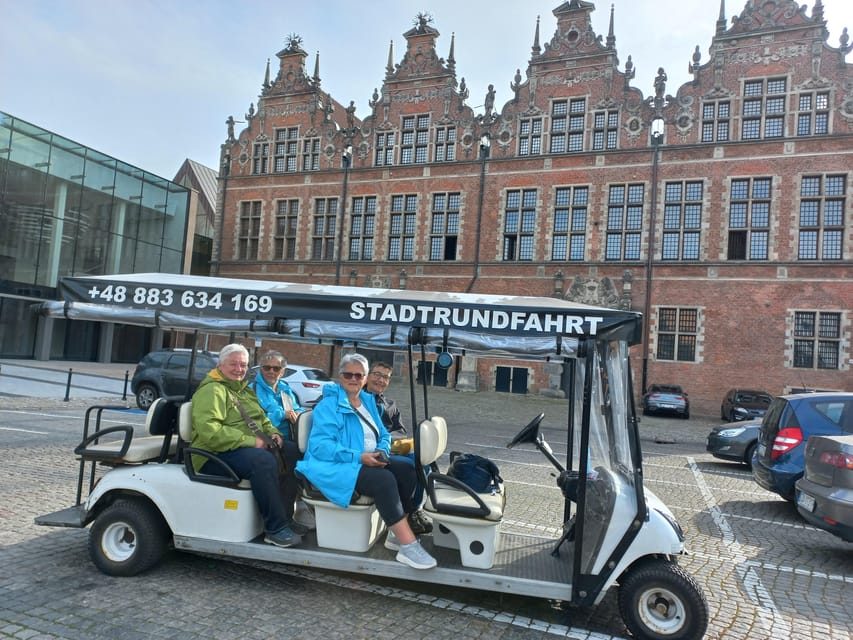
Gdansk’s story runs from medieval merchants to the Solidarity movement, and this private electric-cart tour links those chapters in one brisk ride. You’ll see the brick churches, royal gates, old port, and shipyard without wearing out your feet. The cart also gets you to places that are spread beyond the prettiest streets.
I like the private guide, since you can ask questions and shape the emphasis around your group. I also like the covered, heated cart, which makes this a sensible choice in cold or wet weather. The tradeoff is time: 90 minutes and nearly 30 stops means many sights receive a short explanation or photo stop rather than a long visit.
Key points to know before booking
- St. Bridget’s Church includes entry, with its striking amber altar as a major highlight.
- The route connects Old Town and the shipyard, including the Monument to the Fallen Shipyard Workers and the European Solidarity Centre.
- Your guide drives a private electric cart, so the experience is more personal than a large group coach tour.
- The covered vehicle works in poor weather, and winter guests have described it as warm and comfortable.
- You can be picked up within 2 kilometers of Neptune’s Fountain, subject to street access restrictions.
- A water, coffee, or beer is included, a small but welcome touch during the ride.
Why an electric cart is a smart way to see Gdansk
Gdansk’s historic center is compact, but the full story is not. The grand streets around Long Market lie some distance from the shipyard, the Second World War Museum, and the monuments tied to modern Polish history. Walking between all of them takes time, especially in winter or rainy weather.
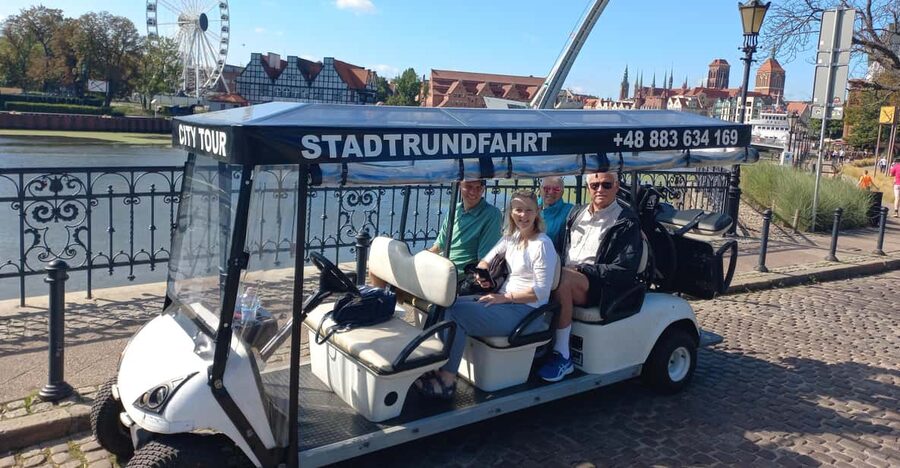
The electric cart solves that problem without putting you behind a coach window. You sit close to the streets, hear your guide in real time, and can pause for photographs at selected points. Since the group is private, the guide can answer questions instead of delivering a fixed speech to strangers.
The vehicle is fitted with protection from rain and wind. Recent winter departures have also used a heated cart, which matters in Gdansk when temperatures hover around freezing. Still, dress for the weather. The tour runs rain or shine, and the cart is a sightseeing vehicle rather than a fully enclosed indoor space.
The 90-minute length is both an advantage and a limit. It gives you a quick orientation and covers a surprising amount of ground, but it cannot provide detailed visits to every church, museum, and monument. Think of it as a well-guided introduction, not a replacement for a full day of exploring on foot.
More City Tours in Gdansk
- Gdansk: City Cruise on Historical Polish Boat
★ 4.8 · 2,913 reviews - Gdańsk City Sights & History Guided Walking Tour in English
★ 4.8 · 876 reviews - Gdansk: City Sightseeing Tour by Golf Cart/Buggy Guided Tour
★ 4.9 · 510 reviews
From Neptune’s Fountain to the Green Gate
The tour begins in the Main City, usually with pickup at your hotel or another address within 2 kilometers of Neptune’s Fountain. You need to be ready 10 minutes before departure. Some streets have restricted access, so your guide may arrange a nearby meeting point if the cart cannot reach your exact address.
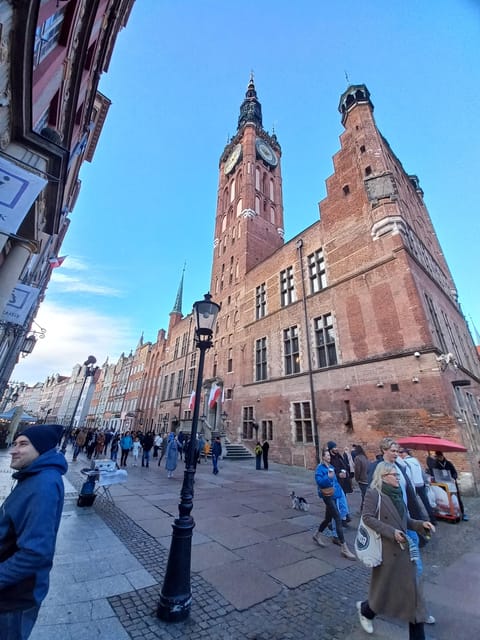
Neptune’s Fountain is the natural starting point. This ornate landmark sits in front of Artus Court, where merchants and civic leaders once gathered. Your guide sets the scene here, then points out the Main Town Hall and the Green Gate, which opens toward the Motława River.
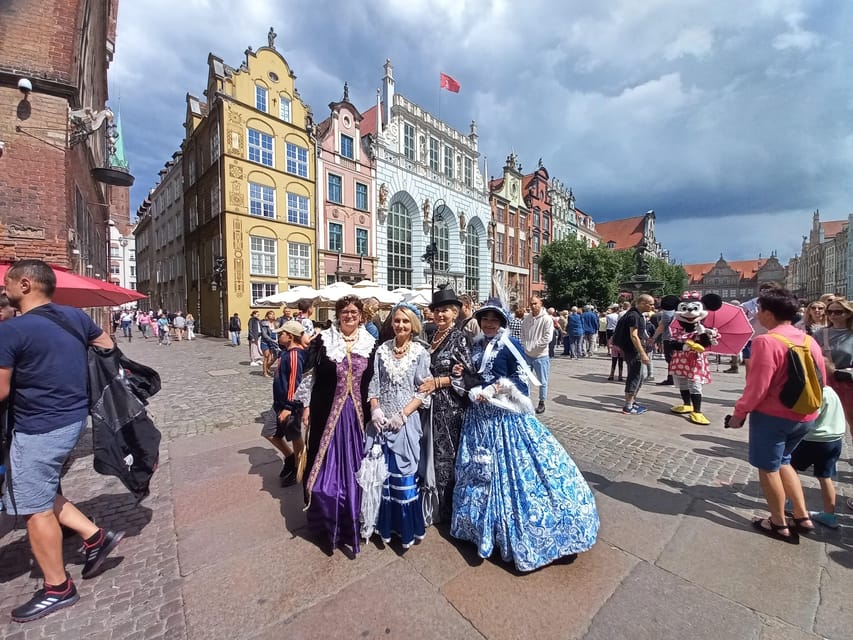
Long Market is the visual heart of this part of Gdansk. Its tall townhouses, decorative facades, and broad pedestrian route make it ideal for a first look at the city’s former wealth. You will not have much time to browse or enter buildings during this part of the ride, but the cart gives you a useful overview before you return on foot later.
Golden Gate and the city’s medieval defenses
The route continues to Golden Gate, one of the most recognizable entrances into central Gdansk. The stop is longer than several of the quick viewpoints, with about five minutes for guiding and sightseeing. It is enough time for photographs and a short explanation of how the ceremonial route into the city worked.
You then pass the Great Armoury and the Upper Gate, known in Polish as Brama Wyżynna. These buildings help explain the former defensive edge of the city. Their elaborate fronts also show how Gdansk mixed practical military structures with the decorative style expected of a wealthy trading center.
Katownia, or the Torture House, adds a darker note to the route. It belonged to the old fortification system and later became associated with criminal justice. This contrast is useful: Gdansk was not only a postcard of merchant houses, but also a fortified city with a stern civic side.
The Basilica of St. Nicholas and the Royal Chapel follow. You should expect exterior sightseeing and a concise explanation here. The itinerary moves quickly, so anyone who wants to study church interiors, artwork, or side chapels will need to return independently.
Churches, mills, and the old center
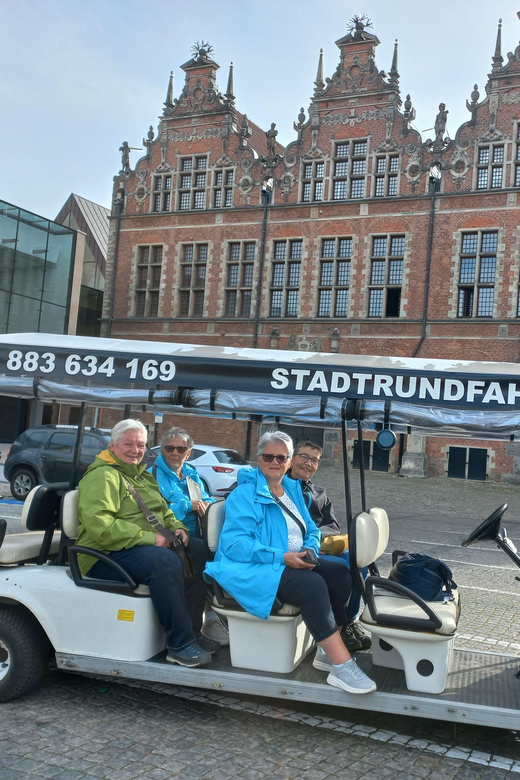
The cart continues past St. John’s Church, St. Catherine’s Church, and St. Mary’s Basilica. Each church represents a different part of Gdansk’s religious and architectural story, but the key stop is St. Mary’s.
St. Mary’s is celebrated as the largest church in the world built of red brick. Its scale is hard to grasp from a single photograph, and the short stop lets you see the building in the context of the surrounding streets. The tour does not promise a climb or a long interior visit, so plan separate time if you want to explore the basilica carefully.
The route also includes the Old City Hall, the Dominican merchants’ market hall, and the Old Town area. Gdansk has more than one historic district, and the distinction can confuse first-time visitors. The tour helps you see how the Main Town, Old Town, and waterfront fit together instead of treating the entire center as one undifferentiated area.
Wielki Młyn, or the Great Mill, brings an industrial note to the old center. It is followed by the Millennium Tree and Forum Gdansk, a modern shopping and public area. These stops show that Gdansk is not a preserved set piece. The city has layered newer buildings and daily life around its old streets.
More Golf Cart Tours in Gdansk
- Gdansk: Shared or Private City Tour Sightseeing By Golf Cart
★ 4.8 · 233 reviews - Gdańsk: City Sightseeing Tour by Buggy/Golf Cart LIVE GUIDED 1H
★ 5.0 · 208 reviews - Gdansk: 2H City Sightseeing Tour LIVE GUIDED by Buggy/Golf cart
★ 5.0 · 89 reviews - Gdańsk: City Tour by Electric Golf Cart
★ 4.6 · 87 reviews
The Motława waterfront and the old crane
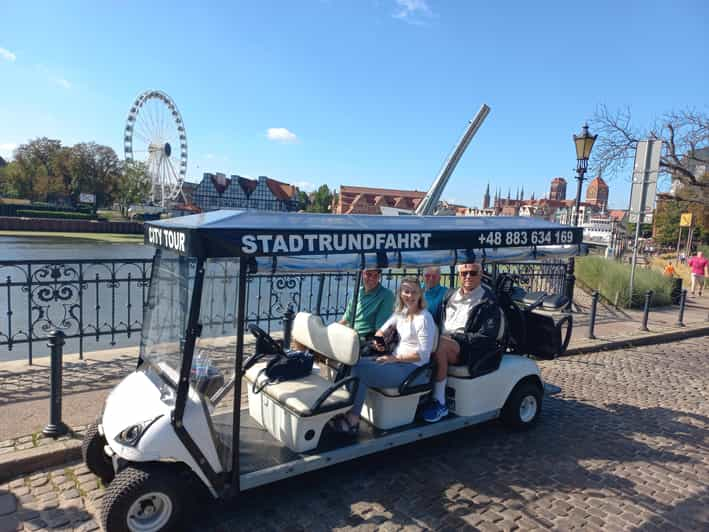
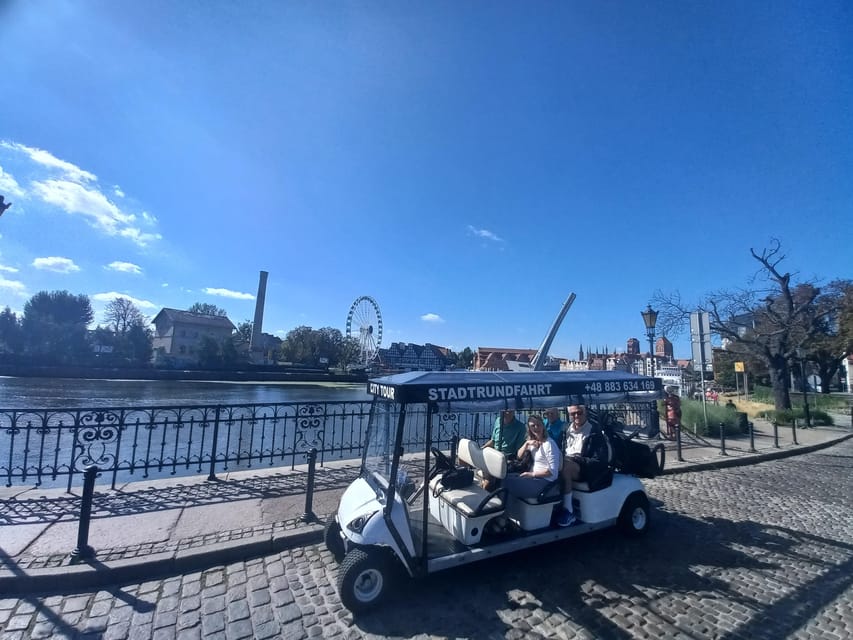
The route reaches the historic port on the Motława River, including the old wooden harbor crane known as Żuraw. This is one of Gdansk’s defining views. The crane once helped load cargo and masts, and its dark timber structure against the riverfront makes an excellent photograph.
The waterfront is also where the city’s trading past becomes easy to understand. Warehouses, gates, boats, and river access all mattered to Gdansk’s growth. Your guide can explain the setting while the cart moves through the area, though the one-minute stop at the crane is very brief.
The drink included with the tour is served as a water, coffee, or beer. A beer fits the port setting nicely, while coffee or water may be the better choice if you are continuing to walk afterward. This is not a meal, but it adds a pleasant local pause without taking time away from the route.
From wartime memory to the Gdansk Shipyard
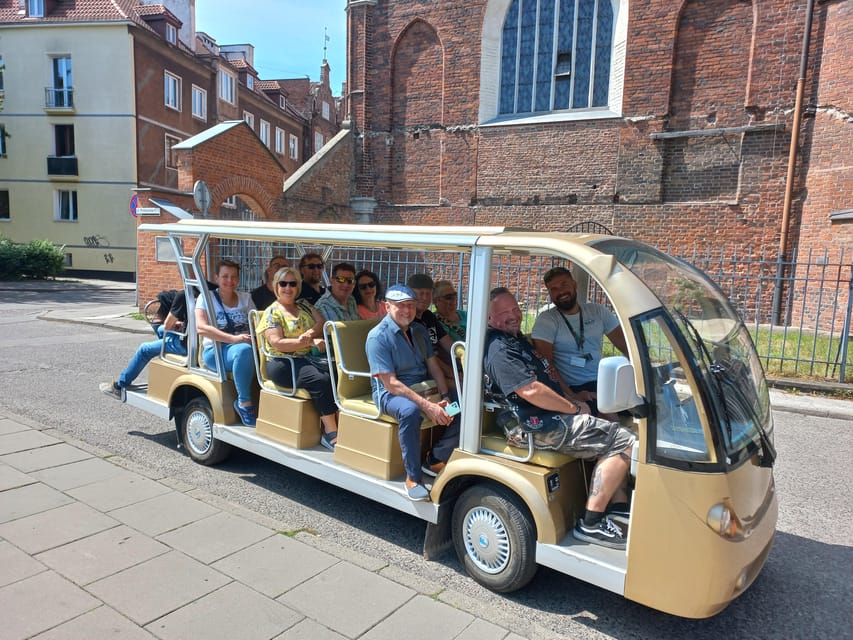
The tour then shifts from medieval Gdansk to the twentieth century. It passes the Museum of the Second World War, a major reference point for understanding Poland’s wartime experience. The stop here is short, so you should not expect museum admission or time inside. If this subject matters to you, plan a separate visit.
The route’s most important modern-history section comes at the Monument to the Fallen Shipyard Workers of 1970, the European Solidarity Centre, and Gdansk Shipyard. These sites explain why Gdansk became central to the collapse of communist rule in Central and Eastern Europe.
The shipyard workers’ monument honors people killed during protests in 1970. The European Solidarity Centre then connects that earlier unrest to the Solidarity movement, which challenged the socialist government through organized labor and public action. The tour presents this as the place where the fall of the socialist camp began, giving you a clear reason why the shipyard belongs on any serious Gdansk itinerary.
You get photo stops at the monument and Solidarity Centre, followed by a visit around the shipyard itself. The five-minute shipyard stop is enough for orientation and photographs, but not for a full museum visit. I consider this one of the tour’s best features because it takes you beyond the polished center and into the setting of a world-changing political movement.
St. Bridget’s Church and its amber altar
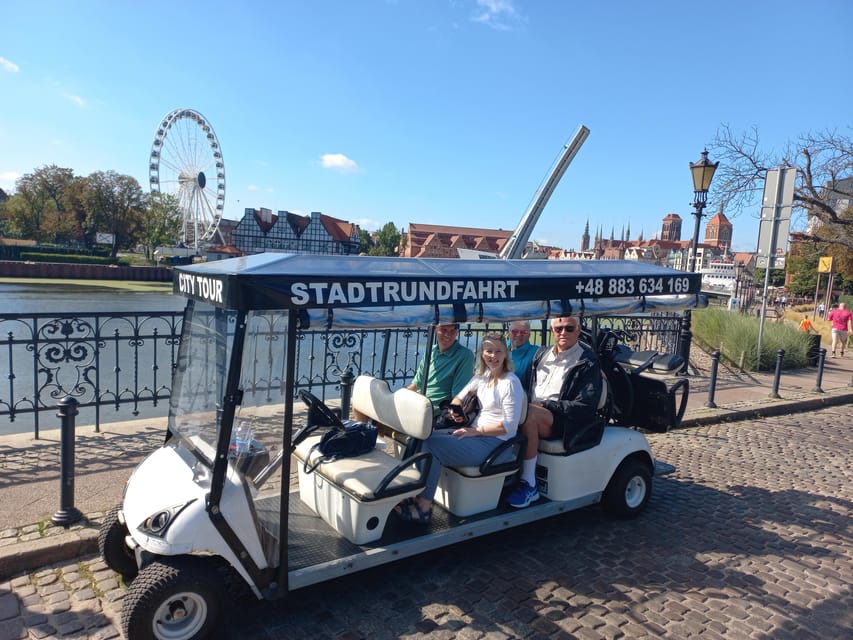
St. Bridget’s Church is the only listed church with included entrance. You receive about 10 minutes here, making it the longest single church stop on the route. That extra time matters.
The church is known for an elaborate amber altar. Amber has a strong connection with the Baltic region, and seeing it used on this scale gives the visit a distinctly Gdansk character. A German-language departure in winter included this church as a particular highlight, and the stop is likely to appeal to you if you want more than exterior photographs.
The visit is still short, so think of it as a focused introduction rather than a full architectural study. If your guide has time and the church is accessible at the moment of arrival, you can ask questions about the altar and the building’s place in the city’s religious history.
What the guide adds to the experience
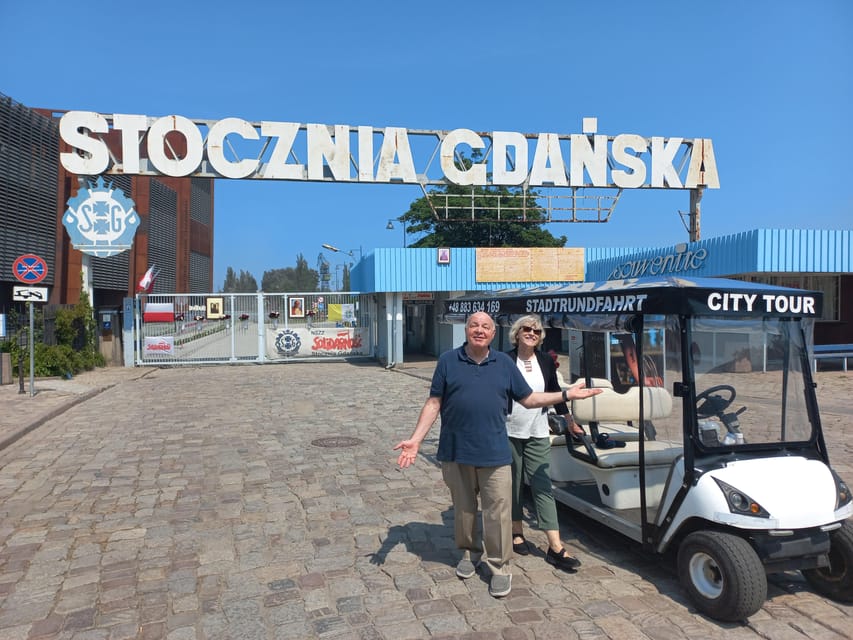
The guide is the main reason to choose this tour over a self-guided electric vehicle ride. The company uses guides including Michał, Maciej, and Marti, and available languages are English, Spanish, Ukrainian, German, and Polish.
The guiding style can vary by person, but the strongest pattern is clear: expect an informal, good-humored introduction rather than a dry lecture. Children have been kept interested by stories that mix serious history with lighter moments. Maciej has also handled German and Spanish during the same outing, which may help multilingual families or mixed-language groups.
Because the ride is private, you can ask why a church matters, how the shipyard protests developed, or which area is best for a later walk. You can also request a personalized route. The company says it can adapt tours to special requests, so tell them what matters to you before departure rather than hoping there will be time to change the plan halfway through.
The guide also handles the practical side of the ride. One winter guide even looked after a guest’s dog during a church visit, showing the sort of small flexibility that can make a private tour easier. That should not be treated as a guaranteed service, but it does suggest that you can discuss reasonable needs in advance.
Is $34 good value for 90 minutes?
At $34 per person, this is not the cheapest way to see central Gdansk. You can walk around the Main City for free, and many of the exterior sights cost nothing. The value comes from the combination of private transport, a live guide, broad coverage, pickup, a drink, and entry to St. Bridget’s Church.
For a couple or family, the cost can make sense because you are paying for a private vehicle rather than simply joining a large group. It is also good value if you have limited time, reduced mobility, or poor weather during your visit. The cart lets you cover the shipyard and waterfront without spending much of your short stay navigating between districts.
The calculation is less favorable if you want long museum visits or extensive time inside churches. The route passes many major sights, but its purpose is orientation. I would use it early in a Gdansk stay, then return to the places that caught your attention.
The private format also gives you more control than the price alone suggests. You can ask for more detail on the Solidarity movement, focus on architecture, or request a route suited to children. Confirm any special plan when booking, since restricted streets and seasonal events can affect access.
Weather, access, and seasonal changes
The tour operates in all weather. Wear layers, shoes suited to walking on historic streets, and clothing that can handle rain or wind. The protective film and heating help, but they do not remove the need to dress sensibly.
The experience is wheelchair accessible, and private transport can be useful for people who find long walks difficult. Ask about your exact mobility needs when booking so the operator can confirm the most suitable pickup point and vehicle arrangement.
Pickup is offered from a hotel, accommodation, or another location within 2 kilometers of Neptune’s Fountain. Restricted streets in the historic center can prevent direct pickup, in which case the guide will contact you with a nearby alternative.
From July 27 through August 25, 2025, St. Dominic’s Fair brings access restrictions and changes to the route. The tour remains 90 minutes, but stops may be adjusted. If your visit falls during that period, treat the advertised sequence as flexible.
The activity allows free cancellation up to 24 hours before departure, and you can reserve now while paying later. That is useful if your Gdansk plans may shift.
Who should book this Gdansk cart tour?
I would choose this tour for a first visit, a short stay, a family with children, or anyone who wants a broad introduction before exploring independently. It is also a practical choice in winter, when a warm covered cart can save you from a long walk in cold weather.
It suits you particularly well if modern Polish history matters as much as medieval architecture. The shipyard, fallen workers’ monument, and European Solidarity Centre give the tour a stronger historical range than a simple Old Town sightseeing ride.
I would think twice if your main goal is museum time, detailed church study, or slow photography. The itinerary is packed, so several stops last only two or three minutes. You see a lot, but you do not linger.
Should you book it?
Book this private electric-cart tour if you want to cover Gdansk’s old center, port, churches, and shipyard in 90 minutes with a guide who can adjust the experience to your group. The heated, weather-protected vehicle, multilingual guiding, St. Bridget’s Church entry, and included drink give it solid value at $34 per person.
Skip it only if you prefer to walk slowly and spend hours inside museums and churches. For most first-time visitors, I would take the ride early in the trip, note the places worth returning to, then explore the details on foot.
FAQ
How long does the Gdansk electric-cart tour last?
The tour lasts 90 minutes, including the sightseeing route, short photo stops, and the return to the Main City.
Where can pickup take place?
Pickup is available within a 2-kilometer radius of Neptune’s Fountain in Gdansk’s historical city center. If your address is on a restricted street, the guide will arrange a nearby meeting point.
Is the tour private?
Yes. The experience uses private transportation for your group and includes a live guide who can answer questions and discuss personalized requests.
Which languages are available?
Guiding is available in English, Spanish, Ukrainian, German, and Polish.
Is the electric cart suitable in rain or cold weather?
The tour runs rain or shine, and the vehicles have protective covering against rain and wind. Winter departures have also used heated carts. You should still wear clothing suitable for the weather.
Is the tour wheelchair accessible?
Yes, the activity is listed as wheelchair accessible. Contact the operator with your specific needs so pickup and access can be arranged properly.
What is included in the price?
The price includes private transportation, a live guide, short photo stops, a drink of water, coffee, or beer, and entrance to St. Bridget’s Church.
Just added around Gdansk
- Gdansk and Malbork Castle Small Group Tour from Warsaw with Lunch★ 4.5 · 20 reviews
- Westerplatte private tour led by Expert-Guide (door to door)★ 5.0 · 5 reviews
- Whisky Tasting in Gdańsk★ 5.0 · 3 reviews
- Private WW2 Tour of Westerplatte,Gdansk and Stutthof Including Lunch★ 5.0 · 12 reviews
- Gdansk EVERYDAY Vodka Tasting Tour★ 5.0 · 6 reviews
- Westerplatte – 2h private trip by luxury car|★ 5.0 · 4 reviews
- Aiport Gdansk Transfer to Malbork Castle or Stutthof★ 5.0 · 3 reviews
- 5 hours Individual trip to the Stutthof Concentration Camp★ 5.0 · 5 reviews
Golf Cart Tours, compared.

City Sightseeing Tour Eco Electric Buggy Golf Cart
Read our review →
Extended City Sightseeing Tour – Eco Buggy Golf Cart
Read our review →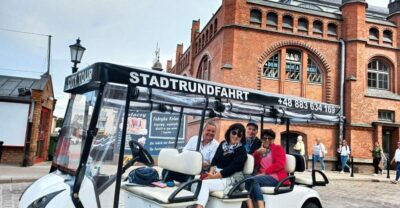
City Sightseeing Tour by Golf Cart/Buggy Guided Tour
Read our review →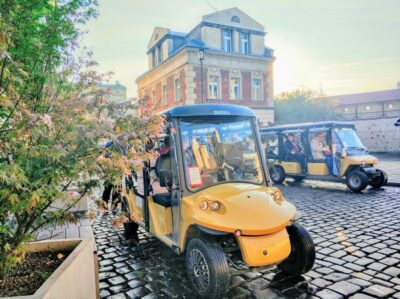
Jewish Quarter and Ghetto Electric Golf Cart Tour
Read our review →City Sightseeing Tour Eco Electric Buggy Golf Cart
Read our review →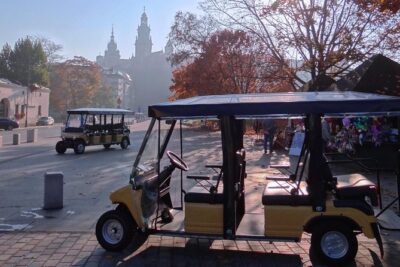
Krakow Grand City Tour by golf cart – All 3 districts
Read our review →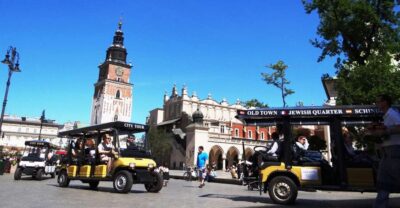
Browse the lists this tour appears in