
Reviewed · CITY TOURS
Main City in Gdańsk – tour in Polish
Gdańsk’s Main Town is a compact history book made of brick, stone, and amber-colored detail. This Polish-language walk connects the Prison Tower, Great Armory, Artus Court, and Town Hall to the traders, wars, artists, and political upheavals that shaped the city. I like the strong historical range, from medieval commerce to Lech Wałęsa’s shipyard movement, and the way guides such as Kasia, known as Dynamit, Marcin, and Klaudia bring humor and feeling to the story.
I also like the 150-minute pace. You get time to ask questions rather than race from one photo stop to the next. The main drawback is simple: this is a Polish-language tour, so it is not the right choice if you need explanations in English or another language. Snow, wind, or rain can also make a long outdoor walk less comfortable.
Key points to know before you book
- A Polish-language walk through central Gdańsk: The focus is the Main Town and its major landmarks.
- A wide historical sweep: Expect stories about Baltic trade, amber, World War II, communism, and famous people born in Gdańsk.
- Four major sights included: The route highlights the Prison Tower and Torture Chamber, Great Armory, Artus Court, and Main Town Hall.
- Guides with lively presentation styles: Kasia, Marcin, and Klaudia are among the guides associated with this experience.
- A full two-and-a-half-hour outing: The 150-minute duration gives room for questions and context.
- A flexible payment approach: The tour operates on a pay-what-you-see-fit model, with the reservation payment treated as the guide’s tip.
Starting beneath the Golden Gate
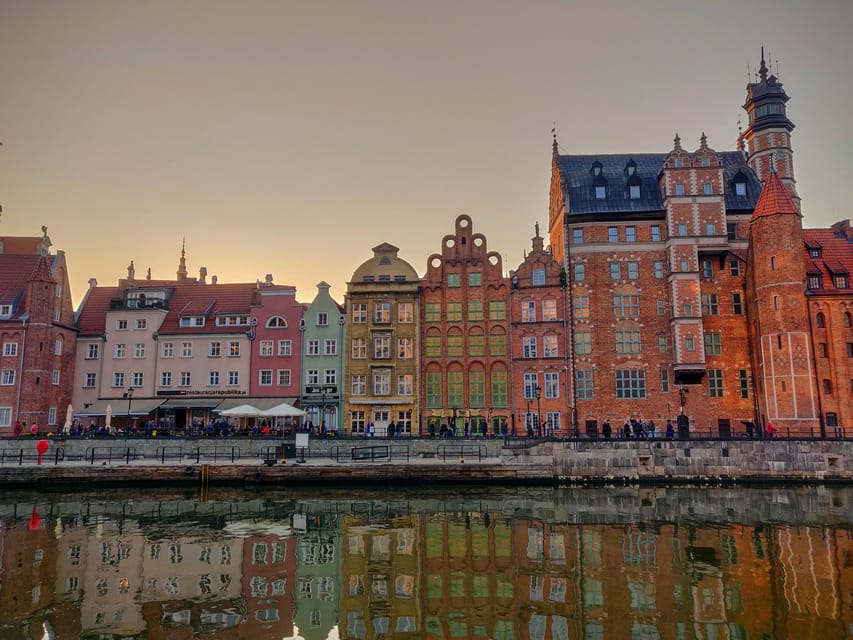
Meet at the Golden Gate, or Złota Brama, and look for the yellow umbrellas. This is a useful meeting point because it places you right at the edge of Gdańsk’s historic center, where the city’s grand ceremonial streets begin.
The Golden Gate is more than a convenient marker. It introduces the polished, formal side of Gdańsk, a city shaped by merchants and political powers from across Europe. From here, the walk leads into the Main Town, where ornate facades and public buildings tell one part of the story, while the city’s difficult past tells another.
I would arrive a few minutes early and check the color of the guide’s umbrella before the start. The city center can be busy, and a clear meeting point matters when several walking groups gather nearby.
Because the tour lasts 150 minutes, wear shoes suited to a long walk on city streets. The January experience described by one participant continued in snow and strong wind, so weather matters here. A warm coat and waterproof layer are sensible outside the summer months.
More City Tours in Gdansk
- Gdansk: City Cruise on Historical Polish Boat
★ 4.8 · 2,913 reviews - Gdańsk City Sights & History Guided Walking Tour in English
★ 4.8 · 876 reviews - Gdansk: City Sightseeing Tour by Golf Cart/Buggy Guided Tour
★ 4.9 · 510 reviews
The Prison Tower and Torture Chamber
The Prison Tower and Torture Chamber give the walk an immediate dose of hard reality. Gdańsk is often presented through its handsome waterfront and elaborate architecture, but this stop reminds you that old cities also had systems of punishment, confinement, and public control.
This is one of the useful features of a guided walk. On your own, you might photograph the tower and move on. A guide can explain what the building meant within the city, helping you read it as part of Gdańsk’s civic story rather than as a decorative old structure.
The stop may feel darker than the grand squares that follow, and that contrast is valuable. You begin to see Gdańsk as a working port and political city, not simply a pretty place rebuilt for visitors. The tour’s wider story depends on this balance between beauty and discomfort.
Do not expect a museum-heavy visit based on the information provided. The experience is a guided walk, so the emphasis is on explanation at and around the sights. If you want long indoor visits or extensive time with exhibits, you may need separate admission elsewhere.
The Great Armory and the city’s merchant wealth
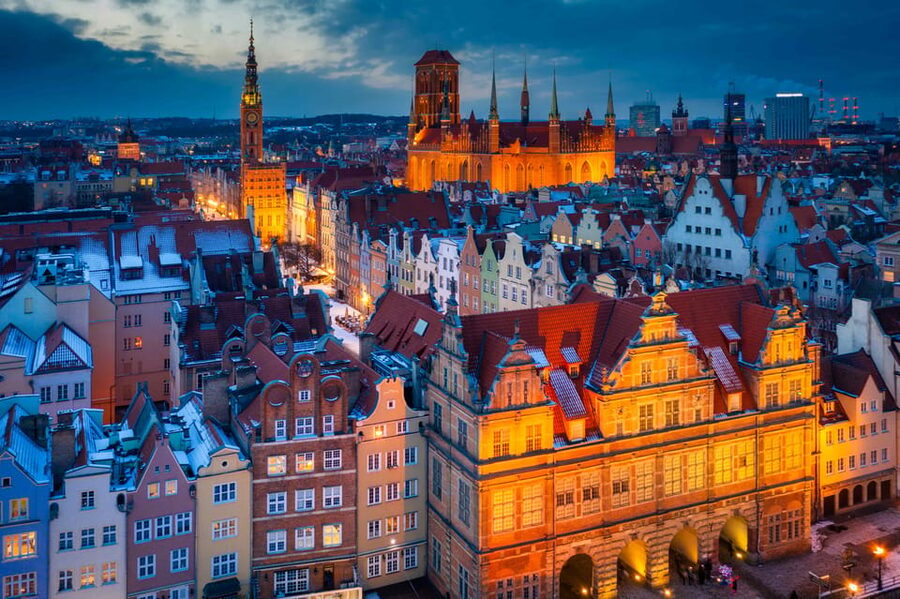
The Great Armory shows how much wealth Gdańsk once directed through its port. The city grew powerful through trade in grain and wood, along with amber, often called the gold of the Baltic Sea. That commercial background helps explain why the Main Town contains such ambitious public buildings.
The name Gdańsk itself has appeared in several forms, including Gdanzc, Dantzk, Dantzig, and Danzig. Those changing names reflect the city’s complicated position at the meeting point of cultures and political interests. The people who lived here were known as Danzigers, and the tour uses that idea to show how local identity developed among residents connected to many parts of Europe.
At the Great Armory, look beyond the surface decoration. The building is a reminder that civic pride often follows money. Merchants who benefited from Baltic trade helped create the grand urban setting you see today.
This is also a good point to listen for the guide’s storytelling style. The strongest part of this experience appears to be the ability to shift between facts and anecdotes without losing the main thread. Kasia is described as combining humor with serious history, while Marcin is praised for colorful, detailed explanations. That approach can make economic history easier to follow than a list of dates and names.
Artus Court and the public face of Gdańsk
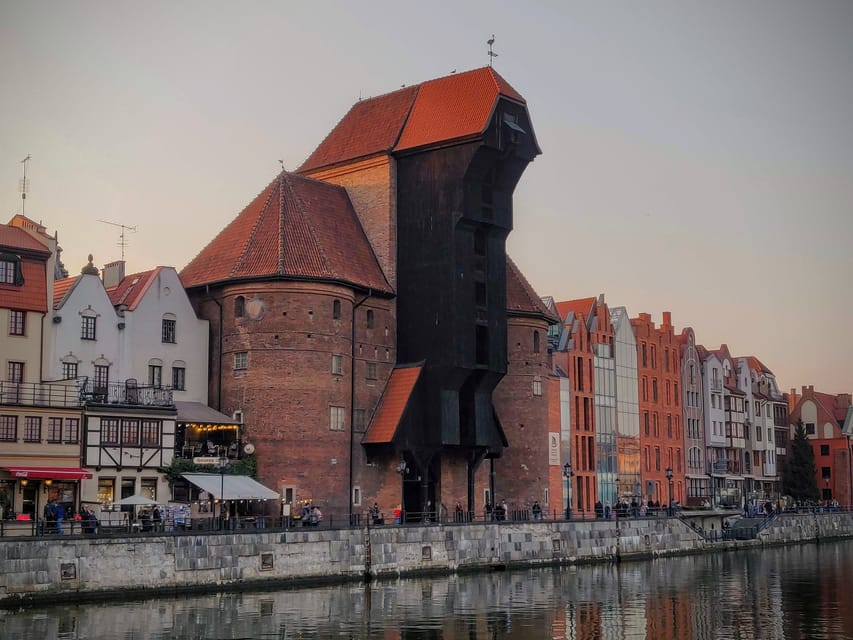
Artus Court is one of the most important stops on the walk because it brings together trade, social life, and civic display. Its name points to the medieval and early modern fascination with the court of King Arthur, but in Gdańsk the building became closely connected with merchants and public life.
Here, the guide can help you understand how wealthy traders presented themselves. Buildings such as Artus Court were not only practical spaces. They projected status, power, and confidence. In a port city competing for influence, grand architecture sent a clear message to visitors and business partners.
I would pay close attention to the setting around Artus Court as well as the building itself. The value of this stop is not just the facade. It is the way the building fits into the Main Town’s larger arrangement of streets, civic structures, and merchant houses.
The guide’s language matters especially here. Historical places can feel remote if the explanation stays formal. A lively Polish-speaking guide may connect the building to everyday ambition, rivalry, and local pride. That helps you understand why Gdańsk looks the way it does, rather than treating each landmark as an isolated monument.
A few more Gdansk half-days worth comparing
- Gdańsk: Sunset Cruise on a Historic Polish Boat
★ 4.9 · 977 reviews - Gdansk: Firearm Shooting Experience with Instructor
★ 4.8 · 866 reviews - Gdansk: Guided Round-Trip Cruise to Westerplatte
★ 4.3 · 865 reviews - Gdańsk: Sightseeing EcoCruise around the Old Town of Gdansk
★ 4.6 · 719 reviews
The Main Town Hall and Gdańsk’s many identities
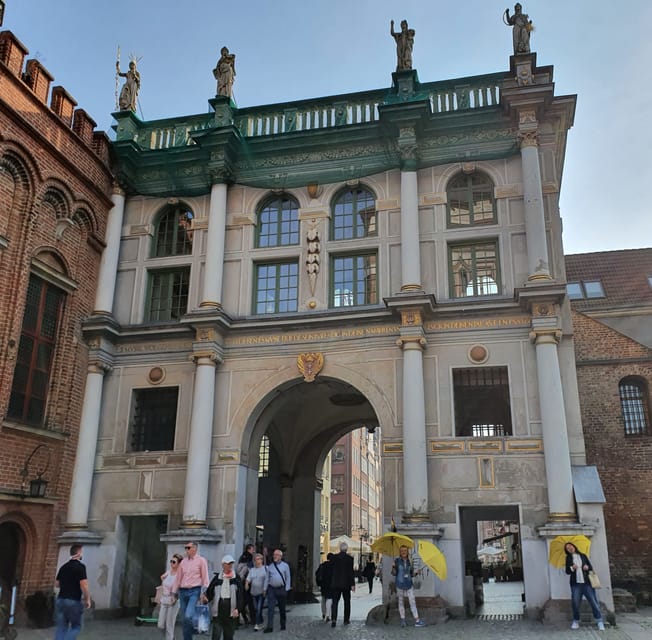
The Main Town Hall gives the tour a natural center. It represents municipal authority, but it also opens the door to Gdańsk’s changing political identity. The city has been connected with different states and powers, and its names have changed along with those political shifts.
The tour description presents Gdańsk as an independent city shaped by people arriving from many parts of Europe. That is a useful lens. The city’s identity was never only about one ruler or one national story. It grew from trade, local institutions, language, religion, and the movement of goods through the Baltic.
The historical range then reaches into the modern era. Napoleon created the first Free City of Danzig, and Adolf Hitler later made Gdańsk one of the major Nazi centers in Europe, with the headquarters of the NSDAP there. One of the first armed clashes of World War II took place in the Free City, during the defense of the Polish Post Office.
These subjects can be difficult, but they are essential to understanding the city. The walk does not treat Gdańsk as frozen in a prosperous merchant past. It links architecture to occupation, war, and political conflict.
You will also hear about Daniel Fahrenheit, Arthur Schopenhauer, and Günter Grass, all born in Gdańsk. Their names widen the story beyond buildings and battles. Gdańsk produced scientists, philosophers, and writers as well as merchants and political leaders.
From shipyard strikes to the end of communism
The final historical movement is the story of the Gdańsk shipyard workers and Lech Wałęsa. Their strike helped begin the end of communism in this part of Europe, making Gdańsk important far beyond Poland’s Baltic coast.
This subject gives the tour a strong modern connection. You are not only looking at old walls. You are learning how a city with a long commercial past became a center of political change in the twentieth century.
The tour’s listed highlights focus on the Main Town, so you should not assume that the walk visits every shipyard site. The shipyard story is part of the historical explanation rather than a promise of a separate shipyard tour. If that period is your main reason for coming to Gdańsk, use this walk as an introduction and seek out more specific sites afterward.
Still, the connection is valuable. It shows why Gdańsk matters in European history and gives the old center a modern edge. The city’s story does not end with reconstructed facades and amber shops.
What the guide style adds
The guide can make or break a history walk, and the strongest feedback here centers on presentation. Kasia, called Dynamit, is associated with a lively, engaging style that moves between humor and serious subjects. Marcin is described as colorful and highly informative, while Klaudia is noted for expressive storytelling, strong contact with the group, and an upbeat manner.
Guide assignments can change, so you should not book on the assumption that one particular person will lead your date. Still, those names give you a sense of the style to expect: active storytelling rather than a dry recital.
The tour also appears well suited to questions. One participant described a group asking many questions and receiving full, interesting answers, even in difficult winter weather. That matters because Gdańsk’s history includes several layers that are easy to confuse. A guide who can stop and clarify names, dates, and political changes adds real value.
The tour is in Polish, and that is both its strength and its limit. If Polish is your first language or you understand it well, you can enjoy the humor, phrasing, and local detail more naturally. If not, choose a language you can follow comfortably. A two-and-a-half-hour history walk is too long for guessing at the meaning.
Is $26 good value for 150 minutes?
At $26 per person, the price is reasonable if you want a proper introduction to central Gdańsk rather than a quick orientation. You are paying for two and a half hours of guided context across several major landmarks, not for transport or a long list of admissions.
The payment structure deserves careful attention. This experience uses a pay-what-you-see-fit model, and the amount paid when reserving through GetYourGuide is treated as the guide’s tip. That makes the advertised price different from a standard fixed-fee tour. Read the payment details closely before confirming so you understand how the charge is presented.
The value depends on how much you use the guide. If you simply want photographs of the Great Armory and Artus Court, you can see the exteriors without joining a walk. If you want to understand why these buildings exist, how Gdańsk became wealthy, and how war and political change shaped the city, the guided format earns its keep.
The 150-minute length is another plus. A shorter walk might cover the same landmarks but leave little time for questions or historical connections. This one gives the guide room to move from medieval trade to modern Poland.
Who should book this Polish-language walk?
I would choose this experience for a first visit to Gdańsk if Polish is comfortable for you and you want the Main Town explained by a local guide. It suits people who like architecture but also want the political and social story behind it.
It is also a good fit for visitors who enjoy asking questions. The guide style appears especially useful for curious groups that want more than fixed speeches at each stop.
Families and mixed-age groups may appreciate the variety. The route includes striking buildings, grim medieval history, famous people, World War II, and the Solidarity-era shipyard movement. That gives the guide several ways to hold attention, though younger children may find the punishment and wartime subjects heavy.
I would be more cautious if you need an English-language tour, dislike outdoor walking, or want substantial time inside museums. The walk is wheelchair accessible, which is helpful, but the provided details do not explain the exact street conditions or interior access at every stop. If you need very specific mobility information, confirm it before booking.
Cancellation and meeting details
You can cancel up to 24 hours in advance for a full refund, and you can reserve now and pay later. Those policies are useful when your Gdańsk schedule may change.
The meeting point is the Golden Gate, marked by yellow umbrellas. The activity lasts 150 minutes, and available starting times should be checked for your date. The guide speaks Polish, and the experience is listed as wheelchair accessible.
Should you book it?
Book this walk if you want Gdańsk’s Main Town to make sense as more than a photogenic collection of old buildings. The route covers the Prison Tower and Torture Chamber, Great Armory, Artus Court, and Main Town Hall, then connects them to Baltic trade, amber, famous local figures, World War II, and the end of communism.
The strongest reason to choose it is the guide-led storytelling, especially if you can follow Polish and enjoy a lively presentation. The main reasons to skip it are the language restriction, the long outdoor duration, and the fact that the walk gives context rather than a full museum visit.
For a Polish-speaking visitor who wants a clear first look at Gdańsk, $26 for 150 minutes is a sensible use of time and money. Just dress for the weather, meet under the yellow umbrella, and arrive ready to listen as well as look.
FAQ
Where does the tour meet?
The group meets at the Golden Gate, Złota Brama. Look for the yellow umbrellas.
How long does the tour last?
The guided walk lasts 150 minutes.
What language is the tour in?
The live guide speaks Polish.
Which Gdańsk sights are highlighted?
The walk highlights the Prison Tower and Torture Chamber, Great Armory, Artus Court, and Main Town Hall.
Is the tour wheelchair accessible?
Yes, the activity is listed as wheelchair accessible.
Can I cancel or pay later?
You can cancel up to 24 hours before the tour for a full refund. You can also reserve now and pay later.
Just added around Gdansk
- Gdansk and Malbork Castle Small Group Tour from Warsaw with Lunch★ 4.5 · 20 reviews
- Westerplatte private tour led by Expert-Guide (door to door)★ 5.0 · 5 reviews
- Whisky Tasting in Gdańsk★ 5.0 · 3 reviews
- Gdansk EVERYDAY Vodka Tasting Tour★ 5.0 · 6 reviews
- Westerplatte – 2h private trip by luxury car|★ 5.0 · 4 reviews
- Private WW2 Tour of Westerplatte,Gdansk and Stutthof Including Lunch★ 5.0 · 12 reviews
- Undercover City Games: Gdynia★ 5.0 · 34 reviews
- Aiport Gdansk Transfer to Malbork Castle or Stutthof★ 5.0 · 3 reviews
City Tours, compared.

City Sightseeing Tour Eco Electric Buggy Golf Cart
Read our review →
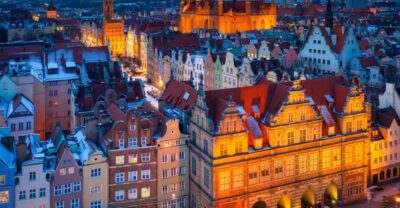
Gdańsk City Sights & History Guided Walking Tour in English
Read our review →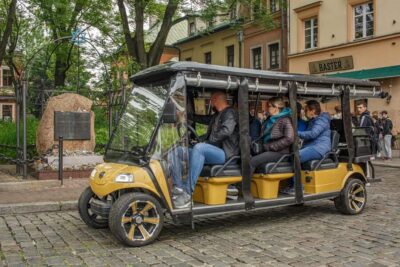
Extended City Sightseeing Tour – Eco Buggy Golf Cart
Read our review →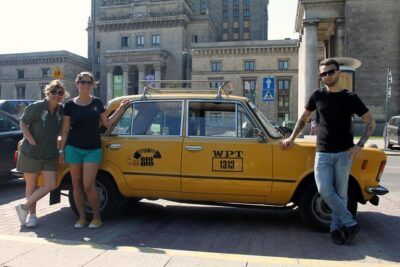
Private Tour: Warsaw City Sightseeing by Retro Fiat
Read our review →Browse the lists this tour appears in