
Reviewed · CYCLING TOURS
Bike Tour Gdansk – Standard
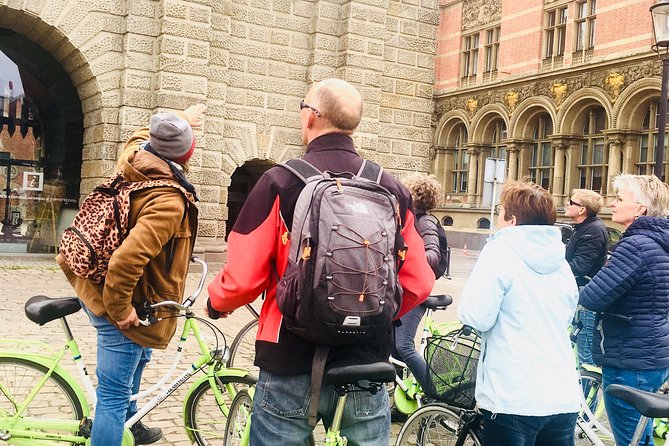
Gdańsk’s story is best understood as a journey between its grand old center and the working port that shaped modern Poland. This two-hour bike tour links Neptune’s Fountain, St. Mary’s Church, the Solidarity Centre, the Shipyard, and the Crane in one tidy ride.
I like the local perspective, especially the attention given to Polish traditions, daily life, and the Solidarity movement. I also like the private format, which lets you ask questions and request a route that fits your interests.
The main tradeoff is time. Ten stops in two hours means some visits are quick looks rather than full museum visits, and the tour needs good weather. The overall rating is 3.8 from eight reviews, so this is best for travelers who want an active orientation, not a long indoor museum tour.
Key points to know before booking
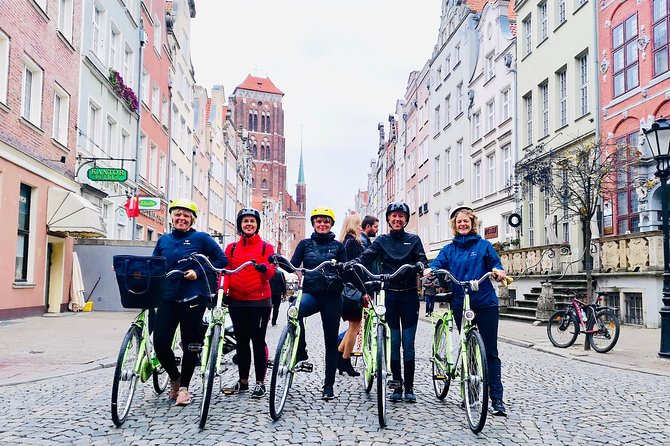
- A local-led route connects old Gdańsk with the modern port city, including the Solidarity Centre and Gdańsk Shipyard.
- The private format is useful for couples, families, or small groups who want a more flexible pace.
- The route includes major icons for $43.05 per person, with group discounts available.
- Several stops are only five to ten minutes, so plan extra time if you want to enter museums or study the churches.
- The Solidarity section is a major strength, with attention to the Polish experience of the 1980s.
- The tour starts and ends at Kołodziejska 7, and free cancellation is available up to 24 hours before departure.
Why a bicycle works well in Gdańsk
Gdańsk is compact in its central area, but its important stories are spread across several districts. The old town gives you decorated gates, churches, and waterfront buildings. The Shipyard and Solidarity Centre show a very different side of the city, one tied to workers, politics, and the fall of communism.
A bicycle joins these parts neatly. You can cover more ground than on foot without turning the experience into a race. The stated pace is relaxed, and that matters on cobbled streets and around busy public spaces. You get a broad first look at the city, then can return later to the places that deserve more time.
This is a private activity, so only your group participates. That gives you a chance to ask about Polish customs, local habits, or the political history of Gdańsk without waiting for a large group to catch up. The guide is a local who was born in the city, which should add personal detail to the route rather than just a list of dates.
The tour is advertised as customizable. You can express an interest in architecture, wartime history, Solidarity, or local life. Still, keep your expectations in check: two hours is enough for an introduction, not a complete examination of every site.
More Bike Tours in Gdansk
- Gdańsk: Highlights Bike Tour
★ 4.9 · 173 reviews - Gdansk Private Bike Tour
★ 5.0 · 36 reviews - Gdansk Private Bike Tour
★ 5.0 · 21 reviews
Starting at Kołodziejska 7
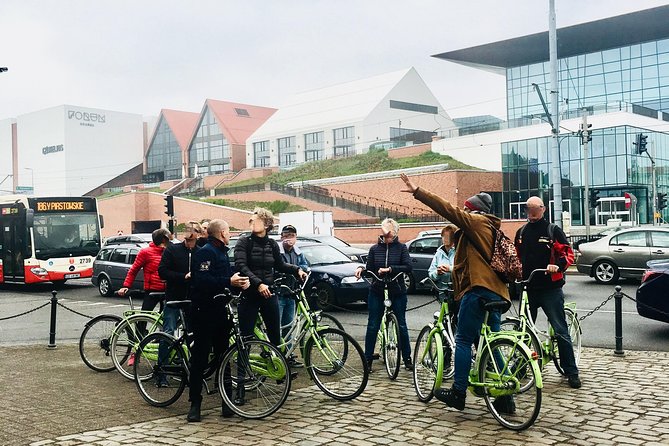
The meeting point is Kołodziejska 7, 80-836 Gdańsk. The ride returns to this same place at the end, which makes planning easier if you have a train, meal, or separate museum visit afterward.
Your booking confirmation arrives at the time of booking. The experience is listed as suitable for most participants, though you should be comfortable cycling for roughly two hours. Since the tour requires good weather, keep a little flexibility in your schedule.
The price is $43.05 per person. That is fair if you value a private guide, bicycle transport between the sights, and a local explanation of the city’s recent past. It is less attractive if you mainly want to enter museums, since admission to the Museum of the Second World War is not included and most stops are brief exterior visits.
Group discounts may improve the value for a larger party. Ask about the final cost when booking, since the supplied price is listed per person and the discount details are not specified.
Dluga Street and Neptune’s Fountain
The first stop is Dluga Street, the ceremonial heart of central Gdańsk. Here you see Neptune’s Fountain, the Town Hall, and the decorated historic buildings that give the street its grand appearance.
The stop lasts about ten minutes, so the guide’s explanation matters. This is a good place to get the basic shape of old Gdańsk and understand why the city’s public buildings were designed to impress. Neptune’s Fountain is one of the city’s best-known symbols, while the Town Hall helps anchor the old civic center.
Admission is not included here, though the route appears designed mainly for an outdoor look. You can take photographs, hear the local context, and then continue without spending much time standing in one place.
St. Mary’s Church and its remarkable interior
St. Mary’s Church receives another ten-minute stop, but this one includes admission. The church is associated with several notable works and objects: Memling’s The Last Judgment, the Beautiful Madonna sculpture, a basket chandelier dating from 1490, and the famous astronomical clock.
This is one of the places where the short schedule may feel tight. Ten minutes lets you see the highlights, but it does not leave much room for quiet observation. If church interiors and art matter to you, note the details you want to revisit after the bike tour.
The inclusion of admission makes this stop more useful than a quick exterior photograph. You get inside, see several specific treasures, and gain a sense of the city’s religious and artistic past. The guide can also help you focus on the objects most worth your attention.
Same city, a completely different kind of day:
- Gdansk: City Cruise on Historical Polish Boat
★ 4.8 · 2,913 reviews - Gdańsk: Sunset Cruise on a Historic Polish Boat
★ 4.9 · 977 reviews - Gdańsk City Sights & History Guided Walking Tour in English
★ 4.8 · 876 reviews - Gdansk: Firearm Shooting Experience with Instructor
★ 4.8 · 866 reviews
The Solidarity Centre and Gdańsk Shipyard
The route then shifts from old stone streets to the modern political story of Poland. At the European Solidarity Centre, you learn why this place matters to Polish people. The stop lasts about ten minutes and admission is included.
This is likely the most important part of the tour for anyone interested in twentieth-century Europe. The Solidarity movement began in the shipyard setting and became linked with opposition to communist rule. Its importance reaches far beyond Gdańsk, and the tour gives you a way to connect the city’s local identity with Poland’s national story.
The route continues to Gdańsk Shipyard, which gained international fame through the Solidarity movement and the collapse of the communist system. The shipyard is not simply another sightseeing stop. It helps explain why Gdańsk appears so often in accounts of modern Polish history.
The local guide’s commentary is especially valuable here. One French-language review praised the historical walk and called attention to the interesting explanations of Solidarity in the 1980s. That emphasis fits the route well. If you want a tour that treats Gdańsk as more than a pretty old town, this is the section to prioritize.
The short stop has a drawback. Ten minutes at the centre and another ten at the shipyard cannot replace a full museum visit. Think of this portion as a clear introduction that helps you decide if you want to return for a longer visit.
The Museum of the Second World War
The Museum of the Second World War receives about five minutes on the route. Admission is not included, and the timing indicates a brief exterior stop or orientation rather than a full visit.
The museum is important enough that the route specifically urges you to visit. Take that advice as a planning suggestion, not as part of the two-hour experience itself. If you want to see the galleries, set aside separate time and budget for admission.
This stop works well as a reminder that Gdańsk’s past cannot be reduced to medieval architecture or Solidarity. The city also sits at the center of major events connected with the Second World War. The bike tour gives you the location and basic context, then leaves the detailed museum experience for another visit.
Golden Gate and the symbolic entrance to the center
The Golden Gate, or Zlota Brama, gets about five minutes. Its allegorical statues represent Peace, Freedom, Wealth, Fame, Piety, Justice, and Concord.
That list tells you how much meaning was placed on a city gate. This was not just a practical entrance. It presented an ideal of civic life to anyone entering the city.
Admission is not included, but the stop is mainly about seeing the gate from outside and hearing what the figures mean. It is a quick and worthwhile pause, especially if you are interested in architecture and symbolism. You may want a later return visit for photographs when you are not keeping pace with the group.
Wyspa Spichrzów and the changing waterfront
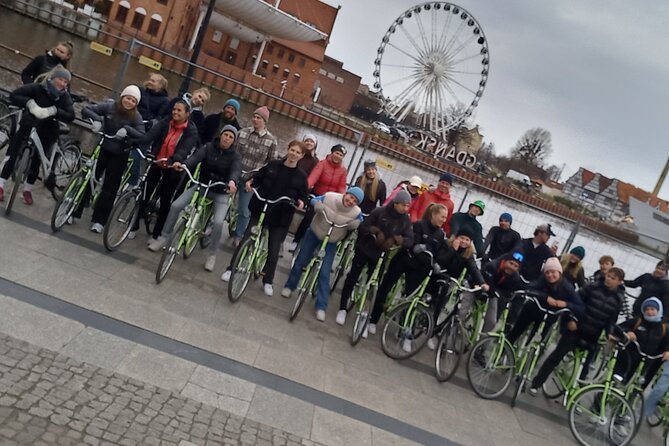
Wyspa Spichrzów is described as the historical heart of Gdańsk. It was destroyed during the Second World War, giving this stop a different mood from the preserved old streets.
The five-minute visit helps you see how war altered the city and how the waterfront fits into its long commercial story. Admission is included, though the brief timing again suggests an orientation rather than a full indoor visit.
I like this stop because it breaks up the postcard view of Gdańsk. You are reminded that the city you see today has been damaged, rebuilt, and reshaped. For a short tour, that kind of context is more useful than stopping only at famous facades.
The Motława footbridge and the Crane
The route includes the footbridge over the Motława to Ołowianka, if the bridge is open. The stop lasts about five minutes and admission is included.
The conditional wording matters. You should not treat this crossing as guaranteed. If it is closed or unavailable, the guide will need to adjust the route.
The Crane is another five-minute stop. It is one of Gdańsk’s defining symbols and a memorable feature along the riverfront. Its historic role is tied to the city’s port identity, so it pairs naturally with the shipyard and the waterfront sections of the tour.
Admission to the Crane is not included. As with the other quick stops, the benefit here is seeing the landmark and hearing its place in the city’s story. If you want to explore the interior, arrange additional time after the ride.
Green Gate and the return to Kołodziejska 7
The final named stop is the Green Gate, or Brama Zielona. It leads toward the Green Bridge and gives you another strong view of the relationship between the old city and the Motława waterfront.
The stop lasts five minutes, with no admission included. It is a fitting final look because the route has moved from Dluga Street through the river district and back toward the historic center.
The experience then ends at the original meeting point. That simple return is useful if you are staying nearby or have left luggage in the area. The tour does not provide a separate drop-off, so plan around Kołodziejska 7.
What the short stops mean in practice
The schedule totals about two hours, with ten stops ranging from five to ten minutes. This gives you a strong overview, but it also means you need to choose your priorities.
You will see the main symbols of Gdańsk, enter St. Mary’s Church, get Solidarity context, and connect the old center with the Shipyard. You will not have time for a slow museum visit, a long church inspection, or extended photography at every landmark.
I would treat the tour as a first morning or first afternoon in Gdańsk. Use it to learn the city’s layout and identify places for a second visit. If you already know the center well, ask the guide to spend more time on the Shipyard, Solidarity, or local life.
The customization promise is important here. A private group can request emphasis on certain themes, but the tour still has to cover a broad route. Tell the guide your priorities early, especially if your main interest is the Second World War or twentieth-century politics.
Who should book this bike tour
This experience suits you if you want a quick, active introduction to Gdańsk and prefer personal conversation over a large group. It is also a good fit for visitors who want to see both the old town and the Shipyard in a single outing.
Families and friends may appreciate the private format, particularly if a group discount applies. People who enjoy local stories should benefit from the guide’s personal connection to the city and the chance to ask about Polish traditions and everyday thinking.
It may not suit you if you dislike cycling, want long museum visits, or need a weather-proof activity. Poor weather can lead to a new date or a full refund, but it can still disrupt a tightly planned day.
Should you book Bike Tour Gdansk Standard?
Book it if you want breadth, local explanation, and easy movement between major sights. The strongest part is the link between Gdańsk’s beautiful center and the Solidarity-era Shipyard, with a local guide helping you understand why both matter.
Skip it if you want a slow art tour or detailed museum experience. At $43.05 per person, the value depends on using the ride as an orientation rather than expecting every stop to be a full visit.
For most first-time visitors with good weather and two hours to spare, I think it is a sensible way to get your bearings. Keep the rest of the day open for St. Mary’s Church, the Museum of the Second World War, or the Solidarity Centre if one of them catches your interest.
FAQ
How long does Bike Tour Gdansk Standard last?
The tour lasts approximately two hours.
Where does the tour start and end?
It starts at Kołodziejska 7, 80-836 Gdańsk, Poland, and ends back at the same meeting point.
Is this a private tour?
Yes. Only your group participates in the activity.
Is admission included at the stops?
Admission is included at St. Mary’s Church, the European Solidarity Centre, Gdańsk Shipyard, Wyspa Spichrzów, and the footbridge over the Motława if it is open. Admission is not included at Dluga Street, the Museum of the Second World War, the Golden Gate, the Crane, or the Green Gate.
Can the tour be canceled because of bad weather?
Yes. The experience requires good weather. If it is canceled for that reason, you will be offered another date or a full refund.
What is the cancellation policy?
You can cancel for a full refund up to 24 hours before the experience starts. Cancellations or changes made less than 24 hours before the start time are not accepted and are not refunded.
Just added around Gdansk
- Gdansk and Malbork Castle Small Group Tour from Warsaw with Lunch★ 4.5 · 20 reviews
- Westerplatte private tour led by Expert-Guide (door to door)★ 5.0 · 5 reviews
- Whisky Tasting in Gdańsk★ 5.0 · 3 reviews
- Gdansk EVERYDAY Vodka Tasting Tour★ 5.0 · 6 reviews
- Westerplatte – 2h private trip by luxury car|★ 5.0 · 4 reviews
- Private WW2 Tour of Westerplatte,Gdansk and Stutthof Including Lunch★ 5.0 · 12 reviews
- Aiport Gdansk Transfer to Malbork Castle or Stutthof★ 5.0 · 3 reviews
- 5 hours Individual trip to the Stutthof Concentration Camp★ 5.0 · 5 reviews
Cycling Tours, compared.
Complete Cracow Bike Tour (small group of maximum 15 people!)
Read our review →
Bike Tour of Old Town, Jewish Quarter and the Ghetto
Read our review →
Full Bike Tour – the Old Town, Jewish Qtr & the Ghetto NEW BIKES
Read our review →
Bike Tour of the Old Town, Kazimierz, and the Ghetto
Read our review →
Half-Day Warsaw City Sightseeing Bike Tour for Small Group
Read our review →Browse the lists this tour appears in