
Reviewed · GDANSK TOURS
Cruises on the Motlawa River
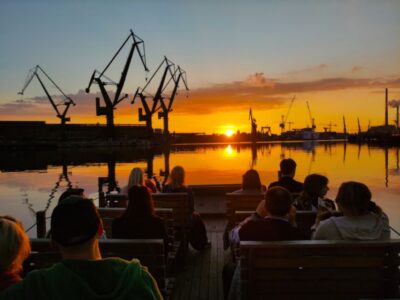
Gdansk’s waterfront tells the city’s story in a compact 45-minute ride. From the Motlawa, you see the medieval Crane at eye level, the old water gates opening onto Dlugie Pobrzeze, and the islands that once powered the city’s trade. It is a quick way to get your bearings before exploring on foot.
I like the low price and the choice of departure times, which make this easy to fit into a busy day. I also like the small group size, capped at 10 people, and the retractable canopy that lets you choose shade or open-air views. The main drawback is uneven commentary: some departures use a printed English sheet, and the spoken guide can be difficult to hear from every seat.
Key points to know before boarding
- The 15th-century Crane is the star view: You’ll see Europe’s largest medieval crane from the river.
- The route covers both islands: Granary Island and Olowianka reveal different sides of Gdansk’s working waterfront.
- The boat is small: A group limit of 10 keeps the ride personal, but space and sound can feel tight.
- The canopy retracts fully: Open it for photographs when the weather is good, or use the roof for shelter.
- The cruise returns to the Green Bridge: You can continue sightseeing in the old center right after the boat ride.
- English information is available: Expect an English tour, but bring patience if live narration is hard to hear.
Why the Motlawa is the best seat for Gdansk’s old center
Gdansk is easy to admire from its streets, but the river gives you a different sense of how the city worked. The old waterfront was not simply a pretty row of buildings. It was a place for loading grain, moving goods, protecting the town, and connecting the center with the Baltic coast.
The boat leaves from the Green Bridge on the Stara Motlawa. That location is convenient because it sits right beside the historic center, near the waterfront streets and the long pedestrian routes along Dlugie Pobrzeze. You do not need to spend half a day getting to a distant harbor.
As you move away from the bridge, the waterfront opens up. The old gates, warehouses, towers, and islands begin to make more sense from the water. I find this especially useful early in a visit, when the river helps you understand the shape of the city before you tackle its streets and museums.
The ride lasts approximately 45 minutes. That is long enough to see the main sights without taking over your day. It is also short enough for families, people with limited time, or anyone who wants a calm break between walking tours.
A few more Gdansk half-days worth comparing
- Gdansk: City Cruise on Historical Polish Boat
★ 4.8 · 2,913 reviews - Gdańsk: Sunset Cruise on a Historic Polish Boat
★ 4.9 · 977 reviews - Gdańsk City Sights & History Guided Walking Tour in English
★ 4.8 · 876 reviews
The Green Bridge and Dlugie Pobrzeze
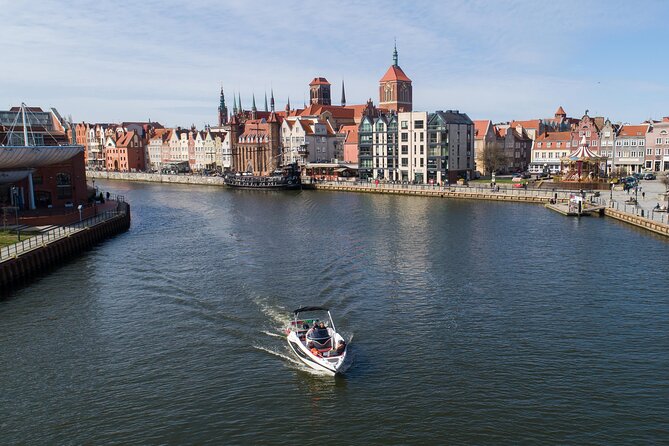
The Green Bridge is the starting and finishing point, so you get a useful view of this central waterfront twice. The cruise follows the river beside Dlugie Pobrzeze, often translated as the Long Embankment or Long Seacoast.
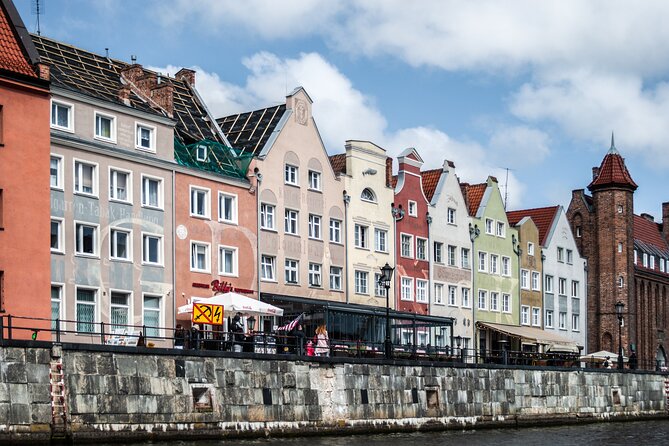
This stretch is marked by historic water gates leading into the city. From the boat, you can see how these openings once connected the river directly with the streets and buildings behind the waterfront. The view is better than a quick glance from land because the boat places you opposite the entire line of the embankment.
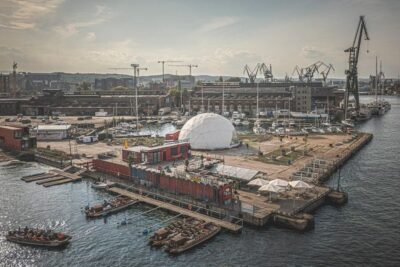
You will also pass the Gdansk marina. The modern boats provide a contrast with the old brick and timber structures. This mix is part of the appeal: you are not looking at a frozen historic display, but at a working waterfront that has changed over time.
The cruise also passes the Fish Market. Gdansk once had more markets of this kind, so the stop offers a small clue about the city’s former commercial life. It is not a major sightseeing stop, but it helps connect the river to everyday trade.
The medieval Crane, the route’s main attraction
The famous Crane is the sight most likely to stick with you. It dates from the 15th century and is described as the largest medieval crane in Europe. From the water, you can study its massive structure without the usual street-level distractions.
The Crane was used to load and unload cargo and to handle ship masts. Its size reflects Gdansk’s importance as a port, but the river view also makes its practical purpose easy to understand. This was not just an impressive building. It was a machine built into the waterfront.
You should have your camera ready as the boat approaches. The canopy can retract fully when weather permits, giving you a clear upward view of the Crane and the skyline behind it. On a gray or windy day, the roof provides shelter, but it may limit some photographs depending on where you sit.
The boat’s small size helps here. With a maximum of 10 people, you are less likely to feel lost in a large sightseeing crowd. The tradeoff is that the vessel can feel cramped, especially when everyone turns toward the same landmark.
Granary Island and Stagiewna Street
Granary Island is one of the most useful parts of the route because it shows how Gdansk stored and moved its wealth. The island is crossed by Stagiewna Street, which begins at the Green Bridge. From the water, you see the island as a piece of the city’s trade network rather than simply another group of buildings.
The preserved wall of the Long Way granary is among the notable sights. It gives you a direct connection to the storage buildings that once held grain and other goods. Look for the contrast between old surviving sections and newer development around them.
A boat view also explains the island’s position. Granaries needed access to the river, and the island offered exactly that. Standing on a street, you may notice the buildings. From the boat, you see why they were placed there.
This part of the ride is less about one famous monument and more about understanding the city’s working structure. I would pay attention here even if you have already walked Stagiewna Street. The angles are different, and the relationship between the island, river, and waterfront becomes clearer.
Same city, a completely different kind of day:
- Gdansk: Firearm Shooting Experience with Instructor
★ 4.8 · 866 reviews - Gdansk: Guided Round-Trip Cruise to Westerplatte
★ 4.3 · 865 reviews - Gdańsk: Sightseeing EcoCruise around the Old Town of Gdansk
★ 4.6 · 719 reviews - Main Town Gdańsk Walking Tour
★ 5.0 · 644 reviews
Olowianka Island and the city’s working past
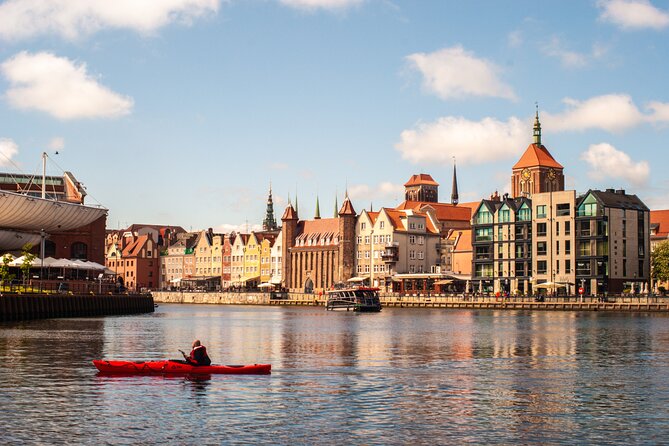
Olowianka Island has a different feel from Granary Island. Its story reaches back to the Teutonic Order, which used the area as an economic base for the commander’s castle. That detail gives the island a place in the city’s earlier political and commercial life.
The island is also where several parts of Gdansk’s story meet: religious power, trade, storage, transport, and later urban development. You will not get a long museum lecture during a short river ride, but seeing Olowianka from the water gives you a helpful outline.
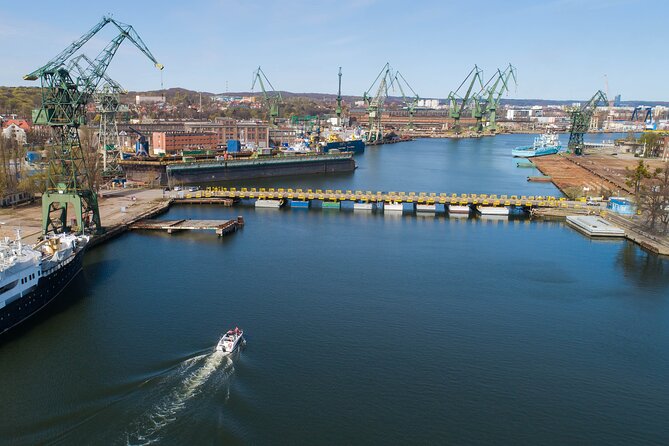
The route also includes a view of the first ship built in Poland after World War II. This detail widens the focus beyond medieval Gdansk. The riverfront is not only about old brick buildings and famous monuments. It also records the city’s postwar rebuilding and industrial identity.
I recommend treating these sights as a visual introduction rather than expecting a full historical tour. If the spoken information is clear, you may receive useful context as you pass. If not, the English printed sheet can help you match names to the buildings.
Churches, towers, and the brick church behind St. John’s
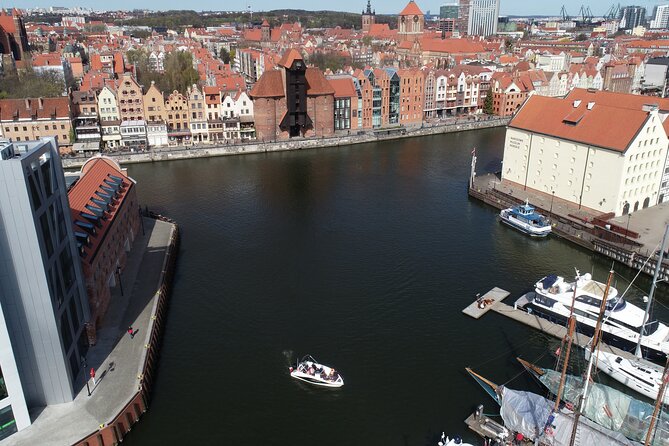
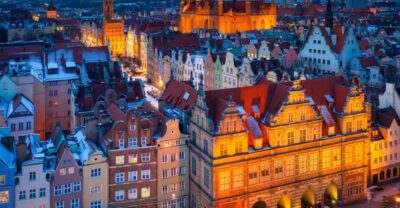
The boat gives you a strong skyline view. Church towers and the town hall rise behind the waterfront, offering a sense of scale that is harder to get from narrow streets.
Behind St. John’s Church, you can see the world’s largest brick church. From the water, the church towers help orient you within the old center. They also remind you that Gdansk’s identity was shaped by more than trade and shipping.
This is a good section for photographs because the river creates distance between you and the buildings. You can often frame several towers together rather than looking straight up from a crowded street. If the canopy is open, the view is especially useful for wide shots.
The boat does not replace a visit inside the churches or town hall. Instead, it gives you a first look and helps you decide where to return on foot. I would make a quick note of the buildings that catch your eye, then use the rest of your day to explore them from land.
What the boat and commentary are really like
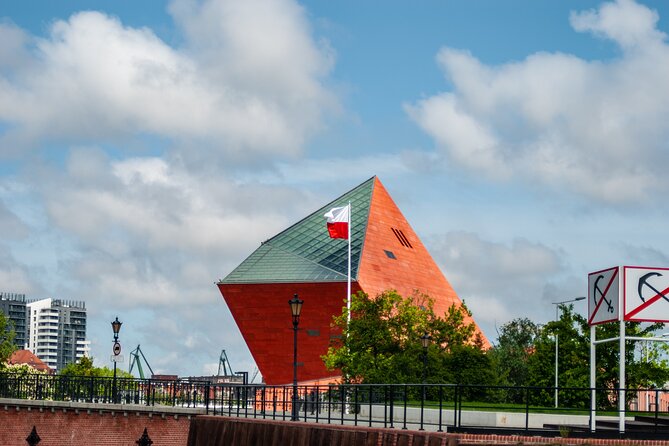
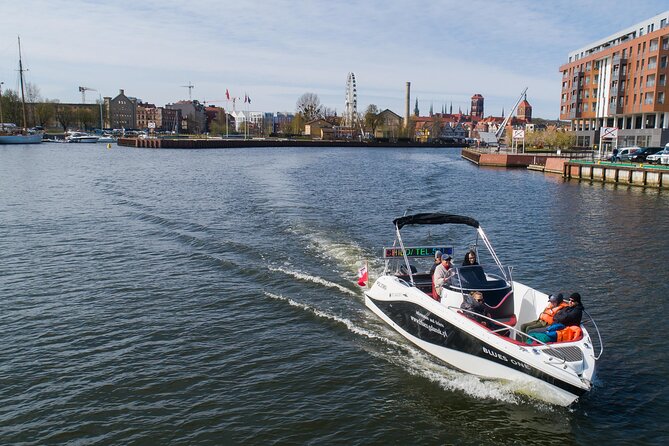
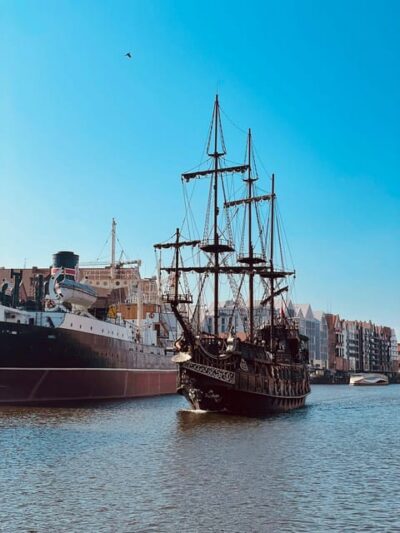
The vessel is small, closer to a private motorboat than a large sightseeing ship. That gives the ride a personal feel and makes it easier to see the riverbank from both sides. It also means there is less room to move around, and the engine or wind may affect how well you hear the guide.
English is offered. However, the spoken commentary has not been consistent on every departure. At times, the guide’s voice has been difficult to hear, and some passengers have relied mainly on a printed English information sheet.
That is the most important practical caution before booking. If you want a polished audio tour with continuous narration, this may disappoint you. If you are happy to use the ride for views and treat the written information as a useful guide, the limitations are easier to accept.
A printed sheet is not as engaging as a live explanation, but it has one advantage: you can read at your own pace. The route passes several names and sites quickly, so having written information can help you keep track of what you are seeing.
The boat has also shown thoughtful practical touches. Children aged 3 and 9 were given life jackets, and blankets were provided when wind made the ride chilly. A captain has even called a party that had trouble finding the boat and waited for them. These details do not guarantee the same response on every departure, but they suggest that the crew can be attentive when problems arise.
Price, timing, and who gets good value
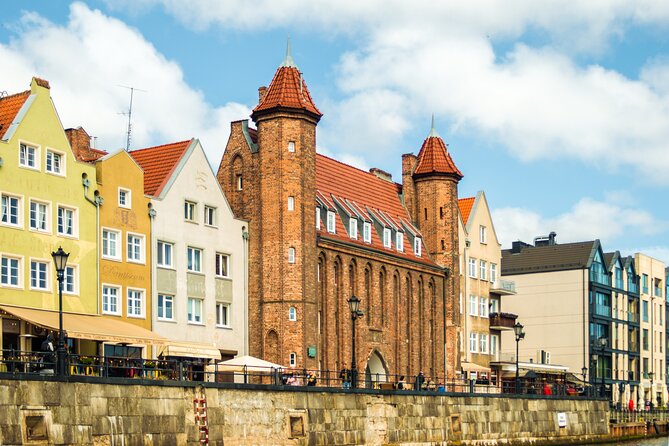
At $19.86 per person, this is inexpensive for a central-city sightseeing activity. The value comes from the combination of a short route, several major sights, and a return to the same convenient meeting point.
You are not paying for a full historical lecture or a large attraction with indoor exhibits. You are paying for a new angle on Gdansk and a calm way to cover the waterfront. Compared with paying for a private boat rental, the cruise can be a better deal if you want some historical context included.
The wide choice of departure times is useful. You can schedule the ride before a museum visit, after a walk through the old center, or during the middle of the day when your feet need a rest. Since the ride takes about 45 minutes, it is easy to fit around lunch or an afternoon sightseeing plan.
The activity is usually booked about 20 days ahead, so reserving early is sensible if your schedule is fixed. The group maximum is 10 people, which is another reason a preferred time may fill.
This cruise suits you best if you want:
- A short introduction to Gdansk’s waterfront
- A low-cost activity near the historic center
- A relaxed ride between walking stops
- Photos of the Crane, islands, gates, and skyline
- A small boat rather than a large sightseeing vessel
- A family-friendly outing with life jackets available for children
You may want to skip it if you need a fully narrated tour, guaranteed open-air seating, or a large stable boat with plenty of space.
Practical advice for finding and enjoying the cruise
The meeting point is the Green Bridge at Stara Motlawa in Gdansk. Give yourself extra time to locate the exact boat. One party ended up waiting at the wrong place, so do not assume every vessel beside the waterfront is part of this experience.
A mobile ticket is accepted. Having it ready on your phone should make boarding easier, and one passenger was able to board promptly while people without advance tickets were still sorting out prices and payment.
Bring a light layer, even on a pleasant day. Wind on the water can make the ride feel cooler, and blankets may not always be available. If photography matters to you, check whether the canopy is retracted before choosing your seat.
The experience requires good weather. You can cancel for a full refund up to 24 hours before the start time. If poor weather causes the operator to cancel, you will be offered another date or a full refund.
Should you book the Motlawa River cruise?
I would book it if you want a short, affordable view of Gdansk from the water. The medieval Crane, Granary Island, Olowianka, and the old waterfront gates are all easier to understand when seen as part of one river system.
Go in with realistic expectations. This is a small-boat sightseeing ride, not a grand cruise ship and not always a polished audio presentation. If the live commentary is hard to hear, use the printed English information and focus on the views.
For first-time visitors, families, photographers, and anyone needing a break from walking, the price makes good sense. If your main goal is detailed history, book a dedicated walking tour as well. The best use of this cruise is as a compact visual introduction to the river that shaped Gdansk.
FAQ
Where does the Motlawa River cruise begin?
The cruise begins at the Green Bridge on Stara Motlawa in Gdansk, Poland.
How long does the cruise last?
The cruise lasts approximately 45 minutes.
Where does the cruise finish?
The activity ends back at the Green Bridge meeting point.
Is the cruise offered in English?
Yes. English is offered, and an English printed information sheet may be provided. Spoken commentary may be difficult to hear on parts of the ride.
How many people can join the boat?
The activity has a maximum of 10 participants.
Can I cancel for a refund?
You can cancel up to 24 hours before the start time for a full refund. If poor weather cancels the cruise, you will be offered another date or a full refund.
Just added around Gdansk
- Gdansk and Malbork Castle Small Group Tour from Warsaw with Lunch★ 4.5 · 20 reviews
- Westerplatte private tour led by Expert-Guide (door to door)★ 5.0 · 5 reviews
- Whisky Tasting in Gdańsk★ 5.0 · 3 reviews
- Gdansk EVERYDAY Vodka Tasting Tour★ 5.0 · 6 reviews
- Westerplatte – 2h private trip by luxury car|★ 5.0 · 4 reviews
- Private WW2 Tour of Westerplatte,Gdansk and Stutthof Including Lunch★ 5.0 · 12 reviews
- Aiport Gdansk Transfer to Malbork Castle or Stutthof★ 5.0 · 3 reviews
- 5 hours Individual trip to the Stutthof Concentration Camp★ 5.0 · 5 reviews
Gdansk Tours, compared.
Gdańsk City Sights & History Guided Walking Tour in English
Read our review →

Sightseeing EcoCruise around the Old Town of Gdansk
Read our review →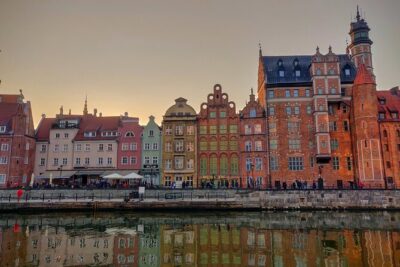

Browse the lists this tour appears in