
Reviewed · RETRO CAR TOURS
Discover the Dark Side of Warsaw in Praga District by Retro Bus
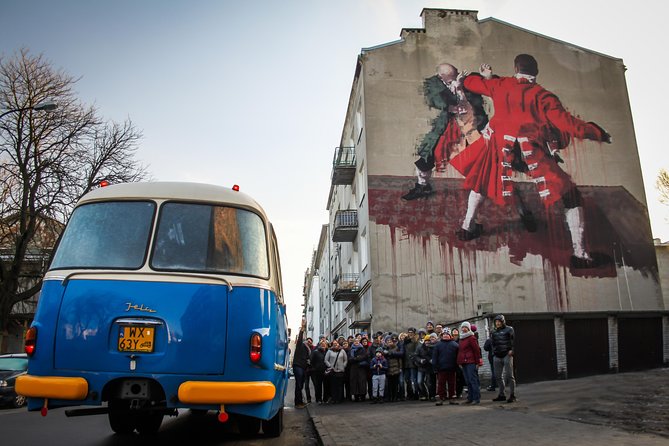
Praga gives you a different Warsaw: one of old courtyards, fading facades, bold murals, former factories, and streets that escaped much of the wartime destruction. This 2.5-hour retro-bus tour brings those pieces together, with stops at E. Wedel, Koneser, Różycki’s Bazaar, and film locations from The Pianist.
I like the 1980s coach, which makes the ride part of the story rather than just transport. I also like the hot chocolate at the E. Wedel factory and the guides, including Conrad, Marcin, and Paweł, who are praised for clear English, humor, and strong storytelling. The main caution is group size: some departures can be crowded, and a few stops may feel rushed.
Key points at a glance
- Hot chocolate at E. Wedel: A warm stop at one of Poland’s best-known chocolate makers, with a short talk about the factory.
- Praga beyond the postcard view: See prewar buildings, courtyards, murals, old markets, and former industrial sites.
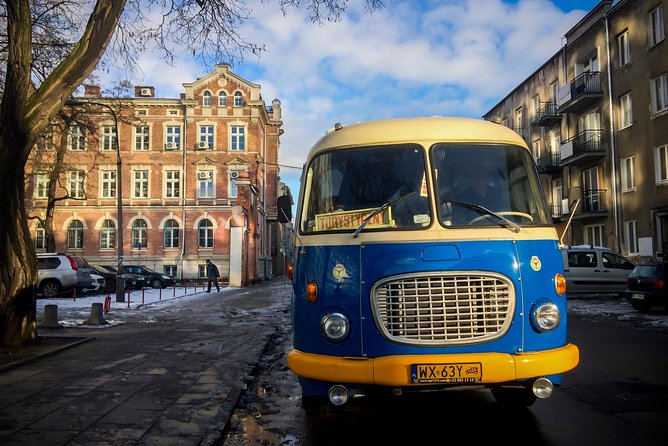
- A bus with character: The 1980s coach is part of the experience, though it may be warm in hot weather and can have a noticeable exhaust smell.
- Strong guides: Conrad, Konrad, Marcin, and Paweł are singled out for humor, clear English, and lively explanations.
- Film and wartime connections: Visit streets used in The Pianist and hear about Warsaw during World War II and the Communist period.
- Good alternative sightseeing: At $42.34 per person, the tour offers a useful way to reach parts of Praga that are easy to miss from the central sights.
Why Praga makes a good half-day outing
Most first visits to Warsaw focus on the Old Town, the Royal Castle, the Palace of Culture and Science, and the broad streets rebuilt after World War II. Those places matter, but they do not tell the whole story.
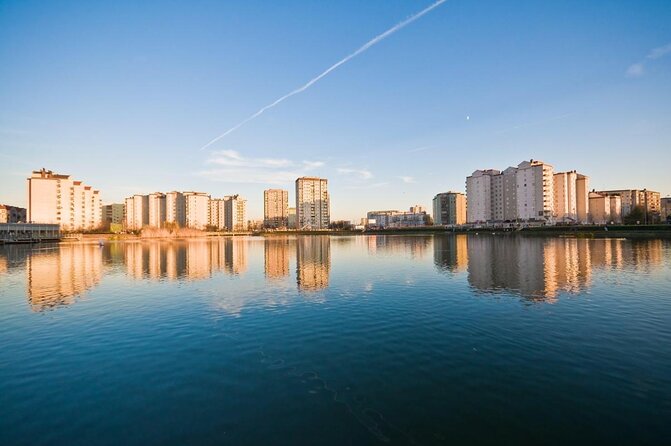
Praga sits across the Vistula River and developed for many years as a separate city. Its streets retain a different feel from the carefully restored center. You see old brick, worn plaster, improvised courtyards, factories turned into cultural spaces, and buildings that reveal how Warsaw changed after the war and after Communism.
I like that this tour does not pretend Praga is a polished museum district. The dark side label is more theatrical than literal. You are not heading into a dangerous adventure. You are seeing a neighborhood shaped by poverty, industry, wartime survival, black-market trade, postwar neglect, and recent change.
That honest angle is useful. If you expect a string of grand monuments, you may find the experience uneven. If you want to understand how ordinary Warsaw developed beyond its formal center, the tour gives you plenty to think about.
More retro car tours around Warsaw:
- Warsaw: 2.5-Hour Dark Side – Praga District by a Retro Bus
★ 4.5 · 248 reviews - Warsaw City Sightseeing in a Retro Bus
★ 5.0 · 196 reviews - Best of Warsaw – private tour by retro minibus with hotel pickup
★ 5.0 · 111 reviews
Meeting the retro bus at the Palace of Culture
The tour begins outside the Palace of Culture and Science, beside the Warsaw Tourist Information Office at pl. Defilad 1. The Palace itself is one of Warsaw’s most recognizable landmarks and was presented as a gift from Joseph Stalin, so the starting point immediately opens a conversation about Soviet influence and the city’s complicated twentieth-century past.
The supplied details give two start times, 10:30am and 11:00am. Check the confirmed time on your booking before you set out. The meeting point is central and near public transportation, which makes it practical to reach without a hotel transfer.
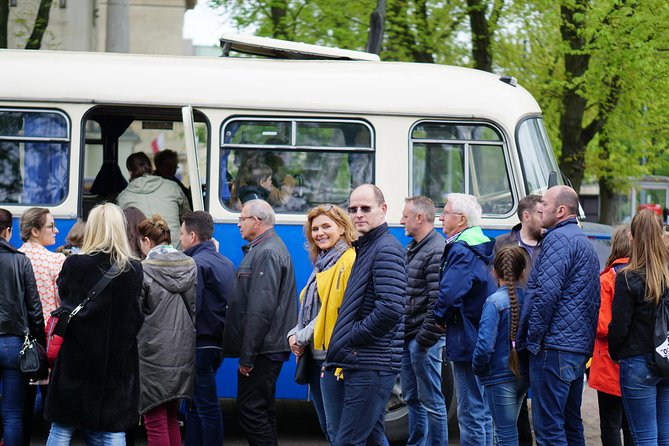
The coach dates from the 1980s. That matters because the ride has a physical sense of the recent past. It is not a sleek sightseeing vehicle. It is a period piece with charm, and the guide’s commentary continues through the drive.
The bus may not suit everyone. One report describes a very warm ride during exceptional summer heat, since there is no air conditioning. Another mentions an exhaust issue. Bring water, especially in hot weather, and dress for the forecast. The tour operates in all weather conditions.
Before reaching Praga, the guide points out several central Warsaw sights and tells short stories about them. These include the famous artificial palm tree, a wartime hiding place in the basement of the National Museum, the football stadium built for UEFA Euro 2012, the Warsaw Nike monument, the Royal Castle panorama, and the city’s main street, enlarged after the war.
These brief drive-by stories help connect the modern capital with the city you are about to see across the river.
E. Wedel and Warsaw’s chocolate tradition
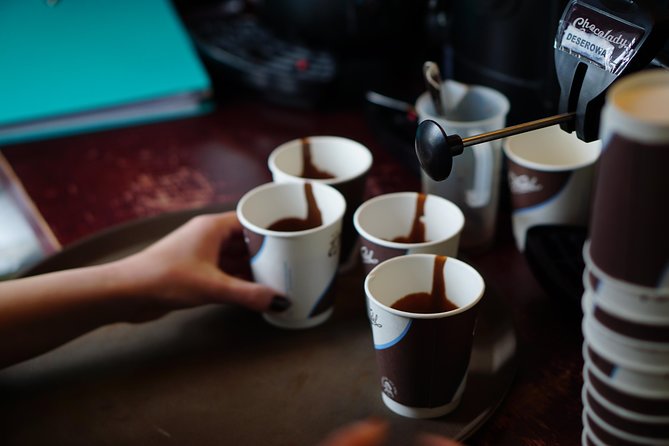
The first main stop is E. Wedel, a nineteenth-century chocolate factory. You receive a cup of hot chocolate and hear about the factory’s role in Warsaw.
This is a short stop of about 20 minutes, so think of it as a taste and a story rather than a full factory tour. The drink is included, and it works well as a break after the opening ride. One useful detail from the experience is that the hot chocolate is served even in warm weather, so you should not expect a seasonal substitute.
I like this stop because it adds an everyday pleasure to a tour that deals with war, political control, poverty, and industrial decline. The chocolate factory gives you a reminder that Warsaw’s story is also about work, food, local brands, and ordinary routines.
The stop may feel too brief if you want time to browse or linger. The focus is on the cup and the explanation, not extended shopping.
Kamionek, the stadium, and Warsaw East station
As the bus moves through the Kamionek area, the guide explains how this part of Praga has changed. The route passes places tied to modern city life, including Warsaw East railway station and the long building known as one of the longest in Warsaw.
The station raises a good question: is Warsaw East the city’s most beautiful railway station? The guide gives the local context rather than leaving you to judge from a quick passing view.
Kamionek is also presented as a neighborhood in transition, with hip bars and cafes appearing alongside older buildings. You should not expect a neatly restored district from end to end. The interest lies in the contrast, where new uses sit beside traces of earlier industry and housing.
The football stadium built for the 2012 European championship is another marker of modern Warsaw. It shows how much the city has invested in new public spaces while older districts continue to change at street level.
A few more Warsaw half-days worth comparing
- Warsaw: Chopin Concert in the Old Town
★ 4.8 · 2,287 reviews - Warsaw: Traditional Galar Cruise on The Vistula River
★ 4.6 · 1,640 reviews - Warsaw: Old Town Highlights Walking Tour in English
★ 4.7 · 1,516 reviews - Warsaw Concert: Chopin – Painted by Candlelights with Wine
★ 4.8 · 1,442 reviews
The Basilica of the Sacred Heart of Jesus
The Basilica of the Sacred Heart of Jesus is one of the scheduled walking stops and lasts about 20 minutes. It is described as one of Poland’s most beautiful churches.
This visit adds an architectural and religious counterpoint to the factories, murals, and markets. The church is not treated as an isolated monument. Instead, it forms part of the wider story of Praga, where religious life, working neighborhoods, and industrial development have long existed close together.
Because the tour covers many sites, the time here is limited. You will get an introduction and a look at the building rather than an extended church visit. If you want quiet time for detailed architectural study, you may need to return independently.
Koneser and the former vodka factory
The Koneser Warsaw Vodka Factory is one of the more memorable stops. The former factory complex provides a clear link between Praga’s industrial past and its changing present.
The guide explains the factory’s story and asks how much vodka affected the district. That question gives the stop some personality. You are not simply looking at old industrial buildings. You are considering how production, employment, drinking culture, and local identity shaped the area.
The scheduled visit lasts about 20 minutes. Koneser is also one of the places that shows Praga’s ongoing change, with an old factory setting now connected to newer uses. The contrast is easy to understand in person: industrial buildings can take on new roles without losing their earlier character.
For me, this is one of the tour’s most useful stops because it makes the shift from old Praga to new Praga visible. Still, the short time means you should expect an overview, not a detailed exploration of every part of the complex.
Murals on Brzeska and Stalowa streets
The streets of Brzeska and Stalowa bring a different side of Praga into view. Colorful murals refer to Polish history and political life, and the street art gives the neighborhood a modern public voice.
The murals are worth seeing, but set your expectations carefully. Street art is only one part of the tour, and the schedule does not give you a long photography session at every wall. If murals are your main interest, you may wish the tour allowed more time here.
I like the way the art fits the district. These are not just decorative backdrops. They help show how public space can carry arguments about Poland’s past and present. The paintings sit beside older buildings, courtyards, and ordinary streets, so you get more than a gallery-style look at the work.
A good guide matters here. Marcin is praised for mixing facts about life under the Iron Curtain with personal anecdotes, while guides such as Conrad and Paweł are noted for making the material easy to follow in English. That kind of delivery is especially helpful when the political references are unfamiliar.
Różycki’s Bazaar and the darker side of Praga
Różycki’s Bazaar is the longest-operating marketplace in Warsaw, and the tour explains its former role as a black market. Customers once came here for forged documents and goods that were difficult to obtain through official channels.
The market gives the dark side theme its clearest historical meaning. This is not a ghost story. It is a look at how people found ways to manage daily life when official systems were limited or controlled.
You also get a chance to see what is sold there now. That present-day view matters. It prevents the stop from becoming a frozen story about crime and scarcity. The market continues as a real part of the neighborhood, even as Praga changes around it.
The visit is best for people who like social history. If you prefer grand interiors and formal monuments, this may feel modest. I find it valuable precisely because it deals with practical city life rather than official symbols.
Streets from The Pianist
The tour includes a picturesque street used as a film set for Roman Polański’s The Pianist. You also hear why Praga was useful for filming Warsaw scenes.
The connection is more meaningful than a simple movie photo stop. Many central parts of Warsaw were destroyed during the war and later rebuilt, while Praga retained more prewar buildings. That surviving fabric can make the district look closer to the Warsaw shown in historical films.
You should not expect a film attraction with sets or displays. The interest comes from seeing an actual street and understanding how the city’s wartime destruction shaped the choice of location.
The route also points toward Warsaw Zoo, which is associated with The Zookeeper’s Wife. The zoo is not listed as a separate admission stop, so treat it as a point of interest along the route rather than a visit inside.
The Praga Bermuda Triangle and New Praga
The Praga Bermuda Triangle is presented as an area of scenic courtyards and prewar architecture. The name sounds dramatic, but the stop is really about local stories, unusual street layouts, and the atmosphere of older residential Praga.
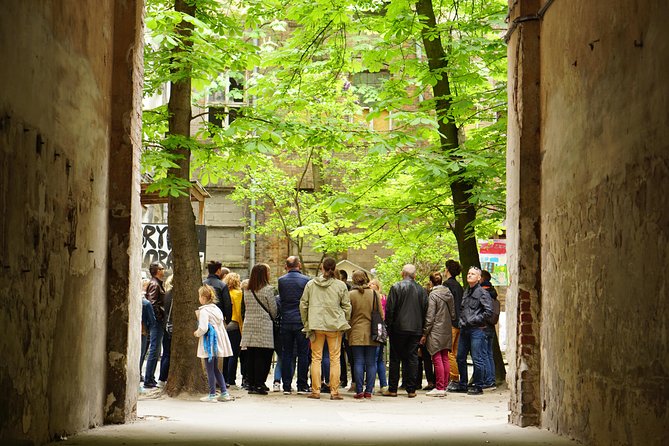
You walk through a courtyard of a prewar residential house and hear about the founder of the Nowa Praga district. This is one of the best chances to see how people lived behind the street facades.
Courtyards are easy to miss if you explore on your own without local context. From the street, a building may look worn or plain. Inside, the layout can reveal a more intimate side of the district, with shared space and layers of older housing.
The Praga Polnoc portion lasts about an hour, making it the longest main stop. That gives the guide room to explain why the district earned its darker reputation and how it has changed. Even so, the overall schedule is full, and the amount of time at individual locations can depend on the group.
How much history fits into 2.5 hours
This is a tightly packed tour. It covers the Palace of Culture meeting point, the Vistula crossing, central Warsaw stories, E. Wedel, Kamionek, Warsaw East, the basilica, Koneser, murals, Różycki’s Bazaar, film streets, New Praga, the zoo area, and the return across the river.
That range is a strength, but it also creates a tradeoff. You see many parts of Praga and receive a broad introduction, but you do not get long, unhurried visits at every stop.
Guides are central to the experience. Conrad and Konrad are praised for being funny and informative, while Marcin and Paweł are praised for clear English and lively personal stories. One guide also managed to keep commentary understandable when Polish narration was playing over the bus speaker.
Group size can affect the pace. The stated maximum is 40 people, though one account describes a larger overall group divided among three buses. A smaller departure may use a smaller coach, but that can work in your favor by making the outing feel more personal.
A late start by part of the group can also compress the schedule. Arrive early at the Palace of Culture so you do not add pressure to the day.
Is $42.34 a fair price?
At $42.34 per person, the value depends on what you want from a Warsaw tour. You are paying for a professional English-speaking guide, transport in a period coach, live commentary, the hot chocolate, and access to a wide route across Praga.
I consider it fair for a first introduction to the district, especially if you have limited time or do not feel ready to plan your own route through Praga. The ride saves you from piecing together distant stops by public transport, while the guide supplies the historical links that make the neighborhood easier to understand.
It is less compelling if you want a slow photography walk, a specialist street-art tour, or a full museum visit. The experience is built around range, storytelling, and atmosphere rather than lengthy time at one attraction.
Free cancellation is available up to 24 hours before the start time. The operator can cancel if the minimum number is not reached, with a different date, another experience, or a full refund offered.
Who should book the Praga retro-bus tour?
I would choose this tour if you want to see a side of Warsaw beyond the Old Town and the main central sights. It suits first-time visitors who want historical context, film fans interested in The Pianist, and anyone curious about how war and Communism still affect the city’s buildings and neighborhoods.
It also works for people who enjoy unusual transport and do not mind that the bus is old-fashioned rather than comfortable by modern standards. The tour is offered in English, and most people can participate.
I would hesitate if you dislike group tours, need lots of free time at each stop, or are sensitive to heat and vehicle exhaust. Carry water, dress for the weather, and keep your expectations realistic. Praga is a real, changing district, not a theme park.
Should you book it?
Yes, if your aim is to understand Warsaw through ordinary streets, surviving buildings, factories, markets, murals, and local stories. The strongest parts are the guides, the retro bus, E. Wedel’s hot chocolate, Koneser, Różycki’s Bazaar, and the prewar courtyards.
Book it as an introduction, not as the final word on Praga. The tour gives you enough background to decide which places deserve a longer return visit. Check the exact start time, arrive early, and do not expect the word dark to mean a frightening experience. It means a less polished, more complicated side of Warsaw, and that is exactly its appeal.
FAQ
Where does the tour begin?
It begins at the Warsaw Tourist Information Office beside the Palace of Culture and Science, pl. Defilad 1, 00-901 Warszawa, Poland.
What time does the tour start?
The provided details list both 10:30am and 11:00am. Check your booking confirmation for the correct departure time.
How long does the tour last?
The experience lasts approximately 2 hours and 30 minutes.
Is the tour offered in English?
Yes. The tour is offered in English and includes live commentary from a professional guide.
What kind of vehicle is used?
Transport is provided by a 1980s retro-style coach.
Is hot chocolate included?
Yes. A cup of hot chocolate at E. Wedel is included in the tour.
Does the tour enter E. Wedel?
The tour stops at E. Wedel for hot chocolate and stories about the factory. The provided details do not describe a longer factory visit.
What places in Praga does the tour visit?
The route includes E. Wedel, the Basilica of the Sacred Heart of Jesus, Koneser Warsaw Vodka Factory, Praga Polnoc, Różycki’s Bazaar, streets used in The Pianist, and New Praga.
How large can the group be?
The stated maximum is 40 people. A larger overall departure may be divided among several buses.
Can I cancel for a refund?
Yes. You can cancel up to 24 hours before the experience for a full refund. Cancellations or changes made less than 24 hours before the start time are not accepted for a refund.
Just added around Warsaw
- Wolfs Lair and Swieta Lipka Small Group Tour from Warsaw with Lunch★ 4.5 · 21 reviews
- Wolf’s Lair & Treblinka Tour in 1 day from Warsaw★ 5.0 · 37 reviews
- Wolfs Lair “Hitler’s Headquarters” – Full Day Tour from Warsaw by private car★ 4.5 · 4 reviews
- Tour from Warsaw: Wolf’s Lair, Hitler’s HQ Zones I and II★ 5.0 · 32 reviews
- Wolf’s Lair Private Day Trip from Warsaw★ 5.0 · 50 reviews
- Warsaw’s Old Town A Self-Guided Audio Tour★ 4.5 · 10 reviews
- Warsaw Must-See Local City Tour with Antek and Tomek★ 5.0 · 51 reviews
- Off the Beaten Track in Warsaw: Private City Tour★ 4.5 · 9 reviews
Retro Car Tours, compared.
2.5-Hour Dark Side – Praga District by a Retro Bus
Read our review →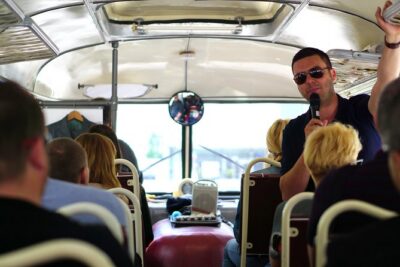
Best of Warsaw – private tour by retro minibus with hotel pickup
Read our review →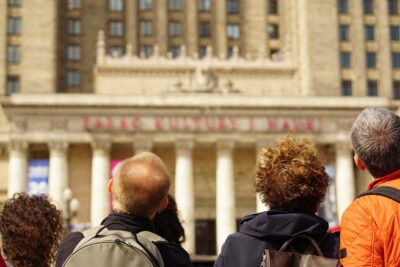
Private Warsaw City Tour by Retro Minibus with Hotel Pickup
Read our review →
1.5h Crazy Guides’ Communism Tour of Nowa Huta in Classic Car
Read our review →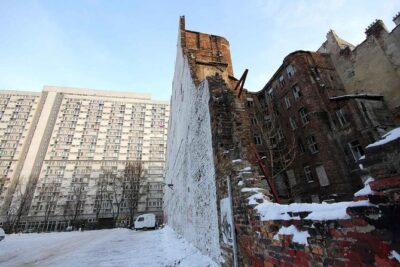
Communist Warsaw: private tour by retro minibus with hotel pickup
Read our review →Browse the lists this tour appears in