
Reviewed · WWII TOURS
From Warsaw: Guided Tour of Treblinka Camp
Treblinka is not a place of grand ruins or preserved barracks. Nazi Germany destroyed much of the camp to hide its crimes. What remains is a forest, a stark memorial field, scattered stones, and the silence left by a killing center where up to 900,000 Jews and about 2,000 Romani people were murdered. This six-hour guided trip from Warsaw helps you read that difficult site with care.
I like two things right away: hotel pickup removes a tricky transport problem, and the guide gives the memorial its historical shape. Guides such as Leszek, Janusz, Jan, and Marek have been praised for clear English, patient answers, maps, memoirs, and links between Treblinka, the Warsaw Ghetto, and the city itself. The main drawback is the price, $134 per person, which can feel high for a solo visitor, especially when the six-hour schedule includes driving.
Key points to know before booking
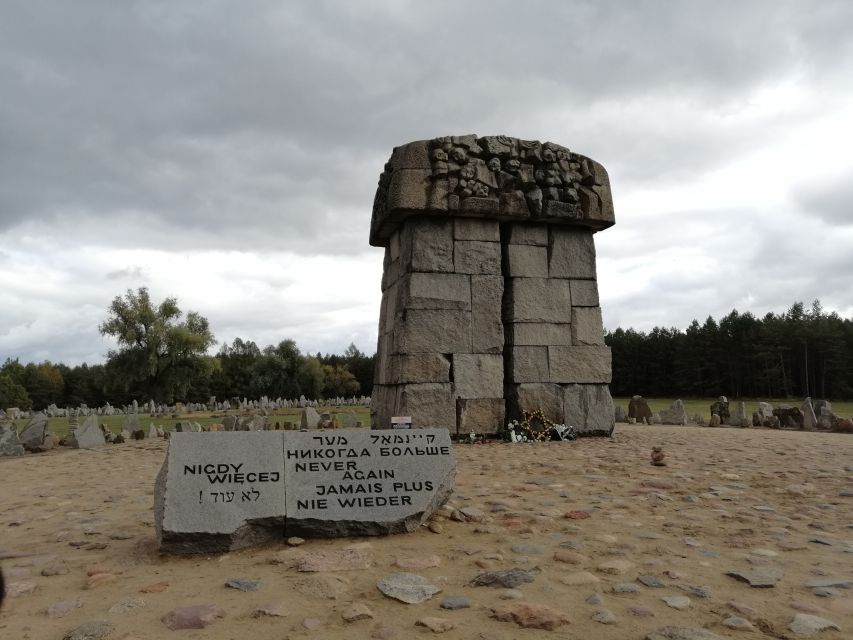
- Treblinka is a place of absence: Most of the camp was dismantled, so the memorial and museum matter more than surviving buildings.
- The visit covers more than one site: You see the extermination camp memorial, museum displays, a camp model, and the nearby Penal Labour Camp area.
- A guide is especially valuable here: Maps, testimony, and explanation help you understand a site that can otherwise be hard to interpret.
- Transport is handled for you: Pickup and drop-off at your accommodation come with an English-speaking driver and an air-conditioned vehicle.
- The subject is emotionally demanding: This is a serious memorial visit, not a casual sightseeing outing.
- Bring food, water, and walking shoes: Food and drinks are not included, and the visit involves walking outdoors.
Why Treblinka is unlike a conventional museum visit
Treblinka operated from July 22, 1942, to October 19, 1943, as part of Operation Reinhard, the Nazi plan that murdered most of the Jews of occupied Poland. It was built in a forest about four kilometers south of Treblinka train station, northeast of Warsaw.
The extermination camp was designed to kill people quickly and conceal what was happening. Between roughly 700,000 and 900,000 Jews were murdered in its gas chambers, along with around 2,000 Romani people. Only Auschwitz killed more Jews among the Nazi extermination camps.
That scale can be hard to grasp at the site itself. There are no intact gas chambers to walk through and no rows of barracks to photograph. The camp was dismantled after the revolt in August 1943, and the area was altered to erase evidence.
This is why a guided visit works well here. A good guide can explain where the camp stood, how deportations reached it, what happened to prisoners, and why the memorial takes the form it does. Without that context, you may see a field of stones and struggle to understand its structure.
More WWII Tours in Warsaw
- World War 2 in Warsaw walking tour in English
★ 4.7 · 237 reviews - Warsaw for WWII Buffs – private tour with hotel pickup
★ 5.0 · 166 reviews - From Warsaw: Tour of the Wolf’s Lair, Hitler’s HQ by Car
★ 4.7 · 116 reviews
Leaving Warsaw with a private pickup
Your day begins with pickup from your accommodation in Warsaw. You meet the driver and guide, then settle into an air-conditioned vehicle for the trip northeast.
The transport is one of the practical strengths of this outing. You do not need to work out a connection to a rural memorial site or find the museum independently. Several guides also use the drive to explain Warsaw, the wartime city, the Warsaw Ghetto, and the route by which people were sent toward Treblinka.
The exact vehicle can vary, but past departures have included comfortable cars and Mercedes minibuses. Water has also been provided on some trips. The booking information promises an English-speaking driver, while the guided visit itself is in English.
The road journey is described as short and scenic, though the tour lasts six hours overall. That total includes pickup, transport, the visit, and the return to Warsaw. Since food and drinks are not included, bring something to eat and a bottle of water.
One useful detail: the guide may speak while you are in the vehicle. One person found a small microphone would have made this easier to hear, so sit close to the guide if you want to follow every detail during the drive.
The museum gives you the basic map
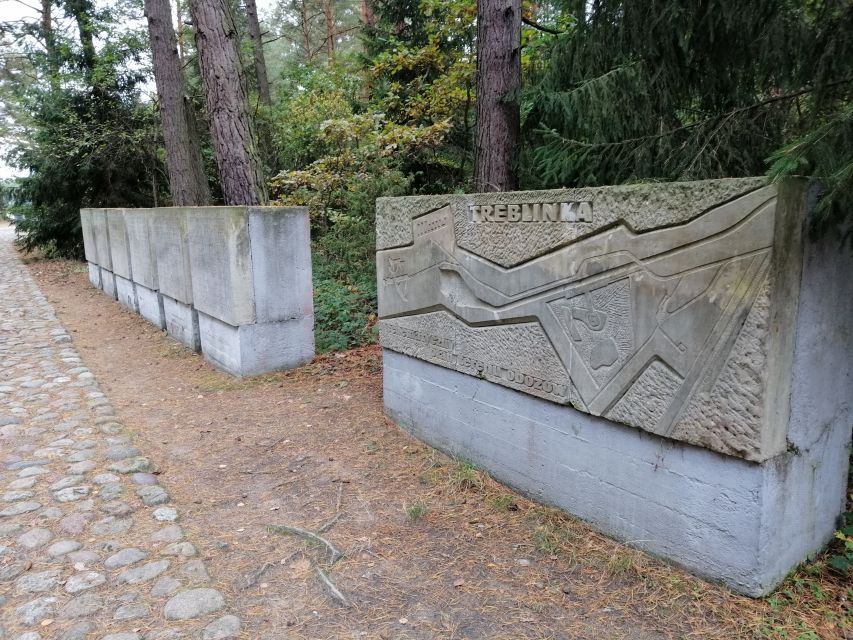
At Treblinka, the museum is your first important anchor. It offers information about the daily life of prisoners and includes a miniature model of the camp. That model helps you understand the layout of a place that no longer exists in its original form.
I find this especially useful at Treblinka because the physical remains are limited. A model can show the relationship between the railway arrival area, the camp zones, and the killing facilities in a way that open ground cannot.
The museum also gives you a chance to pause before walking through the memorial grounds. Films and other materials are available, and one guide specifically encouraged taking time with the museum films to gain a fuller view of the Holocaust and the camp system.
Do not expect a light introduction. The museum is part of a solemn historical visit, and the material may be distressing. Give yourself time to absorb it rather than treating it as a quick stop before the outdoor portion.
Walking through the former extermination camp
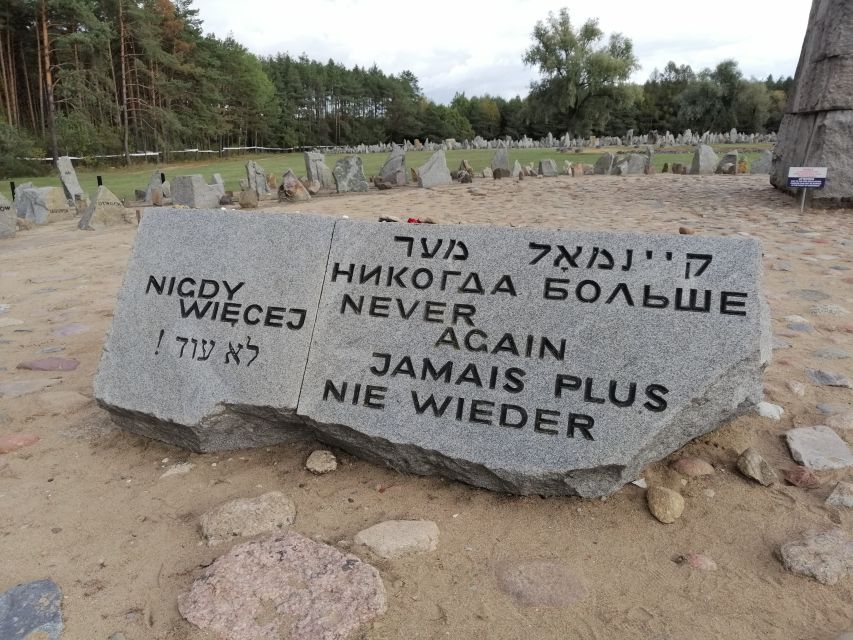
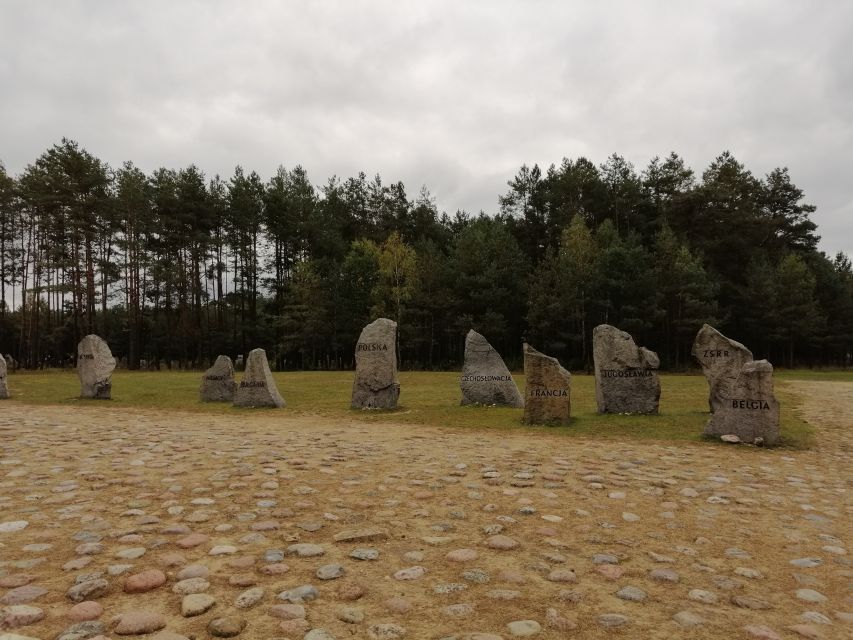
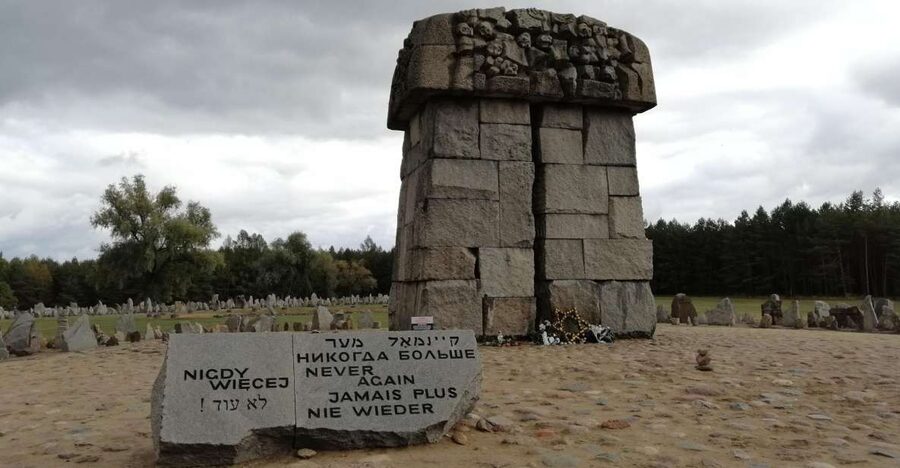
The main memorial area asks you to use imagination in a difficult but necessary way. Treblinka was demolished, the evidence was hidden, and the site was changed to resemble something else. The memorial now marks the former camp through symbolic forms rather than preserved buildings.
Your guide explains what happened in this space and helps connect the memorial to survivor testimony and historical records. That human context matters. The site itself cannot tell you how the camp operated unless someone gives you the framework.
The tour is not designed to turn the camp into a spectacle. The emphasis is on remembrance, evidence, and the lives destroyed there. You walk among memorial works and reconstructed areas, including the train station section based largely on testimony.
The absence is part of the lesson. The lack of original structures is not proof that little happened here. It reflects the Nazi effort to destroy evidence and the later attempt to make the location look ordinary. A guide can help you understand that difference.
Expect outdoor walking, so comfortable shoes are important. The activity is listed as wheelchair accessible, but the supplied details do not explain the exact condition of every path or memorial area. If you need specific access information, ask the provider before booking.
Same city, a completely different kind of day:
- Warsaw: Chopin Concert in the Old Town
★ 4.8 · 2,287 reviews - Warsaw: Traditional Galar Cruise on The Vistula River
★ 4.6 · 1,640 reviews - Warsaw: Old Town Highlights Walking Tour in English
★ 4.7 · 1,516 reviews - Warsaw Concert: Chopin – Painted by Candlelights with Wine
★ 4.8 · 1,442 reviews
The Penal Labour Camp adds another layer
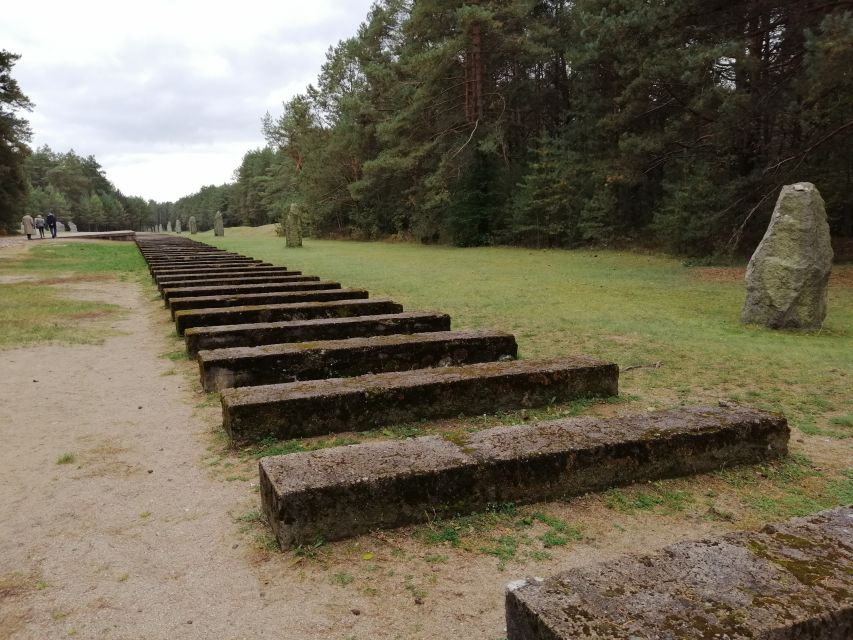
The visit also includes the ruins of the Penal Labour Camp, where about 20,000 prisoners were held between 1941 and 1944. This was separate from the extermination camp, though the two locations are connected within the wider Treblinka complex.
The area gives the tour a broader wartime frame. You are not looking only at the killing center used during Operation Reinhard. You are also considering forced labor, imprisonment, and the system of Nazi terror that existed in the region before and after the extermination camp’s main period.
Because the remains are limited, this stop depends heavily on explanation. The guide helps you understand what you are seeing and how it relates to the rest of Treblinka. If you prefer sites with intact rooms and large collections, this part may feel spare. If you want to understand how historical evidence can survive through ruins, testimony, and memorial design, it adds real value.
The August 1943 revolt is a crucial part of the story
About 840 prisoners of the Death Camp rebelled in August 1943. Their revolt was an act of desperate courage against a system built to leave them no chance of survival.
Your guide places this event within the wider story of Treblinka. The uprising did not erase the camp’s crimes, but it matters because prisoners resisted the fate imposed on them. It also helps explain why the camp was dismantled soon afterward and why the site looks so different from Auschwitz.
This is one of the historical details that can be lost in a short independent visit. The memorial is powerful, but the human decisions behind the revolt need to be explained. Guides often use maps, memoirs, and other source material to make that history easier to follow.
Why the guide can make or break the visit
Treblinka rewards careful interpretation. The strongest part of the experience is often the guide rather than the transport or ticket arrangement.
English-speaking guides named in past departures include Leszek, Janusz, Jan, Marek, and others. Leszek has been praised for detailed explanations, excellent English, patience, and the ability to connect Treblinka with Warsaw’s wartime history. Jan has been described as personal and attentive, remembering names and answering questions without sounding rehearsed. Janusz has been noted for explaining the war, the Holocaust, and the events leading to them with unusual depth.
Those names are not a guarantee that you will meet a particular person. Still, they show the level of historical guidance this experience aims to provide. Some departures have been small, including a group of seven plus the guide, which can make it easier to ask questions and keep the pace thoughtful.
A guide also helps with the emotional tone. Treblinka needs respect, but a visit does not have to be stiff or cold. The best guides remain human and approachable while knowing when the subject calls for silence.
The return to Warsaw and the value of the day
After the visit, you return to your accommodation in Warsaw. The return transfer keeps the day simple, particularly after an emotionally heavy site visit.
Some drivers have offered extra local context on the way back, and one past trip included an optional restaurant stop at the visitor’s request. That should not be treated as a guaranteed part of the tour, since food and drinks are not included. It is better to plan for your own meal and consider any extra stop a possibility rather than a feature.
At $134 per person, this is not the cheapest way to see Treblinka. A solo visitor may find the cost difficult to justify. A shared departure with several people improves the value, especially when the price includes hotel pickup and drop-off, transport, skip-the-line admission, and a guided visit in English.
You are also paying for interpretation at a site where the physical evidence is limited. That is the key value question. If you already have detailed knowledge of Treblinka and are comfortable arranging transport and reading the site independently, the price may feel steep. If you want a clear, respectful explanation and door-to-door transport from Warsaw, the cost is easier to defend.
Who should book this Treblinka tour?
I would choose this tour if you want to understand the site rather than simply photograph the memorial. It suits people interested in World War II, the Holocaust, Polish history, memorial design, and the way testimony can preserve the meaning of a destroyed place.
It is also a good fit if you have limited time in Warsaw and want a half-day outing with the logistics handled. The six-hour length leaves room for transport and a serious visit without requiring a full overnight stay.
You should think twice if you want a relaxed day trip or a museum with many original objects. Treblinka is emotionally difficult, physically open-air, and historically dependent on explanation. It is not a casual add-on to a city break.
Wear comfortable shoes, bring food and drinks, and leave room in your schedule for the site to affect you. Free cancellation is available up to 24 hours before the tour, and you can reserve now and pay later, which helps if your Warsaw plans are still changing.
Should you book it?
Book this tour if you value a strong English-speaking guide, hotel pickup, and a carefully explained memorial visit. The most useful parts are the camp model, the museum, the memorial grounds, the Penal Labour Camp ruins, and the guide’s account of the 1943 prisoner revolt.
I would be less quick to book it for a solo budget trip or if you want long, unstructured time at every part of the site. For most people seeking historical context without transport worries, though, this is a serious and worthwhile way to visit Treblinka from Warsaw.
FAQ
How long does the Treblinka tour last?
The activity lasts six hours, including pickup from your accommodation, transport to Treblinka, the guided visit, and the return journey.
Does the tour include hotel pickup and drop-off?
Yes. Hotel pickup and drop-off are included.
Is transportation provided?
Yes. You travel in an air-conditioned vehicle with an English-speaking driver.
Is the tour conducted in English?
Yes. The live tour guide and listed activity language are English.
What can I see at Treblinka?
The visit includes the museum, a miniature camp model, the former extermination camp memorial area, reconstructed train station areas, and the ruins of the Penal Labour Camp.
Are original camp buildings still standing?
Little of the original extermination camp remains. The site includes memorial works and reconstructed areas, while the camp’s destruction is part of its history.
Are tickets included?
Yes. Skip-the-line tickets to Treblinka are included.
Is food included?
No. Food and drinks are not included, so bring your own supplies.
What should I wear or bring?
Bring comfortable shoes for walking, along with food and drinks.
Is the tour wheelchair accessible?
The activity is listed as wheelchair accessible. For details about specific paths or memorial areas, contact the provider before booking.
Can I cancel the booking?
Yes. You can cancel up to 24 hours in advance for a full refund.
Can I reserve without paying immediately?
Yes. The reserve now and pay later option allows you to secure a place without paying at the time of booking.
Just added around Warsaw
- Wolfs Lair and Swieta Lipka Small Group Tour from Warsaw with Lunch★ 4.5 · 21 reviews
- Wolf’s Lair & Treblinka Tour in 1 day from Warsaw★ 5.0 · 37 reviews
- Wolfs Lair “Hitler’s Headquarters” – Full Day Tour from Warsaw by private car★ 4.5 · 4 reviews
- Tour from Warsaw: Wolf’s Lair, Hitler’s HQ Zones I and II★ 5.0 · 32 reviews
- Wolf’s Lair Private Day Trip from Warsaw★ 5.0 · 50 reviews
- Warsaw Must-See Local City Tour with Antek and Tomek★ 5.0 · 51 reviews
- Off the Beaten Track in Warsaw: Private City Tour★ 4.5 · 9 reviews
- Warsaw’s Old Town A Self-Guided Audio Tour★ 4.5 · 10 reviews
WWII Tours, compared.

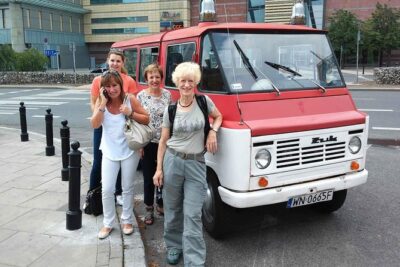
Warsaw for WWII Buffs – private tour with hotel pickup
Read our review →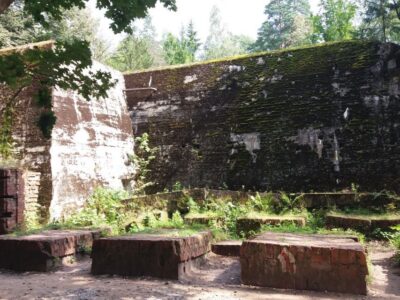
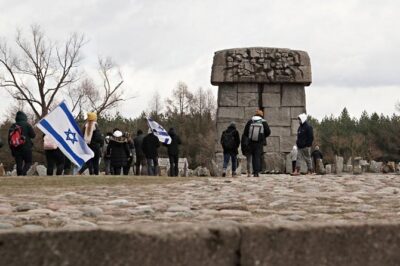
Treblinka Death Camp 6 Hour Private Tour from Warsaw
Read our review →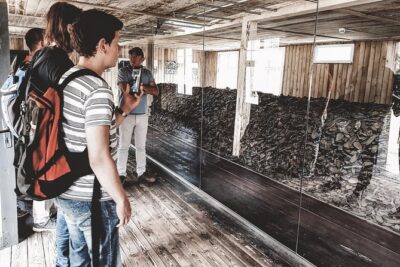
Stutthof Concentration Camp English Tour with Gdansk Hotel pickup
Read our review →
Majdanek Concentration Camp & Lublin Full Day Private Tour from Warsaw
Read our review →Browse the lists this tour appears in