
Reviewed · WALKING TOURS
Gdańsk: Old Town Private Walking Tour with Legends and Facts
Gdańsk’s best story is not confined to one handsome square. It runs from medieval trade and amber craftsmanship to the shipyards where the Solidarity movement helped crack communist rule. This private walk links those chapters with a guide who can explain why the city looks the way it does today. I especially like the contrast between the ornate Old Town and the sober history of the shipyard district.
I also like the private format, which gives you room to ask questions and adjust the pace. Guides such as Kaja, Krzysztof Przyborowski, Gabriela, and Weronika have earned repeated praise for clear explanations, warmth, and useful advice on food, drink, and shops. The main consideration is time: the two-hour route covers the classic center, while the six-hour option is a serious walking day.
Key points at a glance
- Start at the High Gate: Meet at Brama Wyżynna, about eight minutes from Gdańsk Main Railway Station.
- See the classic center: Walk through the Golden Gate, Dluga Street, Long Market, Neptune’s Fountain, Artus Court, and the Green Gate.
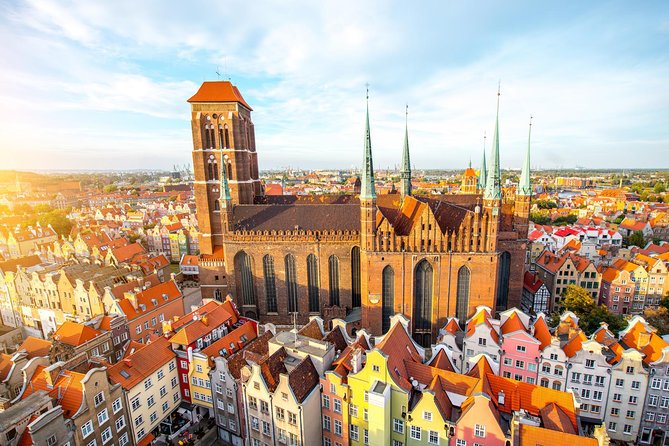
- Enter St Mary’s Basilica: See one of the world’s largest brick churches, including its grand hall, organ, royal chapel, and free-access areas.
- Add the Motława islands: The longer routes cross Wyspa Spichrzów and visit Olowianka, home to the red-brick Baltic Symphony Hall.
- See St Bridget’s famous amber altar: The four-hour route adds a church tied to Solidarity leaders during martial law.
- Finish with modern Polish history: The six-hour tour includes the Fallen Shipyard Workers Monument and the European Solidarity Centre.
Why Gdańsk works so well on foot
Gdańsk can feel like several cities joined together. Along the central streets, you get tall merchant houses, church towers, fountains, and carefully restored facades. Near the Motława River, old warehouses and waterfront views point to the city’s trading past. Beyond the old center, the shipyards tell a much more recent story about protest, courage, and political change.
A private walk is useful here because the details are easy to miss. The guide can explain the difference between the historic Main Town and the area often called the Old Town, point out architectural symbols, and connect a church door or monument to a larger story. You are not just moving from one photo stop to another.
The tour is also a good first introduction if you have limited time. Your guide can offer practical suggestions for restaurants, pubs, and souvenir shops, which helps you make better choices after the walk. If Gdańsk is part of a longer Poland trip, the guide can also help you decide which museums and districts deserve another visit.
More Walking Tours in Gdansk
- Gdańsk City Sights & History Guided Walking Tour in English
★ 4.8 · 876 reviews - Main Town Gdańsk Walking Tour
★ 5.0 · 644 reviews - Discover Gdansk Walking Tour
★ 5.0 · 495 reviews
From the High Gate to the Golden Gate
The meeting point is in front of the tourist information sign beneath the High Gate, or Brama Wyżynna, at Wały Jagiellońskie 2A. It is roughly eight minutes from the Main Railway Station, making the start fairly simple for anyone arriving by train.
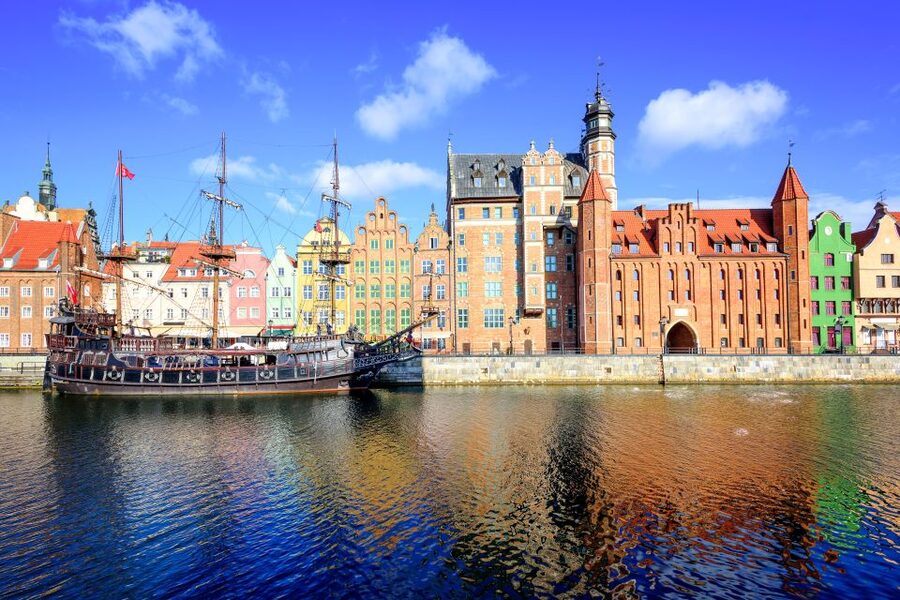
The High Gate marks the entrance into the historic center. From here, the route continues to the Golden Gate, a grand ceremonial entrance with a very different feel from the defensive walls that once protected the city. Your guide sets the basic story here: Gdańsk as a port, an industrial center, and a city shaped by changing political powers and trading links.
This opening section is a good place to ask for context. Gdańsk’s architecture can look almost theatrical, but it reflects the wealth of merchants, the importance of the port, and the city’s long periods of rebuilding. A guide can help you separate original elements from later restoration without turning the walk into a lecture.
Dluga Street and the Long Market
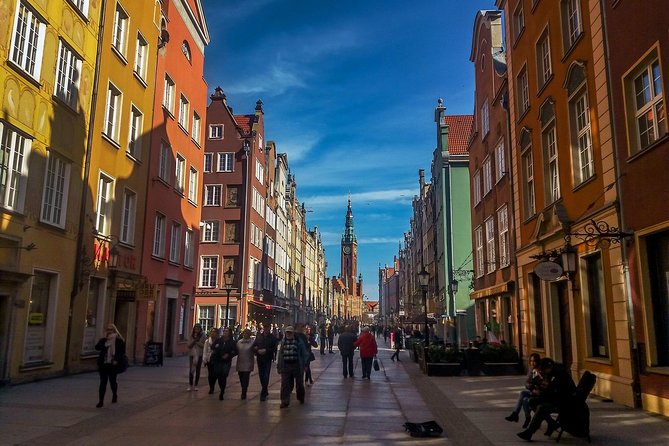
Dluga Street leads into the Long Market, the city’s grand central route. This is the visual heart of the two-hour tour, with rows of decorative townhouses and several of Gdańsk’s best-known landmarks close together.
You will see Gdańsk Town Hall, the Golden House, and Neptune’s Fountain. Neptune is more than a convenient meeting point for photographs. The fountain reflects Gdańsk’s strong connection to the sea and its merchant past, while the surrounding houses show how wealthy citizens once displayed their position.
The Golden House adds another layer. Its decorated facade belongs to the tradition of prosperous urban residences that made this part of Gdańsk so distinctive. Your guide can help you notice the small details above street level, where much of the decoration is easy to miss when the square is busy.
I would not rush this section. The buildings are close together, but the point is not simply to count them. Look upward, listen for the local legends, and ask which stories are documented and which belong to Gdańsk’s folklore. The tour’s mix of facts and legends is most useful when you enjoy both the solid historical record and the tales that give old streets their personality.
Artus Court and the Green Gate
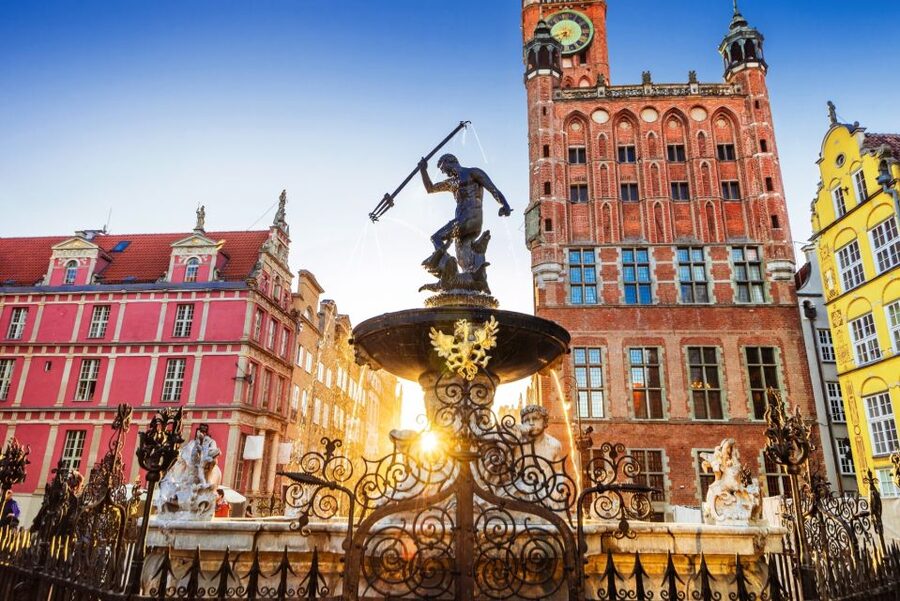
Artus Court, or Dwór Artusa, was once a meeting place for the city’s merchants. It now operates as a branch of the Gdańsk History Museum, with collections connected to local history and art.
This stop helps explain how trade shaped the city. The Long Market was not only a pretty civic space. It was also a place where merchants met, dealt, socialized, and displayed their standing. Artus Court gives that commercial world a physical setting.
Check the details of your booking if entering the museum is important to you. The experience includes a visit to Artus Court as part of the route, but the listed inclusions specifically identify free entry to parts of St Mary’s Church, St Bridget’s Church tickets on the four and six-hour tours, and a skip-the-line ticket for the European Solidarity Centre on the six-hour tour.
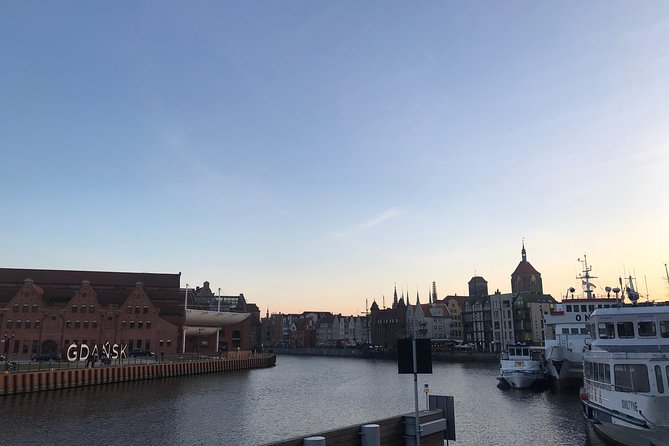
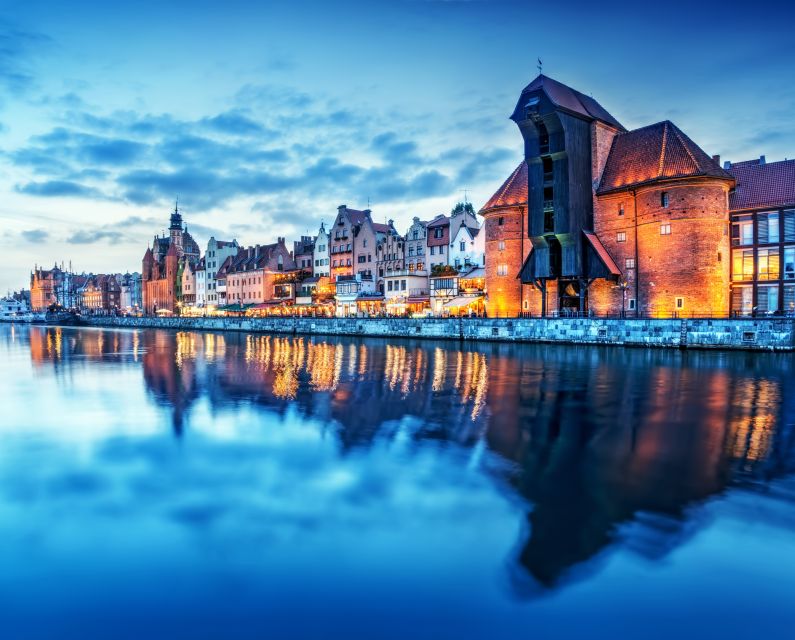
The Green Gate brings a change of mood. From here, you get a scenic view toward the Motława River, with the waterfront opening beyond the dense streets. This is one of the best points on the short route for understanding Gdańsk as a port city rather than simply an attractive historic center.
More Ghost Tours in Gdansk:
- Gdańsk Old Town Private Walking Tour with Legends and Facts
★ 5.0 · 65 reviews - Gdansk Legends & Cocktails Tour: Historic Tales and Tasting
★ 5.0 · 11 reviews - Creepy Krakow: 2-Hour City Walking Tour
★ 4.7 · 1,131 reviews - Krakow Night Tour: Ghosts, Vampires and Legends of the Old Town
★ 5.0 · 258 reviews
Inside St Mary’s Basilica
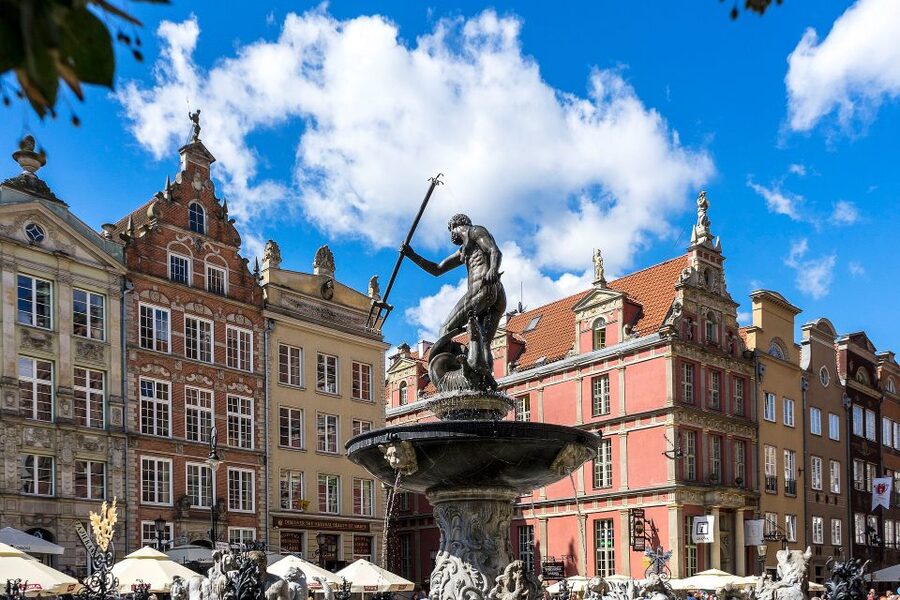
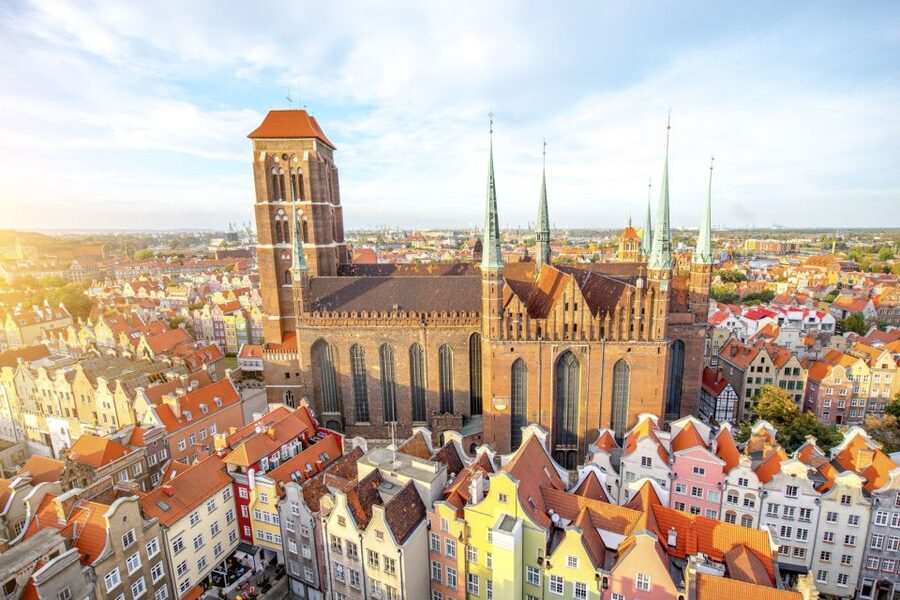
St Mary’s Basilica is one of the essential stops. It is one of the largest brick churches in the world, and its vast interior has a different effect from the narrow streets outside.
Inside, you can see the grand hall church, an ornate altar, the organ set, and the royal chapel. The scale matters. The plain strength of the brick structure and the height of the interior give you a sense of the city’s medieval ambition without needing much decoration on every surface.
All tour options include entry to the free parts of St Mary’s Church. This is worth noting because the church is not just a quick exterior stop. Allow yourself time to look at the proportions, side chapels, and religious details. Your guide can explain what you are seeing and connect it to the city’s past.
The basilica is also a useful pause in the walk. After the open squares and busy streets, the interior offers a quieter setting for questions. If you choose the two-hour tour, this church helps make the route feel substantial rather than rushed.
The Great Armoury and the two-hour choice
The standard two-hour route ends at the Great Armoury, a 17th-century building known as one of Gdańsk’s finest Renaissance examples. Its grand facade gives the short tour a strong finish.
Choose two hours if you want a solid orientation to the central sights, have a tight schedule, or prefer to spend the rest of your day at your own pace. You will cover the city’s main architectural route, enter St Mary’s Basilica, see the Motława River, and receive local suggestions for meals and shopping.
The limitation is straightforward: you will not reach the islands, St Bridget’s Church, or the European Solidarity Centre. This is not a flaw if your priority is the historic core. It becomes a drawback only if modern Polish history or the shipyard district is a major reason for your visit.
Three hours: the Motława islands and old warehouses
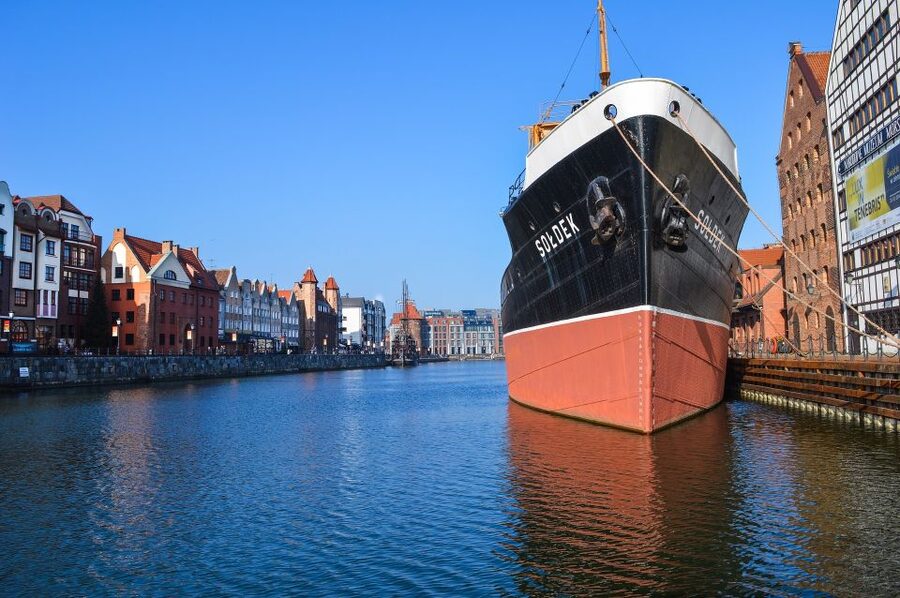
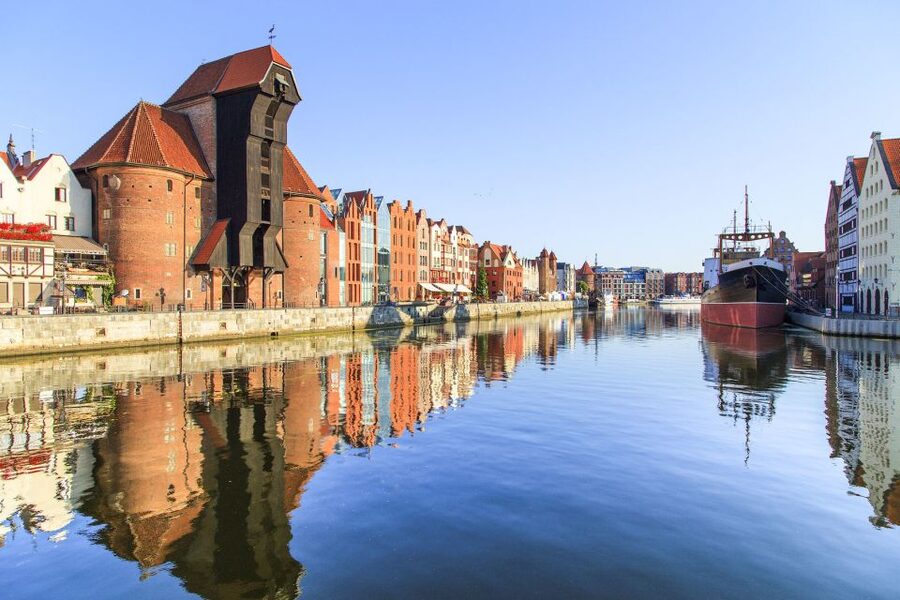
The three-hour option extends the walk to the islands on the Motława River. You will cross to Wyspa Spichrzów, an area being redeveloped around old brick structures and warehouse ruins.
This is a valuable addition because it shows the practical side of Gdańsk’s trading past. The Long Market presents wealth through decorated facades. Wyspa Spichrzów shows where goods were stored and handled. The old brick remains and warehouse structures make the commercial story easier to picture.
The route also reaches Olowianka Old Town, where you can see the red-brick Baltic Symphony Hall. The island section gives the tour more breathing room and adds waterfront views that the two-hour route only touches briefly.
Pick three hours if you want more than the postcard center but are not ready to commit to a full day of churches and museums. It is a sensible middle option for many people, especially if you like architecture and urban history more than formal museum displays.
Four hours: St Bridget’s Church and the amber altar
The four-hour route adds St Bridget’s Church, one of the most important stops for understanding Gdańsk’s modern political past. During martial law, the church served as a sanctuary for Solidarity leaders.
The church doors show scenes from August 1980 through the imposition of martial law in December 1981. That detail gives the political story a human scale. Instead of hearing only about strikes and government policy, you see how the movement was represented in a place of worship.
St Bridget’s is also known for its amber altar. Amber is one of the region’s most recognizable materials, and the altar gives you a close look at how local identity and religious art can meet. The church also contains religious artifacts that add to the visit.
I recommend this option if you want the tour to connect old Gdańsk with the Solidarity era, but you do not need a full museum visit. The four-hour format adds a meaningful historical stop without making the day revolve around a single institution.
Six hours: the shipyard and Solidarity
The six-hour route is the most complete choice. It extends beyond the central historic area to the Monument to the Fallen Shipyard Workers of 1970 and the European Solidarity Centre.
The monument commemorates workers killed during anti-communist riots. Its presence changes the tone of the day. After the polished streets of the historic center, you encounter a direct reminder that Gdańsk’s political history was marked by danger and loss.
At the European Solidarity Centre, you learn about the Solidarity riots and the trade union movement that helped bring an end to communist government in Poland. The museum is especially valuable if you want more than a brief explanation from a guide. The six-hour option includes a skip-the-line ticket, which is useful because it protects time for the exhibition itself.
This is the best choice for anyone drawn to 20th-century European history, political change, labor movements, or Poland’s transition away from communism. It is also the most demanding option physically and mentally. You will spend much of the day on foot, and the subject matter becomes heavier as the route continues.
The guide makes the private format worthwhile
The strongest feature of this experience is the guide. Kaja is praised for clear explanations, warmth, humor, and obvious affection for Gdańsk. Krzysztof Przyborowski is known for detailed local history and for answering questions fully without rushing the group. Gabriela has also worked well with families by keeping children involved.
That range matters. A private guide can adjust the emphasis once they learn what interests you. If you care about architecture, you can spend more time on facades and church interiors. If modern politics matters most, you can give more attention to St Bridget’s, the shipyard monument, and the European Solidarity Centre.
The guides speak English, Spanish, French, Italian, German, Polish, Russian, Norwegian, or Swedish. The experience is wheelchair accessible, and private groups are available. Pickup can be arranged from accommodation in Gdańsk Old Town within 1.5 kilometers of the High Gate. Otherwise, meet at Brama Wyżynna.
Is $107 per person good value?
At $107 per person, this is not the cheapest way to see Gdańsk. The value depends on how many people are in your private group and which duration you choose.
For two hours, you are paying for a licensed guide, a focused route, local advice, and entry to the free parts of St Mary’s Church. That can be worthwhile for a first visit, especially if you want to get your bearings quickly and avoid spending time piecing together the city’s story alone.
The longer options offer stronger value if you want more history. The four-hour route includes St Bridget’s Church, and the six-hour route includes the European Solidarity Centre with a skip-the-line ticket. A private format also lets you ask questions and request adjustments, something a large group tour cannot offer as easily.
If you are traveling alone, the price may feel high. For a family or small group, the private arrangement becomes easier to justify, particularly when you want a guide who can speak directly to your interests.
Who should book this walk?
I would choose this tour if you want a first look at Gdańsk that combines landmarks with explanation. It suits people who enjoy walking, old architecture, local legends, and modern European history.
Families can benefit from the private setup, especially because guides such as Gabriela have kept children engaged. It also works well for repeat visitors. Jamie, who had been to Gdańsk many times, found that the guide added new context and made familiar streets more meaningful.
You might skip it if you prefer exploring alone with a guidebook, dislike long walks, or want to spend the whole day inside museums. Also remember that the two-hour tour is mainly the central historic route. For Solidarity history, select at least four hours, and ideally six.
Should you book it?
Book the two-hour option for a sharp introduction to the center. Choose three hours if the river islands and warehouse past appeal to you. The four-hour route is the best balance for many history-minded visitors, adding St Bridget’s Church and its amber altar without requiring a full museum day.
Choose six hours if the Solidarity movement is central to your interest in Gdańsk. The route has more walking, but it gives you the clearest picture of how medieval trade, port life, shipyard protest, and modern Poland fit together. The high rating of 4.9 from 245 bookings reflects the tour’s strongest quality: guides who explain the city with care and adapt the experience to the people in front of them.
FAQ
Where does the Gdańsk walking tour begin?
Meet your guide in front of the tourist information sign under the High Gate, Brama Wyżynna, at Wały Jagiellońskie 2A, 80-887 Gdańsk.
How far is the meeting point from the Main Railway Station?
The High Gate meeting point is about eight minutes from Gdańsk Main Railway Station.
How long can the private tour last?
You can choose a two, three, four, or six-hour option, subject to available starting times.
What is included on every tour?
Every option includes a private walking tour of Gdańsk Old Town, a licensed five-star guide, and entry to the free parts of St Mary’s Church.
Is St Bridget’s Church included?
St Bridget’s Church is included on the four-hour and six-hour options, with regular admission tickets.
Which tour includes the European Solidarity Centre?
The six-hour option includes a skip-the-line ticket to the European Solidarity Centre.
Does the tour visit Wyspa Spichrzów?
Yes. Wyspa Spichrzów is included in the three, four, and six-hour options.
Can I be picked up at my accommodation?
Pickup is available from accommodation in Gdańsk Old Town within 1.5 kilometers of the meeting point. Otherwise, meet your guide at the High Gate.
Which languages are available?
Guides are available in Spanish, French, Italian, English, German, Polish, Russian, Norwegian, and Swedish.
Can I cancel the booking?
You can cancel up to 24 hours before the tour for a full refund. Reserve now and pay later is also available.
Just added around Gdansk
- Gdansk and Malbork Castle Small Group Tour from Warsaw with Lunch★ 4.5 · 20 reviews
- Westerplatte private tour led by Expert-Guide (door to door)★ 5.0 · 5 reviews
- Whisky Tasting in Gdańsk★ 5.0 · 3 reviews
- Gdansk EVERYDAY Vodka Tasting Tour★ 5.0 · 6 reviews
- Westerplatte – 2h private trip by luxury car|★ 5.0 · 4 reviews
- Private WW2 Tour of Westerplatte,Gdansk and Stutthof Including Lunch★ 5.0 · 12 reviews
- Aiport Gdansk Transfer to Malbork Castle or Stutthof★ 5.0 · 3 reviews
- 5 hours Individual trip to the Stutthof Concentration Camp★ 5.0 · 5 reviews
Walking Tours, compared.
Gdańsk City Sights & History Guided Walking Tour in English
Read our review →
Browse the lists this tour appears in