
Reviewed · HISTORICAL TOURS
Historic City Center Tour Gdansk in German
Gdansk’s old center packs a remarkable amount into a walkable stretch: grand gates, narrow façades, a church built of brick, and a medieval crane once powered by human muscle. This German-language tour gives you the story behind those sights instead of leaving you to guess what you are looking at.
I like the clear 150-minute route and the chance to see major landmarks without arranging several separate visits. I also like the practical local advice folded into the tour, including recommendations for cafés and restaurants. The main consideration is the amount of historical detail. A guide such as Sandra can make the past gripping, but some parts, especially church history, may feel dense.
- Meet at the Golden Gate: Find the yellow umbrellas at Złota Brama, a simple landmark in the historic center.
- Follow a concentrated route: The walk links the High Gate, Golden Gate, St. Mary’s Church, Arthur’s Court, the Right Town Hall, the Crane, and the Polish Post Office.
- Hear the German-language story: The live guide explains Gdansk’s thousand-year history and the ideas created by its own people.
- See the famous medieval Crane: This waterfront landmark once worked through human power and remains one of the city’s signature sights.
- Allow for a full history lesson: The tour has plenty of dates and background, which some people will enjoy and others may find hard to retain.
- Prepare for the weather: The walk runs rain or shine, and winter visitors should dress warmly.
Why Gdansk Works So Well on Foot
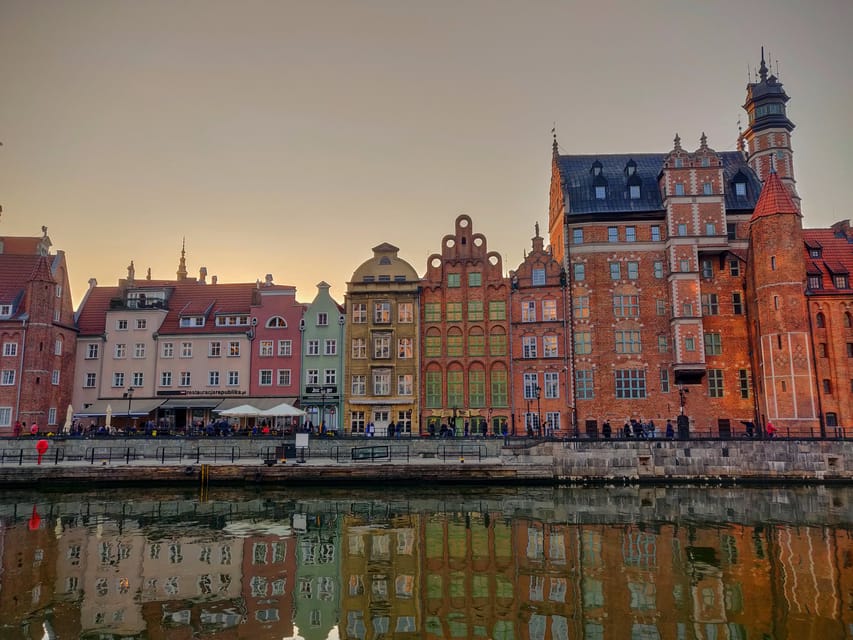
Gdansk’s historic center is made for a first orientation walk. The streets are compact, the architecture is easy to photograph, and the route brings together political, religious, commercial, and maritime parts of the city.
You begin near the Golden Gate, then move through the old central district, known in the description as the law town. Expect cobbled streets, tall, slender façades, and terraces that give the center its polished look. The scenery is attractive, but the real value of a guide is learning why these buildings matter and how the city developed over roughly a thousand years.
At $26 per person, this is not the cheapest way to spend two and a half hours, but it is a reasonable price for a live German-language guide covering many of Gdansk’s main sights. You are paying for orientation, context, and the ability to ask questions, not for transport or hotel service. If you are visiting for a short stay, that concentration can be useful.
Starting Beneath the Golden Gate
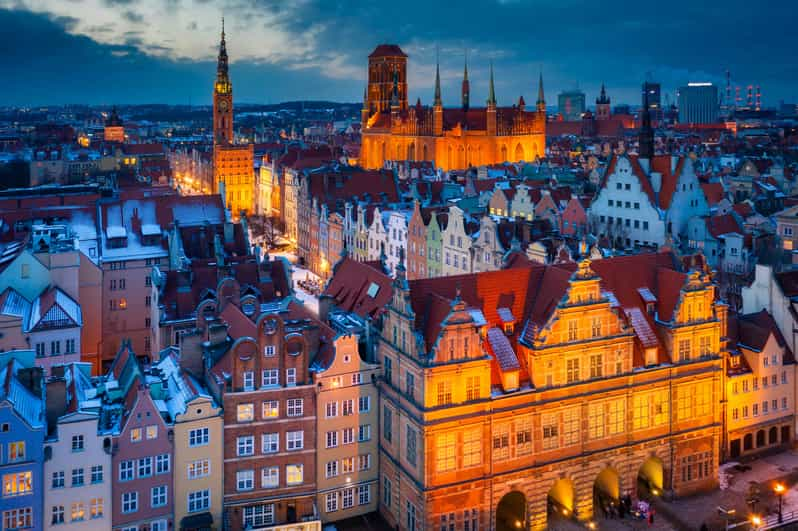
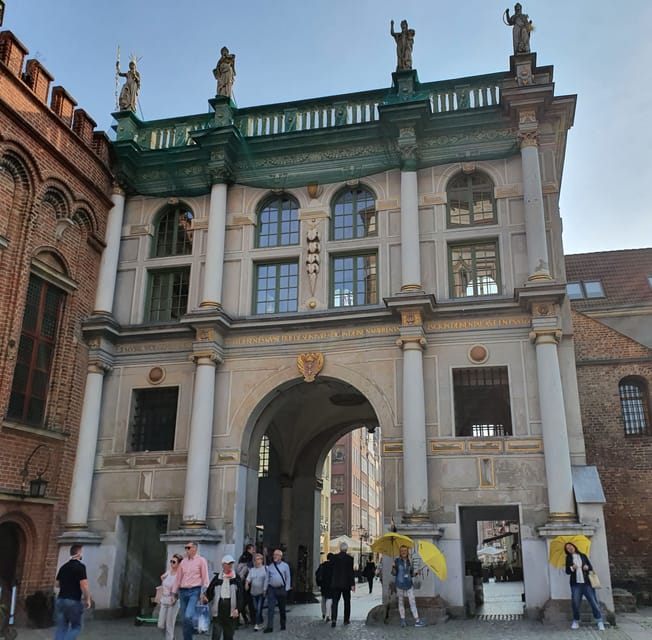
The meeting point is the Golden Gate, or Złota Brama. Look for the yellow umbrellas, which should make the group fairly easy to spot in a busy historic district.
The gate gives the tour a fitting opening. It is one of the ceremonial entrances to the old center, and from here you can quickly understand how Gdansk’s grand public spaces connect. The route also includes the High Gate, another important entry point, so you get a sense of how visitors and residents once approached the city.
This is a walking tour rather than a sightseeing ride, so your first few minutes are useful for getting your bearings. Wear comfortable shoes. The old streets are cobbled, and the pace must balance photography, explanations, and keeping the group together.
Because the tour joins a general walking group, it is not a private experience. That keeps the price down, but it also means the guide has to serve different interests at once. If you want a smaller private walk, you can contact the supplier after booking to arrange one.
More Historical Tours in Gdansk
- Gdansk: City Cruise on Historical Polish Boat
★ 4.8 · 2,913 reviews - Gdańsk: Sunset Cruise on a Historic Polish Boat
★ 4.9 · 977 reviews - Gdańsk City Sights & History Guided Walking Tour in English
★ 4.8 · 876 reviews
St. Mary’s Church and the Weight of the Past
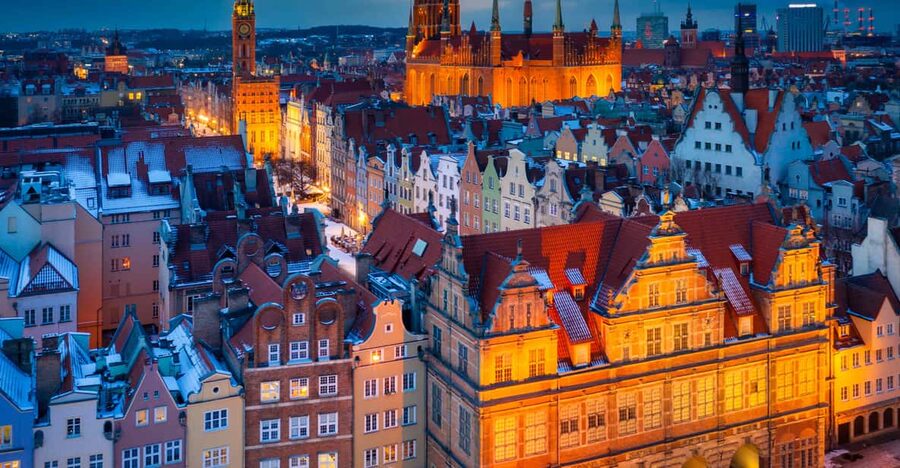
St. Mary’s Church is the visual heavyweight of the route. It is described as the largest brick church in the world, and its scale gives you a strong sense of the resources and ambition behind medieval Gdansk.
The church is valuable even if you are not a specialist in religious architecture. Its size changes your view of the surrounding streets, and the guide can place it within the broader story of the city. You will hear about its religious role and the historical events tied to Gdansk’s changing fortunes.
This is also the section most likely to test your attention. The historical material can come quickly, and church history may receive more time than you expect. If you prefer a light architectural walk, you might find this part long. If you like dates, institutions, and the way faith shaped public life, it will probably be one of the strongest sections.
The tour is conducted in German, so make sure you are comfortable following detailed explanations in that language. A guide such as Sandra has been praised for making the material engaging even in cold conditions. Still, bring a warm coat in winter. You may be standing outside while listening, and the walk continues in poor weather.
Arthur’s Court and the City’s Public Face
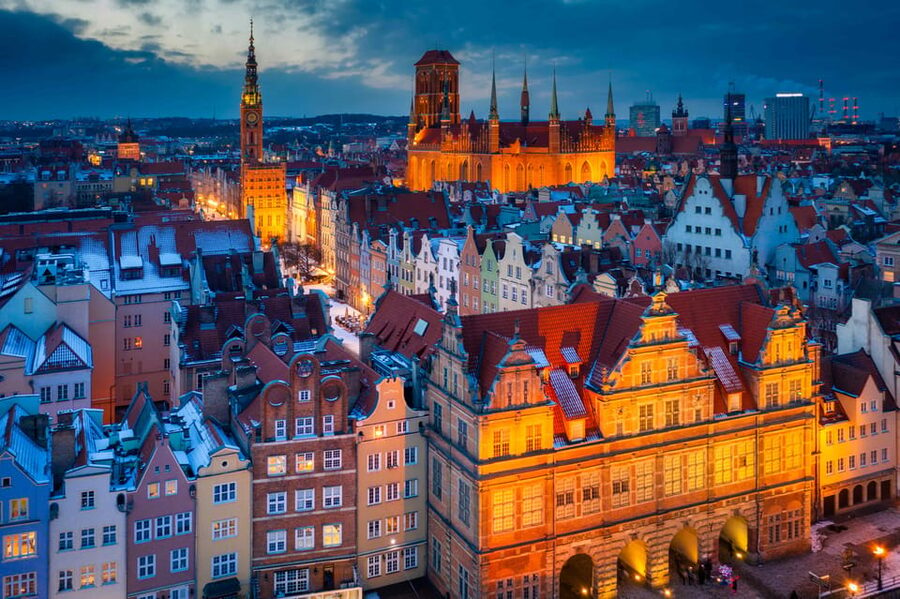
Arthur’s Court adds a different side of Gdansk. This was a prestigious civic and social setting, and its name points to the medieval and merchant culture that shaped the city’s public life.
The stop helps explain that Gdansk was not simply a collection of churches and pretty façades. Its central buildings also expressed wealth, power, status, and civic identity. Your guide can connect the building to the people who made decisions, traded goods, and shaped the city’s character.
This is where the tour’s focus on local ideas becomes useful. The presentation is not only about rulers who arrived from elsewhere. It also looks at the people of Gdansk and the ideas developed in the city itself. That local angle keeps the walk from becoming a standard list of royal names and construction dates.
As with the other stops, do not expect a long indoor visit to every building. The supplied details promise a walking tour and guide, but they do not list entry tickets or special access. Think of the experience primarily as an outdoor route with explanations at major landmarks.
The Right Town Hall and the Shape of Civic Power
The Right Town Hall, also called the Right-town town hall in the tour description, brings civic administration into the picture. It is one of the places where the city’s political story becomes visible in stone and brick.
I like this kind of stop because it helps you read the streets around you. A town hall is not just another attractive building. It tells you that the district was a working center of government, commerce, and public life. Your guide can help separate the decorative details from the larger story of how Gdansk was governed.
The tour’s historical approach means you may hear many names and dates here. Take a few mental notes, but do not worry about remembering every detail. The useful takeaway is the relationship between the city’s buildings and its long civic life.
If your main goal is photography, this stop still earns its place because it gives you time to look at the façade and surrounding streets. If you want a rapid walk with only short explanations, the amount of background may feel heavy.
Same city, a completely different kind of day:
- Gdansk: Firearm Shooting Experience with Instructor
★ 4.8 · 866 reviews - Gdansk: Guided Round-Trip Cruise to Westerplatte
★ 4.3 · 865 reviews - Gdańsk: Sightseeing EcoCruise around the Old Town of Gdansk
★ 4.6 · 719 reviews - Main Town Gdańsk Walking Tour
★ 5.0 · 644 reviews
The Medieval Crane Beside the Water
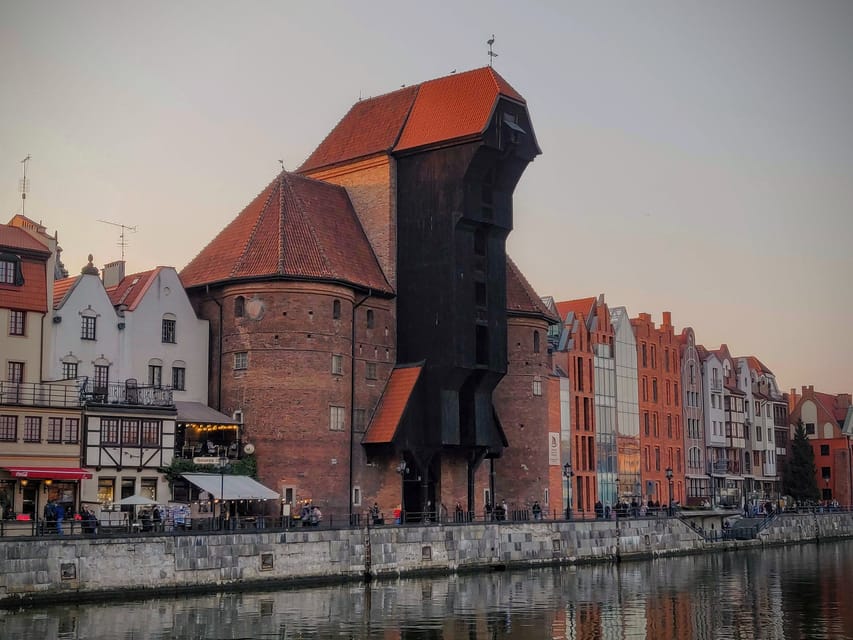
The Crane is one of Gdansk’s most memorable sights and perhaps the most unusual object on the route. It was once operated by human muscle power, a reminder of the physical work behind the city’s maritime trade.
This landmark gives the tour a practical turn. Instead of only discussing grand institutions, the guide can show how goods were handled and how the waterfront functioned. The Crane also links Gdansk’s inland streets to its role as a port.
The description calls it the largest medieval crane in Europe. That is a useful reason to pause here, but the bigger value is seeing a working piece of old technology in the middle of the city. It is easier to understand the scale of historic trade when you are looking at the structure itself rather than reading about it in a museum caption.
The Crane is also a good place for photographs, though the tour continues as a group. Have your camera ready before the guide moves on, and listen for the explanation before stepping away for a closer look.
The Polish Post Office and the Free City of Danzig
The Polish Post Office in the former Free City of Danzig adds a more modern and politically charged chapter. It takes the story beyond medieval gates and merchant buildings into the complicated history of the city’s changing identity.
This stop matters because Gdansk cannot be understood through architecture alone. The city has carried different names and political arrangements, including its period as the Free City of Danzig. The Polish Post Office helps connect those changes to an actual place in the center.
For you, this is one of the reasons the tour offers more than a pretty-street stroll. The guide can show how national identity, administration, and local life overlap. The subject may be serious, but it gives the route needed depth.
The tour description does not promise entry inside the post office, so expect an explanation connected to the site rather than assume a museum visit. That distinction matters if you are planning a day around indoor attractions.
German Guidance and the Human Side of the Walk
A German-language live guide is the central feature of this experience. You are not following an audio recording or reading a fixed set of signs. The guide can respond to questions and adjust the explanation as the group moves through the center.
Sandra has received especially warm feedback for telling the story in an interesting and absorbing way. Her ability to keep the walk enjoyable in cold weather is a useful sign for anyone visiting outside summer. At the same time, no guide can remove every challenge of a dense historical route. You may hear more information than you can retain.
The best approach is to focus on the main thread. Listen for how Gdansk grew, how its people shaped the city, how religion and civic power left their mark, and how the port influenced daily life. You do not need to memorize every date to get value from the walk.
The tour suits German-speaking adults, couples, families with older children, and anyone who wants a first look at the historic center before exploring alone. It is less suited to someone who wants a short photo stop at each landmark with almost no explanation.
Price, Timing, and Practical Details
The cost is $26 per person for 150 minutes, including the walking tour and guide. Hotel pickup and drop-off are not included, so you need to make your own way to the Golden Gate.
The length is a useful middle ground. A one-hour walk can feel rushed in a city with this many major sights, while a much longer tour may be tiring on cobbled streets. Two and a half hours gives the guide time to explain the main buildings, but you should expect to be on your feet for most of it.
The tour is listed as wheelchair accessible. Since the route includes cobbled streets, you may still want to confirm any personal mobility concerns before booking. The available information does not specify the exact surface conditions at every stop or the size of the group.
You can cancel up to 24 hours before the start for a full refund, and you can reserve now while paying later. Those terms are useful if your Gdansk schedule is still shifting. The walk operates rain or shine, so your clothing matters. In winter, wear warm layers. In wet weather, bring suitable rain protection.
Who Should Book This Gdansk Walk
Book this tour if you want a broad introduction to Gdansk in German and prefer a guide who explains the meaning behind the buildings. The route covers the city’s central landmarks without requiring transport, and the price is fair for the amount of ground and history included.
It is especially useful early in your stay. After the walk, you will know where the Golden Gate, St. Mary’s Church, Arthur’s Court, the town hall, the Crane, and the Polish Post Office fit together. You can then return to the places that interest you most.
Think twice if you dislike long historical explanations or want guaranteed private attention. This is a general walking tour, not a private custom route. The church section may run long for some people, and the number of names and dates can be difficult to remember.
I would book it for a first visit, particularly if German is your preferred tour language. Dress for the weather, wear steady shoes, and treat the walk as an introduction rather than a substitute for every museum and interior in Gdansk.
FAQ
Where does the Historic City Center Tour Gdansk begin?
The tour begins at the Golden Gate, or Złota Brama. Look for the yellow umbrellas.
How long does the tour last?
The walking tour lasts 150 minutes, or two and a half hours.
What language is the tour conducted in?
The live tour guide speaks German.
What sights are included on the route?
The route includes the High Gate, Golden Gate, St. Mary’s Church, the Right Town Hall, Arthur’s Court, the medieval Crane, the Polish Post Office in the former Free City of Danzig, and additional sights in the historic center.
Is hotel pickup included?
No. Hotel pickup and drop-off are not included. You meet the guide at the Golden Gate.
Does the tour operate in bad weather?
Yes. The tour runs rain or shine, so you should dress appropriately for the conditions.
Just added around Gdansk
- Gdansk and Malbork Castle Small Group Tour from Warsaw with Lunch★ 4.5 · 20 reviews
- Whisky Tasting in Gdańsk★ 5.0 · 3 reviews
- Westerplatte private tour led by Expert-Guide (door to door)★ 5.0 · 5 reviews
- Gdansk EVERYDAY Vodka Tasting Tour★ 5.0 · 6 reviews
- Westerplatte – 2h private trip by luxury car|★ 5.0 · 4 reviews
- Private WW2 Tour of Westerplatte,Gdansk and Stutthof Including Lunch★ 5.0 · 12 reviews
- Aiport Gdansk Transfer to Malbork Castle or Stutthof★ 5.0 · 3 reviews
- 5 hours Individual trip to the Stutthof Concentration Camp★ 5.0 · 5 reviews
Historical Tours, compared.

POLIN Museum of the History of Polish Jews Ticket
Read our review →
Gdańsk City Sights & History Guided Walking Tour in English
Read our review →

Small-Group Historical Guided Tour of Warsaw with pick up/drop off. Public Tour.
Read our review →
Browse the lists this tour appears in