
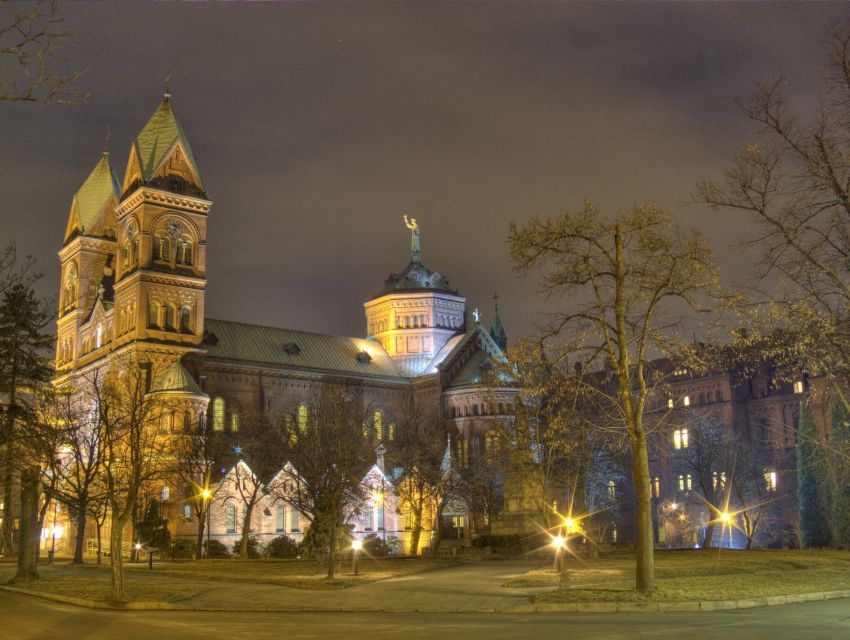
Reviewed · WALKING TOURS
Katowice Old Town Highlights Private Walking Tour
Katowice’s story is written in coal, steel, neon, brick, and bold modern buildings. This private walk connects the Old Town with the city’s industrial past, the memory of World War II and Communism, and the striking Spodek arena. I like the clear historical arc, and I also like the choice of three tour lengths, so you can fit the walk to your schedule.
The 2-hour route is a good introduction to central Katowice, while the 3-hour option adds a former coal-mining site and the 5-hour version reaches Nikiszowiec, the city’s famous red-brick workers’ district. The main drawback is price: at $103 per person, this is not a budget walk, especially for a solo visitor. You are paying for a private guide and a more tailored visit, not simply a set of landmarks.
Key points at a glance
- Follow Katowice’s transformation: Learn how a small Silesian settlement became an industrial city and then a modern cultural center.
- Begin at the Silesian Philharmonic: The meeting point puts you beside one of the region’s major cultural institutions.
- See central landmarks in one walk: Visit Plac Wolności, Goldstein Palace, the Market Square, Silesian Theatre, monuments, and Spodek.
- Add former mining grounds: The 3-hour and 5-hour tours include the old mine site and Warszawa II tower shaft.
- Reach Nikiszowiec by public transport: The 5-hour tour includes two-way bus tickets to the historic miners’ estate.
- Ask for local suggestions: Your guide can point you toward restaurants, cafes, pubs, and shops for the rest of your stay.
Why Katowice works best with a historical guide
Katowice can seem at first like a modern Polish city with broad streets, postwar buildings, and a famous arena shaped like a flying saucer. Its older story is less obvious. Coal mining, German influence, industrial growth, wartime damage, political change, and cultural renewal all sit close together.
That is where a private guide earns the fee. Instead of seeing unrelated buildings, you get a thread connecting them. A stop at a square can lead into the city’s industrial years. A monument can open a conversation about wartime memory or Silesian identity. A modern cultural building can make more sense when you know what occupied the area before it.
The tour is also useful if you are new to Katowice and want practical advice. The guide can suggest places to eat, have coffee, enjoy a drink, or shop. Since this is a private group, you can ask questions and adjust the pace more easily than on a large scheduled walk.
The experience is offered in English, German, or Polish. A licensed guide is included, and the activity is wheelchair accessible. If your hotel is in Katowice Old Town, pickup may be available, though the itinerary can change slightly to allow for it.
More Walking Tours in Katowice:
- Katowice Old Town Walking Tour
★ 5.0 · 5 reviews - Warsaw: Old Town Highlights Walking Tour in English
★ 4.7 · 1,516 reviews - Old Town Krakow & Wawel Castle Walking Tour
★ 5.0 · 1,508 reviews
Starting at the Silesian Philharmonic
The walk begins in front of Filharmonia Śląska at Sokolska 2. Do not go inside the building, since it is only the meeting point and its staff are not involved with the tour.
The Silesian Philharmonic has been an important part of cultural life in Silesia since 1945. That makes it a fitting place to begin. The tour does not treat Katowice as an old European center frozen in time. Instead, it shows you a city shaped by work, music, politics, and rapid change.
This opening stop also helps you get your bearings. From here, the route moves through central Katowice on foot. Wear comfortable shoes, since the tour is a walking experience and the longer versions cover more ground.
Plac Wolności and Goldstein Palace
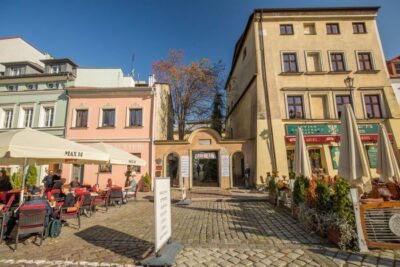
One of the first major stops is Plac Wolności, one of Katowice’s oldest squares. Its location helps show how the city grew outward from a smaller settlement into a major urban center.
The square is also home to Goldstein Palace, an attractive historic building that gives the area a more formal, nineteenth-century character. It is a useful contrast with the later industrial and Communist-era structures you will see during the tour.
I like this part of the route because it begins with scale and texture rather than rushing straight to the city’s most famous modern sight. You get a sense of Katowice as a place with layers. The square is not only a photo stop. It helps explain the city before the largest industrial expansion took hold.
Walking along 3 Maja Street to the Market Square
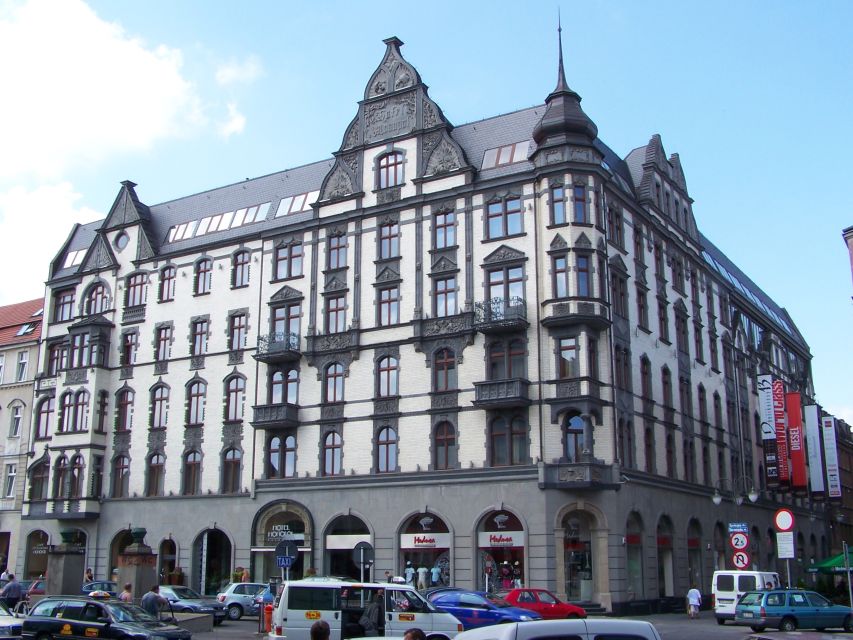
From Plac Wolności, the route continues toward the Market Square along 3 Maja Street. This is one of the city’s best-known streets and is described as one of the most expensive in Poland.
That detail gives you a useful look at present-day Katowice. The street is part of the city’s commercial center, but your guide will also help you picture its earlier appearance, when Old Town streets were lit by bright neon signs during the city’s industrial heyday.
The Market Square, or Rynek, is the central stop on the shorter tour. You will see the buildings around the square and hear how the area has changed over time. Since the city has a mix of historic and modern architecture, it is worth listening to the explanation rather than expecting a single uniform style.
If you have only two hours in Katowice, this central route gives you the most efficient introduction. It covers the main historic core without requiring a bus ride or a longer outing to the former mine and Nikiszowiec.
A few more Katowice half-days worth comparing
- Private One-Way Transfer from Kraków to Katowice Airport
★ 5.0 · 157 reviews - Pub Crawl 1hr Unlimited Beer + Vodka then Clubs in Katowice
★ 4.2 · 22 reviews - Katowice and Nikiszowiec: bicycle tour with guide
★ 4.3 · 14 reviews - Katowice Airport Krakow Private Transfer, Private Driver Service
★ 5.0 · 7 reviews
Silesian Theatre and the city’s changing center
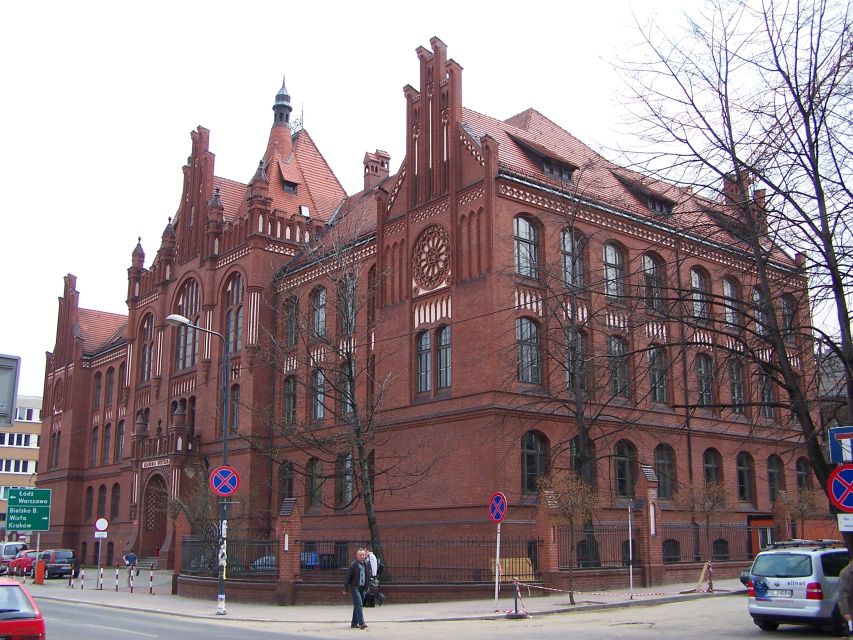
The grand Silesian Theatre is another key stop near the Market Square. Its scale reflects Katowice’s role as a major cultural center in the region.
The theatre also helps balance the mining story. Silesia is often reduced to coal, but the tour shows how music, theatre, architecture, and public life developed alongside industry. Your guide can explain the buildings around the square and how they fit into the city’s changing identity.
One benefit of a private walk is the ability to pause at places that interest you. If you care about architecture, ask about the older facades and newer structures. If you are more interested in political history, ask about the changes brought by World War II and Communism. The experience is designed around a guide rather than an audio track, so questions are part of its value.
Monuments that explain Silesian memory
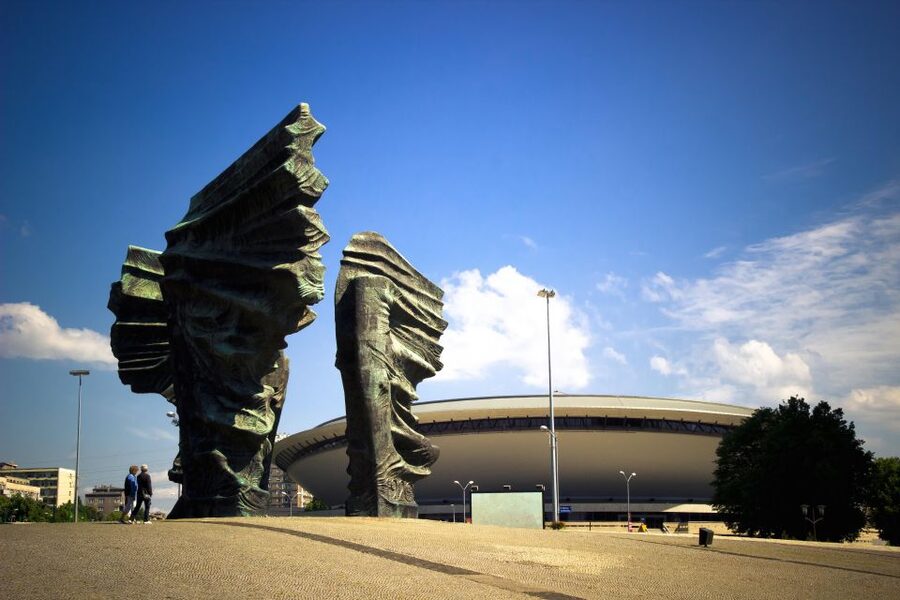
The route passes the World War II Monument to the Scouts of September and the Silesian Insurgents’ Monument. These are not decorative stops. They point toward the conflicts and political struggles that shaped the region.
The monument to the Scouts of September recalls the young people involved in the defense of Poland at the beginning of World War II. The Silesian Insurgents’ Monument looks toward the region’s postwar memory and the Silesian uprisings.
These stops give the tour more weight than a simple architecture walk. You are not just checking off buildings. You are seeing how Katowice remembers war, national identity, and the region’s place within Poland. If those subjects interest you, the guide’s explanations may be among the most useful parts of the visit.
Finishing at Spodek
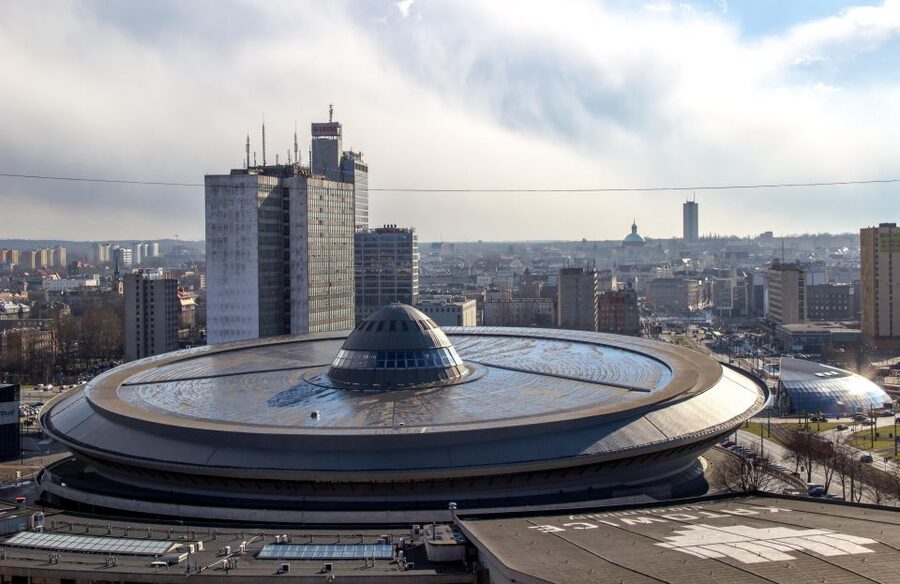
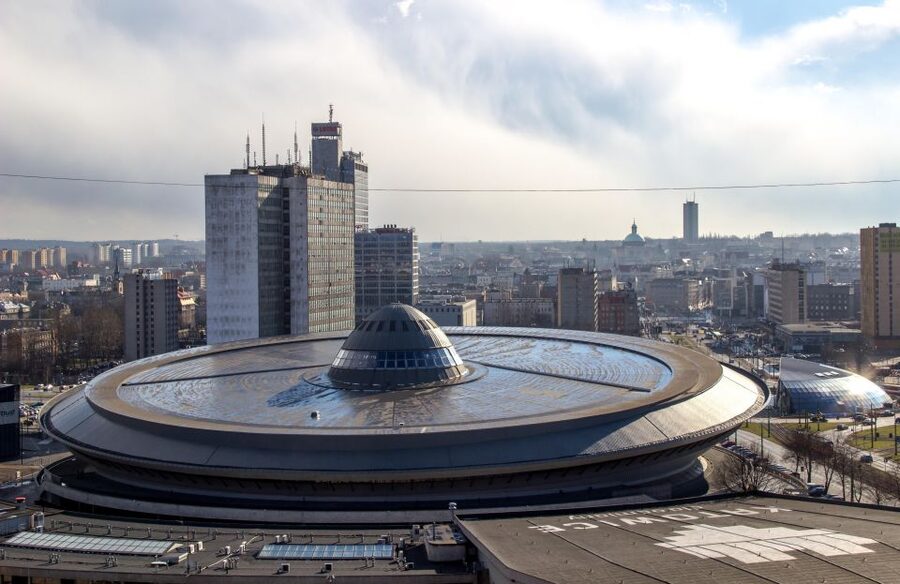
The 2-hour route ends at Spodek, Katowice’s instantly recognizable arena. Its unusual form resembles a flying saucer, and it remains one of the city’s most memorable pieces of modern architecture.
Spodek is a strong finish because it captures the difference between old Katowice and modern Katowice in one image. After seeing historic squares, theatres, monuments, and industrial references, you arrive at a building that looks forward rather than back.
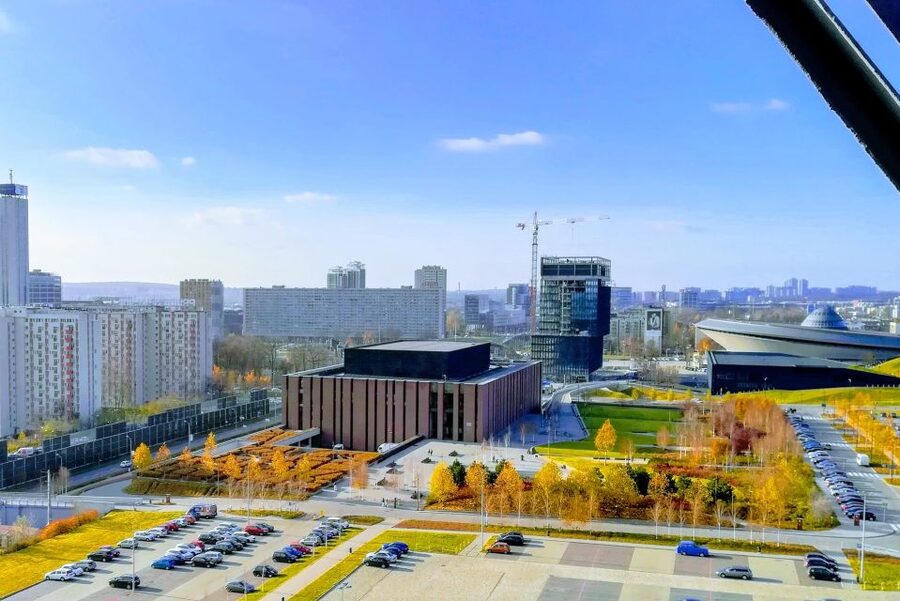
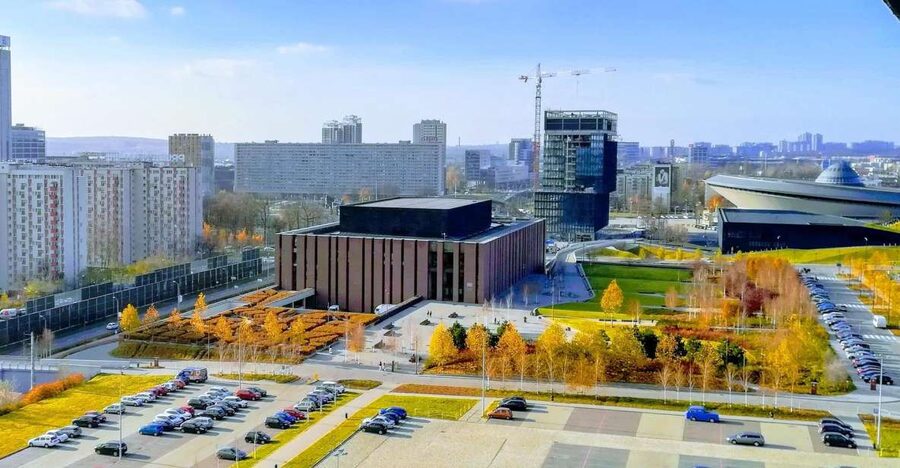
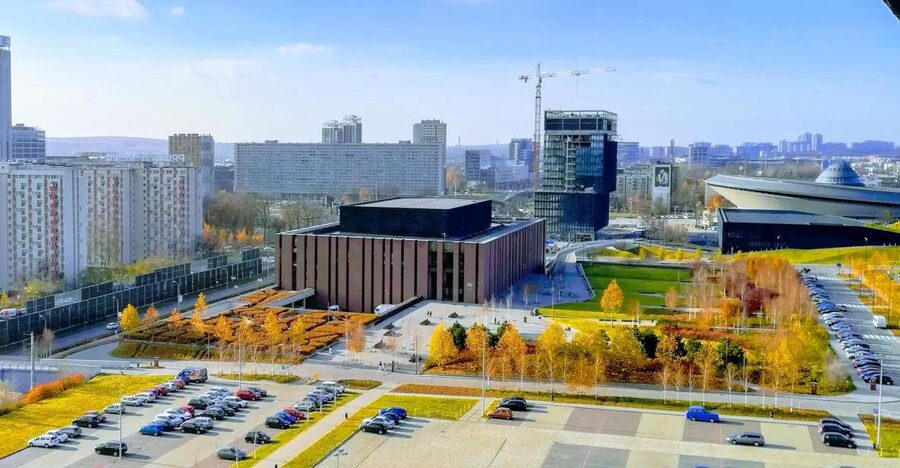
The surrounding Cultural Zone includes the International Congress Centre, the home of the Polish National Radio Symphony Orchestra, and the Silesian Museum. On the 3-hour and 5-hour tours, these places become part of the route. Museum admission is not included, so plan this walking tour as an introduction to the area rather than a museum visit.
The 3-hour route and the former coal mine
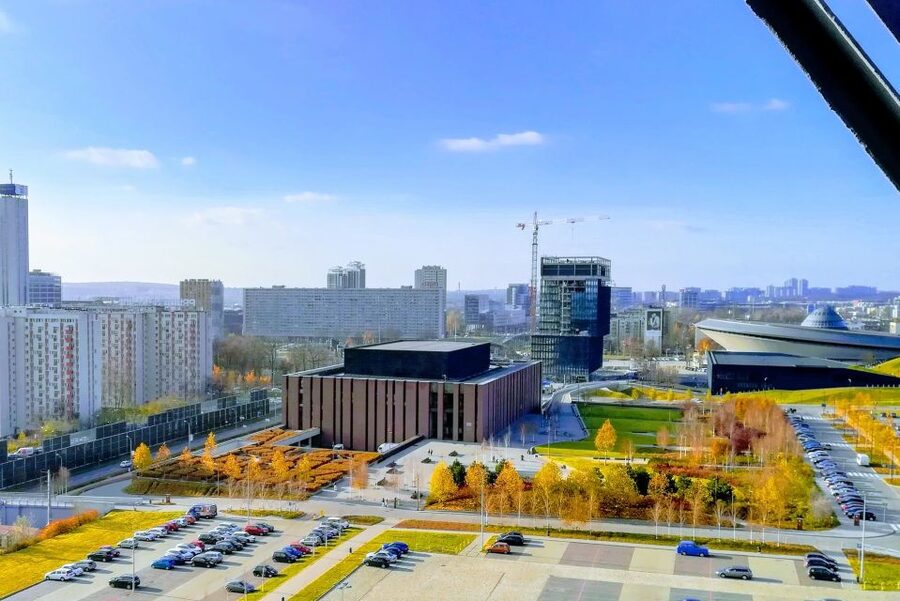
The 3-hour option adds Katowice’s Cultural Zone and the grounds of a former coal mine. This is the best middle choice if you want more than the center but do not have time for Nikiszowiec.
On the former mine site, you can see old infrastructure and the historic Warszawa II tower shaft. The guide explains how coal mining shaped Silesian work and city life. This gives you a physical setting for the region’s industrial past, rather than discussing mining only in the abstract.
In summer, the tower shaft may offer an observation deck, depending on weather and opening conditions. The extra ticket costs 5 PLN for an adult and is not included in the tour price. The view can add a useful sense of the city’s layout, but it should be treated as an optional extra, not a guaranteed part of the experience.
The 3-hour route is a sensible pick for first-time visitors who want context. You get the Old Town, Spodek, the Cultural Zone, and the former mine site without committing to the longer public transport outing.
The 5-hour route to Nikiszowiec
The 5-hour tour adds Nikiszowiec, one of Katowice’s most distinctive districts. The neighborhood was built in the twentieth century for local miners and their families. Its red-brick architecture gives it a very different feel from the central streets.
Nikiszowiec is recognized as a historical monument and forms part of the Industrial Monuments Route of the Silesian Voivodeship. Those designations matter because the district is not simply an attractive photo stop. Its design reflects the daily life of working families connected to the mines.
The tour includes two-way public transport tickets from the city center, since Nikiszowiec lies farther away. That makes the longer option easier to manage, especially if you do not know the local transport system. The trip also changes the rhythm of the day. You are not walking through one continuous central district. You are moving between separate parts of Katowice and seeing how industrial communities were planned.
Choose this version if mining history and architecture are central to your interests. It is also the strongest choice if you want to see a side of Katowice that a short Old Town walk cannot provide. The tradeoff is time. Five hours is a substantial part of your day, and the route includes public transport.
Is $103 per person good value?
At $103 per person, this is a premium walking tour. The price makes more sense for people who value a private guide, flexible questions, and a focused introduction to a city they do not know well.
The 2-hour tour offers the least sightseeing for the price, but it is efficient. You see the Old Town, Market Square, monuments, and Spodek with a guide who can put each stop into context. If you are traveling alone, the cost may feel high. For a private group splitting the cost across several people, the value improves.
The 3-hour option adds the former mine and Cultural Zone, which gives you a fuller picture of Katowice. The 5-hour version provides the most complete itinerary, including transport to Nikiszowiec and return tickets. Museum entry and the optional tower observation deck are extra, so keep those costs in mind.
I would choose the 2-hour version for a short city break, the 3-hour version for a balanced first visit, and the 5-hour version for anyone with a strong interest in Silesian industry and working-class architecture.
Practical details before you book
The standard meeting point is in front of the Silesian Philharmonic at Sokolska 2. Pickup is available from accommodation in Katowice Old Town if you provide the full address. If your accommodation is more than 1.5 kilometers from the meeting point, or if you do not provide an address, meet the guide at the Philharmonic.
Check your email the day before the tour for final information. Starting times vary, so you need to check availability for the date you want.
The tour ends back at the meeting point. The 5-hour itinerary uses public transport, and two-way tickets are included. The 2-hour and 3-hour tours do not include the trip to Nikiszowiec.
Free cancellation is available up to 24 hours before the start time, and you can reserve now and pay later. Those terms are helpful if your Poland itinerary is still moving around.
Who should choose this Katowice walking tour?
I would recommend it to first-time visitors who want the city explained rather than simply photographed. It suits people interested in mining, industrial development, World War II, Communism, architecture, and local culture.
It also works well for a private family group or friends who prefer to set their own pace. The guide can answer questions directly, and the included local suggestions may help you plan the rest of your stay.
I would not choose it if you want a cheap, self-guided stroll or if you plan to spend most of your day inside museums. The Silesian Museum is part of the Cultural Zone, but admission is not included, and the tour is mainly about seeing the city and understanding its story from the streets.
Should you book it?
Book the 3-hour tour if you want the best balance of central sights, Spodek, the Cultural Zone, and mining history. Choose the 5-hour option if Nikiszowiec is high on your list and you want to see the city’s working-class past in person.
The 2-hour tour is enough for a useful first look, especially if your time is short. At $103 per person, this is not the cheapest way to see Katowice, but the private format and historical focus make it worthwhile for visitors who want clear explanations, local orientation, and more than a quick walk around the Market Square.
FAQ
How long does the Katowice tour last?
You can choose a 2-hour, 3-hour, or 5-hour version. Starting times depend on availability.
What languages are available?
The live guide is available in English, German, or Polish.
Where does the tour begin?
The meeting point is in front of Filharmonia Śląska at Sokolska 2, 40-084 Katowice. You should not enter the building because it is only being used as a meeting point.
Is hotel pickup available?
Pickup is available from accommodation located in Katowice Old Town. You must provide your full address when booking. If the accommodation is more than 1.5 kilometers from the meeting point, the guide will meet you at the Philharmonic instead.
Does the tour include Nikiszowiec?
Nikiszowiec is included only in the 5-hour tour. That option includes two-way public transport tickets from the city center.
Is the former coal-mining site included?
The former coal-mining site and Katowice Cultural Zone are included in the 3-hour and 5-hour tours. They are not included in the 2-hour tour.
Is the tower observation deck included?
No. The observation deck is an optional summer activity, subject to weather conditions. An adult ticket costs 5 PLN.
Just added around Katowice
- Katowice KTW Airport – Kraków City/KrakówAirport Private Transfer★ 5.0 · 6 reviews
- From Katowice: Trip to the Guido Coal Mine in Zabrze★ 5.0 · 6 reviews
- Katowice: Private Traditional Polish Food Tour★ 5.0 · 4 reviews
- Katowice Private Vodka Tasting Tour★ 5.0 · 3 reviews
- Katowice Old Town Walking Tour★ 5.0 · 5 reviews
- Explore Katowice in 60 minutes with a Local★ 3.5 · 4 reviews
- Gun Shooting Experience with Hotel Transfers in Katowice★ 4.5 · 3 reviews
- Katowice Private Traditional Polish Food Tour★ 5.0 · 3 reviews
Walking Tours, compared.
Gdańsk City Sights & History Guided Walking Tour in English
Read our review →
Browse the lists this tour appears in