
Reviewed · COMMUNIST HISTORY TOURS
Life Behind the Iron Curtain Warsaw Walking Tour
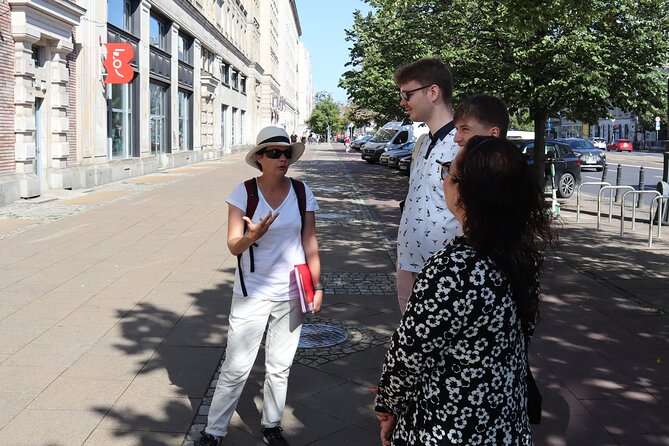
Warsaw’s communist past is easiest to understand on foot, where grand squares, broad parade streets, party offices, railway stations, and department stores form one connected story. This small-group walking tour follows that story from Constitution Square to the Palace of Culture, using buildings and street details to explain what daily life was like under the Polish People’s Republic.
I like the focus on ordinary life, especially shopping shortages, censorship, travel, and family memories shared by guides such as Olivia, Oliwia, Agnieszka, and Aga. I also like the compact route and visual aids, which help you read a city that has changed quickly. The main drawback is that the tour covers a fair distance in two and a half hours, so it is not ideal if long walks are difficult.
Key points about the Warsaw Iron Curtain walk
- Constitution Square sets the scene: You begin at a planned communist city center built for grand public life and political display.
- The route links power and daily routine: You move from parade streets and party headquarters to stores, stations, and public monuments.
- Personal stories add human scale: Guides including Olivia and Agnieszka bring family experiences into a period that can otherwise feel remote.
- The group is capped at 10 people: That makes it easier to ask questions and follow explanations in busy central Warsaw.
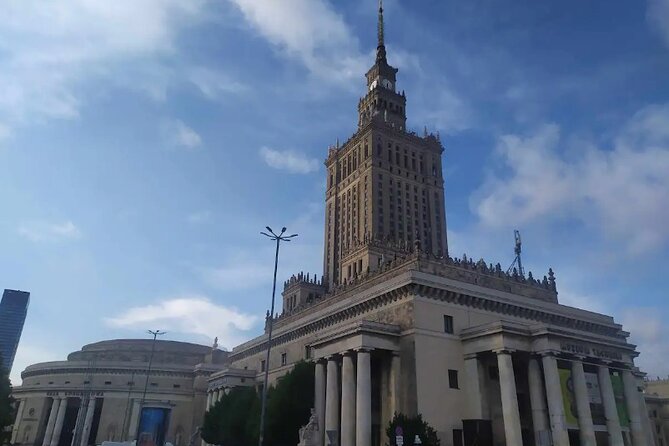
- The Palace of Culture finishes the story: You see the city’s most controversial communist landmark, with the viewing terrace available for an extra 28 PLN.
- The tour costs $28.57: For 2.5 hours of guiding, visual material, and local recommendations, the price is fair if this period interests you.
Why communist Warsaw makes sense on foot
Warsaw can look like a modern European capital until you notice the layers beneath it. Wide streets, oversized public buildings, formal squares, and leftover signs point to a time when architecture had to serve politics as much as practical needs.
This walk gives those places a clear order. You start at Constitution Square, pass along Marszałkowska Street, examine government and party buildings, then shift toward censorship, shopping, transport, and the Palace of Culture. That sequence matters because it moves from the state’s public face to the problems people faced in private life.
I find this more useful than a general history talk delivered in one square. You keep changing the setting, so each part of the communist system has a physical address. A building is not just a building. It may have been a party headquarters, a symbol of planned prosperity, a place linked to censorship, or a shop where finding basic goods could take patience and luck.
The experience is offered in English and lasts about two hours and thirty minutes. With no museum admissions included along the route, most of your time is spent outside, looking, listening, and asking questions.
More Communist History Tours in Warsaw
- Private Tour: Warsaw’s Communist History by Retro Fiat
★ 5.0 · 115 reviews - Warsaw: Communism Tour in an Original Socialist Van
★ 4.9 · 75 reviews - Warsaw: Cold War Museum Entry Ticket
★ 4.6 · 55 reviews
Constitution Square and the planned city center
The tour begins at Plac Konstytucji, or Constitution Square. It was planned as a new center for the Polish People’s Republic, and its scale tells you something before the guide says a word.
This was not designed as a cozy neighborhood square. It was built to project order, authority, and collective purpose. The open space and surrounding architecture suited ceremonies, public gatherings, and the visual language of the communist state.
Your guide explains what the planners wanted this part of Warsaw to become. That gives you a useful starting point for the rest of the walk. You can begin to see how urban design was used to shape public behavior and political identity.
The stop lasts about 20 minutes and is free to visit. It is also a practical meeting point, located at Plac Konstytucji, 00-647 Warszawa. Arrive ready to walk, since the tour moves through central Warsaw rather than remaining in one small area.
Marszałkowska Street and the language of parades
From the square, you follow Marszałkowska Street for about 20 minutes. Its broad layout made it suitable for parades and marches, so the street becomes a lesson in how the government wanted public space to function.
I like this part because it connects architecture with movement. A wide road can carry traffic, but it can also carry a political message when crowds, banners, and official ceremonies pass along it. Your guide points out one of the most recognizable places associated with the Polish People’s Republic.
The route is not only about dates and political leaders. It asks you to think about who controlled public space, who appeared in official events, and how ordinary people experienced these spectacles. The same street could be a place of national celebration, political pressure, or simply a route through the city.
The walk is central and practical, but you should wear comfortable shoes. The tour description specifically warns that it is not suited to people who have difficulty walking long distances. That is the only real physical caution, though the itinerary is described as a moderate amount of walking rather than an all-day trek.
Socialist realism at the Ministry of Agriculture
The Ministry of Agriculture and Rural Development provides a 15-minute lesson in socialist realism. This architectural style was not chosen simply because officials liked its appearance. It was part of a larger effort to make public buildings express the values of the state.
Your guide explains the features of the style and why buildings were constructed in this way. You will look at the building as both architecture and political communication, considering how size, decoration, and formal design could suggest strength, discipline, and national purpose.
This stop is especially useful if you are not familiar with the visual difference between socialist realism and other twentieth-century architectural styles. Instead of treating the building as a quick photo stop, the guide gives you a way to read it.
The short timing works well here. Fifteen minutes is enough to understand the main ideas without turning the tour into an architecture seminar. If you want detailed technical analysis of every facade, this will probably feel brief. For a general history walk, it is the right amount of attention.
More Walking Tours in Warsaw
- Warsaw: Old Town Highlights Walking Tour in English
★ 4.7 · 1,516 reviews - Warsaw: Old Town Guided Walking Tour
★ 4.9 · 599 reviews - Half-Day Polish Food Walking Tour with Guide and Dinner
★ 4.5 · 381 reviews - Warsaw: Warsaw Ghetto Private Walking Tour with Hotel Pickup
★ 4.9 · 369 reviews
Mysia 3 and the cost of controlled speech
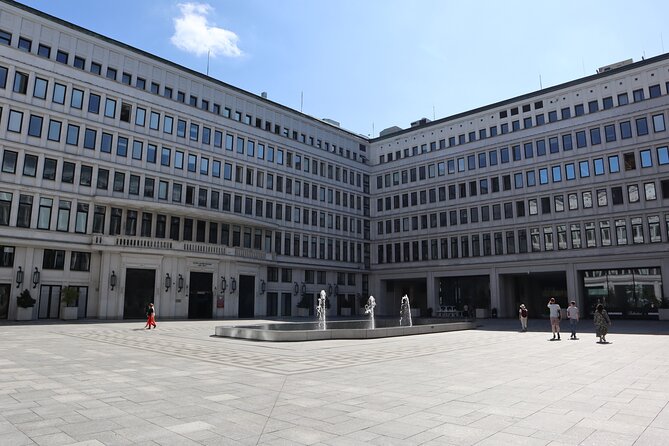
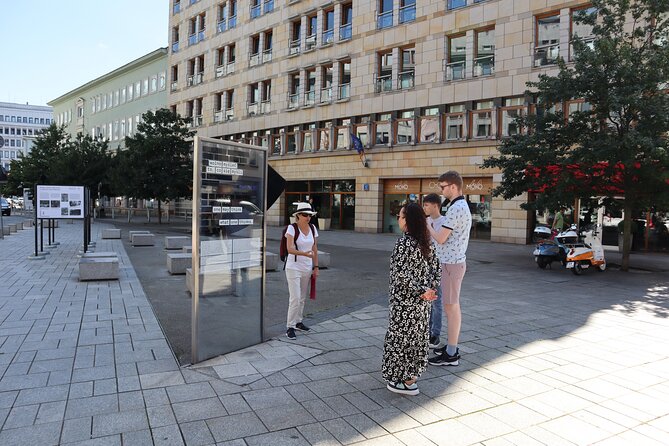
At Mysia Street, the tour turns toward censorship and espionage. The Free Speech Memorial provides a direct link between the physical city and the limits placed on information.
This is one of the more important stops because censorship affected far more than newspapers. It shaped what people could read, discuss publicly, publish, broadcast, or safely pass along to others. The reference to espionage adds another layer, showing how information could carry political risk.
The stop lasts around 20 minutes. That gives you time to ask questions and connect the site with the broader system introduced at Constitution Square. The guide’s visual aids are useful here because a monument or street corner may not explain its importance on its own.
This is also where a strong guide matters most. Olivia, Oliwia, Agnieszka, and Aga are named in the supplied feedback, and their approach is described as clear, lively, and personal. Stories from family members who lived through the period help turn censorship from an abstract policy into something that affected real households.
The former Communist Party headquarters at Nowy Świat
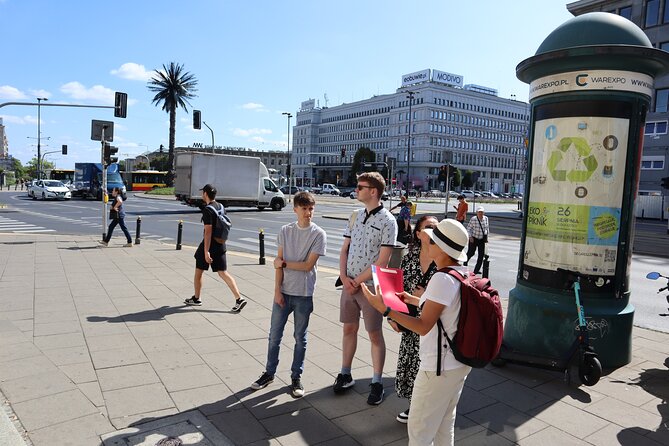
At Nowy Świat 6/12, you see the building that now houses the Banking and Finance Center. During the Polish People’s Republic, it was the headquarters of the Communist Party and a place from which the country was managed.
The change in use is worth noting. A building can keep its shape while its political meaning shifts completely. Your guide explains what happened here during the communist period and how the site functions today.
This 15-minute stop helps you understand the concentration of power in Warsaw. Decisions affecting workplaces, food supplies, travel, public speech, and local government were tied to institutions in the capital. You are not just looking at an old office block. You are looking at a former command center.
I also appreciate that the tour does not treat the communist period as a sealed-off chapter. The guide connects past use with present-day Warsaw, helping you notice how the city has moved on while keeping reminders of what came before.
Cedet and the reality of finding everyday goods
The former Central Department Store Cedet is where the tour shifts from political structures to consumer life. Buying ordinary things was one of the hardest parts of daily life during the Polish People’s Republic, and this former store offers a natural place to discuss why.
This may be the most relatable stop for many people. Political slogans and government buildings can feel distant, but everyone understands the frustration of trying to find food, clothing, household goods, or other basic items. The guide explains how shortages affected shopping and why a department store mattered.
The stop lasts 15 minutes. Do not expect to go shopping inside as part of the tour or to visit a dedicated museum exhibit. The value is in the explanation of what the building represented and how the system worked around it.
Family stories are especially helpful here. One guide’s account of her parents’ and grandparents’ experiences reportedly made the subject more immediate, including the way life changed after the fall of the Soviet Union. You get a sense of how political systems reach into kitchens, queues, budgets, and family plans.
Warsaw Central and Downtown Railway Stations
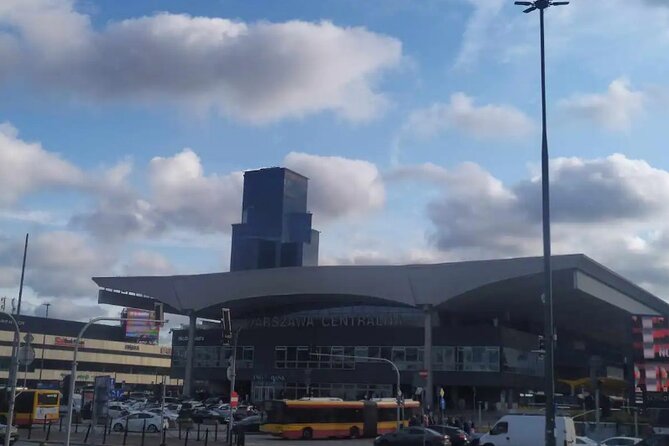
The railway section covers local, regional, and international travel during the communist period. You look at Warsaw Central Railway Station and Downtown Railway Station, then hear how movement around Poland and beyond worked at the time.
This is a smart inclusion. Travel is often discussed as a matter of trains and timetables, but under a restrictive political system it can also involve permissions, limitations, borders, and unequal access. The stations help explain how connected, or disconnected, people could feel.
The stop takes about 15 minutes. The guide’s job is to give you the key context rather than lead you through a long station tour. You will likely get more from this section if you ask about the difference between domestic and international travel, since the itinerary specifically covers both.
The railway stations also bring the route into the present. You are seeing working transport spaces, not only preserved monuments. That can make the contrast between past and present easier to grasp, even though the buildings and surroundings have changed.
The Palace of Culture and Science finale
The final stop is the Palace of Culture and Science, one of Warsaw’s strongest symbols and most disputed landmarks. The tour spends about 30 minutes here, the longest single stop, which is appropriate given the building’s political weight.
Your guide explains why the Palace was built, what it represented, and why many people still have mixed feelings about it. It is both a major part of the city’s identity and a reminder of Soviet influence. You do not need to admire the building to understand why it matters.
The tour ends nearby at Emilii Plater 54, 00-901 Warszawa. The viewing terrace is not included, but you can add it for 28 PLN if you want a higher view over central Warsaw. Treat that as an optional extra rather than a necessary part of the walk. The guided explanation is the core experience.
Finishing here gives the route a clear visual ending. You have moved from a square designed for the new communist center to the most famous building associated with that era. The Palace gathers together the themes of scale, power, propaganda, and changing public attitudes.
How the guides shape the experience
The strongest part of this tour is the human explanation. Olivia is described as engaging and generous with restaurant and sightseeing suggestions. Agnieszka, also called Aga, is praised for cheerful storytelling and a strong command of the subject.
Oliwia’s family background adds another useful layer. She was young when her family left Warsaw during communism, but she draws on what she learned from her parents and grandparents. That matters because it avoids presenting the period as a simple textbook chapter.
You should expect interpretation rather than a dry list of dates. The guides explain buildings, point out details you might miss, and connect public places with household experience. Their personal stories are most valuable when used alongside broader history, and the feedback indicates that this balance is a major strength.
The group limit is 10 people. That is small enough for questions without making the walk feel like a private tour. It also makes visual aids easier to follow than they would be in a large crowd.
Is $28.57 a fair price?
At $28.57 per person, I consider this good value for a 2.5-hour guided walk in central Warsaw. You are paying for a focused route, an English-speaking guide, visual aids, background information sent before the tour, and practical suggestions for places to eat, drink, and visit afterward.
The route itself has no admission fees at the main stops. That keeps the price simple, but it also means you are paying mainly for interpretation. If you prefer to explore buildings independently and read plaques, you may find the cost less appealing. The places are public, so the guide’s context is the reason to book.
The optional Palace viewing terrace costs 28 PLN. You can decide at the end, after you know whether you want the extra view. Free cancellation is available up to 24 hours before the start time, while cancellations or changes made later are not refunded.
This tour is often booked about 47 days ahead. That suggests you should reserve early if your Warsaw dates are fixed, especially since the group is limited to 10 people.
Who should book this walking tour?
I would choose this tour if you want to understand how communism shaped ordinary life, not just see famous buildings. It suits first-time visitors who want a historical framework for central Warsaw, as well as people who have taken similar Cold War walks in other countries and want to compare different systems.
It is particularly useful if you enjoy architecture, political history, family stories, or city planning. The route also works well early in a Warsaw stay because the guide provides recommendations for more places to see, eat, and drink.
You may want to skip it if your main interest is medieval Warsaw, wartime destruction, or museums with indoor collections. This is a modern-history walk conducted mainly outdoors, and it covers a fair amount of ground.
Service animals are allowed, public transportation is nearby, and most people can take part. Still, plan for extended walking and outdoor conditions. The experience is offered in English, and confirmation arrives when you book.
Should you book the Life Behind the Iron Curtain tour?
Book it if you want the city to explain itself. The route connects Constitution Square, Marszałkowska Street, government offices, the Free Speech Memorial, Cedet, railway stations, and the Palace of Culture into one readable story.
The best reason to go is the combination of public architecture and private memory. Guides such as Olivia, Oliwia, Agnieszka, and Aga bring family experience into discussions of censorship, shortages, travel, and political control. That gives the tour more feeling than a standard building-by-building walk.
I would recommend it to most history-minded visitors who can manage the walking. The price is reasonable, the group is small, and the Palace viewing terrace is optional. Just remember that this is an outdoor walking experience, not a museum tour, and its value depends on your interest in Warsaw’s communist past.
FAQ
Where does the Life Behind the Iron Curtain Warsaw tour begin?
The tour begins at Constitution Square, or Plac Konstytucji, at 00-647 Warszawa, Poland.
Where does the tour end?
It ends near the Palace of Culture and Science at Emilii Plater 54, 00-901 Warszawa, Poland.
How long does the walking tour last?
The tour lasts approximately two hours and thirty minutes.
Is the Palace of Culture viewing terrace included?
No. Entry to the viewing terrace is not included and costs 28 PLN.
How many people can join the tour?
The group has a maximum of 10 participants.
Can I cancel for a full refund?
Yes. You can cancel at least 24 hours before the experience starts for a full refund. Cancellations and changes made less than 24 hours before the start time are not accepted for a refund.
Just added around Warsaw
- Wolfs Lair and Swieta Lipka Small Group Tour from Warsaw with Lunch★ 4.5 · 21 reviews
- Wolf’s Lair & Treblinka Tour in 1 day from Warsaw★ 5.0 · 37 reviews
- Tour from Warsaw: Wolf’s Lair, Hitler’s HQ Zones I and II★ 5.0 · 32 reviews
- Wolf’s Lair Private Day Trip from Warsaw★ 5.0 · 50 reviews
- Wolfs Lair “Hitler’s Headquarters” – Full Day Tour from Warsaw by private car★ 4.5 · 4 reviews
- Warsaw Must-See Local City Tour with Antek and Tomek★ 5.0 · 51 reviews
- Off the Beaten Track in Warsaw: Private City Tour★ 4.5 · 9 reviews
- Warsaw’s Old Town A Self-Guided Audio Tour★ 4.5 · 10 reviews
Communist History Tours, compared.
Legendary Private Nowa Huta Communism Tour with Crazy Guides
Read our review →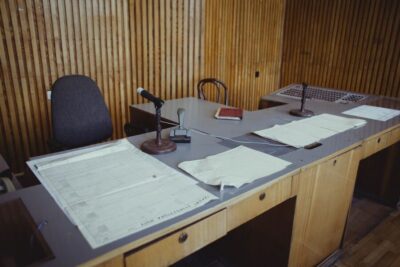
Nowa Huta: Steelworks Administration Buildings/Shelters Tour
Read our review →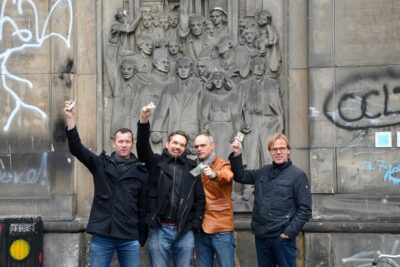
Private Tour: Warsaw’s Communist History by Retro Fiat
Read our review →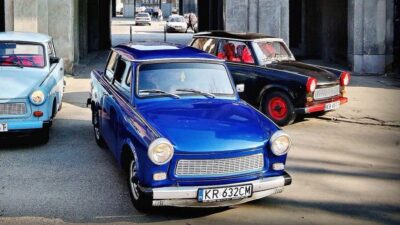
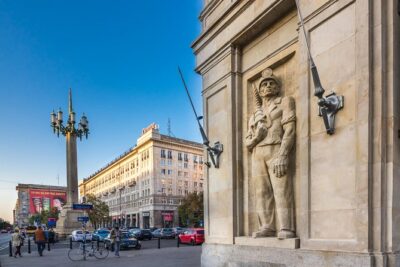
Private Nowa Huta Adventure Tour in Communist Cars
Read our review →
Browse the lists this tour appears in