
Reviewed · COMMUNIST HISTORY TOURS
Life Behind the Iron Curtain Warsaw Walking Tour
Warsaw’s communist past is easiest to understand from the pavement, not from a display case. This 150-minute walk connects broad parade streets, grand public buildings, empty-shop memories, censorship, and the small tricks people used to get through daily life. The humor matters. It shows how ordinary Poles dealt with an absurd system without turning the tour into a dry political lecture.
I like the personal family stories shared by guides such as Oliwia and Agnieszka, and I like the route’s clear focus on real life rather than only famous architecture. You also get visual aids, useful Warsaw suggestions, and plenty of time for questions. The main consideration is the roughly 3-kilometer walk, which may not suit anyone who has trouble covering that distance.
Key points at a glance
- See Warsaw’s planned communist center: Constitution Square was meant to help create a new heart for the city.
- Walk along parade-scale Marszałkowska Street: Its width and layout make more sense once you hear how it was used for marches and public displays.
- Meet socialist realism face to face: The buildings may look handsome to you, while many Poles connect them with hardship and state control.
- Discuss censorship and spying at the Free Speech Memorial: This gives the political story a human scale.
- Understand daily shortages through humor: The tour explains how people bought goods in empty shops and joked about service in state stores.
- Finish near the Palace of Culture and Science: You can add its viewing terrace afterward, but the entry fee is not included.
Warsaw’s communist center begins at Constitution Square
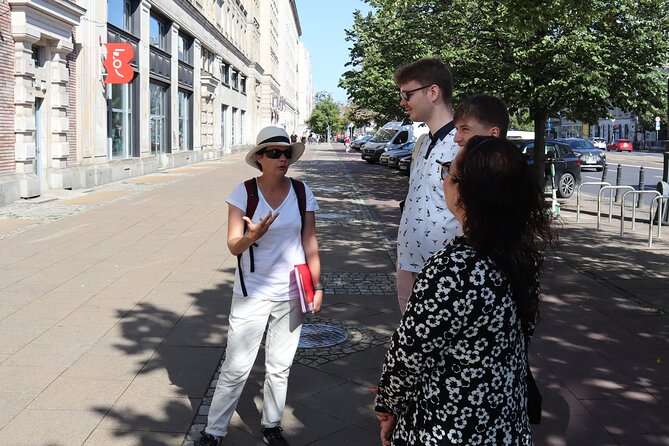
The tour starts at Constitution Square, a place designed to project order, power, and a new social future. Its scale is the first clue. This was not planned as a quiet neighborhood square. It was supposed to help form the new center of Warsaw, with space for crowds, ceremonies, and official displays.
Your guide uses the setting to explain how architecture can carry a political message. The square is not just a collection of buildings. It tells you what the state wanted citizens to see: confidence, unity, and control. At the same time, the discussion turns toward what daily life felt like behind that polished public image.
This opening section lasts about 15 minutes, so you get useful context without spending the entire walk on one site. I would pay attention to the contrast between the impressive scale and the practical problems described by the guide. That contrast is one of the tour’s central ideas.
More Communist History Tours in Warsaw
- Private Tour: Warsaw’s Communist History by Retro Fiat
★ 5.0 · 115 reviews - Warsaw: Communism Tour in an Original Socialist Van
★ 4.9 · 75 reviews - Warsaw: Cold War Museum Entry Ticket
★ 4.6 · 55 reviews
Marszałkowska Street reveals the scale of public power
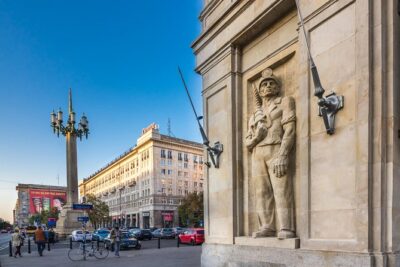
From Constitution Square, the route continues along Marszałkowska Street. Its width makes sense once you hear about parades and marches. Walking here helps you picture how public space could be arranged for the state, rather than mainly for private cars, small shops, or neighborhood life.
The guide discusses socialist realism, the official style associated with much of this period. You may find the buildings orderly, monumental, or even attractive. The tour points out why many Poles view the same style with far less affection. Architecture is tied to memory, and a grand facade can recall years of pressure, shortages, and official slogans.
This is a useful reminder not to judge the buildings only by their appearance. The tour asks you to look at what they were meant to communicate and how people experienced the system behind them. Marszałkowska receives another 15-minute stop, enough for a focused explanation before the walk moves into more direct discussions of speech and control.
The Free Speech Memorial brings censorship down to street level
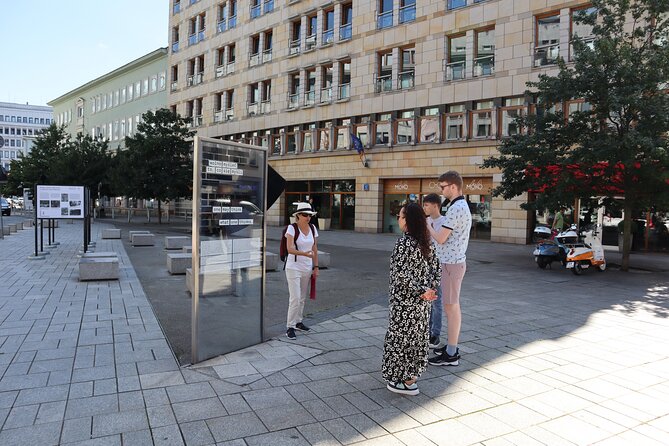
The Free Speech Memorial gives the tour a sharper political edge. Here, the discussion turns to censorship and espionage, but the guide keeps the subject connected to ordinary decisions. What could people say openly? What had to be kept private? How did state control affect trust?
This stop is valuable because it avoids treating the Iron Curtain as a distant contest between political blocs. You hear how the system reached into conversation, information, and personal behavior. The guide also explains how people responded with ingenuity and humor.
A 15-minute stop may sound brief for such a large subject, but it works well within the full route. You receive a clear framework, then have the chance to ask questions. Guides such as Oliwia and Agnieszka are praised for making complex subjects easy to follow and for adding personal connections to the larger story.
The former Communist Party headquarters shows official authority
The stop at Centrum Bankowo Finansowe takes about 10 minutes and focuses on the former location of the Communist Party headquarters. Its importance is less about entering a building and more about understanding the concentration of power in central Warsaw.
This is where the route helps you connect individual stories with institutions. The party was not simply an idea discussed in books. It had offices, leaders, procedures, and a visible presence in the city. Seeing where that authority was based gives the political system a physical address.
The guide can also place this stop beside the other buildings on the route. The square, the parade street, the memorial, and the party headquarters form a chain. Together, they show how public space, information, and administration worked together.
More Walking Tours in Warsaw
- Warsaw: Old Town Highlights Walking Tour in English
★ 4.7 · 1,516 reviews - Warsaw: Old Town Guided Walking Tour
★ 4.9 · 599 reviews - Half-Day Polish Food Walking Tour with Guide and Dinner
★ 4.5 · 381 reviews - Warsaw: Warsaw Ghetto Private Walking Tour with Hotel Pickup
★ 4.9 · 369 reviews
Cedet explains why an empty shop could still be a place to buy things
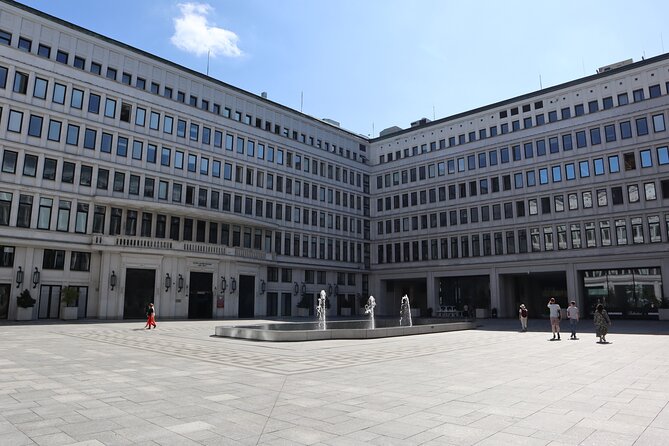
The former Central Department Store Cedet is one of the most useful stops for understanding daily life. The tour explains how people managed to buy goods in shops that could appear completely empty. This is the sort of detail that turns a broad account of communism into something you can picture.
You also hear about the joke behind what can I get you? In a store with little or nothing available, the question could become a symbol of the gap between official language and reality. The humor was not simply entertainment. It was a way to describe an awkward system without saying everything directly.
This section should appeal to you if you prefer social history to a list of political dates. The guide focuses on shopping, work, shortages, and the small acts of cleverness that helped people cope. Family memories make these points more immediate, while the visual aids help keep the story grounded.
Warsaw Central Station shows the limits placed on movement
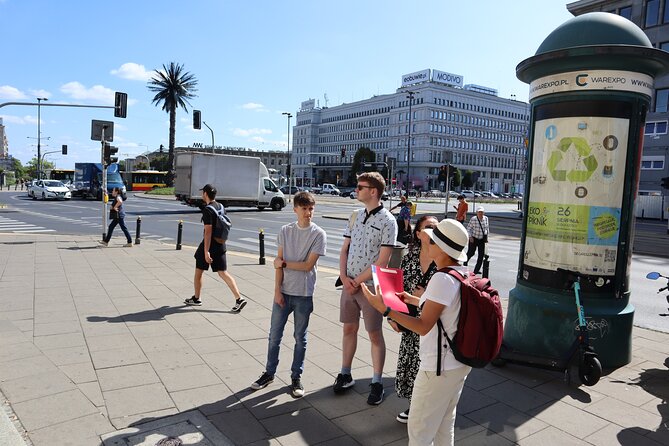
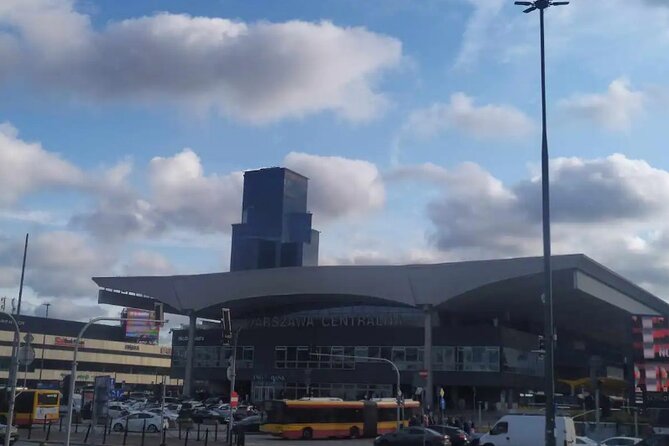
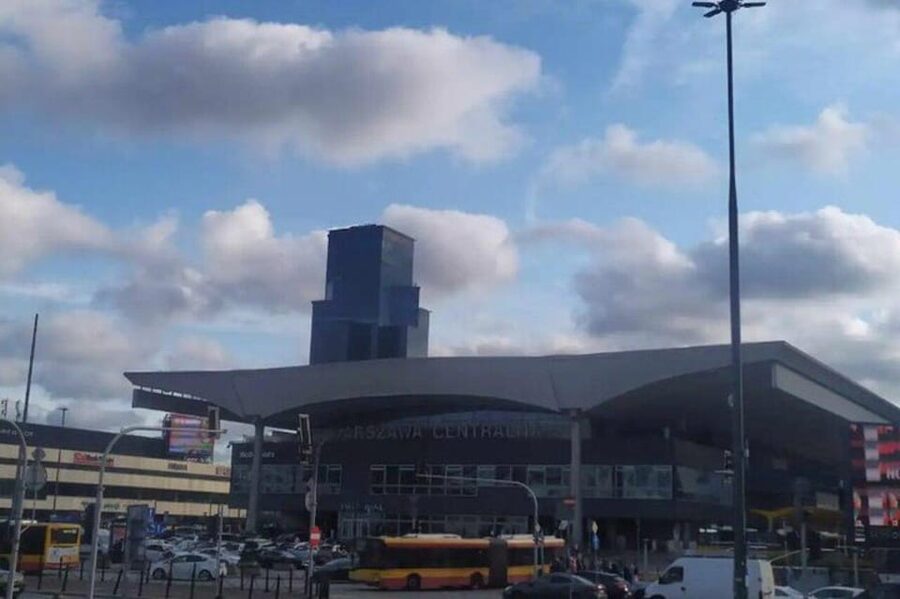
The stop at Warszawa Centralna lasts about 10 minutes and adds another everyday theme: travel. The tour explains how the state made sure Poles did not travel too far. That subject broadens the meaning of the Iron Curtain beyond borders and military rivalry.
A station is a fitting place to discuss movement. It is built for connections, departures, and choices, yet the tour shows how those choices could be restricted. You begin to see that a political system can shape not just what you read or buy, but also where you can go.
This is also a practical point in the route. You are moving through active central Warsaw, rather than stopping only at preserved monuments. The city around you remains part of the lesson, and the guide keeps linking what you see now with how these spaces functioned before.
The Palace of Culture and Science remains the most controversial building
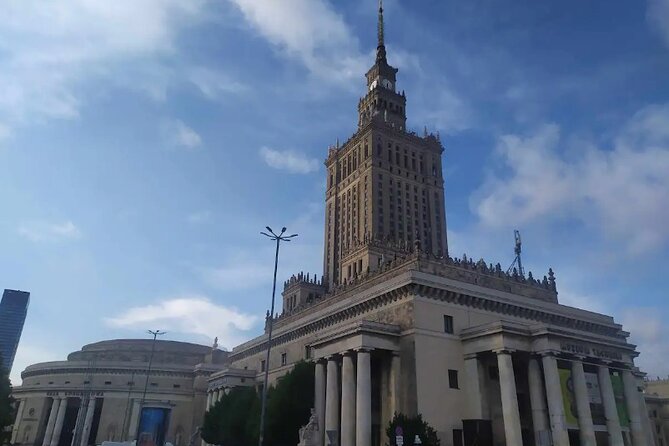
The Palace of Culture and Science is the route’s most visually obvious symbol. The tour treats it as the most controversial building in Warsaw, and not for only one reason. Its scale, purpose, political meaning, and place in the city all create room for disagreement.
This is the point where the earlier discussion of socialist realism comes together. The building can look impressive, even beautiful, yet it also carries memories that are far more complicated. Your guide explains why a structure that catches your eye may provoke a very different response from someone whose family lived through the period.
The walking tour ends at Emilii Plater 54, near the Palace of Culture and Science. The viewing terrace is not included, but you can consider paying for entry afterward if you want a higher look across Warsaw. The tour itself does not depend on that extra visit, so you can decide based on your time and interest.
The humor is not decoration, it is part of the history
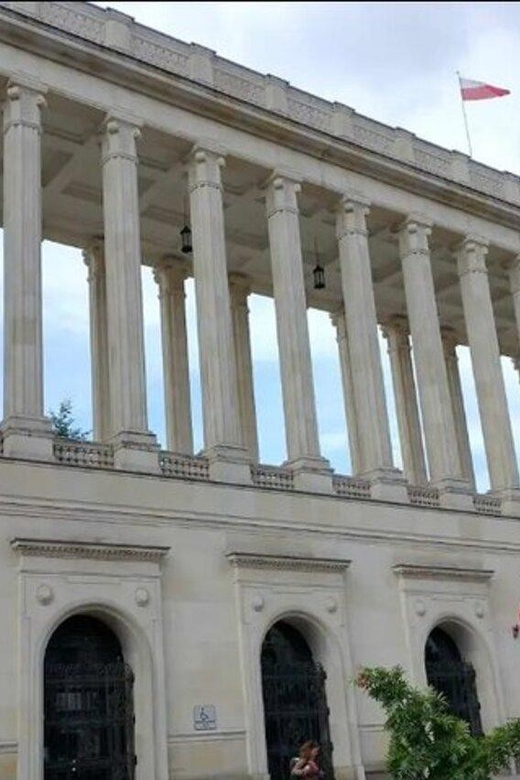
The strongest part of this experience is its tone. The subject includes oppression, censorship, surveillance, travel restrictions, and shortages. A solemn presentation would be understandable, but it would miss an important part of how people survived the period.
The guides use dry humor and stories of everyday ingenuity to show how Poles handled a system that often made ordinary tasks needlessly difficult. You hear about empty shops, official language, and the small icon of communism that is apparently so cute you may want one yourself.
That balance helps the tour avoid two common problems. It does not make the period seem harmless, and it does not reduce people to helpless victims. Instead, you see people making jokes, finding workarounds, and preserving a sense of independence inside a tightly controlled system.
Oliwia and Agnieszka shape the experience
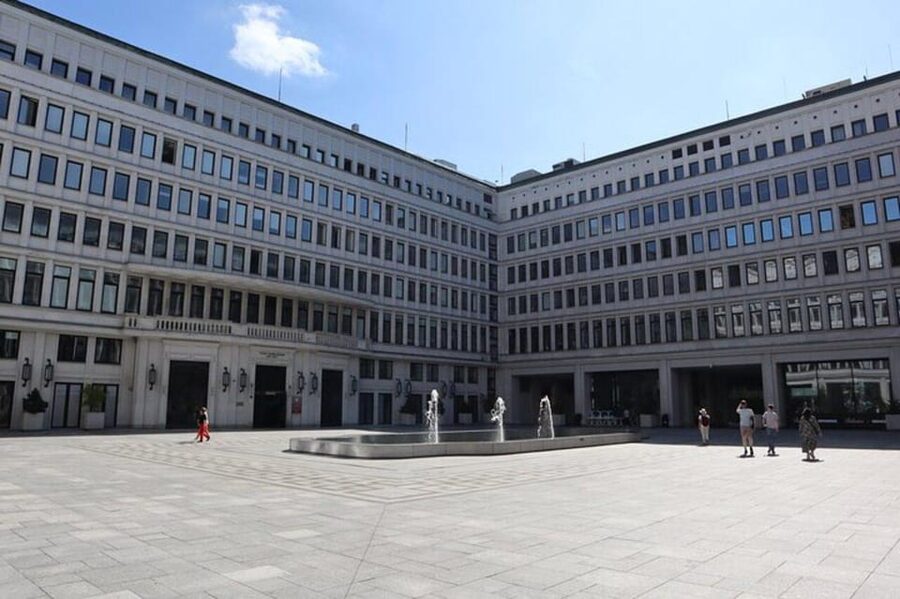
The guide matters greatly on a tour built around explanation and personal memory. Oliwia is praised for her passion for Warsaw, her dry wit, and her ability to connect family history with the wider city. She also adapts the pace, stops in the shade on warm days, and makes room for questions.
Agnieszka brings the same personal approach, with detailed accounts of the communist period and its effects on Polish society. She is also noted for giving people time to ask questions rather than rushing from one stop to the next.
You may receive either guide, so the exact delivery can differ. The common thread is an English-language presentation that combines clear historical explanation, personal stories, and humor. The guide is not simply pointing out buildings. You are being encouraged to interpret them.
What the 150-minute format means for your day
The advertised duration is about two and a half hours, with roughly 3 kilometers of walking. In practice, that gives the tour enough time to cover nine points without making every stop feel rushed. Several stops last 15 minutes, while the party headquarters, station, and Palace of Culture receive shorter explanations.
The route is manageable for many people who are comfortable walking through central Warsaw, but it is not a seated experience. Wear shoes you can walk in and allow for changing weather. The tour is listed as wheelchair accessible, though the distance still matters if long walks are difficult for you.
Small groups and private options are available. That can be especially useful here because the subject invites questions. In a very large group, personal stories and discussion can be harder to follow. If you want to ask about family memories, censorship, architecture, or the transition after the communist period, a smaller format may suit you better.
Is $32 good value for this Warsaw walk?
At $32 per person, the tour offers a focused 150-minute experience with an English-speaking guide, visual aids, and practical suggestions for the rest of your time in Warsaw. The value comes less from admission tickets and more from interpretation. Most of the route is experienced from public streets, so you are paying for the guide’s ability to make those streets meaningful.
I think the price is fair if you want a focused explanation of twentieth-century Warsaw rather than a general city walk. You get a clear subject, a compact route, and access to personal stories that are difficult to pick up by simply walking around alone.
The included information pack adds some practical value before the tour. It contains Warsaw FAQs, useful links, and ideas for places to visit, eat, and drink. You also receive recommendations during the experience, which can help you plan the rest of your stay.
The main limitation is that this is not designed as a full architectural survey or a broad introduction to every period of Warsaw’s past. If your main interest is medieval Warsaw, the royal route, or wartime reconstruction, you should choose a different walk or pair this one with another tour.
Who should book this experience?
I would recommend it if you want to understand how political control affected ordinary routines. It suits you especially well if you enjoy social history, architecture, personal stories, and a guide who is willing to explain the gray areas rather than offer a simple good-versus-bad story.
It is also a strong choice for families with older children and teenagers who may connect more easily with stories about shopping, travel, jokes, and daily restrictions than with a long museum display. The humor gives the subject an accessible entry point without removing its seriousness.
You may want to skip it if you dislike walking, prefer quiet sightseeing with little commentary, or have no interest in Warsaw after 1945. The route is not physically extreme, but three kilometers plus standing at several stops can be tiring. The tour is listed as wheelchair accessible, yet the stated walking distance remains an important consideration.
Book at least 24 hours ahead if you want the full cancellation option. You can also reserve now and pay later, which is useful when your Warsaw schedule is still moving around.
My verdict on Life Behind the Iron Curtain
I like this tour because it makes Warsaw’s communist period feel close and practical. You see the square built for a new center, the avenue made for marches, the place tied to free speech, the former party headquarters, the department store, the station, and the Palace of Culture. Each stop adds another piece of the same question: how did ordinary people live inside a system built to control so much?
The best reason to book is the guide-led interpretation. Oliwia and Agnieszka bring personal stories, sharp humor, and enough detail to help you read the city differently after the walk. The main caution is simple: you must be comfortable covering about 3 kilometers.
For $32, this is a good-value choice for a thoughtful introduction to Warsaw under communism. I would book it early in your stay, then use the guide’s food, drink, and sightseeing suggestions to shape the rest of your time in the city.
FAQ
How long does the Life Behind the Iron Curtain tour last?
The tour lasts approximately 150 minutes, or two and a half hours.
How far do you walk?
The route covers approximately 3 kilometers.
What language is the tour offered in?
The tour is offered in English.
Where does the tour start?
It starts at Constitution Square in Warsaw.
How do I find the guide?
Look for the guide holding a white and green umbrella at the meeting point.
Where does the tour finish?
The tour finishes at Emilii Plater 54, near the Palace of Culture and Science.
Is entry to the Palace of Culture viewing terrace included?
No. The entry fee to the viewing terrace is not included.
Is the tour wheelchair accessible?
Yes, the activity is listed as wheelchair accessible. It is not recommended for people who have problems walking long distances.
Can I cancel or pay later?
You can cancel up to 24 hours in advance for a full refund. You can also reserve your place and pay later.
Just added around Warsaw
- Wolfs Lair and Swieta Lipka Small Group Tour from Warsaw with Lunch★ 4.5 · 21 reviews
- Wolf’s Lair & Treblinka Tour in 1 day from Warsaw★ 5.0 · 37 reviews
- Wolfs Lair “Hitler’s Headquarters” – Full Day Tour from Warsaw by private car★ 4.5 · 4 reviews
- Tour from Warsaw: Wolf’s Lair, Hitler’s HQ Zones I and II★ 5.0 · 32 reviews
- Wolf’s Lair Private Day Trip from Warsaw★ 5.0 · 50 reviews
- Warsaw’s Old Town A Self-Guided Audio Tour★ 4.5 · 10 reviews
- Warsaw Must-See Local City Tour with Antek and Tomek★ 5.0 · 51 reviews
- Off the Beaten Track in Warsaw: Private City Tour★ 4.5 · 9 reviews
Communist History Tours, compared.
Legendary Private Nowa Huta Communism Tour with Crazy Guides
Read our review →
Nowa Huta: Steelworks Administration Buildings/Shelters Tour
Read our review →
Private Tour: Warsaw’s Communist History by Retro Fiat
Read our review →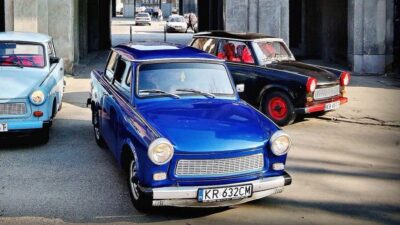
Private Nowa Huta Adventure Tour in Communist Cars
Read our review →
Browse the lists this tour appears in