
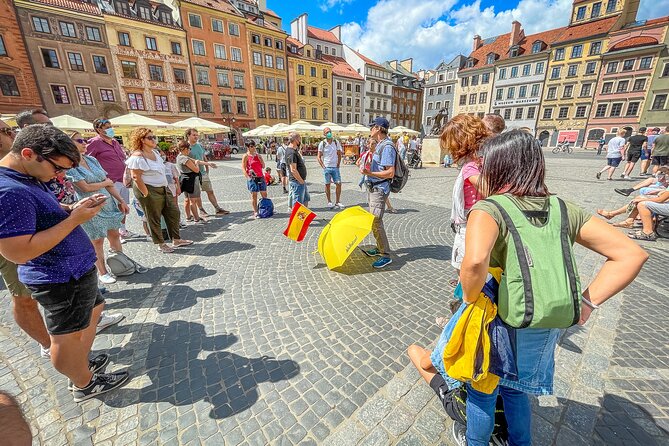
Reviewed · WALKING TOURS
Old Town Warsaw Walking Tour
Warsaw’s Old Town looks medieval, but its most striking fact is modern: almost all of it was rebuilt after World War II. This walking tour makes that story the heart of the visit, linking the royal boulevard, colorful Old Town, and medieval New Town in about two and a half hours.
I like the route’s strong sense of place and its guides’ lively storytelling. Aga, Andrzej, Jack, Ania, and Oliwia are among the guides praised for clear explanations, humor, and answers that go beyond a memorized script. The main drawback is the group size, which can reach 40 people, and one guide was difficult for a listener to follow because of a strong accent and a weak microphone.
Key points to know
- The rebuilt Old Town is the main event: Learn why Warsaw’s UNESCO-listed center is a postwar reconstruction rather than a preserved medieval district.
- The route begins on the royal road: Krakowskie Przedmiescie brings palaces, churches, monuments, and Chopin into the story before you reach the Old Town.
- Guides make or break the walk: Aga, Andrzej, Jack, Ania, Oliwia, and other local guides are praised for humor, strong English, and personal insight.
- You finish in medieval New Town: The route includes Maria Skłodowska-Curie’s birthplace area and ends beside the Barbican.
- The pace is active but manageable: You walk outdoors for about 2.5 hours, though the route is not described as an exhausting march.
- The $26.60 price covers more than a simple stroll: It includes the booking fee and guide payment for the general pay-as-you-wish format, with no entrance tickets required.
From the Copernicus Monument along Warsaw’s royal road
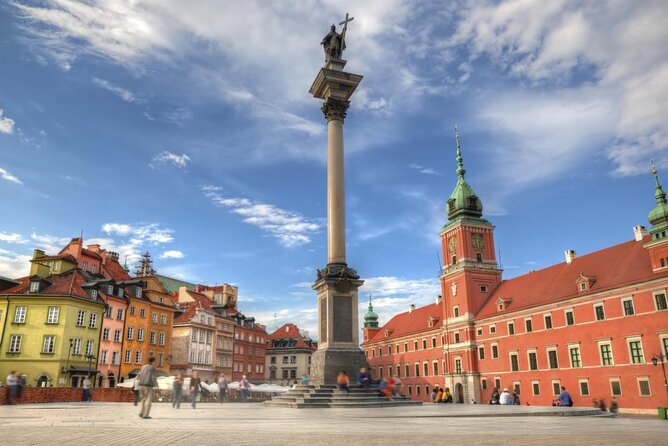
Meet at the Nicolaus Copernicus Monument on Krakowskie Przedmiescie, one of Warsaw’s most important streets. This is a practical starting point because it puts you directly on the city’s historic northbound route, with the Old Town ahead and major sights close by.
The first hour follows Krakowskie Przedmiescie, often called the royal road because it once linked Warsaw’s royal residences. The street gives the guide room to explain how the capital grew around power, religion, science, and culture rather than presenting the Old Town as an isolated postcard district.
You will pass the Presidential Palace, the Bristol Hotel, and St. Cross Church. Each stop adds a different layer to the city. The Presidential Palace connects the street to modern government. The Bristol brings in Warsaw’s grand hotel tradition. St. Cross Church is tied to Frédéric Chopin, whose heart is interred there.
That Chopin detail is especially useful if you plan to explore Warsaw’s music connections later. The tour does not turn into a full Chopin walk, but it gives you a clear landmark and a reason to look more closely at a church you might otherwise pass.
The boulevard is also a good place for a guide to explain the damage Warsaw suffered during World War II. Several guides focus heavily on the period from 1939 to the present, while also covering earlier Polish history. If you want a quick framework for understanding modern Warsaw, this opening section does important work before you reach the reconstructed center.
Expect the guide to stop in front of buildings rather than take you inside them. The listed attractions have no admission charge for this walk, but this is an outdoor sightseeing tour, not a series of interior visits. That keeps the group moving and helps the tour cover more ground.
More Walking Tours in Warsaw
- Warsaw: Old Town Highlights Walking Tour in English
★ 4.7 · 1,516 reviews - Warsaw: Old Town Guided Walking Tour
★ 4.9 · 599 reviews - Half-Day Polish Food Walking Tour with Guide and Dinner
★ 4.5 · 381 reviews
Why Warsaw’s Old Town is not as old as it looks
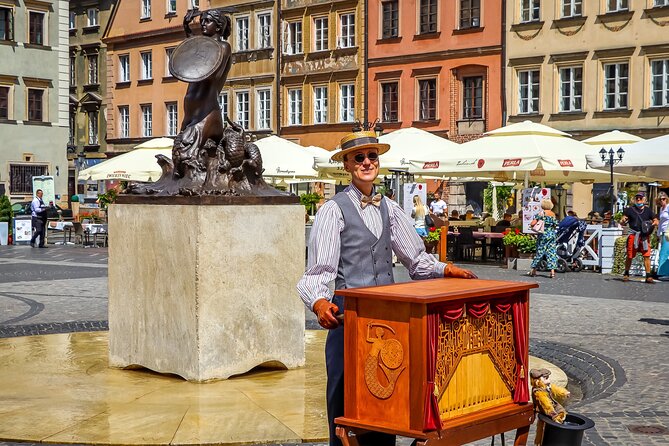
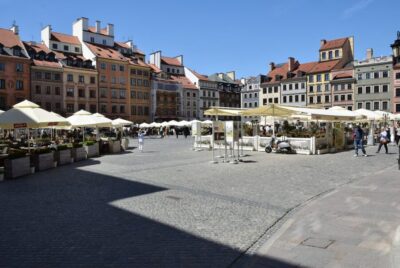
After Krakowskie Przedmiescie, the route reaches Old Town, or Stare Miasto. You get the familiar Warsaw picture here: red roofs, colorful facades, narrow streets, and the Royal Castle. Yet the key lesson is that this picturesque district was almost completely destroyed during World War II.
The reconstruction was carried out with such care that it can be difficult to tell which details are original and which were rebuilt. That makes this stop far more interesting than a standard walk through a preserved old quarter. You are looking at a city that chose to restore its historic identity rather than leave the ruins as they were.
A good guide will help you separate appearance from age. Aga is especially praised for explaining what was original and how the rebuilding took place. Other guides connect the reconstruction to the broader effect of war on Polish society and Warsaw’s identity today.
The tour’s treatment of the war is one of its strongest features, but it may not satisfy you if World War II is your main reason for visiting Warsaw. The route gives you a clear introduction, not a specialist study of the occupation, destruction, or uprising. One review specifically wished for more time on the war and its effect on Poland.
That is a fair limitation to keep in mind. If you want a detailed look at wartime Warsaw, you will need a separate museum visit or a tour built around that subject. If you want to understand why the Old Town looks the way it does, this walk gives you the essential background without turning the entire afternoon into a lecture.
The Royal Castle adds another useful thread. Its location helps explain Warsaw’s royal past and the importance of the city as Poland’s political center. The guide can connect the castle and the royal road, so the first part of the tour feels like one continuous story rather than a list of unrelated sights.
The setting is also where the tour’s humor matters. The guides are often praised for making difficult subjects easier to follow with jokes and personal stories. That does not remove the seriousness of wartime destruction, but it keeps a long outdoor explanation from becoming heavy or hard to absorb.
The colorful market area and the value of a local guide
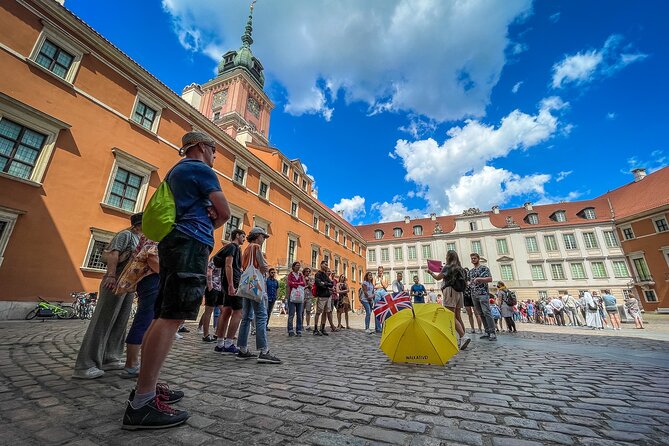
Old Town is the portion most people expect to enjoy visually, but the guide is what gives the square and surrounding streets meaning. You will hear about the rebuilding, Polish history, art, music, politics, and the way past events still affect Warsaw.
Aga is described as warm, funny, and able to move between music, art, war, politics, and reconstruction. Andrzej is praised for making Polish history engaging and for bringing strong energy to the walk. Jack, sometimes identified as Jacek, is noted for combining facts with humor. Ania is described as charming and well informed about Warsaw and Poland.
The names matter because this is not a fixed audio tour. Your actual experience depends partly on who leads your departure. Guides vary in tone, accent, humor, and depth. Most comments praise their English and ability to answer questions, but one person found a strong accent and a poor microphone hard to follow.
For that reason, I would position yourself close to the guide, especially in a larger group. The tour can include up to 40 people, and a crowd of that size makes it harder to hear from the back. The walk is designed for listening, not just taking photographs, so staying near the guide improves the value of the booking.
The pace appears suitable for many visitors with moderate fitness. One guide was praised for keeping the walking pace comfortable, and another account described the route as interesting without involving an unreasonable amount of walking. You should still expect to be on your feet outdoors for roughly 150 minutes, with no promise of indoor shelter if the weather turns poor.
New Town, Maria Skłodowska-Curie, and the Barbican finish
The final section reaches New Town, or Nowe Miasto. The name can mislead you. This district was also founded in the Middle Ages, so new refers to its position beyond the older settlement, not to a modern neighborhood.
This is a useful final stop because it shows that Warsaw’s historic center is larger than the main Old Town square. The district is also associated with Maria Skłodowska-Curie, the Polish-born scientist known internationally for her work in physics and chemistry. The tour gives you that connection as part of the walk rather than treating Warsaw’s story as only royal and military.
The route finishes at the Warsaw Barbican on Nowomiejska Street. The Barbican once formed part of the city’s defensive system and now creates a natural dividing point between Old Town and New Town. It is a sensible end to the walk because you finish near a major historic structure and can continue exploring on your own.
The supplied details describe the Barbican as the conclusion point, but they do not promise entry. Plan to see it from the outside during the tour. The same applies to the other landmarks: the experience is about guided context and city streets, not paid interior admission.
One comment expressed disappointment about not going to New Town. Since New Town is listed as the final 30-minute section, check the meeting instructions and stay with the group through the end if that area matters to you. A busy group or a late start can make the last section feel shorter than expected, so it is worth treating the entire 2.5-hour schedule as important.
Same city, a completely different kind of day:
- Warsaw: Chopin Concert in the Old Town
★ 4.8 · 2,287 reviews - Warsaw: Traditional Galar Cruise on The Vistula River
★ 4.6 · 1,640 reviews - Warsaw Concert: Chopin – Painted by Candlelights with Wine
★ 4.8 · 1,442 reviews - Warsaw: City Sightseeing Hop-On Hop-Off Bus Tour
★ 3.6 · 1,415 reviews
What the $26.60 price really buys you
At $26.60 per person, this is a reasonably priced introduction to central Warsaw. The key value is not transportation or entry tickets. The tour uses public streets and free-access outdoor sights, so you are paying mainly for the guide’s structure, explanations, and local perspective.
The payment system needs a little clarification. The experience is part of a general pay-as-you-wish tour, but the amount paid online covers the reservation fee and the guide’s payment in this case. You may still choose to reward an excellent guide with an additional tip, as one visitor did after a strong winter tour.
That arrangement can work well if you want the social feel of a group walk without paying private-tour prices. It is less appealing if you prefer a small, quiet group or a highly tailored route. A smaller private tour can be arranged by contacting the provider, but the supplied price applies to the general tour.
No transportation to or from attractions is included because the route is walked from the Copernicus Monument to the Barbican. Hotel pickup and drop-off are also not included. Both meeting points are near public transportation, so getting to the start and continuing from the finish should be planned separately.
The tour is offered in English and uses a mobile ticket. Confirmation arrives at booking, which is useful if you are fitting the walk into a short stay. Since it is booked on average 22 days in advance, I would reserve ahead for a preferred date, particularly during a busy season.
Weather, footwear, and group size
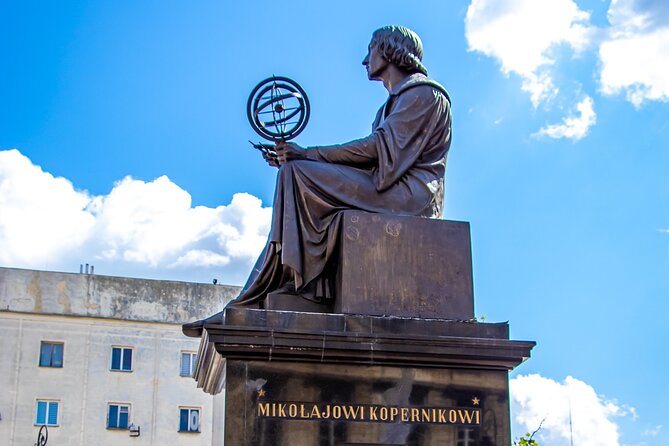
This is an all-weather outdoor activity. Wear clothing suited to the forecast, and do not underestimate Warsaw’s cold months. Several comments stress warm layers, thermal clothing, a hat, and gloves for winter.
Comfortable shoes matter more than dressy clothes. The route is not described as extreme, but you will walk and stand during explanations. A moderate level of physical fitness is requested, and children must be accompanied by an adult.
A maximum of 40 people is a practical concern. A large group can bring more energy and make the price attractive, but it can also make the guide harder to hear and questions slower to handle. The guides are often praised for staying attentive and answering questions, yet the group size means you should not expect the personal attention of a private walk.
The tone is another point to consider. Most guides use humor, including during serious parts of Polish history. That works well for people who like a lively presentation. If you prefer a quiet, formal lecture, the jokes and quick delivery may not suit you.
Who should book this Warsaw walking tour?
I would choose this walk early in a Warsaw visit if I wanted a clear orientation to the historic center. In one route, you get the royal boulevard, Chopin, the Presidential Palace, St. Cross Church, the Royal Castle, the rebuilt Old Town, New Town, Maria Skłodowska-Curie, and the Barbican.
It suits first-time visitors, short-break visitors, and anyone who wants history explained while seeing the city rather than reading about it later. It also works well for people who enjoy a guide with personality. The strongest praise centers on humor, clear English, storytelling, and the ability to connect old events with Warsaw today.
I would be more cautious if you need an intimate group, a slow photography walk, or detailed wartime study. The group may be large, the information can come quickly, and one guide’s microphone and accent caused problems for a listener. You should also be ready to walk outdoors in poor weather.
Should you book it?
Book this tour if you want an affordable, story-led introduction to Warsaw’s center, especially the remarkable reconstruction of Old Town. The route is well chosen, the price is sensible, and guides such as Aga, Andrzej, Jack, Ania, and Oliwia have shown they can make serious history clear and engaging.
Skip it if you already know the city well or want a private, museum-focused experience. For most first-time visitors, though, this is a useful way to get your bearings, understand why Warsaw looks new and old at once, and finish near the Barbican with plenty of the city still left to explore.
FAQ
How long does the Old Town Warsaw Walking Tour last?
The tour lasts approximately 2 hours and 30 minutes. The route includes about one hour on Krakowskie Przedmiescie, one hour in Old Town, and 30 minutes in New Town.
Where does the tour begin?
The tour begins at the Nicolaus Copernicus Monument on Krakowskie Przedmiescie, Warsaw, Poland.
Where does the tour end?
The walk ends at the Warsaw Barbican at Nowomiejska 15/17, Warsaw.
Is the tour offered in English?
Yes. The tour is offered in English and includes a local professional guide.
What is included in the price?
The price includes the reservation fee and guide payment for the general pay-as-you-wish tour format. A mobile ticket and guide are included.
Are admission tickets included?
The listed stops have no admission ticket charge for this walking route. The tour does not promise entry into the buildings or attractions.
Is hotel pickup included?
No. Hotel pickup and drop-off are not included. You are responsible for reaching the meeting point and arranging transportation after the walk.
Can I cancel for a refund?
Yes. You can cancel at least 24 hours before the experience starts for a full refund. Cancellations or changes made within 24 hours are not refunded or accepted.
Just added around Warsaw
- Wolfs Lair and Swieta Lipka Small Group Tour from Warsaw with Lunch★ 4.5 · 21 reviews
- Wolf’s Lair & Treblinka Tour in 1 day from Warsaw★ 5.0 · 37 reviews
- Wolfs Lair “Hitler’s Headquarters” – Full Day Tour from Warsaw by private car★ 4.5 · 4 reviews
- Tour from Warsaw: Wolf’s Lair, Hitler’s HQ Zones I and II★ 5.0 · 32 reviews
- Wolf’s Lair Private Day Trip from Warsaw★ 5.0 · 50 reviews
- Warsaw Must-See Local City Tour with Antek and Tomek★ 5.0 · 51 reviews
- Off the Beaten Track in Warsaw: Private City Tour★ 4.5 · 9 reviews
- Warsaw’s Old Town A Self-Guided Audio Tour★ 4.5 · 10 reviews
Walking Tours, compared.
Gdańsk City Sights & History Guided Walking Tour in English
Read our review →
Browse the lists this tour appears in