
Reviewed · WROCLAW TOURS
Wroclaw: Lower Silesia, Ksiaz Castle & Church of Peace Tour
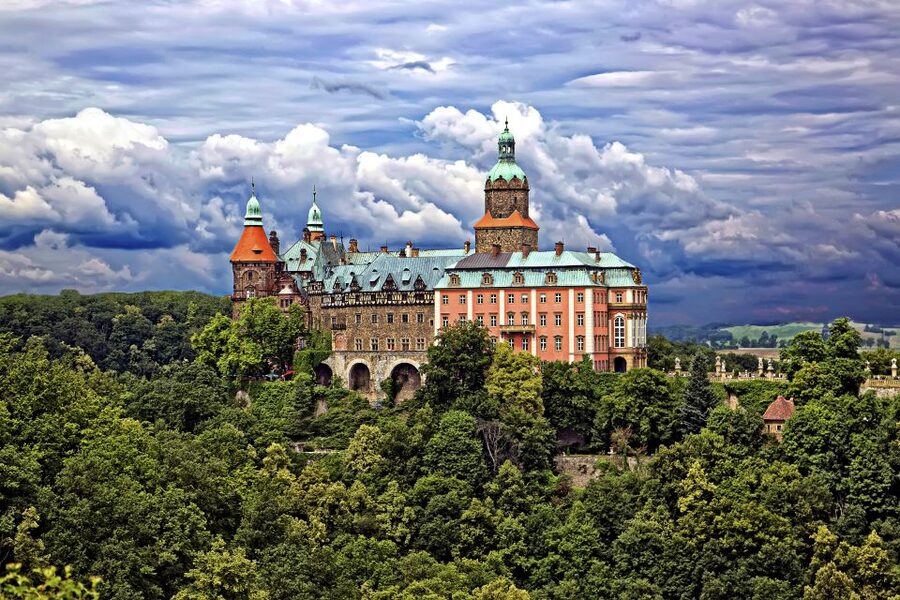
Książ Castle is the star here: a huge palace perched on a rocky cliff above the Pelcznica River, surrounded by forest and tied to one of the darkest chapters of 20th-century Poland. I like that the day pairs this dramatic site with Świdnica’s extraordinary timber Church of Peace and the pretty Market Square. The Wałbrzych Palm House adds an unusual final stop, with plants growing inside a historic structure built for the castle’s royal family.
The main drawback is time. Six hours is efficient, but this is a packed circuit with several stops and substantial driving. You should also know that the tour is not suitable for wheelchair users, and one recent passenger found the driving a little fast, even while praising the guide and service.
Key points at a glance
- Książ Castle rises 395 meters above sea level on a cliff beside the Pelcznica River.
- The castle has a Nazi wartime connection: construction began there in 1943 as part of plans for an important headquarters for Adolf Hitler.
- Świdnica’s Church of Peace is one of Europe’s largest timber-framed religious buildings, built in the religious turmoil after the Peace of Westphalia.
- Świdnica’s Market Square brings a lighter mood, with renovated townhouses, Gothic remains, fountains, and a Neptune well dating from 1732.
- Wałbrzych Palm House preserves its original construction, built for Mary Theresa Cornwallis-West by Hans Heinrich XV of the Hochberg family.
- The small group is limited to eight people, with hotel pickup in Wrocław, private transport, a driver-guide, and an English audio guide.
Why this Lower Silesia day trip works
This is a good choice if you want to see beyond Wrocław without arranging several separate connections. In six hours, you get a castle, a religious monument, an old town square, and a historic greenhouse. That variety keeps the day moving and gives you a broader sense of Lower Silesia than a single-site excursion would.
I especially like the contrast among the stops. Książ is grand, theatrical, and wrapped in forest. The Church of Peace is built from humble materials but carries enormous historical weight. The Market Square is colorful and easygoing, while the Palm House feels like a curious royal side project. None of these places tells the same story.
The practical setup is also strong. Pickup and drop-off at your Wrocław accommodation save you from finding an early meeting point. Transport is by private vehicle, and the group can have no more than eight participants. That is a much more personal arrangement than a large coach, though the final group size depends on bookings.
An English or Polish driver-guide accompanies the trip, and an English audio guide is included. Adam has been praised for his humor and command of history, while Lucas has been noted for being attentive and helpful. Those names are useful to know, though you should not assume which guide will lead your departure.
More Ksiaz Castle and Lower Silesia days:
- From Wroclaw: Ksiaz Castle and Church of Peace in Swidnica
★ 4.7 · 42 reviews - Wroclaw: Project Riese and Ksiaz Castle Private Tour
★ 4.7 · 39 reviews
Książ Castle on its rocky perch
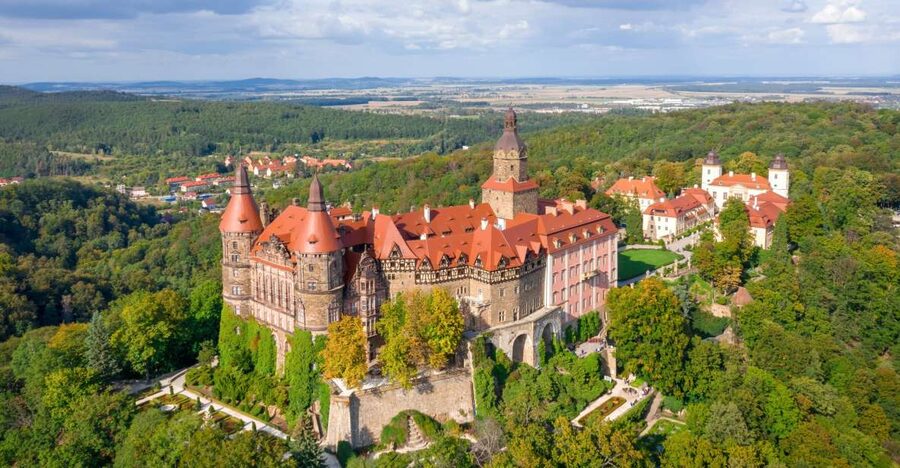
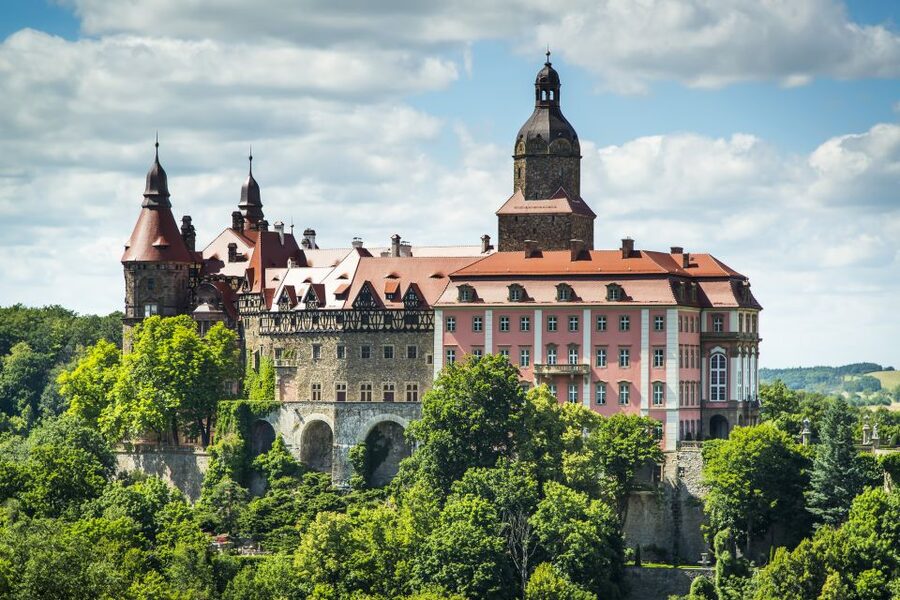
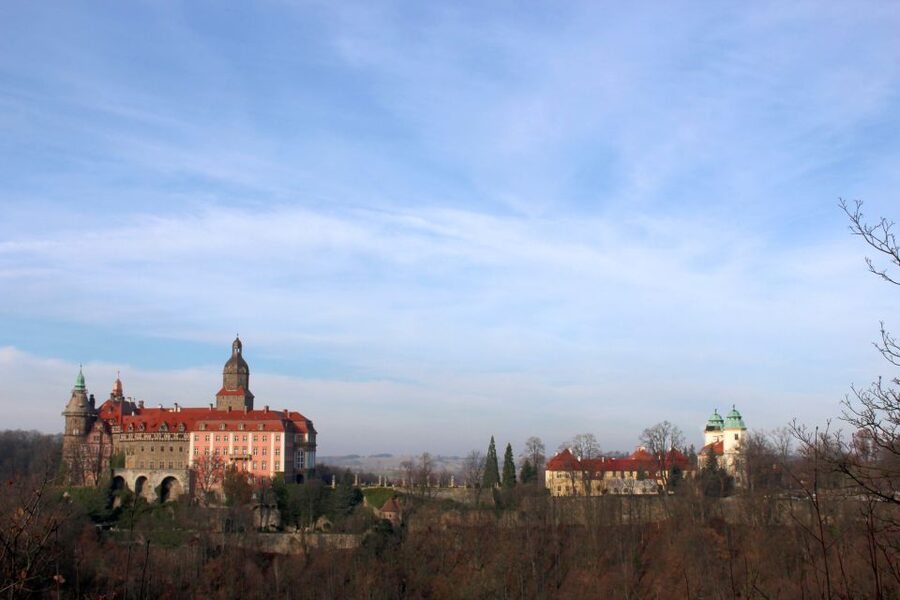
Książ is the reason many people choose this excursion. It is Poland’s third-largest castle, set on a dramatic rock cliff beside the Pelcznica River. At about 395 meters above sea level and surrounded by forest, the setting feels almost more impressive than the building itself.
The castle is often called the Pearl of Lower Silesia. That nickname makes sense once you see how its size and location work together. Rather than sitting quietly in a town, Książ occupies a high, commanding site with wooded slopes around it. You get the sense of a royal residence designed to be seen from a distance.
The tour description does not specify exactly how much interior time you receive or which rooms are visited, so keep your expectations measured. The experience centers on reaching and seeing the castle, not on a detailed room-by-room museum visit. If you care most about interior collections, ask for the exact castle access included when booking.
Książ also carries a grim wartime story. In 1943, Hitler’s paramilitary organization took over the castle and began construction connected with one of Adolf Hitler’s important headquarters. This fact changes the mood of the visit. Książ is not only a handsome palace in a grand setting. It is also a place where Nazi plans altered the building and its role.
That mix of beauty and difficult history is valuable. You can admire the architecture and cliff-top position while also remembering that the site was pulled into the machinery of war. A good guide can help connect those two sides without turning the visit into a simple castle postcard.
You will want comfortable shoes here. The day involves sightseeing at a large historic property, and the tour itself specifically advises practical clothing and footwear. The exact walking route is not given, so anyone with limited mobility should take the stated wheelchair restriction seriously.
Świdnica’s Church of Peace and the fight for worship
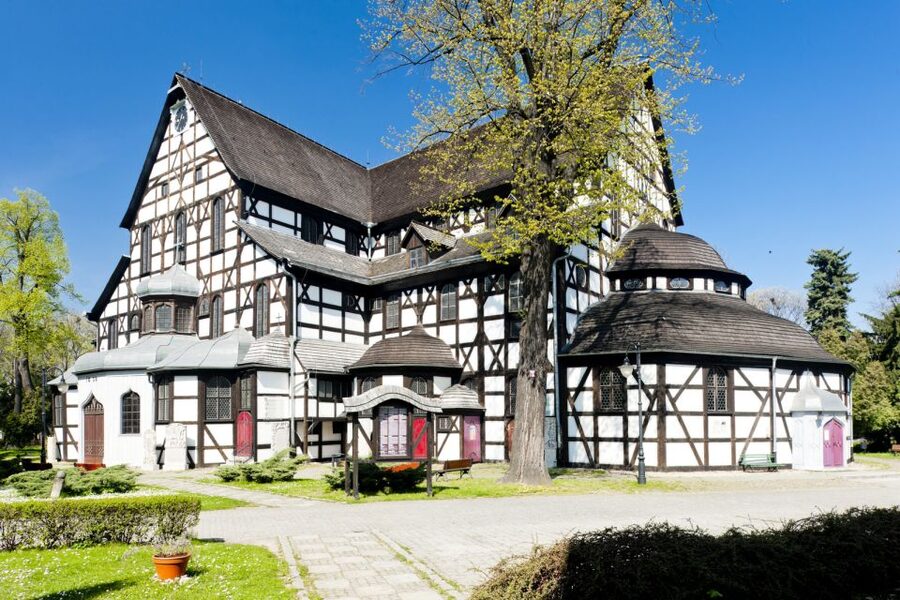
The Church of Peace in Świdnica is the most unusual stop on the route. It was built in the mid-17th century, after the Peace of Westphalia, during a period of intense religious conflict in former Silesia.
The political rules imposed on Lutheran communities shaped the building. Churches had to be placed outside city walls, constructed from materials such as wood or clay, and completed in less than a year. Those limits might sound like a recipe for a plain meeting hall. Instead, the result became one of Europe’s largest timber-framed religious buildings.
That contrast is what makes the church memorable. The materials and rules were restrictive, but the finished building expresses a strong Lutheran presence in a visual style often associated with Catholic churches. You are looking at both a place of worship and a record of how communities adapted under pressure.
The church is on UNESCO’s World Heritage list, which reflects its architectural and historical importance. The listing alone is not the reason to visit. The real value is seeing how religious freedom, politics, local craftsmanship, and architecture meet in one building.
The information provided calls it the largest timber-framed religious building in Europe, while the tour highlights also describe the Churches of Peace as Europe’s largest timber-framed religious building. Either way, you can expect exceptional scale for a wooden church. Allow yourself a quiet moment inside rather than treating it as a quick photo stop.
Because this is a six-hour tour with several destinations, the amount of time at the church may be limited. If religious architecture is your main interest, you may want to confirm the schedule before paying. For most people, though, even a well-paced visit adds something far more distinctive than another standard European church.
A short walk through Świdnica’s Market Square
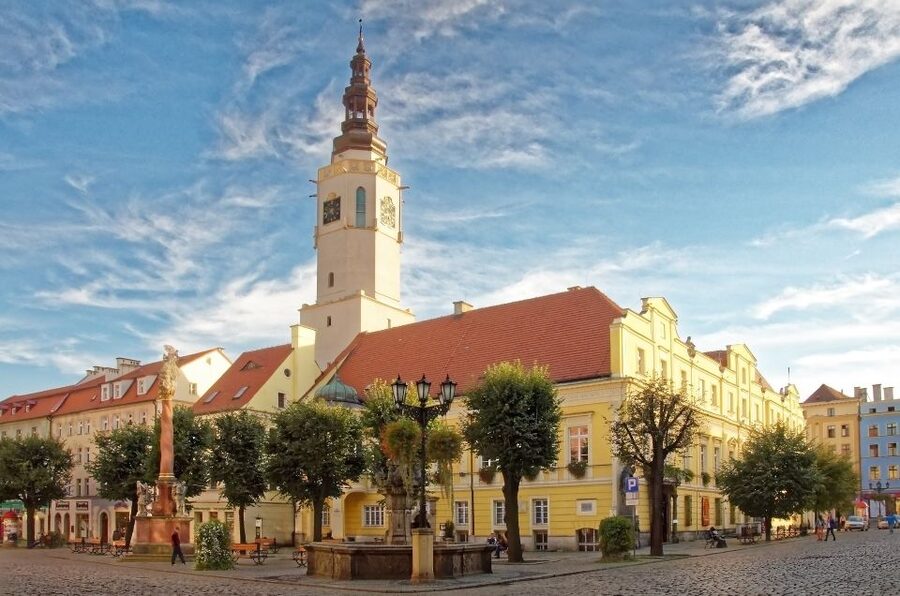
Świdnica’s Market Square gives the itinerary a welcome change of pace. After the castle’s steep setting and the Church of Peace’s serious history, the square offers colorful renovated townhouses, Gothic relics, fountains, and open space for getting your bearings.
The Neptune well from 1732 is one of the details worth seeking out. It is an easy landmark and a reminder that the square’s appeal comes from small features as much as from its overall design. The lighting has also won competition awards, though daytime visitors will mainly notice the restored façades and the mix of old and renewed elements.
This is a good stop for a little independence. The supplied information does not promise a guided walking tour of every building, so you may have time to look around at your own pace. You can use the square to take photographs, inspect the Gothic remnants, or simply enjoy a pause between larger scheduled sights.
The possible weakness is that this stop may be shortened if driving or castle arrangements take longer than expected. One recent booking had extra time after a communication problem at the castle, and the guide offered a different historic stop instead of the Market Square. That shows the day can be adjusted, but it also means the exact rhythm may not be fixed in every circumstance.
For that reason, think of Świdnica’s square as a pleasant part of the route rather than the main reason to book it. Książ and the Church of Peace carry the greatest weight. The square supplies local character and breathing room.
A few more Wroclaw half-days worth comparing
- Wroclaw: E-Car Tour and Audio Guide
★ 4.6 · 1,738 reviews - Wroclaw: 2-Hour Private Guided Tour by Electric Car
★ 4.8 · 805 reviews - Wrocław: Old Town and Ostrów Tumski Walking Tour in English
★ 4.8 · 311 reviews - Wroclaw: Private Old Town Guided Walking Tour (2 hours)
★ 4.8 · 275 reviews
Wałbrzych Palm House, a royal greenhouse with a personal story
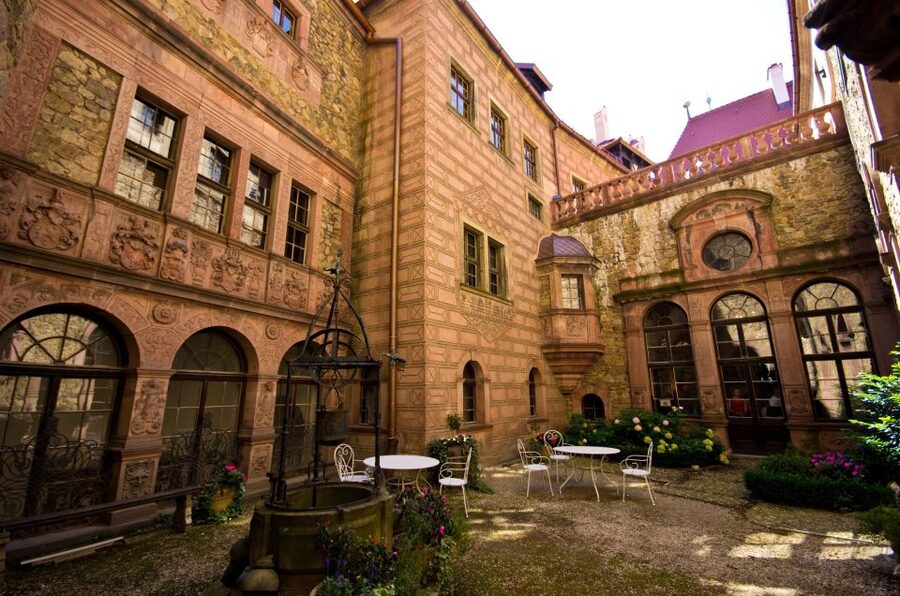
The Wałbrzych Palm House is an unusual addition to a castle tour. It was commissioned by Hans Heinrich XV, the last representative of the Hochberg dynasty at Książ Castle, for his wife, Mary Theresa Cornwallis-West.
The building is also notable because it is the only facility of its kind in Poland preserved in its original construction. You get a sense of the private world surrounding the castle family, where a greenhouse could be created as a grand personal gift rather than as a public attraction.
The stop focuses on flora, so it provides a welcome change from masonry, politics, and wartime history. You can expect a plant-filled setting inside a historic structure, though the available details do not identify specific species or explain how long the visit lasts.
I like the Palm House because it broadens the story of Książ. The castle is not isolated from the lives and interests of its owners. This greenhouse shows another side of aristocratic life, one based on collecting, cultivation, and display.
Still, plant lovers should keep their expectations realistic. This is one element of a fast half-day route, not a dedicated botanical excursion. If you are comparing this tour with a castle-only visit, the Palm House is a strong bonus. If you want hours among plants, it may feel brief.
What the six-hour schedule means for you
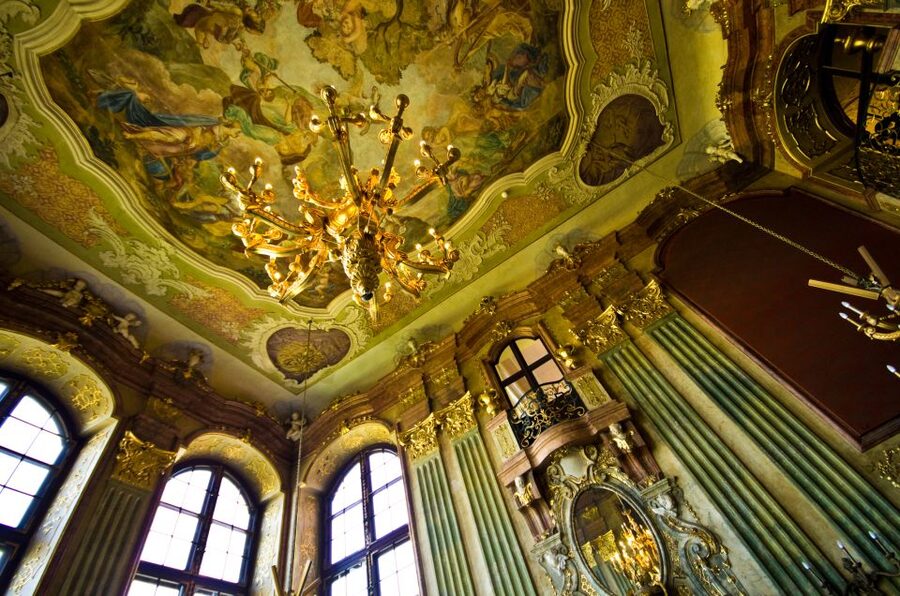
Six hours sounds generous until you count four destinations, pickup and drop-off in Wrocław, and the time needed to travel between them. You will spend part of the day in the vehicle, although one recent passenger specifically found the vehicle comfortable on the longer drive.
The private vehicle is important here. It keeps the route practical and avoids the complications of public transport between several Lower Silesian sites. It also gives the driver-guide a chance to explain what you are seeing and respond to questions along the way.
There is a small tradeoff. One Finnish passenger felt the driving could have been more measured, despite praising the guide’s attention. If you are sensitive to fast driving, say so early and clearly. Comfortable clothes and shoes are sensible, and you should avoid packing the day around formal wear or impractical footwear.
Hotel pickup and drop-off in Wrocław are included. That makes this a simple choice for someone staying in the city and wanting a fully arranged day. The tour also includes trip insurance, though the supplied details do not explain its exact coverage, so ask the provider if that matters to you.
The activity can be canceled up to 24 hours in advance for a full refund, and you can reserve now while paying later. Those terms give you useful flexibility, especially if your Wrocław plans are still shifting.
Is $203 a fair price?
At $203 per person, this is not a bargain bus outing. It is priced as a small-group, private-vehicle day with hotel pickup, a driver-guide, trip insurance, and an English audio guide. The maximum group size of eight matters because it can make the day less rigid and more personal than a large coach tour.
The value depends on what you would otherwise need to arrange. If you had to organize transport to Książ, Świdnica, and Wałbrzych separately, the convenience alone has real worth. You also avoid the need to match several regional connections and work out how to return to Wrocław.
The price is harder to justify if you only want Książ Castle and do not care about the other stops. In that case, a shorter or more focused visit may suit you better. Here, you are paying for breadth, private transport, and time saved on planning.
The 4.6 rating from 42 reviews suggests a generally strong experience, but the individual comments show why you should read the offer carefully. Driving quality and communication at the castle can affect the day, while the strongest praise goes to the guides, comfortable vehicle, and personal service. Adam and Lucas are particular names to mention if you want to ask about guide assignments.
Who should book this Lower Silesia tour?
I would choose this for a first visit to Wrocław when you want one organized day outside the city. It suits you if you like mixing architecture, difficult history, old-town scenery, and gardens instead of spending an entire day on one attraction.
It is also a good fit for couples, families with older children, and small groups who value hotel pickup. Children must be accompanied by an adult, and infant seats are available if requested at the time of booking. Unaccompanied minors are not permitted.
You should think twice if you use a wheelchair, since the experience is not suitable for wheelchair users. You should also reconsider it if you dislike a quick pace or prefer long, unstructured visits at each stop.
Should you book it?
Book this tour if you want the most convenient way to combine Książ Castle and Świdnica’s Church of Peace in one day, with the Market Square and Palm House adding variety. The scenery, unusual architecture, and serious wartime context make the route more rewarding than a simple castle outing.
Skip it if you want a slow castle visit, a fully detailed guided tour at every stop, or a day designed around accessibility. Before booking, confirm how much time is planned at Książ and whether the Market Square is guaranteed in the final schedule. For most able-bodied visitors staying in Wrocław, the $203 price is reasonable when you value private transport, hotel service, and a compact route that would be awkward to arrange alone.
FAQ
How long does the tour last?
The tour lasts six hours, including the scheduled visits and transport from Wrocław.
Where does pickup take place?
Pickup and drop-off are provided at your accommodation in Wrocław.
What places does the tour visit?
The route includes Książ Castle, Świdnica’s Market Square, the Church of Peace in Świdnica, and the Wałbrzych Palm House.
Is transport included?
Yes. Transport by private vehicle is included, along with a driver-guide.
How large is the group?
The group is limited to eight participants.
What languages are available?
The driver-guide service is available in English and Polish. An English audio guide is included.
Is the tour suitable for wheelchair users?
No. The activity is listed as not suitable for wheelchair users.
Can children join the tour?
Yes, but children must be accompanied by an adult. Infant seats are available on request if you advise the provider when booking.
Just added around Wroclaw
- Lower Silesia Tour From Wroclaw★ 4.5 · 33 reviews
- Wroclaw Old Town Private Tour★ 5.0 · 6 reviews
- Museum of Illusions Wroclaw Entrance Ticket★ 5.0 · 42 reviews
- Jewels of Lower Silesia★ 5.0 · 22 reviews
- Legends of Old Town 1 Hour Walking Tour in Wroclaw★ 5.0 · 6 reviews
- Highlights of Wroclaw Private Tour with one Entrance★ 5.0 · 5 reviews
- Private Candlelight concerts with classical music in Wroclaw★ 4.5 · 6 reviews
- Famous Islands of Wroclaw – Cathedral Island and Sand Island Private Tour★ 5.0 · 13 reviews
Wroclaw Tours, compared.
Old Town and Ostrów Tumski Walking Tour in English
Read our review →
City Tour Sightseeing By Golf Cart Shared Or Privat
Read our review →
Browse the lists this tour appears in