
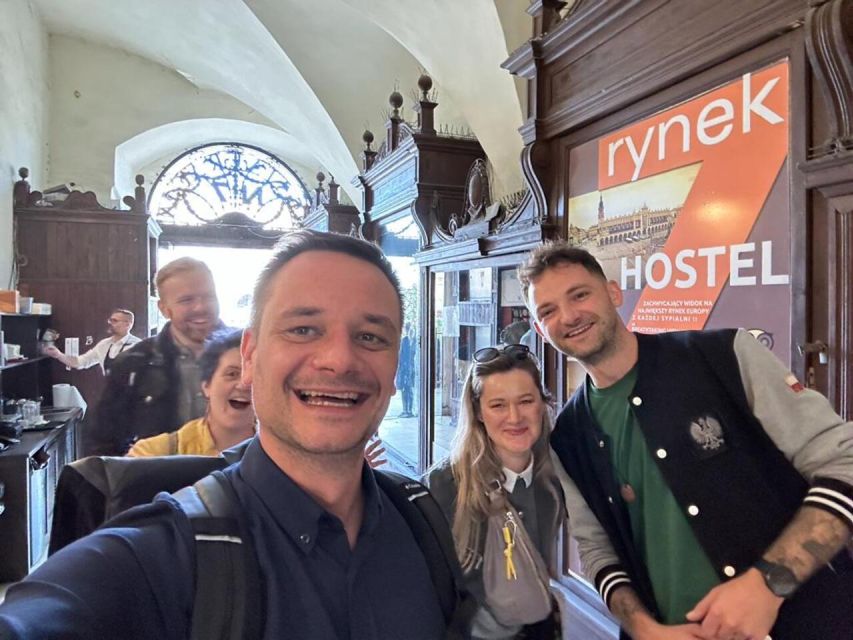
Reviewed · JEWISH HERITAGE TOURS
The Jewish Quarter – Walking Tour
Krakow’s Kazimierz is not simply a pretty old district with cafés and photogenic synagogues. It is where the city’s Jewish and Christian stories meet, and this two-hour walking tour explains how that shared world developed, then changed almost beyond recognition during World War II. I like the broad time span, from the 11th century to the present, and the way the route connects major sights with smaller, easily missed places such as a former women’s mikveh and Helena Rubinstein’s birthplace. The focus on Jewish and Christian coexistence gives the walk more depth than a quick stop at the main synagogue.
I also like that the tour is led by licensed English-speaking guides, with Zee singled out for making the experience personal and for showing more than expected. The main limitation is time: two hours is enough for a strong introduction, but not for a slow visit inside every synagogue or a full study of Krakow’s Jewish history. Admission tickets are not included, so check what you want to enter before setting out.
Key points at a glance
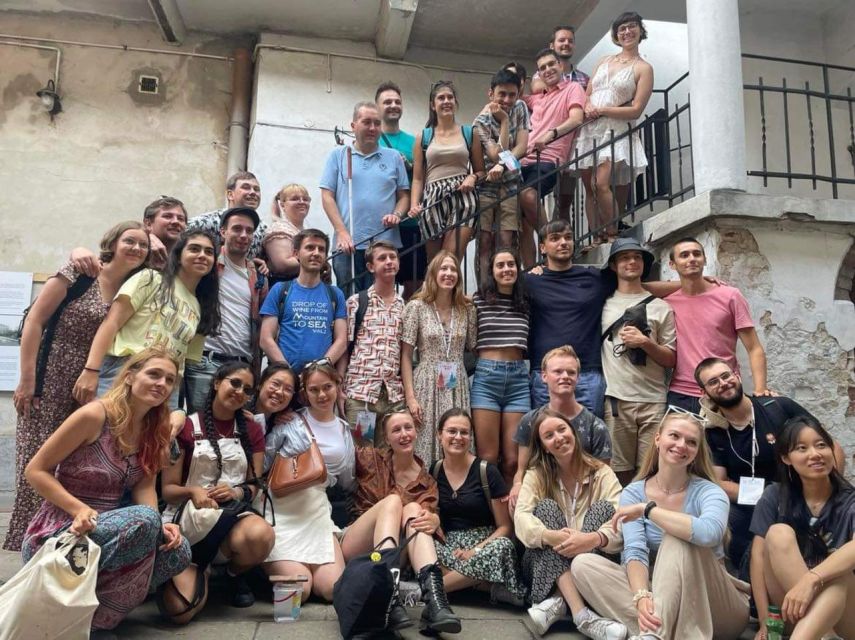
- Kazimierz’s shared past: Learn how Jewish and Christian communities lived alongside one another over many centuries.
- World War II context: See how the war reshaped Krakow’s Jewish population and the city itself.
- Schindler’s List locations: Connect streets and buildings with scenes from the well-known film.
- Historic Jewish sites: Pass the Tempel, Kupa, Izaak, Remuh, Popper’s, and Old Synagogues.
- Unusual stops: Find a 16th-century women’s mikveh, Helena Rubinstein’s birthplace, and a monument linked to Holocaust rescue efforts.
- Practical format: A two-hour, English-language walk costs $33 per person, with licensed guiding included and admission fees extra.
Why Kazimierz needs more than a quick photo stop
Kazimierz is often presented as Krakow’s Jewish District, but that label can flatten the story. For centuries, it was a place where Jewish and Christian communities lived near one another, worked in the same city, and shaped its streets and institutions.
This tour begins with that larger idea. You are not only looking at old synagogues. You are learning why Jewish people settled in Poland, how Jewish life grew there, and why Poland became so important in Jewish history. By the 16th century, about 75 percent of the world’s Jewish population lived in Poland, a striking fact that changes how you look at Kazimierz.
I find this opening especially useful if you are new to Polish Jewish history. Krakow’s buildings can otherwise seem like isolated monuments. A guide gives them a sequence: settlement, growth, religious life, coexistence, persecution, destruction, and remembrance.
The story reaches back to the 11th century, then moves through the development of Kazimierz as a distinct part of Krakow. That broad sweep is one of the tour’s strongest features. You get enough background to understand the district before the walk turns toward the catastrophe of World War II.
More Jewish Heritage Tours in Krakow
- Krakow: Schindler’s Factory & Ghetto Guided Tour
★ 4.7 · 1,694 reviews - Krakow: Jewish Quarter and Former Ghetto Tour
★ 4.9 · 1,441 reviews - Krakow: Bike Tour of Old Town, Jewish Quarter and the Ghetto
★ 4.9 · 1,155 reviews
Kazimierz Main Square and the old city walls
The route includes Kazimierz’s Main Square and Miodowa Street, where you can see traces of the former city walls of Kazimierz. These stops help establish the district’s shape before the tour turns to individual religious buildings.
A square can look ordinary when you do not know what once happened around it. Your guide uses the setting to explain how the old town worked and where the Jewish quarter fitted into the wider city. Miodowa Street adds a useful physical clue: this was not an abstract neighborhood, but a defined urban community with boundaries and its own character.
Do not expect a long architectural lecture at every corner. The value here is orientation. After these first stops, the synagogues and streets ahead make more sense as parts of a once-living neighborhood rather than a checklist of historic buildings.
The Tempel, Kupa, and Izaak Synagogues
Three important synagogues appear early in the route: the Tempel Synagogue, the Kupa Synagogue, and Izaak’s Synagogue. Each gives the guide a chance to explain a different part of Jewish religious and community life in Krakow.
The Tempel Synagogue is closely tied to the reform movement within Jewish communities. Kupa Synagogue and Izaak’s Synagogue add to the picture of a district with several congregations, traditions, and institutions. Even if you do not enter the buildings, seeing them together makes one point clear: Jewish Kazimierz was not a single, uniform community.
Since admission tickets are not part of the $33 price, confirm with the operator if you want to visit interiors. The walking tour’s main purpose is interpretation, not a guaranteed indoor visit at every stop. That distinction matters if your priority is detailed architectural inspection or time for prayer and quiet reflection.
The route also includes the oldest building inside the Jewish Quarter, dating from the 1400s. The description does not identify the building by name, so your guide will be the best source for its exact history and appearance. It is a useful reminder that the district’s story is older than the famous synagogues most people recognize.
A 16th-century mikveh and the daily life behind the monuments
One of the most unusual stops is a mikveh, a ritual Jewish cleansing bath house for women from the 16th century. This is the kind of detail that can disappear when a tour focuses only on grand façades and famous names.
A mikveh points toward everyday religious practice. It helps you picture the routines of women and families, not only the public life of rabbis, community leaders, and synagogue buildings. That makes the stop valuable even if you have little background in Jewish customs.
The tour also includes Helena Rubinstein’s birthplace. Rubinstein became a major name in the cosmetics world, but the point here is not simply celebrity trivia. Her birthplace connects the neighborhood to the ordinary human stories that are easy to lose when the main subject is war and destruction.
I appreciate this mix of stops. The walk is serious, as it should be, but it does not reduce Kazimierz to a memorial zone. Religious practice, business, family life, local streets, and later remembrance all share the same route.
More Walking Tours in Krakow
- Old Town Krakow & Wawel Castle Walking Tour
★ 5.0 · 1,508 reviews - Creepy Krakow: 2-Hour City Walking Tour
★ 4.7 · 1,131 reviews - Krakow: The Old Town Walking Tour
★ 4.8 · 794 reviews - Krakow: Kazimierz Jewish Quarter Walking Tour
★ 4.8 · 571 reviews
Szeroka Street and the heart of old Jewish Kazimierz
Szeroka Street is one of the central places on the walk. It brings several major Jewish landmarks close together and gives you a clearer sense of how the district once functioned.
This is where the route can feel most concentrated. You will see a number of important buildings and hear how they relate to the neighborhood around them. The Old Synagogue, the Remuh Synagogue, and the Jewish Cemetery are all part of the itinerary, making Szeroka and its surroundings a key section of the tour.
The concentration of historic sites is convenient, but it also means the area can feel like a series of names unless you pay attention to the connections. I recommend listening for the social details: who used each place, how religious institutions supported community life, and what changed during the German occupation.
The Remuh Synagogue and Jewish Cemetery are especially important for understanding Krakow’s Jewish past. The cemetery adds a physical record of generations who lived in the city before World War II. As with the other religious sites, admission is not included, so the tour may not replace a separate visit if you want to go inside and spend time there.
Remembrance, resistance, and the years of World War II
World War II is not a short final chapter on this walk. It is central to understanding why Krakow looks different today from the multicultural city described in the tour’s historical introduction.
You will see the Nissenbaum Family Foundation monument and a statue honoring a man who tried to stop the Holocaust. These memorials shift the focus from the earlier life of the district to the effort to remember what was destroyed and who attempted to help.
The tour also explains what happened to Poland during the war and why its social makeup changed so sharply. That context is important. Without it, the empty spaces in the district can be mistaken for simple urban change rather than the result of persecution, murder, displacement, and the destruction of Jewish life.
This section may be emotionally difficult. The tour deals with Jewish history in Poland and the Holocaust directly, so it is not a light sightseeing walk. At the same time, the information is balanced by the earlier discussion of community life, which keeps the story from beginning and ending with tragedy alone.
The Old Synagogue, Popper’s Synagogue, and layers of memory
The Old Synagogue and Popper’s Synagogue add more architectural and historical stops to the route. Their inclusion gives you a chance to compare buildings and hear how Jewish institutions developed within the district.
The Old Synagogue is one of the best-known landmarks in Kazimierz, while Popper’s Synagogue is another reminder of the number of religious and communal buildings that once served the area. A guide can help you notice details that are easy to miss when walking alone, including how buildings sit within the street plan and how their current appearance relates to their former use.
Again, two hours requires a brisk pace. You will receive an organized introduction to the major sites, but you should not expect a slow examination of every doorway, inscription, or interior. If one synagogue matters especially to you, plan extra time before or after the walk and budget for its admission separately.
Schindler’s List filming locations
Several locations connected with Schindler’s List are included. For many people, these sites provide an immediate visual link to the wartime story. Streets that may otherwise look like film scenery become places tied to a dramatic representation of Krakow under occupation.
The film connection is useful when handled as an entry point rather than the whole subject. This tour places those locations within the wider history of Jewish Krakow, so you can distinguish between cinematic storytelling and the real community that existed before, during, and after the war.
If you have seen the film, you will likely recognize some places or at least understand why the production used them. If you have not seen it, the stops still have value because the guide explains their historical setting. The route does not promise a full film-location tour, so expect several locations woven into a broader walking tour.
What the two-hour format is really like
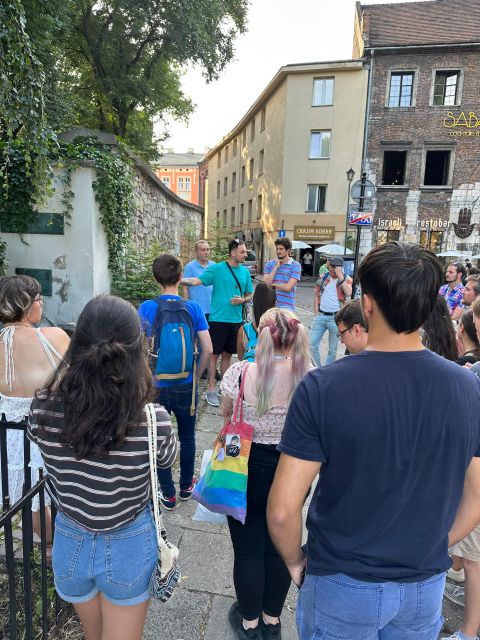
Two hours is a good length for a first look at Kazimierz. It is long enough to cover the district’s major themes without turning into an exhausting half-day lecture. The route contains many stops, so you should be ready to walk and to keep moving between explanations.
The English-language guiding is provided by licensed guides. Zee led the tours described in the supplied information, and the strongest praise centers on his knowledge, energy, and willingness to show more than requested. That suggests a personal style, though guide assignments can vary, so you should not assume Zee will lead every departure.
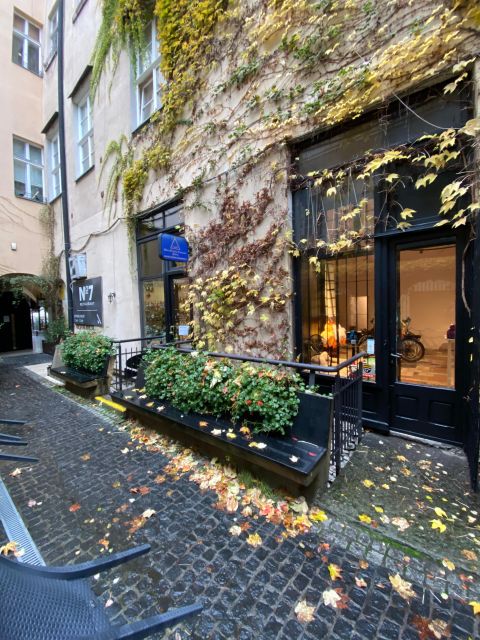
The walk is wheelchair accessible, which is useful in a historic district where surfaces and building access can vary. Public transportation is not included, but the meeting point is in the courtyard of the building containing Restaurant No7. ZeeTour’s office is the second shop on the left once you enter the courtyard. Give yourself time to find that entrance rather than waiting on the main street.
The tour is conducted in English. If you need another language, this experience does not list one.
Is $33 a fair price?
At $33 per person, the tour sits in a reasonable range for a guided two-hour history walk, especially because you are paying for a licensed guide rather than simply following a printed route. The value comes from the connections: the guide joins medieval settlement, synagogue life, World War II, memorials, and film locations into one story.
The price is less attractive if you want extended interior visits. Admission tickets are extra, and the tour does not replace a longer visit to the Old Synagogue, Remuh Synagogue, or Jewish Cemetery. Think of the $33 as the cost of getting oriented and receiving historical context, not as an all-inclusive museum ticket.
For a first day in Krakow, that can be good value. You can use the walk to decide which buildings deserve a return visit. I would especially recommend it early in your stay, when the background will help you understand later visits to museums and memorial sites.
Who should book this walk?
I would choose this tour if you want a clear introduction to Jewish history in Krakow and prefer learning while walking through the actual district. It suits anyone interested in World War II, Jewish religious life, Polish history, or the locations used in Schindler’s List.
It is also a strong choice if you want a guide to connect places that might feel scattered when visited alone. The route includes enough unusual details, from the women’s mikveh to Rubinstein’s birthplace, to keep it from being only a synagogue circuit.
You may want a different format if you dislike serious historical subjects, need a very slow pace, or want extensive time inside each religious building. In that case, treat this walk as an introduction and add separate visits afterward.
Should you book The Jewish Quarter Walking Tour?
Book it if you want the story behind Kazimierz, not just attractive streets and old façades. The strongest reasons are the licensed English-speaking guide, the careful link between Jewish and Christian history, the World War II context, and the range of stops packed into two hours.
Go in with the right expectations: admission fees are separate, the pace may be brisk, and the tour offers a broad foundation rather than a specialist seminar. For $33, it is a practical way to get your bearings and learn why Kazimierz matters before exploring its synagogues, cemetery, and museums on your own.
FAQ
Where does the Jewish Quarter walking tour meet?
Meet at Restaurant No7. Enter the building and walk into the courtyard. ZeeTour’s office is the second shop on the left.
How long does the tour last?
The walking tour lasts two hours.
What language is the tour offered in?
The tour is offered in English with a live guide.
Are admission tickets included?
No. Admission tickets are not included in the tour price.
Is public transportation included?
No. Public transportation is not included.
Is the tour wheelchair accessible?
Yes, the activity is listed as wheelchair accessible.
Can I cancel the booking for a full refund?
Yes. You can cancel up to 24 hours in advance for a full refund. You can also reserve now and pay later.
Just added around Krakow
- stag dog chase Krakow prank★ 5.0 · 4 reviews
- Divine Mercy Sanctuary – Private Tour from Krakow★ 5.0 · 4 reviews
- ZALIPIE – painted village, unique small group tour from Krakow★ 5.0 · 7 reviews
- ZALIPIE – painted village, unique PRIVATE tour from Krakow★ 5.0 · 20 reviews
- Zalipie Private Tour from Krakow The Painted Village★ 5.0 · 4 reviews
- Wooden Churches Unesco List Private Tour from Krakow★ 5.0 · 14 reviews
- Guided tour to Salt Mine & Schindler Factory with Pick-Up Options★ 4.0 · 58 reviews
- White Water Rafting Krakow★ 5.0 · 3 reviews
Jewish Heritage Tours, compared.
Bike Tour of Old Town, Jewish Quarter and the Ghetto
Read our review →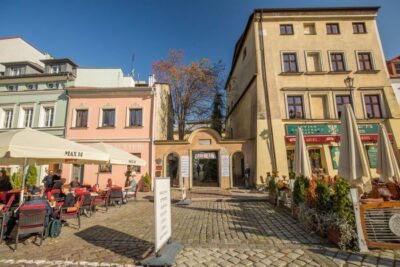
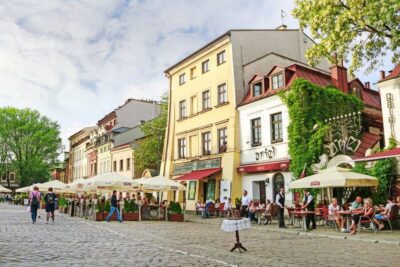
Kazimierz, Schindler’s Factory & Ghetto Guided Tour
Read our review →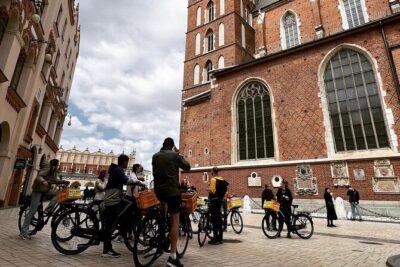
Full Bike Tour – the Old Town, Jewish Qtr & the Ghetto NEW BIKES
Read our review →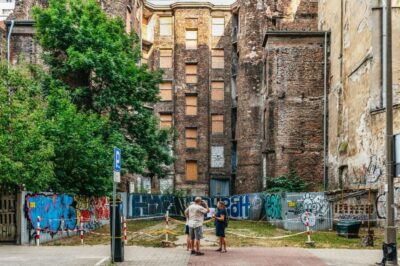
Warsaw Ghetto Private Walking Tour with Hotel Pickup
Read our review →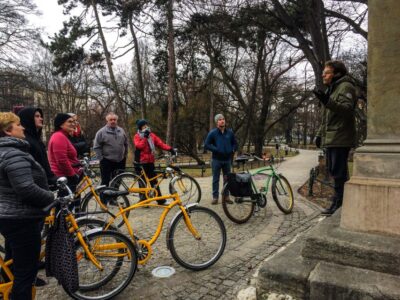
Bike Tour of the Old Town, Kazimierz, and the Ghetto
Read our review →Browse the lists this tour appears in