
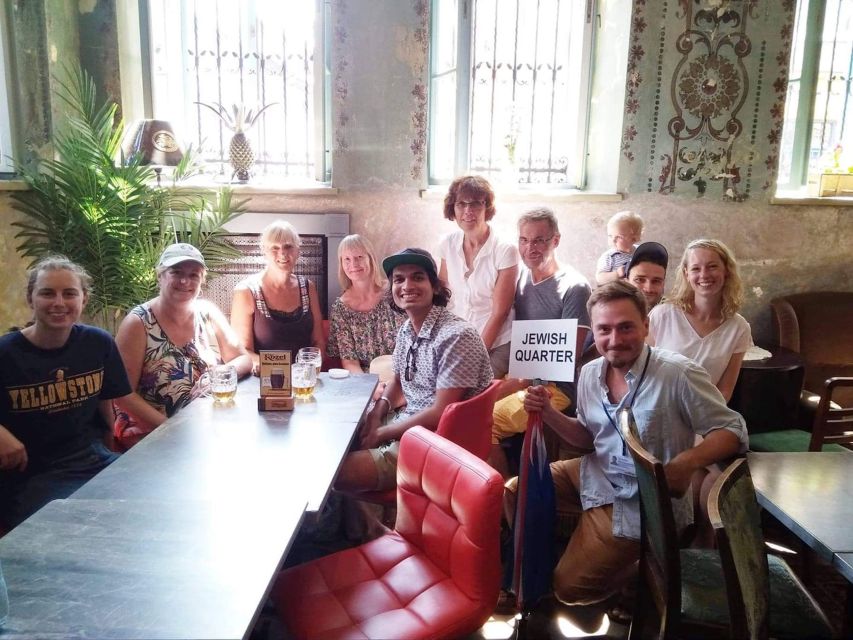
Reviewed · JEWISH HERITAGE TOURS
Krakow: Jewish Quarter and Former Ghetto Tour
Krakow’s Jewish Quarter is not just a photogenic cluster of old streets. It is a place where centuries of Jewish life, Nazi persecution, postwar silence, and modern renewal sit close together. This 150-minute walking tour helps you read those layers instead of simply passing through them. I especially like the way it connects famous sights, such as the Old Synagogue and Schindler’s List filming locations, with lesser-known buildings and personal stories.
I also like the guides’ strong reputation for clear storytelling. Bart, Magda, Emily, Slavek, Matt, and Chris are among the guides praised for their warm delivery, strong voices, and thoughtful answers. The main drawback is the amount of information packed into two and a half hours. You walk often, and one person found the pace a little rushed, so bring comfortable shoes and allow time afterward to think through what you have heard.
Key points at a glance
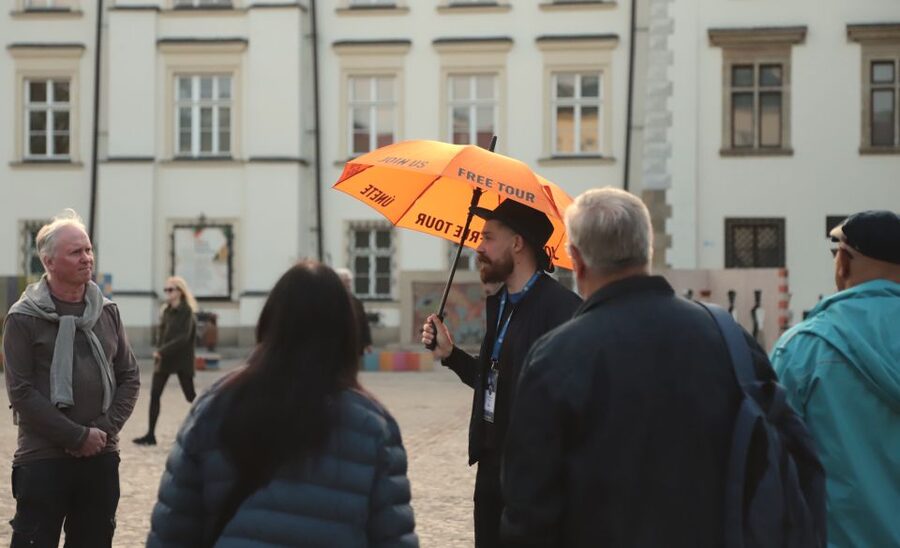
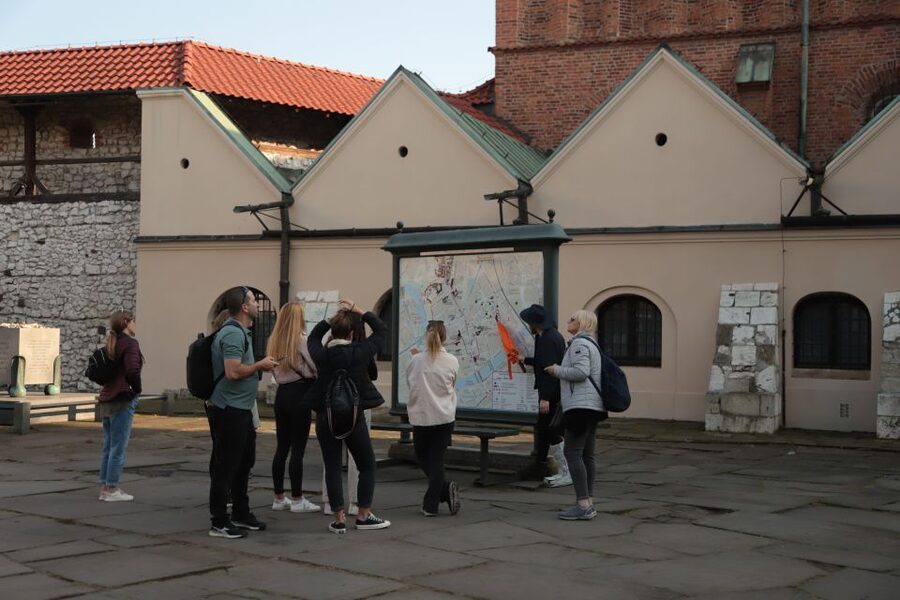
- Start beside the Old Synagogue: Meet at ul. Szeroka 24, under the orange umbrella.
- See Jewish Krakow in two chapters: The tour covers both Kazimierz and the former ghetto.
- Expect serious history: Holocaust memorials and Heroes of Ghetto Square make this an emotional experience.
- Look beyond the famous film: Schindler’s List locations add a pop-culture link, but the tour focuses on real people and events.
- Guides make the difference: Bart, Magda, Emily, Slavek, Matt, and Chris have all been praised for clear, engaging presentation.
- Budget-friendly format: At $19, the tour offers a useful introduction before you decide which museums or sites deserve more time.
Why Kazimierz needs more than a casual stroll
Kazimierz began as a separate city on an island near Krakow. Its founders hoped it would compete with its larger neighbor. Over time, Jewish residents who had faced persecution in western Europe settled here, and Kazimierz became a major center of Jewish life in Poland.
That background matters because the quarter can look deceptively compact. You may see a synagogue, a café, a quiet lane, and a handsome old building within a few minutes. Without context, these sights can blur into a pleasant walk through an old district. With a guide, the streets become evidence of a community that developed its own religious traditions, institutions, businesses, and social life.
I like that the tour does not treat Jewish Krakow as a backdrop for wartime tragedy alone. You hear about life before World War II, Jewish traditions, and the difference between Ashkenazim and Sephardim. You also encounter people connected with Krakow and Jewish history, including Helena Rubinstein, Roman Polanski, Ludwick Zamenhof, and Maximilian Faktorowicz.
That wider frame is important. The Jewish Quarter was not created by the Holocaust. It had a long life before the catastrophe, and its story continues afterward.
More Jewish Heritage Tours in Krakow
- Krakow: Schindler’s Factory & Ghetto Guided Tour
★ 4.7 · 1,694 reviews - Krakow: Bike Tour of Old Town, Jewish Quarter and the Ghetto
★ 4.9 · 1,155 reviews - Krakow: Kazimierz Jewish Quarter Walking Tour
★ 4.8 · 571 reviews
Beginning at the Old Synagogue on Szeroka Street
The meeting point is directly in front of the Old Synagogue at ul. Szeroka 24. Look for the guide with an orange umbrella. This is a practical start because Szeroka Street puts you in the heart of Kazimierz rather than at a distant transport stop.
The Old Synagogue is one of the tour’s anchor points. It is presented as the oldest synagogue in Poland and among the oldest synagogue buildings in Europe, with the activity description highlighting it as the second oldest synagogue in Europe. The key value here is not simply seeing an old religious building. Your guide explains what the synagogue represented within the community and how Jewish religious and social life shaped the quarter around it.
The opening stop also gives you a chance to settle into the group and hear the tour’s overall approach. Guides such as Bart and Magda are praised for answering questions, while Emily is noted for keeping people engaged during the full two and a half hours. That matters on a walking tour with a serious subject. A good guide keeps the information human rather than turning the experience into a list of dates.
You should not expect a long indoor museum visit as part of the basic tour. This is a walking experience with an experienced local guide, not a ticketed synagogue tour or a museum package. Food and drinks are not included, so plan those separately.
Jewish streets, traditions, and people
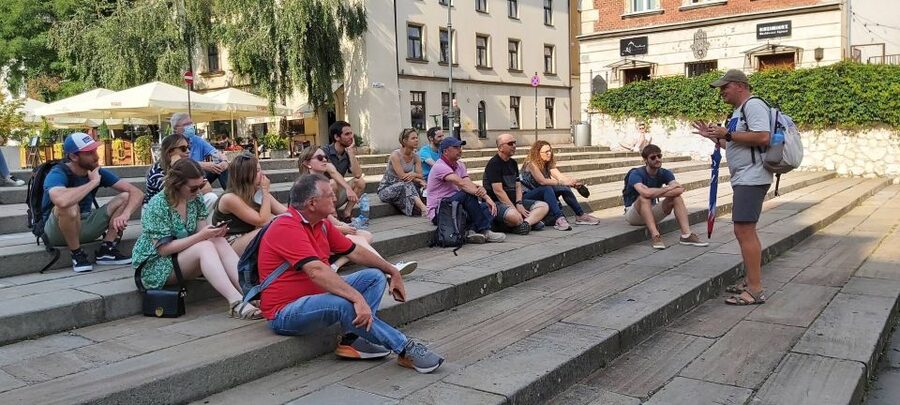
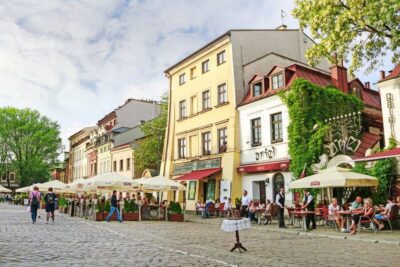
From the Old Synagogue, the tour examines the surrounding streets and buildings. The appeal lies in the details you could easily miss alone. A façade, a narrow passage, or the position of a building can mean more once someone explains how the area functioned as a Jewish community.
The tour introduces Ashkenazim and Sephardim, two major Jewish cultural traditions. You also hear about notable people linked to Jewish history and Krakow, including Helena Rubinstein, Roman Polanski, Ludwick Zamenhof, and Maximilian Faktorowicz. These names help move the subject away from a single wartime narrative and toward the wider range of Jewish contributions to culture, language, business, and public life.
I would pay attention to the guide’s examples here and ask questions. Several guides are praised for being approachable and willing to stop for discussion. Magda, in particular, is described as checking whether the group had questions or comments, while other guides are praised for giving clear answers without losing the pace.
The setting itself can be lively and modern, but the tour asks you to imagine the earlier community that once filled these streets. That contrast is part of the experience. You are not walking through a preserved historic district frozen in time. You are walking through a living part of Krakow where memory, tourism, everyday life, and restoration overlap.
The Jewish cemetery and the weight of continuity
The Jewish cemetery adds another layer. A cemetery is not just another stop for photographs. It shows how a community remembered its dead, marked family connections, and expressed religious customs across generations.
Expect the guide to place the cemetery within the longer story of Jewish life in Krakow. That is useful because the cemetery helps connect the prewar community with the people and traditions discussed earlier. It also gives the tour a quieter change of mood before the subject turns more directly to wartime persecution.
You should approach this part respectfully. The activity includes Holocaust memorials and sites connected with violence and loss, so the tone is reflective rather than light sightseeing. Guides such as Emily and Bart have been praised for handling difficult material with care, while Chris is described as thought-provoking and personal in his presentation.
The exact amount of time at each stop can vary. A group with many questions may spend longer at one location and move more quickly at another. One person found the tour slightly rushed because so much information was delivered while walking. If you prefer to linger, take notes or return later on your own.
Same city, a completely different kind of day:
- Kraków: Evening or Night River Cruise
★ 4.0 · 7,386 reviews - Krakow: Oskar Schindler’s Factory Entry Ticket & Guided Tour
★ 4.2 · 3,793 reviews - Krakow: City Sightseeing Tour by Electric Golf Cart
★ 4.5 · 3,264 reviews - Krakow: Schindler’s Factory Tour with Entrance Ticket
★ 4.5 · 3,182 reviews
Crossing into the former ghetto
The tour then links Kazimierz with Krakow’s former ghetto. This change is central to the experience. Kazimierz represents the long development of Jewish life in the city, while the ghetto story shows the destruction imposed by Nazi occupation during World War II.
The walk helps you understand that these are connected places, but not the same place. That distinction can be hard to grasp from a map or a self-guided stroll. A guide can explain how Jewish residents were affected before, during, and after the ghetto period, and how the city’s geography shaped daily life.
The subject is emotionally difficult. You will hear about persecution and the destruction of Jewish communities. This is not a tour for anyone looking only for light entertainment or a quick photo stop. At the same time, the guides aim to keep the experience clear and accessible. The strongest comments about Bart, Magda, Emily, and Slavek focus on their ability to explain difficult history in a direct, respectful way.
The tour is suitable for a wide range of visitors because it does not assume advanced historical knowledge. You can arrive with only a basic understanding of Krakow and still follow the story. If you already know a lot about the Holocaust, you may value the local setting, personal names, and buildings more than a broad introduction.
Heroes of Ghetto Square and the Holocaust memorial
Heroes of Ghetto Square is one of the tour’s most powerful stops. The square functions as a memorial to the people forced into the Krakow ghetto and to those who suffered during the occupation. Its open space and memorial design give the guide room to explain what happened and why the site matters.
This part can be emotionally heavy, but it is also where the tour’s context becomes most concrete. Instead of hearing only about policies and dates, you are standing in a place connected to deportation, fear, separation, and loss. A guide’s role is especially important here because the setting calls for restraint. You need explanation, but you also need space to look and think.
Bring a warm layer if you visit in colder months. One February booking specifically advised wrapping up because the group remained outside for more than two hours. Comfortable shoes are equally useful. The route includes regular walking, although the experience is described as wheelchair accessible.
The memorial stop is also a good reason not to schedule something immediately afterward. The advertised duration is 150 minutes, but a guide may run a little longer when questions and group discussion continue. One person described a tour lasting close to three hours. Give yourself breathing room rather than racing to your next reservation.
Schindler’s List locations without losing the real story
The film connection is useful, especially if Schindler’s List helped lead you to Krakow. The tour points out filming locations and places associated with the movie, giving you a chance to connect familiar scenes with the actual streets of the city.
Still, I would treat the film as a doorway, not the main attraction. The real value lies in learning how the locations relate to Krakow’s Jewish community and wartime history. A film location can draw your attention, but it cannot explain the full experience of the people who lived there.
One practical warning comes from the walking format. A participant became separated from the group while taking photographs near Schindler-related sites and then followed the wrong group. Keep the guide in sight, especially when stopping for pictures. An orange umbrella identifies the meeting point at the start, but you should also listen for the guide’s voice and confirm the group before moving on.
Guides with strong voices are particularly helpful outdoors. Bart was praised for being easy to hear, while other guides were praised for keeping the group together and making frequent stops. Even so, a little personal attention helps. If you need to step aside for a photo, tell the guide or stay close enough to rejoin quickly.
The guide matters more than the script
The strongest part of this experience is the human delivery. Bart is repeatedly described as passionate, witty, and easy to hear. Magda is praised for warmth, patience, and a strong grasp of Jewish life before and during World War II. Emily is noted for storytelling and for keeping the group engaged. Slavek is praised for friendliness and clear explanations, while Matt and Chris receive similar credit for bringing the subject to life.
The exact guide depends on the departure, so you cannot assume you will get a particular person. Still, the range of positive comments suggests that the experience is built around local guides rather than a fixed audio script.
That makes the tour more useful for questions. You can ask about a name, a building, a custom, or the connection between a location and the larger history. The guides also point out places you can revisit later, which is helpful if you plan to spend another day in Kazimierz.
I would listen for the guide’s distinction between Jewish life before the war, the Holocaust, and the modern quarter. Those sections can blend together if the explanation is too broad. The best approach is to treat the tour as an orientation. It gives you a map, a set of stories, and enough background to choose your next museum or site.
Is $19 a fair price?
At $19 per person, the tour is good value if you want more than a walk through attractive streets. You get two and a half hours with an English-speaking local guide, and the route covers several separate themes: synagogue history, Jewish traditions, the cemetery, the former ghetto, memorials, and film locations.
The value is strongest for a first visit. You can walk through Kazimierz alone for free, but you may not understand the importance of the buildings or know which details deserve attention. The fee buys structure and interpretation, not just movement from one point to another.
There is also a free-tour style option in the city, with payment handled differently. Some people may prefer that model, while others like knowing the price in advance. At $19, I see this paid tour as a straightforward choice for anyone who wants to support a planned, guided experience without committing to an expensive private tour.
Food, drinks, and separate museum admission are not included. Keep that in mind when comparing prices. The walking tour works best as a foundation, not as a complete replacement for Krakow’s Jewish museums and indoor sites.
Who should book this walking tour?
I would book it if you are visiting Krakow for the first time, want historical context, or feel that a self-guided walk would leave too many gaps. It is also a strong choice if you have seen Schindler’s List and want to connect the film with actual places and broader Jewish history.
The tour suits people who enjoy listening, asking questions, and walking at a steady pace. It is wheelchair accessible, though the duration and outdoor format are still worth considering for your own comfort. Wear practical shoes and dress for the weather.
I would hesitate only if you want a short, light introduction or prefer spending most of your time inside museums. The subject is serious, the route is fairly long, and the amount of information can be intense. You may also want a separate visit to the Old Synagogue or other museums if you prefer unhurried time with exhibits.
Final verdict
Book this tour if you want Krakow’s Jewish Quarter to make sense rather than simply look old and atmospheric. For $19, you get a well-structured introduction to Kazimierz, the former ghetto, Jewish traditions, Holocaust memorials, and Schindler’s List locations.
The experience depends on the guide, and the guide names associated with it, including Bart, Magda, Emily, Slavek, Matt, and Chris, suggest a strong team. Go prepared for a serious subject, a good deal of walking, and plenty to absorb. Keep your group in sight at photo stops, leave time afterward, and you will get far more from the quarter than a casual stroll can provide.
FAQ
Where does the Krakow Jewish Quarter and former ghetto tour begin?
The tour begins in front of the Old Synagogue at ul. Szeroka 24. Look for the guide with an orange umbrella.
How long does the tour last?
The stated duration is 150 minutes, or two and a half hours. Some departures may run longer if the group has many questions or discussions.
What language is the tour in?
The tour is conducted in English with a live English-speaking guide.
What places are included?
The experience includes the Old Synagogue area, the Jewish cemetery, Holocaust memorials, Heroes of Ghetto Square, the former ghetto, and Schindler’s List filming locations.
Is the tour wheelchair accessible?
Yes, the activity is listed as wheelchair accessible.
Is food or drink included?
No. Food and drinks are not included in the tour price.
Can I cancel for a full refund?
Yes. You can cancel up to 24 hours in advance for a full refund.
Can I reserve now and pay later?
Yes. The reserve-now, pay-later option lets you secure a place without paying at the time of booking.
Just added around Krakow
- stag dog chase Krakow prank★ 5.0 · 4 reviews
- Divine Mercy Sanctuary – Private Tour from Krakow★ 5.0 · 4 reviews
- ZALIPIE – painted village, unique small group tour from Krakow★ 5.0 · 7 reviews
- ZALIPIE – painted village, unique PRIVATE tour from Krakow★ 5.0 · 20 reviews
- Zalipie Private Tour from Krakow The Painted Village★ 5.0 · 4 reviews
- Wooden Churches Unesco List Private Tour from Krakow★ 5.0 · 14 reviews
- Guided tour to Salt Mine & Schindler Factory with Pick-Up Options★ 4.0 · 58 reviews
- Wawel Castle, Cathedral, & Rynek Underground Tour with Lunch★ 5.0 · 4 reviews
Jewish Heritage Tours, compared.
Bike Tour of Old Town, Jewish Quarter and the Ghetto
Read our review →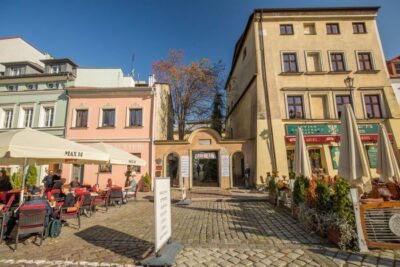
Kazimierz, Schindler’s Factory & Ghetto Guided Tour
Read our review →
Full Bike Tour – the Old Town, Jewish Qtr & the Ghetto NEW BIKES
Read our review →
Warsaw Ghetto Private Walking Tour with Hotel Pickup
Read our review →
Bike Tour of the Old Town, Kazimierz, and the Ghetto
Read our review →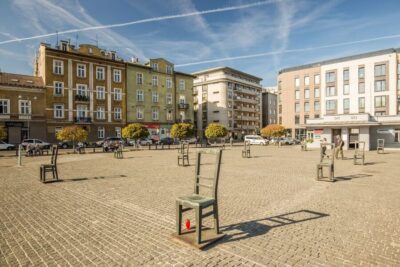
Browse the lists this tour appears in