
Reviewed · WALKING TOURS
Gdańsk Old Town Private Walking Tour with Legends and Facts
Gdańsk’s story changes quickly as you walk: medieval trade gives way to royal ceremony, wartime destruction, amber craft, and the modern fight against communism. This private tour connects those layers on foot, beginning at the Highland Gate and moving through the city’s grandest streets before reaching the shipyard district.
I like the personal format, since you can ask about Hanseatic merchants, Polish politics, architecture, or local food without waiting for a group to catch up. I also like the choice of routes: a two to four-hour Old Town walk can cover the essentials, while the longer version adds St. Bridget’s Church, the shipyard memorial, and the European Solidarity Centre.
The main thing to consider is pace. The full route can last up to six hours, and some sites are viewed briefly while others deserve more time. Pickup is only offered within 1.5 kilometers of the meeting point, and one poor experience involved confusion over the meeting place and an English-language problem, so confirm the details the day before.
Key points before you book
- Private guiding keeps the day flexible: Guides such as Marek, Kaja, Elwira, Marta, Joanna, and Thomas have adapted routes to interests, timing, and walking pace.
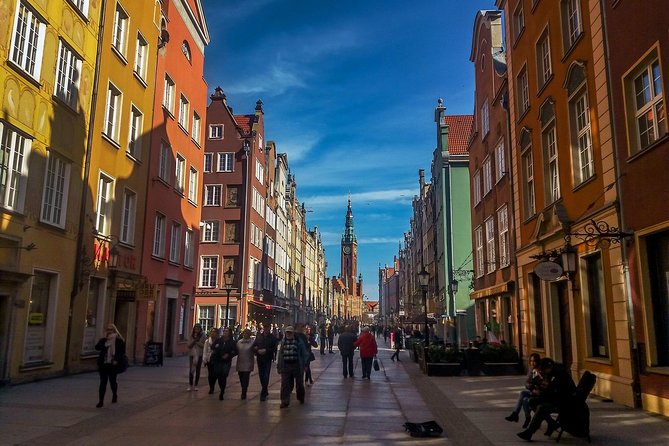
- The basic route covers Gdańsk’s postcard center: Expect the Golden Gate, Long Street, Long Market, Town Hall, Neptune’s Fountain, Artus Court, the Green Gate, St. Mary’s Basilica, and the Great Armoury.
- The extended route adds modern Polish history: St. Bridget’s Church, the Fallen Shipyard Workers Monument, and the European Solidarity Centre give the walk a strong Solidarity theme.
- It mixes free outdoor sights with included interiors: The listed route includes Artus Court, the European Solidarity Centre, St. Bridget’s Church, and the Wyspa Spichrzow section, while the Motława waterfront stop lists admission separately.
- The price makes most sense for a small private group: At $107.89 per person, value improves when several people share the guide and use the private format well.
- The tour is highly rated but not flawless: It has a 4.8 rating from 65 reviews and a 97 percent recommendation rate, with one serious complaint about English and pickup confusion.
Starting at the Highland Gate
Meet at the Highland Gate, or Brama Wyżynna, at Wały Jagiellońskie 2A. This was the main entrance through the medieval city wall, so it is a fitting place to begin. You get an immediate sense that Gdańsk was not simply a pretty port, but a defended and important city.
The first stop lasts about ten minutes and is outdoors. There is no admission charge. If your accommodation is within 1.5 kilometers of the meeting point, the guide can meet you there instead. Otherwise, use the stated meeting point and check your email the day before for any important instructions.
This opening is short, but useful. Your guide can set the basic timeline before the walking begins, which helps you understand why the city center contains both grand merchant houses and reminders of war and political change.
More Walking Tours in Gdansk
- Gdańsk City Sights & History Guided Walking Tour in English
★ 4.8 · 876 reviews - Main Town Gdańsk Walking Tour
★ 5.0 · 644 reviews - Discover Gdansk Walking Tour
★ 5.0 · 495 reviews
Along the Golden Gate and Long Street
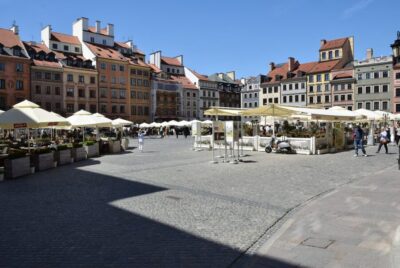
From the Highland Gate, you continue through the Golden Gate and along Długa Street toward the Long Market. This is the visual heart of the tour, with tall façades, decorative details, and some of Gdańsk’s best-known civic buildings.
The route takes about an hour. You see the Town Hall, the Golden House, and Neptune’s Fountain, a 17th-century landmark that has become one of the city’s familiar symbols. The guide’s role matters here. A quick walk can leave you with photos but little sense of what you are seeing. A private guide can point out architectural details, explain the role of merchants and city government, and answer questions as they arise.
This is also where the tour can feel busiest and most polished. The buildings are impressive, but the setting is designed for sightseeing, so you should not expect a quiet backstreet walk at every moment. The benefit is that you cover several major sights without wasting time finding them.
Several reviews praise guides for adding personal stories and quirky details. Marek, Thomas, and Michal were singled out for making the architecture and politics easier to follow, while guides such as Marta and Kaja were praised for their energy and clear explanations. Those personal touches are most useful on a street like Długa, where a good guide can keep the walk from becoming a list of building names.
Artus Court and the merchant city
The next stop is Artus Court, or Dwór Artusa, a former meeting place for Gdańsk merchants. It now operates as part of the Gdańsk History Museum and contains local art and historical collections.
The listed visit lasts around 20 minutes, with admission marked as free for this tour. That is enough time for an introduction and a look at the main interior, but not a long museum visit. If you enjoy art museums and want to study every display, you may find this portion brief.
Artus Court is valuable because it gives the commercial center a human purpose. The grand streets were not built only for decoration. They were tied to trade, civic power, and the merchants who helped shape Gdańsk. Ask your guide to connect this stop with the city’s role in the Hanseatic world if that subject interests you. Joanna, one of the guides mentioned in the feedback, adjusted a three-hour walk for visitors especially interested in the Hanseatic League and the Teutonic Knights.
The Green Gate and the Motława waterfront
The route then follows the Motława River embankment, known as Długie Pobrzeże, toward the Green Gate. The stop is short, about ten minutes, but it gives you a change of view after the close façades of the main streets.
You can look across the river and see the waterway that helped make Gdańsk a trading center. The waterfront is also a good place to pause for photographs and ask your guide how the port shaped the city. The listed admission is not included at this point, so clarify what, if anything, you plan to enter.
This section is more about setting and orientation than a long visit. If you want an extended waterfront stop, tell the guide early. The private format makes that possible, though adding time here may reduce time at a museum or church later.
More Ghost Tours in Gdansk:
- Gdańsk: Old Town Private Walking Tour with Legends and Facts
★ 4.9 · 245 reviews - Gdansk Legends & Cocktails Tour: Historic Tales and Tasting
★ 5.0 · 11 reviews - Creepy Krakow: 2-Hour City Walking Tour
★ 4.7 · 1,131 reviews - Krakow Night Tour: Ghosts, Vampires and Legends of the Old Town
★ 5.0 · 258 reviews
St. Mary’s Basilica and the Great Armoury
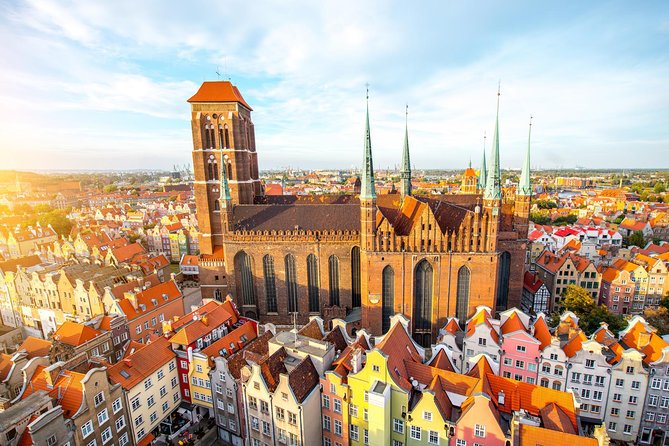
St. Mary’s Basilica is one of the tour’s major interiors. It is one of the largest brick churches in the world, with a vast hall, an ornate altar, an organ set, and a royal chapel. The visit is listed at about 20 minutes and has no admission charge for the tour.
That time gives you a strong first look, but it is not enough for a slow architectural study. If the church matters to you, ask whether the schedule allows extra time. One guide, Margaret, made a point of getting the group there in time for the clock show, a useful example of how timing can make a difference.
The walk ends in this central section at the Great Armoury, a fine example of Renaissance architecture. The itinerary then continues farther on the extended version. This distinction is important when booking: the shorter route gives you the main center, while the longer option adds a much more serious look at modern Gdańsk.
Wyspa Spichrzów and the warehouse ruins
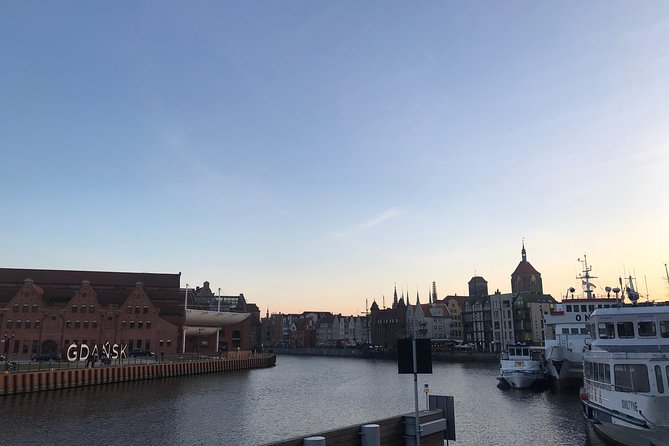
The extended route crosses toward the islands on the Motława. On Wyspa Spichrzów, you see old brick structures and warehouse ruins connected to the city’s trading past. The stop takes about an hour and is listed as included.
This is a worthwhile addition if you want more than the polished central streets. The warehouse remains suggest the practical side of port life: storage, shipping, and commerce. You get a better sense of how the city functioned, not just how its ceremonial center looked.
The extended route also reaches Ołowianka, where you see the red-brick Baltic Symphony Hall. This section adds walking distance, so wear shoes that can handle several hours on city streets. The tour is private, which means you can ask for a slower pace, but it does not remove the physical demand of a long walking day.
St. Bridget’s Church and its amber altar
St. Bridget’s Church is one of the most distinctive stops on the longer route. The church served as a sanctuary for Solidarity leaders during martial law, linking the building to one of Poland’s most important modern political movements.
Inside, you can see religious objects and a striking amber altar. Amber is strongly associated with the Baltic region, and the altar gives the material a place in the city’s religious and cultural life rather than treating it only as a souvenir. The church visit is listed at two hours, making it one of the most substantial parts of the extended experience.
A large church door shows scenes from the Solidarity period, from August 1980 through the imposition of martial law in December 1981. This gives your guide a natural way to explain the workers’ movement and the pressure placed on opposition leaders.
The two-hour duration suggests a deeper visit than the brief stops in the central Old Town. If you are mainly interested in architecture, you may find this political history-heavy section less appealing. If you want to understand why Gdańsk matters to modern Poland, it is one of the tour’s strongest additions.
The shipyard memorial and the European Solidarity Centre
The route continues to the Monument to the Fallen Shipyard Workers of 1970. The monument remembers workers killed during anti-communist riots and provides a direct link between Gdańsk’s industrial past and the Solidarity movement.
The stop itself lasts about 30 minutes and is listed without an admission charge. Your guide can explain the setting before you enter the European Solidarity Centre, a modern museum devoted to the riots, the trade union movement, and the political changes that helped end communist government in Poland.
The museum visit is listed at another 30 minutes, with admission included. That is a useful introduction, but the center can easily reward more time. One of the strongest reactions in the supplied feedback focused on the museum, with the visitor calling it outstanding. If the subject interests you, ask about spending longer there and accept that the overall walk may run toward the six-hour end of the range.
This part changes the tone of the day. You move from medieval gates and merchant houses to workers, protest, and political memory. That contrast is exactly why the longer tour can be more useful than a standard Old Town photo walk.
How the private format affects the experience
The tour is for your group only, rather than a mixed party. That matters most when you have specific interests or limited time. Thomas reportedly adjusted the route for historic sites, shopping, and the group’s pace, while Marek changed a booking time 36 hours before the start without trouble.
You can also ask for recommendations. Guides have suggested restaurants and bars, taken groups to an amber dealer, and made unscheduled stops for beer tasting or soup when time allowed. These extras are not guaranteed, so treat them as possible additions rather than promised features.
The guide quality is the most important variable. Names praised in the feedback include Marek, Kaja, Elwira, Marta, Joanna, Krzysztof, Margaret, Thomas, Michal, and Karina. Their strengths included humor, local pride, flexibility, and the ability to explain Polish history in an approachable way.
There is one clear warning. One person reported weak English, a pickup mix-up, and an unprofessional stop at a shop. The overall rating remains high, but you should confirm the meeting arrangement and guide language before the walk. English is the listed language for this booking.
Price, timing, and practical value
The price is $107.89 per person. That is not a bargain for a short two-hour walk, especially if you are alone or traveling as a couple. It becomes more defensible when you are sharing a private guide with a family or small group and use the chance to shape the route.
The duration ranges from roughly two to six hours. This broad range reflects the difference between the central Old Town route and the longer version that includes Wyspa Spichrzów, St. Bridget’s Church, the shipyard memorial, and the European Solidarity Centre.
You should ask which route is planned if the booking page does not make it clear. The basic city walk is suitable for a first introduction. The extended version is better if you want Gdańsk’s medieval trade story connected to Solidarity and the end of communist rule.
The tour is near public transportation, and most people can take part. Since the route includes several hours of walking, rain can affect timing. One person arrived late after struggling to park in wet weather, and the guide waited, but public transportation may be the less stressful choice in poor conditions.
Free cancellation is available up to 24 hours before the start time for a full refund. Changes made inside that window are not accepted, so make decisions early.
Who should book this Gdańsk walk?
I would choose this tour for a first visit, especially if you want a guide to connect buildings, legends, architecture, and modern Polish politics. It also suits families, school or staff groups, and anyone who prefers asking questions over listening quietly in a large crowd.
It is a good match for history fans who want the extended route. The European Solidarity Centre, St. Bridget’s Church, and the 1970 workers’ monument add meaning that a short postcard tour will miss.
I would be more cautious if you want a slow museum day or a purely architectural walk. The schedule covers many places, and some stops are short. You should also confirm the exact start point, pickup plan, route length, and English ability of the assigned guide.
Should you book it?
Book it if you want a flexible introduction to Gdańsk and can share the cost with a small private group. The strongest version is the longer route, where the medieval center leads naturally into the shipyard and Solidarity story.
For a couple seeking only a quick look at the main square, the per-person price may feel high. In that case, choose the shorter route and use the guide’s local suggestions to plan the rest of your stay. For first-time visitors who want context, personal attention, and the freedom to ask questions, this is a sensible way to get your bearings fast.
FAQ
Where does the Gdańsk walking tour start?
The tour starts at the Highland Gate, Brama Wyżynna, at Wały Jagiellońskie 2A, 80-887 Gdańsk, Poland.
Where does the tour end?
The activity ends back at the meeting point.
Is hotel pickup available?
Pickup is available only within Gdańsk Old Town, at accommodation located within 1.5 kilometers of the meeting point. If your accommodation is farther away, the route may be changed.
What language is the tour offered in?
The tour is offered in English.
How long does the tour last?
The tour lasts approximately two to six hours, depending on the selected route and the included stops.
Is this a private activity?
Yes. Only your group participates in the private tour.
What main sights are included on the shorter route?
The route includes the Highland Gate, Golden Gate, Długa Street, Long Market, Gdańsk Town Hall, Golden House, Neptune’s Fountain, Artus Court, the Motława waterfront, St. Mary’s Basilica, and the Great Armoury.
What does the extended route add?
The extended route adds Wyspa Spichrzów, Ołowianka and the Baltic Symphony Hall, St. Bridget’s Church, the Monument to the Fallen Shipyard Workers of 1970, and the European Solidarity Centre.
Is admission included?
Several listed stops have admission included or no charge, including Artus Court, St. Bridget’s Church, Wyspa Spichrzów, and the European Solidarity Centre. Admission at the Motława River Embankment stop is listed as not included.
Can I cancel for a full refund?
You can cancel up to 24 hours before the experience start time for a full refund. Cancellations or changes made less than 24 hours before the start are not accepted for a refund.
Just added around Gdansk
- Gdansk and Malbork Castle Small Group Tour from Warsaw with Lunch★ 4.5 · 20 reviews
- Westerplatte private tour led by Expert-Guide (door to door)★ 5.0 · 5 reviews
- Whisky Tasting in Gdańsk★ 5.0 · 3 reviews
- Gdansk EVERYDAY Vodka Tasting Tour★ 5.0 · 6 reviews
- Westerplatte – 2h private trip by luxury car|★ 5.0 · 4 reviews
- Private WW2 Tour of Westerplatte,Gdansk and Stutthof Including Lunch★ 5.0 · 12 reviews
- Aiport Gdansk Transfer to Malbork Castle or Stutthof★ 5.0 · 3 reviews
- 5 hours Individual trip to the Stutthof Concentration Camp★ 5.0 · 5 reviews
Walking Tours, compared.
Gdańsk City Sights & History Guided Walking Tour in English
Read our review →
Browse the lists this tour appears in