
Reviewed · CYCLING TOURS
Sopot Private City Walking or Bike Tour with a local architect
Sopot’s best stories are not all on the main promenade. This private tour with architect Agnieszka Lasota leads you from Bohaterów Monte Cassino into old villas, spa buildings, leafy parks, and beachside landmarks, showing how a small fishing village became the Riviera of the North.
I like the use of historical photographs, which lets you compare Sopot’s streets with their earlier appearance. I also like the private format: your group of up to nine can ask questions, adjust the pace, and choose whether to climb the lighthouse.
The main drawback is time. In 90 minutes to two hours, you will see a lot, but some stops are brief. If you want to enter museums or spend time inside the buildings, plan a separate visit. The price also makes the most sense for a small group, not a solo visitor.
Key points to know before booking
- A local architect leads the way: Agnieszka Lasota explains Sopot through buildings, streets, parks, and the people connected to them.
- Historical photographs add useful context: You can see how the town center and resort district changed over time.
- The route goes beyond Monte Cassino Street: Expect villas, a ravine bridge, spa architecture, the beach, Grand Hotel, and the lighthouse.
- Walking or biking is available: The tour can suit different energy levels and sightseeing styles.
- It is private for up to nine people: Your group gets the guide’s attention rather than following a large scheduled crowd.
- The lighthouse climb is optional: You can decide if the steps and extra effort are worth the view.
Starting on Monte Cassino Street with old Sopot in view
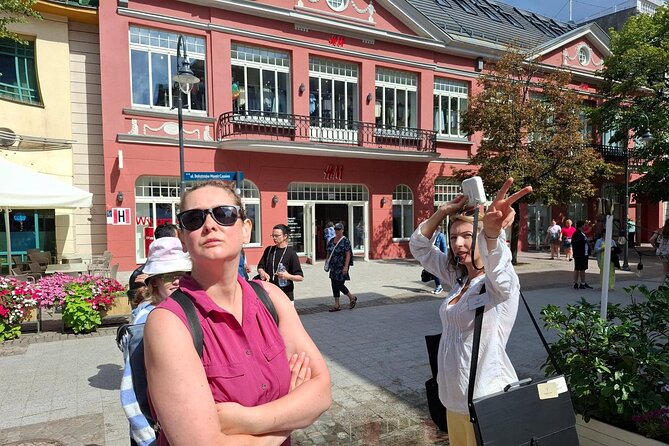
The tour begins at McDonald’s on Bohaterów Monte Cassino 21, right on Sopot’s famous pedestrian street. This is a practical meeting point near public transportation and in the middle of the town’s central activity.
Monte Cassino Street has a story that reaches back to Sopot’s days as a small fishing village. Before restaurants, shops, and holiday crowds filled the route, it was the main road leading toward the sea. Fishermen used it to reach the shore.
That simple detail gives the street more meaning. You are not just walking along Sopot’s main commercial route. You are following an old path between settlement and sea. Agnieszka uses historical images to show how the center changed over the centuries, so you can look at the present street with an earlier version in mind.
The stop takes about 14 minutes. That is enough time for an introduction and a few visual comparisons, but not enough for a long architectural lecture. I see this as a good opening: it gives you a sense of place before the tour turns toward quieter streets.
More Bike Tours in Gdansk
- Gdańsk: Highlights Bike Tour
★ 4.9 · 173 reviews - Gdansk Private Bike Tour
★ 5.0 · 36 reviews - Gdansk Private Bike Tour
★ 5.0 · 21 reviews
The calm garden at Dworek Sierakowskich
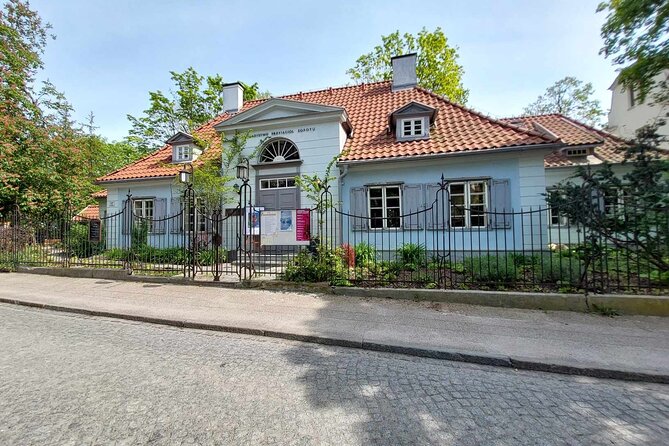
From the main street, the route reaches Dworek Sierakowskich, an 18th-century building that once served as a guest house for a large manor. The setting is calmer than Monte Cassino Street, with a back garden and a more private feel.
This is one of the tour’s useful shifts in mood. Sopot can seem like a resort built for promenades and beach time, but places such as this show its older, quieter side. The building also connects the town to Fryderyk Chopin. A bust commemorates the composer, who very probably stayed here during a holiday and played the piano.
The stop is short, around six minutes, and entry is free. You will see the building and hear its story rather than spend a long time inside. If you enjoy small historic properties more than grand landmarks, this may be one of the more appealing moments on the route.
Villas Street and Sopot’s architectural personality
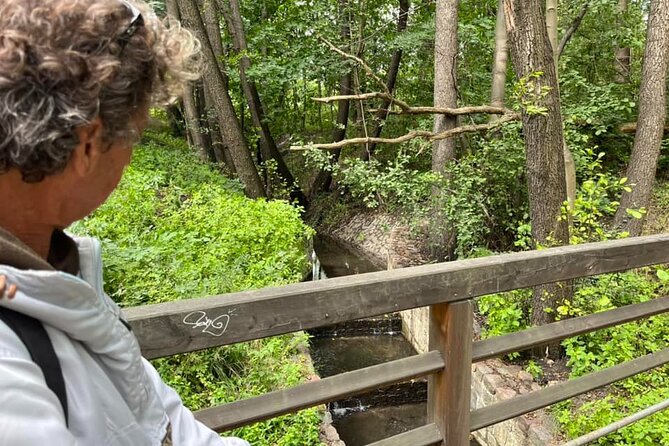
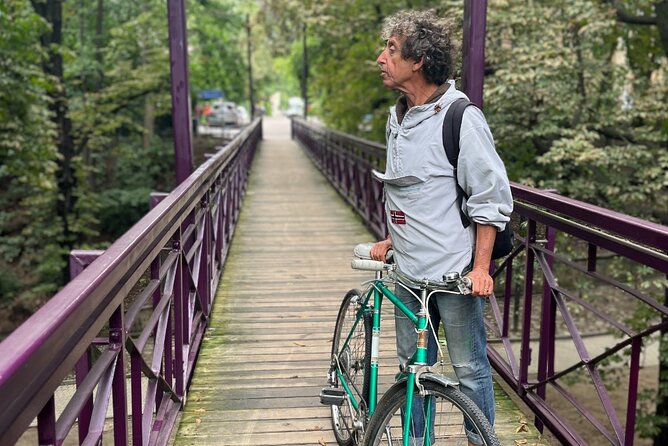
The route then crosses a picturesque bridge over a deep ravine and reaches a street first known as Villas Street. The oldest house here dates from 1881. Classical architecture gives the street a different character from the central promenade, and the buildings come with stories of their own.
This section is especially well suited to Agnieszka’s training as an architect. You are encouraged to look closely at the houses, not simply photograph them from the sidewalk. Details in the façades, the spacing of villas, and the relationship between buildings and greenery all help explain why Sopot has such a strong resort identity.
In the second half of the 20th century, the street was nicknamed Poland’s Montmartre. That name points to its artistic atmosphere, but the tour does not reduce the area to a slogan. You hear about the people and events connected to the buildings, which makes the walk feel more personal.
The route is a good choice if you have already seen the pier and beach and want a more local view of Sopot. It gives you streets that many visitors pass without understanding.
Tower Villa and the spa town story at Goyki 3
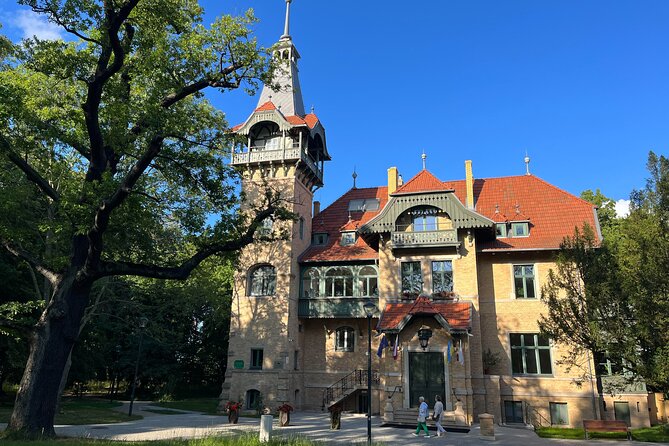
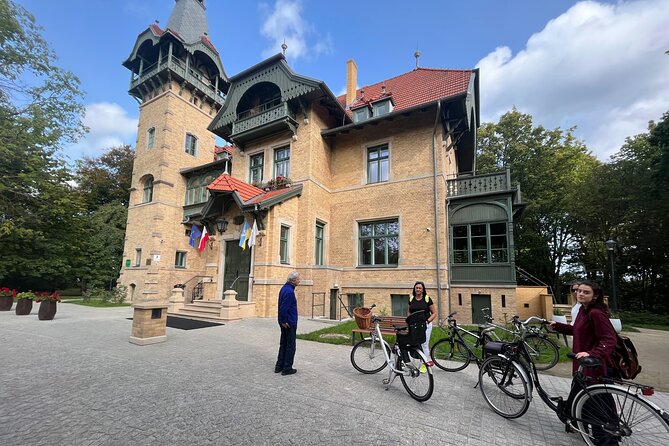
At Goyki 3 Art Inkubator, you will see one of the district’s largest villas. Known as Tower Villa, it dates from the late 19th century and was built by a merchant for his family. Today, the Alpine Resort style building houses an art institution.
The architectural question here is a good one: why would a seaside resort use a design associated with the Alps? The answer leads into the wider European spa movement that began in the 18th century. Resort towns borrowed forms, fashions, and ideas from one another. Sopot was part of that network, even though its appeal came from the Baltic coast rather than mountain air.
Agnieszka explains how spa architecture developed in the park around the villa. That setting matters. Sopot’s resort identity was not created by one hotel or one beach. It grew from a combination of buildings, parks, promenades, water, leisure, and carefully planned public spaces.
The stop lasts about 13 minutes. You should expect exterior views and architectural explanation, rather than a full tour of the art institution. Museum visits are not part of the experience, and the guide suggests arranging those separately.
More City Tours in Gdansk
- Gdansk: City Cruise on Historical Polish Boat
★ 4.8 · 2,913 reviews - Gdańsk City Sights & History Guided Walking Tour in English
★ 4.8 · 876 reviews - Gdansk: City Sightseeing Tour by Golf Cart/Buggy Guided Tour
★ 4.9 · 510 reviews - Gdansk: Shared or Private City Tour Sightseeing By Golf Cart
★ 4.8 · 233 reviews
Sopot’s spa buildings and the story of P.O.G. Dahlberg
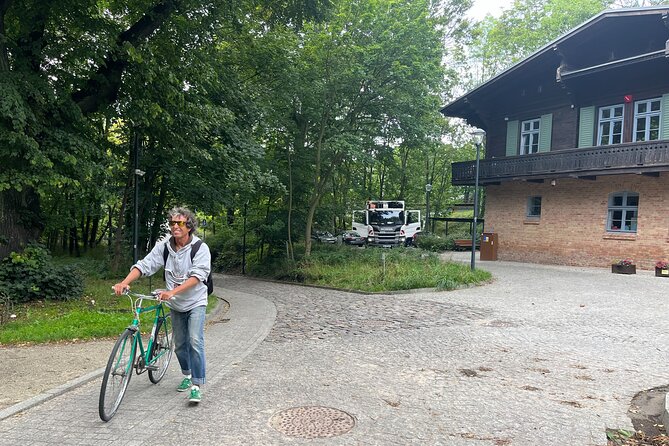
The tour continues through what is described as one of Europe’s richest collections of spa architecture. You will see how different buildings express Sopot’s role as a resort town and how the town combined health, leisure, and seaside recreation.
This is also the area connected with Swedish artist Per Oscar Gustav Dahlberg. He moved to Sopot in 1996 after falling in love with the town. His house and studio may be visited if you are interested in his work, and a meeting can possibly be arranged in advance. You may also have the chance to buy his graphics or an album about Sopot and Gdańsk architecture.
That arrangement is not automatic, so treat it as an optional possibility rather than a promised stop. It is worth asking about before the tour if art or architecture is central to your plans.
Dahlberg is also associated with the famous Crooked House in Sopot, whose design was inspired by his drawings. That connection gives you another way to read the town’s more playful modern architecture after the tour.
Meeting Jan Jerzy Haffner, Sopot’s early godfather
The Jan Jerzy Haffner Monument offers a short pause, about three minutes, but the story behind it is important. Haffner was a surgeon in Napoleon’s army before choosing Sopot as a place to live. He arrived long before the area became a major resort.
The monument helps explain how Sopot’s development depended on people who saw potential in the coast before it was widely known. The town’s identity was not simply handed down by nature. It was shaped by residents, planners, doctors, investors, and visitors.
The route also brings together several things that define Sopot today: tennis courts, large parks, mature trees, sandy beaches, and resort buildings. This is a useful reminder that Sopot is more than a strip of shops leading to the sea.
Grand Hotel and the beachside resort era
The Sofitel Grand Sopot, often called the Grand Hotel, is one of the tour’s major architectural stops. It sits directly beside the beach, an impressive position for a large hotel.
The building also tells a civic story. In the 1920s, the city of Sopot itself decided to make this investment. That choice shows how seriously the town took its role as an international resort. The hotel was not just a private business serving holidaymakers. It formed part of the city’s plan for presenting Sopot as a polished destination.
You will look around the exterior and hear stories connected with the hotel’s past elegance. The stop takes about 15 minutes. It is long enough to appreciate the setting and discuss the building, but it does not include a hotel interior visit.
I like this stop because it links architecture with public ambition. A grand building on the beach can seem like a postcard image. Learning that the city made the decision to build it gives the image a political and economic side.
Skwer Kuracyjny and the Riviera of the North
Skwer Kuracyjny, the resort plaza, was created in 1925. It is a central place for understanding Sopot during its great spa era. Historical photographs show how the area looked when Sopot was known across Europe as the Riviera of the North.
The phrase sounds grand, but the photographs give it substance. They reveal the attractions, public spaces, and resort habits that once drew people to the Baltic coast. You can compare the older plaza with what you see today and consider how much has changed.
The stop takes about 12 minutes. It is another point where the guide’s images matter. Without them, a plaza can be easy to pass through. With them, you begin to picture the crowds, buildings, and entertainment that once filled the same space.
If you are visiting Sopot in summer, this part of the route may be busy. That is not necessarily a problem, but you should expect the town center and beach area to feel more active than the villa streets.
The fishermen’s houses and the Changing Rooms
Near the end, the route reaches the southern Łazienki area and the Changing Rooms built in 1905. The tour includes the stories behind these buildings, including some lighter and amusing details.
The tour may also finish at a plaza surrounded by small fishermen’s houses. These homes were gently relocated from their original position in 1905. That detail returns you to the older Sopot, before its resort identity fully took over.
This is a fitting end because the route has moved through several versions of the town: fishing village, spa resort, artistic neighborhood, and modern seaside destination. The buildings are modest compared with the Grand Hotel, but they help keep Sopot’s origins in view.
The final stop lasts about six minutes. Confirm the exact ending point when booking, since the listed end location is different from the starting point.
The pier and lighthouse option
At some point, you pass near Sopot’s famous pier. The pier itself is not presented as a full tour stop, but you will hear enough about it to visit afterward with a better sense of its place in the town.
The tour ends at Sopot Lighthouse. Climbing the lighthouse steps is optional. The guide is clear that the climb can be tiring, but the view makes the effort worthwhile. If you prefer an easy finish, you can choose not to go up.
This flexibility is helpful for mixed groups. Some people want a final view over Sopot and the Baltic coast, while others may have had enough stairs after a full day of sightseeing. The choice is yours.
Walking, biking, timing, and group size
The experience lasts about 90 minutes to two hours. That range matters because the tour is not a fixed rush from landmark to landmark. The route includes several short stops, optional elements, and time for questions.
You can take it as a walking tour or a bike tour. The supplied details do not specify bike rental arrangements, so ask about that when booking if you plan to cycle. A bike may help you cover the route with less effort, while walking is better if you want time to study façades, gardens, and street details.
The tour is private for your group, with up to nine people. The advertised price is $204.04 per group, not per person. For nine people, that works out to about $23 per person. For four people, it is about $51 each. For one or two people, the cost is much harder to justify unless personal attention is your top priority.
Pickup is offered, and the activity is available in English. Service animals are allowed, and most people can take part. You should still consider the lighthouse steps, the walking distance, and the possible need to move between different parts of town.
Who will get the most from this Sopot tour
I would choose this experience if you care about architecture, local stories, historic photographs, and the way a town developed over time. It is also a smart first introduction to Sopot because it connects the center, villas, parks, beach, resort district, and lighthouse in one outing.
It suits families and friends who want their own pace. The private format lets you ask about a building that catches your eye or pause for coffee if the group needs a break. One Slovenian group specifically appreciated that Agnieszka noticed when people needed coffee or refreshment and chose good places to enjoy the town and coast.
The tour also works well for repeat visitors. One person took part a second time, which makes sense because the route focuses on details that are easy to miss on a normal walk through Sopot.
I would not choose it if you want long museum visits, a deep look inside historic buildings, or a full-day excursion. The guide points out museums and enters a few buildings for free, but museum admission and extended indoor sightseeing are separate plans.
Should you book it?
Book this tour if you want Sopot explained by someone who sees both its architecture and its human stories. Agnieszka Lasota’s approach is personal, flexible, and focused on details, from Chopin’s connection with Dworek Sierakowskich to the city’s decision to build the Grand Hotel.
The strongest reasons to book are the private group format, the historical photographs, and the route beyond the obvious sights. The main caution is value for small groups, since $204.04 is much easier to share among six to nine people than among one or two.
For a first visit to Sopot, take the tour early in your stay and use the pier or museums afterward. For a return visit, book it specifically for the villas, spa architecture, and stories behind the streets you thought you already knew.
FAQ
Where does the Sopot tour begin?
The tour begins at McDonald’s, Bohaterów Monte Cassino 21, 81-706 Sopot, Poland.
Where does the tour end?
The activity ends at a different location from the meeting point. The route includes the Sopot Lighthouse and may also finish near the Changing Rooms or the plaza with relocated fishermen’s houses.
How long does the tour last?
The tour lasts approximately 1 hour 30 minutes to 2 hours.
Is the tour private?
Yes. It is a private activity for your group only, with up to nine people.
Is the lighthouse climb required?
No. Climbing the lighthouse steps is optional, so you can decide during the tour if you want to make the climb.
Is admission to museums included?
No. Museums are best visited separately. The tour enters a few buildings at no cost, and historical photographs plus a licensed guide are included.
More Walking Tours in Gdansk
- Main Town Gdańsk Walking Tour
★ 5.0 · 644 reviews - Discover Gdansk Walking Tour
★ 5.0 · 495 reviews - Gdańsk: Old Town Private Walking Tour with Legends and Facts
★ 4.9 · 245 reviews - Gdansk Old Town 2-Hour Walking Tour
★ 4.5 · 94 reviews
Just added around Gdansk
- Gdansk and Malbork Castle Small Group Tour from Warsaw with Lunch★ 4.5 · 20 reviews
- Westerplatte private tour led by Expert-Guide (door to door)★ 5.0 · 5 reviews
- Whisky Tasting in Gdańsk★ 5.0 · 3 reviews
- Gdansk EVERYDAY Vodka Tasting Tour★ 5.0 · 6 reviews
- Westerplatte – 2h private trip by luxury car|★ 5.0 · 4 reviews
- Private WW2 Tour of Westerplatte,Gdansk and Stutthof Including Lunch★ 5.0 · 12 reviews
- Aiport Gdansk Transfer to Malbork Castle or Stutthof★ 5.0 · 3 reviews
- 5 hours Individual trip to the Stutthof Concentration Camp★ 5.0 · 5 reviews
Cycling Tours, compared.
Complete Cracow Bike Tour (small group of maximum 15 people!)
Read our review →
Bike Tour of Old Town, Jewish Quarter and the Ghetto
Read our review →
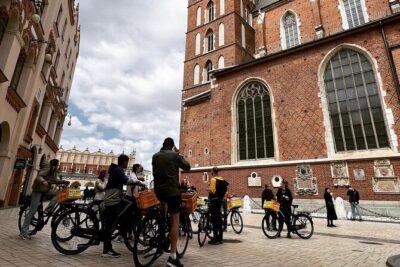
Full Bike Tour – the Old Town, Jewish Qtr & the Ghetto NEW BIKES
Read our review →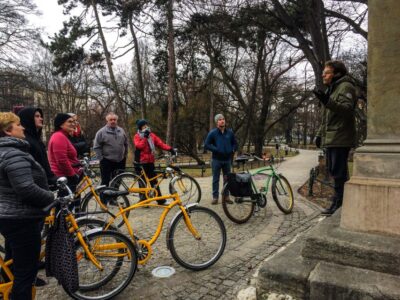
Bike Tour of the Old Town, Kazimierz, and the Ghetto
Read our review →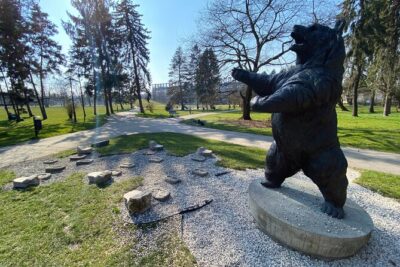
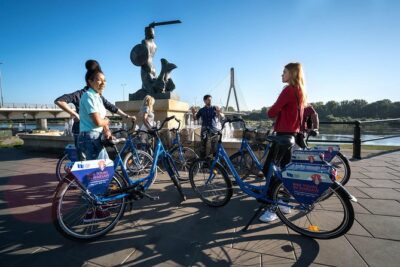
Half-Day Warsaw City Sightseeing Bike Tour for Small Group
Read our review →Browse the lists this tour appears in