
Reviewed · JEWISH HERITAGE TOURS
Kraków old town and jewish quarter®
Kraków’s story makes the most sense when you connect its grand churches, royal hill, university quarter, and Jewish district in one walk. This three-hour route does exactly that, moving from the Old Town to Wawel and then into Kazimierz, where Polish Catholic and Jewish stories meet.
I like the Spanish-speaking historian guide, especially when Luis leads the route with photos and drawings to explain complicated events. I also like the broad sweep: you get medieval walls, the Market Square, Collegium Maius, Wawel, synagogues, memorials, and the old Jewish cemetery without paying museum-level prices.
The trade-off is pace. Three hours is short for such a large amount of ground, and the tour is mainly outdoors. Cold, snow, or tired feet can make the final section harder, while food and drinks are not included.
Key points to know before booking
- Old Town to Kazimierz in one walk: The route links Kraków’s main historic center with its former Jewish district.
- A guide with an academic background: The included guide is a graduate in Geography and History, and Luis has been praised for clear, lively explanations.
- Major landmarks, not just photo stops: You’ll see Wawel Cathedral, Collegium Maius, the Barbican, St. Mary’s Basilica, synagogues, cemeteries, and occupation memorials.
- Useful visual teaching: Photos, drawings, and a map can make the city’s buildings and historical changes easier to follow.
- Spanish only: This is a good fit if you want the tour in Spanish, but not if you need English or another language.
- Good value at $16: The price is modest for a three-hour guided introduction, though the route does not include food, drinks, or paid interior visits.
Why this route gives you a useful first look at Kraków
Kraków is easy to admire and surprisingly easy to misunderstand. Its center looks polished and medieval, but the city’s importance comes from several layers: royal power, religious life, university culture, Polish national identity, and the long presence of Jewish communities.
I like that this route does not treat each monument as an isolated stop. The walk helps you connect Kraków’s architecture with the events that shaped Poland. That matters because the city can otherwise feel like a string of attractive buildings with no clear thread.
You start in the downtown area, then move through the Old Town, the university quarter, Wawel Hill, and Kazimierz. The order works well. First you see Kraków as a medieval and royal center. Later, you see how another community developed beside it and how the city’s twentieth-century story altered both groups.
The guide’s academic training in Geography and History is useful here. This is not just a route for taking pictures. You are given explanations about why people settled in certain areas, how institutions grew, and how different communities shared the city.
More Jewish Heritage Tours in Krakow
- Krakow: Schindler’s Factory & Ghetto Guided Tour
★ 4.7 · 1,694 reviews - Krakow: Jewish Quarter and Former Ghetto Tour
★ 4.9 · 1,441 reviews - Krakow: Bike Tour of Old Town, Jewish Quarter and the Ghetto
★ 4.9 · 1,155 reviews
From the Juliusz Słowacki Theater to the medieval walls
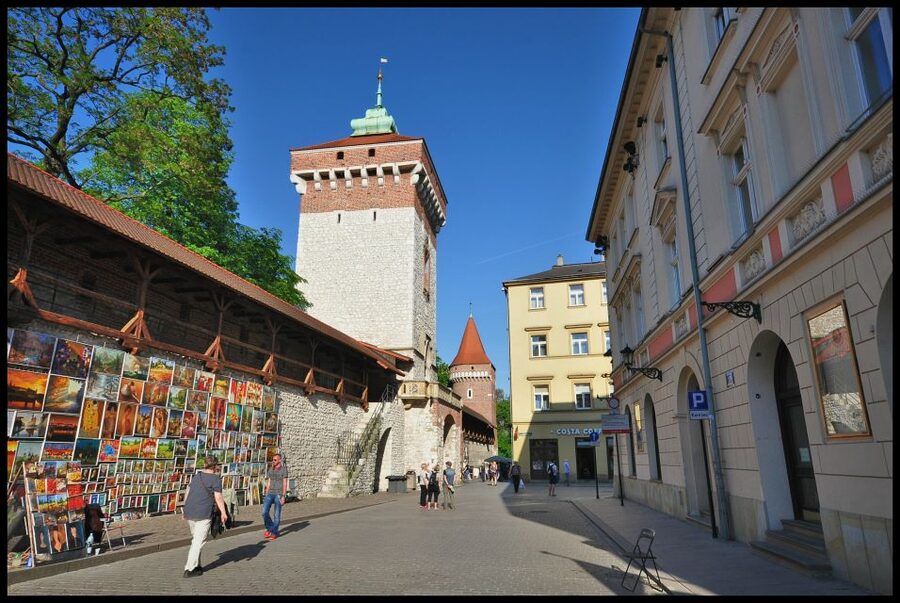
The opening section introduces Kraków through its northern edge and historic defenses. The Juliusz Słowacki Theater gives the route a cultural starting point, while the medieval walls, Barbican, and St. Florian’s Gate show how the city was once protected and entered.
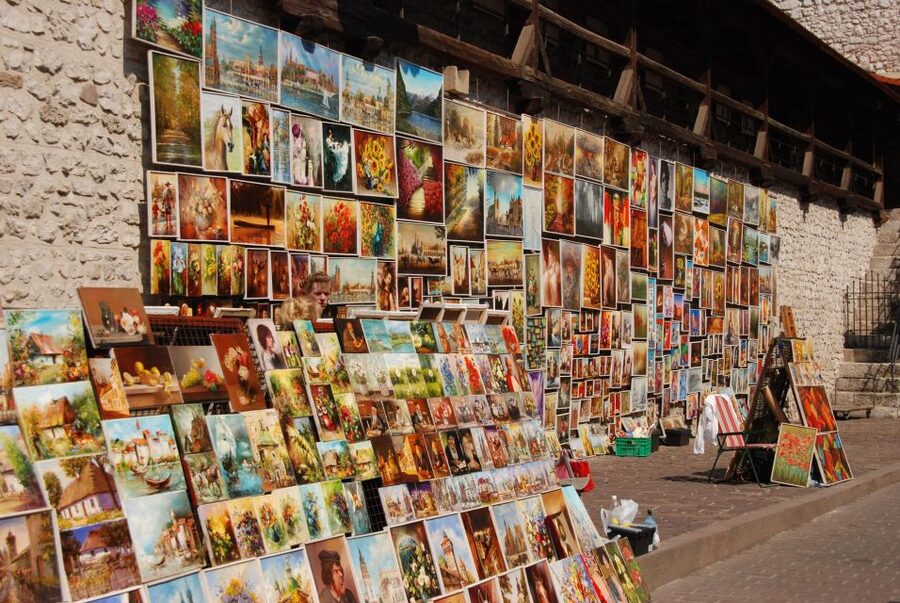
The Barbican is one of the most memorable structures on the route. Its heavy defensive form helps you picture Kraków as a fortified medieval city rather than the relaxed café center you see today. St. Florian’s Gate then provides a clear transition from the old defenses into the heart of the city.
This part is especially useful for first-time visitors because it gives you a sense of direction. You begin to understand where the old city boundary was and how the historic center fits together.
The guide also has a chance here to explain the difference between Kraków’s civic, religious, and royal spaces. That broad framing is more helpful than receiving a list of dates that vanish as soon as the tour ends.
Reading Kraków’s Market Square
The Market Square is the visual center of the Old Town, and the tour gives it the attention it deserves. You’ll see St. Mary’s Basilica, Sukiennice, the old Town Hall Tower, the Eros Bendato sculpture, the Church of St. Adalbert, and the Adam Mickiewicz Monument.
Each stop adds a different piece to the square. St. Mary’s Basilica represents Kraków’s religious importance. Sukiennice recalls the commercial role of the square, while the old Town Hall Tower points to civic power. The monuments and sculpture add layers from later periods, showing that the square has never belonged to only one moment in time.
The guide’s job here is to explain the monumental load of the square without drowning you in detail. The feedback about a good rhythm between explanations and walking is important. A guide who talks nonstop can turn a beautiful public space into a classroom with no breathing room. Here, the route is designed to keep you moving while still giving each major landmark a purpose.
This is also one of the best sections for orientation. After the tour, you should be able to return to the Market Square and recognize the main buildings instead of simply remembering that they were all attractive.
Collegium Maius and Kraków’s university tradition
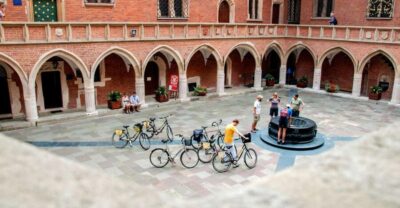
The route then enters the university neighborhood and visits Collegium Maius. This part changes the focus from royal and religious power to education and intellectual life.
The university quarter matters because Kraków’s identity is not only tied to kings and churches. Figures such as John Paul II and Copernicus received academic training in the city, and the guide uses that setting to connect local institutions with wider Polish and European history.
Collegium Maius gives you a more intimate architectural contrast to the open Market Square. It helps explain how learning became part of Kraków’s public identity. You are not simply looking at an old university building. You are seeing one reason the city became important beyond its role as a political center.
The guide’s use of drawings and photographs can be helpful here, particularly when an old building is difficult to interpret from the street. If you enjoy historical context more than quick photo stops, this section may be one of the strongest parts of the walk.
Same city, a completely different kind of day:
- Kraków: Evening or Night River Cruise
★ 4.0 · 7,386 reviews - Krakow: Oskar Schindler’s Factory Entry Ticket & Guided Tour
★ 4.2 · 3,793 reviews - Krakow: City Sightseeing Tour by Electric Golf Cart
★ 4.5 · 3,264 reviews - Krakow: Schindler’s Factory Tour with Entrance Ticket
★ 4.5 · 3,182 reviews
The Archbishop’s Palace and Franciscan Basilica
The Archbishop’s Palace and the Basilica of the Franciscans continue the religious side of the route. These stops help you understand how closely civic life, education, and Catholic institutions were tied together in Kraków.
The Archbishop’s Palace is also linked to John Paul II, adding a personal connection to the university section. The Franciscan Basilica offers another change in architectural character and gives the guide room to explain the place of religious buildings in the city’s development.
I appreciate the way these stops sit between the university neighborhood and Wawel. They create a gradual shift toward the royal complex rather than sending you there without context.
Keep in mind that a three-hour walking tour cannot give every interior the time it deserves. The route is best understood as an informed introduction. If one church or building catches your attention, you may want to return later with more time.
Climbing Wawel Hill and seeing the royal center
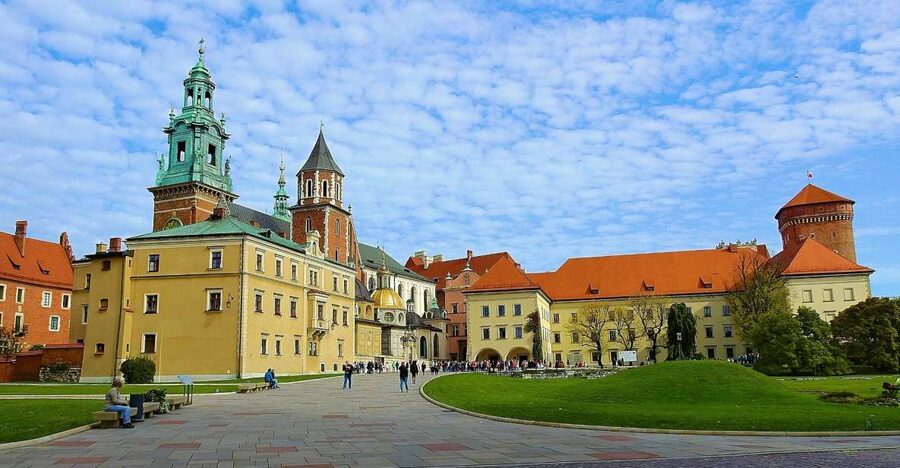
Wawel is the heavyweight stop. The route takes you up the hill to examine the cathedral and the wider Wawel complex, including the dragon sculpture.
Wawel matters because it brings together several strands of Kraków’s past in one place. The cathedral represents religious importance, while the wider complex reflects royal and national power. The hill also gives the route a strong sense of place, showing why Kraków’s central buildings are arranged as they are.
The guide’s historical connections are especially useful here. Without explanation, Wawel can become a blur of courtyards, towers, and grand facades. With a clear guide, you can separate the cathedral from the other buildings and understand why the complex is treated as one of Poland’s key historic sites.
The dragon sculpture provides a lighter moment after the heavier royal and religious discussion. It is also a useful reminder that Kraków’s identity includes legend and popular culture, not just official history.
Wawel is one of the places where the pace may feel quick. The complex is large, and a three-hour route still has Kazimierz ahead. You will see the key areas, but this is not a substitute for a full Wawel visit.
Crossing into Kazimierz
The shift into Kazimierz is the heart of the tour. This district was home to the first Jewish communities that settled in Kraków, and the walk examines why they established themselves here and how Jewish and Catholic communities lived alongside one another.
That subject needs care. Kazimierz is now one of Kraków’s most visited districts, but its buildings and memorials carry painful meaning as well as visual appeal. A good guide helps you avoid treating the area as a decorative old quarter and instead explains how its communities formed, changed, and suffered.
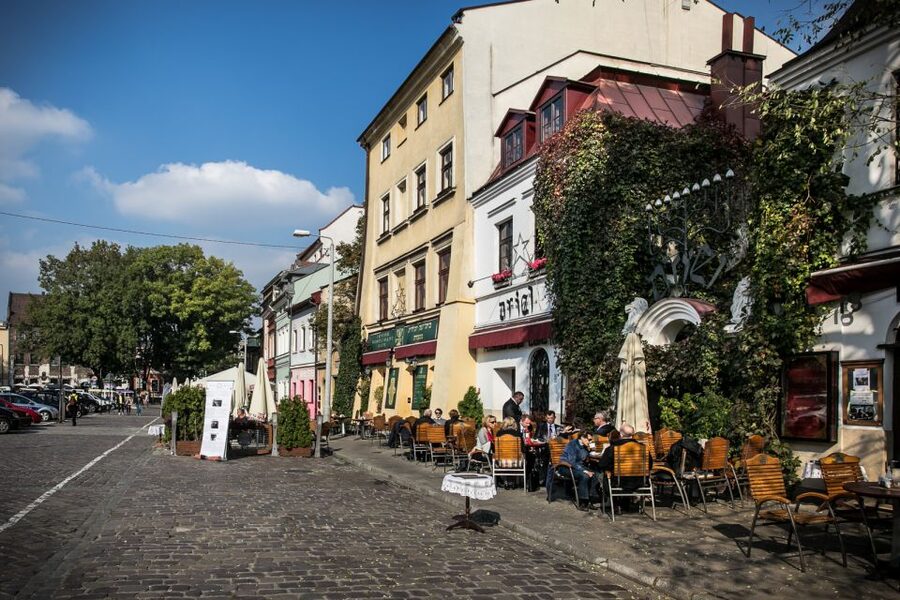
The route includes the medieval square of the Jewish quarter, the walls of the district, New Square, Tempel Synagogue, and the Old Synagogue. Together, these places show the area’s religious, social, and urban structure.
The Old Synagogue is particularly important for understanding the long presence of Jewish life in Kazimierz. Tempel Synagogue adds another part of that story and helps show that Jewish life was not uniform. Different institutions and traditions existed within the same district.
New Square gives you a more everyday urban setting. It is not only a monument or formal landmark. It helps you see Kazimierz as a neighborhood with its own central meeting place.
Memorials, cemeteries, and the difficult twentieth century
The final part addresses the Holocaust, the occupation, and the destruction of Jewish life in Kraków. You’ll see the monument to the victims of the Holocaust, the monument to the Righteous Among the Nations, the monument to Polish victims during the occupation, and the old Jewish cemetery.
These stops give the tour its moral weight. The history of Kazimierz cannot be reduced to synagogues and picturesque streets. The memorials force the route to address persecution, people who helped others, and the suffering of Polish civilians during the occupation.
The old Jewish cemetery adds a quieter setting for reflection. It is different from a public square or a large monument because the physical remains of a community are part of the place itself.
This section may feel emotionally demanding, especially after the lighter architectural stops earlier in the walk. That is appropriate to the subject, but it is worth knowing before you book. You are not signing up for a simple sightseeing loop.
I would pay close attention to the guide’s explanations here. The tour promises help in connecting events affecting Kraków and Poland, and that connection is most important in Kazimierz. The guide can help distinguish the story of Jewish communities before the war, the destruction during the Holocaust, and the later memory of those events.
The guide, language, and teaching style
The tour is conducted in Spanish. If you are comfortable learning in Spanish, this is a strong reason to choose it. If you need English, you should look elsewhere because no other tour language is provided in the supplied details.
The guide is a graduate in Geography and History. Luis is specifically associated with the experience, and his approach is described through clear explanations, photos, drawings, and a lively way of presenting the city’s past.
Those visual aids matter. Kraków’s story includes changing borders, institutions, communities, and periods of conflict. A sketch or photograph can make a building’s former role easier to understand than spoken description alone.
The reported pace is another positive. The tour moves between locations without making the explanations feel rushed. Still, the route covers a lot, so ask yourself what you prefer: a broad city overview or a slow look at a small number of sites.
What $16 gets you
At $16 per person, the value is strong if you want a guided introduction to Kraków. You receive three hours with a qualified history and geography guide, covering the Old Town, university quarter, Wawel, and Kazimierz.
The price works best for someone who wants context. If you only need directions or a quick list of landmarks, you can walk much of the same area independently. The added value is the explanation of how the parts fit together.
Food and drinks are not included. That is normal for a walking tour, but plan accordingly because the route is long and the guide will not be providing refreshments.
You also need to allow for outdoor conditions. A December walk in snow and cold is possible, as shown by the tour’s winter operation, but comfortable shoes and suitable clothing will matter. The guide carries a gray umbrella at the meeting point, which gives you a simple way to identify the group.
The experience is wheelchair accessible. Because the route includes a substantial amount of walking and a visit to Wawel Hill, you may still want to confirm the practical route details when booking if you have specific mobility needs.
Who should book this Kraków walk?
I would choose this tour if you want a Spanish-language overview before exploring Kraków on your own. It suits first-time visitors who want the main landmarks explained in one sitting, especially those interested in the connection between Polish Catholic history and Jewish history.
It is also a good fit for people who learn best through stories, maps, photographs, and drawings. The guide’s style appears to favor clear teaching rather than a dry recital of dates.
You may want a different option if you prefer long interior visits, frequent food stops, or a slow pace. Three hours cannot fully cover the Old Town, Wawel, and Kazimierz. Think of this as a well-packed orientation, not the final word on Kraków.
Should you book it?
Book it if the price, Spanish language, and wide route match your plans. For $16, you get a useful historical framework and access to the city’s most important districts with a guide who can explain more than the buildings alone.
The strongest reason to go is the connection between places: medieval defenses lead to the Market Square, the university quarter leads toward Wawel, and Wawel leads into Kazimierz’s Jewish story. Just bring good shoes, dress for the weather, and accept that some stops will be brief.
FAQ
How long does the Kraków Old Town and Jewish Quarter tour last?
The tour lasts three hours.
What language is the tour conducted in?
The live tour guide speaks Spanish. Spanish is the only language provided in the tour details.
What areas of Kraków does the route visit?
The route visits the historic center, the university neighborhood, the Wawel complex, and Kazimierz, the city’s historic Jewish quarter.
Is the tour wheelchair accessible?
Yes, the activity is listed as wheelchair accessible.
What landmarks are included?
The route includes the Juliusz Słowacki Theater, medieval walls, the Barbican, St. Florian’s Gate, St. Mary’s Basilica, Sukiennice, the old Town Hall Tower, Collegium Maius, Wawel Cathedral, the Wawel complex, Tempel Synagogue, the Old Synagogue, the old Jewish cemetery, New Square, and several occupation and Holocaust memorials.
Is food or drink included?
No. Food and drinks are not included.
Who guides the tour?
The included guide is a graduate in Geography and History. The guide Luis is associated with the experience, and the tour is led in Spanish.
Just added around Krakow
- stag dog chase Krakow prank★ 5.0 · 4 reviews
- Divine Mercy Sanctuary – Private Tour from Krakow★ 5.0 · 4 reviews
- ZALIPIE – painted village, unique small group tour from Krakow★ 5.0 · 7 reviews
- ZALIPIE – painted village, unique PRIVATE tour from Krakow★ 5.0 · 20 reviews
- Zalipie Private Tour from Krakow The Painted Village★ 5.0 · 4 reviews
- Wooden Churches Unesco List Private Tour from Krakow★ 5.0 · 14 reviews
- Guided tour to Salt Mine & Schindler Factory with Pick-Up Options★ 4.0 · 58 reviews
- Wawel Castle, Cathedral, & Rynek Underground Tour with Lunch★ 5.0 · 4 reviews
Jewish Heritage Tours, compared.
Bike Tour of Old Town, Jewish Quarter and the Ghetto
Read our review →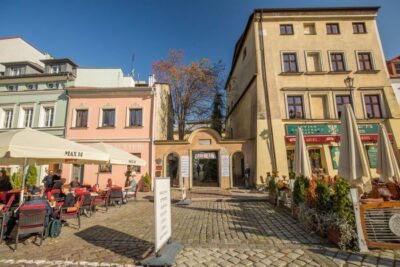
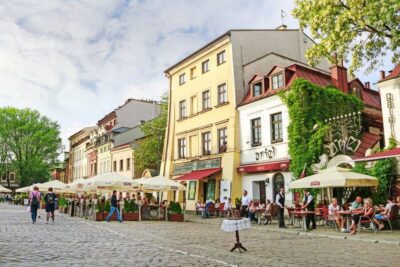
Kazimierz, Schindler’s Factory & Ghetto Guided Tour
Read our review →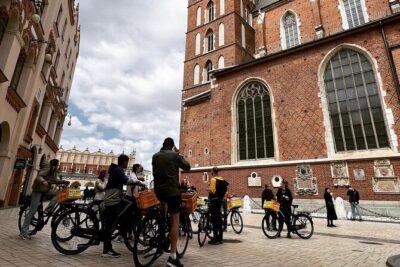
Full Bike Tour – the Old Town, Jewish Qtr & the Ghetto NEW BIKES
Read our review →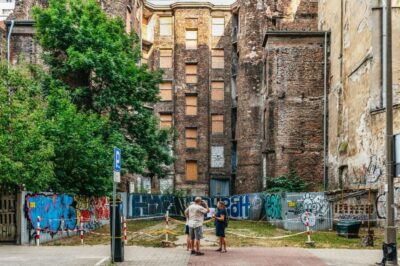
Warsaw Ghetto Private Walking Tour with Hotel Pickup
Read our review →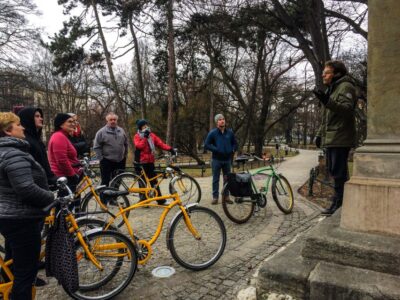
Bike Tour of the Old Town, Kazimierz, and the Ghetto
Read our review →Browse the lists this tour appears in