
Reviewed · WWII TOURS
Warsaw for WWII Buffs – private tour with hotel pickup
Warsaw’s WWII story is easiest to grasp when you move through the city itself. This private tour links ghetto wall fragments, Chłodna Street, Muranów, the Ghetto Heroes Monument, and the Warsaw Uprising Monument into one clear route. The retro Żuk minibus adds character, while guides such as Marcin, Tom, Karol, and Lukas bring strong historical knowledge and a local point of view.
I like the way the tour reaches places that can be easy to miss, including the ruined tenement on Waliców Street and the former ghetto boundary. I also like the private format, which lets you ask questions and adjust the emphasis. The main drawback is time: three hours goes quickly, and hotel transfers count toward that total.
Key points to know before booking
- A moving history lesson: Follow Warsaw from the 1939 invasion through the Holocaust, the 1943 Ghetto Uprising, the 1944 Warsaw Uprising, and the start of communist rule.
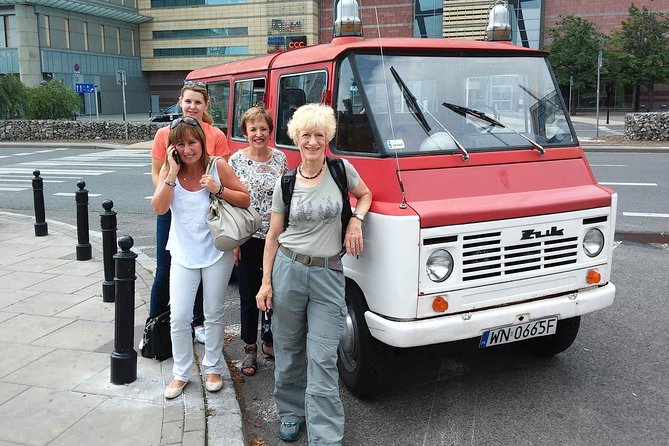
- A classic Żuk ride: The vintage minibus is part of the experience, but some vehicles have no air conditioning or seat belts and can be harder for older passengers to enter.
- Private and flexible: Only your group takes part, with room to ask questions or request more attention to a particular subject.
- Hotel pickup has limits: Pickup and drop-off are included within 3 kilometres of central Warsaw, but the transfer time comes out of the three-hour tour.
- Mostly outdoor sightseeing: You walk at several stops, so comfortable shoes and weather-appropriate clothing matter.
- Good for serious history fans: The route covers difficult subjects directly, with little attempt to soften the wartime story.
Why this short Warsaw WWII tour works
Warsaw can feel confusing if you try to study its wartime past one monument at a time. The city was invaded by Germany in 1939, occupied by the Soviet Union in the east at the same time, sealed into a Nazi-created ghetto, shattered during two uprisings, and then rebuilt under communist rule.
This tour gives you a usable framework for those events. You are not simply driven past memorials with a date and a name. The guide explains how the occupation changed daily life, how resistance developed, and why today’s quiet residential streets can sit above ground destroyed during the war.
The private setup makes a difference. You can ask about Polish resistance, Jewish life before the war, the Soviet role, the 1944 uprising, or the postwar period without waiting for a large group to catch up. Guides including Tom, Marcin, Karol, Martin, and Lukas are praised for explaining complex subjects in clear English and adjusting the conversation to the group.
At $169.38 per person, this is not a bargain city ride for one person. It makes more sense for a couple, family, or small group that wants a focused private guide rather than a standard sightseeing circuit. Group discounts are available, though the exact saving is not provided. For a group sharing the vehicle, the price buys transport, a local guide, and a route that would be awkward to assemble on foot in only three hours.
More WWII Tours in Warsaw
- World War 2 in Warsaw walking tour in English
★ 4.7 · 237 reviews - From Warsaw: Tour of the Wolf’s Lair, Hitler’s HQ by Car
★ 4.7 · 116 reviews - From Warsaw: Guided Tour of Treblinka Camp
★ 4.7 · 85 reviews
Riding through Warsaw in a vintage Żuk
The tour begins in central Warsaw, either at your hotel or apartment if it is within the stated three-kilometre radius, or at a nearby central meeting point. You travel in a restored or classic Żuk minibus, a vehicle associated with Poland’s communist-era roads.
The vehicle gives the outing a strong sense of place. It is not just a modern van with a period label. You get the old-fashioned ride, and some roads may feel pleasantly bumpy. That charm comes with practical limits, though. The minibuses are not air-conditioned, some historic vehicles do not have seat belts, and one vehicle may feel more like a van than the car shown in promotional images.
Each minibus seats up to eight people, and the operator has a fleet of five. Since this is a private activity, your group is not mixed with strangers. Ask ahead if the exact vehicle matters to you, especially if you have mobility concerns or want the smallest classic car shown in the description.
The vehicle is mainly used to move between locations. At each stop, expect short walks and time outside. Wear shoes suited to uneven pavements and bring clothing for the weather.
The 1939 invasion and Warsaw under occupation
Early in the route, the guide sets the political scene of the late 1930s. Germany invaded Poland in September 1939, while the Soviet Union attacked from the east on September 17. Those two invasions divided Poland and began years of occupation, repression, and mass death.
This introduction is important because the rest of the tour depends on it. The Warsaw Ghetto was not an isolated tragedy, and the Warsaw Uprising did not appear from nowhere. The guide connects military defeat with the growth of underground resistance and explains how the occupation shaped ordinary life in the capital.
You will spend about 15 to 20 minutes on this opening section. It is largely a moving orientation rather than a museum visit, so the value depends heavily on the guide’s explanation. The strongest guides use photographs, anecdotes, and conversation to make the background easier to follow. Tom has been praised for bringing visual material, while Karol and Martin are noted for answering questions and expanding the discussion beyond a fixed script.
Waliców Street and the remaining ghetto wall
The Warsaw Ghetto is the emotional center of the route. Before the war, Poland had roughly three million Jewish residents, including about 300,000 in Warsaw. In 1940, Nazi authorities forced nearly half a million people into the Warsaw Ghetto.
Very little of the original physical district remains in an obvious form. Modern blocks and rebuilt streets can make the past hard to picture. That is why a preserved section of the ghetto wall matters. It sits between buildings and follows an old property line, showing how occupation authorities used existing urban boundaries to divide people.
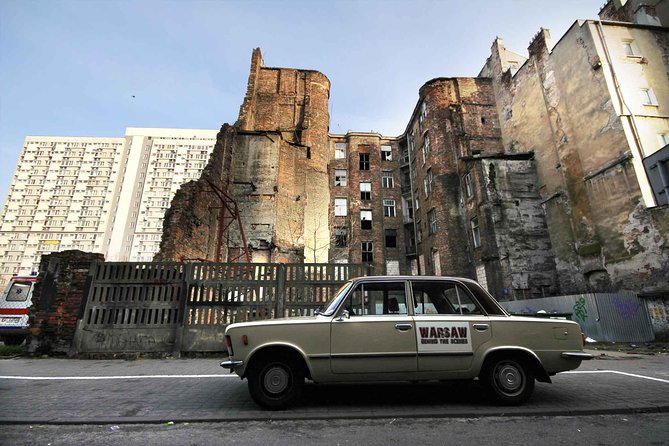
The stop lasts about 25 minutes, including time to listen and look closely. Your guide helps you picture the wall not as a single monument, but as part of a much larger system of confinement. You will also visit Waliców Street, where a damaged tenement remains as a stark reminder of the prewar district and its destruction.
The ruined building is especially powerful because it has not been polished into a traditional memorial. It feels like an unfinished piece of the city, surrounded by later Warsaw. The surviving wall fragment is at the same location, making Waliców one of the most useful stops for understanding how little physical evidence can remain after a city has been rebuilt.
Same city, a completely different kind of day:
- Warsaw: Chopin Concert in the Old Town
★ 4.8 · 2,287 reviews - Warsaw: Traditional Galar Cruise on The Vistula River
★ 4.6 · 1,640 reviews - Warsaw: Old Town Highlights Walking Tour in English
★ 4.7 · 1,516 reviews - Warsaw Concert: Chopin – Painted by Candlelights with Wine
★ 4.8 · 1,442 reviews
Chłodna Street and the divided ghetto
Chłodna Street shows how the ghetto itself was split into two sections in 1941. The street carried east-west traffic, and the separation forced residents to deal with a city route that continued to serve German transport and non-Jewish Warsaw.
A wooden footbridge once connected the two ghetto sections near Chłodna and Żelazna streets. It rose to the third floor of nearby buildings, allowing trams, military vehicles, and cars to pass underneath. Wartime photographs of the bridge are often the key to understanding what stood here, since the original structure is gone.
This is a short stop, about 10 minutes, and there is no major surviving structure to enter. That can make it less visually dramatic than the wall or the monuments. Its importance comes from the explanation and the old photographs. You begin to see how occupation turned ordinary streets, traffic routes, and building entrances into tools of control.
Muranów and the city built over ruins
Muranów can look like an ordinary district of apartment blocks. That is precisely why the guide’s commentary matters. The neighborhood was built over the destroyed Warsaw Ghetto, and the modern streets do not announce what lies beneath them.
The stop is brief, around 10 minutes, but it changes the way you read the city. Rebuilt Warsaw can look orderly and new, yet the ground itself carries the imprint of the ghetto and its destruction. The guide explains how the postwar district relates to the vanished wartime neighborhood.
This part of the tour is best for people who want more than a list of memorials. You are asked to connect present-day buildings with a lost urban community. The tradeoff is that Muranów may not feel immediately dramatic if you do not already know what happened there. Listen closely, and the ordinary apartment blocks become part of the story.
The Ghetto Heroes Monument and POLIN area
The route then reaches the Monument to the Ghetto Heroes and the area beside the POLIN Museum of the History of Polish Jews. These sites are near the location of the first armed clashes of the 1943 Ghetto Uprising.
The monument is one of Warsaw’s central places of remembrance. It honors the people who resisted the Nazi attempt to destroy the ghetto, while the surrounding district encourages a wider look at Jewish life, wartime persecution, and the years of remembrance that followed.
The tour does not list a museum admission as included, so treat this as an exterior stop and a chance to understand the setting rather than a full POLIN Museum visit. If you want to tour POLIN inside, plan separate time before or after this activity.
The guide also places this area within the later relationship between Polish, Jewish, and German communities. That does not erase the painful disagreements around wartime memory, but it explains why the square and museum carry such weight today. Allow about 20 minutes here.
The Soviet occupation and the eastern deportations
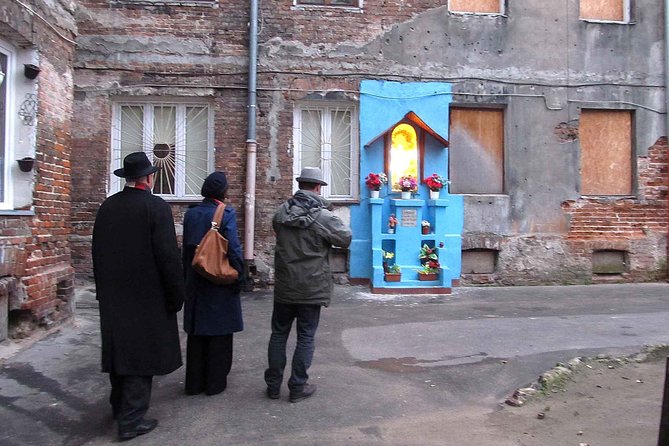
At the Monument to the Fallen and Murdered in the East, the story shifts from Nazi crimes to Soviet repression. The monument honors Poles deported to Gulags in Siberia, people killed in executions, and victims of the Katyń massacres.
The date September 17, 1939 is central to this stop. Two weeks after Germany attacked Poland, the Soviet Union invaded from the east. The subject can be unfamiliar to visitors who know the Nazi occupation better than the Soviet one, so this pause broadens the tour beyond the Warsaw Ghetto.
It also helps explain why Polish memories of WWII do not fit neatly into a single good-versus-evil story. Poland suffered under both occupying powers, and Soviet control continued after the war in the form of communist rule. The monument is a useful place to ask your guide about deportations, Katyń, and the political silence that shaped public memory for decades.
The Warsaw Uprising and the destroyed capital
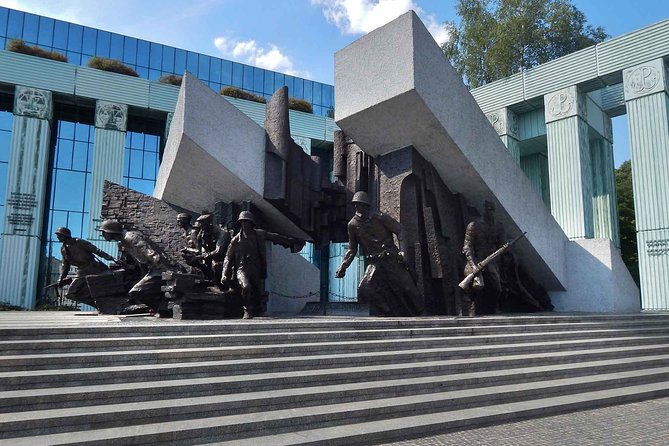
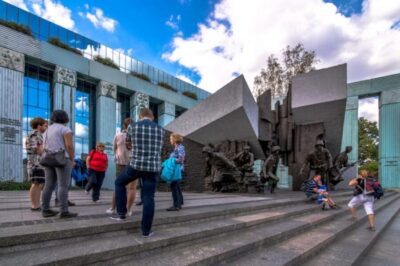
The final major stop is the Warsaw Uprising Monument. Here the guide explains the 1944 uprising, when the Polish underground attempted to regain control of the city before the Red Army arrived.
The uprising was defeated, and German forces then destroyed much of Warsaw. Soviet troops entered the city in January 1945, finding a capital largely reduced to ruins. The result was not immediate independence, but a new period of communist rule.
This is a fitting end because it brings together the tour’s main themes: resistance, abandonment, destruction, and political control. The monument is not simply a final photo stop. It gives the guide a chance to explain why the 1944 uprising remains so important in Polish memory and why the rebuilt city can never be separated from what was lost.
Several guides are especially praised for discussing the postwar period as well as the fighting itself. If your interest goes beyond battlefield dates, tell the guide at the start. The private format makes it possible to spend more time on the uprising, the Soviet era, or the destruction of Warsaw, depending on your priorities.
What three hours can and cannot cover
Three hours is a useful length if you want an introduction before visiting museums or exploring independently. You cover a wide area without exhausting yourself with a full-day program, and the vehicle saves time between scattered locations.
Still, this is a fast route. Several stops last only 10 minutes, and the hotel pickup and drop-off count within the total duration. If your accommodation is far from the center, meeting the guide in central Warsaw may leave more time for the actual history.
You will not receive a full museum program, a long walk through every former ghetto street, or a detailed treatment of every wartime event. The tour works best as a carefully guided overview with powerful locations, not as a complete study course.
Some people may want more time. One guide has been praised for having enough material for four hours, and a three-hour schedule can feel short if you ask many questions. If your group is deeply focused on WWII, ask about extending the tour or arranging a follow-up visit.
Comfort, access, and booking details
Pickup is available from hotels, Airbnb properties, and apartments within three kilometres of central Warsaw. If the vehicle cannot reach your accommodation, the operator suggests a nearby meeting point.
Children over 150 centimetres can be booked online. For younger children, contact the operator first about booster seats, which are required under Polish law. The vintage vehicles are not designed like modern accessible minibuses, so anyone with difficulty climbing steps or standing from a low seat should ask about the vehicle before booking.
The tour is offered in English and includes a local English-speaking guide, the Żuk transport, and hotel or apartment pickup and drop-off within the stated area. Tips are not included. Free cancellation is available until 24 hours before the start time, but cancellations or changes inside that window are not refunded or accepted.
Who should book this Warsaw history experience?
You should book it if you want a private guide, prefer a focused WWII route, and value places that are easy to miss without local help. It suits couples, families, and small groups who want to ask direct questions and shape the conversation.
It is also a smart first or second-day activity. The guide gives you a framework for the rest of your stay, especially if you plan to visit POLIN, the Warsaw Uprising Museum, or other memorials afterward.
I would think twice if you need air conditioning, modern seat belts, easy step-free access, or a slow museum-based tour. The classic vehicle is fun, but comfort varies, and the experience includes walking in all kinds of weather.
Should you book Warsaw for WWII Buffs?
For a serious look at Warsaw’s wartime past in a short window, I would book this tour. The strongest reasons are the private format, the well-planned route, and guides such as Marcin, Tom, Karol, and Lukas, who are praised for clear English, personal warmth, and the ability to answer questions beyond a memorized script.
Book it with realistic expectations. You are paying for a compact, emotionally heavy city tour in a vintage minibus, not a museum admission or a full-day academic seminar. Ask about the exact vehicle, choose a central meeting point when practical, and tell the guide which subjects matter most to you. With those points in mind, this is a valuable way to see the physical traces of a city that was nearly destroyed and then rebuilt around its memories.
FAQ
How long does the Warsaw WWII tour last?
The tour lasts approximately three hours, including hotel pickup and drop-off when that service is used.
Is the tour private?
Yes. Only your group participates in the activity.
What language is the tour offered in?
The tour is offered in English with a professional local English-speaking guide.
What vehicle is used?
Transport is provided in a retro communist-era Żuk minibus. Each minibus accommodates up to eight passengers.
Is hotel pickup included?
Pickup and drop-off are available from hotels, Airbnb properties, and apartments within three kilometres of central Warsaw. If the address is too far away or inaccessible by car, the operator suggests a nearby meeting point.
Does the tour enter the POLIN Museum?
The route includes the area of the Monument to the Ghetto Heroes and the POLIN Museum. Museum admission is not included, so plan separate time and admission if you want to visit inside.
Is the tour suitable for children?
The tour can be booked online for children over 150 centimetres tall. For a child under 150 centimetres, contact the operator in advance to ask about a mandatory booster seat.
Can I cancel for a full refund?
Yes. You can cancel at least 24 hours before the local start time for a full refund. Cancellations or changes made less than 24 hours before the start time are not accepted or refunded.
Just added around Warsaw
- Wolfs Lair and Swieta Lipka Small Group Tour from Warsaw with Lunch★ 4.5 · 21 reviews
- Wolf’s Lair & Treblinka Tour in 1 day from Warsaw★ 5.0 · 37 reviews
- Wolfs Lair “Hitler’s Headquarters” – Full Day Tour from Warsaw by private car★ 4.5 · 4 reviews
- Tour from Warsaw: Wolf’s Lair, Hitler’s HQ Zones I and II★ 5.0 · 32 reviews
- Wolf’s Lair Private Day Trip from Warsaw★ 5.0 · 50 reviews
- Warsaw Must-See Local City Tour with Antek and Tomek★ 5.0 · 51 reviews
- Off the Beaten Track in Warsaw: Private City Tour★ 4.5 · 9 reviews
- Warsaw’s Old Town A Self-Guided Audio Tour★ 4.5 · 10 reviews
WWII Tours, compared.
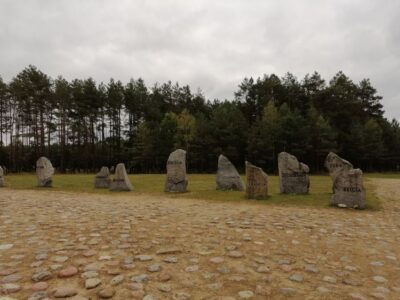
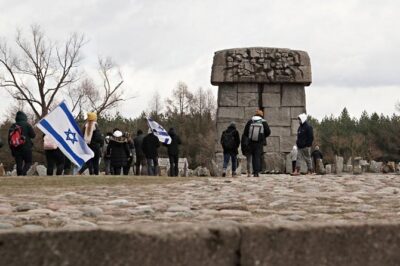
Treblinka Death Camp 6 Hour Private Tour from Warsaw
Read our review →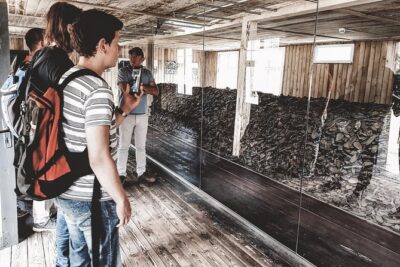
Stutthof Concentration Camp English Tour with Gdansk Hotel pickup
Read our review →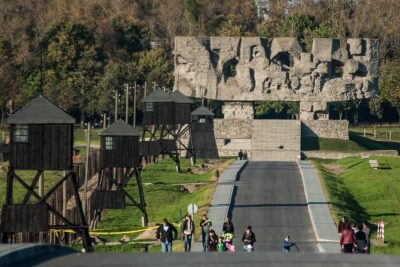
Majdanek Concentration Camp & Lublin Full Day Private Tour from Warsaw
Read our review →Browse the lists this tour appears in