
Reviewed · WALKING TOURS
Warsaw: Old Town Guided Walking Tour
Warsaw’s Old Town looks polished and historic, but its real story is about destruction and rebuilding. This two-hour walk links royal Poland, the Jewish quarter, the Warsaw Uprising, and the city’s remarkable postwar recovery. I especially like the way it moves beyond the prettiest streets to the Ghetto Wall Monument and the Warsaw Uprising Monument, where the city’s past becomes personal and serious.
I also like the practical touch of guides such as Anthony, Thomas, and Antek sharing restaurant, café, and pastry advice as you walk. The narrow side paths help you avoid the thickest crowds. The main consideration is pace: you cover a lot in two hours, and a group of up to 25 to 30 people can feel less personal than a private tour.
Key points at a glance
- Start beneath Sigismund’s Column: Meet in Castle Square beside the 22-meter column and look for the guide carrying a white umbrella.
- See more than postcard Warsaw: The route includes the Old Town, Royal Gardens, New Town, Jewish heritage sites, and the 1944 uprising monument.
- History comes with context: Expect clear explanations of the Jewish Uprising of 1943, the Warsaw Uprising of 1944, and the city’s wartime destruction.
- Guides add personality: Anthony, Thomas, Antek, and other guides use humor, family stories, photographs, and practical local advice.
- Good value at $13: The price is low for a two-hour licensed guide, but read the payment wording carefully because this is linked to a pay-as-you-wish format.
- Plan for outdoor conditions: The tour runs in rain, snow, heat, and cold, so good shoes and suitable clothing matter.
Why this walk gives Warsaw its proper setting
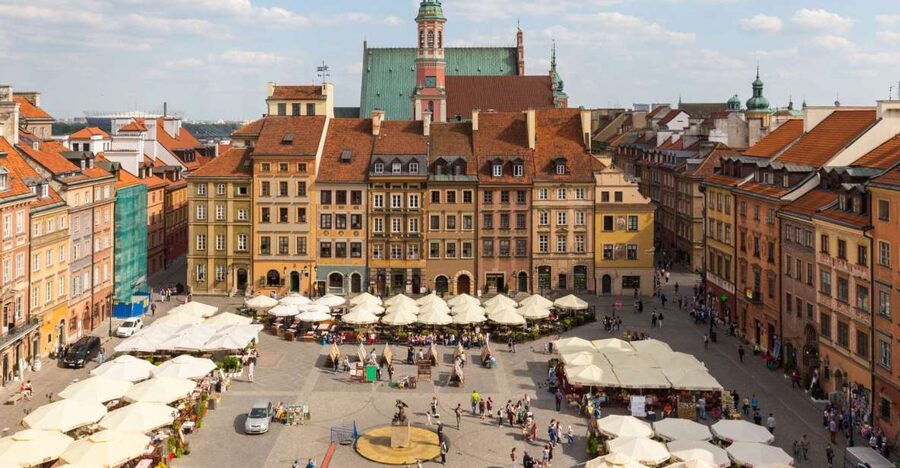
If you see only Warsaw’s colorful Old Town façades, you can easily mistake the district for a perfectly preserved medieval quarter. It is not. Much of what you see was rebuilt after World War II, using old plans, paintings, photographs, and surviving fragments.
That fact gives the tour its emotional center. You are not simply ticking off attractive buildings. You are learning how a city that was almost destroyed rebuilt its public face and national identity.
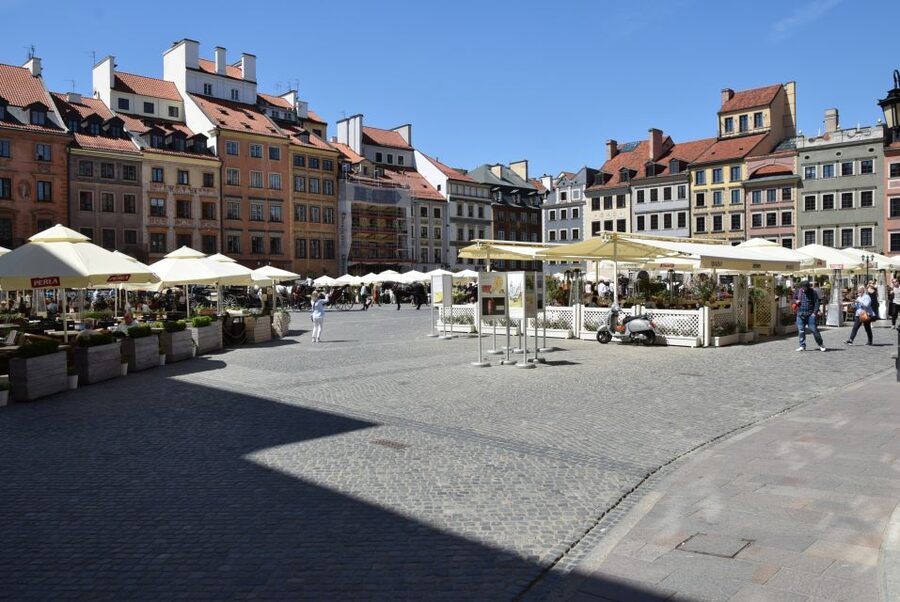
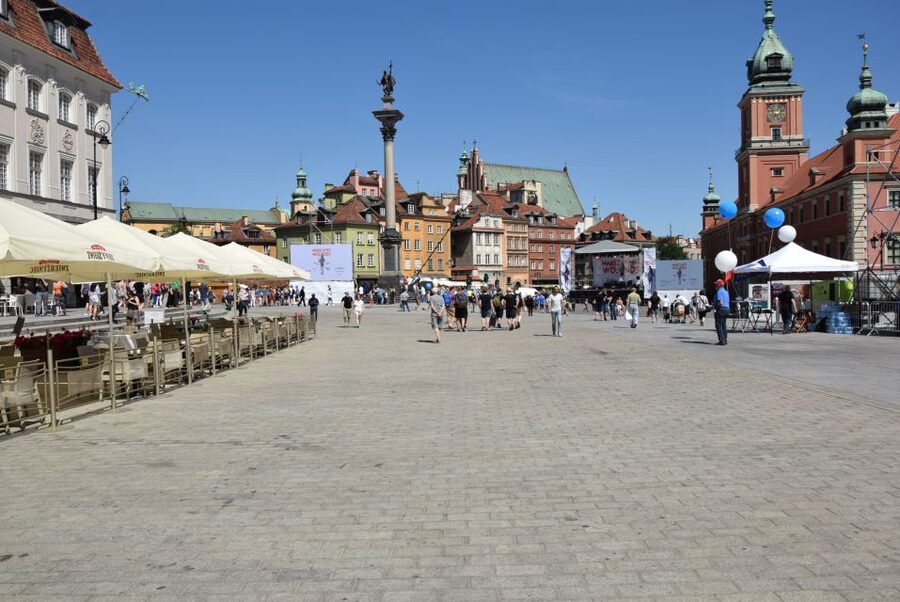
The tour begins on Castle Square, a useful place to get your bearings. Sigismund’s Column rises 22 meters above the square, honoring King Sigismund III Vasa, who moved Poland’s capital from Kraków to Warsaw in the late sixteenth century. From here, you can see the Royal Castle and the entrance to the Old Town.
Your guide uses this opening to explain the royal era before moving into the harder twentieth-century story. That order works well. You first see what Warsaw once represented, then learn what happened to it.
More Walking Tours in Warsaw
- Warsaw: Old Town Highlights Walking Tour in English
★ 4.7 · 1,516 reviews - Half-Day Polish Food Walking Tour with Guide and Dinner
★ 4.5 · 381 reviews - Warsaw: Warsaw Ghetto Private Walking Tour with Hotel Pickup
★ 4.9 · 369 reviews
Castle Square, the Royal Castle, and the gardens
The Royal Castle is one of the first major sights on the route. The walk includes the castle area and Royal Gardens, but it is not an indoor museum visit. Do not book this expecting extended time inside the castle rooms or a detailed look at the royal collection.
The gardens provide a calmer section of the walk. After the open space of Castle Square and the historic streets, you get a chance to see the castle from a different angle and hear about its royal role. The guide explains the political importance of the building and the way it was restored after wartime destruction.
I find this part useful because it keeps the tour from becoming a string of monuments. You are given a sense of how Warsaw’s rulers used the castle and how the city grew around it. It also creates good photo opportunities before the route narrows into the Old Town.
The Market Square and Warsaw’s famous mermaid
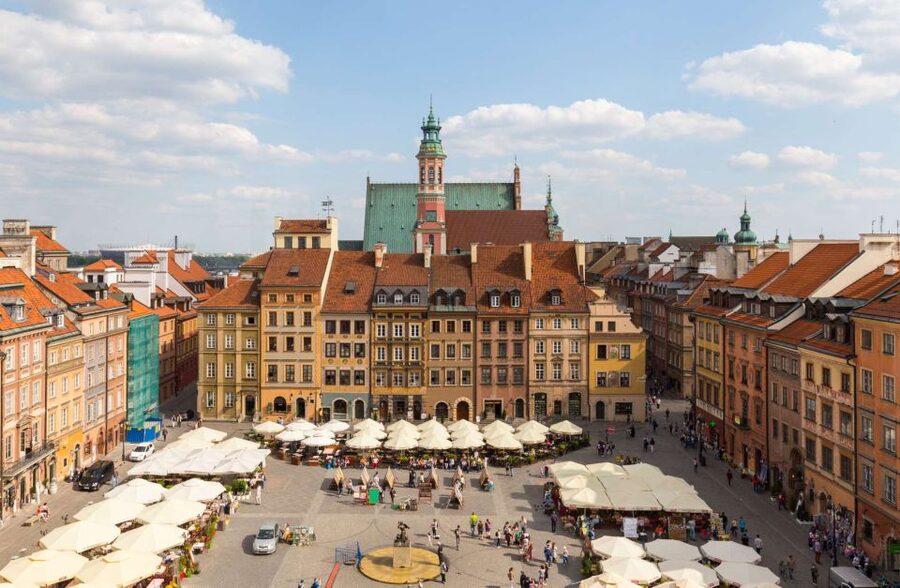
The Old Town Market Square is the visual centerpiece. Painted façades surround the square, and the statue of the Warsaw Mermaid gives you the classic photo stop. The mermaid, or Syrenka, is one of the city’s best-known symbols and appears on Warsaw’s coat of arms.
The guide explains the square’s purpose and points out details that are easy to miss when you are busy taking pictures. Look up at the façades, not only at the statue. The colors and decorative details are attractive, but the important fact is that this entire area was reconstructed after the war.
You may find the square crowded, especially at popular times. The guide’s use of quieter lanes is helpful here. You get the main sight, then move away from the center before the visit becomes a slow shuffle through a crowd.
A narrow façade and the city’s odd details
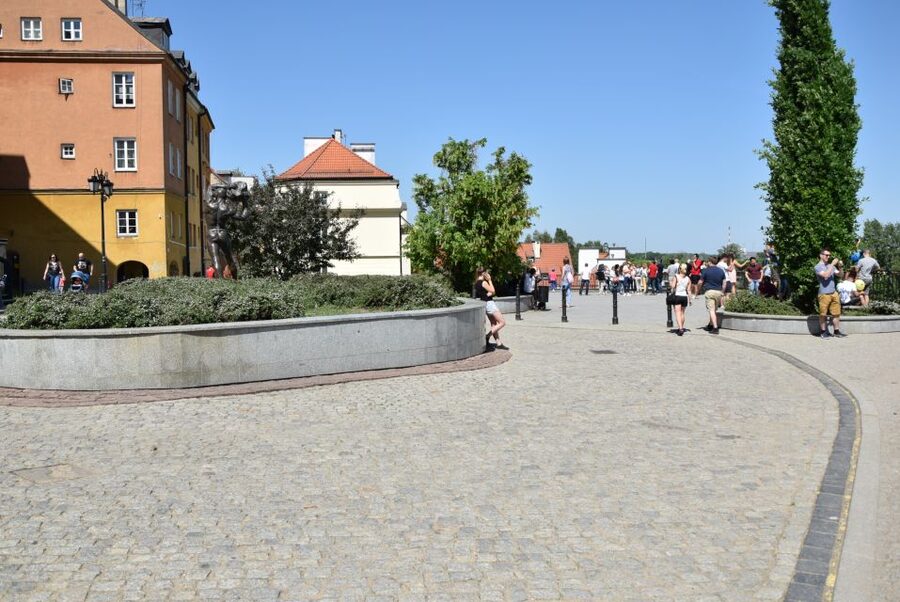
One of the more unusual stops is the narrowest house façade. It is a small architectural curiosity rather than a grand landmark, but it adds variety to the walk.
Details like this are useful on a short city tour. They give you something concrete to remember between larger subjects such as kings, occupation, and wartime destruction. The guide also uses these smaller features to show how tightly built the old quarter once was.
This is one reason I would take the walk early in a Warsaw visit. You learn the layout while collecting small reference points. Later, when you return on your own, you will recognize the corners and understand why they matter.
Same city, a completely different kind of day:
- Warsaw: Chopin Concert in the Old Town
★ 4.8 · 2,287 reviews - Warsaw: Traditional Galar Cruise on The Vistula River
★ 4.6 · 1,640 reviews - Warsaw Concert: Chopin – Painted by Candlelights with Wine
★ 4.8 · 1,442 reviews - Warsaw: City Sightseeing Hop-On Hop-Off Bus Tour
★ 3.6 · 1,415 reviews
St. John’s Cathedral and the Jesuit Church
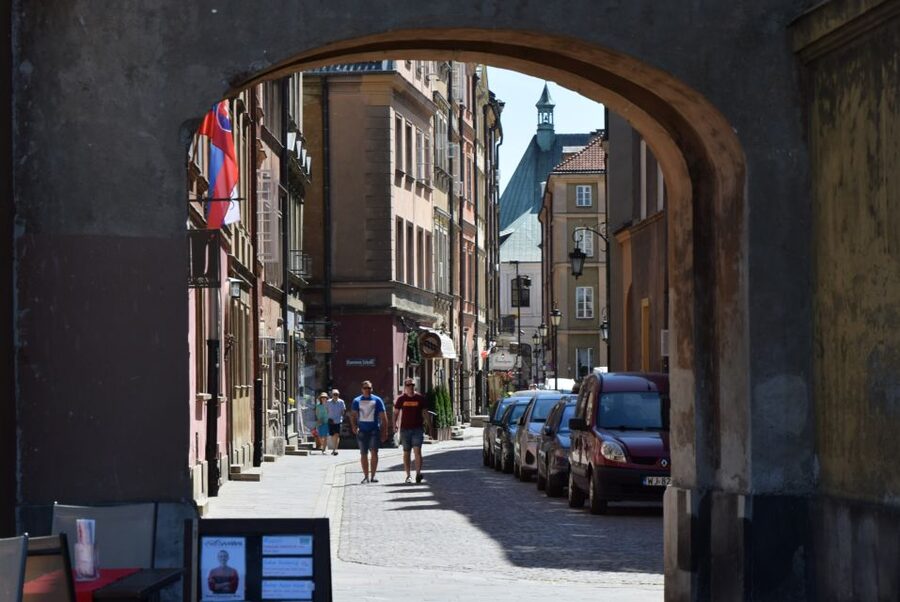
The route continues to St. John’s Cathedral and the Jesuit Church, two important religious buildings close to the Old Town Market Square.
St. John’s Cathedral has a major place in Warsaw’s religious and national story. The Jesuit Church adds another layer of architectural and local interest. The tour focuses on the buildings from the walking route and explains their history rather than treating them as silent backdrops.
Because this is a two-hour tour, expect a guided look rather than a long architectural study. If you have a special interest in church interiors, organ music, or religious art, you may want to return later with more time. For a first introduction, the stops provide useful context without taking over the entire walk.
City walls, the Barbican, and the Old Town view
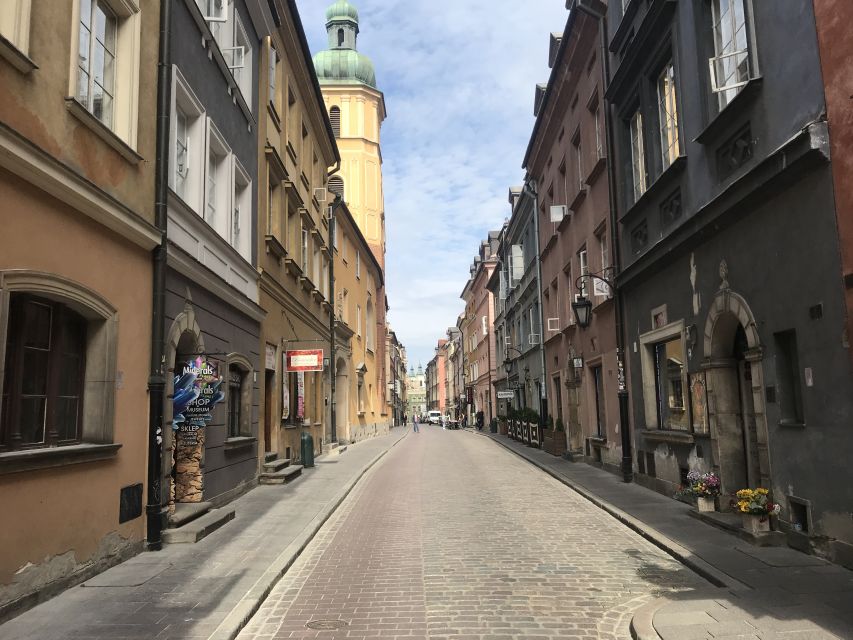
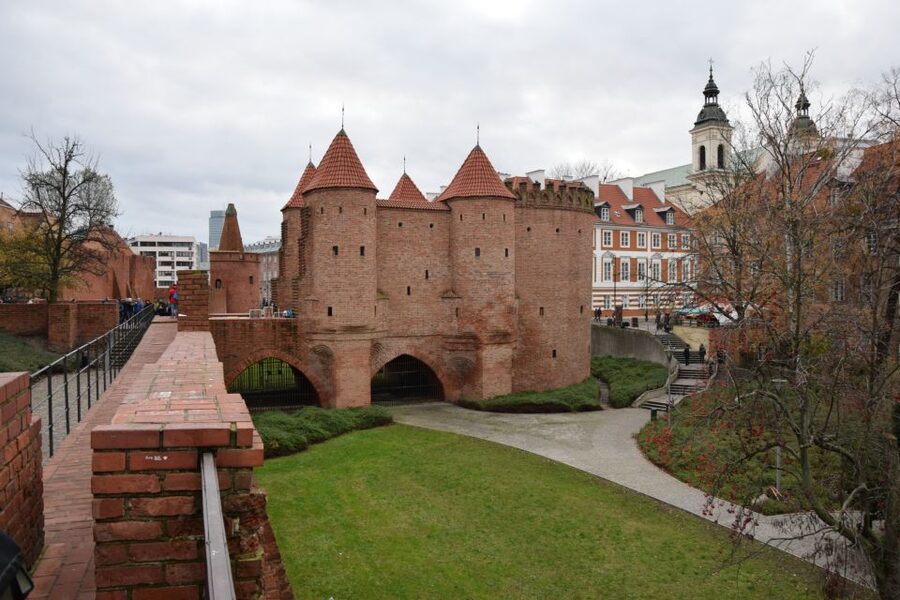
Near the edge of the Old Town, you see surviving sections of the city wall and the Barbican. These defensive structures help explain the old settlement’s shape. The Barbican’s brickwork and curved form also make it one of the more photogenic parts of the route.
The guide explains how the walls protected the city and how the Old Town once related to the settlements outside them. This is where the walk shifts from royal and religious Warsaw to the city as a fortified urban center.
A viewing terrace adds one of the tour’s strongest visual moments. You look toward the river and across the city, gaining a broader sense of Warsaw beyond the compact old quarter. The view is especially helpful after walking through narrow streets because it shows the city at a larger scale.
New Town and the Marie Curie connection
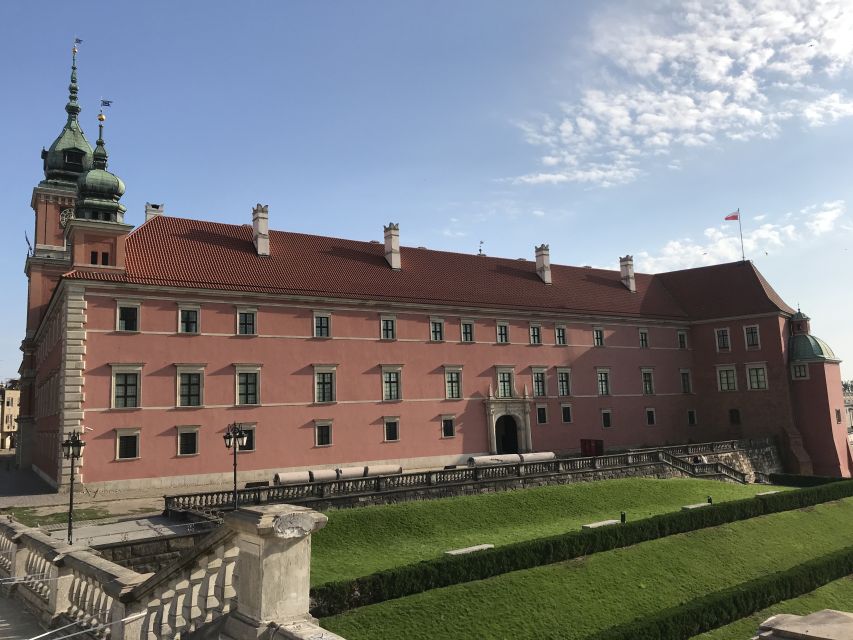
The walk then reaches New Town, or Nowe Miasto. Despite the name, this is another historic district, and its quieter streets offer a change from the Old Town’s central squares.
The route includes the birthplace of Marie Curie, the Polish-born scientist who later worked in France and won Nobel Prizes in two scientific fields. The stop gives the tour a welcome link to science, education, and a famous Warsaw life beyond royalty and war.
Do not expect a long museum visit here. The value lies in placing Curie within the city’s streets and showing how many different stories fit into a small area. The New Town section also gives you practical ideas for further exploring after the tour.
Jewish Warsaw and the Ghetto Wall Monument
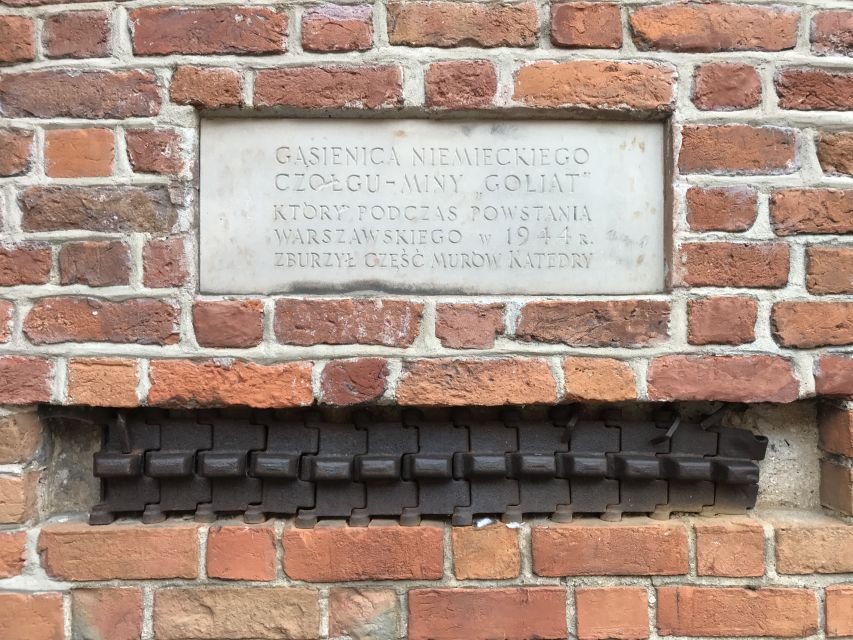
The Jewish heritage section is one of the most important reasons to choose this walk instead of a tour that stays only inside the postcard Old Town. You visit markers showing the former ghetto boundary and hear about Jewish life in Warsaw before World War II.
The Ghetto Wall Monument helps explain the scale of the wartime persecution and the physical separation imposed on the Jewish population. The guide also discusses the Jewish Uprising of 1943, when people trapped in the Warsaw Ghetto resisted the German forces.
This subject is painful, and the quality of the guide matters. The strongest guides keep the tone respectful while making the history understandable. Anthony and Thomas are praised for combining clear facts with care and humor at suitable moments. That balance can help you stay engaged without making light of the suffering.
The tour cannot cover every part of Jewish Warsaw in detail. If this is your main interest, you should allow extra time for museums and memorial sites after the walk. Still, this stop gives you a necessary starting point and places the story within the city itself.
The 1944 Warsaw Uprising at plac Krasińskich
The tour ends at the Warsaw Uprising Monument on plac Krasińskich, with about 15 minutes set aside for the guided explanation. This is an effective final stop because the monument brings together the themes introduced earlier: resistance, loss, courage, and rebuilding.
The Warsaw Uprising of 1944 was a major armed revolt by the Polish underground against German occupation. Your guide explains why it began, what the resistance hoped to achieve, and how devastating the result was for the city and its people.
The end point also makes practical sense. You finish near a major historical site rather than circling back to Castle Square. The walk’s ending is serious, so you may want to leave space afterward rather than rushing straight into another attraction.
The guides: facts, humor, and personal stories
The strongest feature of this experience is the guide. Names appearing often in the guide team include Anthony or Antony, Thomas, Antek, and Bratek, along with other English and German-speaking guides.
Their style is not purely academic. You can expect humor, personal anecdotes, old photographs or statistics in some cases, and answers to questions as the walk progresses. Several guides are especially good at explaining how Warsaw’s history shaped Polish attitudes and identity.
That approach suits a subject that can become overwhelming. The tour covers royal power, occupation, the Holocaust, two uprisings, and reconstruction in just two hours. A dry lecture would be hard to follow. A guide who can shift between a joke, a precise date, and a human story makes the material easier to retain.
There is a trade-off. Guide quality and personality naturally vary from one departure to another. The consistently strong feedback suggests a solid team, but you should still come ready for a group experience rather than a private conversation.
Pace, group size, and weather
The advertised group limit is about 25 to 30 people. That is modest for a public walking tour, but it is not tiny. You should be able to hear the guide most of the time, though you may need to stay close at busy corners.
The walk covers a lot of ground in two hours. One person described it as fast-moving but thorough, which is a fair expectation. If you walk slowly, tell the guide early. A guide has already shown patience with people moving at different speeds, including those accompanying an older parent.
Wear comfortable shoes. The route includes paved streets, squares, and changes in surface around historic buildings. Bring water in warm weather and dress in layers in colder months.
This is an outdoor tour in all seasons. Recent departures have gone ahead in freezing temperatures, snow, and steady rain, and the guides have adjusted by stopping in shade or paying attention to comfort. Still, bad weather can reduce the pleasure of a two-hour walk, and you should not rely on the guide to solve every clothing problem for you.
Is $13 a good price?
At $13 per person, the tour offers strong value if you want a guided introduction to Warsaw. You receive two hours with a licensed city guide and see a wide spread of important locations. A private guide would cost far more.
There is one point to clarify before booking. This experience is connected to a general pay-as-you-wish tour structure. The amount paid at booking covers the reservation fee and the guide’s payment according to the supplied terms, but the wording also refers to rewarding the guide at the end.
I would ask the operator how payment works before the tour so you know if any extra tip is expected. One participant found the arrangement awkward after discovering that the walk was presented locally as a tip-based tour. The price can still be good, but clear expectations make for a better experience.
The flexible cancellation policy helps. You can cancel up to 24 hours before the start for a full refund, and the reserve-now, pay-later option lets you hold a place without paying immediately.
Food tips and what to do afterward
The guide shares suggestions for Polish restaurants, cafés, and a traditional pastry shop in the Old Town. These tips are most useful at the end, when you already know the streets and can return to a place that caught your attention.
Ask questions during the walk. The guides are used to recommending what to do next in both the Old Town and New Town. Since the tour finishes at plac Krasińskich, you can also use the rest of the day for further historical sightseeing rather than repeating the same route.
I would not treat the food advice as the main reason to book, but it is a welcome bonus. A local recommendation is more useful after you have learned how the districts fit together.
Who should book this Warsaw walk?
I would choose this tour for a first visit, especially if you want Warsaw explained rather than simply photographed. It suits people who enjoy history, can walk for two hours, and want a mix of royal landmarks, Jewish heritage, wartime events, and local stories.
It is also a good choice for a short stay. In one outing, you get your bearings around the Old Town, learn which sites deserve a longer return visit, and receive practical suggestions for food and cafés.
You may prefer another option if you want a slow photography walk, a private guide, or detailed interior visits. The route moves quickly and covers difficult material in a limited time. It is an introduction, not a full study of Warsaw’s museums or wartime history.
Should you book the Old Town Guided Walking Tour?
Yes, if you want a lively first look at Warsaw with serious history included. The best part is the range: you move from Sigismund’s Column and the Royal Castle to the Mermaid, city walls, Marie Curie’s birthplace, Jewish memorials, and the 1944 uprising monument.
Book it early in your stay, wear sensible shoes, and arrive five to ten minutes before the start. Find the white umbrella in front of Sigismund’s Column, and clarify the pay-as-you-wish wording before you go.
The tour will not answer every question about Warsaw. It will give you the right questions to ask, the right places to revisit, and a much clearer sense of why this rebuilt city matters.
FAQ
Where does the Warsaw Old Town walking tour begin?
The tour begins in Castle Square, in front of the 22-meter-high Sigismund’s Column.
How do I recognize the guide?
Look for a guide holding a white umbrella. Arriving five to ten minutes before the scheduled start is sufficient.
How long does the tour last?
The walking tour lasts two hours.
What languages are available?
The tour is offered with live guides in English or German.
What places does the tour visit?
The route includes Sigismund’s Column, the Royal Castle Gardens, the Royal Castle area, Old Town Market Square, New Town Market Square, the Warsaw Ghetto boundary markers, and the Warsaw Uprising Monument.
Does the tour include the inside of the Royal Castle?
The supplied tour details include a visit to the Royal Castle area and Royal Gardens, but they do not specify an indoor museum visit or entry to the castle rooms.
How large is the group?
Public tours are limited to a maximum of about 25 to 30 people.
What does the $13 payment cover?
The payment covers the reservation fee and the guide’s payment according to the supplied terms. The tour also uses a general pay-as-you-wish format, so you should clarify the tipping arrangement before joining.
Can I cancel the booking?
Yes. You can cancel up to 24 hours in advance for a full refund. You can also reserve now and pay later.
Just added around Warsaw
- Wolfs Lair and Swieta Lipka Small Group Tour from Warsaw with Lunch★ 4.5 · 21 reviews
- Wolf’s Lair & Treblinka Tour in 1 day from Warsaw★ 5.0 · 37 reviews
- Tour from Warsaw: Wolf’s Lair, Hitler’s HQ Zones I and II★ 5.0 · 32 reviews
- Wolf’s Lair Private Day Trip from Warsaw★ 5.0 · 50 reviews
- Wolfs Lair “Hitler’s Headquarters” – Full Day Tour from Warsaw by private car★ 4.5 · 4 reviews
- Warsaw Must-See Local City Tour with Antek and Tomek★ 5.0 · 51 reviews
- Off the Beaten Track in Warsaw: Private City Tour★ 4.5 · 9 reviews
- Warsaw’s Old Town A Self-Guided Audio Tour★ 4.5 · 10 reviews
Walking Tours, compared.
Gdańsk City Sights & History Guided Walking Tour in English
Read our review →
Old Town & Wawel Castle Walking Tour in English
Read our review →Browse the lists this tour appears in