
Reviewed · JEWISH HERITAGE TOURS
Galicja Jewish Museum
The Galicia Jewish Museum brings Jewish life in southern Poland into focus through more than 140 photographs, not through a large collection of historic objects. I like the freedom to move at your own pace, and I like how the permanent Traces of Memory exhibition links everyday Jewish heritage with the Nazi destruction of Jewish culture. The main drawback is that visitors looking for artifacts, reconstructed rooms, or a guided tour may find the museum more photo-based than expected.
I would allow about two hours if you want time to read the text beside the images. Arriving near opening time, listed as 10 a.m. in one visit, can give you a quieter setting for reflection. You need a printed ticket from the local operator, so plan ahead rather than assuming an emailed ticket on your phone will be accepted.
Key points to know before you go
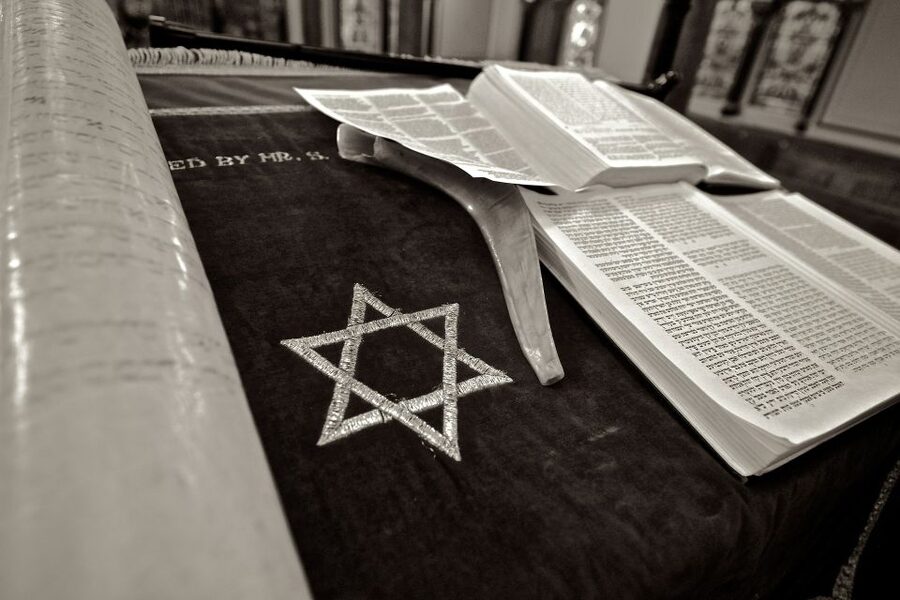
- More than 140 photographs: Chris Schwarz’s images record Jewish sites, memorials, and traces of Jewish life across former Galicia.
- A self-guided visit: You explore at your own speed, with no guide or transport included.
- An 800-year story: Traces of Memory connects centuries of Jewish culture in Poland with the destruction of the Second World War.
- A thoughtful two-hour stop: The museum rewards slow reading and quiet attention rather than a quick photo opportunity.
- Part of the Krakow City Pass: City Card holders receive free entry, while the regular admission price is about $4.33 per person.
- Printed ticket required: If you cannot print your emailed ticket, printing is available at Plac Szczepański 8.
Why the Galicia Jewish Museum matters
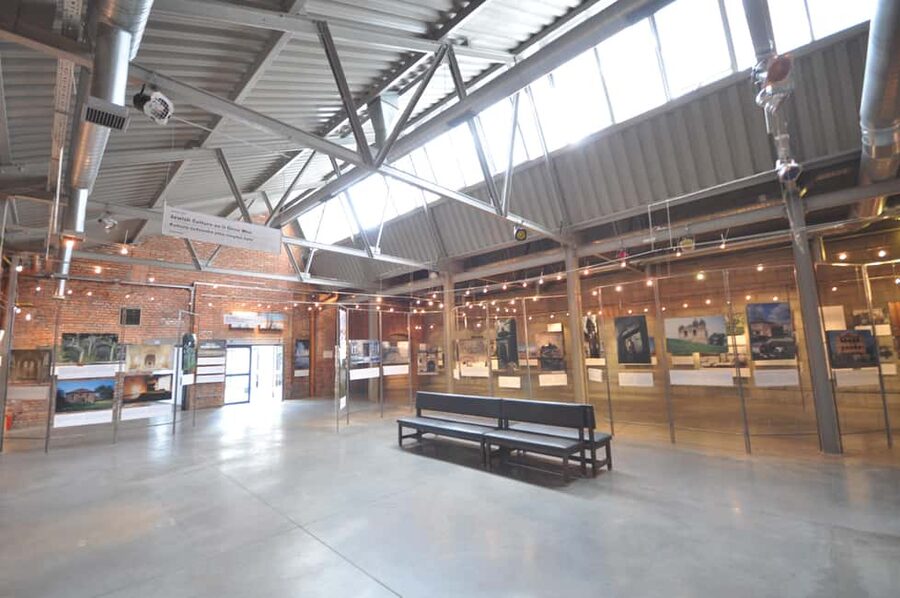
The Galicia Jewish Museum was created to honor the victims of the Holocaust and celebrate the Jewish culture of Polish Galicia. That two-part purpose shapes the whole visit. You are not looking only at loss, and you are not looking at Jewish culture as a distant subject from the past. The museum places both parts together.
Galicia was the name used for a large region that included parts of modern southern Poland and western Ukraine. The museum focuses on the Polish side of that former region, including Krakow and other places in southern Poland. Its permanent exhibition presents an 800-year record of Jewish presence and culture, followed by the destruction brought by Nazi persecution during the Second World War.
The subject is serious, but the museum is not built as a single wall of sorrow. Its photographs also point to homes, cemeteries, synagogues, memorials, and surviving traces of community life. This gives you a better sense of what was lost. The Holocaust did not destroy only individual lives. It also broke apart neighborhoods, religious communities, family networks, and a culture that had developed over centuries.
More Jewish Heritage Tours in Krakow
- Krakow: Schindler’s Factory & Ghetto Guided Tour
★ 4.7 · 1,694 reviews - Krakow: Jewish Quarter and Former Ghetto Tour
★ 4.9 · 1,441 reviews - Krakow: Bike Tour of Old Town, Jewish Quarter and the Ghetto
★ 4.9 · 1,155 reviews
Entering Traces of Memory through photographs
The heart of the visit is Traces of Memory, the permanent exhibition created from twelve years of artistic work by the museum’s founder, British photographer Chris Schwarz. His photographs document the remains of Jewish life in southern Poland.
Expect to spend much of your time looking at photographs and reading their accompanying information. This is not primarily an artifact museum. You will not find the visit filled with displays of household objects or a large archaeological collection. Instead, the photographs ask you to look closely at places and signs that might otherwise be easy to miss.
That approach has a clear benefit. A photograph can connect a physical site with a human story in a direct way. A surviving building, cemetery, or memorial becomes more than a location on a map. It becomes evidence of a community that once lived, prayed, worked, and raised families there.
The exhibition also records the damage done by the Nazis during the Second World War. This creates a difficult but important contrast. You see traces of Jewish culture, then consider how quickly that culture was attacked and dismantled. The meaning comes from the relationship between the photographs, not from any single image alone.
I would not rush through this section. One visit took about two hours, with time spent reading the information beside the images. If you only have 30 minutes, you can still see the main exhibition, but you will lose much of its value. This is a place for a slower pace.
A museum built for quiet reflection
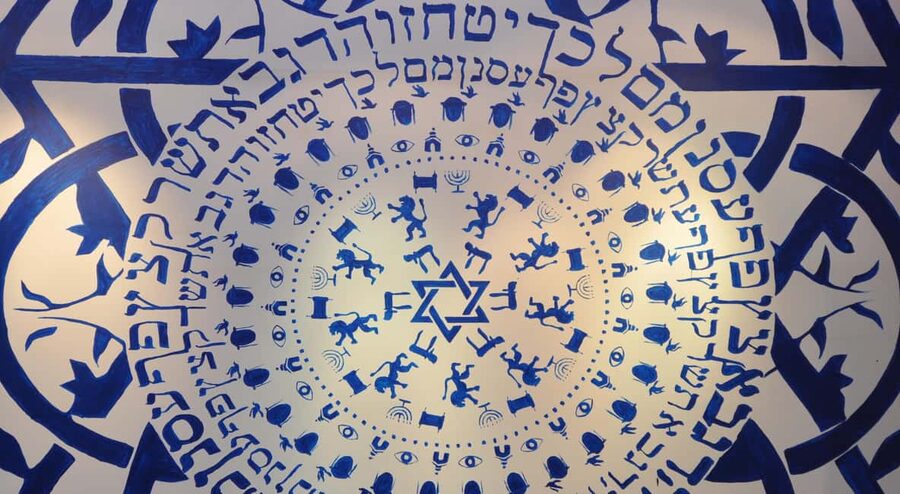
The Galicia Jewish Museum has a different feel from a large, crowded city attraction. One practical advantage is that it can be a calmer stop, especially if you arrive at opening time. A quieter room matters here because the subject requires concentration and personal reflection.
You control the pace. You can stop at an image for as long as you wish, return to an earlier section, or pass more quickly through material that feels especially difficult. That freedom suits visitors who prefer to think through an exhibition without being moved along by a fixed group schedule.
There is no named guide attached to this experience, and transportation is not included. The visit is self-guided, so the quality of your experience depends partly on how much time and attention you bring. I see that as a strength for independent visitors, but a drawback if you want a specialist to explain the historical setting as you go.
The museum can work well after a morning in Krakow’s historic center or the nearby Kazimierz district, where Jewish heritage is an important part of the city’s story. The available information does not provide a walking route or transport arrangement, so you will need to make your own way there and check the current opening hours before setting out.
Why the photo focus is both a strength and a limitation
The strongest part of this museum is also the point you should understand before booking. Photography allows the museum to show places across a broad area of former Galicia. You gain a sense of Jewish heritage beyond one city or one building.
The images also encourage close observation. A photograph of a surviving site can show its condition, surroundings, or connection to later memorial work. The exhibition is not simply a collection of portraits. It is a record of physical traces and the effort to remember them.
Still, visitors expecting many original objects may be disappointed. One clear assessment of the museum was that it contains more photographs than actual artifacts, while still providing an excellent look at Jewish life and the Jewish community. That is a fair way to approach it. Come for visual documentation, historical context, and reflection. Do not come expecting a conventional museum of objects.
The moving images and wartime material add another layer to the experience. The supplied details describe pictures showing Jews during the Second World War, alongside the photographic record of destruction. These sections can be emotionally heavy. You should leave enough time afterward if you prefer not to move straight into another demanding attraction.
More Museum Tours in Krakow
- Krakow: Rynek Underground Museum Guided Tour
★ 4.6 · 1,122 reviews - Krakow Schindler’s Factory Museum Guided Tour in English
★ 4.5 · 650 reviews - Museum of illusions Entry Ticket
★ 4.5 · 521 reviews - Chopin Piano Concert at Chopin Gallery with a Glass of Wine
★ 4.5 · 283 reviews
More than one permanent display
Although Traces of Memory is the main reason to visit, the building also includes temporary exhibitions. Their themes and contents can change, so you should check what is showing at the time of your visit rather than assuming the same display will always be available.
The museum also hosts concerts, author meetings, lectures, and workshops. These events make the institution more than a standard daytime exhibition. If you are staying in Krakow for several days, it is worth checking the schedule for a program that matches your interests.
A cafe gives you a place to pause, and the bookshop adds useful depth for anyone who wants to continue reading. Books are available in Polish, English, and German, with subjects including Jewish life and culture, the Holocaust, Jewish thought, identity, and literature. For English-speaking visitors, this is especially useful because you can take home material that expands on what you saw.
The bookshop is also a practical stop for readers who prefer background before or after a museum visit. Since this is a self-guided experience, a book can help fill in context that a live guide might otherwise provide.
How long to allow and when to visit
The admission is valid for one to two days according to the booking information, with starting times dependent on availability. The exact opening hours can change, so check them close to your visit. The last entrance is 90 minutes before closing.
In practical terms, I would plan for roughly two hours. That gives you time to read the exhibition panels, study the photographs, and visit any temporary display without turning the museum into a hurried stop. A shorter visit is possible, but it will feel selective.
An early arrival is sensible. One visit began at 10 a.m. and found the museum fairly empty, making it easier to focus on the images and text. Crowds can change from day to day, but opening time gives you the best chance of a more private experience.
Smoking is not permitted. The supplied information does not list transportation as part of the ticket, so you will need to arrange your own route. The meeting point may vary depending on the option booked, although a normal museum admission generally centers on the museum itself.
The ticket details that can affect your visit
The standard price is about $4.33 per person. For a museum with a permanent exhibition, temporary displays, a cafe, bookshop, and cultural program, that is a modest admission fee. The value is strongest if you give the museum enough time instead of treating it as a quick stop.
The Krakow City Pass changes the calculation. City Card holders receive free entry, and the pass also covers access to many other Krakow museums and landmarks for one to three days, depending on the option. Listed attractions include Schindler’s Factory, the Rynek Underground Museum, the Old Synagogue, the National Museum’s Main Building, the Polish Aviation Museum, MOCAK, and several archaeological and historic sites.
If you already plan to visit several included attractions, the City Pass may offer good value. If the Galicia Jewish Museum is your only planned museum, paying the individual admission is simpler. Check the precise pass terms and opening hours before relying on it, since access arrangements can vary.
A separate ticket is sent by email after booking. Only a printed version is accepted. If you cannot print it at home or at your hotel, printing is available at Plac Szczepański 8. This is the most important practical detail to handle in advance.
Free cancellation is available up to 24 hours before the visit for a full refund. Opening hours may change because of circumstances at the museum, so confirm them before you go.
Who will get the most from this museum
I recommend the Galicia Jewish Museum to you if you want a serious, self-guided look at Jewish heritage in southern Poland. It suits visitors who are comfortable reading exhibition text and spending time with photographs rather than relying on a guide or a large object collection.
It is also a good choice if you want to understand the scale of what was lost during the Holocaust. The exhibition does not treat Jewish culture as a small footnote in Krakow’s past. It gives that culture its own long timeline, then shows the destruction that interrupted it.
Families with older children and teenagers may find useful material here, though the wartime subject matter requires thoughtful preparation. The museum can also suit photographers, history readers, and anyone who wants a quieter cultural stop.
You may want to choose another attraction if you have very little time, dislike reading-heavy museums, or mainly want artifacts and reconstructed interiors. The photo-led format is direct, but it is not designed as a fast, object-filled sightseeing stop.
Should you book the Galicia Jewish Museum?
Book it if you want a calm and meaningful museum visit centered on more than 140 photographs, Jewish life in former Galicia, and the destruction caused by the Nazis. At about $4.33, the regular price is reasonable, and entry is free with the Krakow City Pass.
Give yourself close to two hours, arrive early if possible, and print your ticket before leaving. The museum will not provide the same experience as a guided tour or an artifact-heavy collection, but its focused photographs and long historical view make it a valuable addition to a Krakow itinerary.
FAQ
Where is the Galicia Jewish Museum located?
It is located in Lesser Poland, Poland, in Krakow.
What is the main exhibition at the museum?
The permanent exhibition is called Traces of Memory. It presents more than 140 photographs documenting Jewish heritage and the remains of Jewish life in southern Poland, formerly Galicia.
How long should I plan for the visit?
Allow about two hours if you want time to look closely at the photographs and read the exhibition information.
Is the visit guided?
No guide is included in this activity. You visit the museum at your own pace.
What does the regular ticket cost?
The listed price is about $4.33 per person.
Is entry free with the Krakow City Pass?
Yes. Krakow City Card holders receive free entry to the Galicia Jewish Museum.
Do I need to print my ticket?
Yes. Only a printed ticket from the local operator is accepted. If you cannot print it yourself, you can print it at Plac Szczepański 8.
Can I use the ticket for more than one day?
The activity is listed as valid for one to two days. Check availability and the exact option when booking.
How late can I enter the museum?
The last entrance is 90 minutes before closing.
Can I cancel the booking?
Yes. You can cancel up to 24 hours in advance for a full refund.
Just added around Krakow
- stag dog chase Krakow prank★ 5.0 · 4 reviews
- Divine Mercy Sanctuary – Private Tour from Krakow★ 5.0 · 4 reviews
- ZALIPIE – painted village, unique small group tour from Krakow★ 5.0 · 7 reviews
- ZALIPIE – painted village, unique PRIVATE tour from Krakow★ 5.0 · 20 reviews
- Zalipie Private Tour from Krakow The Painted Village★ 5.0 · 4 reviews
- Wooden Churches Unesco List Private Tour from Krakow★ 5.0 · 14 reviews
- Guided tour to Salt Mine & Schindler Factory with Pick-Up Options★ 4.0 · 58 reviews
- Wawel Castle, Cathedral, & Rynek Underground Tour with Lunch★ 5.0 · 4 reviews
Jewish Heritage Tours, compared.
Bike Tour of Old Town, Jewish Quarter and the Ghetto
Read our review →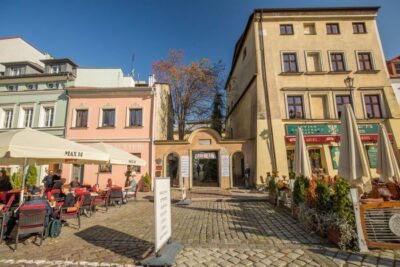
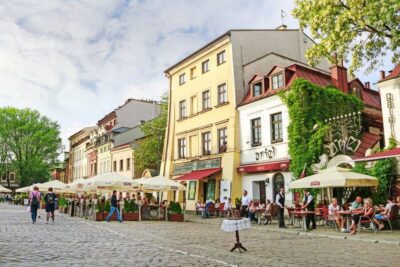
Kazimierz, Schindler’s Factory & Ghetto Guided Tour
Read our review →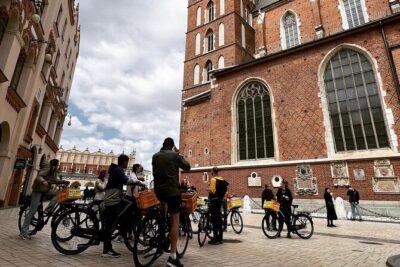
Full Bike Tour – the Old Town, Jewish Qtr & the Ghetto NEW BIKES
Read our review →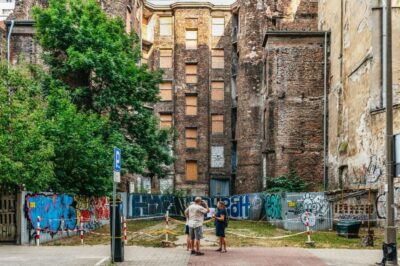
Warsaw Ghetto Private Walking Tour with Hotel Pickup
Read our review →
Bike Tour of the Old Town, Kazimierz, and the Ghetto
Read our review →Browse the lists this tour appears in